

Rustam Khalfin
1949 — Tashkent (Uzbekistan) | 2008 — Ungurtas, Almaty region (Kazakhstan). Worked in Almaty (Kazakhstan)
Rustam Khalfin was one of the most important figures of the twentieth-century art of Kazakhstan, and the first to introduce performance, installation, and video art; he greatly influenced the art community of the region. He graduated from the faculty of urban planning at the Moscow Architectural Institutein 1972. After returning to Alma-Ata (now Almaty), Khalfin began working as an architect and helped develop the architectural complex in New Square (1971–80). [1] When their project proposal was changed beyond recognition, he decided to devote himself instead to painting, and worked out of a home studio. Beginning in 1978, he became interested in the teachings of Vladimir Sterligov—a prominent figure in the art of Leningrad and student of Kazimir Malevich—and took part in his circle’s activities and exhibitions in Leningrad (now Saint Petersburg). He formed his own group in Alma-Ata and began painting in accordance with Sterligov’s cup-cupola system. [2]
Khalfin was also interested in twentieth-century philosophy, reading works by Michel Foucault, José Ortega y Gasset, and Gilles Deleuze, among others. From the 1980s until the mid-1990s, he immersed himself in the study of painting and its new frontiers, taking his own beliefs as a point of reference. During this period, the recurring topoi in his work were “field of vision,” “transparency,” “fragments,” and “pulota.” [3] His approach was to dissect and deconstruct famous works by such past masters as Diego Velázquez, Paul Cézanne, Henri Matisse, Pablo Picasso, Kazimir Malevich, and Paul Klee. According to his wife, the artist Lidia (Lida) Blinova, this period in his creative practice was marked by “radical mutations generated by movement across theoretical fields of strong artistic systems.”
The pulota motif began showing up in Khalfin’s work in the early 1990s, appearing in a variety of guises and materials: three fingertips pinched together (hinting at a three-fingered sign-of-the-cross blessing in the Orthodox church), or a piece of clay molded inside a clenched fist, recognizable to those in the know as the concept of kut (grace), which is sacred to nomads. At other times, Khalfin’s pulotas would be reduced to flat, silhouette-like shapes of black plywood, representing organic spaces such as those between toes, the empty space on either side of a fist, or the spaces between hips. Khalfin exhibited his black pulotas as an installation, where they were combined in various ways. Sometimes, he decorated his pulotas with fragments of paintings. There is also a binocular-shaped version made of clay with an empty space inside.
Khalfin’s “pulota” thus served as his own unique take on Malevich’s “additional element.” [4] It also built on the ideas of his teacher, Sterligov, and through him, drew on other avant-garde artists who used this term, which referred to a structural module in Malevich’s system of painting.
Beginning in the mid-1990s, Khalfin came to realize the inadequacy of painting alone, and embarked on a new phase in his artistic practice—the creation of large-scale art projects. Khalfin would involve anyone who was interesting––or near and dear to him––in his creative activities. In his need for continuous dialogue, he consistently sought out interlocutors, collaborators, kindred spirits, and viewers. He was always surrounded by a team of artists, from Blinova all the way down to students at various art universities.
In 1996, Khalfin conceived the art project Шкура художника [The Artist’s Skin], and in 1997 he brought it to life: With this project, he first took on the role of a curator––a first for Kazakh art as well. He invited several artists to participate in the project, artists whom he believed had the potential for embarking on artistic research. He is responsible for numerous projects in their different versions, for which he drew on the heritage of modernism and its apologists: Sergei Kalmykov (1891–1967), Joseph Beuys, Marcel Duchamp, and Man Ray—anyone who could be considered an iconoclast in art.
The summa of all of Khalfin’s ideas was Нулевой уровень. Глиняный проект [Level Zero: A Clay Project] (1998–2001), which was housed in the Look Gallery, founded especially for this purpose by the artist. He won a grant from the Soros–Almaty Center for Contemporary Art to create an innovative art project. His statement of purpose for the project sounds like a manifesto: “The project takes us back to the time of the creation, to the primal act of sculpture. Each new generation of artists starts from zero, from a breach, from a reevaluation of the past, and builds everything up again from scratch; they want to create like the God of the Bible, ex nihilo, from nothing. Each time, this becomes the starting point, the zero level, the geometric origin.” [5]
Khalfin consistently defended the idea of a uniquely Eurasian and nomadic path for contemporary Kazakh art, proposing an online version of the hyper-project Евразийская утопия [Eurasian Utopia] and inventing his own concept of Kazakh modernity. This modernity was based on several postulates, which the artist attributed to the particularities of a nomadic worldview: tactility, curvilinearity, and ecological compatibility.
To house the project, Khalfin chose a two-story space, a former produce storage facility on the grounds of the KIMEP International University in Almaty. With his background in architecture, Khalfin decided to make the entire building the focus of his project. In its final version, a giant, recumbent man of clay seemed to sprout up through the ground floor and first floor of the building. Various rooms of the storage facility featured “landscapes of the body”; these functioned both as conceptual objects and as elements of the discursive exhibition space.
An important development in Khalfin’s artistic practice were his video objects. Here, the work of perceptual investigation was transformed into narrative using the language of film. In his video objects, Khalfin also sought to actualize the viewer’s sensory presence. To this end, he shot the video in extreme close-up, so the viewer must watch as if by touch. In the series Северные варвары [Northern Barbarians], Khalfin introduced an ethnographic narrative into the video, although even here he continued to use extreme close-ups. The series consists of two separate works: Жених и невеста [Bride and Groom] (1999) and Любовные скачки [Love Race] (2000). In all his video objects, Khalfin used the camera to emphasize the properties of “video footage as the lived experience of the eye, voluptuously possessing the world.” [6]
In the spring of 2001, KIMEP University, which owned the produce storage facility where Look Gallery and Глиняный проект [Clay Project] were housed, decided not to renew their lease of the space. Khalfin’s team was forced to dismantle their programmatic work, a piece they had invested with tactical and strategic hopes for forging a new identity for Kazakh art. After the works were taken down, Khalfin suffered a stroke that transformed his integrated self into a multiplicity of fragments. He tried to recover his strength and got involved in a variety of undertakings and projects, but was never his old self again. It was obvious that, on a subconscious level, he was looking for an artistic finale to his life story. He traveled to Venice, to the first Central Asian pavilion at the Venice Biennale, where a model of his Clay Project was being exhibited; afterward, he decided to undertake a “small hajj” across Turkestan, to the sacred place known as Ungurtas, near Almaty, where he died on the night of December 31, 2008, a pilgrim on holy ground.
In Kazakhstan, Khalfin’s works are in the collections of the Kasteyev State Museum of Arts, Almaty; Nevzorov East Kazakhstan Regional Museum of Fine Arts, Semipalatinsk; and Pavlodar Regional Art Museum, Pavlodar. Apart from the Zimmerli Art Museum, his works are also in the National Centre for Contemporary Art, Moscow, Russia; and the M HKA Museum of Contemporary Art, Antwerp, Belgium.
Perhaps Khalfin’s most important legacy is the idea that a new country must create a new corpus of new art, a local modernity—in the case of Kazakhstan, a distinctive “nomadic modernism.” [7] Its constituent parts were the postulates of modernism, the basic elements of nomadic culture, and the ideas of Eurasianism, which at the time had not yet been discredited. His range of artistic practices included painting, drawing, collage, performance, video art, art objects, installations, environments, and mixed media.
Today, Khalfin is widely considered a pioneer of contemporary art in Kazakhstan. In 2019, his heir, Ruslan Khalfin, established a foundation for the study of the artist’s oeuvre, and in 2024, the Rustam Khalfin/Look Gallery electronic archive was launched.
Yuliya Sorokina
Translated from Russian by Philip Redko
Photo portrait: Rustam Khalfin, early 1990s. Photographer unknown. Courtesy of Rustam Khalfin digital archive/Look Gallery (via Ruslan Khalfin)
Notes:
1. The architects were Khalfin, Yury Tumanyan (1938–1997), Lidia Blinova (1948–1996), Adambek Kapanov (1927–2011), Rustem Seidalin (1927–2015), and Kaldybai Montakhaev (1950–2008).
2. Kushnir, Isaak. Prostranstvo Sterligova [Sterligov’s space], Avangard na Neve series.Saint Petersburg: PRP, 2001.
3. The word pulota is formed by a play of words in Russian: pustota and polnota (“emptiness” and “fullness”); it carries the idea of presence and absence at the same time, of framing the void. It is a gaze through one’s own body and an optical object: a space of emptiness inside a clenched fist that you see looking through fingers, or a figure cut out by its outline; this concept guided his various explorations of spaces and silhouettes around or between other things. As Khalfin put it, it is a camera obscura that exists in our own bodies.
4. For Malevich, “additional (or supplementary) element” is a certain structural module that carries comprehensive information about its pictorial system; when introduced into a foreign environment (literally, adding itself to the elements of another pictorial system), it becomes an agent of influence. It is part of the work that transcends the need to depict the real world, becoming a self-contained, emotionally charged visual entity, a form that emerges during the process, rather than one that is predetermined. Malevich’s essay “Introduction to the Theory of Additional Element in Painting” (dated 1923 by the author, published in 1927 in Germany as part of Die Gegenstandslose Welt. Albert Langen Verlag, Munchen) is a key articulation of his suprematist philosophy and became a full-fledged theory in GINKhUK (State Institute of Pictorial Culture). For English, see: Kazimir Malevich, Essays on Art 1915–1933, 2 vols., ed. Troels Andersen, trans. Xenia Glowacki-Prus and Arnold McMillin, 2nd ed. (New York: Wittenborn, 1971).
5. Khalfin, Rustam. Nulevoi uroven’. Glinianyi proekt [Zero level: Clay project]. Almaty: Look Gallery, 1999), brochure.
6. Viktor Misiano, unpublished interview with Aliya Tiesenhausen about Central Asian art, Almaty, 2008.
7. “Local modernities influence each other, creating shared communal art territories, where each artist is unique in his/her own way and, at the same time, possesses a common legacy and a common modernist language. … Within the context of a new country that has inherited the culture of the nomads of the Great Steppe the artistic language of Khalfin’s art may, within this discourse of local modernity, be called ‘Rustam Khalfin’s nomadic modernism.’” Iuliia Sorokina and Svetlana Shkliaeva, “The Eurasian Utopia: The Legacy of the Nomadic Modernist,” Third Text 29, no. 6 (2016): 1–15.

Form Creates Form from the series Form Studies, 1985–86. Black chalk on paper, 20 x 21 cm (7 7/8 x 8 1/4 in.). Purchased with funds donated by Norton Dodge and Nancy Dodge. 2000.0748.01-02
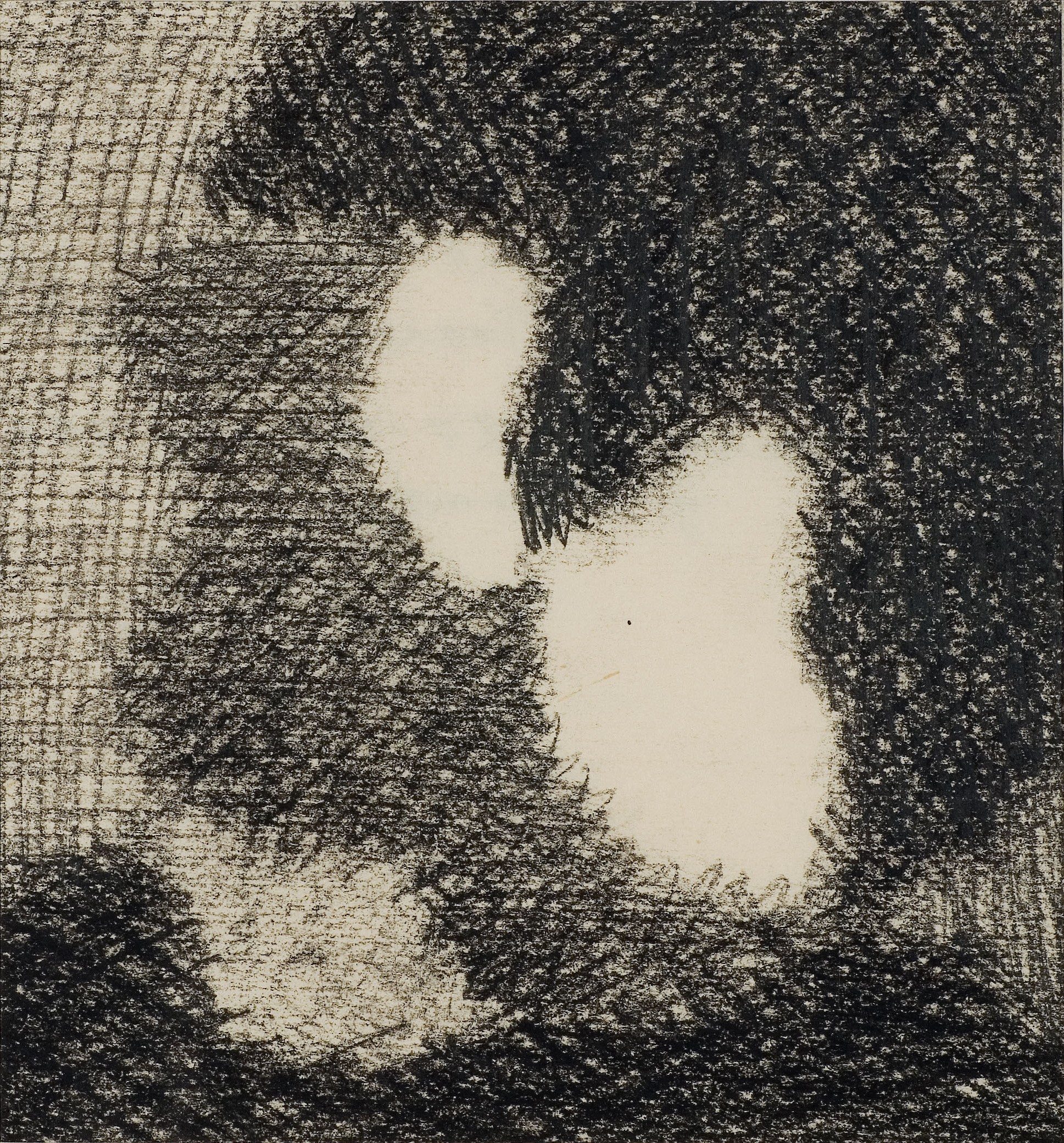
Form Creates Form from the series Form Studies, 1985–86. Black chalk on paper, 20 x 21 cm (7 7/8 x 8 1/4 in.). Purchased with funds donated by Norton Dodge and Nancy Dodge. 2000.0748.01-02
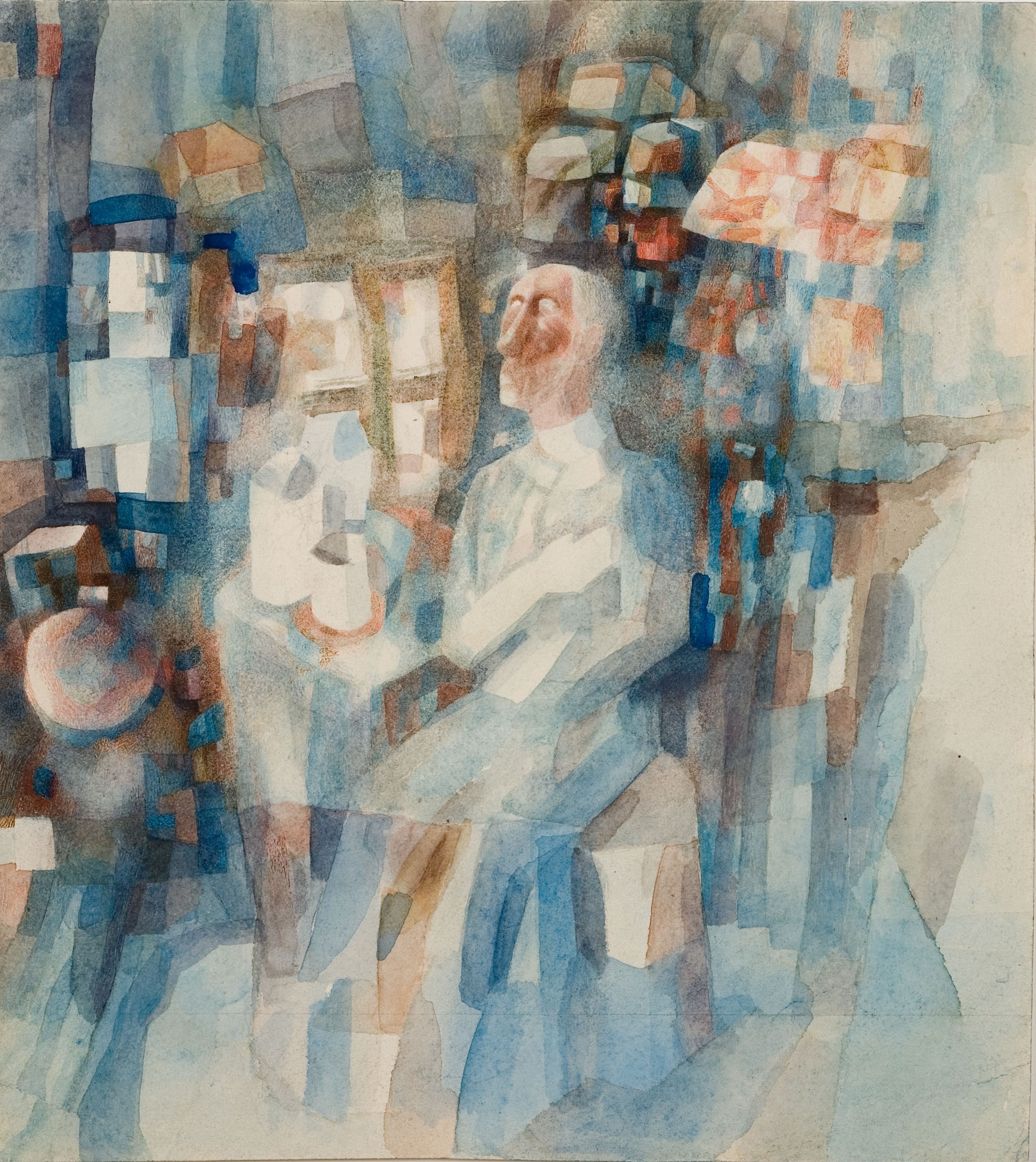
Character in Blue, 1970s. Watercolor on paper, 24.8 x 22 cm (9 3/4 x 8 11/16 in.). Purchased with funds donated by Norton Dodge and Nancy Dodge. 2000.0750
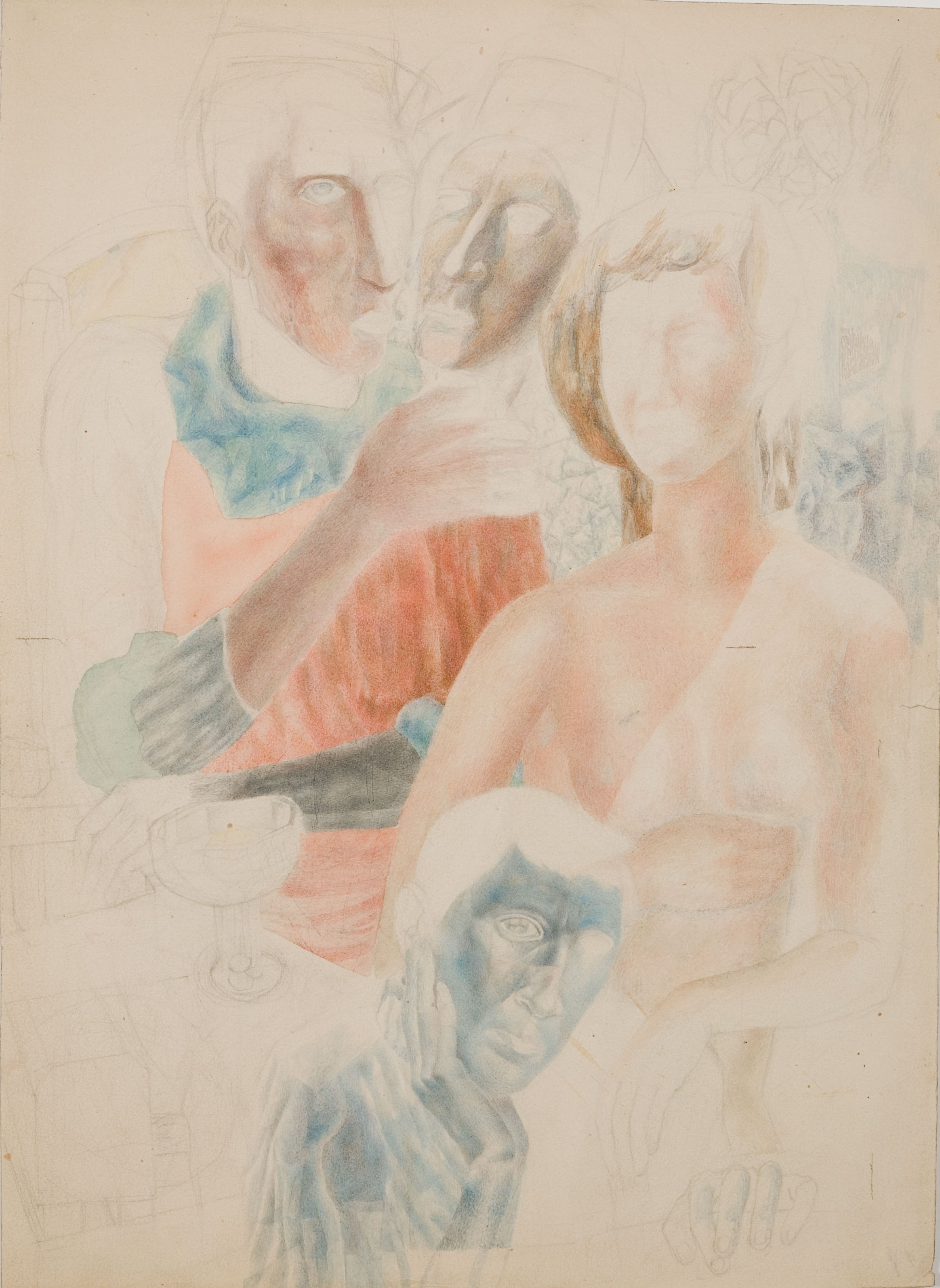
Three with Self-Portrait, 1960s. Watercolor and graphite on paper, 35.5 x 25.8 cm (14 x 10 3/16 in.). Purchased with funds donated by Norton Dodge and Nancy Dodge. 2000.0751
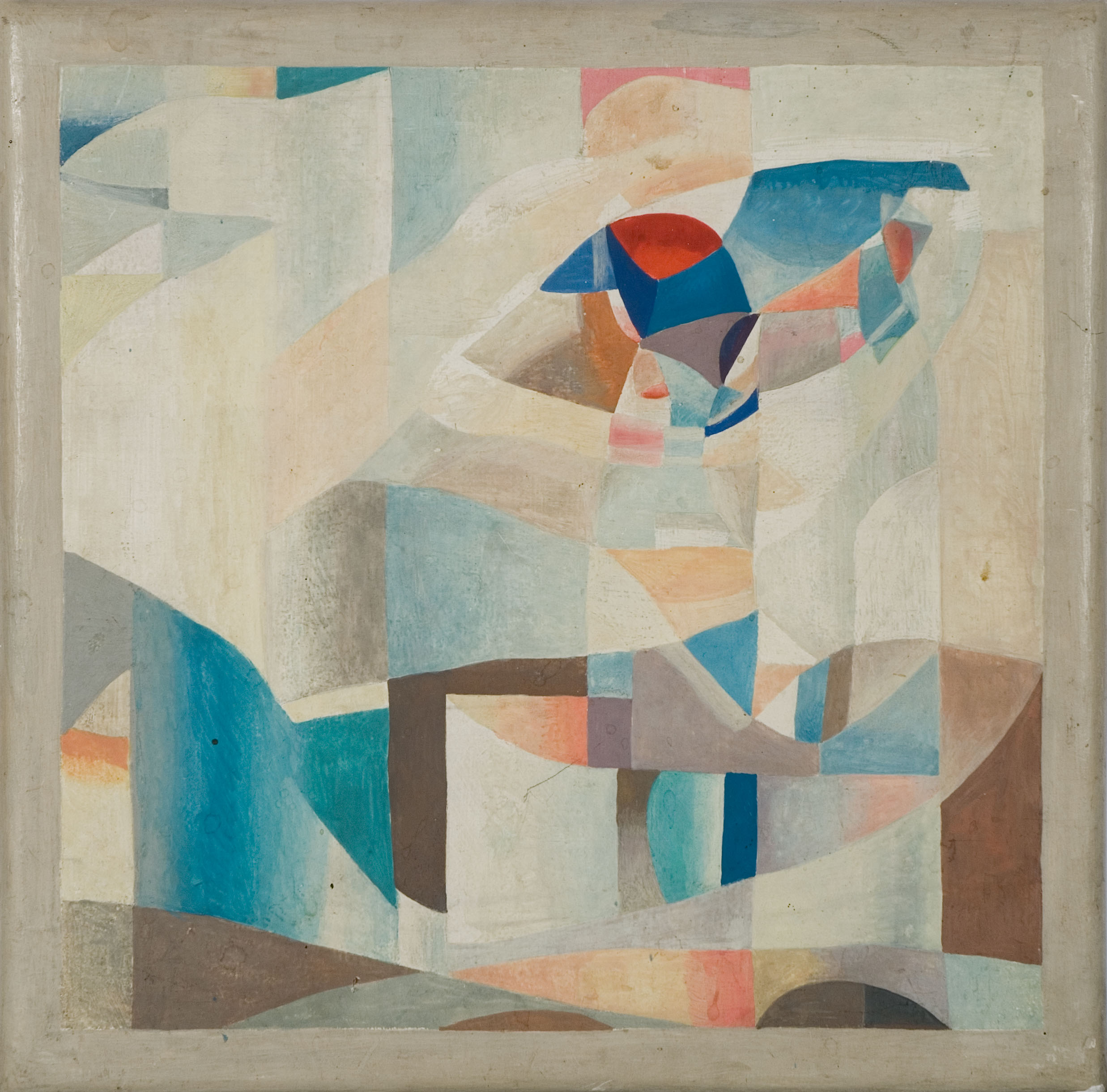
Theater (Section), 1973–74. Tempera on wood panel, 25 × 25 cm (9 13/16 × 9 13/16 in.). Purchased with funds donated by Norton Dodge and Nancy Dodge. 2000.0754

Garden, 1983. Oil on canvas, 36.2 × 58 cm (14 1/4 × 22 13/16 in.). Purchased with funds donated by Norton Dodge and Nancy Dodge. 2000.0024
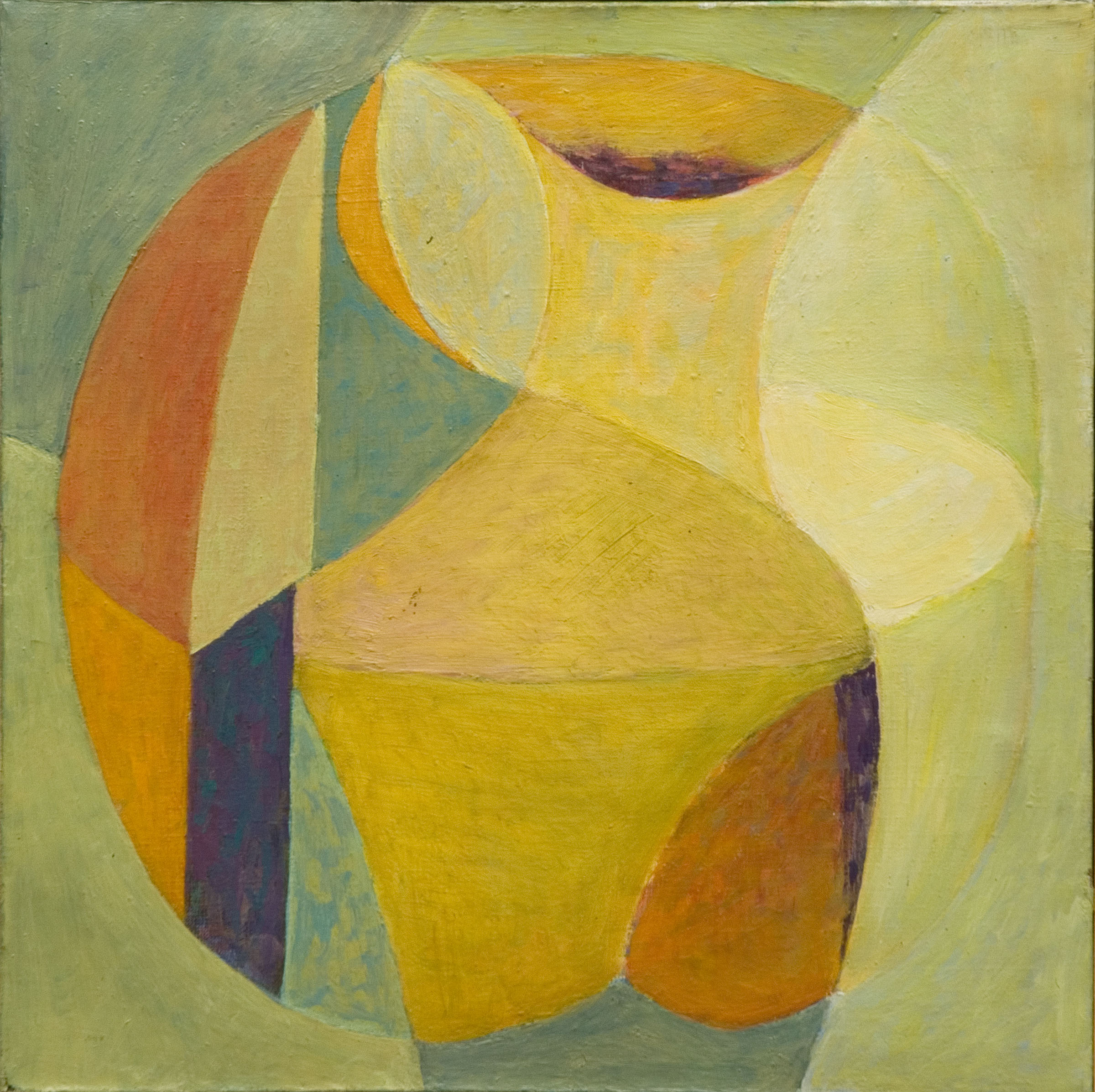
Apple, 1984. Oil on canvas, 45 × 45 cm (17 11/16 × 17 11/16 in.). Purchased with funds donated by Norton Dodge and Nancy Dodge. 2000.0025
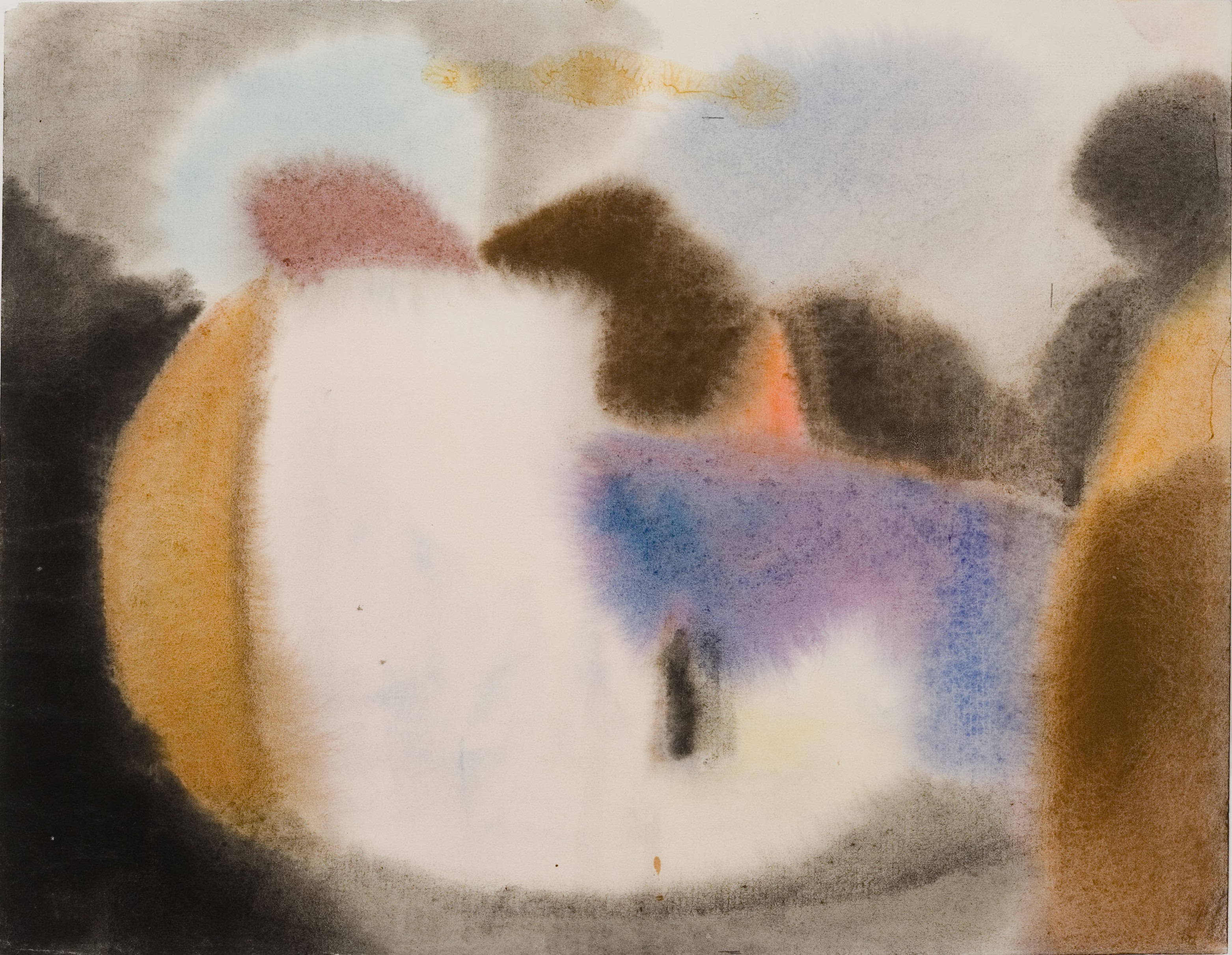
Almaty "Ronchamps," 1986. Watercolor on paper, 24.5 x 31.5 cm (9 5/8 x 12 3/8 in.). Purchased with funds donated by Norton Dodge and Nancy Dodge. 2000.0752
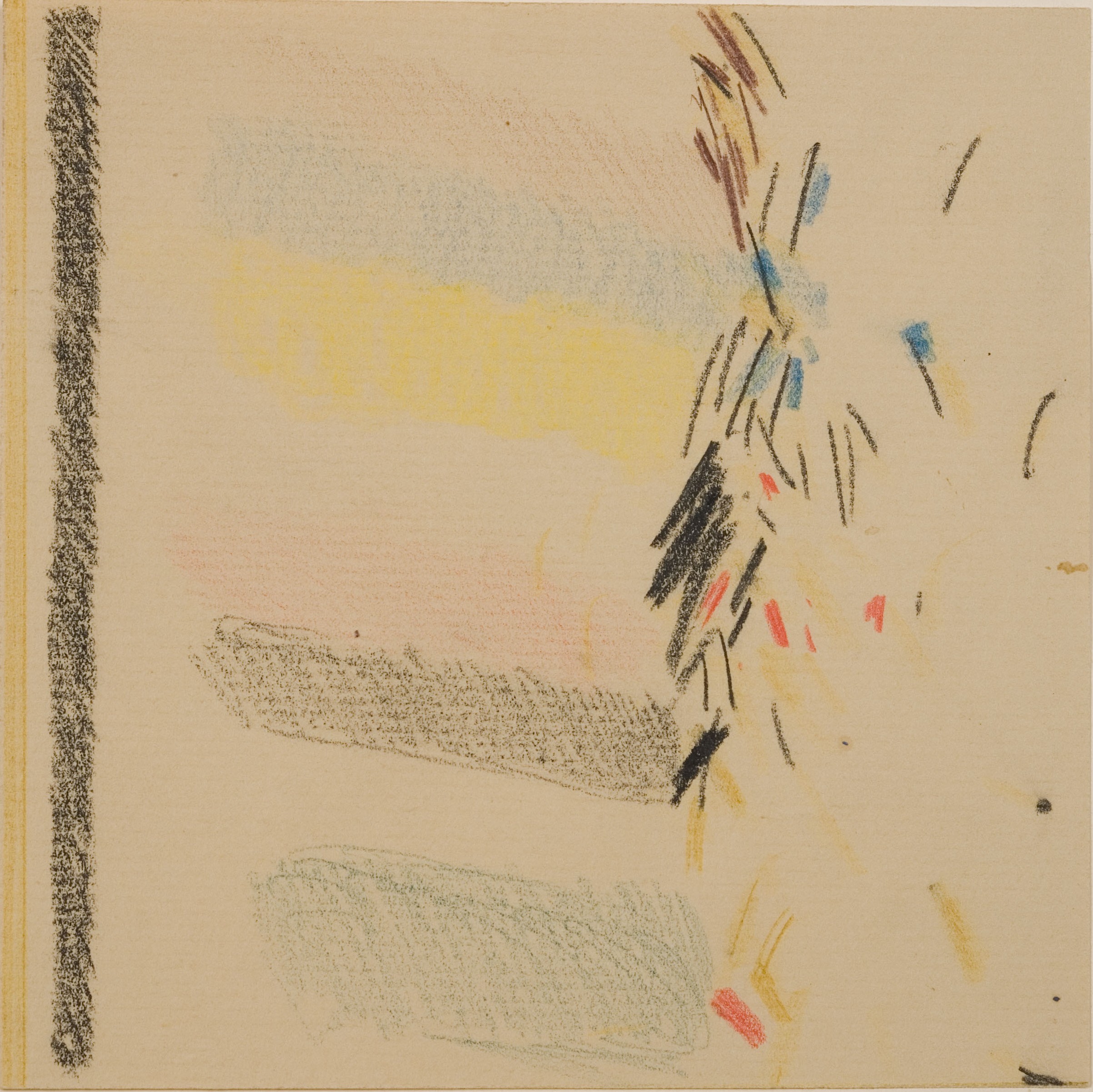
Colored Rain, 1983. Colored pencil on paper, 14.2 x 14.1 cm (5 9/16 x 5 9/16 in.). Purchased with funds donated by Norton Dodge and Nancy Dodge. 2000.0749
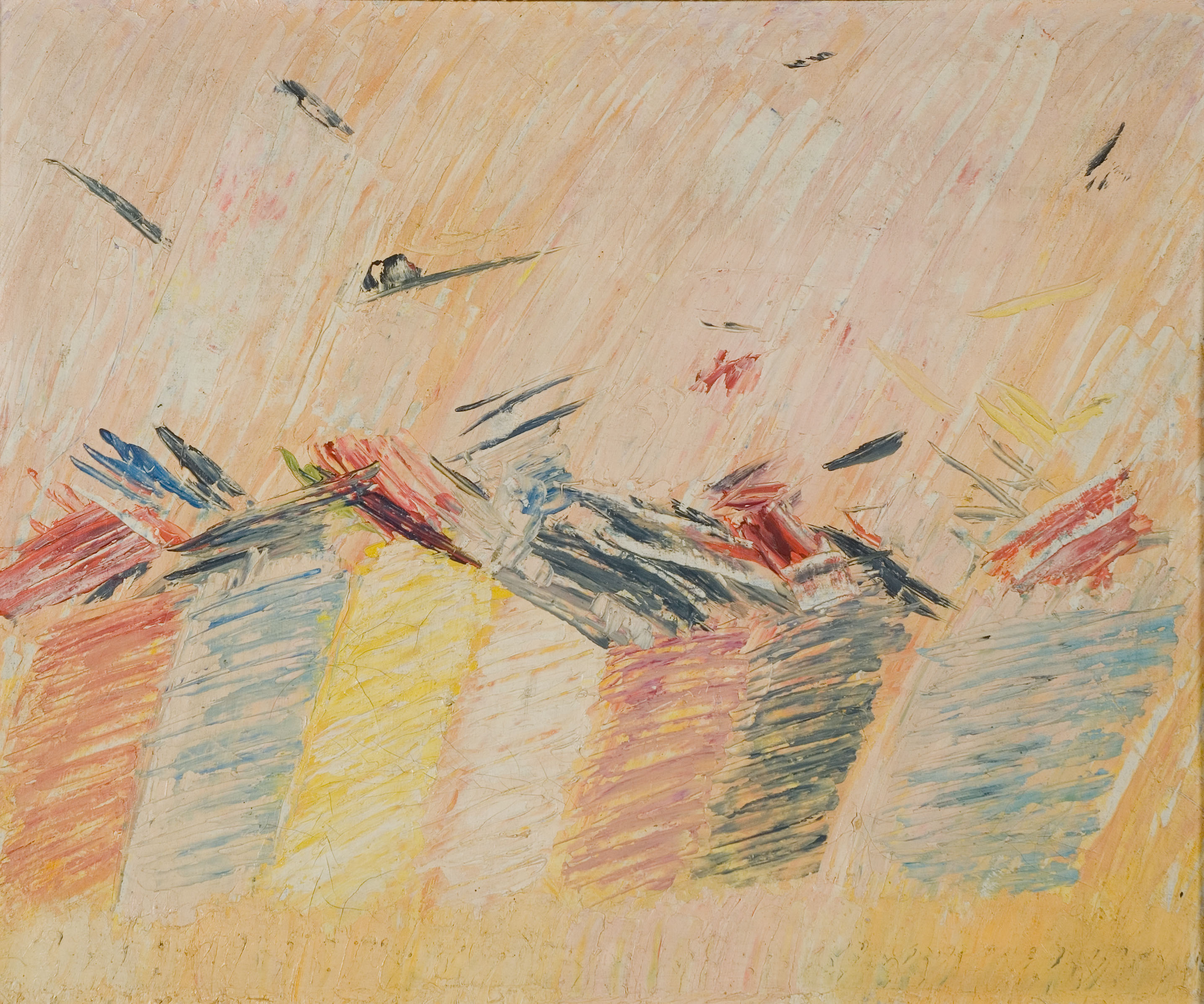
Colored Rain, 1983. Oil on linen, 50 × 60 cm (19 11/16 × 23 5/8 in.). Purchased with funds donated by Norton Dodge and Nancy Dodge. 2001.0127
Selected Exhibitions
2002 Re-orientation: Kunst zu Mittelasien [Re-orientation: Central Asian art], ACC Gallery, Weimar, Germany
2002 Abseits der Seidenstraße. Kunst und Kultur aus Zentralasien [Beyond the Silk Road: Art and Culture of Central Asia], Haus der Kulturen der Welt, Berlin, Germany
2003 Nordic Nomads, Contemporary Art Centre, Vilnius, Lithuania (solo)
2005 Central Asia pavilion, 51st Venice Biennale, Venice, Italy
2007 Love Races—Rustam Khalfin Retrospective, White Space Gallery, London, UK (solo)
2007 Intim—In Time, Center for Contemporary Art Soros, Almaty, Kazakhstan
2018 Eurasian Utopia: Post Scriptum, Suwon Ipark Museum of Art, Suwon, South Korea
Selected Publications
Ezhenova, Nazipa. Zhivye spleteniia [Living networks]. Almaty: Tselinny, 2020.
Ibraeva, Valeria, ed. Rustam Khalfin. Contemporary Artists of Kazakhstan series. Almaty: Soros Foundation–Kazakhstan, 1995.
Sorokina, Yuliya, and Svetlana Shkliaeva. “The Eurasian Utopia: The Legacy of the Nomadic Modernist.” In Third Text 29, no. 6 (2016): 1–15.
See also
