
Moisei (Mykhailo) Chereshnia
1938 — Odesa (Ukraine). Lives and works in Odesa (Ukraine)
A Ukrainian-Jewish artist, Moisei Chereshnia is a member of the unofficial art community in Odesa. In his “quiet” painting, he mainly references the genres of interior, portrait, and landscape, emphasizing states of anxiety and uncertainty. His works are marked by the influence of surrealism and expressionism and the traditions of the Paris School.
Chereshnia was born on March 1, 1938, in Odesa. In 1960 he graduated from the Grekov Odesa Art School, where he studied with Dina Frumina (1914–2005). His close friends at the school were Stanislav Sychov (1937–2003) and the artist and poet Aleksandr Richter (1939-2015), who moved to the United States after graduation, both of whom would also become members of the unofficial art community. While studying, Chereshnia also became involved in the circle of the artist Valentyn Khrushch (1943–2005), where he met many future nonconformists.
In 1966 Chereshnia graduated from the Department of Monumental and Decorative Painting at the Leningrad Vera Mukhina Higher School of Art and Industry, having studied in the studio of Gleb Savinov (1915–2000). After returning to Odesa, he worked in the monumental workshop of the Art Fund of the Ukrainian Soviet Socialist Republic from 1966 to 1992. He participated in exhibitions, predominantly with works related to his main activity as a monumentalist painter, such as sketches of murals and decorative compositions.
Since the 1960s, Chereshnia’s main focus has been painting. While he struggled to exhibit his works officially during the late Soviet period, they nonetheless gained a reputation among the creative community and collectors through apartment shows.
Chereshnia’s art is influenced by his acquaintance with the works of impressionists and postimpressionists, whose “rediscovery” took place in the USSR during the Khrushchev Thaw of the second half of the 1950s. The young artist was originally inspired to join this tradition, having seen publications on these styles in the Odesa Gorky Scientific Library. Later, while studying in Leningrad (now Saint Petersburg), he frequented the Hermitage Museum and also visited the Pushkin Museum of Fine Arts in Moscow. There he became familiar with works of Claude Monet, Auguste Renoir, Paul Cézanne, Camille Pissarro, and Paul Gauguin.
Chereshnia also communicated with members of the older generation of Odesa modernists, specifically Ilya Shenker (1920–2013) and Amshei Nurenberg (1887–1979), both of whom had a great impact on him. They were the bearers of the Paris School tradition: Nurenberg had a direct connection to it, owing to his stay at the La Ruche art residency in Paris from 1911 to 1913, where he shared an atelier with Marc Chagall, a friendship with whom he maintained for the rest of his life. Also a successful artist, Ilya Shenker had been a student of the legendary artist Teofil Fraierman (1883–1957), who had lived in Paris between 1906 and 1914 and been a member of the jury of the Salon d’Automne, exhibited at the Salon des Indépendants. In addition, he had been friends with Henri Matisse. After returning from France, Nurenberg and Fraerman became members of the modernist association Незалежні (Independent), which played a prominent role in the artistic life of Odesa by furthering the Paris School. Their presence in Odesan artistic life in the Soviet era largely stimulated the emergence of the "second wave of modernism," as the nonconformism of the 1960s and 1980s was referred to.
Chereshnia’s early works of the 1960s are devoted to cityscapes of Odesa. One example of this is Воронцовський провулок [Vorontsov Lane] (ZAM, 2013.006.007), which is characterized by the presence of light, including sunshine. This painting is associated with the Odesan plein-air tradition of the early twentieth century. Already in this early work, the empty streets of his hometown and the huge shadows cast on the walls of old buildings by small figures of single pedestrians testify to the artist's interest in the inner life of the city and the secret, hidden sides of this life, as opposed to merely a superficial admiration for the external beauty of the world.
This desire to penetrate deeper and to gain a greater understanding of the essence of the world led Chereshnia to themes and images that corresponded to his artistic temperament. Gradually, he moved away from landscapes and bright colors and turned to interiors, creating a world of empty rooms, mirrors, and mysterious spaces. He now focused especially on the traditions of surrealism and expressionism, most often descended from the Paris School. He was especially close to the lineage stemming from the Jewish circle of the Paris School, in particular the art of Chaïm Soutine (1893–1943). In Chereshnia’s work, this manifested itself in the sense of tragedy conveyed through lonely figures in interiors, empty rooms that only emphasize this starkness and desolation.
Untitled (1972, ZAM, D04771) is a metaphysical composition in an expressionistic style. A graceful, unindividualized human figure, as if borrowed from the paintings of Giorgio de Chirico, is presented in a fantastical, empty landscape. Central to the composition is a mirror, a favorite motif of Chereshnia’s. This mirror complicates the space, adding an element of mystery and a disturbing note. Another recognizable feature of the artist’s style is his careful use of color, juxtaposing warm and cold tones and surrounding spots of color with soft outlines.
Chereshnia’s works have an improvised style, defined by the presence of light and transparency. This feeling arises out of his brushstrokes and the dissonant color clashes, which the artist brings together in a tense, expressive harmony.
The artist’s favorite genre is self-portraiture, in which he develops the traditions of Amedeo Modigliani, Sandro Botticelli, and, occasionally, Chaïm Soutine. Here too, the artist adds elements of disturbing ambiguity to his work, often intensifying the play of shadows or literally introducing the motif of a “double” shadow (Self-Portrait, 1975, private collection).
Chereshnia’s works of the 1980s are complex in their emotional load. The author settles his lyrical hero, whose emotions are conveyed by color, in the middle of a space that is not always harmonious for him, creating a tension that has its origins in surrealism and metaphysical painting. The painting Міф [Myth] (1981), from the collection of the Museum of Contemporary Art in Odesa, is marked by the tangible influence of Chereshnia’s favorite artists, René Magritte and Giorgio de Chirico. It adopts the dreamlike atmosphere typical of their work, as well as the combination of conventional spaces with faceless forms, such as mannequins. The artist brings dynamics and a breath of life to the composition with the help of moving nude female figures and expressively resolved bright colors, which only enhance the feeling of unreality.
The night landscape [City Street (Odesa)] (1981, ZAM, D04665) is based on contrasts of light and dark. The nude female figures, reminiscent of dolls, bring a note of eroticism and a certain mechanical quality reminiscent of both Maurice Utrillo of the Paris School and de Chirico. At the same time, the expressive generalization of the shapes of trees and houses, the narrowing of the color palette, and the energy of the brushstrokes add emotional tension to the image.
In 1980 the Moscow photographer Valentyn Serov and Odesan nonconformist artist Viktor Maryniuk (1939–2026) included Cheresnia in their compilation of unofficial artists in their catalogue “Artists of Odesa” (see Selected Publications). Other artists featured include Valentyn Khrushch (1943–2005), Oleh Sokolov (1919–1990), Liudmyla Yastreb (1945–1980), Valerii Basanets (b. 1941), and Oleksandr Anufriiev (1940–2024).
In the second half of the 1980s through the 1990s, Chereshnia was a member of the Odesa ТОХ (Творчє об’єднання художників; Creative Association of Artists) and participated in its exhibitions. In 1993 his first solo exhibition took place at the Artis Gallery in Odesa. Since 1996 he has been a member of the International Federation of Artists (IFA) at UNESCO (Saint Petersburg).
Moisei Chereshnya's place in the Odesa artistic community can be described as existence on the border of official and nonconformist artistic circles. Lacking the radicalism of his modernist colleagues, he subtly developed and deepened the legacy of the early twentieth-century Odesan figurative art, with its rich range of artistic trends and close ties to the Paris School, overcoming the one-dimensional understanding of realism in the Soviet tradition by introducing to it both metaphysicality and tragedy.
Oksana Barshynova
Translated from Ukrainian by Ada Wordsworth
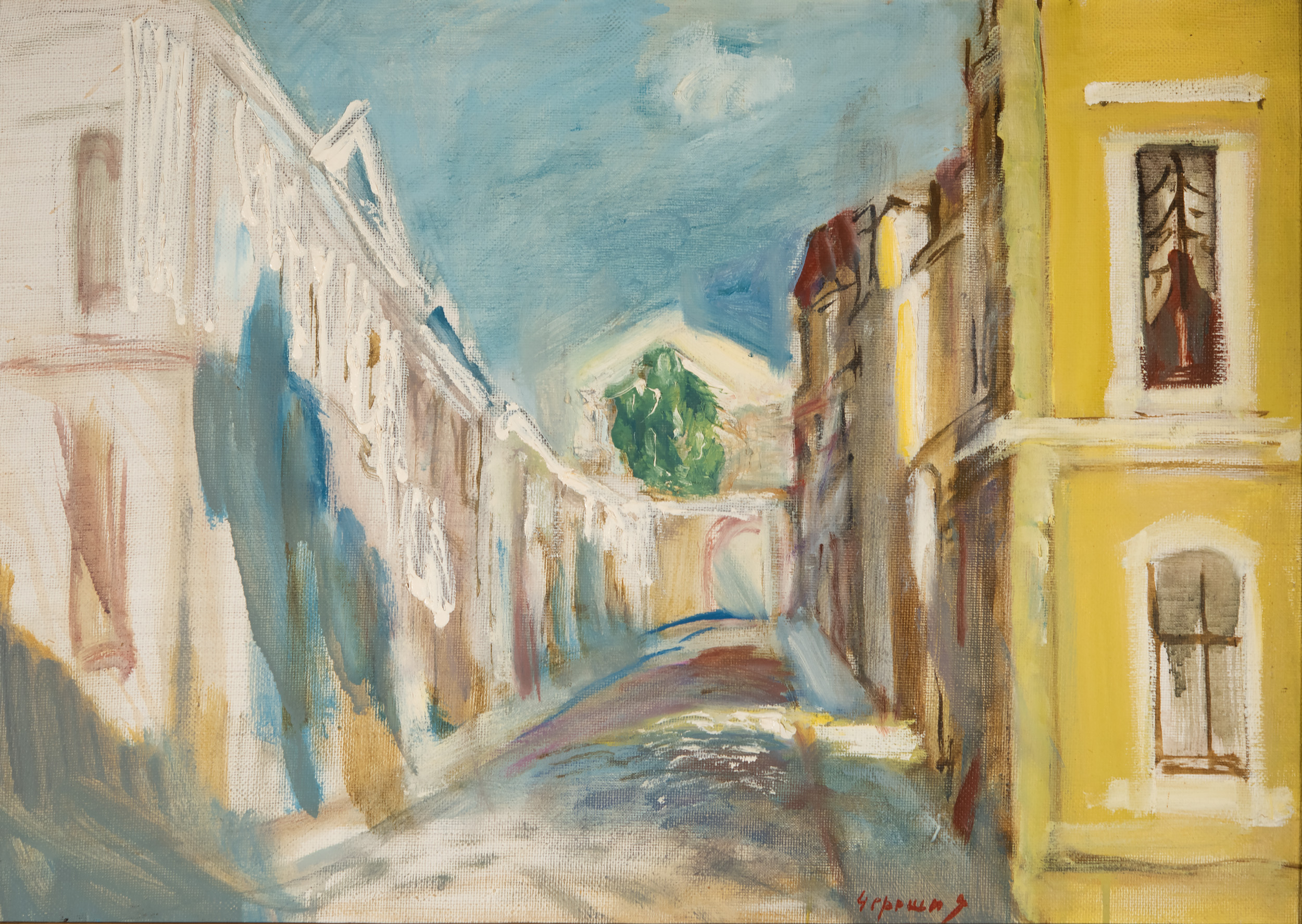
Vorontsovsky Lane, undated. Oil on coarse canvas, 49.6 x 70.5 cm (19 1/2 x 27 3/4 in.). Norton and Nancy Dodge Collection of Nonconformist Art from the Soviet Union. 2013.006.007
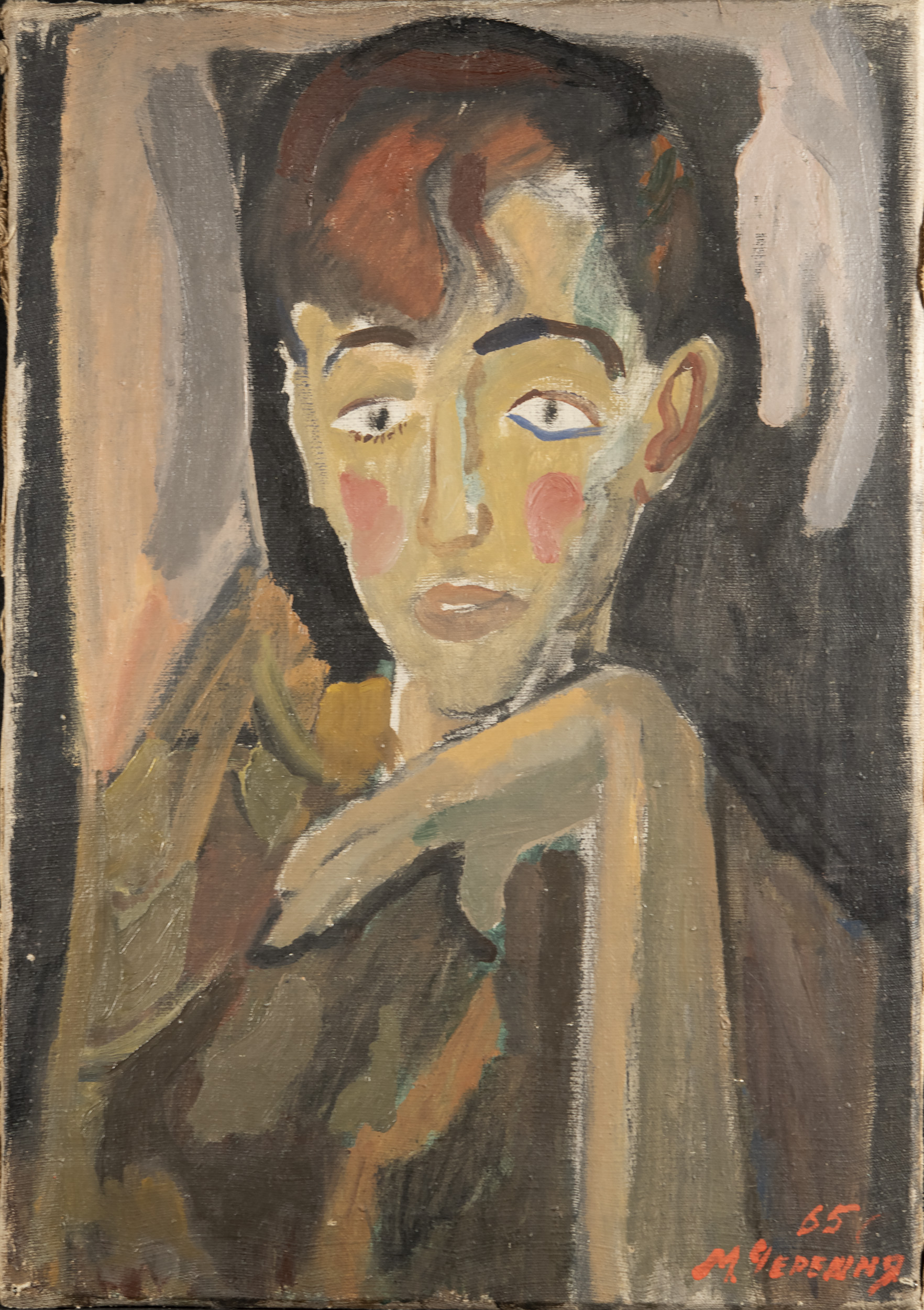
Untitled, 1965. Oil on canvas, 65 × 45 cm (25 9/16 × 17 11/16 in.). Norton and Nancy Dodge Collection of Nonconformist Art from the Soviet Union. D04634
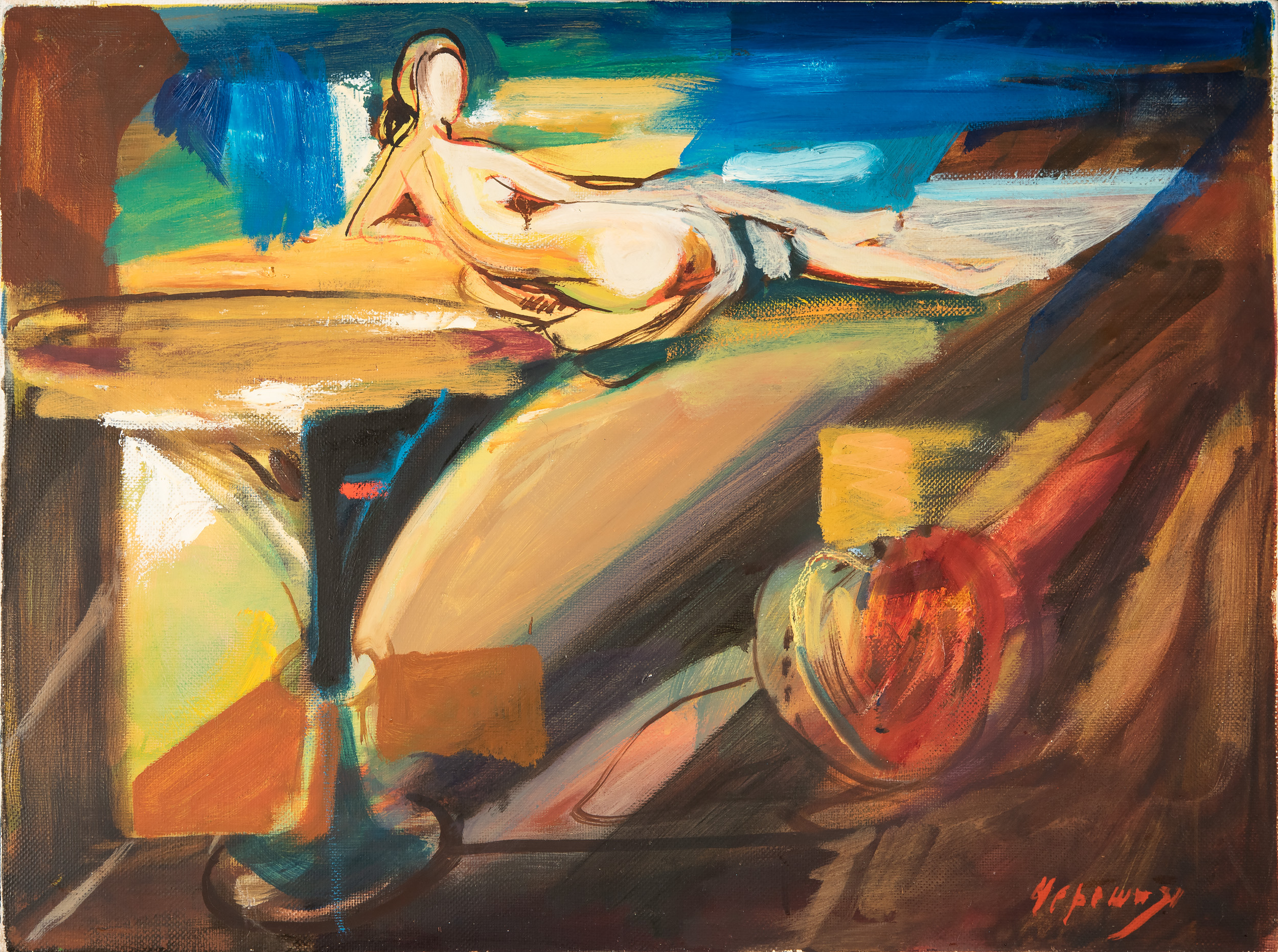
Untitled, undated. Oil on canvas, 45.2 × 61 cm (17 13/16 × 24 in.). Norton and Nancy Dodge Collection of Nonconformist Art from the Soviet Union. D04663
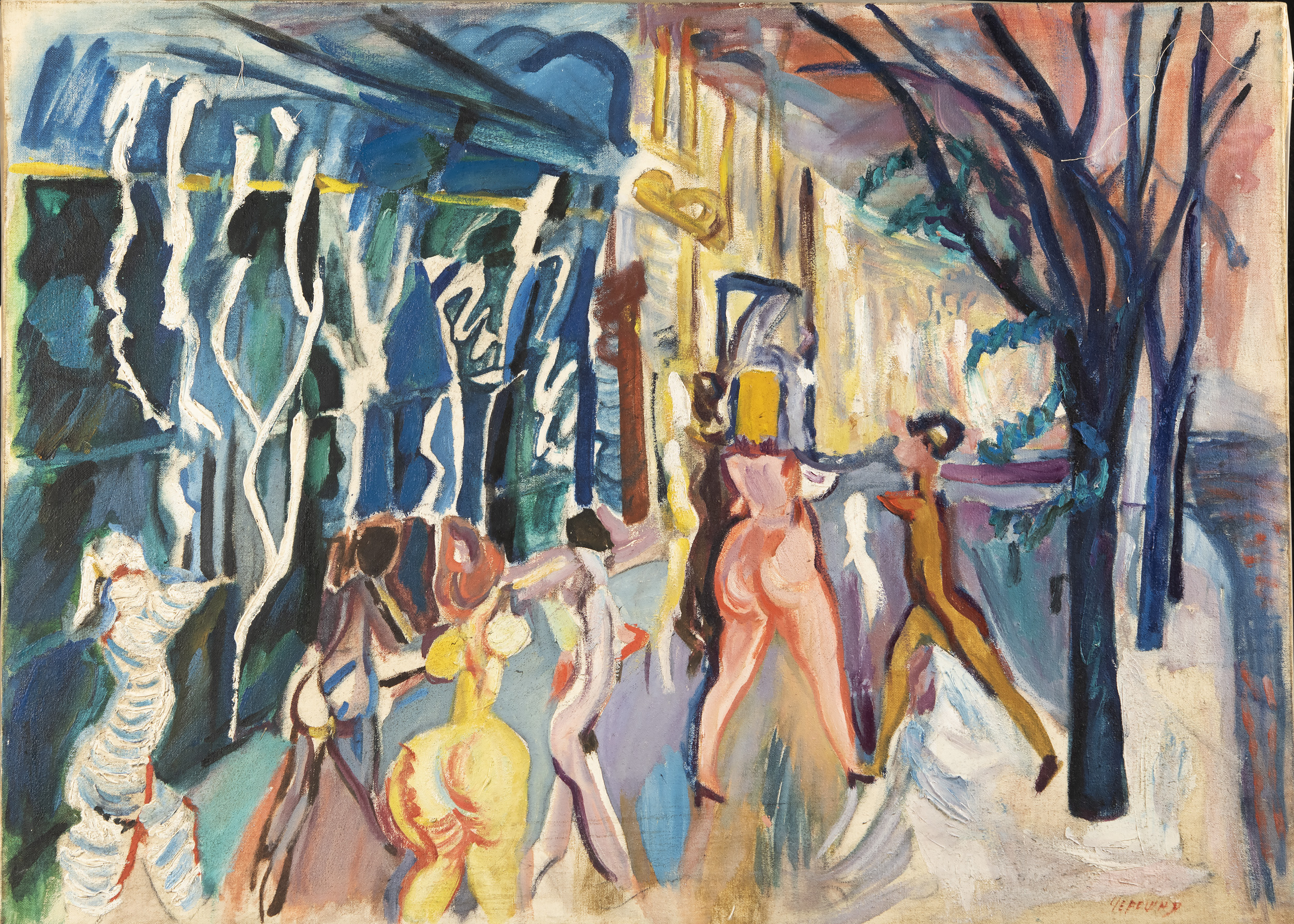
City Street (Odesa), 1981. Oil on canvas, 66.8 × 90.7 cm (26 5/16 × 35 11/16 in.). Norton and Nancy Dodge Collection of Nonconformist Art from the Soviet Union. D04665
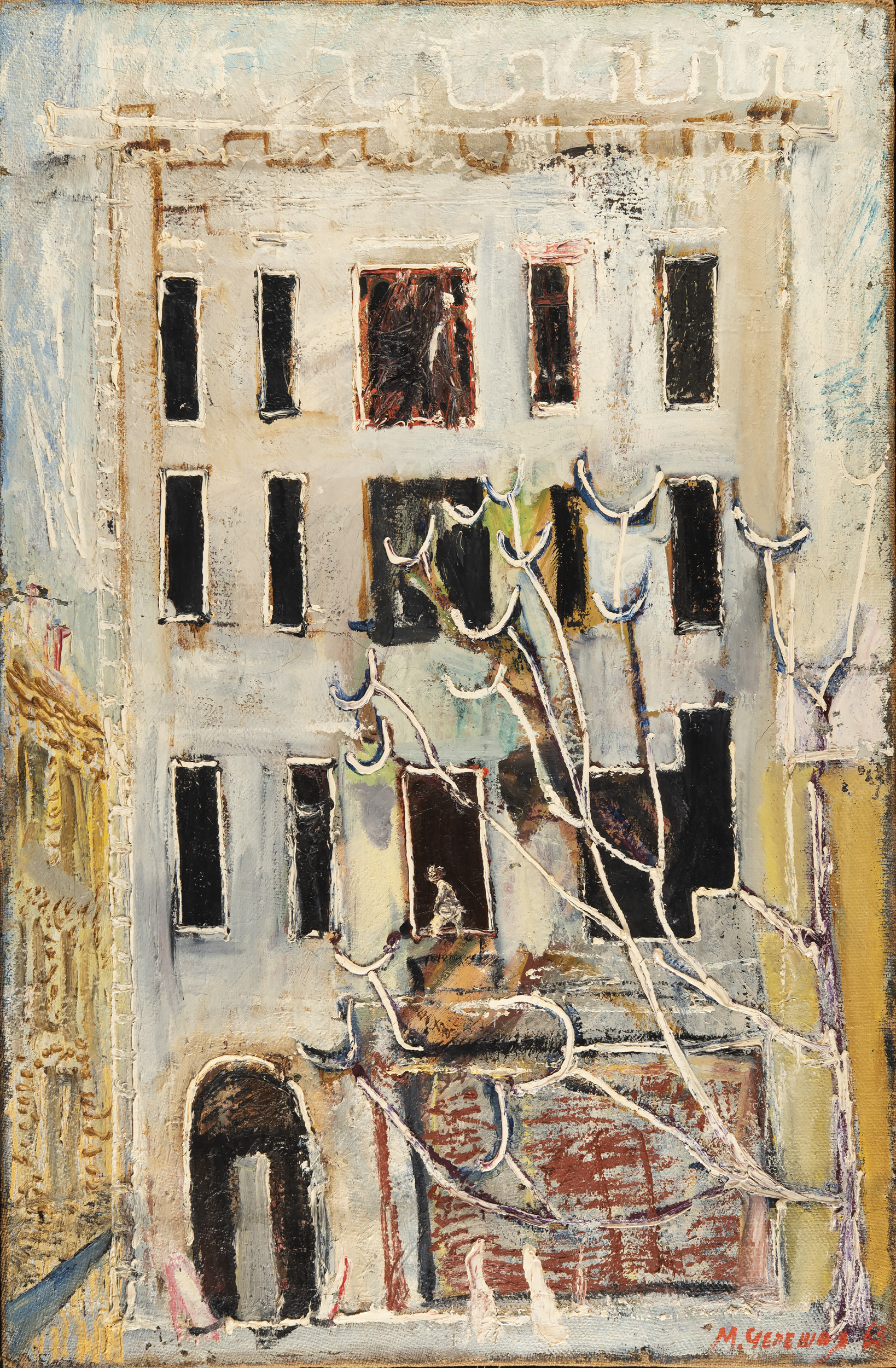
The House, 1963. Oil on canvas, 119.4 × 82.6 cm (47 × 32 1/2 in.). Norton and Nancy Dodge Collection of Nonconformist Art from the Soviet Union. D04712
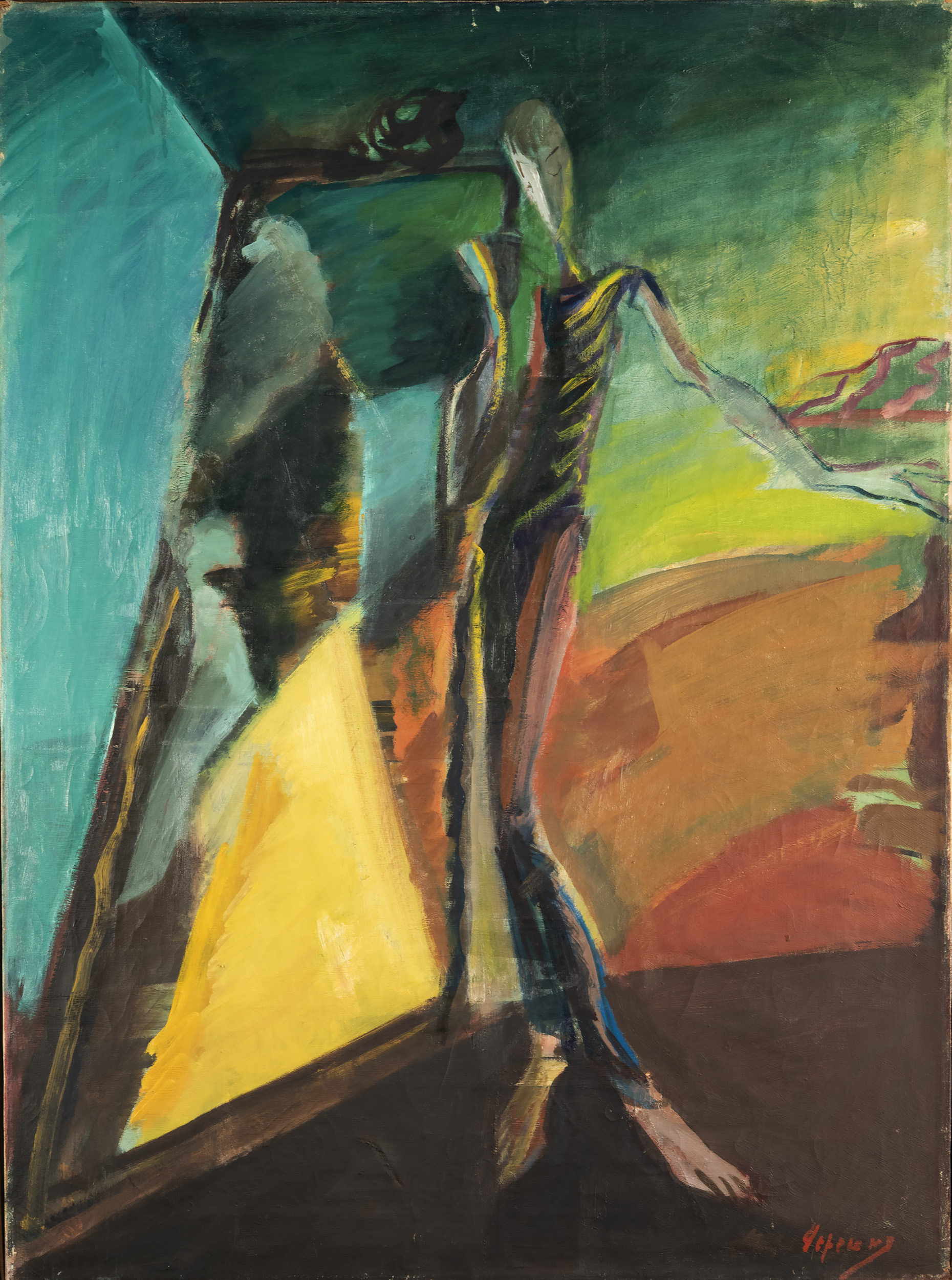
Untitled, 1972. Oil on cloth, 80.5 × 60.5 cm (31 11/16 × 23 13/16 in.). Norton and Nancy Dodge Collection of Nonconformist Art from the Soviet Union. D04771