

Hagop Hagopian
1923 — Alexandria (Egypt) | 2013 — Yerevan (Armenia). Worked in Alexandria (Egypt), Cairo (Egypt), Paris (France), Leninakan (Now Gyumri, Armenia), and Yerevan (Armenia)
Hagop Hagopian was a prominent Armenian painter and sculptor. He belonged to the strain of 1960s modernism that entered Armenian art in the post-Stalin era by way of the Armenian diaspora and imbued it with novelty and freshness. Hagopian’s work imbues masterfully executed renderings of human figures, nature, and everyday objects with a spiritual-intellectual component. Some Soviet art critics connected Hagopian’s painting to the “severe style” that emerged in Soviet art of the post-Khrushchev era because it shares with that style a philosophical and moral-psychological approach to the world and human existence; it also shares with the severe style a laconic quality reminiscent of graphic art, as well as a cool color palette. The roots of Hagopian’s oeuvre, however, reside outside Soviet art, and may be found in the Western context in which his style developed. His painterly approach may be characterized as “contemplative realism”; although highly original, it bears a connection to metaphysical painting.
For the artist, the Armenian homeland embodied an acquired national identity. At the same time, the question of national identity was complicated and fraught. Hagopian recognized the distinctiveness of his “non-Armenian” painterly vision and considered it foreign, not based in Armenian art. Nevertheless, in an era of flourishing Armenian “national modernism,” Hagopian became one of the key figures in Armenian art, and his work garnered widespread acclaim both in the USSR and abroad. Hagopian’s paintings entered the collection of the Yerevan Museum of Modern Art soon after its founding by Henrik Igityan in 1972.
The artist’s family came from Western Armenia (now Turkey). Fleeing the Armenian genocide in the Ottoman Empire in 1915, they ended up in Alexandria (Egypt). Hagopian received his initial education in Nicosia (Cyprus), at the Melkonian Armenian School, where his interest in drawing initially emerged. In 1944, the artist moved to Cairo, where he worked as a designer while attending classes at the Cairo Art Academy. Here, he took part in his first exhibition, which featured works by Armenian painters in Egypt. After completing his studies in Cairo, Hagopian moved to Paris, where he studied under French cubist painter André Lhote, who was then at the Académie de la Grande Chaumière.
In Hagopian’s works from his early Parisian and Egyptian periods, the influence of French miserabilism of the 1940s to the 1960s is evident: the focus on the solitary “little man” in despair, isolated from the world, and turned inward. This figure—which also echoes those of Picasso’s blue period—resonated with the young refugee artist, a descendant of a recently massacred people.
In 1962, Hagopian fulfilled his dream and, together with his family, repatriated to his historical homeland, Soviet Armenia. Its image became the focus of the artist’s subsequent work. In the early years after his repatriation, the Soviet Armenian government provided Hagopian with housing not in the capital but in Armenia’s second largest city, Leninakan (now Gyumri). The muted, sun-scorched, monochromatic ocher landscape of the northern province of Shirak, of which Gyumri is the center, considerably influenced Hagopian’s painting during his Soviet period.
At this time, the artist focused his attention on landscape. Hagopian’s works in this genre manifest a dramatically new approach to the depiction of nature in Armenia. In Armenian art of the 1960s, the “Sarian approach”—radiant with rainbowlike fauvist and post-impressionist hues—still prevailed. In stark contrast to the landscapes of Martiros Sarian (1880–1972), Minas Avetisyan (1928–1975), and Harutyun Galentz (1910–1967), Hagopian’s appear both more ascetic, stylistically, and more meditative, content-wise.
His landscapes are informed by the artist’s special connection to the land. Their restrained yellow-ocher palette, linear compositional structure, and fine, almost transparent brushstrokes lend them a distinctive charm. The quiet nature of these paintings, devoid of human presence, compels the viewer to perceive the works not only visually but also contemplatively. The works are endowed with an elusive, hidden meaning; they come across as both allegories and mystical dramas (as do Hagopian’s still lifes). For all its minimalism and extreme economy, sometimes bordering on graphic geometrism, Hagopian’s artistic language conveys the lyrical-dramatic essence of his vision.
The Norton and Nancy Dodge Collection at the Zimmerli Art Museum includes numerous landscape paintings and lithographs from Hagopian’s mature period, the 1970s and 1980s. Among these, special mention should be made of the truly magnificent Kesor [Midday] (1978, D05457), Qarqarot bnankar [Stony Landscape] (1979, 1995.0923), Gyughi tsayramasy [Outskirts of the Village] (1981, 1992.1078), Arevot bnankar [Sunny Landscape] (1983, 1992.1096), and Garnii kirtchy [Ravine at Garni] (1983, D06169). In these works, the artist, alternating the vertical and horizontal rhythms of the land, captures the distinctive characteristics of Armenia’s rocky landscape, endowing it with a certain “anthropomorphic” quality as well as musicality. Hagopian created his Dodge Collection landscape lithographs at L’Atelier Mourlot in Paris—the same studio where avant-garde luminaries such as Georges Braque, Marc Chagall, Henri Matisse, Joan Miró, and Pablo Picasso printed their lithographs.
Along with his landscapes, Hagopian’s still lifes occupy a special place in his oeuvre. His Yerevan-period still lifes established a specific iconography marked by an array of seemingly incongruous objects: gloves, fish, eggs, a mirror, scissors, mannequins, a coat draped over a chair, tools (scissors, pincers, shears, pliers). These inanimate motifs assume a frightening and anthropomorphic resonance and seem to interact in an unfathomable symbolic drama, in which they are the actors. The Dodge Collection is home to the most emblematic examples of Hagopian’s still lifes from the 1970s and 1980s: Dzknerov ev dzernotsnerov Natyurmort [Still Life with Fish and Gloves] (1975, D05447); Gortsiknerov, dzernotsnerov ev dzverov natyurmort [Still Life with Tools, Gloves, and Eggs] (1975, 1991.0883); Dzernotsner ev dzuk [Gloves and Fish] (1976, 1995.0672); Khohanotsum [In the Kitchen], (1977, 1995.0673); and Untitled (1980, D06635). While spiritual, anthropomorphic landscapes recur throughout Armenian landscape painting, the metaphorical and metaphysical anthropomorphism of Hagopian’s still lifes is unique in Armenian art.
The artist’s allegorical “still lifes” with mannequins and “empty” clothes of the 1970s and 1980s, such as Still Life (1977, D14205) and Still Life (1977, D14562), speak to humankind’s spiritual crisis and solitude. The “empty clothes” motif was used to powerful effect in landmark works on antiwar subjects such as Voch neytronayin rumbin [No to the Neutron Bomb!] (1977, 1995.0890). In the 1970s and 1980s, amid the Cold War, the Soviet regime promoted and solicited antiwar imagery: it was embodied in countless posters, large-scale canvases, and other media. But Hagopian began to explore this topic in his own inimitable visual language. The artist’s copy of No to the Neutron Bomb! is located in the Yerevan Museum of Modern Art; prior to Norton Dodge’s acquisition of the original version, it belonged to the legendary Armenian art collector Garik Basmajyan. It should be noted, however, that the artist initially imbued the canvas with a completely different—one might say anti-Soviet—message, conceiving it as a protest against the soulless totalitarian machine. Only later, having learned from the foreign press about the dangers of the neutron bomb, did he come up with the idea of presenting his painting as a protest against the weapon of mass destruction.
Hagopian was awarded the State Prize of the Armenian SSR twice—in 1977 and 1985. He was inducted as a corresponding member into the Academy of Arts of the USSR and won the USSR State Prize. During the Independence Era (1990s and 2000s), he was repeatedly honored by the Armenian state, including posthumously in 2013, when he won the Presidential Award. Even after his death, he remains one of Armenia’s most popular and beloved artists.
Hagopian’s works are held in the National Gallery of Armenia (Yerevan, Armenia), the Yerevan Museum of Modern Art (Yerevan, Armenia), the Egyptian Museum of Art (Cairo, Egypt), the State Tretyakov Gallery (Moscow, Russia), the State Museum of Oriental Art (Moscow, Russia), the Zimmerli Art Museum (New Brunswick, NJ, US), the Ludwig Museum (Cologne, Germany), the Georgian State Museum of Art (Tbilisi, Georgia), the State Museum of Ukraine (Kyiv, Ukraine), the Kasteev State Art Museum (Almaty, Kazakhstan), the Armenian Church in Marseilles (Marseilles, France), the Museum of the Mekhitarist Congregation (Venice, Italy, and Vienna, Austria), the Museum of the Armenian Patriarchate of Cilicia (Beirut, Lebanon), the Khrimian Museum of the Mother See of Holy Etchmiadzin (Vagharshapat, Armenia), and numerous private collections around the world.
Tatev Hambardzumyan and Lilit Sargsyan
Translated by Ilya Bernstein
Photo portrait by Hrayr Khacheryan

Midday, 1978. Oil on canvas, 73 × 100.5 cm (28 3/4 × 39 9/16 in.). Norton and Nancy Dodge Collection of Nonconformist Art from the Soviet Union. D05457
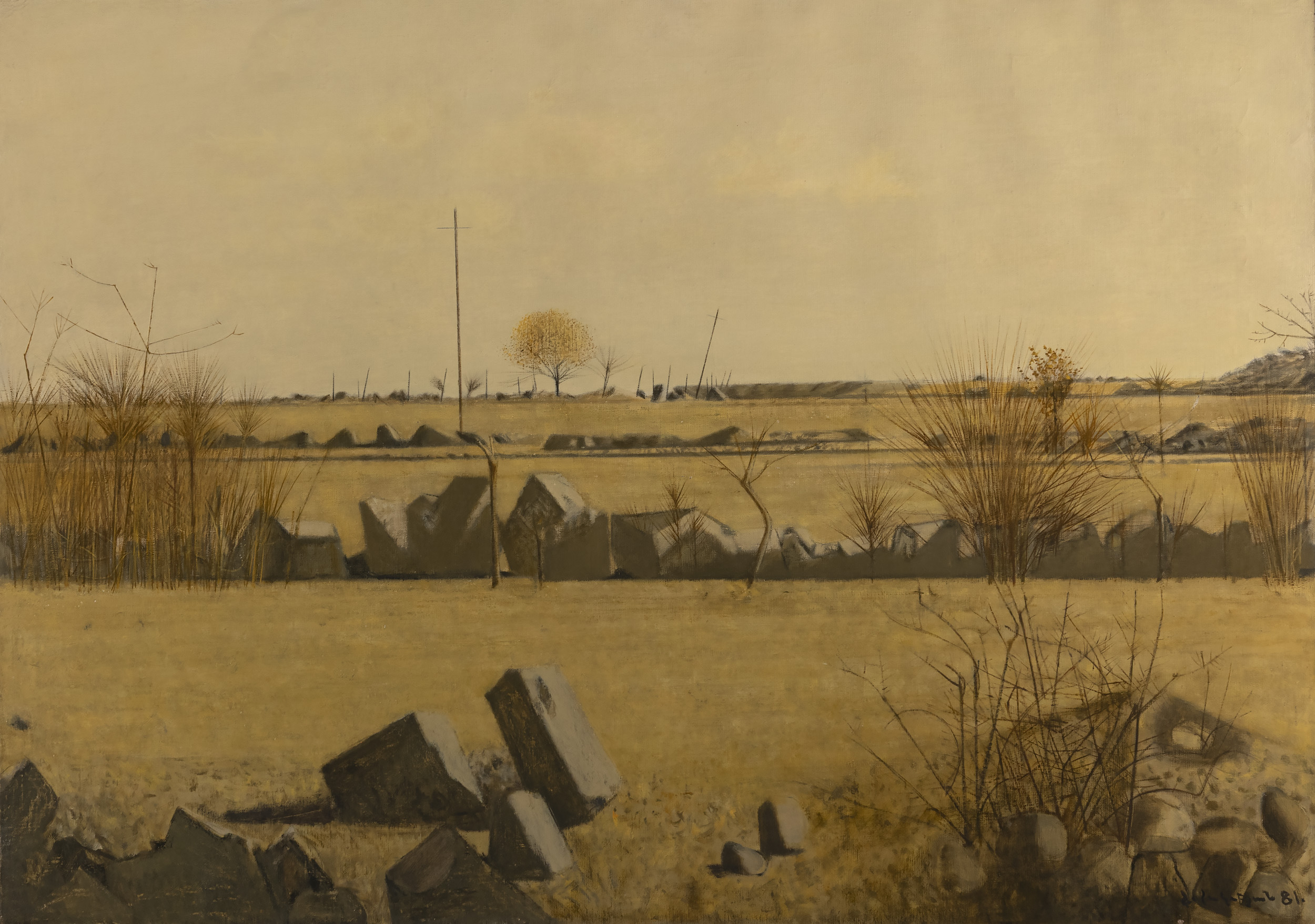
Outskirts of the Village, 1981. Oil on canvas, 73 × 100 cm (28 3/4 × 39 3/8 in.). Norton and Nancy Dodge Collection of Nonconformist Art from the Soviet Union. 1992.1078

Still Life with Tools, Gloves and Eggs, 1975. Oil on canvas, 60.3 × 81 cm (23 3/4 × 31 7/8 in.). Norton and Nancy Dodge Collection of Nonconformist Art from the Soviet Union. 1991.0883
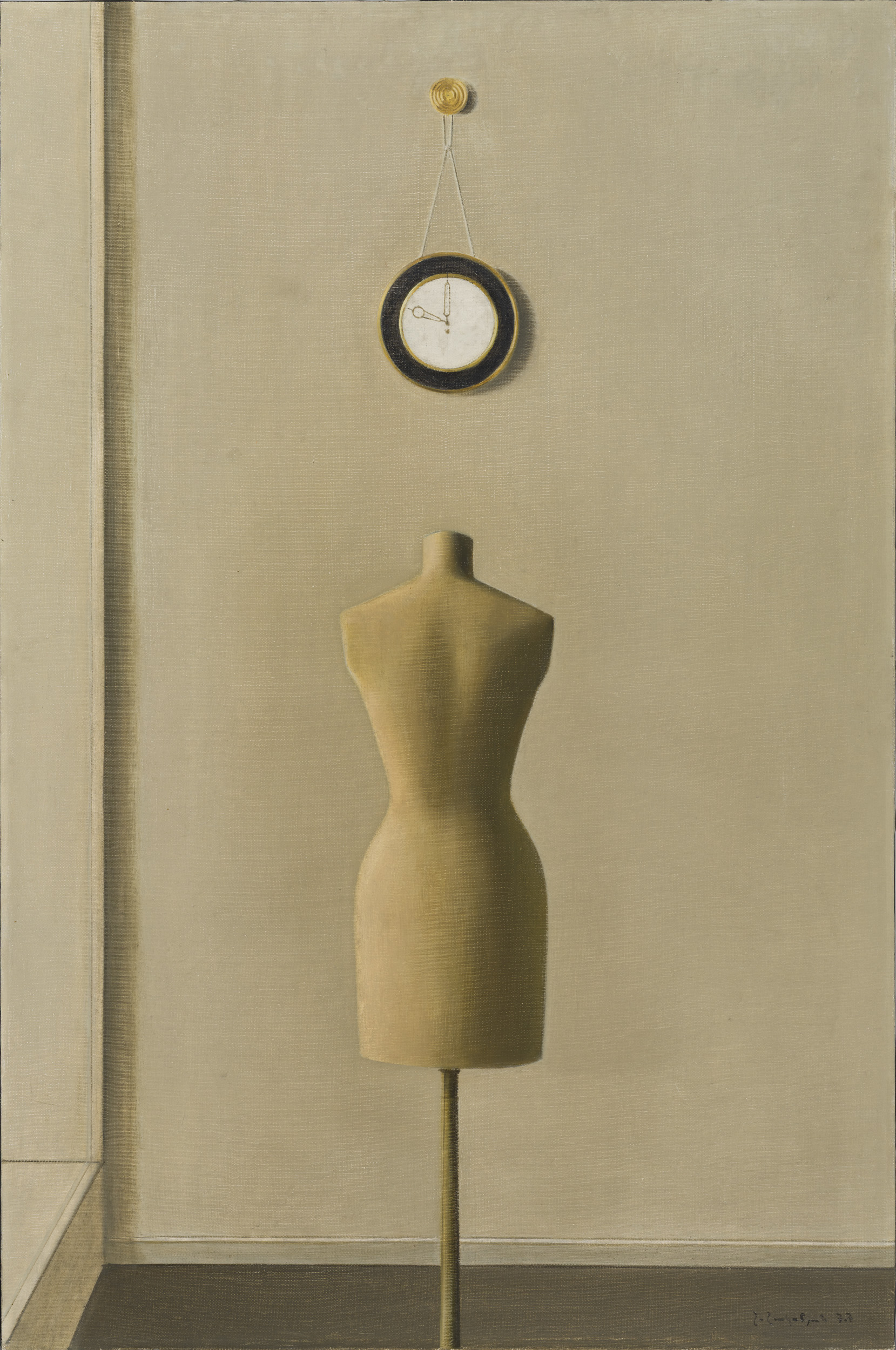
Still Life, 1977. Oil on canvas, 120.7 × 80 cm (47 1/2 × 31 1/2 in.). Norton and Nancy Dodge Collection of Nonconformist Art from the Soviet Union. D14205
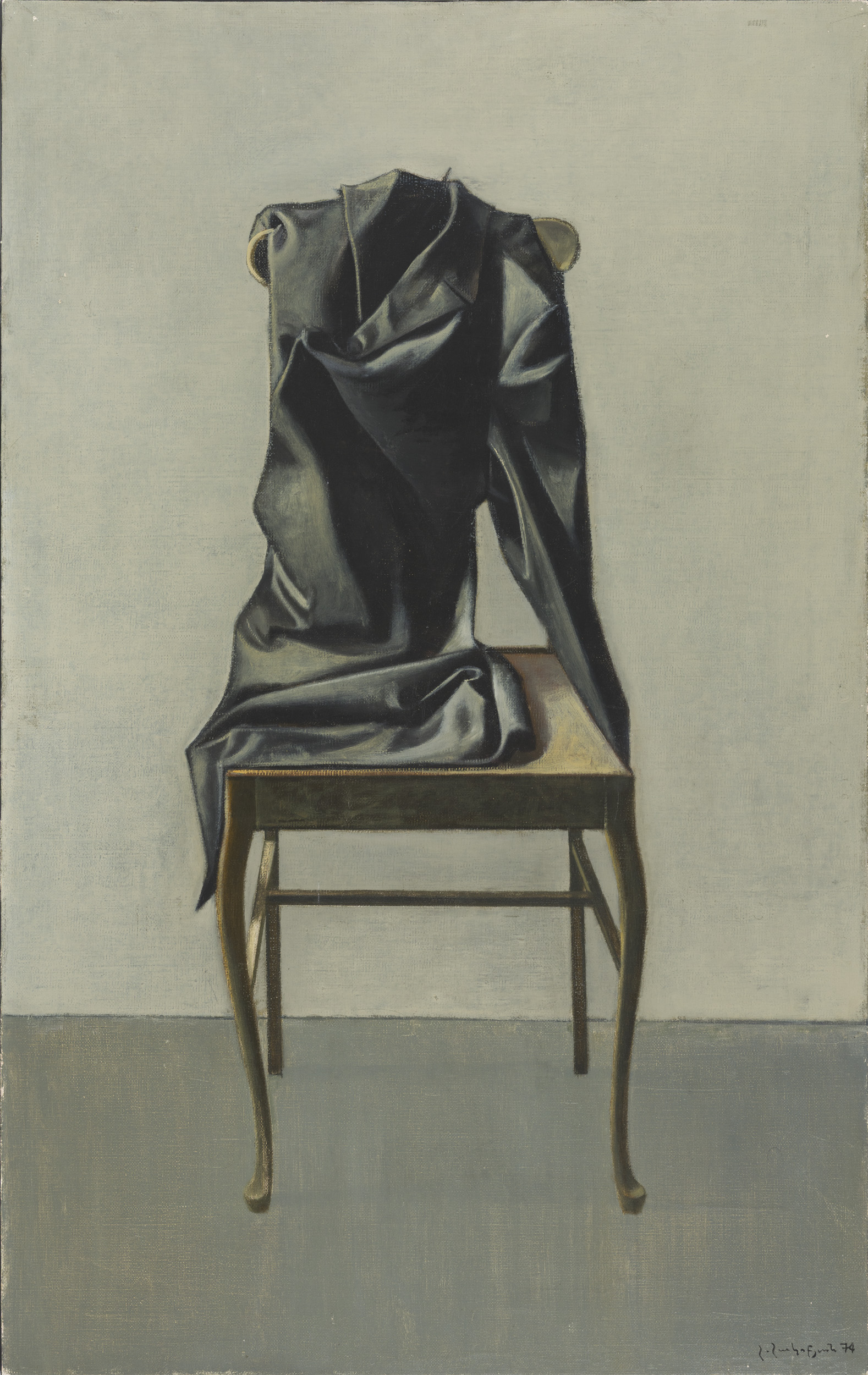
Still Life, 1974. Oil on canvas, 115.4 × 73 cm (45 7/16 × 28 3/4 in.). Norton and Nancy Dodge Collection of Nonconformist Art from the Soviet Union. D14562
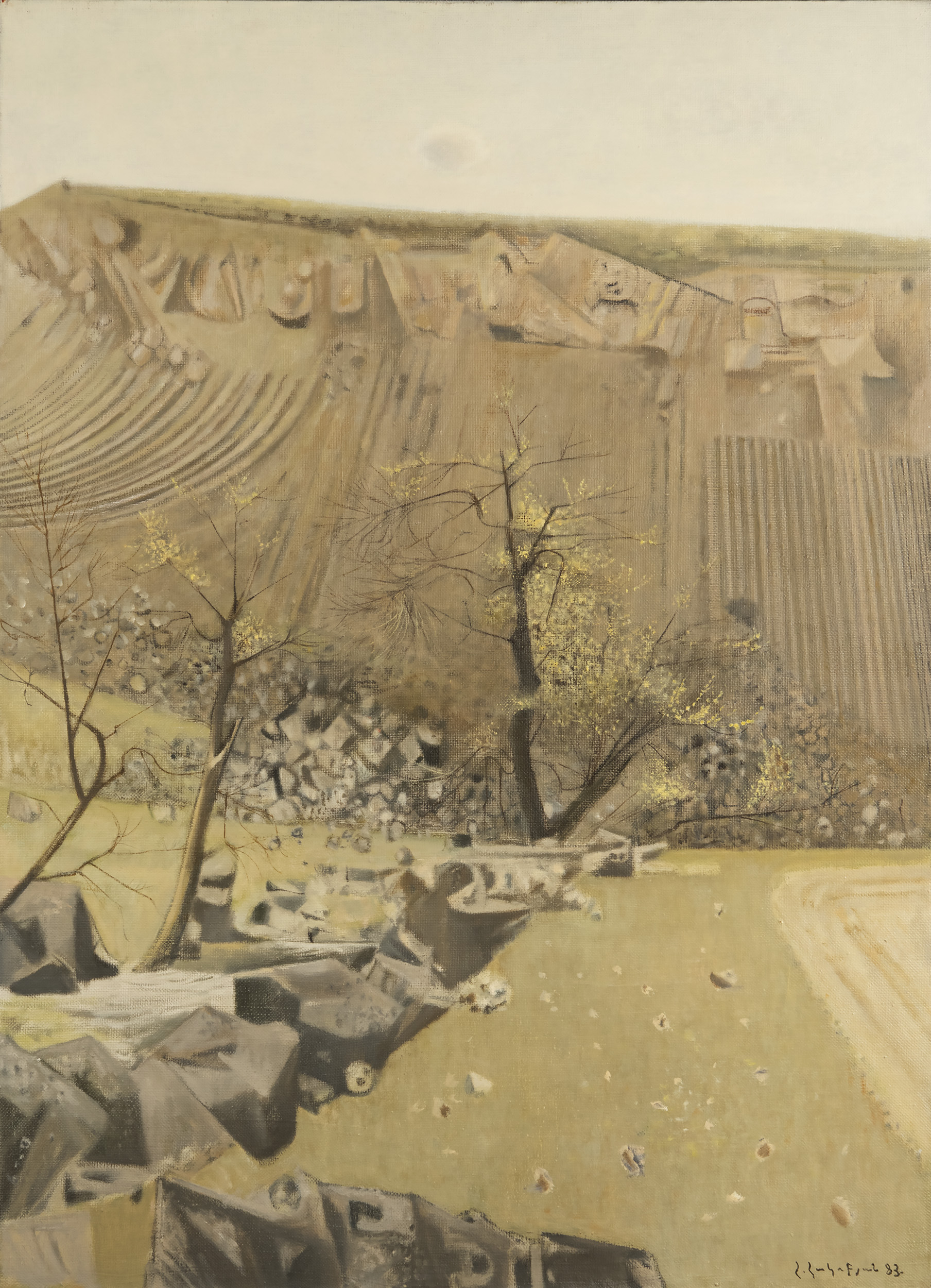
Ravine at Garni, 1983. Oil on canvas, 100.5 × 73.3 cm (39 9/16 × 28 7/8 in.). Norton and Nancy Dodge Collection of Nonconformist Art from the Soviet Union. D06169
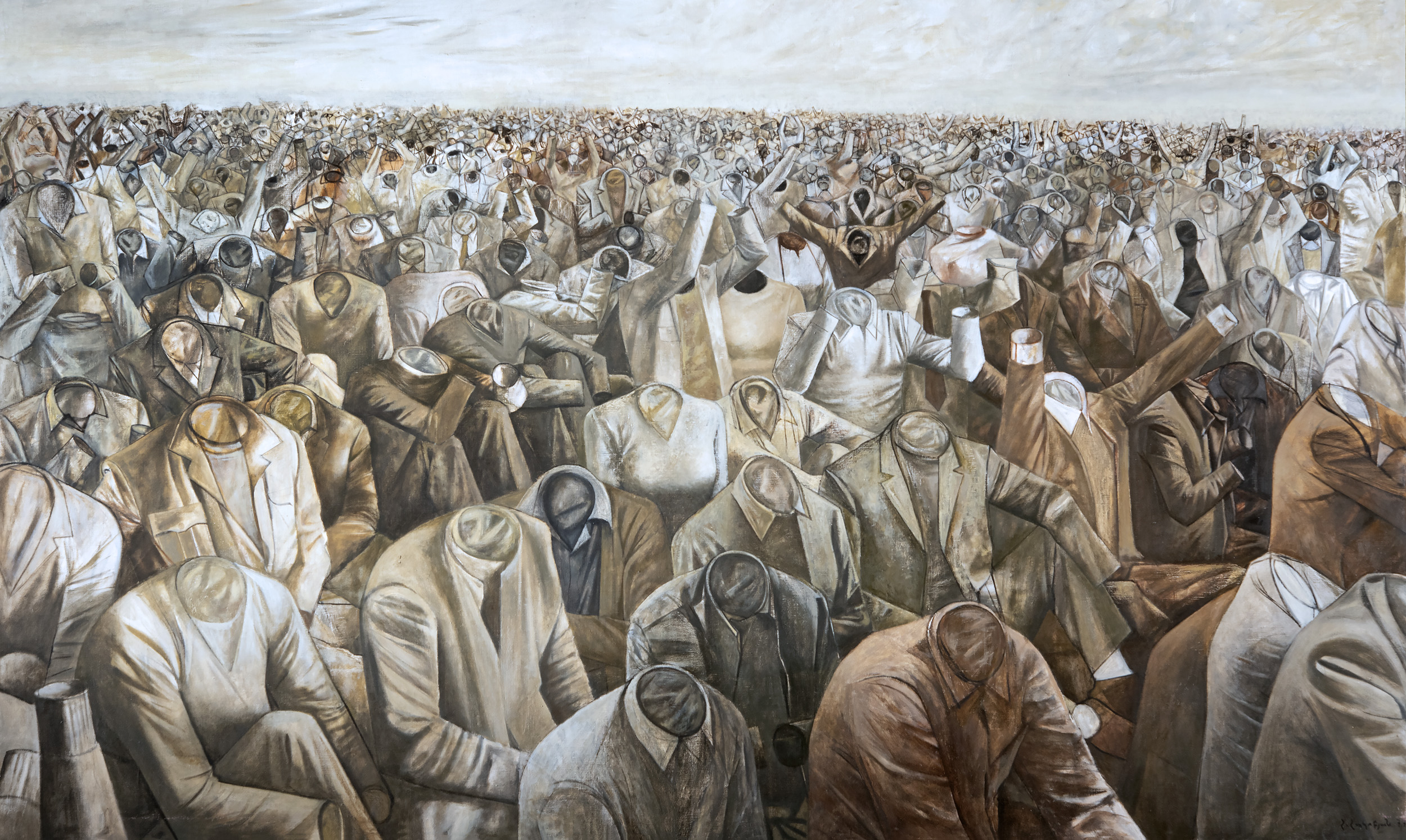
No to the Neutron Bomb!, 1977. Oil on canvas, 194 × 298 cm (76 3/8 × 117 5/16 in.). Norton and Nancy Dodge Collection of Nonconformist Art from the Soviet Union. 1995.0890
Selected Exhibitions
1944 Exhibition of Armenian Artists, Cairo, Egypt
1954 Exhibition of Young French Artists, Paris, France
1975 Joint exhibition with Minas Avetisyan, Vienna, Austria
1988 Sarian and His Contemporaries, Padua and Venice, Italy
1993 Hagop Hagopian, National Gallery of Armenia, Yerevan, Armenia (solo)
1994 Hagop Hagopian, Roshan Gallery, Beirut, Lebanon (solo)
2003 Hagop Hagopian, Artists’ Union of Armenia, Yerevan, Armenia (solo)
2005 Museum of Folk Art, Los Angeles, CA, USA (solo)
2011 Hagop Hagopian: The Song of Earthen Colors, Cafesjian Center for Arts, Yerevan, Armenia (solo)
2023 Hagop Hagopian: 100; Mirror of the Soul, National Gallery of Armenia, Yerevan, Armenia (solo)
Selected Publications
Ayrumyan, Z., introduction. Yerevan Museum of Modern Art: Album. Yerevan: Tigran Mec, 2022 (in English).
Azar, Eme. La peinture moderne en Egypte. Cairo, 1961 (in French).
Hagop Hagopian. Peinture. Graphique. Ministère de la Culture de L’U.R.S.S. sous les auspices de l’ambassade de L’U.R.S.S. en France. Centre d’art International, 1979 (in French)
Igityan, H. Armenian Palette of the 20th Century. Yerevan: Tigran Mec, 2004 (in English).
Khachatryan, M., introduction. Hagop Hagopian: 100; Mirror of the Soul. Exh. cat. Yerevan: National Gallery of Armenia Press, 2023 (In Armenian).
Khachaturian, Sh., introduction. Hagop Hagopian. Catalogue. Moscow and Paris, 1979 (in Russian and French).
Khachaturian, Sh., and N. Apchinskaya. Hagop Hagopian. Catalogue. Moscow: Sovetsky Khudozhnik, 1990 (in Russian).
Rosenfeld, Alla, and Norton T. Dodge. From Gulag to Glasnost: Nonconformist Art in the Soviet Union. New York: Thames & Hudson, 1995 (in English).
Sowjetkunst heute Malerei, Graphik und Skulptur aus der Neuen Galerie-Sammlung Ludwig, Aachen und aus der Ludwig-Stiftung für Kunst und Internationale Verständigung, Aachen. Cologne: Museum Ludwig, 1988 (in German).
Yerlashova, S. Hagop Hagopian: Album. Moscow: Sovetsky Khudozhnik, 1983 (in Russian and English).
See also