
Zitta Sultanbaeva
1964 — Alma-Ata (Kazakhstan). Works in Almaty (Kazakhstan)
Zitta Sultanbaeva is a graduate of the N. V. Gogol Alma-Ata Art School (1981–86, now the O. Tansykbaev Almaty College of Decorative and Applied Arts), the filmmaking workshop at the Kazakhfilm studio (1985–87), and Kazakhstan’s Almaty State Institute of Theater and Fine Arts (1986–89, now the T. K. Zhurgenov National Academy of Arts). Since the late 1980s, she has been working in graphics, using monotype and watercolor. She created a famous portrait series, Лики и Лица [Faces and countenances], which is characterized by a special expressiveness and spontaneity, a vibrating pulse in the texture of the images. She experimented with formalist techniques in the spirit of artists of the avant-garde. One notable example from this period, in the Zimmerli Museum, is Portrait of A Girl in Green (1987, ZAM, 2000.0745).
Here, the artist plays with color and form: against the lemon-lime background of the watercolor sheet, a figure is shown in a dark green chapan coat and cap. The three-dimensionality of her downcast face is articulated by angular facets of color to represent its light and shadows.
The other result of Sultanbaeva’s experiments from this period is her conceptual diploma work, Поэтический календарь [Poetic Calendar], from 1989, in which the life of the poet Nupis (Nurlan Sultanbaev) unfolds across twelve pages. Each spread is composed through intense yet harmonious color combinations and sharply defined geometric imagery, inspired by Malevich’s suprematism and the avant-garde poetry of Nupis, who wrote a quatrain for each page.
Sultanbaeva’s first big public statement was her solo exhibition Открой глаза [Open your eyes] at the House of Cinema in Almaty in 1993. It was then that she announced herself to be a “strange greenhouse flower,” as if unexpectedly in bloom. [1] The reason was that, at the time, the artist inhabited her own imaginary kingdom, which had no points of intersection with the rest of the art world or the broader sociopolitical environment. In this inward-facing existence, she developed her own figurative language and her individual system of signs and mythologies.
During this period, Sultanbaeva remained faithful to her credo: she “slackened” her hand so that the lines could flow freely and “be born from the vibrations of the air.” [2] The combination of the intuitive movement of her hand and the randomness of her monotype technique allowed the creation of paintings, the essence of which is life itself, its very movement and breath. This is also akin to what art historian Dilyara Sharipova notes: “Her works are vegetative in nature, they are filled with the movement of organic growth … the continuous germination and tension of living fibers, spiral-shaped vortices, out of which figures and faces are composed.” [3] This is how, for example, one of Sultanbaeva’s most famous works appeared: Зародыш [Embryo] (1993). One single fiber, thin and airy, is stretched into the shape, reduced to the shape of a head facing down, like an embryo or an egg. This is the center of the composition, toward which everything else is turned—air, light, color. Sultanbaeva’s laconic gesture leaves room for air and light, while the opposition of white and black heightens the conflict from which the subject emerges.
Surrealist shapes become a way for the artist to give a physical outline to her figurative world, the central characters of which are birds, worms, and kings. Each of these is a personification of the upper, lower, or middle world, an intermediate space between heaven and earth. The image of the egg, seen in Embryo, is an important symbol of the beginning of life and its primal origin. She also brought this symbol into her later works, for which she used different techniques and context.
Since the second half of the 1990s, Sultanbaeva has been actively working in contemporary art, joining important associations, and taking part in events and discussions. Her professional education in art and immersion in the theory of conceptual art (through seminars at the Soros Center for Contemporary Art–Almaty) allow her to combine traditional graphics and techniques of contemporary art (performance, video art, and installation) in her practice.
The “greenhouse flower” faces the world surrounding her and looks at life with “eyes wide open.” For her, the figure of the artist has acquired new meaning as an instrument that is actively involved in the life of society and reflects its concerns. [4] One of the points of transition to critically engaged and conceptual art is Sultanbaeva’s graphic series Боги и марионетки [Gods and puppets] (2001), which explores how society is governed by manipulation.
This moment of shift is also marked by a key event: the artist starts working with Ablikim Akmullaev (b. 1965), and they establish ZITABL duo (they later formed a family and continue to create together to this day). Their first work is Азиатский маршрут [The Asian Route] (2000). It was realized as part of the annual international exhibition Коммуникации. Опыты взаимодействия [Communications: Experiments in interaction] at the Soros Center for Contemporary Art–Almaty. At the exhibition, they were awarded the main prize alongside artist Yerbosyn Meldibekov, “for [their] connection to reality at a time when the greater art world is experiencing its loss.” [5]
Asian Route is a three-channel installation based on video documentation of the performance Саяхат—Зеленый базар [Sayakhat—Green Bazaar] that was inspired by Akmullaev’s bus trips in the area around the Sayakhat bus station, where boys working as barkers calling customers to the buses captured his attention. Their exclamations, superimposed over the sounds of a tambourine, set the rhythm of what is happening, outlining its spatial and temporal context.
For the artistic partners, the main strategy in their life and creative endeavors is not isolation from reality, but a deep existence within it, combined with critical reflection and efforts at implementing change. Together they have participated in major international exhibitions of contemporary art in Berlin, Paris, Geneva, Mexico City, London, Strasbourg, and Saint Petersburg.
In 2008 Sultanbaeva and Akmullaev organized the exhibition Яйцеголовые на конвейере времени [Eggheads on the conveyor belt of time]. It brought together a series of works in which the egg represents anonymity and depersonalization. Reflecting on how our consciousness is able to go into a zero state and absorb new ideologies, she turned to photographs from family archives and reformatted them using collage techniques, a reference to a “reformatting” of human consciousness. This series can be viewed in the broader context of artistic work that uses archival photographs, which gained newfound relevance in the post-Soviet period, when personal, official, or anonymous photographs attracted attention as a material testament to the past and allowed us to reconceptualize it. Sultanbaeva’s interpretation offers a different perspective on the role and place of the individual during a time of great historical change.
The artist’s creative departure from the world she had created for herself and her turn to sociopolitical issues occurred gradually. This was also brought about by the fact that she had come of age during the collapse of the Soviet Union, when Kazakhstan became an independent republic. There was a sense of freedom and unlimited possibilities in the air, but at the same time, reality was crumbling before everyone’s eyes: conflicts in society were growing more intense, and ideological, economic, and social polarization was taking place. All this is reflected in her work: the connection to real life and its critical conceptualization become an important driving force for the artist. She remains acutely attuned to time and the context of her environment, and she conveys her perceptions through artistic statements and by experimenting with genres of contemporary art.
Following this work, Sultanbaeva continued to explore the surrounding reality and respond to social and political transformations. In 2016, she created a series of staged photographs using her own collection of dolls, combining them under the title Ахыр Заман / Конец времён [Akhyr Man / The end of times]. These works were presented at the eponymous exhibition of the ZITABL art duo at Gallery Belyi Roial’. And in 2018, the exhibition-manifesto А ОТ ненависти ДО любви [And from hatred to love] followed, serving as an artistic response to Russia’s invasion of Eastern Ukraine in 2014. The central work in this project, the staged photographs Битва Укропа и Ваты [Battle of Dill and Cotton, referring to the Ukrainian and Russian armies, respectively], spread through Russian-speaking online spaces via thousands of reposts. In this work, she continued to reflect on the bellicose, aggressive rhetoric that has divided society, but did so with a new message calling for love and reconciliation. Her characters, Ukrop (Dill) and Vata (Cotton), are married in this version of the story, and they have a baby named UkraVato—a metaphor for the possibility of unity.
The creative biography of Zitta Sultanbaeva is a story of continuous movement: from inward-facing, intuitive expression to art with a social message, from traditional artistic forms to the practices of contemporary art. This movement is not linear—the artist moves freely within her imaginative world, returning to previously invented images, ideas, and forms that acquire a new resonance in their new temporal and social contexts. In her practice, there is a consistent interest in the study of reality, both personal and social. She continues to actively work on current topics, presenting artistic forms that are open to interpretation, dialogue, and new readings. She has her own independent and unbiased view of the processes taking place in contemporary art and modern society.
Asel Rashidova
Translated from Russian by Maria P. Vassileva
Notes:
1. Sharipova, Diliara. Son v letnii polden’ [A dream on a summer noon]. Almaty: Stolichnoe obozrenie, 1993.
2. Zitta Sultanbaeva, interview with the author, 2025.
3. Sharipova, Son v letnii polden’.
4. Sultanbaeva, interview with the author, 2025.
5. Sultanbaeva, Zitta. Art-atmosfera Alma-Aty. Almaty: Service Press, 2016: 180.
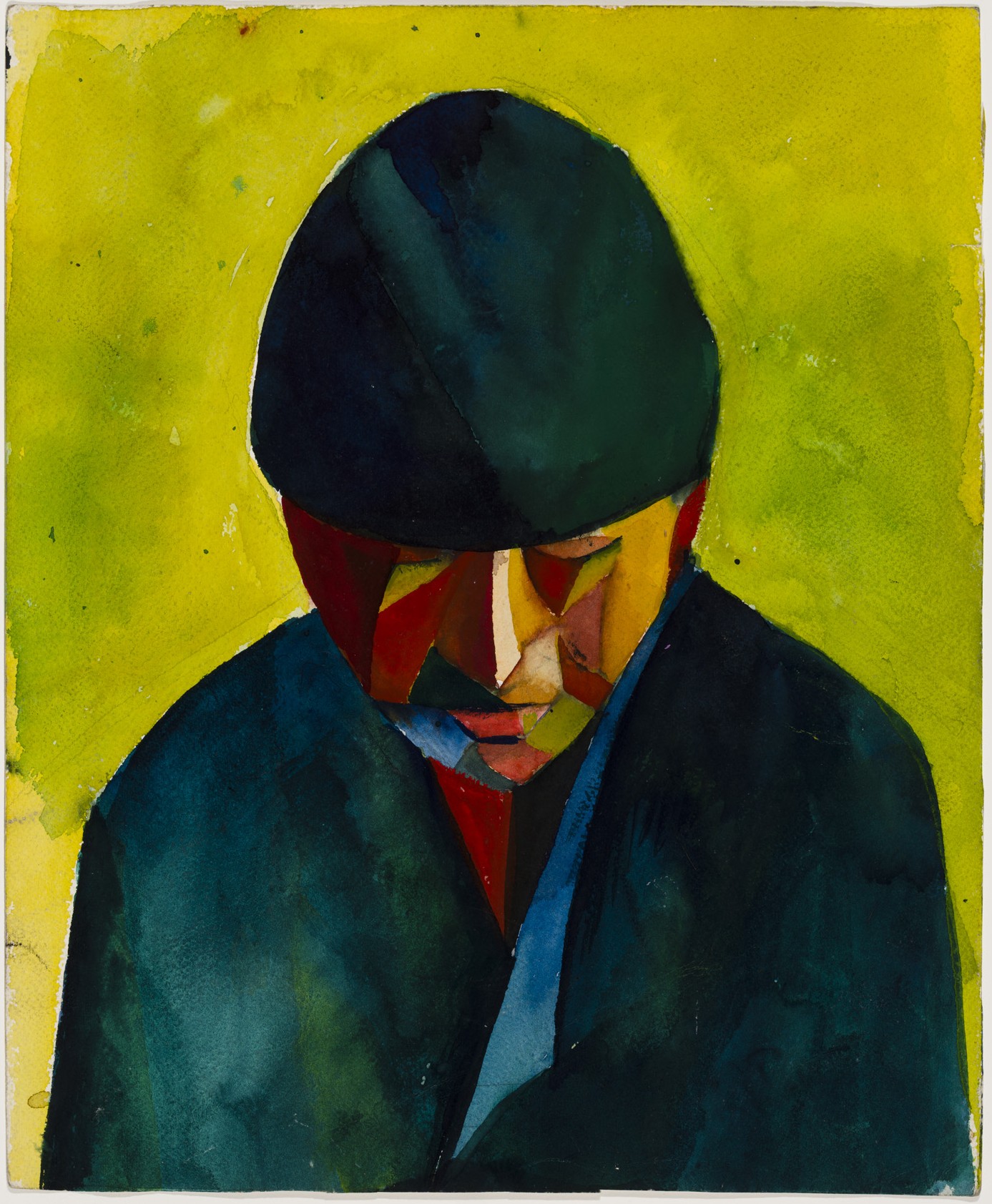
Portrait of a Girl in Green, c. 1987. Watercolor on paper, 33.5 × 27.7 cm (13 3/16 × 10 7/8 in.). Purchased with funds donated by Norton Dodge and Nancy Dodge. 2000.0745
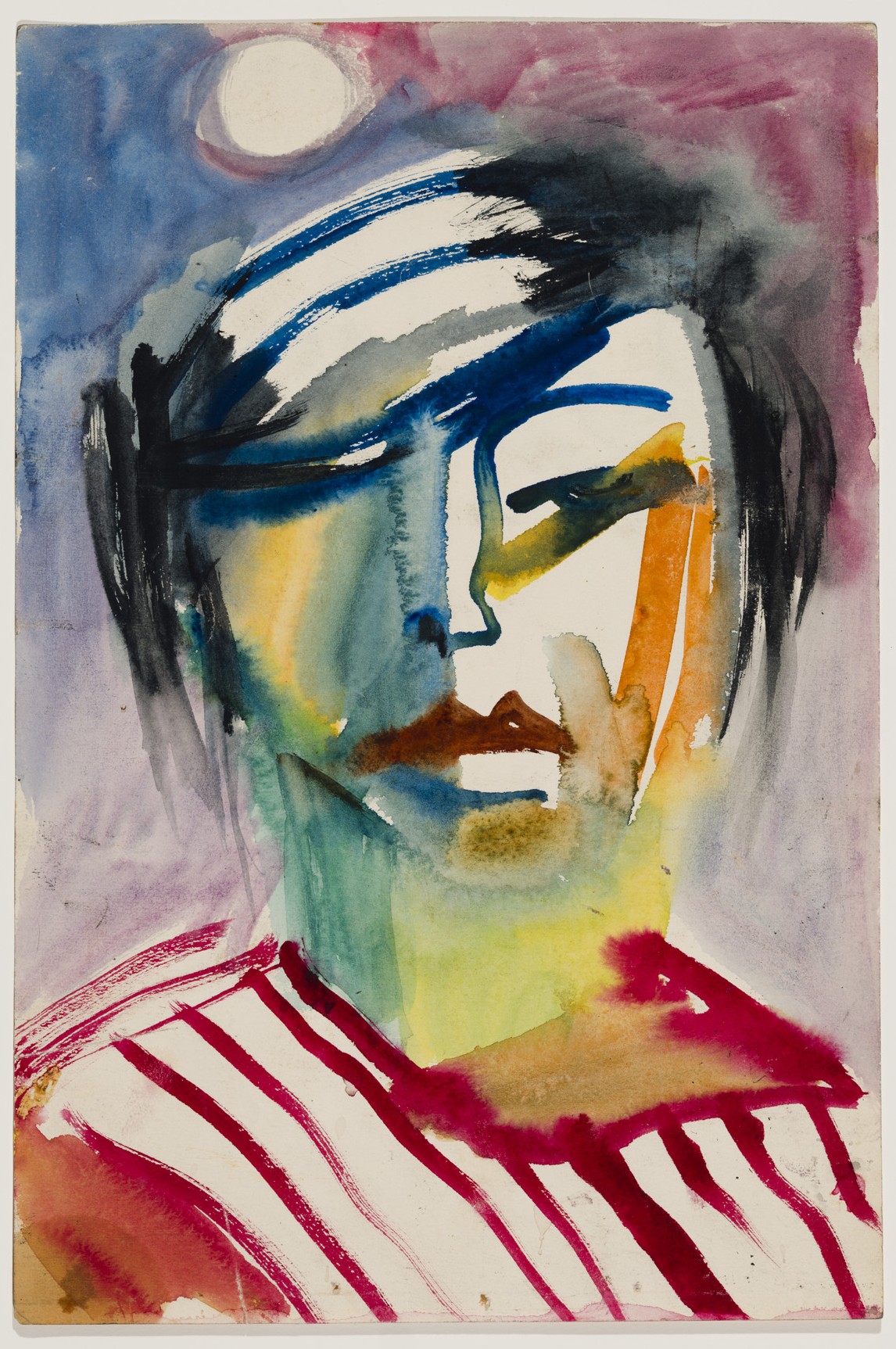
Self-Portrait, c. 1987. Watercolor on paper, 37 × 24.5 cm (14 9/16 × 9 5/8 in.). Purchased with funds donated by Norton Dodge and Nancy Dodge. 2000.0746