
Yury Gherasimenka-Zhyzneusky
1948 — Village Daŭhinava (Belarus) | 1997 — Maladzyechna (Belarus). Lived and worked in Minsk and Maladzyechna (Belarus)
Artist, graphic artist, and book illustrator Yury Gherasimenka-Zhyzneusky was born to an artistic peasant family on November 9, 1948, in the village of Daŭhinava in the Vilyeyka district of the Minsk region of what is today Belarus. His father, Pavlo Herasymenko, came from Ukraine, where he attended the Grekov Odesa Art School but he did not complete his studies, and thus was considered a self-taught artist. In postwar Daŭhinava, he created sculptures and painted narrative carpets on canvas, while his Belarusian wife, Maria Zhyzneuskaya, prepared pigments and poured backgrounds for the production of painted carpets. Yury’s father instilled in his son a great passion for art. When Yury was still in school, the family moved to Vilyeyka, where his father worked in a branch of an art workshop, creating posters and decorative designs. Then the family moved to Maladzyechna, where his father taught at the Studio of Fine and Applied Arts of the Maladzyechna District House of Folk Art. It was in Maladzyechna that Yury finally realized his dream of becoming an artist, attending the studio of Jadwiga Razdzialowskaya (1902–1992), whose efforts helped establish a true artistic life in Maladzyechna. Yuri maintained a deep friendship with his teacher throughout his life.
In 1968, Yury entered the Belarusian State Theater and Art Institute (now the Belarusian State Academy of Arts) in the graphic arts department, where he studied under Vasily Sharangovich (1939–2021) and Pavel Lyubomudrov (1916–1984). After graduating from the institute in 1977, he was offered a job in the graphic arts department, which he declined, wanting to pursue independent creative work. Starting in 1976, he began exhibiting his works at republican and all-union exhibitions. Some of his works were also exhibited in Western European countries during his lifetime. For example, in 1991, Gherasimenka-Zhyzneusky had two solo exhibitions in Esslingen, Germany, the first one showcasing his book illustrations and the second, his easel graphics.
First and foremost, Gherasimenka-Zhyzneusky entered the history of Belarusian culture as an excellent graphic artist and illustrator, a virtuoso of “large graphic forms,” and a watercolorist. He worked in book and easel graphics, as well as various genres of easel painting, including portraiture. Despite the taboo on formalism in the USSR in the late 1970s and ’80s, he experimented with form, creating abstract graphic works that led his contemporaries to classify him as a daring innovator.
During this period, many artists could afford to experiment with form only by finding refuge in book illustration and decorative art. In the late Soviet years, artists from republics perceived as peripheral to the cultural and political center of the USSR—such as Belarus, Georgia, or Armenia—sometimes found slightly more room for formal experimentation and symbolic ambiguity than those working in cities like Moscow or Kyiv. In Belarus, it was occasionally more acceptable to refer to ornamentation, ethnographic motifs, archaism, or even pagan symbolism, as these could be interpreted as explorations of national heritage rather than direct acts of dissent.
Thus, Gherasimenka-Zhyzneusky’s early abstract graphic works are characterized by lyricism, ornamentation, and the incorporation of recognizable fragments of objects and silhouettes of flora and fauna into abstract compositions. In this early period, he often used dynamic, curved lines and forms, which he modeled with deep chiaroscuro treatment. His favorite materials included ink, etching, watercolor, and pastel.
Gherasimenka-Zhyzneusky also excelled in the genre of portraiture: Among the artist’s achievements are oil portraits of important figures of Belarusian culture and history, for example his Yanka Kupala (1982), Gennady Kahanovsky (date unknown), and Kastus Kalinouski (1988). In 1972, he produced an etching portrait of Yakub Kolas, which was recognized as the best graphic portrait of the poet. Many of his self-portraits have also survived, as have portraits of his contemporaries, in which the artist’s skillful use of charcoal, red chalk, and ink on paper allowed him to reveal deep psychological insights into his subjects.
However, in the history of Belarusian graphic art of the 1980s, he is primarily remembered as a book designer-illustrator, for which he repeatedly became a laureate of republican and all-union book competitions. He participated in the World Book Fair in Moscow (1985) and in the same year exhibited his works at the World Exhibition of Book Graphics in Bratislava (Czechoslovakia, now Slovakia). For many years, Gherasimenka-Zhyzneusky actively collaborated with the children’s literary and artistic magazine Vyasyolka [Rainbow] as an illustrator. He was in charge of the book design for Selected Works by Yakub Kolas (1981) and the book Bandarouna [Banderovna, or Daughter of the Tanner] by Yanka Kupala. For his illustrations of Yakub Kolas’s book, in 1982, he was awarded the order of Francysk Skaryna and the diploma of the II degree at the All-Union Book Competition. Gherasimenka-Zhyzneusky used a wide range of artistic tools for book design: for some illustrations, he employed an inventive ornamental-decorative naive aesthetic, as in Vasil Vitka’s Kazki i kraski [Tales and Colors] (1984) or the Belarusian Calendar (1992); for Znak Biady [Sign of Misfortune] (1984) by Vasil Bykov, he turned to dramatic, compositionally and pictorially contrasting anti-war illustrations; he created deliberately lyrical, pseudo-amateur, and quasi-historical illustrations in Gennady Kahanovsky’s book A sertsa ўsyo іmkne da batskoўskaga krayu [But the Heart Yearns for the Fatherland] (1991); or stylish linocuts for Gennady Kahanovsky’s book Adchynіsya, tayamnіtsa chasu [Open, Mystery of Time] (1984). For Vasil Zuyonko’s book Maўchanne travy [Silence of Grass] (1980), Gherasimenka-Zhyzneusky created a series of anxious, high-contrast figural compositions primarily built on diagonals. He was awarded the First Degree Diploma of the Republican Book Competition for this work. In his art, Gherasimenka-Zhyzneusky revealed himself as a philosopher whose creativity is inseparably linked to the nature, history, and culture of Belarus, as well as themes of spirituality and humanism.
In 1982 the artist became a member of the Soviet Belarusian Artists’ Union. Although he refused to teach at the Belarusian State Academy of Arts, from 1976 to 1983 he served as the director of the People’s Studio of Fine and Applied Arts in Maladzyechna. He also initiated the creation of the Department of Decorative and Applied Arts at the Maladzyechna Music School, where he taught in the last years of his life. in 1988 he also designed the first coat of arms of Maladzyechna, which depicted a golden fern with three leaves (it was replaced by another design in 2000). His works are in the collections of the National Art Museum of Belarus and the Museum of Contemporary Art in Minsk, as well as in other cultural and educational institutions of the country, and in private collections in Belarus, the US, France, Germany, Poland, and Russia.
One of his last wishes at the end of his life was to add his mother’s maiden name, Zhyzneuskaya, to his surname. He lived only forty-eight years and died on February 15, 1997, in Maladzyechna. He is buried in Daŭhinava, his native village. His son Pavel, who became a sculptor, erected a monument on his father’s grave in the form of a bowing angel with folded hands on the chest, as if in prayer.
Sergey Shabohin
Photo portrait by Mikhail Asaevich (year unknown). Source
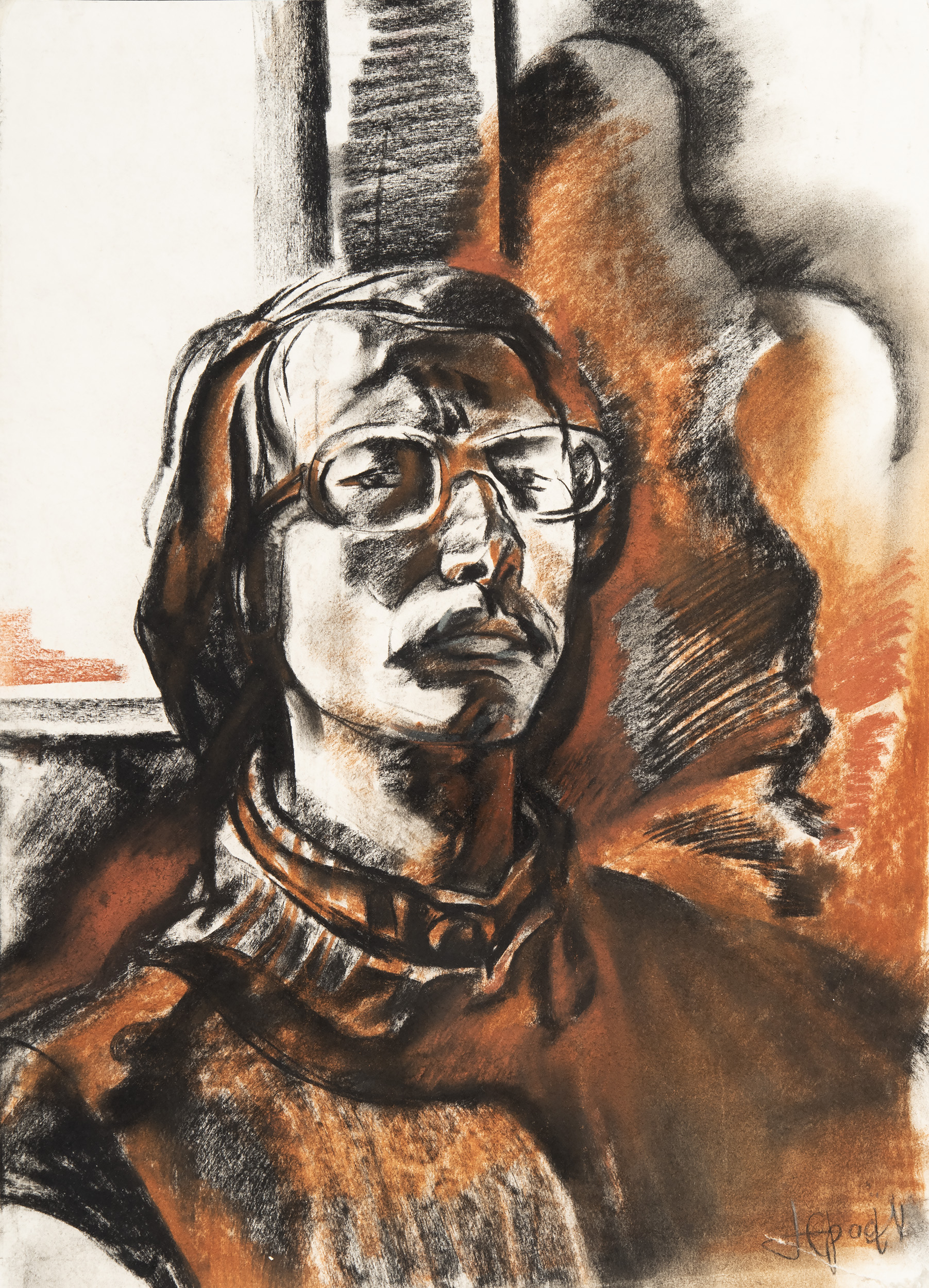
Self Portrait, 1970. Pastel on paper, 62.3 × 44.9 cm (24 1/2 × 17 11/16 in.). Norton and Nancy Dodge Collection of Nonconformist Art from the Soviet Union. D16666
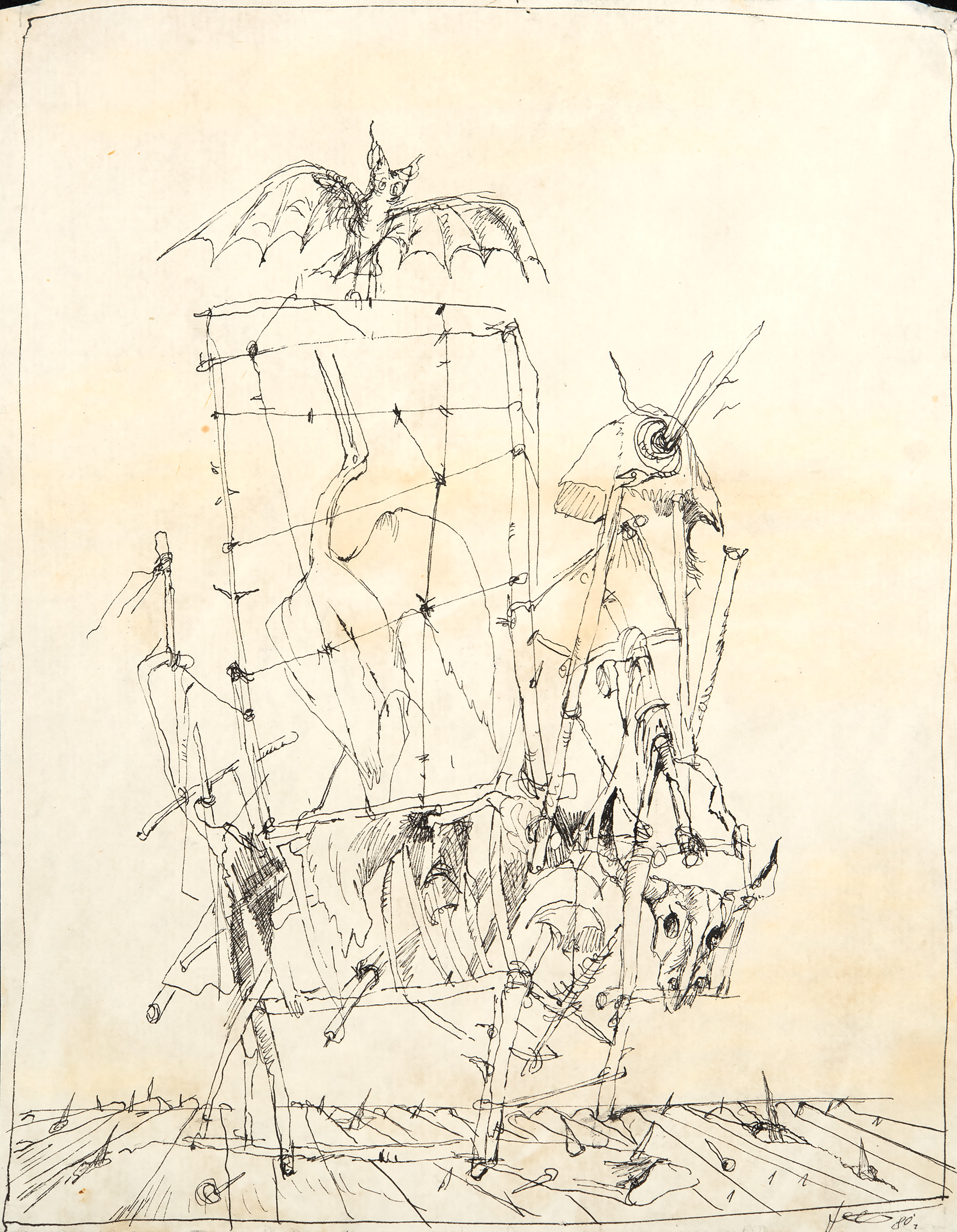
Creatures, 1980. Ink on paper, 24.1 × 18.5 cm (9 1/2 × 7 5/16 in.). Norton and Nancy Dodge Collection of Nonconformist Art from the Soviet Union. D18673
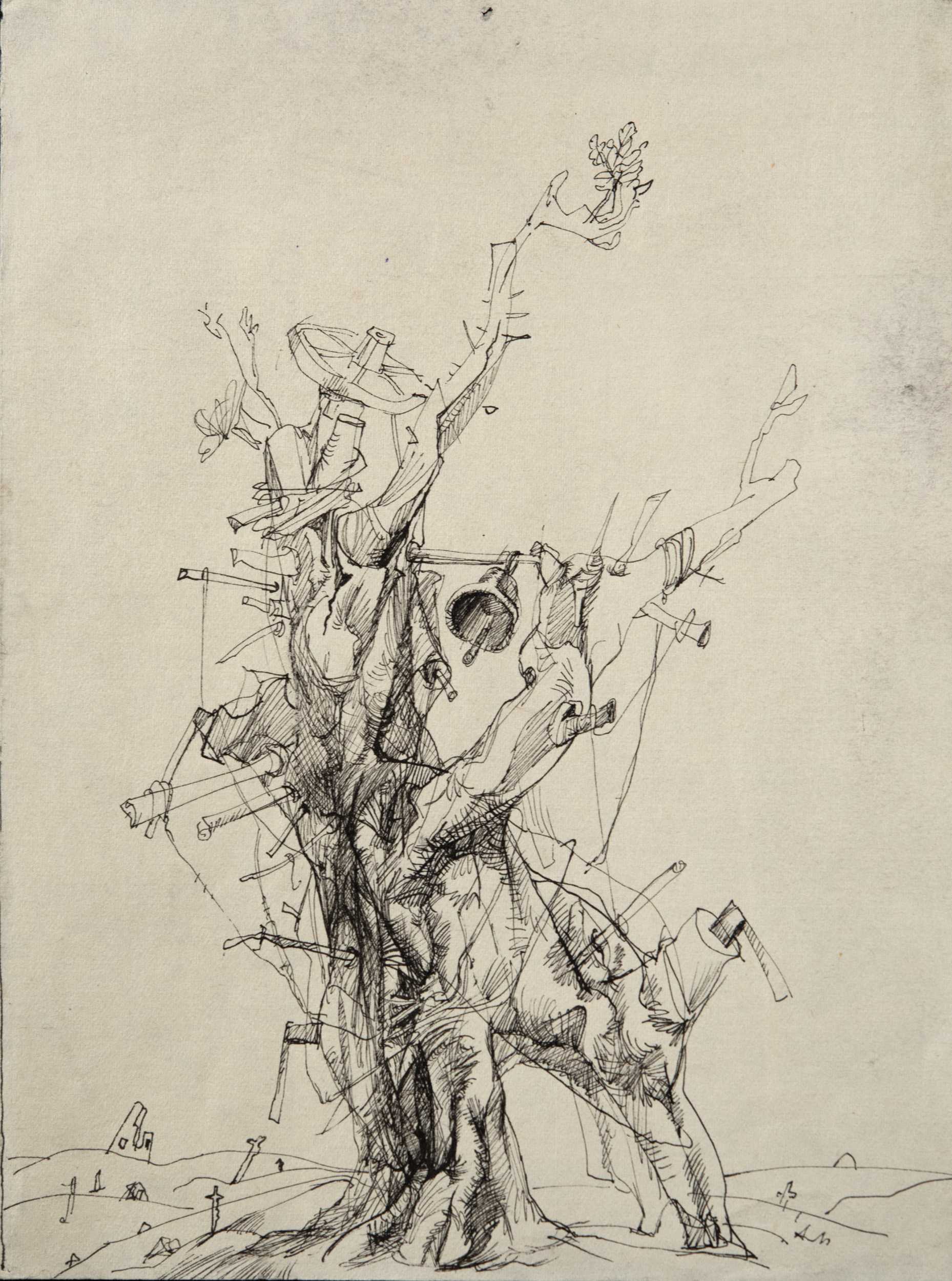
Drawing 1, 1980. Ink on paper, 19.9 × 14.8 cm (7 13/16 × 5 13/16 in.). Norton and Nancy Dodge Collection of Nonconformist Art from the Soviet Union. D18674
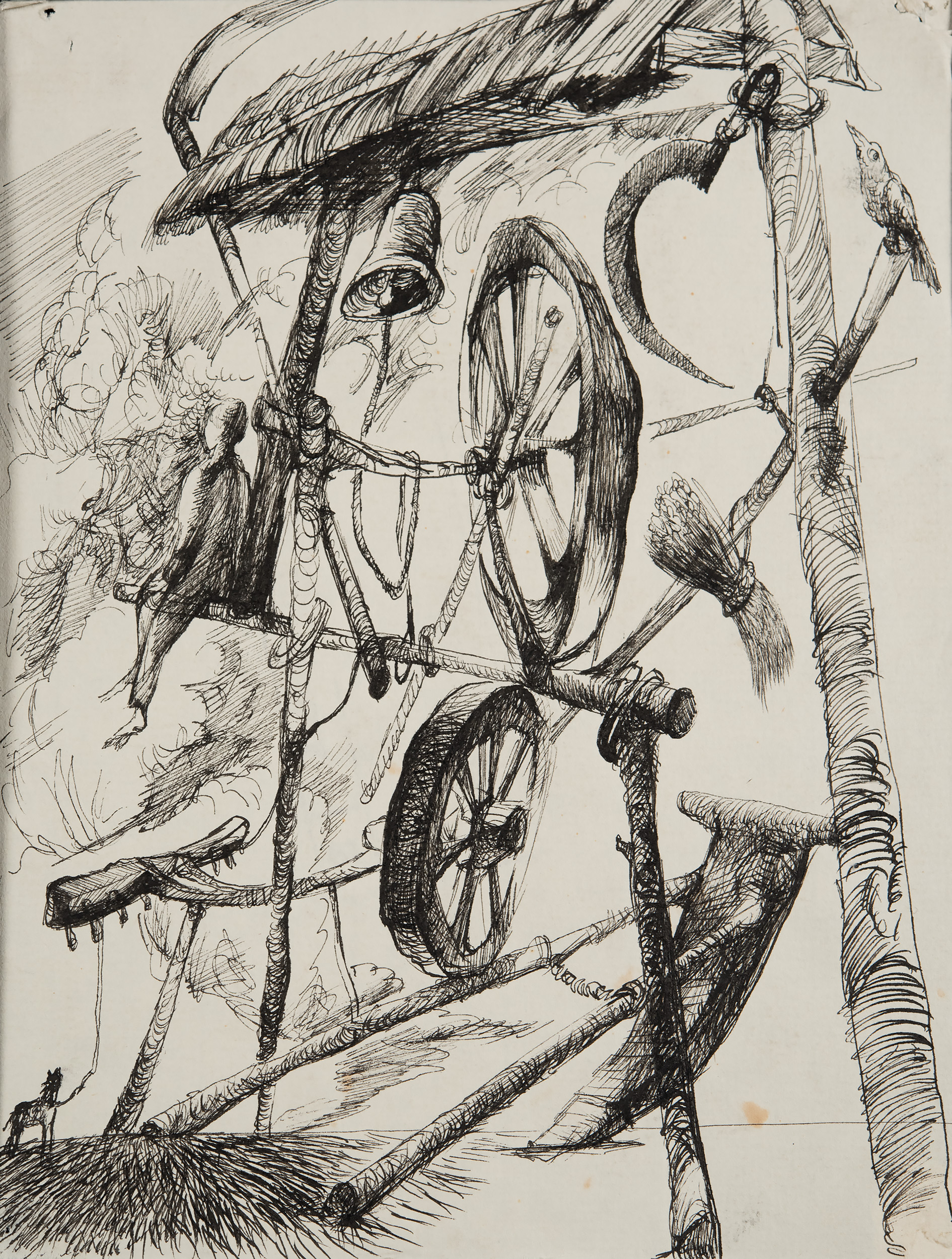
Drawing 2, 1980. Ink on paper, 20.8 × 15.4 cm (8 3/16 × 6 1/16 in.). Norton and Nancy Dodge Collection of Nonconformist Art from the Soviet Union. D18672
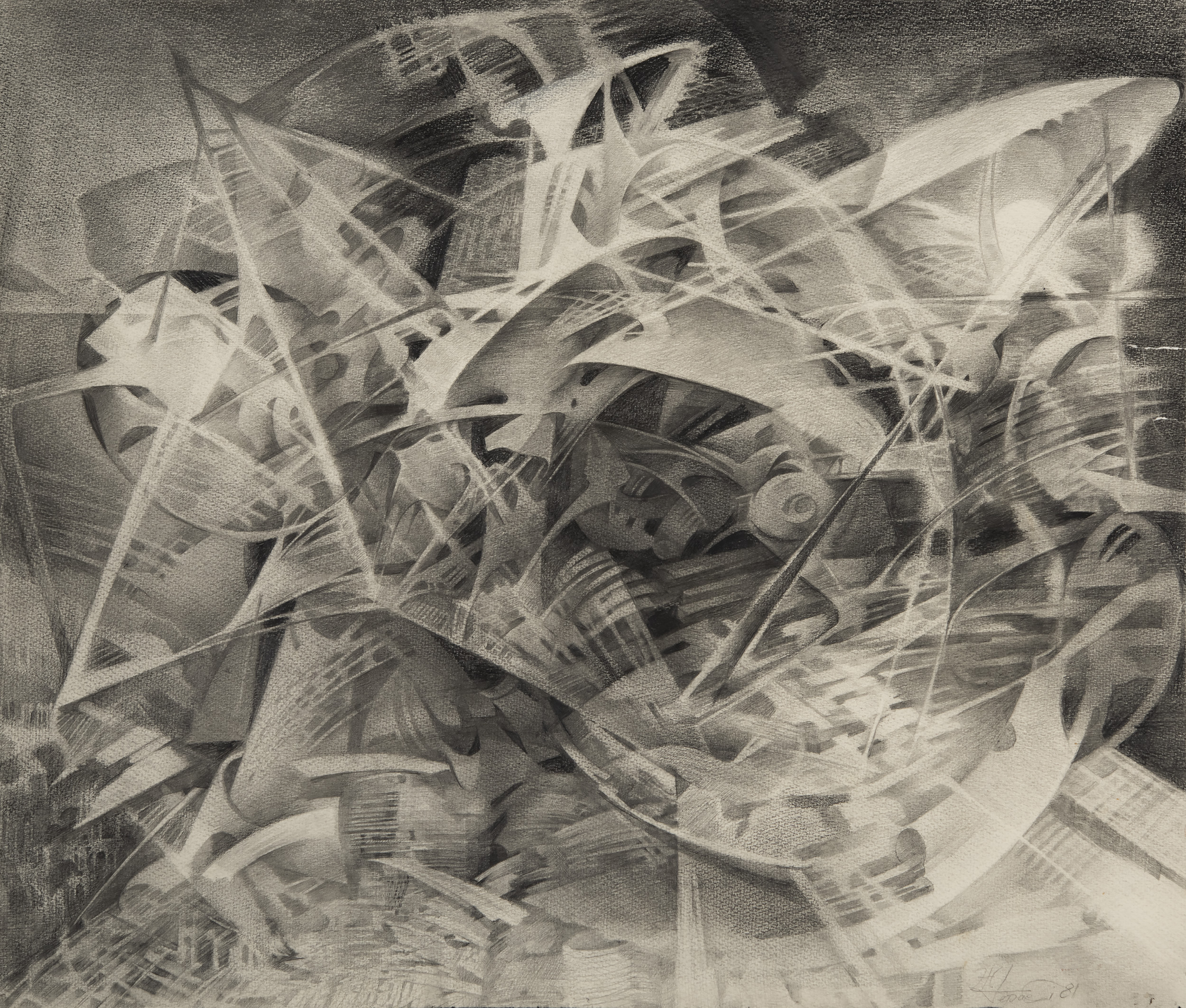
Abstract Composition, 1981. Graphite on paper, 72.2 × 84.2 cm (28 7/16 × 33 1/8 in.). Norton and Nancy Dodge Collection of Nonconformist Art from the Soviet Union. D16649