
Vladimir Shakhlevich
1949 — Brest (Belarus). Lived and worked in Minsk (Belarus); currently lives and works in Moscow (Russia)
Photographer, artist, and architect Vladimir Shakhlevich graduated from the Department of Architecture of the Brest State Technical University in 1978 and worked as an architect until 1997. A member of the Union of Architects of the USSR, in 1991 he became a member of the Union of Architects of the Republic of Belarus.
Between 1984 and 1986, Shakhlevich also studied photography at the studio of Valery Lobko (1951–2008), which was part of the Minsk Photo Club. There he joined the Province group, (Правінцыя), one of several artistic collectives formed in the 1980s that constitute the phenomenon known as the Minsk school of photography. Shakhlevich’s early works often focused on the human body in motion as a starting point for exploring form and the photographic medium. For example, the series Akt z partretam [An Act with a Portrait] consists of eight images: four self-portraits of the artist, showing him with different facial expressions and gestures, are positioned above a row of four photographs of indeterminate body parts, which appear almost abstract due to the extreme close-up and the high contrast of light and dark. As viewers, we are left wondering: What is the relationship between the two rows of images? Whose body is represented in the images at the bottom? Is it one body and if so, which part of it are we looking at? Or are we intruding on an intimate union of bodies? The overall effect of the work is a humorous yet uncanny exploration of form that at once suggests a narrative plot and refuses to cohere in the viewer’s imagination, simultaneously seducing and disturbing with its organic shapes and voyeuristic undertones.
Shakhlevich’s 1989 series TV and Brest: Gymnastic Exercises also focus on the body, but now they are insistently contextualized, inscribed in its immediate context. In TV, the photographer again uses his own body as a subject, posing in various positions that could be described as gymnastics or stretching. The playful and intimate scene takes place in an apartment with a characteristic late-Soviet middle-class interior and a brightly lit television set, which, because of the color contrast, draws the visual focus away from the artist’s figure. In the tension between the apparent subject, the body, and the setting, the television set, the series evokes the complexity of the relationship between the individual and society, between public and private, between personal freedom and ideological framework. The latter theme also appears in the Brest photographs, where flying, dynamic bodies of the gymnasts coexist uneasily with the monumental posters and statues of Soviet leaders. In both series, the freedom and playfulness of the individual bodies take on new meaning in their specific contexts, giving the ordinary exercises a quality of rebellion and resistance.
One of Shakhlevich’s best-known projects from the late 1970s to early 1990s is Portraits for the Kolkhoz Honor Board (1979/89, ZAM, D15839, D15838). In 1980 he was commissioned to photograph the most productive workers at the Red Banner collective farm (kolkhoz) in Belarus for the farm’s board of honor. The first set of photographs he produced followed the standards of official photographic portraiture, cropped to simple vertical head-and-shoulders shots of individuals, positioned against a monochromatic background. Years later, Shakhlevich revisited these photographs, recropping them to reveal more of the background and adding a hammer and sickle to the backdrop, thus transforming the background fabric into a makeshift communist banner (1985, ZAM, D16179; 1979/89, ZAM, D15838). For the next iteration of the project, Shakhlevich printed the entire negative, producing an uncropped version of the photographs. The resulting images, unlike the early “official” portraits, showcased the individuality of each person and the specific, often understated settings in which the photographs were taken—a side of a house, a field, a garden fence. The images also preserved accidental details, such as the body parts of Shakhlevich’s assistants caught in the frame as they held up the background fabric, adding a layer of authenticity and spontaneity to the images. Taken as a whole, the project highlights how photography can both erase and reaffirm individuality, depending on how images are cropped, edited, and presented. By revisiting and reinterpreting his old photographs, Shakhlevich reveals the tension between ideology as a visual and conceptual framework and the agency of each subject.
Shakhlevich’s photographic work quickly gained recognition, and in 1993 he won the Best Artist award at the 2nd All-Russia Festival of the Photo Art in Moscow. In 2006 he was also awarded the Silver Camera diploma of the Moscow House of Photography. In 2000, he moved to Moscow, where, in addition to his photography practice, Shakhlevich also taught creative photography at the School of Photojournalism of Izvestia newspaper (2003–4); at the Ostankino TV School (2005–7); and at the School of Variety, Cinema, and Television (EKTV) (2008). His editorial roles included serving as chief artist for several magazines in Belarus and in Russia, including Master-Photo (Minsk), Retsept (Minsk), Zdorovye i Uspekh (Minsk), and Portfolio (Moscow).
Shakhlevich’s photographic practice is characterized by experimentation, openness, and emphasis on collaboration. In addition to the Province group, he has also been a member of the Moscow +/-group [1] and, most recently, the On the Mount group (Мастерская на Горе, Masterskaya na Gore). [2] However, his most enduring creative collaboration has been with his partner, Galina Moskaleva (b. 1954). Among their early works together is the series of photo collages Durdom [Madhouse] (1989–92) [3], held in the collection of Le Fonds national d’art contemporain in Paris, France, as well as several private collections. The images in the series are composed of two sets of photographs: those taken by Shakhlevich during a political rally in Minsk on November 7, 1991, an annual celebration of the anniversary of the October Revolution, and those taken by Moskaleva at the children’s psychiatric hospital, while on assignment for the Belarusian Television and Radio Company. By merging these two different worlds, the images emphasize a paradoxical continuity between these two social universes, highlighting their shared emotion of frustration bordering on madness.
Shakhlevich lives and works in Moscow, where he continues his photographic and artistic experiments, often collaborating with Moskaleva and other members of the On the Mount group on new and ongoing projects. Shakhlevich’s early photographic work, characterized by a unique blend of humor, rebellion, and innovation, continues to resonate far beyond its original Soviet and early post-Soviet context, offering insightful commentary on individuality, society, and the power of visual representation.
Tatsiana Zhurauliova
Photo portrait source: Artist’s personal website
Notes
1. The group also included photographers Galina Moskaleva, Svetlana Tregub, Elena Churikova and Ludmila Podduvalina, who exhibited together between 2000 and 2009.
2. Exhibiting together since 2012, the Workshop on the Mount art group (abbreviated as WoM) also includes artists Galina Moskaleva, Svetlana Gayvan, and Vadim Moskalev.
3. There exists some confusion regarding the dates of the series: on the artist’s website and in Novaya khvalya, ed. Іna Reut, it is dated to 1989, but according to Olga Bubich’s interview with the artists, the source photographs were taken in 1991–92. 1992 is the date retained by the Centre national des arts plastiques / FNAC.

From the series Portraits for the Kolkhoz Board of Honor, 1985. Gelatin silver print on paper, 38.7 × 24.8 cm (15 1/4 × 9 3/4 in.). Norton and Nancy Dodge Collection of Nonconformist Art from the Soviet Union. D16179
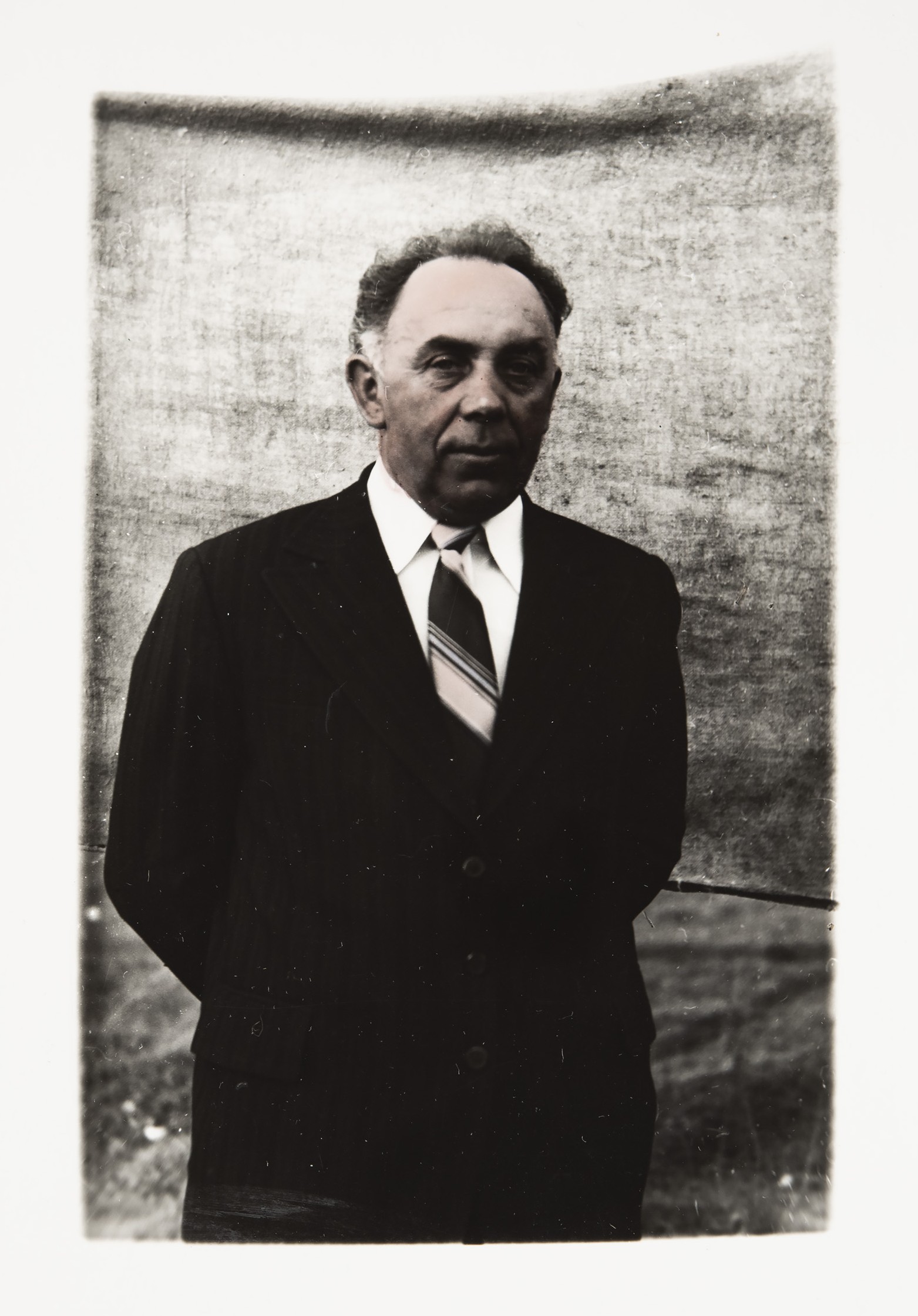
From the series Portraits for the Kolkhoz Board of Honor, 1979/89. Handcolored gelatin silver print on paper, 29 × 22.6 cm (11 7/16 × 8 7/8 in.). Norton and Nancy Dodge Collection of Nonconformist Art from the Soviet Union. D15839
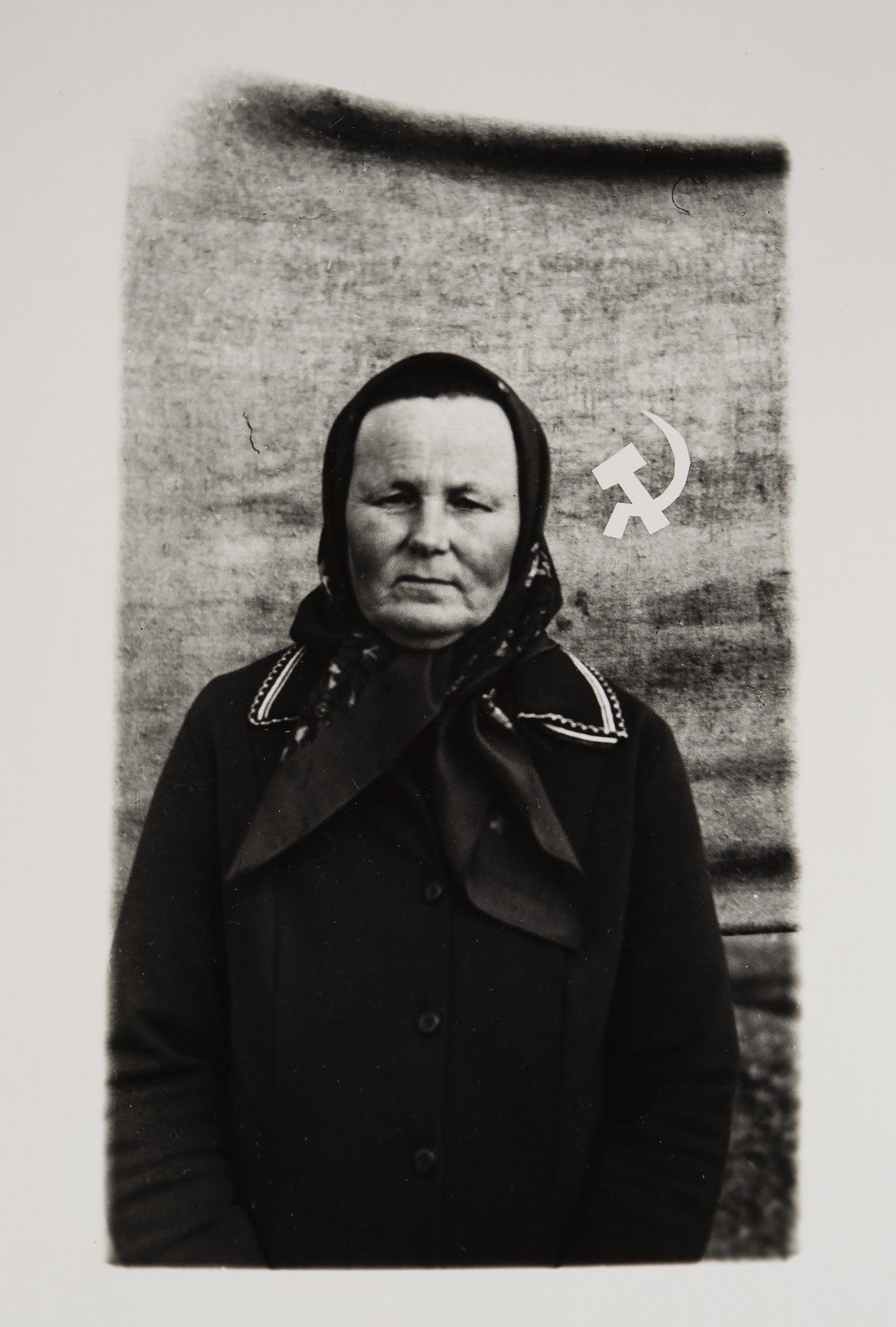
From the series Portraits for the Kolkhoz Board of Honor, 1979/89. Handcolored gelatin silver print on paper, 29.2 × 22.6 cm (11 1/2 × 8 7/8 in.). Norton and Nancy Dodge Collection of Nonconformist Art from the Soviet Union. D15838

(Untitled) from the series One Day in Kaunas, 1985. Photograph on paper, 17.3 × 27.5 cm (6 13/16 × 10 13/16 in.). Norton and Nancy Dodge Collection of Nonconformist Art from the Soviet Union. D15017
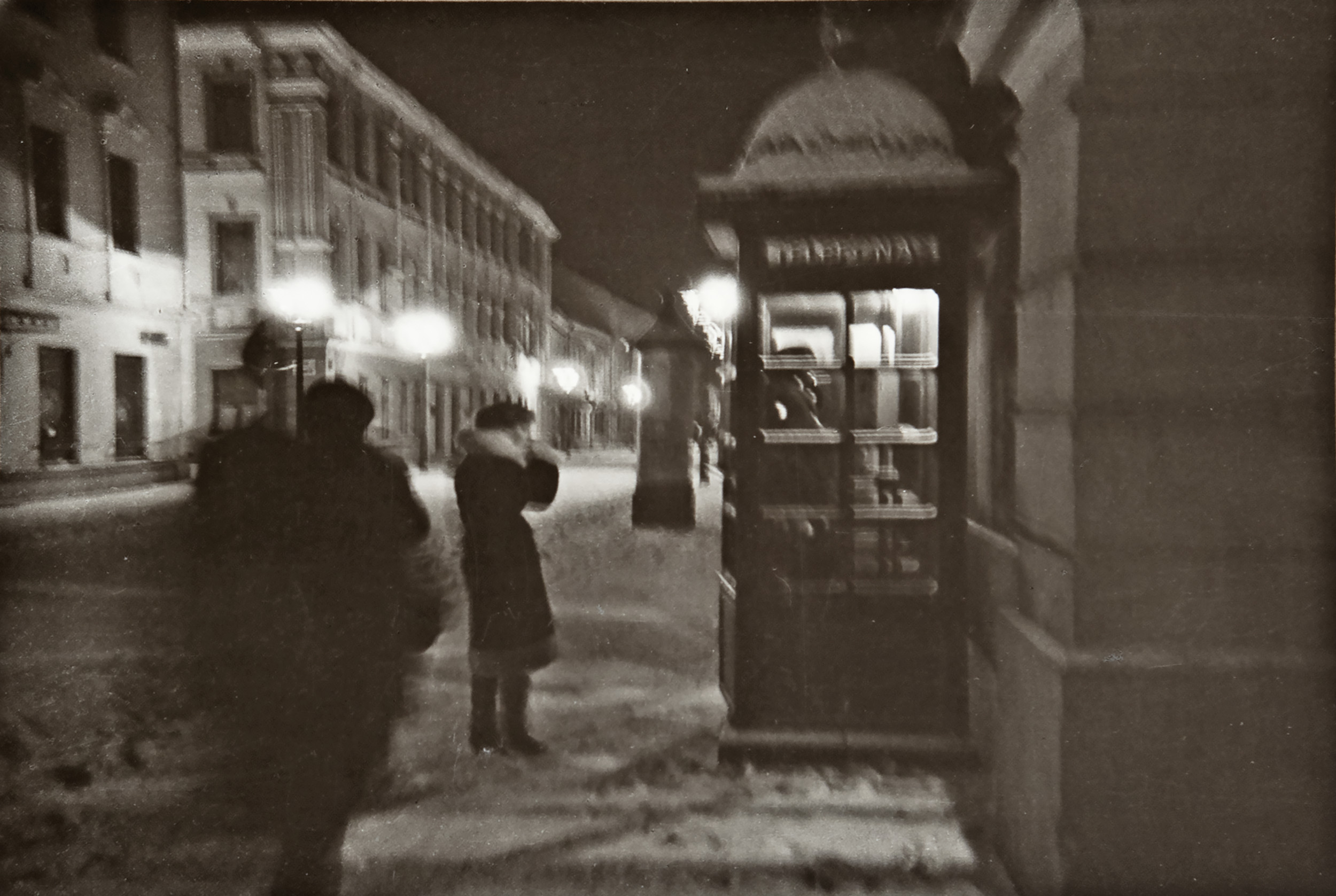
Impression from the series One Day in Kaunas, 1985. Photograph on paper, 18.5 × 27.5 cm (7 5/16 × 10 13/16 in.). Norton and Nancy Dodge Collection of Nonconformist Art from the Soviet Union. D15018