
Vitalijus Butyrinas
(a.k.a. Vitaly Butyrin)
1947 — Kaunas (Lithuania) | 2020 — Vilnius (Lithuania). Worked in Kaunas and Vilnius (Lithuania)
An important self-taught Lithuanian art photographer, Vitalijus Butyrinas (Vitaly Butyrin) was born in Kaunas, Lithuania, to a Russian-speaking family. His father was a native Russian who was wounded during World War II in Lithuania and chose to remain in the country after the war, and his mother was born in Belarus. Following Butyrinas’s birth, however, his family was exiled to northern Kazakhstan, then a Soviet republic, as part of the 1934–53 campaign of forced deportations by the Communist party leader Joseph Stalin. These deportations were devastating to Soviet-occupied Lithuania, and even though the family experienced drastic hardship while in exile, Butyrinas later recalled these years with fondness, as he had found himself in a multicultural environment composed of Germans, Kazakhstanis, Ukrainians, and other people of varied ethnicities. In addition, the stark yet expansive landscape made an indelible impression on the young artist, who regarded this period in Kazakhstan as his “school of life.”
In the decade following Stalin’s death in 1953, the new, more liberal leader of the Soviet Union, Nikita Khrushchev (in power from 1953 to 1964), allowed deportees to return to their homelands as part of the brief so-called Khrushchev Thaw. Not long after the Butyrinas family returned to Kaunas, the fifteen-year-old received his first camera, a Smena, and began to take pictures of the world around him. Soon he saved up enough money by working menial jobs after school to set up a photo lab with a friend that galvanized his creativity and output. In 1965, he joined the recently founded Kaunas Photography Club—the first of its kind in Lithuania and a model for similar clubs in other cities—and began exhibiting with its founding members, including Vitas Luckus (1943–1987), Aleksandras Macijauskas (b. 1938), and Romualdas Rakauskas (1941–2021). Shortly after that, he was conscripted into the Soviet army. When his colonel discovered Butyrinas’s work had been published in a London photo yearbook, he was assigned to be the regiment’s photographer, for which he was also free to visit museums and exhibitions. After his duty he was offered an officer’s position with an apartment, but instead he chose to return to Lithuania, where he worked in a “mailbox” (a secret Soviet industrial organization), where he was promoted to an engineer, making advertisements and photographs of technical instruments. [1]
The new, distinctive style of Lithuanian art photography was further reinforced in 1969, when the Lithuanian Society of Art Photography (LSAP, now the Lithuanian Photographers Association) was officially established. This progressive organization was unique in the Soviet Union because it was dedicated to creative rather than only journalistic photography. As a result, the recognizable modern reportage-based style developed by Lithuanian artists became widely known as the Lithuanian school of photography, and their works functioned as a cultural export aimed at showcasing the newest developments of socialist culture. In 1970 Butyrinas became a member of LSAP, and from 1973 to 1980 he was editor-in-chief responsible for international relations until Soviet authorities discovered that he had found a way to cheat the censorship procedures and to secretly send unapproved LSAP photographs to exhibitions abroad. In 2002, when Lithuania had been independent for over a decade, he was made an honorary member of the Lithuanian Photographers Association for his merits.
Even though most members of the LSAP nominally adhered to the enforced dictates of the Soviet era, including romanticized depictions of common working people, their true aspirations and motives were often at odds with the regime’s ideology. Although LSAP artists followed the tenets of socialist humanism in form, their photographs between the late 1960s and the beginning of the Lithuanian national revival in the late 1980s consistently focused on risky, nostalgic subject matter, such as the old Lithuanian countryside and inherited ethnic traditions—topics that the Communist Party, with its fixation on industrialized labor and brutal, standardized urban development for the “builders of communism” sought to eradicate. In addition, when they sent photographs to exhibitions abroad, including to countries of the Western bloc, the catalogues that arrived back would contain works by non-Soviet photographers (even if the Lithuanians’ submissions were lost in the process, as happened to Butyrinas numerous times). These catalogues provided LSAP artists with a glimpse of what was happening in photography beyond the Iron Curtain.
Perhaps in part due to these encounters with a broader spectrum of expression, Butyrinas’s work quickly departed from the trademark psychological, humanist documentary style championed by his fellow artists in the Lithuanian school of photography. Lacking a personal connection with the Lithuanian countryside and its pre-Soviet traditions that characterized the oeuvre of renowned contemporaries like Macijauskas, Rakauskas, and Antanas Sutkus (b. 1939), Butyrinas instead created a dream world that bent the familiar axes of time and space. His otherworldly, psychedelic sand- and waterscapes may well have originated in his memories of Kazakhstan’s vast horizonless landscape, such as in Dune-I (1976, ZAM, D15081) and Shell World (1983, ZAM, D15085). This does not mean that he eliminated figures from these dreamlike scenes, as in his Terra Incognita (1976). On the contrary, Butyrinas’s 1976 series Jūros pasakos [Sea Tale] and his series Vaikystės prisiminimai [Childhood Memories] and Civilizacijos [Civilizations], both from 1983, show a figure in a mysterious and boundless fairy-tale world. It could be said that the artist is a humanist who focuses on the metaphysical and the supernatural instead of the social and the existential.
To achieve this effect, Butyrinas experimented with the then-unorthodox techniques of photomontage and photography. In this regard, his work resembled graphic art more than conventional art photography. The artist’s inimitable collages of landscape fragments, female nudes, other human figures, objects, and fantastical visual effects could never have been created using a camera alone. While a handful of photographers sporadically explored the genre of photomontage—mainly inspired by Butyrinas’s works—there were few artists who became as consistent as him. During his three decades of productivity, from the mid-1970s to the early 2000s, he received more than three hundred awards for his work, many of them abroad, including the title of Master of the International Federation of Photographic Art (MFIAP) in 1992 and Excellence for Services Rendered to FIAP (ESFIAP) in 1997. While the originality and painstaking meticulousness of the artist’s collage work may seem diminished by the advent of the ubiquitous digital image manipulation technology in the new millennium, his work remains a testimony to the free-spirited experimentation that managed to escape the straightforward depiction of ideological norms in an era of substantially restricted artistic freedom. Perhaps Butyrinas’s legacy is yet to be recontextualized from a new critical perspective.
Another fundamental merit of the artist is that he remained loyal to the Lithuanian culture and art scene to the end of his life, even while his non-Lithuanian ethnic background often prompted the Russian art establishment to position him as a Russian photographer and sought to convince him to move to Moscow. Butyrinas always thought of himself as a Lithuanian photographer even though he barely spoke Lithuanian when he returned from exile in Kazakhstan. Such a cultural determination at a time when national identities were deliberately obliterated by the Soviet ideology points to an inherent dissidence and strong-willed nature that managed to survive, attain creative success, and, to an extent, sabotage the repressive system in which he lived. In 1976 Butyrinas joined the Fédération Internationale de l’Art Photographique (FIAP), which united members from over ninety countries with a headquarters in Luxembourg, and from 1993 to 2001 he served as Lithuania’s representative, which contributed to international awareness of Lithuanian photography.
Jurij Dobriakov
Photo portrait: 2007, Tomas Pabedinskas, courtesy Tomas Pabedinskas
Notes
1. These events are drawn from the account the artist gave in a 2017 interview with Artūras Morozovas: Artūras Morozovas, “Seven Decades Worth of Collage: An Interview with Vitalijus Butyrinas,” Lithuanian Photographers Association, December 17, 2019
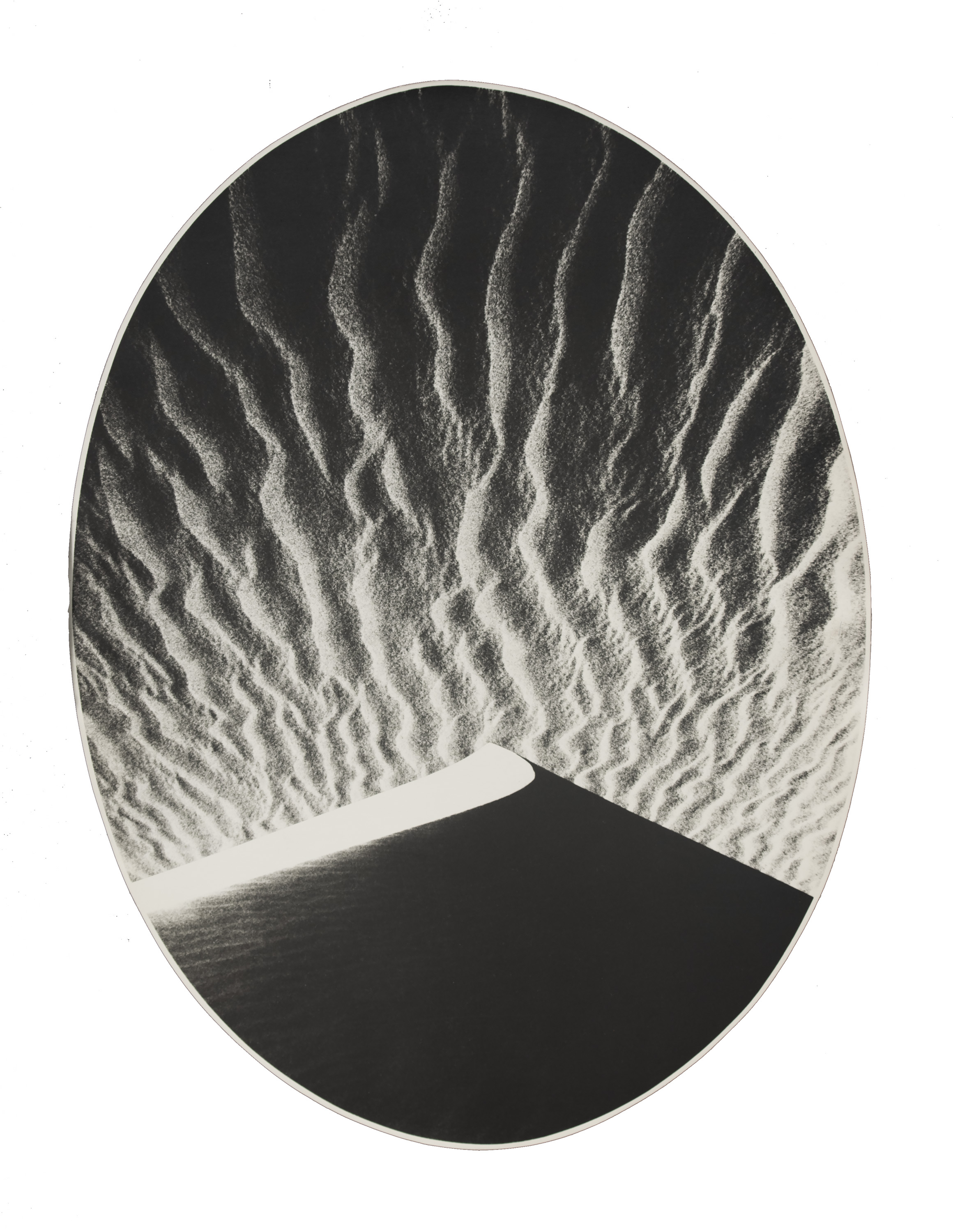
Dune I, 1976. Photograph on paper, 38.5 × 28.8 cm (15 3/16 × 11 5/16 in.). Norton and Nancy Dodge Collection of Nonconformist Art from the Soviet Union. D15081
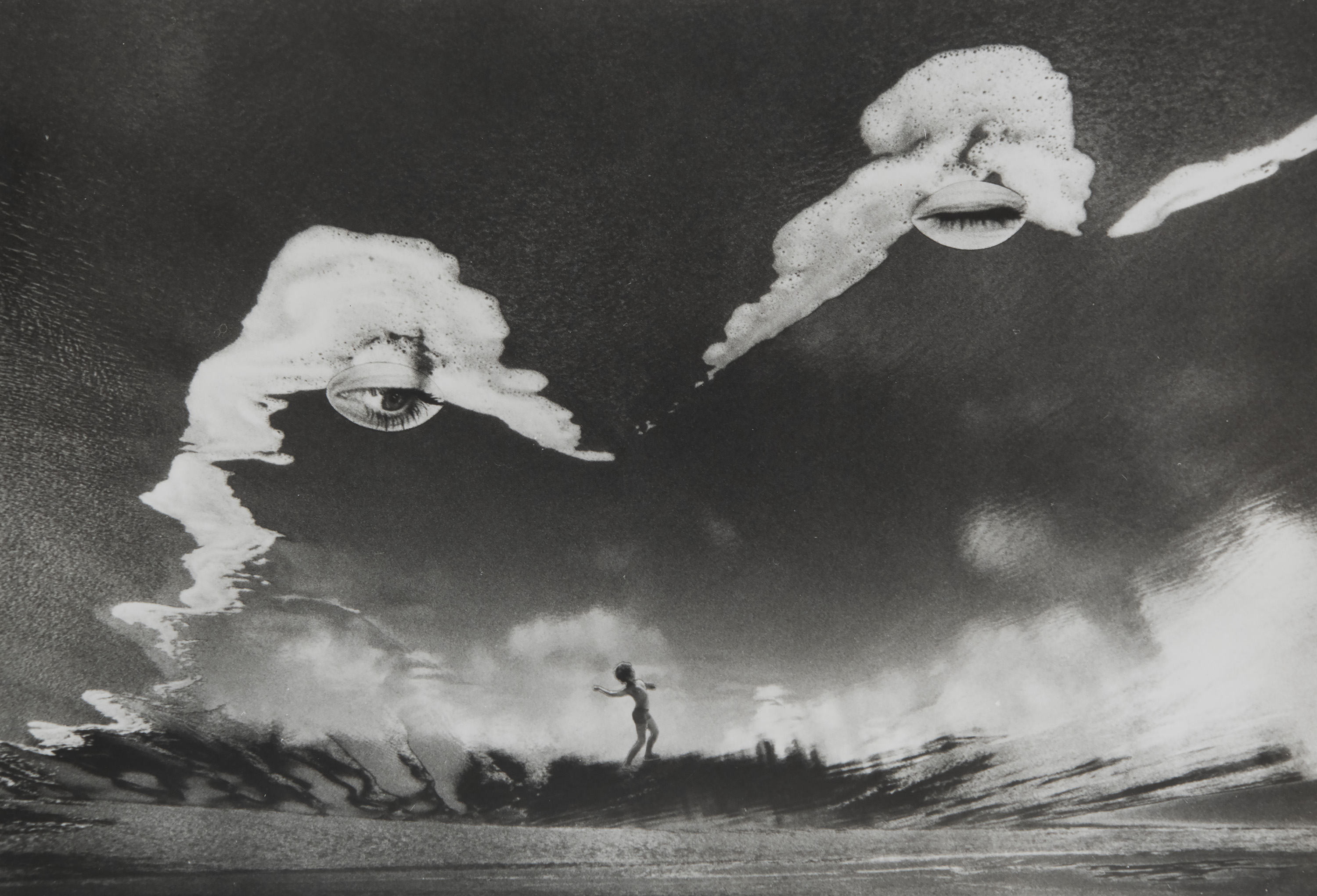
Contact, 1983. Photograph on paper, 20.7 × 29.4 cm (8 1/8 × 11 9/16 in.). Norton and Nancy Dodge Collection of Nonconformist Art from the Soviet Union. D15082

Summer in Nida, 1983. Photograph on paper, 28.5 × 23.3 cm (11 1/4 × 9 3/16 in.). Norton and Nancy Dodge Collection of Nonconformist Art from the Soviet Union. D15083

Shell World, 1983. Photograph on paper, 28.7 × 17.4 cm (11 5/16 × 6 7/8 in.). Norton and Nancy Dodge Collection of Nonconformist Art from the Soviet Union. D15085
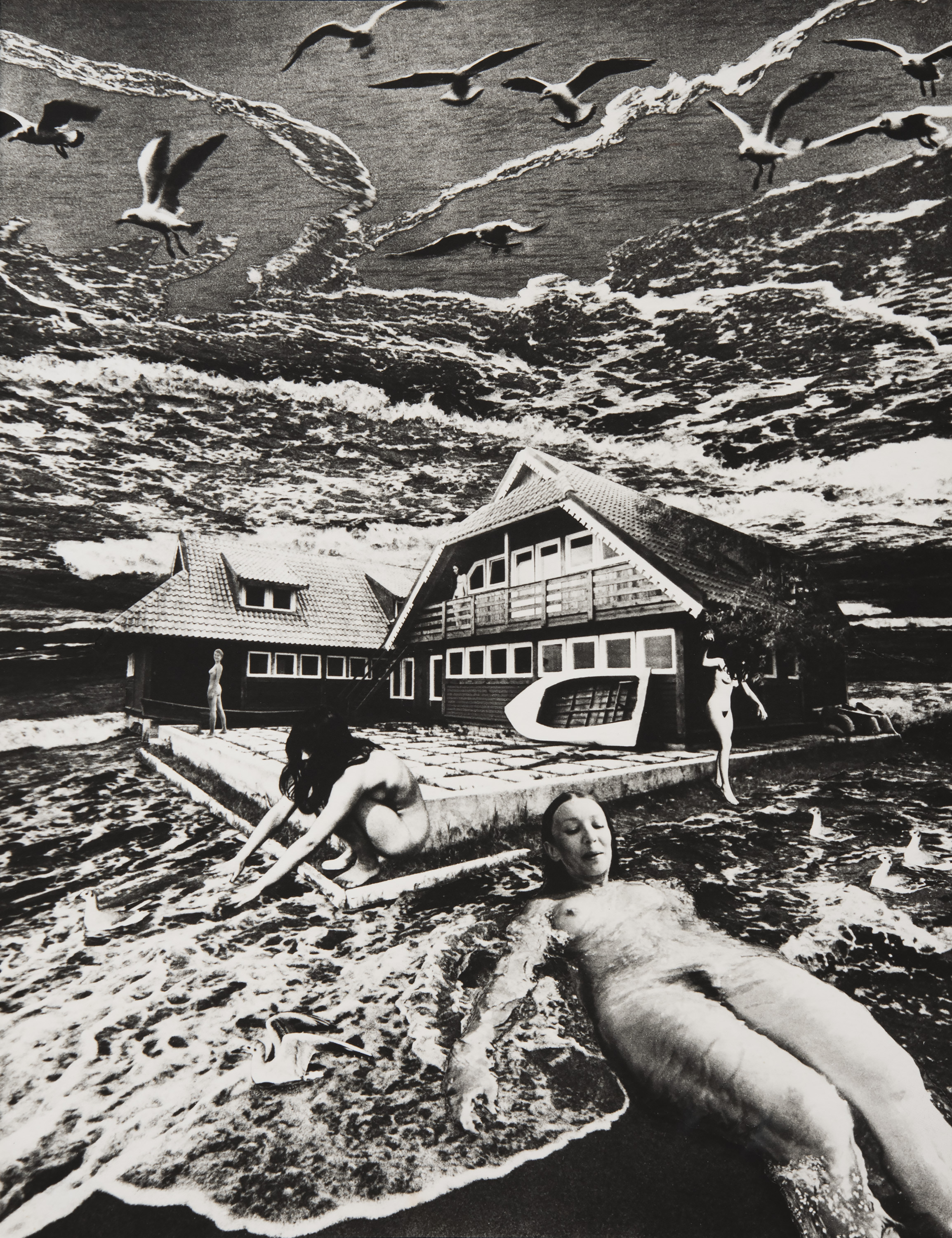
Seaside Cottage, 1983. Photograph on paper, 29.1 × 22.5 cm (11 7/16 × 8 7/8 in.). Norton and Nancy Dodge Collection of Nonconformist Art from the Soviet Union. D15086