
Viktor Zaretsky
1925 — Bilopillia, Sumy region (Ukraine) | 1990 — Koncha-Ozerna, Kyiv region (Ukraine)
Viktor Zaretsky was a prominent Ukrainian painter, muralist and mosaic artist, draftsman, and educator. He belonged to the “1960s generation” (shistdesyatnyky), a cohort within the Ukrainian intelligentsia morally opposed to the Soviet totalitarian regime and seeking political and artistic freedom. A member of the Union of Artists of the Soviet Union, Zaretsky was one of the outstanding artists of the Soviet period in Ukraine (1950–90). Beginning with the techniques and style of socialist realist painting, he arrived at a completely “non-Soviet” style of art, expressing resistance to its worn-out ideology and untruthfulness. Zaretsky developed a unique individual style that emerged from an academic professionalism and craftsmanship, with international artistic influences including Early Renaissance painting, modernism, Art Nouveau, and Ukrainian folk art.
In his youth Zaretsky lived with his parents in Donetsk, Horlivka, and Dniprodzerzhynsk (now Kamianske). In 1941 the family was evacuated to the northern Urals in Russia, where he finished high school and was drafted into the army in 1943. After demobilization in 1946, he arrived in Kyiv and entered the last grade of the Kyiv Art Secondary School. From 1947 to 1953, he attended the Kyiv State Fine Arts Institute (now the National Academy of Fine Arts and Architecture), studying in the painting department under Konstiantyn Yeleva (1897–1950) and Hennadiy Tytov and in the workshop of Serhiy Hryhoriev (1910–1988). From 1953 to 1957, he taught at the Kyiv Art Institute and in 1955 took part in the International Festival of Youth and Students in Warsaw, where his paintings Портрет арфістки Манзій [Portret arfistky Manzii, Portrait of the Harpist Manzii] (1955) and Піонерка [Pioneer Girl] (1954) were presented.
Each year from 1955 to 1959, he traveled to the Donetsk region and painted pictures depicting the life of miners. This was a theme familiar to him since childhood because he grew up in mining country. These works were known throughout the Soviet Union and earned awards, although they were also removed from exhibitions because organizers worried that no one would want to become a miner after seeing such unvarnished portrayals of tired and dirty laborers.
In 1956 Zaretsky joined the Union of Artists, and the next year he was awarded a prestigious diploma for the painting Після зміни [Pislia zminy, After the Shift] (1956). The talented young artist began to gain wider recognition and was honored with a number of state awards. In 1959 he received the Certificate of Honor of the Main Committee of the Exhibition of Best Practice in the National Economy of the Ukrainian SSR for his participation in the creation of the mural Індустріалізація [Industrialization]. In 1960 he received the Certificate of Honor of the Presidium of the Supreme Soviet of the USSR.
From the second half of the 1950s through the 1960s, new horizons opened in Zaretsky’s life. This was the period of the reforms and de-Stalinization of the Khrushchev Thaw following the death of Stalin. In 1952 Zaretsky married Alla Horska, a fellow student. Together with their colleagues and other like-minded poets, writers, and artists, they formed the Suchasnyk [Contemporary] Creative Youth Club. From 1963 to 1964, Zaretsky headed the club, where he befriended and associated with poets such as Vasyl Symonenko, Vasyl Stus, Lina Kostenko, and Yevhen Sverstiuk, and the artists Opanas Zalyvakha (1925–2007) and Liudmyla Semykina (1924–2021).
Zaretsky’s creative growth was significantly influenced by his travels in 1962 and 1963 to Khiva, Samarkand, Bukhara, and Kattakurgan in central Asia. Throughout most of the 1960s, he was a member of the editorial board of Pioneriia (Pioneer) magazine.
The artist first explored more rural themes in his art in the early 1960s, striving to convey the essence of folk life and characters by working with collective farmers in the Chornobyl region. The images of Ukrainian village girls and women that Zaretsky created at the time became canonical. A deep and organic connection to Ukrainian national culture clearly shines through his work of this period. Zaretsky also took some decisive steps to free his own painting from academic socialist realism, studying Ukrainian folk art, where he discovered links to the Art Nouveau style. During this “rural” period, an attraction to the premodern world and a more impressionistic style were emerging in his work.
In the second half of the 1960s, Zaretsky joined forces with his wife to help revive the lost mural and mosaic art of Ukraine, aiming to create a national monumental school of world significance and develop a modern Ukrainian style. Between 1965 and 1977, in collaboration with Horska and, later, a number of other artists, he created large public artworks at Donetsk Secondary School No. 47, the Mariupol restaurant Ukraina, the Moloda Hvardiia [Young Guard] Krasnodon Museum, the Kyiv restaurant Natalka, the Moloda Hvardiia pioneer camp, the Ivano-Frankivsk Music and Drama Theater, the embassies of Poland, Germany, and Czechoslovakia in Kyiv, and other locations.
Zaretsky’s focus on more urban themes grew out of his interest in the latest international artistic trends, which managed to make their way through the Iron Curtain. His art of the 1960s reflects the inner tension and anxiety that gripped the whole of society and, in particular, the artist’s social circles, which included Horska, Liudmyla Semykina, Mykhailyna Kotsiubyinska, Ivan Drach, and Ivan Dziuba. They created modernist art, exploring ideas of freedom and justice while also working with national traditions. Although this endeavor seemed to align with the rhetoric of the Soviet state government, the authorities decided otherwise and branded the artists enemies of the state and the people. At the end of his life, in 1990, Zaretsky said that those were beautiful times that ended very tragically. [1]
In 1968 Zaretsky and Horska were signatories of a “Letter of Protest 139” against political trials and were initially expelled from the Union of Artists (though later reinstated). Then, in 1970 Horska and Zaretsky’s father were both found brutally murdered. The authorities attempted to blame Zaretsky but subsequently claimed that his father had killed Horska and then committed suicide. Documents accessed forty years later by the artist’s son revealed evidence that the KGB had murdered both of them. This terrible episode marked the beginning of a period of stagnation in the Soviet Union and a new wave of repression against the nationally conscious intelligentsia of Ukraine.
Throwing himself into his work in the 1970s, Zaretsky made illustrations for the children’s magazines Maliatko [Baby] and Barvinok [Periwinkle]. In 1973 he went on a working trip to the Far East and Sakhalin, making sketches and paintings and collecting material for future projects.
In 1977 Zaretsky found a sense of refuge and family warmth when he married Maia Hryhorieva, an old acquaintance, colleague, and friend of Horska’s who was the daughter of Serhii Hryhoriev, his teacher at the Art Institute. Settling in Koncha-Ozerna near Kyiv, he focused on painting, studying and sketching from nature with his father-in-law.
The artist’s imaginative, mythologized landscapes in the late 1970s and 1980s are a unique phenomenon in Ukrainian painting. He also turned to portraiture in this later period, creating works such as Автопортрет з музою [Self-Portrait with Muse] (1987), which has hints of Maya Hryhorieva’s features, and a series of works that directly depict her, including Майя [Maya] (1984) and Ретро [Retro]. He created expressive images in the neo-secessionist style: Оленка з лялькою [Olenka with a Doll] (1987), Намалюй мені синього птаха [Paint Me a Blue Bird] (1988), Кіра [Kira] (1985), Олеся. Філіжанка кави [Olesia, Coffee Cup] (1989), and Портрет Раїси Недашківської в ролі Катерини Білокур [Portrait of Raisa Nedashkivska as Kateryna Bilokur] (1989). He also crafted mythologized postmodern compositions such as Озонова діра [Ozone Hole] (1988), Джаз [Jazz] (1988), Пісня жаги [Song of Desire] (1987), and Гра з манекеном [Playing with a Mannequin] (1988).
In these works of the late 1970s and 1980s, Zaretsky channeled the personal pain and suffering that had been inflicted on him by the totalitarian state into passionate protest expressed on canvas. His subsequent work effected a philosophical and metaphorical transformation of reality, challenging dogmas, stereotypes, hypocrisy, banal norms, and the anti-aesthetic environment of his time. During these years the artist thoughtfully assimilated and creatively reinterpreted the painting philosophy of Georges Pierre Seurat (1859–1891), the color usage of Henri Matisse (1869–1954), the painterly forms of Paul Cézanne (1839–1906), the mysticism and elegance of Pre-Raphaelite and modern styles, and the sensuality, extravagance, and artistic language of Gustav Klimt (1862–1918). Significantly, he evoked Ukrainian folk art through composition and color.
Having consciously transformed himself into a nonconformist artist in the 1970s, Zaretsky—unlike other well-known representatives of artistic nonconformism—stood alone in his position, avoiding societal norms and even deliberately steering clear of certain social circles. Remaining true to himself, he defied the system by creating art that was not commissioned, supported, or expected by the authorities. In the final years of his life, his artistic expression epitomized a quest for harmony, purity, beauty, and love, as seen in his painting Леда [Leda] (1980, ZAM, D11287).
Zaretsky’s path diverged from the demands and trends of socialist realism, as well as the artistic tastes of those in power and other nonconformist artists alike. His work garnered interest and support primarily from his circle of friends: writers, journalists, scientists, and diplomats. For his portraits and narrative compositions, he often used nonprofessional models, including poets, female artists, and actresses.
In 1989 he was diagnosed with cancer and underwent surgery. During a six-month remission, he created as many paintings as others might produce in a lifetime. According to the author’s recollections, he once said that during his surgery, he gained a special kind of insight into the essence of art, and he often talked about how God had brought him back from the other world to build on his artistic accomplishments. He knew he was following his own true path. He did not fear death but lamented that the Creator had not given him enough time to complete all that had been revealed to him during his illness. [2]
He died on August 23, 1990.
His first and last exhibition in his lifetime was at the exhibition hall of the House of Scientists in Kyiv in 1989. A large solo exhibition, which he carefully prepared, took place posthumously at the National Art Museum of Ukraine in Kyiv in March 1992. In the same year, the Viktor Zaretsky Annual Prize for Young Artists was founded, under the auspices of National Academy of Fine Arts and Architecture. Two years after that, in 1994, the artist was posthumously awarded the T. H. Shevchenko State Prize of Ukraine for his later paintings: Солдатка [Soldatka, Soldier] (1987–88), Ой кум до куми залицявся [Oi kum do kumy zalytsiavsia, Oh He Wooed Her] (1987–88), Літо [Lito, Summer] and Весняні клопоти [Vesniani klopoty, Spring Worries] (both 1987), and Дерево. Витоки мистецтва [Derevo: Vytoky mystetstva, Tree: Origins of Art] (1988).
Olesia Avramenko
Translated from Ukrainian by Nathan Jeffers
Notes:
1. This statement was made by Viktor Zaretsky in a personal conversation with the author in 1990, shortly before his death. The exchange was informal and not recorded but is cited here as part of the author's firsthand recollections.
2. This account is based on the author’s personal conversations with Viktor Zaretsky in 1989–1990. These informal exchanges were not recorded but are cited here as part of the author’s firsthand recollections.

Leda, 1980. Tempera on canvas, 100.5 × 100 cm (39 9/16 × 39 3/8 in.). Norton and Nancy Dodge Collection of Nonconformist Art from the Soviet Union. D11287
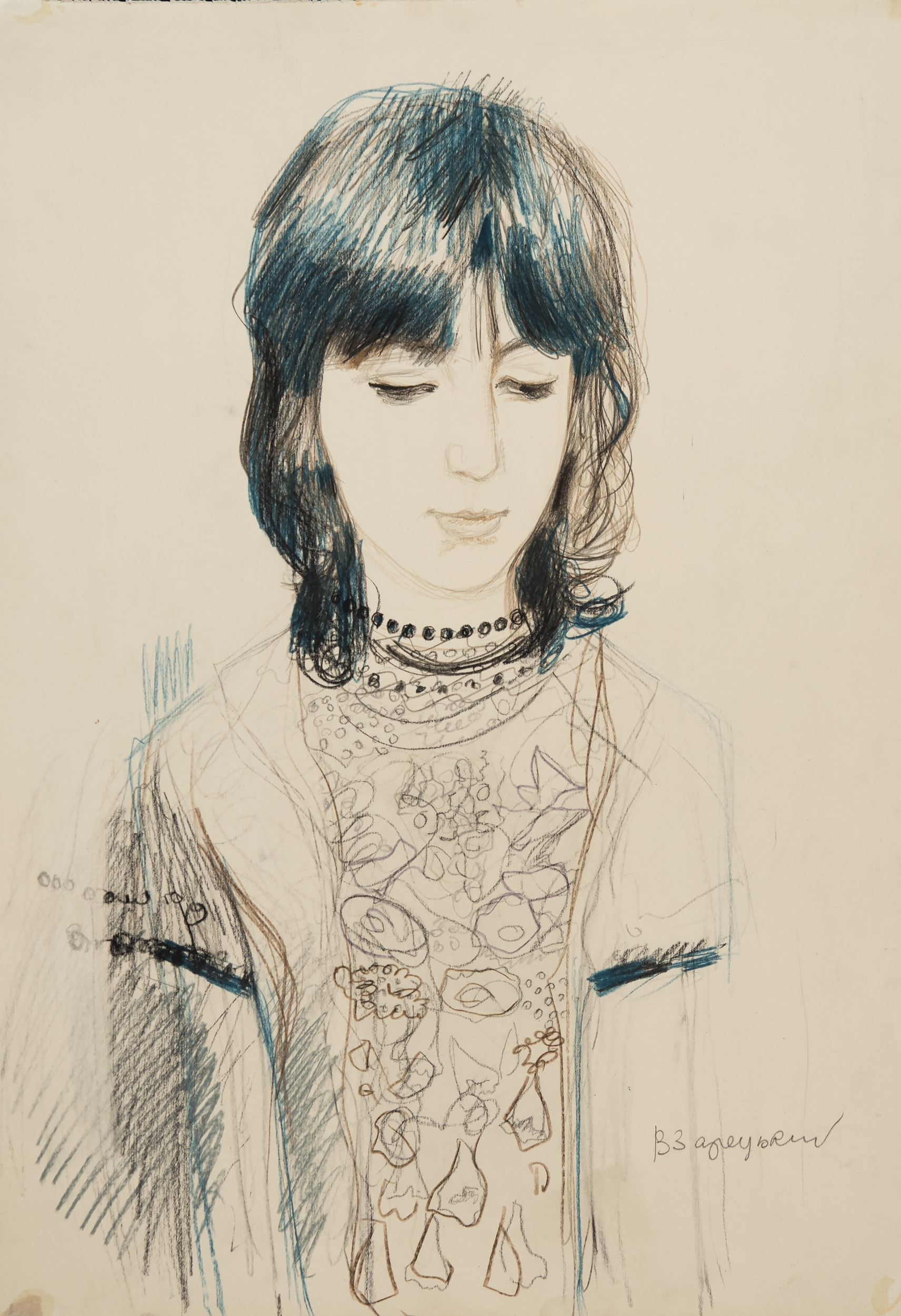
The Girl in Green, undated. Graphite and pastel on paper, 57.7 × 40.8 cm (22 11/16 × 16 1/16 in.). Norton and Nancy Dodge Collection of Nonconformist Art from the Soviet Union. D00635
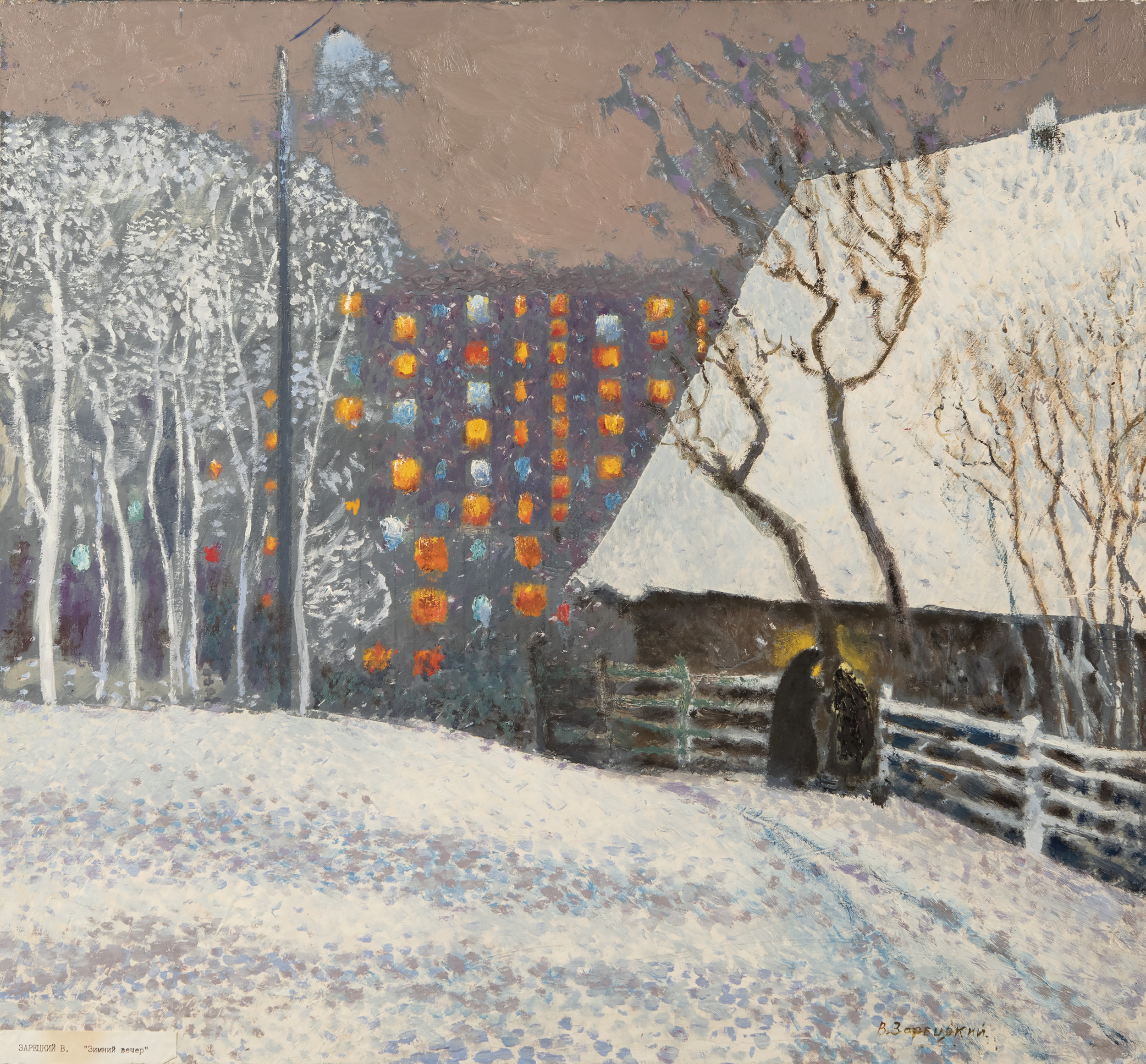
Winter Evening, 1984. Oil on canvas, 60.5 × 65 cm (23 13/16 × 25 9/16 in.). Norton and Nancy Dodge Collection of Nonconformist Art from the Soviet Union. D00648
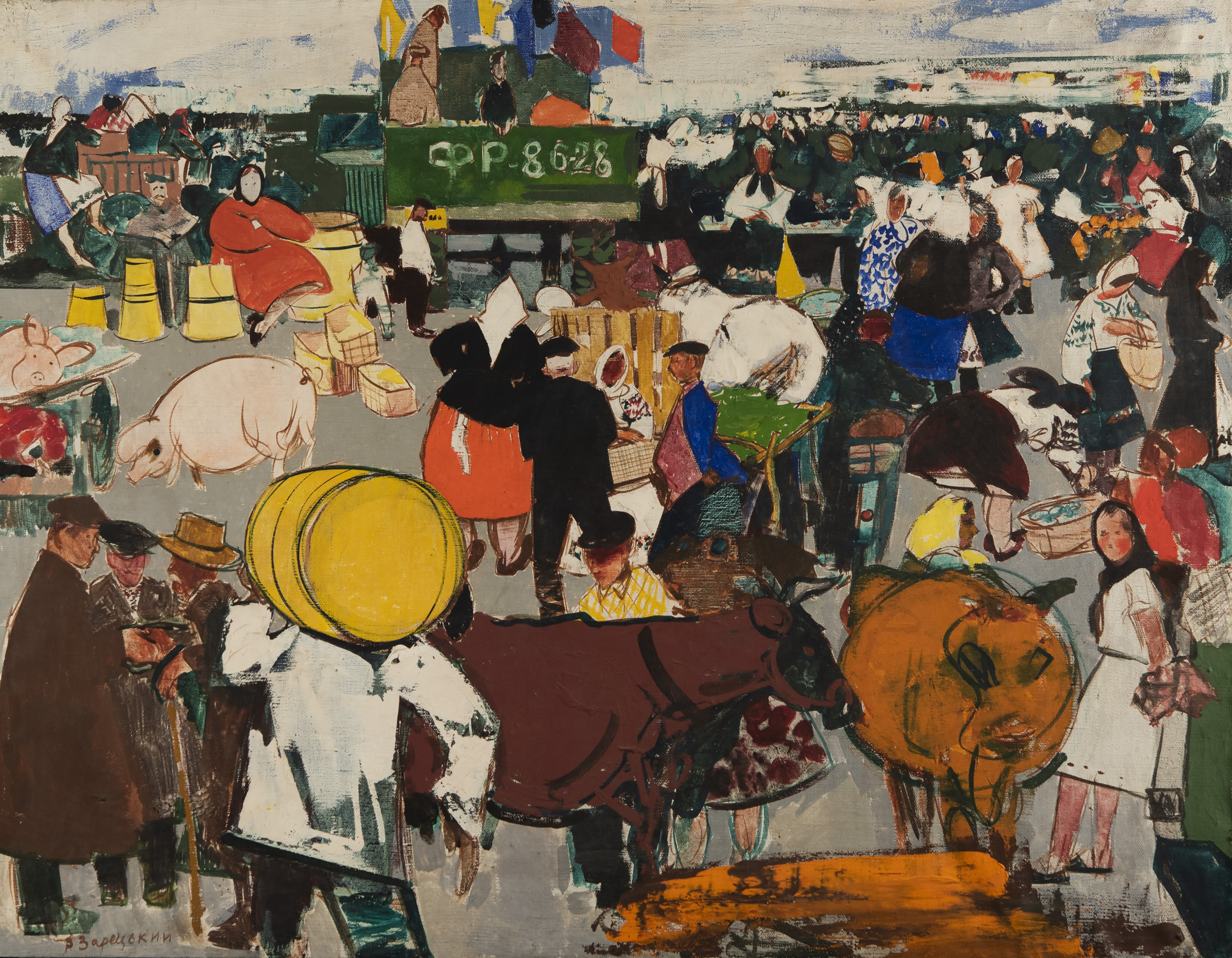
Bazaar, 1969. Oil on canvas, 77.5 × 99.5 cm (30 1/2 × 39 3/16 in.). Norton and Nancy Dodge Collection of Nonconformist Art from the Soviet Union. D00849
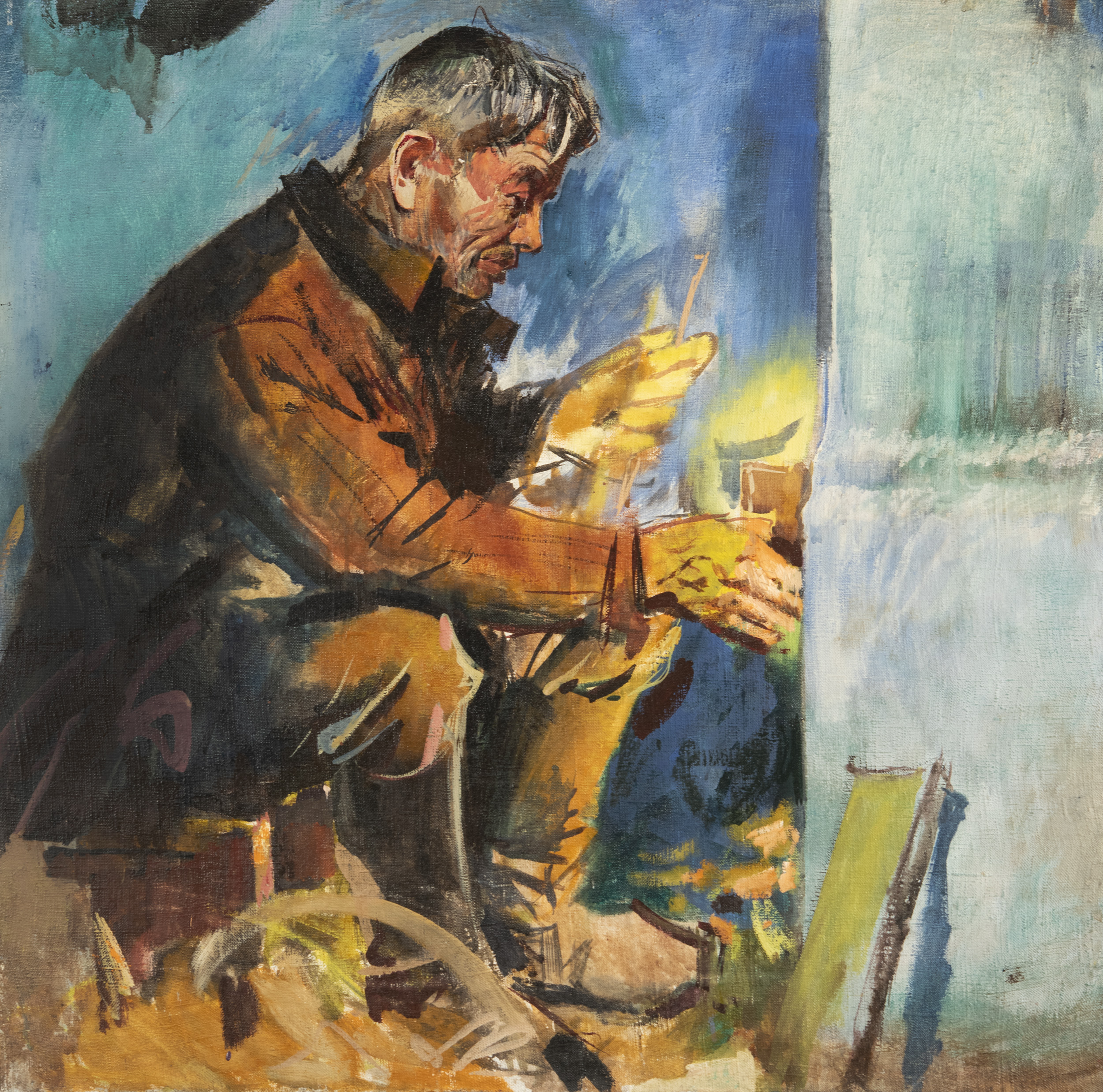
Near a Stove, 1965. Oil on canvas, 75 × 75 cm (29 1/2 × 29 1/2 in.). Norton and Nancy Dodge Collection of Nonconformist Art from the Soviet Union. D00856
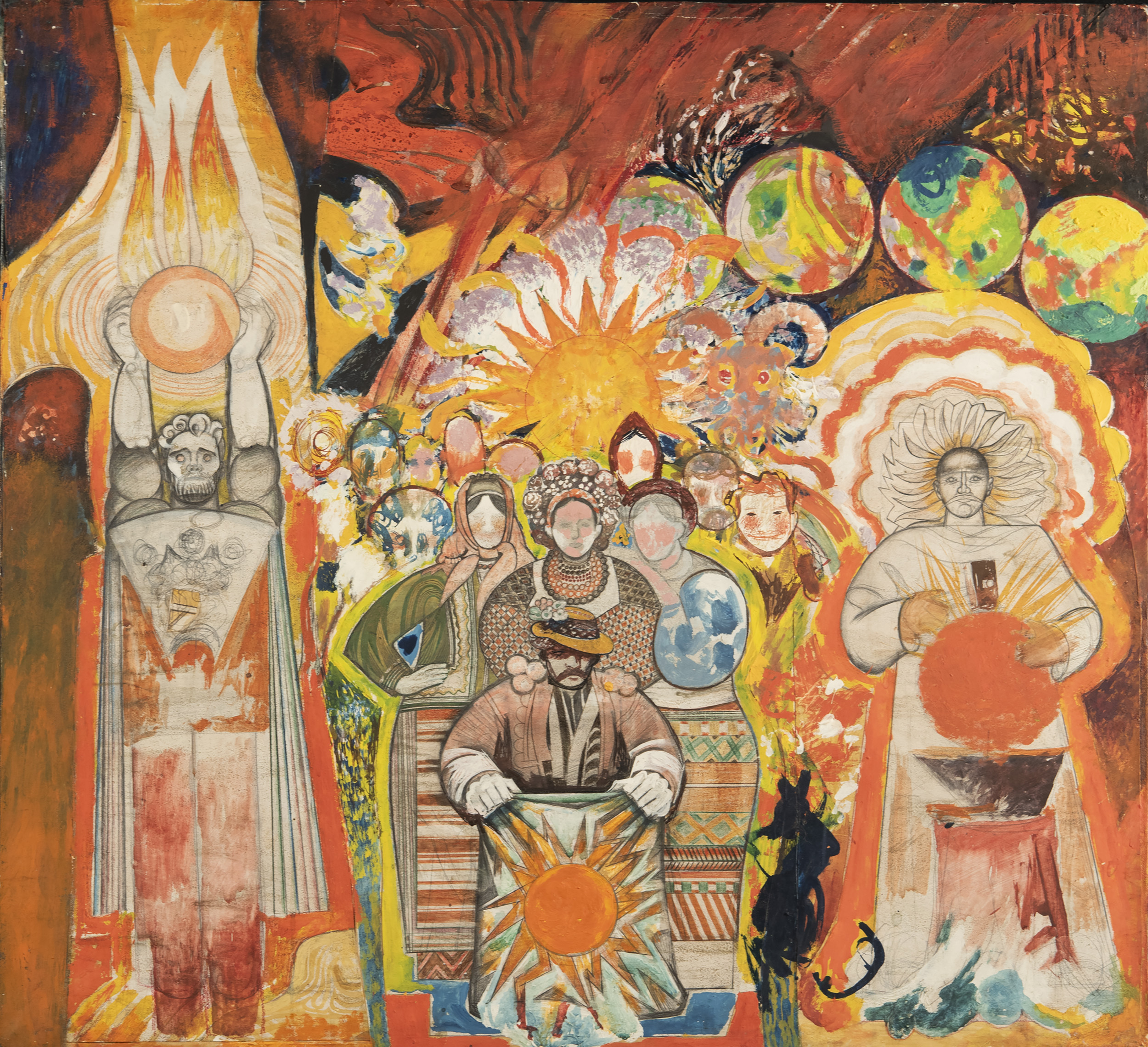
Pagan Ceremony, undated. Mixed media on paper on canvas, 75 × 80.9 cm (29 1/2 × 31 7/8 in.). Norton and Nancy Dodge Collection of Nonconformist Art from the Soviet Union. D00858