
Valve Janov
1921 — Tartu (Estonia) | 2003 — Tartu (Estonia). Worked in Tartu (Estonia)
Valve Janov (née Moss) was born in Tartu. Her father was a craftsman. In 1938 she began studying painting at the Pallas Higher Art School in Tartu (now Pallas University of Applied Sciences), the country’s leading art school at that time. Her studies were interrupted and prolonged by World War II. As the Soviets finally cemented their power for the second time in 1944, the art school was renamed the Tartu State Art Institute. Despite mounting ideological pressure, Janov managed to graduate from the school in 1948.
As a student, Janov had become a member of the Tartu circle, an informal group of talented students that also included Silvia Jõgever, Lüüdia Vallimäe-Mark, Kaja Kärner, Ülo Sooster, Lembit Saarts, Heldur Viires, Valdur Ohakas, Henn Roode, and Esther Raudsepp (later Roode). These young artists were determined not to succumb to the Soviet model of rigid socialist realism but to pursue the Western modernist orientation of the interwar period. Most members of the group were arrested in 1949 on fabricated charges and deported to prison camps. Janov managed to avoid imprisonment and deportation but had to cope with depression and despair.
Janov belongs to the last generation of traditional modernists in Estonian art. As the Stalinist regime was cutting all ties with the rest of the world and subjugating artists to intense indoctrination, this generation preserved memories from the previous period of democracy and struggled to keep artistic freedom and innovation alive. The choice before artists was either to collaborate and embrace socialist realism, or to forfeit the opportunity to have their work seen outside their circle of friends and to make a living as an artist. Janov and her friends were reluctant to conform, so from 1948 to 1972, she worked in a laboratory (marrying Leonid Janov in 1955). It was only in 1969 that she was accepted to the Soviet Artists’ Union and thus attained official recognition as an artist.
By 1956 Janov’s friends had returned from prison camps and the group resumed as nonconformist artists. Those in the group remained loyal to the Pallas School, with its focus on the delicate use of color. Denied professional status, they had to work at home, and they faced difficulties in acquiring paints. Consequently, they often had to use gouache paints and work in small formats. The leader of the group was Ülo Sooster, who had moved to Moscow and introduced his friends to the underground art scene there. Janov always asserted that Sooster played a great part in her formation as an artist, but it is likely that the two influenced each other.
The careers of dissident artists were hampered by lack of reception: Under the severe censorship, their works usually remained hidden. The only public display of the works by the group members took place in 1960 at the Tartu 8th Secondary School. This informal exhibition was followed by a scathing attack on the group in newspapers and by the Soviet Artists’ Union. As Janov recalled: “There was simply no way these works could be displayed in public. I never even thought about it. Knowingly I did them for myself, to be shut away in a drawer. Even in the 1960s there was nothing else I could do with these small pictures.” [1]
Janov’s early work was remarkably varied in terms of themes, motifs, and techniques. From the 1950s on, some of her paintings show the influence of American abstract expressionism or European informalism, as seen in Ice Melting on Ema River (1958, ZAM, D16810). Janov described her method as subconscious and automatist, similar to surrealist automatism. Sometimes she would also use bold abstract patterns within figurative works. She has said: “I like to depict flowers, fish or buildings which I do not believe exist. . . I work long and never want to finish. I feel that as long as I am working, I live in the space that I myself have created. After I have finished, I have to move out.” [2]
In her independent work, Janov did not adhere to a single style, preferring to experiment in different directions. The influence of the Swiss modernist Paul Klee can be noticed in some compositions. From the end of the 1950s, Janov also created playful collages that often emphasize textures and structures (e.g., Collage [1962, ZAM, 1999.0343]). Some of her early paintings and collages were quite close to action painting.
Fish were a recurring motif in Janov’s art from the 1950s (e.g., Green Fish [1961, ZAM, 1999.03326] and Red Collage Fish [1960, ZAM, 1999.0336]). Ülo Sooster also used the fish motif, and it is difficult to say who was the first to “discover” it. By turns conventional or expressive, decorative or structural, the fish became for Janov an ambiguous object with all sorts of modifications, allusions, and meanings. It was an inexhaustible motif that she went on to paint for decades. Another recurring motif in Janov’s work is the moon.
There is often a surrealist or metaphysical atmosphere perceptible in Janov’s works. Her fantastical flower compositions and metaphysical moon landscapes evaded Soviet censorship somewhat more easily than her other works and were sometimes even admitted to exhibitions. Nevertheless, her experimental paintings and collages remained practically unknown throughout the Soviet occupation.
Once Estonia regained its independence in 1991, Janov’s work was finally exposed to a broader audience. An exhibition of Estonian collage art from the 1960s at the Art Museum of Estonia, Tallinn, was a turning point in the evaluation of her art. Today it is generally held that by preserving aesthetic values and innovating means of expression in the face of totalitarian pressure, Janov and her colleagues played an important role in the resistance movement of Estonian art.
Tõnis Tatar
Photo portrait: Valve Janov, 1997. Photo by Wim Lamboo. Art Museum of Estonia. EKM j 61772 FK 4842
Notes:
1. Valve Janov: From the Beginnings to the Avant-Garde 1942–65, exhibition brochure (Tallinn: Adamson-Eric Museum, 2022).
2. Valve Janov, Kaja Kärner, exhibition catalogue (Tartu: Ministry of Culture of the Estonian SSR, 1971).
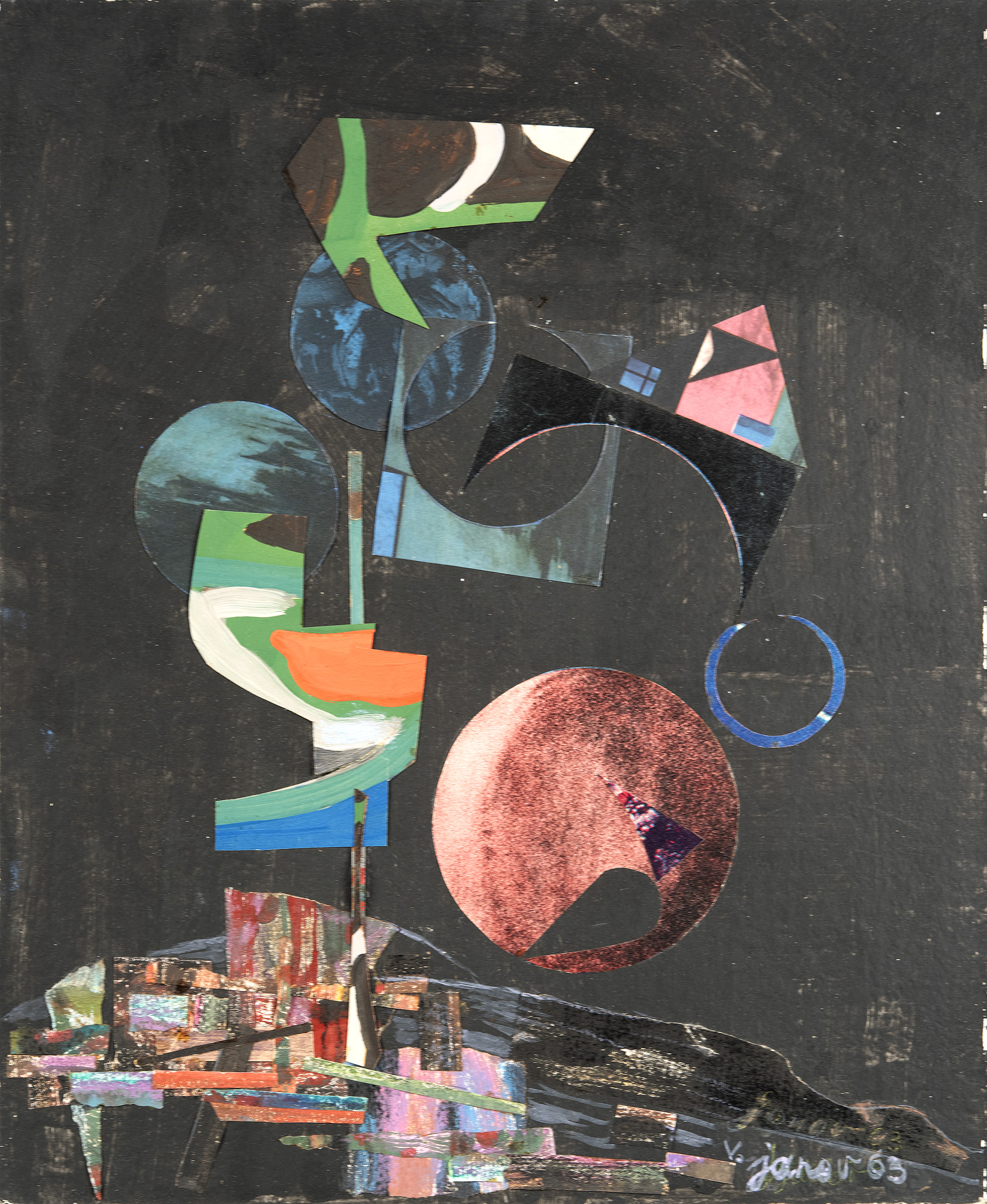
Kite, 1963. Mixed media and paper collage on paperboard, 41.5 × 34.3 cm (16 5/16 × 13 1/2 in.). Purchased with funds donated by Norton Dodge and Nancy Dodge. 1999.0326
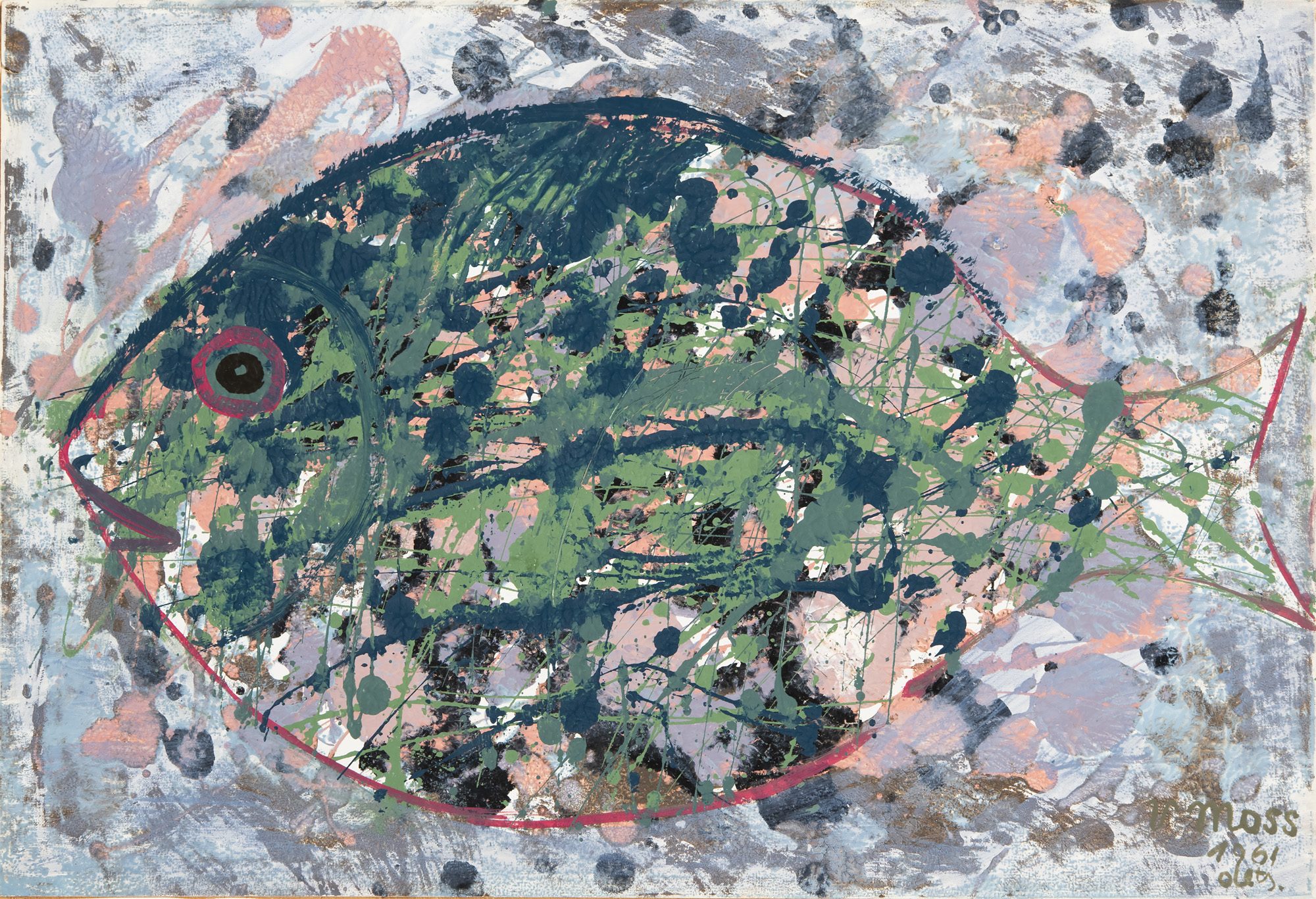
Green Fish, 1961. Oil on paperboard, 33.5 × 48.5 cm (13 3/16 × 19 1/8 in.). Purchased with funds donated by Norton Dodge and Nancy Dodge. 1999.0332
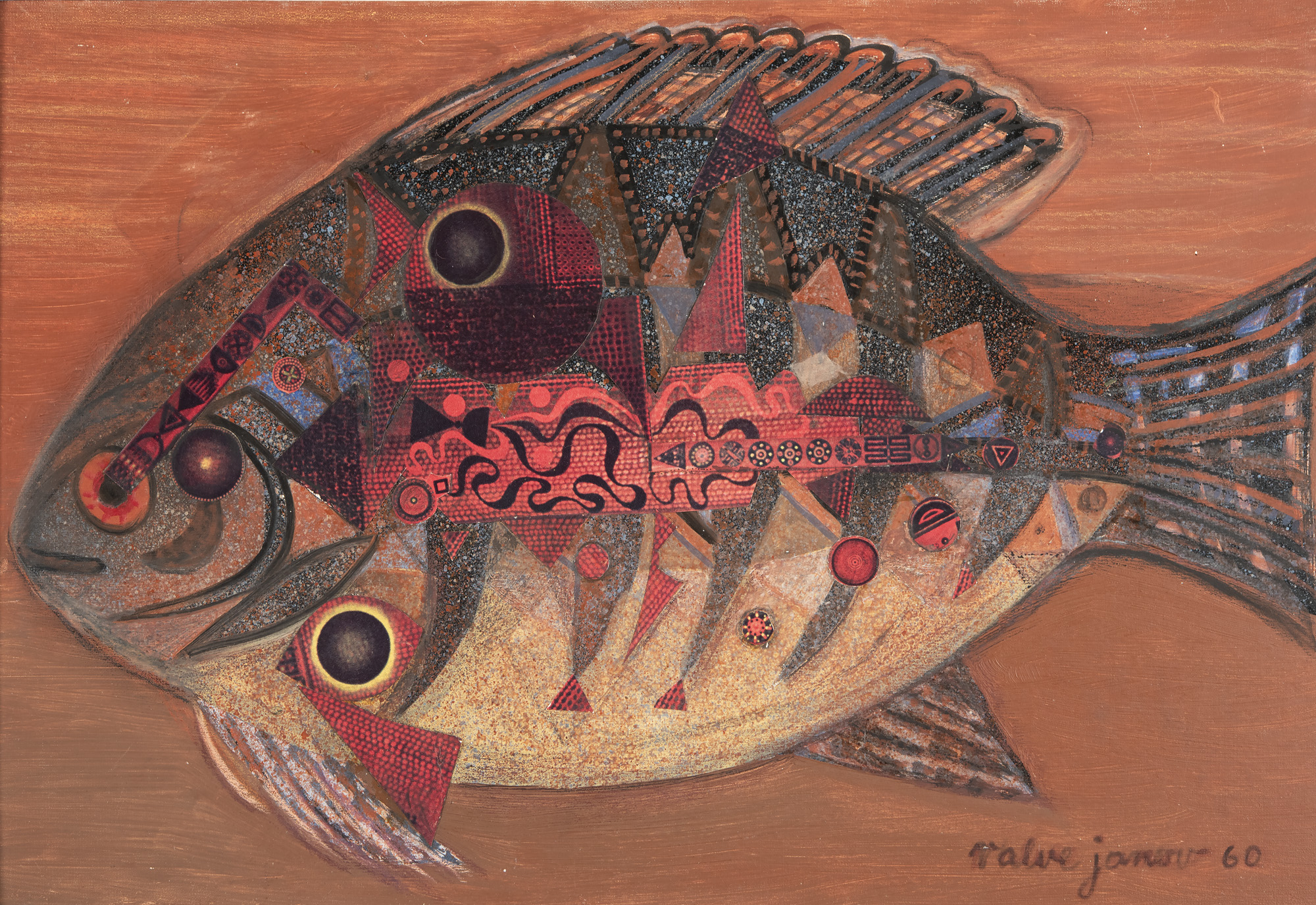
Red Collage Fish, 1960. Oil, mixed media, and paper collage on paperboard, 33 × 48 cm (13 × 18 7/8 in.). Purchased with funds donated by Norton Dodge and Nancy Dodge. 1999.0336
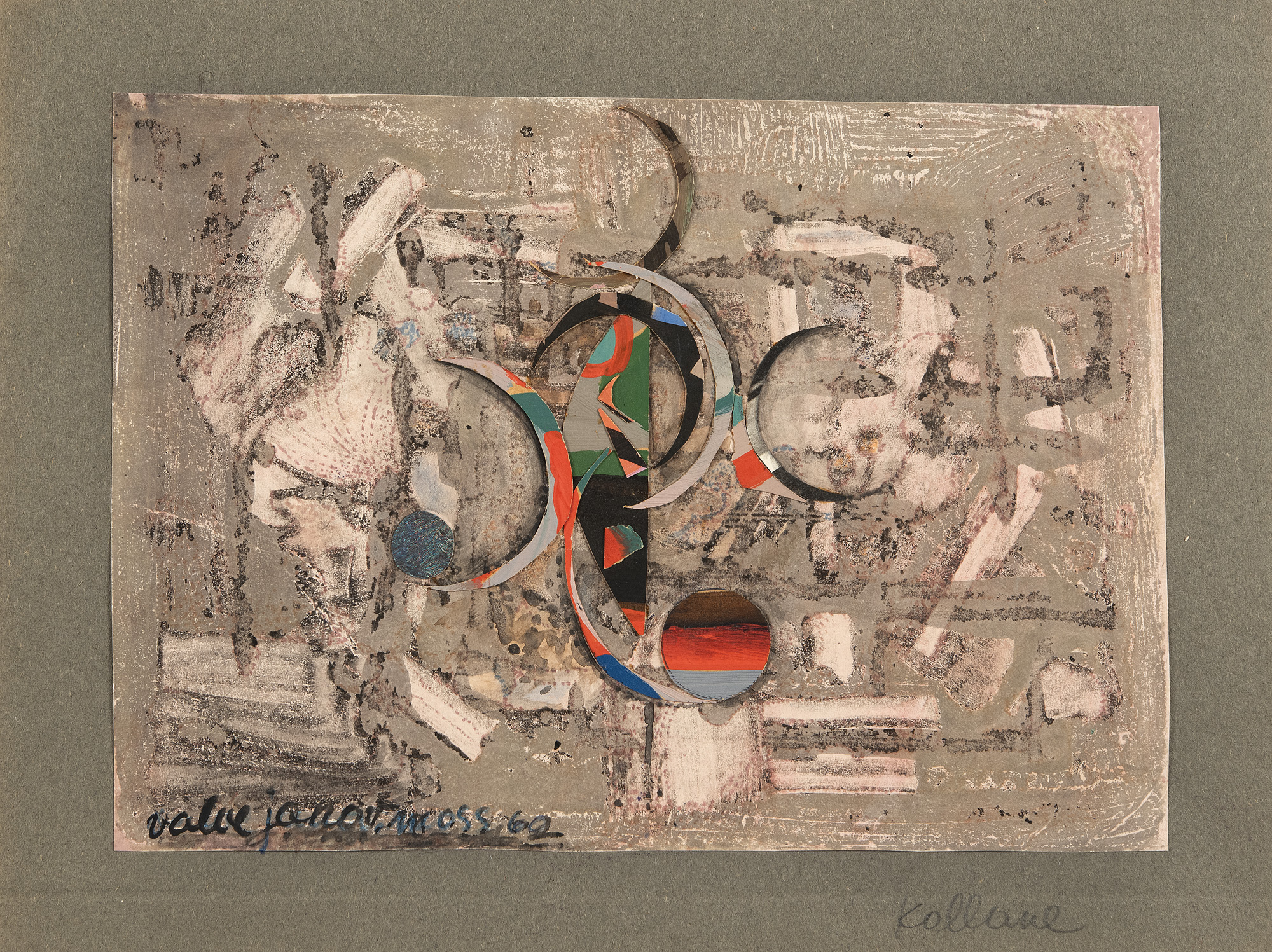
Collage, 1962. Collage and tempera on paper, 18.2 × 25.5 cm (7 3/16 × 10 1/16 in.). Purchased with funds donated by Norton Dodge and Nancy Dodge. 1999.0343
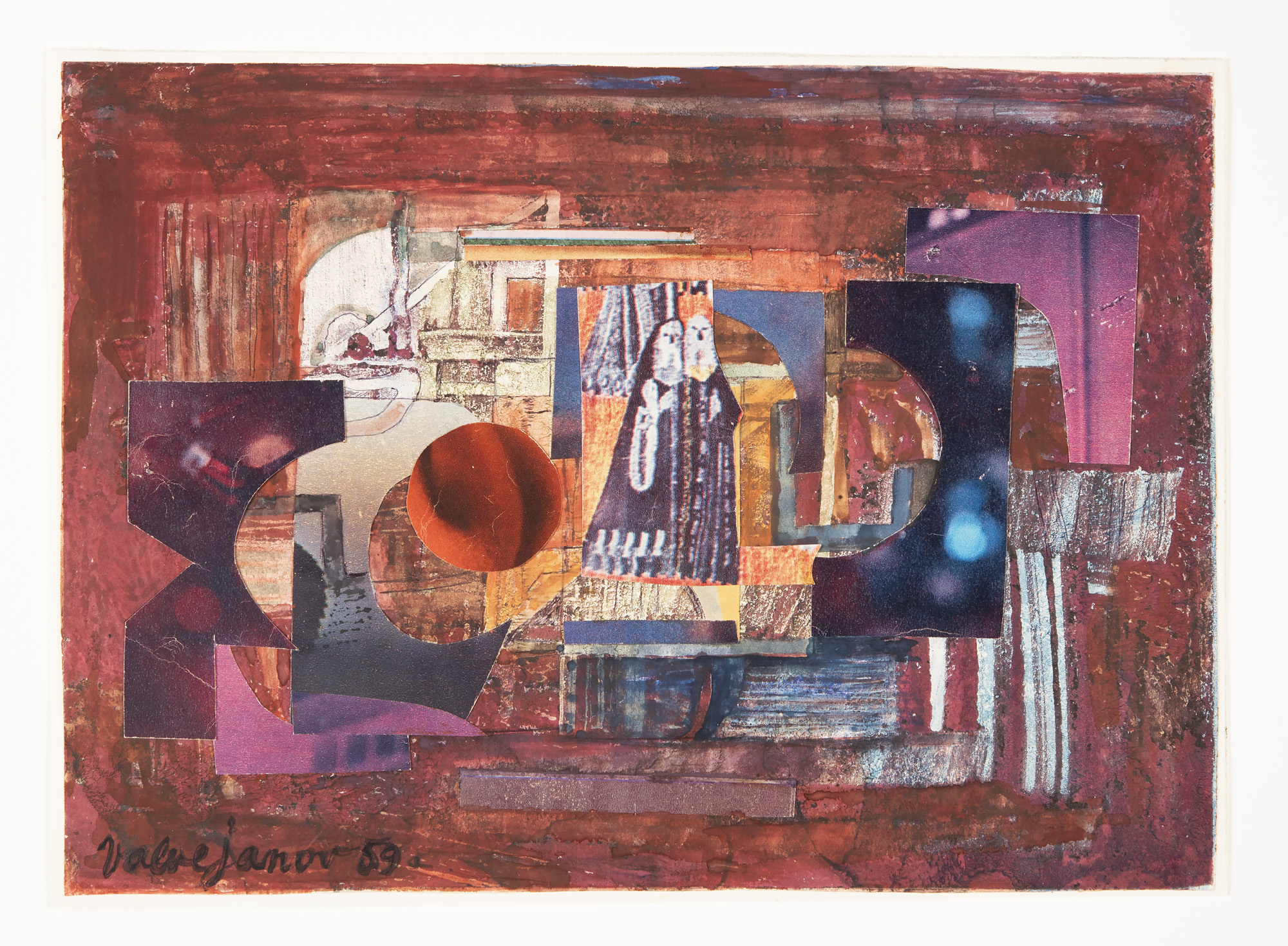
Collage, 1959. Gouache and paper collage over monotype on paper, 18 × 25.5 cm (7 1/16 × 10 1/16 in.). Purchased with funds donated by Norton Dodge and Nancy Dodge. 1999.0344
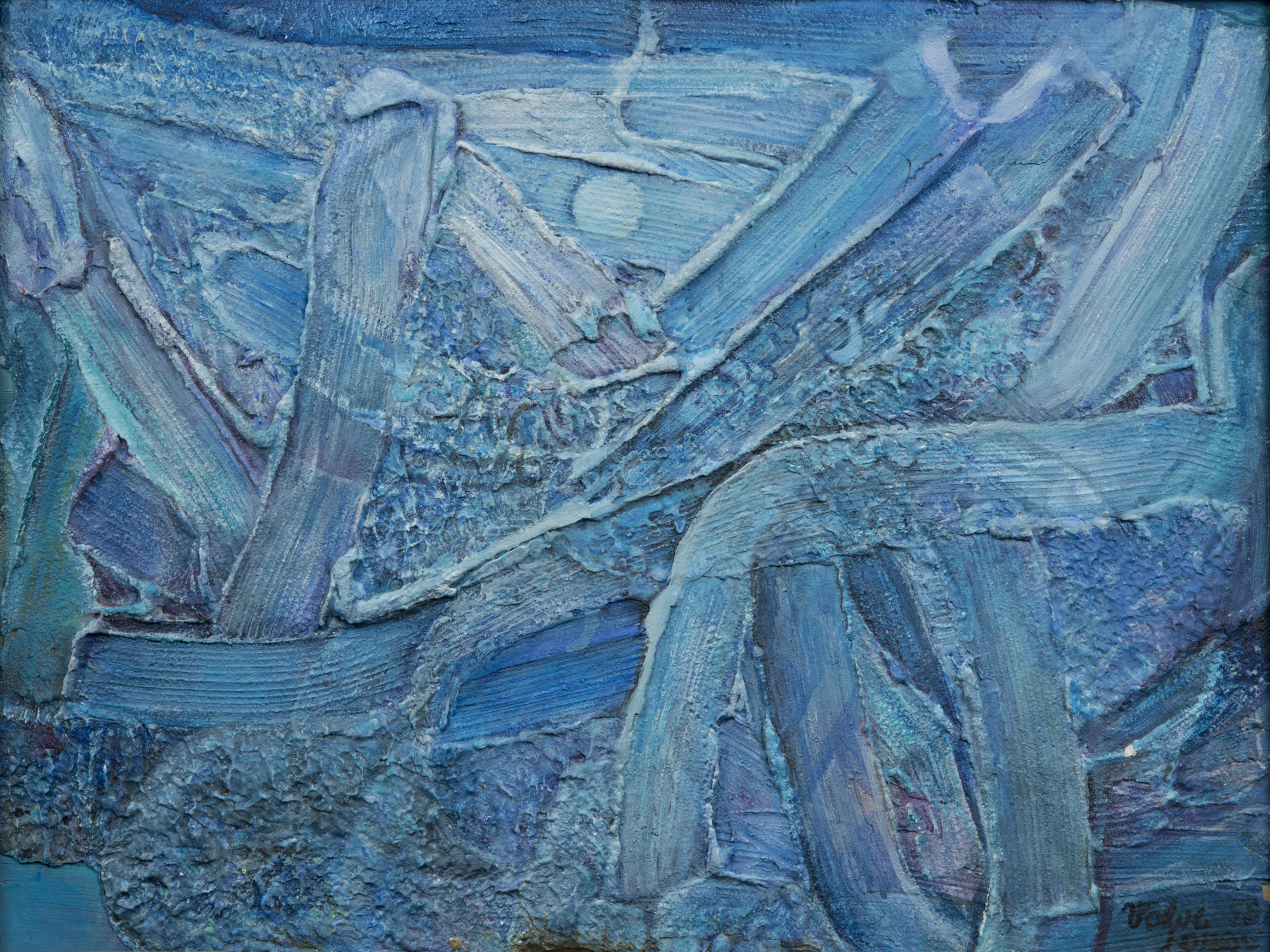
Ice Melting on Ema River, 1958. Mixed media and painted plaster on wood board, 44.3 × 58.6 cm (17 7/16 × 23 1/16 in.). Norton and Nancy Dodge Collection of Nonconformist Art from the Soviet Union. D16810