
Valerii Bondar
a.k.a. Valier
1956 — Melnytsia-Podilska, Ternopil region (Ukraine) | 2012 — Kharkiv (Ukraine). Worked in Kharkiv (Ukraine)
Valerii Bondar was a Ukrainian graphic artist, illustrator, designer, painter on glass, and monumental artist. He was a public figure, serving as the first chairman and member of the central leadership of the Kharkiv Regional Organization of the Congress of Ukrainian Nationalists, cofounder of the Kharkiv branch of the Helsinki Union, and a member of the independent artistic group the National Association of Artists. As a nationally minded Ukrainian, he often embraced civic protest and the worldview of a “stranger among his own.” This outlook influenced his work as a nonconformist artist; he worked in the style of expressionism and was one of the leaders of the Kharkiv underground in the 1980s and the Ukrainian national revival of the 1990s and 2000s.
Bondar received no professional art education, but he studied at the Kharkiv Institute of Municipal Construction Engineers (now the O. M. Beketov National University of Urban Economy in Kharkiv) from 1975 to 1978, completing a degree in architecture.
The artist’s architectural education, natural charisma, and family roots (his father and grandfather were from the Ternopil region) influenced the formation of his creative personality, which combined emotionality with rationality. His artistic style intertwined features of Ukrainian folk art and European art, mostly German expressionism, with a dramatic worldview shaped by the theme of suffering as sacralized by Christianity. As an artist, he proved himself mainly in two artistic genres: graphics (easel and book illustration) and painting on glass. These mediums allowed the artist to express his creative temperament and artistic style to the fullest through expressive imagery, intense drama, and free-form graphics. Although at first glance Bondar’s artworks suggest an abstract manner, he was extremely specific in his thematic images, seeking to express themes rather than formal motifs.
The roots of his style, called “Kharkiv Expressionism” [1] by the art historian Larysa Savytska, lie in the artist’s family circle. His grandfather, Mykola Bondar (1911–1977), studied in the graphic studio of the Kharkiv Art Institute (now Kharkiv State Academy of Design and Arts) in the 1920s and ’30s under the esteemed Vasyl Kasyan (1896–1976) and other prominent modernists including Anatol Petrytsky (1895–1964), Vasyl Yermilov (1894–1968), and Oleksandr Khvostenko-Khvostov (1895–1967). He witnessed the flourishing of the avant-garde but was later repressed. His initial order for execution was replaced by a ten-year sentence in the camps for his participation in the UPA (Ukrainian Insurgent Army) between 1942 and 1943. Young Bondar saw himself as a grandson of the “Executed Renaissance” generation, [2] which thus shaped his personal and artistic spirit and his own rebellious aesthetic. His grandfather taught him the need to search for his own style, as well as an interest in world and Ukrainian history, culture, and art, and also influenced his traditional religious upbringing. After the death of his grandfather, the artist’s stalwart uncle and godfather, Ihor Bondar (1939–1998), took up the baton of spiritual influence over the young artist. Bondar was a dissident and Ukrainian nationalist who discussed culture, traditions, and other areas of Ukrainian history with his nephew. He helped him to look for old prints, albums of Ukrainian and Western European art, Japanese prints, books by Ukrainian writers, and Ukrainian translations of world literature. He also procured an order from the Czech Republic for the artist to illustrate Ukrainian folktales (1980s). These relationships and experiences formed the basis of Bondar’s original and nationally expressive style.
From the very beginning of his career, the artist dissociated himself from everything official and associated with the state. He refused to study at prestigious universities and stayed away from the National Union of Artists of Ukraine, fearing forced cooperation with the KGB. The life and artistic strategy he chose was based on self-education and free creativity. He became a member of the first artistic union in independent Ukraine, the National Association of Artists (1995), which proclaimed its mission of combining the deep traditions of the Ukrainian people with the achievements and experience of contemporary Ukrainian and world art in order to create the national art of a sovereign Ukraine.
After graduating in 1978, Bondar was sent to work as an engineer at the Kharkiv Regional Utility Department. From that time he began keeping a personal notebook, gradually switching to Ukrainian from Russian, and he started to form a distinctly national style in his graphic art, increasingly identifying as a Ukrainian nationalist. He reasoned and struggled with himself in his notes, writing about faith, ideology, and the search for freedom. Later he found like-minded artists and thinkers in Lviv. Volodymyr Loboda (1943–2023) and Ivan Ostafiichuk (b. 1940), both prominent artists and representatives of the Lviv underground from the 1960s to the 1990s, became his mentors. In 1987 Bondar joined the Ukrainian Association of the Independent Creative Intelligentsia (UAICI), which was founded in Lviv and included many political prisoners, and he designed the UAICI logo and the cover of Kafedra magazine. The editor-in-chief of Kafedra was the UAICI founder Mykhailo Osadchyi (1936–1994), a Ukrainian journalist, writer, dissident, and political prisoner of the USSR. During this time, Bondar felt as if he was in internal exile and controlled by society, and he wanted more freedom in his work. While he was working as an artist-designer for the official opening of the Kharkiv Literary Museum in 1988, he had his own art studio in the basement of the museum, which became a center for the dissemination of Ukrainian national culture and language, and for communication among creative intellectuals, writers, and artists from all over Ukraine.
In the 1970s and ’80s, Bondar created numerous field sketches of landscapes and cities he visited (including Lviv, Riga, Trakai, and Klaipeda) and narrative compositions, gradually moving to a more generalized graphic style and trying his hand at illustrations (The Tale of Igor’s Campaign, Franz Kafka’s The Trial, and color illustrations for Ukrainian fairy tales). In the 1980s he produced leaflets, posters, bookplates, graphic signs, postcards, and book covers. He improvised in the style of a linocut or Japanese graphic using black ink and ocher watercolor on white paper (e.g., Церква с. Кривки Турківського району Львівщини XVII ст. [Church in the Village of Kryvky, Turkivskyi District, Lviv Region. XVII Century, 1986]). At this time the artist was also fond of painting, particularly portraiture (e.g., Сліпі та глухі [Blind and Deaf, 1988]).
Bondar worked in the field of graphic art and book illustration, as well as painting on glass, trying to develop a synthetic recognizable style combining angular, semiabstract figurative images with turbulently expressive lines and blotches to create concentrated and intense images (e.g., Схованка [Hiding Place, 1987] and Героям слава [Glory to the Heroes, 1988], both ink on paper). In the second half of the 1980s, he worked extensively in the genre of graphic miniature (e.g., Покрова [Intercession], День державності [Statehood Day], ОУН [OUN], Великдень [Easter], Різдво на Січі [Christmas in the Sich], Голодомор [Holodomor]) and then created book illustrations for Ukrainian folktales (Shchedryk and Dzyga) and collections of poems by classical and contemporary Ukrainian authors. In 1996 he made illustrations for the poem-treatise Metaphysical Requiem, by Volodymyr Hariaiev, the “last Ukrainian futurist” of the 1930s. In the 1990s he drew posters and programs for literary festivals and made handwritten books. His characteristic graphic language was clearly evident in the first illustrations to the poetry of Vasyl Stus (1989) and later established in works for poetry by Stepan Sapelyak, Nadia Shmid, Oleksandra Kovaliova, Bohdan-Ihor Antonych, and Serhiy Zhadan. He mainly represented dramatic, even deadly struggle and overcoming obstacles, using expressive abstraction and the unrestrained architecture of black stripes and lines. His favorite graphic technique of those years was linocut, and after a joint exhibition of Kharkiv and Lviv artists in 1992, his friends from Lviv gifted him a machine that facilitated his further work in that medium.
In his glass painting, with its formal connection to folk art, icons, and lubok popular prints, Bondar contrasted forms with open, clear spaces of color, expressing themes of the struggle for truth and freedom, catharsis, the way of the cross, the union of heaven and earth, and other themes (e.g., the series Туск [Tusk], Праведники [The Righteous], and Мости [Bridges, 2000–2010]). The artist rejected the language of folk iconography, instead creating his own synthetic artistic language. Although Bondar’s technique appears closely related to the genre of the folk “glass icon,” it derives its expressive language from the avant-garde of the early twentieth century and the modern Ukrainian baroque. At the turn of the 1980s and ’90s, he was working with poster gouache on glass, and then acrylic, combining monotype with painting. He mostly drew on urban and biblical motifs, fixing his works by sealing them with varnish or backing them with paper. (The paintings were poorly preserved, however, and required restoration, which was executed by the famous restorer V. Shulika.)
Bondar’s monumental artworks include two Kharkiv monuments dedicated to the UPA soldiers in the Youth Park (1992) and to the repressed kobzars (traditional itinerant bards) in the Taras Shevchenko City Garden (1997), as well as several memorial plaques. The plaques were dedicated to the nationalist lawyer Mykola Mikhnovsky (2003), the victims of the Union for the Freedom of Ukraine trial (2004), [3] the Greek Catholic Patriarch Josyf Slipyj (2005, 2008), [4] the architect Vasyl Krychevsky (2008), and the famous linguist and professor at Kharkiv University Yuri Sheveliov (George Shevelov) (2013, later destroyed by local authorities). [5]
From 1987 Bondar participated in art exhibitions in Ukraine and abroad, including solo exhibitions in Kharkiv (1987, 1991, 1996), Lviv (1991), Toronto (1991), and Munich (1992). One of his first exhibitions of graphics and paintings, presented jointly in 1990 with the master of Ukrainian ceramics Petro Mos (b. 1948), was a great success. The works on view, created in 1987–88, impressed the audience with their timeless yet modernist quality, as well as their depth of meaning. The exhibition included his graphic works Володимир Великий [Volodymyr the Great], Петро з ключами [Peter with the Keys], and Христос скорботний [Christ the Sorrowful] (all 1987), as well as his oil paintings Петро і півень [Peter and the Rooster], Вигнання гендлярів з храму [Expulsion of the Handmaids from the Temple], Молитва в Гетсиманському саду [Prayer in the Garden of Gethsemane], and Голгота [Golgotha].
All six of Bondar’s graphic works in the Dodge Collection date from the final years of the Soviet Union, between 1983 and 1986. This was a career-defining period in the artist’s work, when he was finding his own language in freehand graphics, posters, and book illustrations, all of which are represented in the Dodge Collection. Depicting different images of confrontation with power, these works include sharply defined forms and counterforms to create tense rhythms. They address themes of sacrifice, as in the poster Голодомор на Україні [Holodomor in Ukraine] (1983, ZAM, D10860), where the word for “death” can be read in graphic symbols that resemble crosses on graves; resilience; and resistance, as in two untitled linocuts (ZAM, D11091, D11092); the cruelty of the totalitarian regime, as in illustrations for Vasyl Stus’s book Веселий цвинтар [The Merry Cemetery] (1986, ZAM D11096, D11097); and the sacralization of Christian martyrdom, as in Походження писанки [The Origin of the Easter Egg] (1984, D11098). The artist returned to these wide-ranging themes later in both graphics and glass painting.
In the 1990s, Bondar began to explore a more symbolic and expressive graphic form, reminiscent of Chinese calligraphy. He used this approach to reflect emotional states in a series of self-portraits, such as the cycles Біль [Pain] and Сум [Sadness] (1996–98).
The artist’s creative star began to rise in the 1990s, when his artworks were bought and exported abroad. He was particularly popular in Germany, where he was considered one of their own because of his creative connection with the German expressionists. Interest in the author’s works dropped off in the late 2000s, however, causing the artist great disappointment and depression which led to his premature death. A large collection of Bondar’s works is still preserved in Kharkiv’s Literature Museum, and a significant number are scattered across Ukraine and around the world in private collections.
Bondar’s distinctive style, built on a synthesis of avant-garde strategies and reinterpreted traditions of Ukrainian folk art, reflected a personal artistic ideology that manifested itself not only in the figurative and narrative content, but also at a deeper conceptual level. The essence of his works can be found in their deep and associative visual language that expresses the struggle of the spirit, Christian sacrifice, and a worldview built upon resistance.
Eugeny Kotlyar
Translated from Ukrainian by Nathan Jeffers
Notes:
1. Larysa Savytska,“Mosty i Pravednyky” [Bridges and the righteous], Muzeinyi provulok [Museum lane], no. 1 (2007): 132.
2. A term coined by the Polish writer, editor and public figure Jerzy Giedroyc (1906–2000), which became commonly used from the end of the 1950s. The term denotes the creative generation of the 1920s and ’30s in the Ukrainian SSR that produced many important artistic works in a wide range of cultural and artistic fields and was destroyed during Stalin’s terror in the 1930s.
3. This was a show trial in the 1930s in which the Soviet government arrested and tried many central figures of the Ukrainian intelligentsia.
4. The first version of this plaque was made in 2005 but was destroyed by unknown persons in 2006. The second version was made in 2008 but later destroyed by Ukrainophobes and the local authorities in 2010. It was restored in 2011 according to the artist’s design by the Kharkiv sculptor Oleksandr Ridnyi. See Istorichna Pravda, 4 February 2011.
5. See Istorichna Pravda, 23 September 2013.
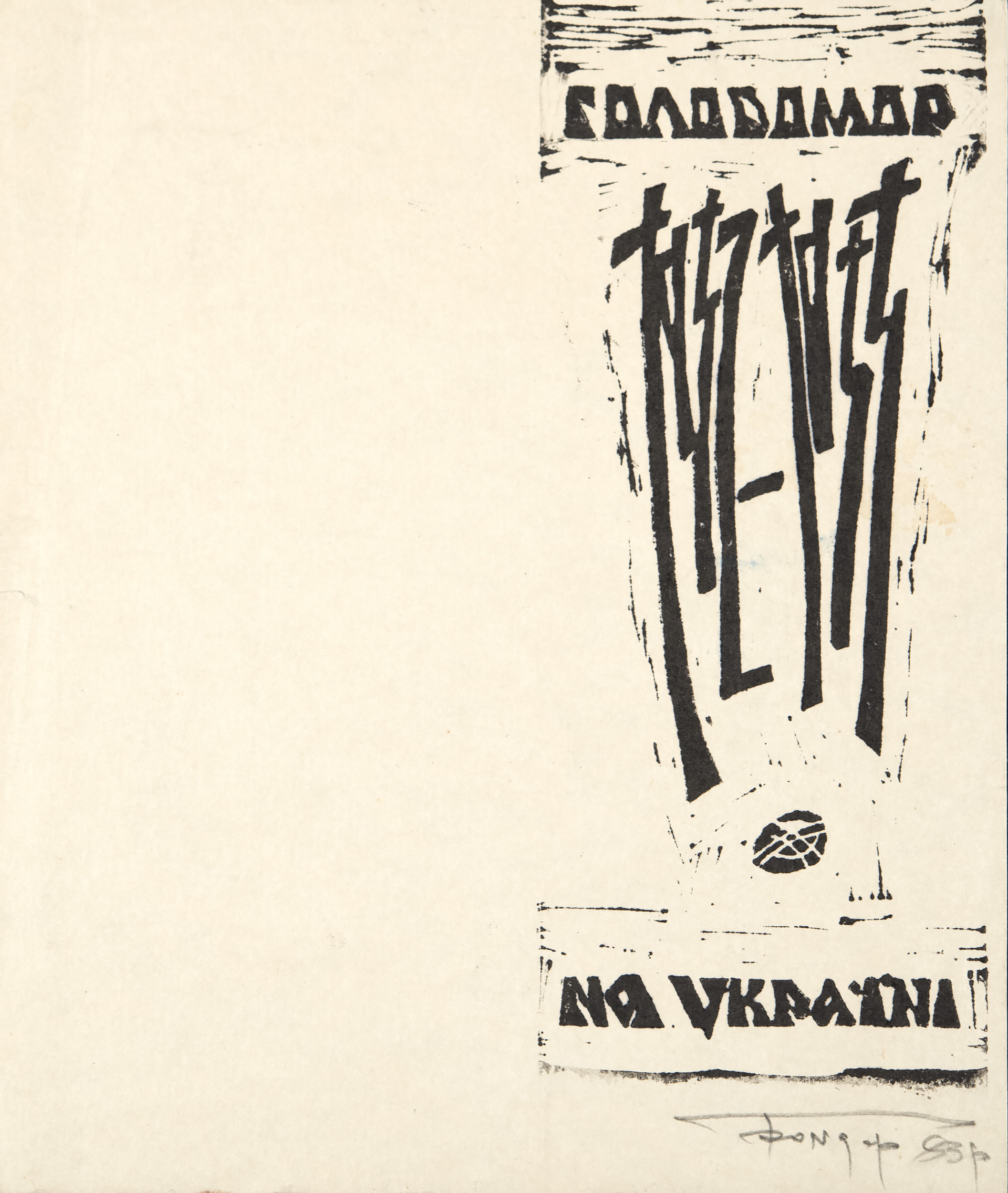
Holodomor na Ukraine, 1983. Stencil on paper, 21.5 × 18 cm (8 7/16 × 7 1/16 in.). Norton and Nancy Dodge Collection of Nonconformist Art from the Soviet Union. D10860
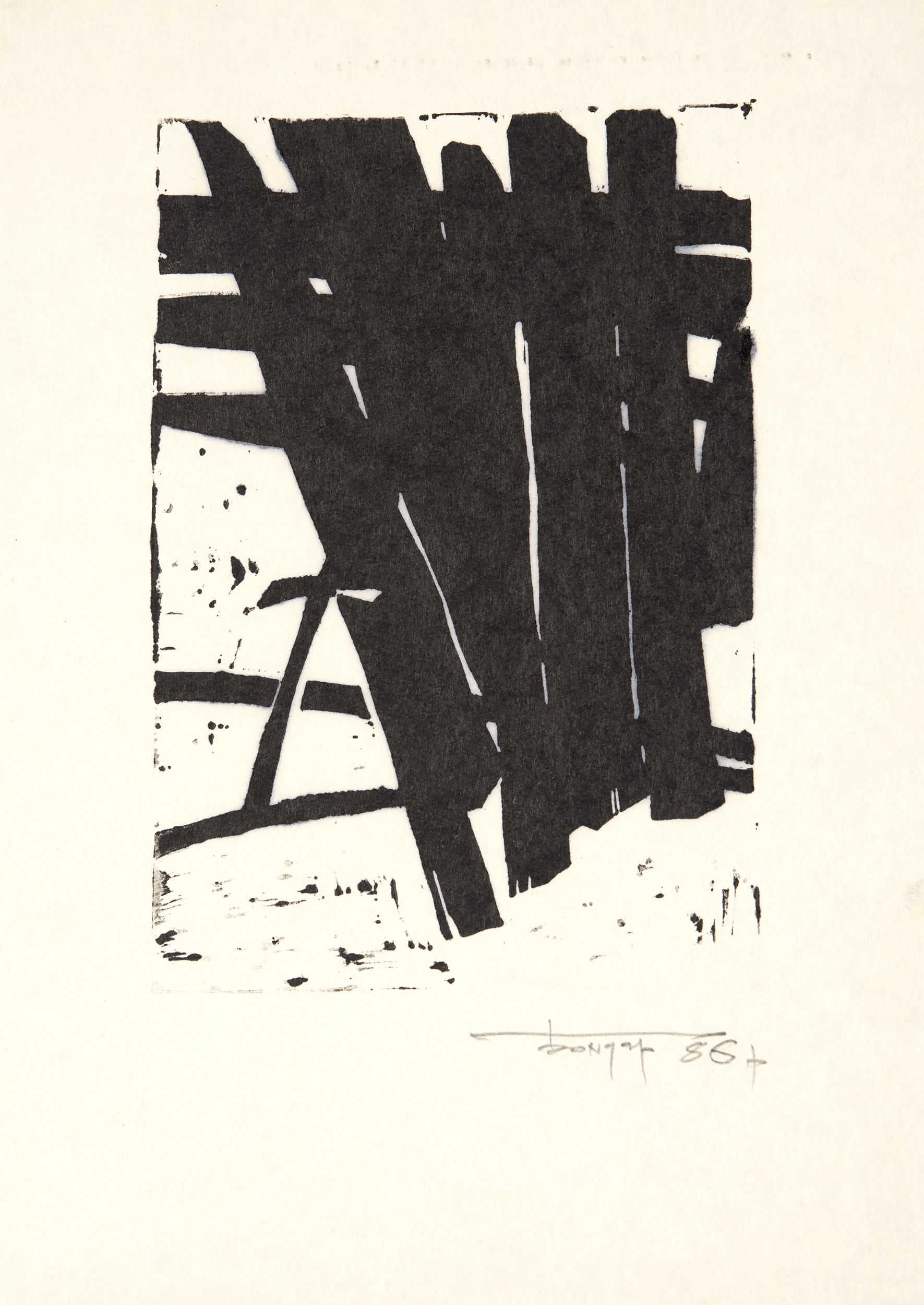
Untitled, 1986. Linoleum block print on paper, 28.5 × 20.3 cm (11 1/4 × 8 in.). Norton and Nancy Dodge Collection of Nonconformist Art from the Soviet Union. D11091
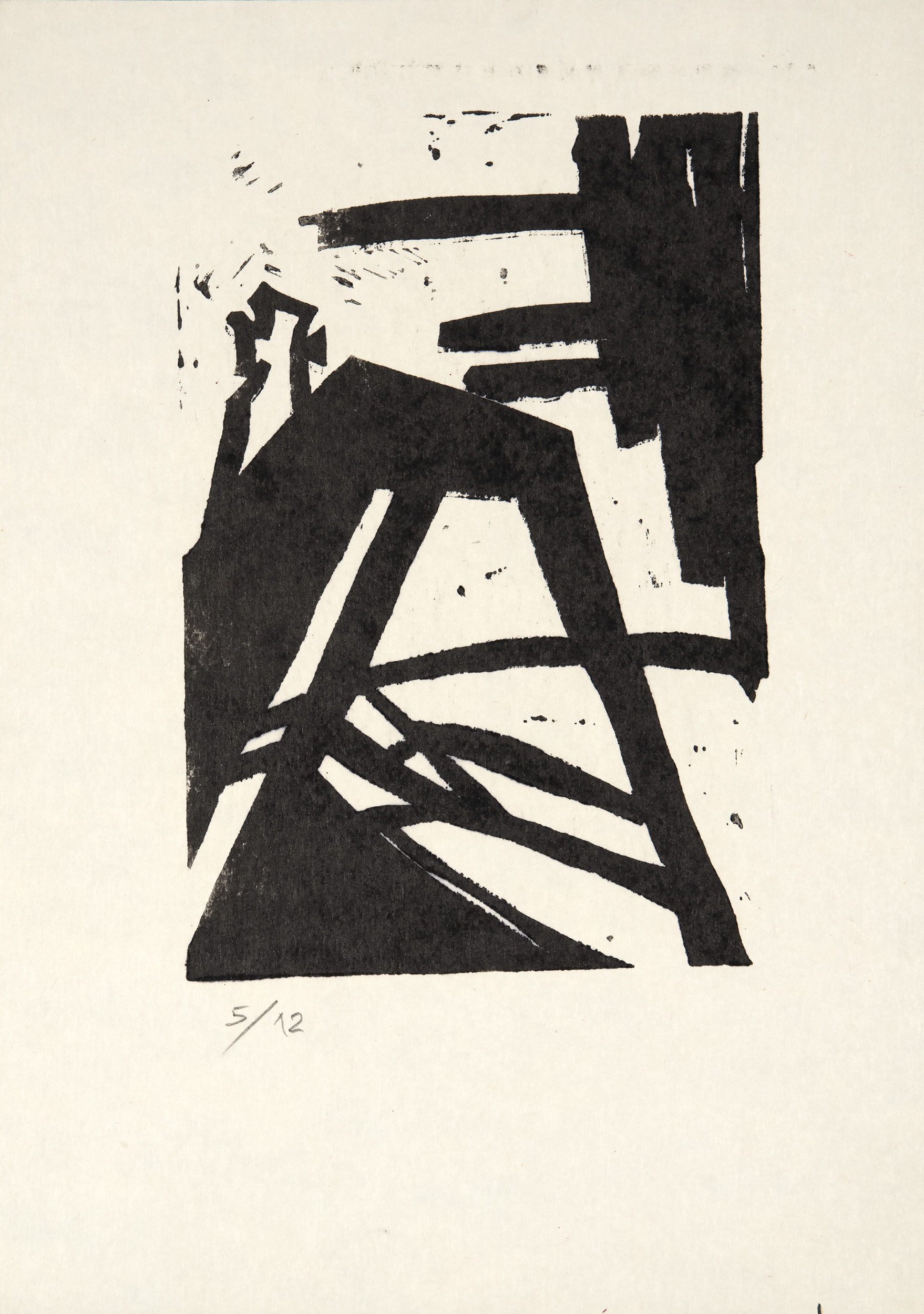
The Earth’s Dense Crust Has Grown Thin. From the Illustrations for Vasyl Stus's book Veselyi tsvyntar (The Merry Cemetery), undated. Linoleum block print on paper, 29.4 × 20.8 cm (11 9/16 × 8 3/16 in.). Norton and Nancy Dodge Collection of Nonconformist Art from the Soviet Union. D11092
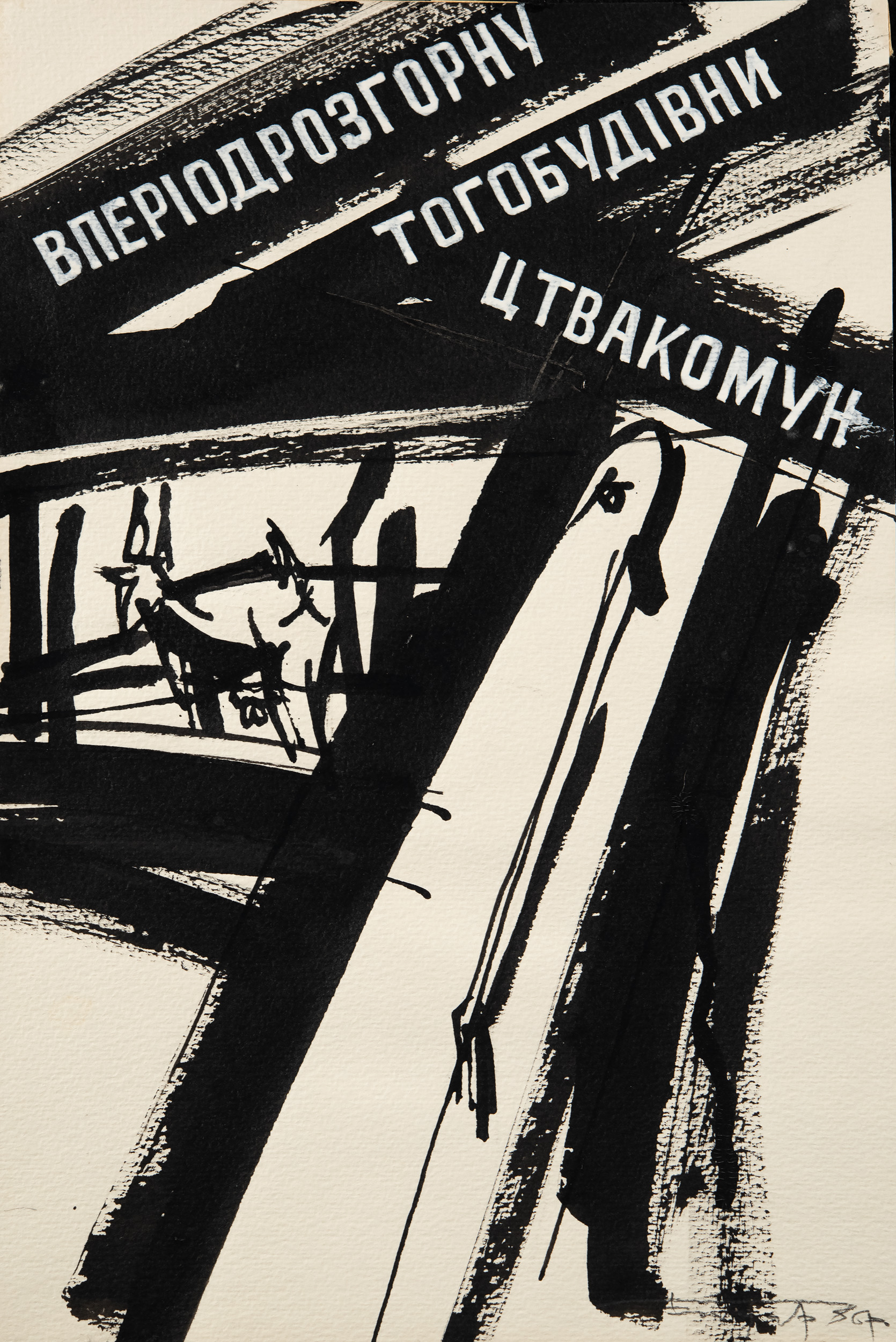
Illustration for Vasyl Stus's book Veselyi tsvyntar (The Merry Cemetery), 1986. Ink and gouache on paper, 36 × 24 cm (14 3/16 × 9 7/16 in.). Norton and Nancy Dodge Collection of Nonconformist Art from the Soviet Union. D11096
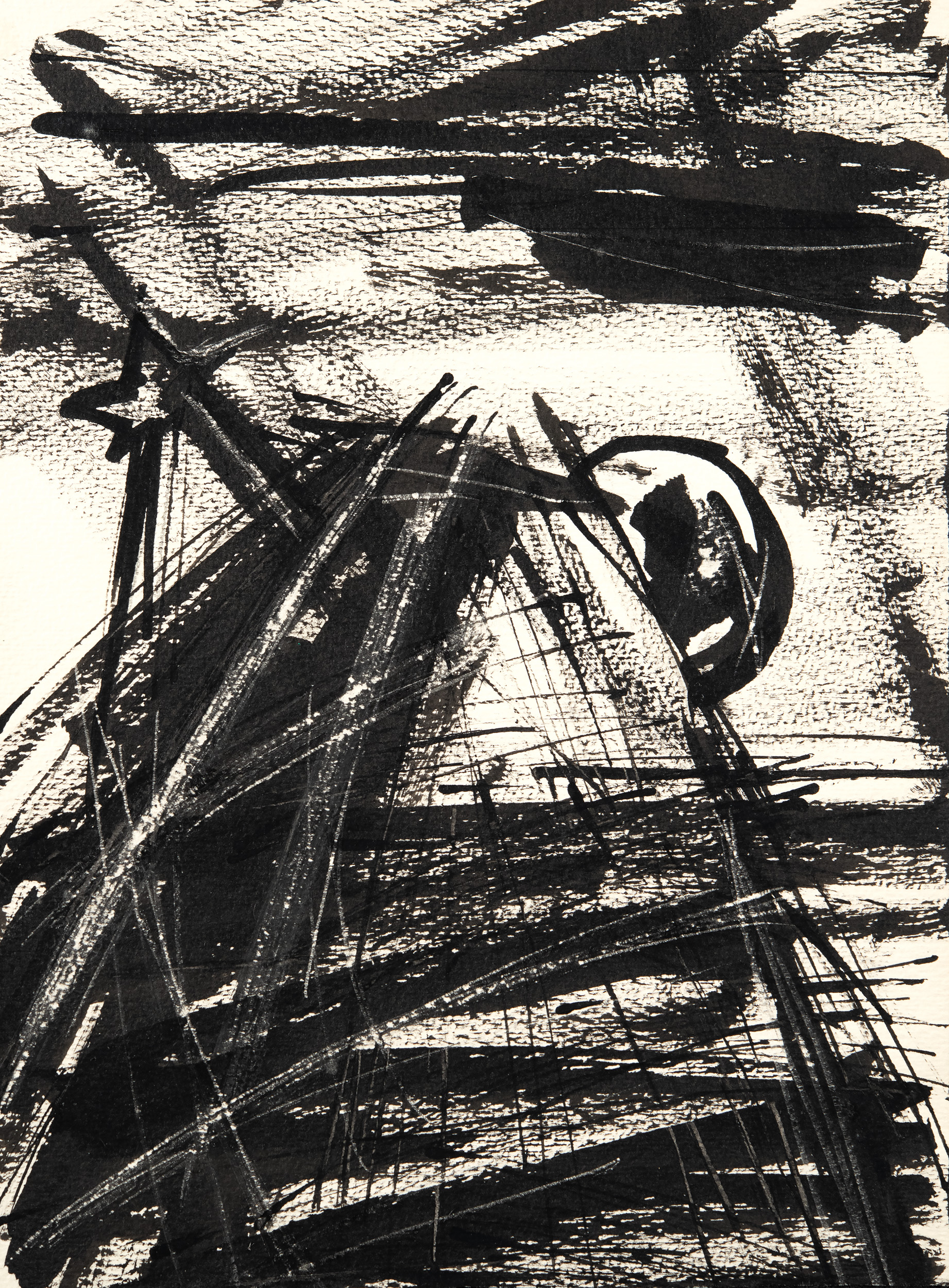
Illustration for Vasyl Stus's book Veselyi tsvyntar (The Merry Cemetery), 1986. Ink on paper, 32.5 × 24 cm (12 13/16 × 9 7/16 in.). Norton and Nancy Dodge Collection of Nonconformist Art from the Soviet Union. D11097
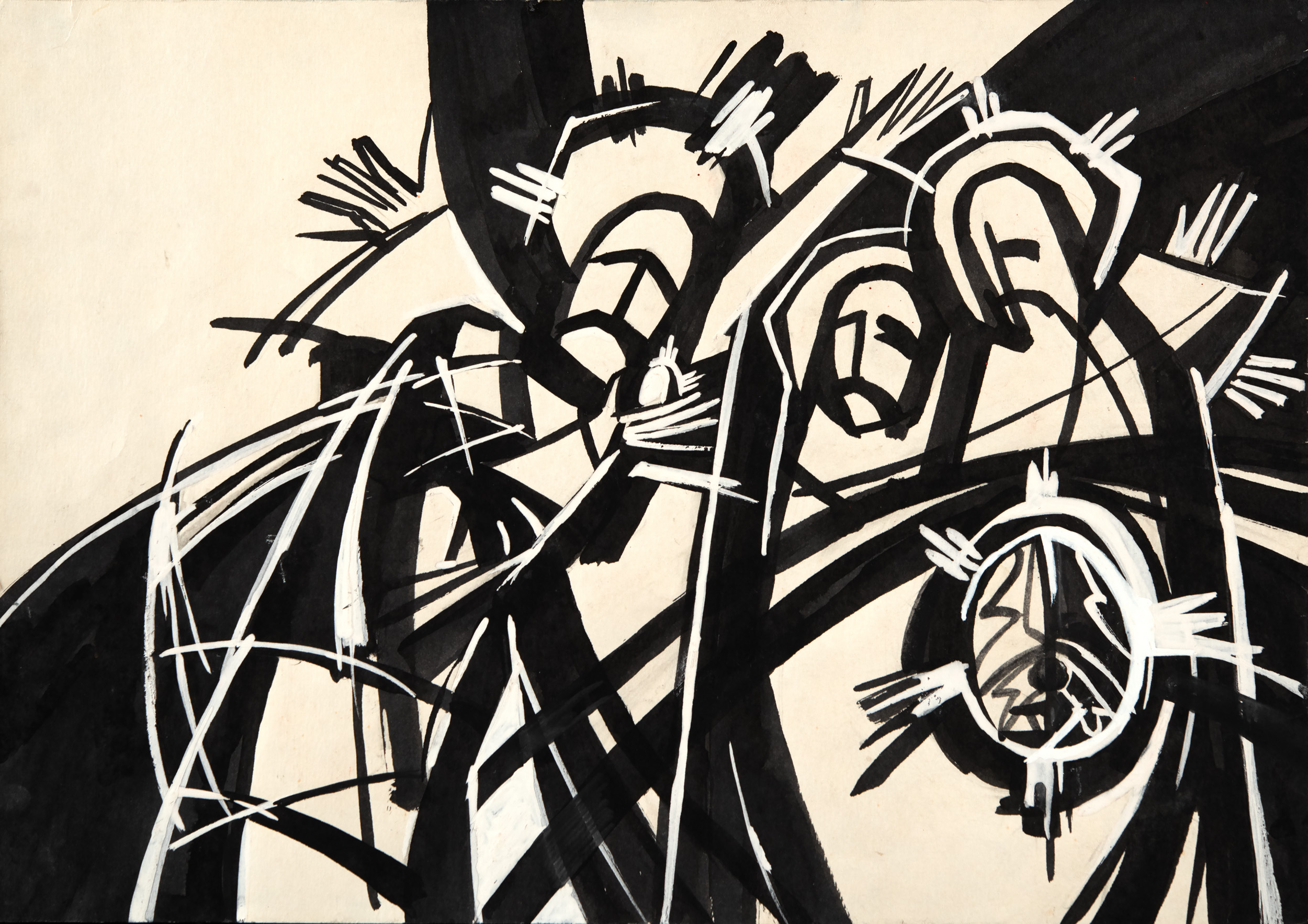
The Origins of the Easter Egg, 1984. Ink and gouache on paper, 29.5 × 42 cm (11 5/8 × 16 9/16 in.). Norton and Nancy Dodge Collection of Nonconformist Art from the Soviet Union. D11098