
Valentin Gerasimenko
1935 — Leningrad (Russia) | 2020 — Saint Petersburg (Russia). Worked in Saint Petersburg (Russia)
Valentin Gerasimenko—graphic artist and painter—was born and raised in the center of Leningrad, where, as a child, he experienced World War II and the Leningrad blockade. After graduating from school in 1953, he entered the geography department of Leningrad University. He graduated from the university with a degree in geomorphology but did not work in a related profession. In the mid-1950s, he met the painter Rikhard Vasmi (1929–1998) and joined a circle of friends that had formed around the poet Roald Mandelstam (the artists’ group known as the Arefiev circle, after its most energetic representative, the artist Aleksander Arefiev [1931–1977]). Vasmi had a decisive influence on the development of Gerasimenko's artistic style. Gerasimenko’s first known independent paintings and graphic works—urban landscapes and genre scenes—date to 1957.
From 1958 to 1971, Gerasimenko worked as an artist in theater, television, and film. In the mid-1950s, he met the theater director and artist Nikolai Akimov (1901–1968) and audited his lectures at the Leningrad Theater Institute (now the Russian State Institute of Performing Arts). In 1972, Gerasimenko was hired as an artist-designer at the Palace of Culture in the city of Tosno, southeast of Leningrad, where he worked until 1990. In the workshops of the regional district center, a group of friends formed, all of them artists associated with the unofficial artistic culture: Igor Sinyavin (1937–2000), Alexander Gurevich (b. 1944), and, later (after Sinyavin’s emigration to the United States in 1976), Vladimir Dukhovlinov (b. 1950).
In the early 1970s, Gerasimenko began working in etching (soft varnish), taking part in the official exhibitions of the city’s Ex-Libris Lovers’ Club. In 1975, he showed his graphic works (drawings and etchings) and paintings at a large group exhibition of nonconformist artists at the Nevsky Palace of Culture in Leningrad; these works revealed traits that are characteristic of his art as a whole: a texture-oriented treatment of the surface, the use of collage techniques, and meticulousness and attention to minor details. His subjects and handling of space share certain aspects with theater decoration and connect Gerasimenko’s painting with the widespread metaphysical movement. A significant influence on the artist came from twentieth-century literature, particularly Nikolai Zabolotsky’s book of poems Columns and the novels of Konstantin Vaginov.
The unofficial artistic life in which Gerasimenko had become involved in the 1960s became a prominent part of the dissident movement in the 1970s. On May 30, 1976, he took part in an attempted exhibition near the Peter and Paul Fortress and was detained by the police. In 1981, he showed his works at the Bronnitskaya Street Exhibit, which led to the creation of TEII, the Fellowship for Experimental Fine Art, an independent association of nonconformist artists active in Saint Petersburg during the years 1981–91. Gerasimenko became part of the Fellowship’s leadership, regularly taking part in organizing group shows.
In the mid-1980s, Gerasimenko devoted himself entirely to graphic art. After meeting Gražina Didelytė (1938–2007) and other Lithuanian graphic artists, he began making engravings on cardboard. His first works in this technique were executed in 1984 and exhibited in 1985. One of his reasons for turning to cardboard as a material for creating printing plates was its relative availability compared with traditional copper or zinc, but over time, the artist radically refined his technique, discovering the new plastic possibilities cardboard presented and transforming it into an original method of artistic printing. His printing plate was made using a dense solution of emulsion or relief paste and supplemented with collage elements. Various textures were then transferred onto this bare plastic foundation by means of imprinting, and brass and aluminum foil were also employed to create relief. The works were printed in intaglio style on an etching press in five to ten copies, unique exemplars, which the artist often continued working on by hand, illuminating them with watercolors and gouache.
Memory, culture, the book, archaeology, the sign, and play: these are the essential concepts of Gerasimenko’s artistic universe. His works reflect the philosophical currents and intellectual fashions of the last quarter of the twentieth century, such as interest in folklore and naive art, reflected by the series Urban Folklore, among others, or interest in semiotics and structuralism, as in the works Destruction of the Sign and the Signs series. Other objects of his continuous interest were indicated by him in an interview given in 2008: “Stones. I have a collection of Saint Petersburg paving stones. The ones covered up with asphalt. I collect them and keep them. Maps, old things, books.” [1]
Gerasimenko characterized the plastic features of his graphic art as follows: “A compromise between line and texture, a mixing of elements as the basis of the work. In combining shallow and deep printing, line and texture carry equal weight. The line must not be overpowering, [or] one feels an aesthete’s hand in it. Virtuosity itself is dangerous. The line must be perceived as a conclusion.” [2]
In 1988, Gerasimenko and Elena Figurina (b. 1955) became the first of Saint Petersburg’s nonconformist artists to tour the United States, as part of the “Leningrad Show”: Twenty-one Artists from the Fellowship for Experimental Art. The decades that followed were a period of the artist’s greatest creative activity, in which his art was regularly exhibited in the United States and Europe.
In works from the 1990s and 2000s, Gerasimenko engages in methodical deconstruction: he cuts up printing plates, reconfigures their pieces in various combinations, and prints them as new, independent works, which now acquire the freedom and expressiveness of abstraction. In this way, he overcomes the insularity characteristic of graphic work, and his works embody a synthetic conception of art in that his printing plates, considered as complex reliefs, become independent sculptural objects, while his completed graphic works, in their plasticity, approach painting.
Pavel Gerasimenko
Translated from Russian by Ilya Bernstein
Photo portrait: Valentin Gerasimenko, 2006. Photo by Pavel Gerasimenko. Author's archive
Notes
1. Sergey Kovalsky, ed., Paralleloshar. 1989–2009 [Parallelosphere. 1989–2009] (Saint Petersburg: Museum of Nonconformist Art, DEAN, 2010), 603.
2. Valentin Gerasimenko, interview by Natalya Kozyreva, March 16, 2002. Manuscript, artist’s family archive.
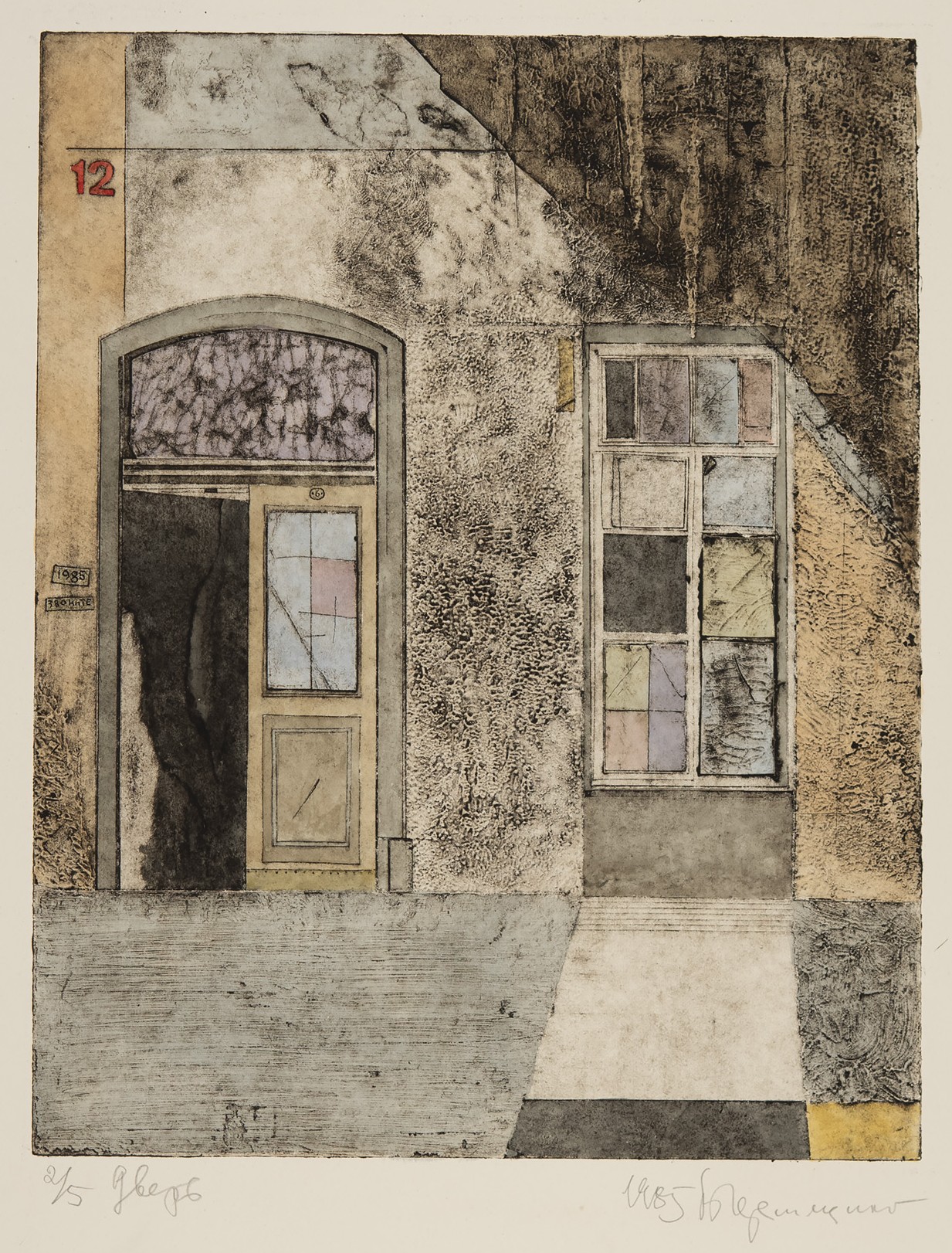
Door, 1985. Handcolored etching on paper, 34.9 × 27.4 cm (13 3/4 × 10 13/16 in.). Norton and Nancy Dodge Collection of Nonconformist Art from the Soviet Union. D10375
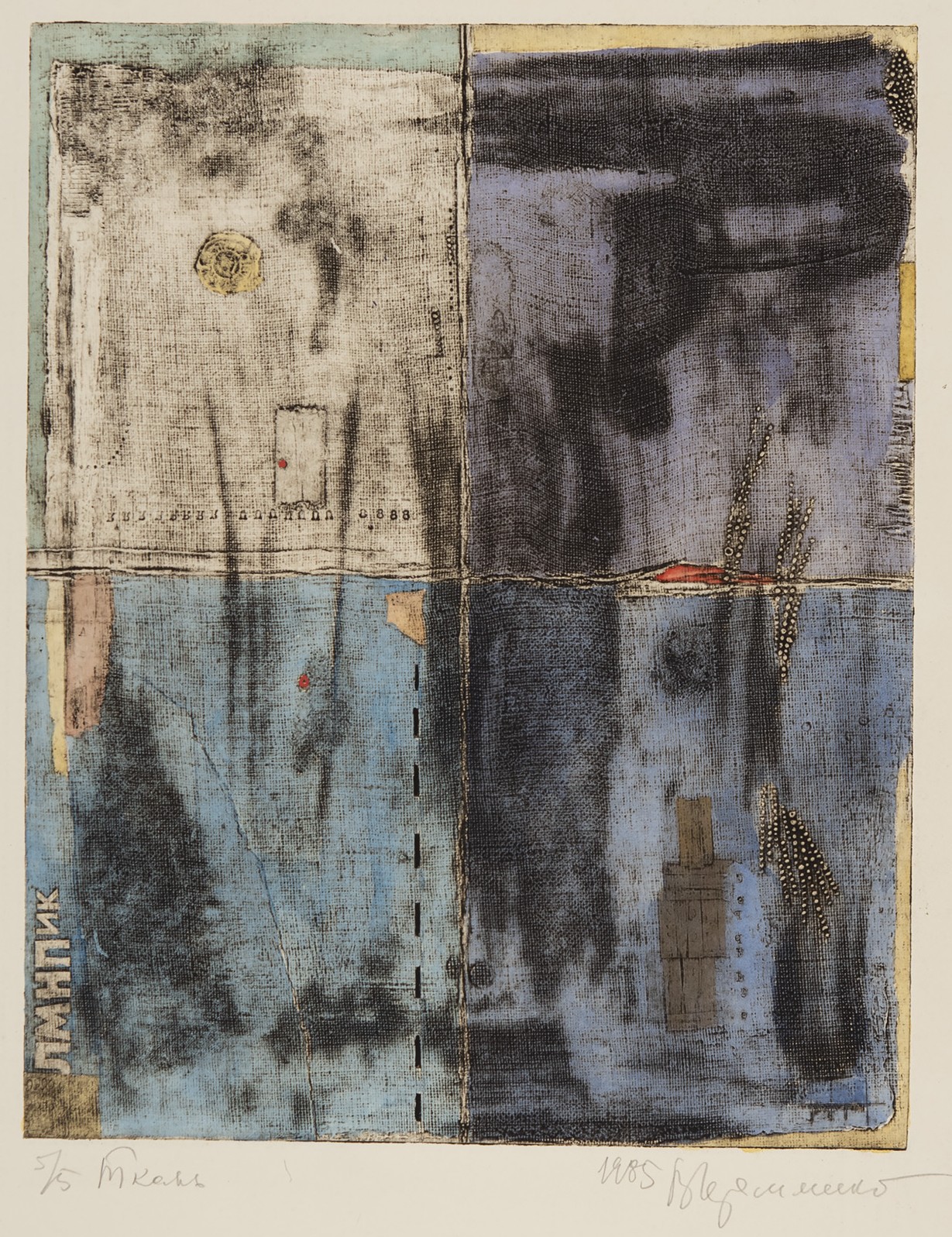
Cloth, 1985. Handcolored etching on paper, 34.9 × 27.4 cm (13 3/4 × 10 13/16 in.). Norton and Nancy Dodge Collection of Nonconformist Art from the Soviet Union. D10376
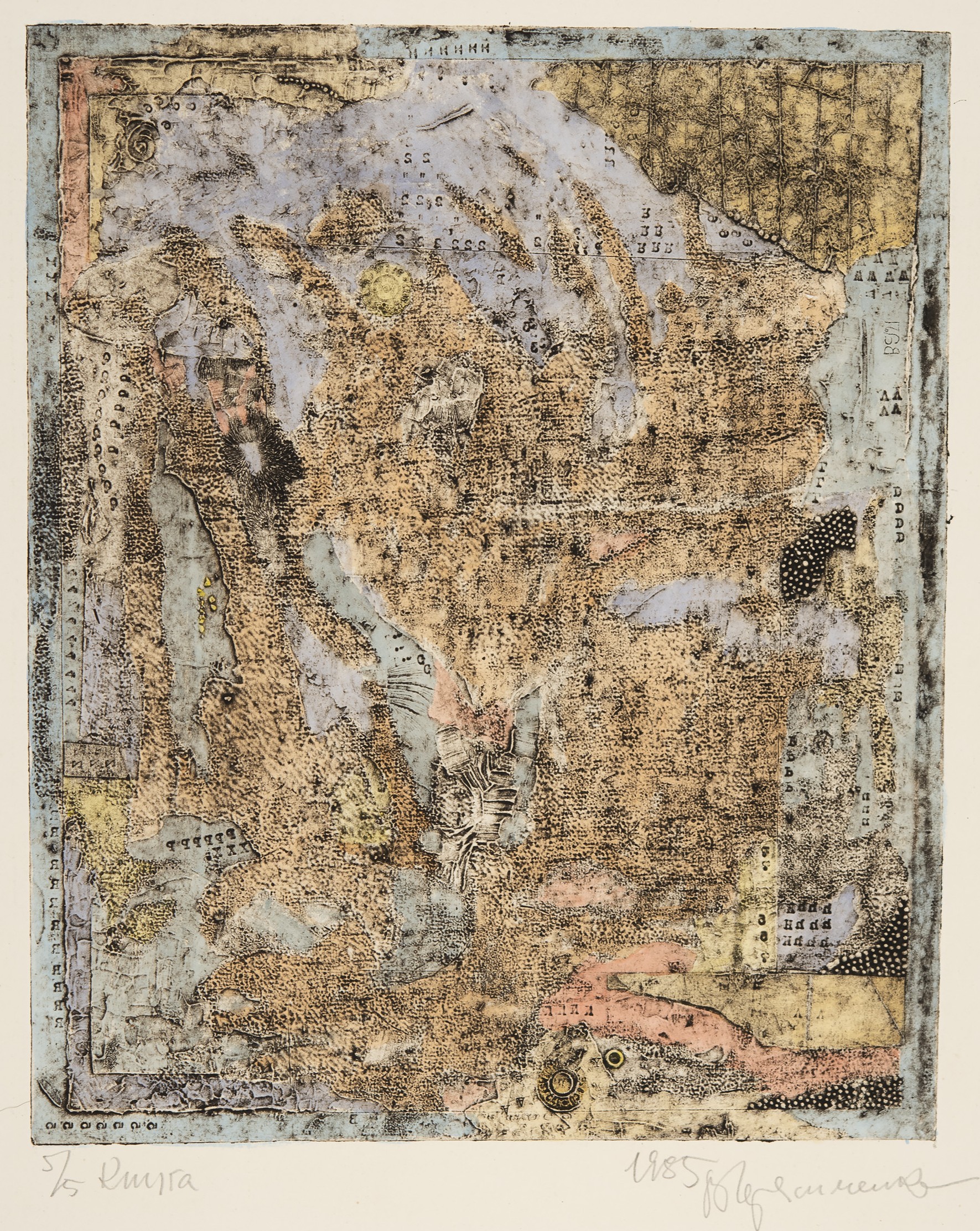
The Book, 1985. Handcolored etching on paper, 33.4 × 27.4 cm (13 1/8 × 10 13/16 in.). Norton and Nancy Dodge Collection of Nonconformist Art from the Soviet Union. D10377
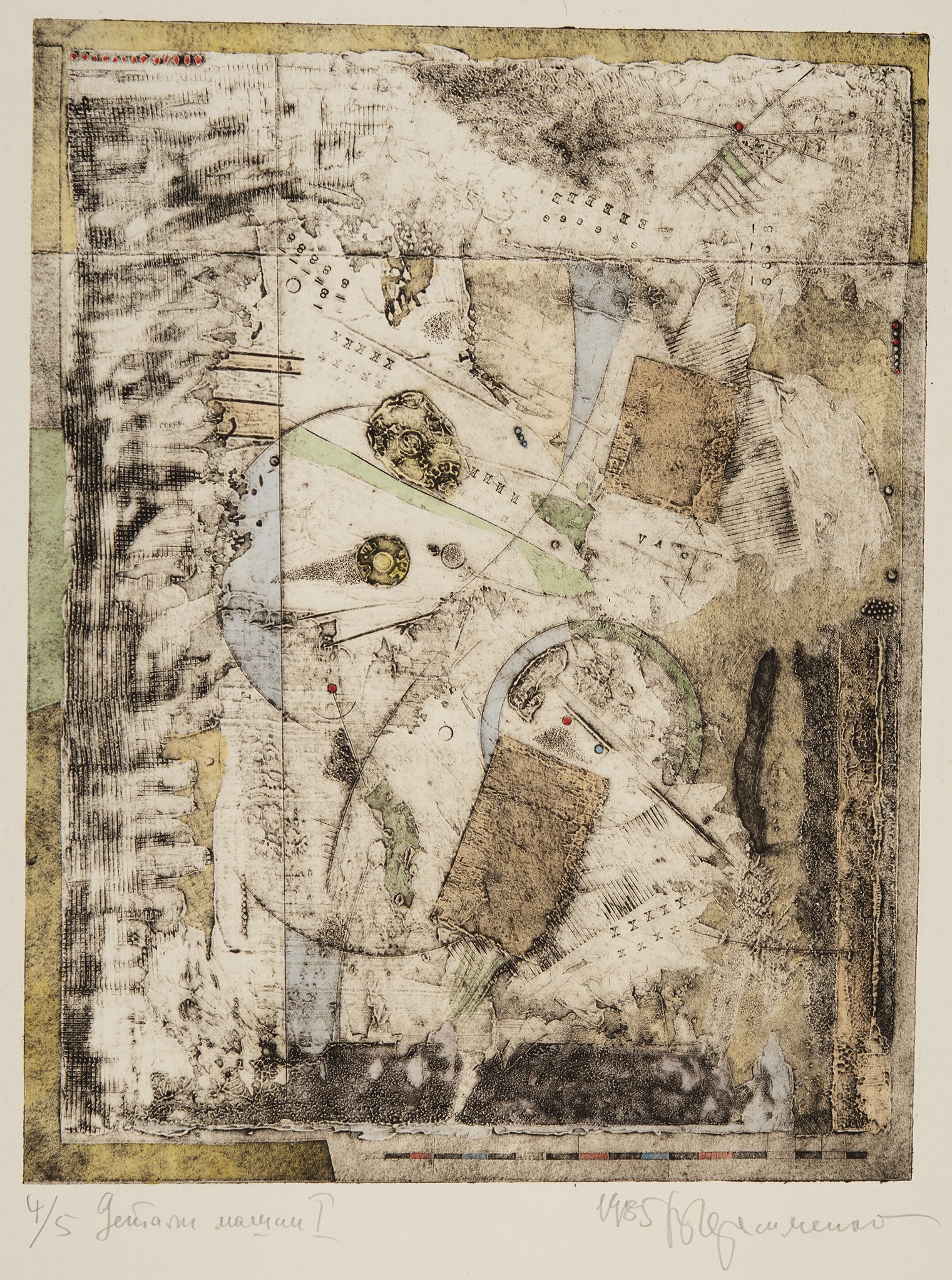
Machine Parts I, 1985. Handcolored etching on paper, 35.5 × 27.5 cm (14 × 10 13/16 in.). Norton and Nancy Dodge Collection of Nonconformist Art from the Soviet Union. D10378
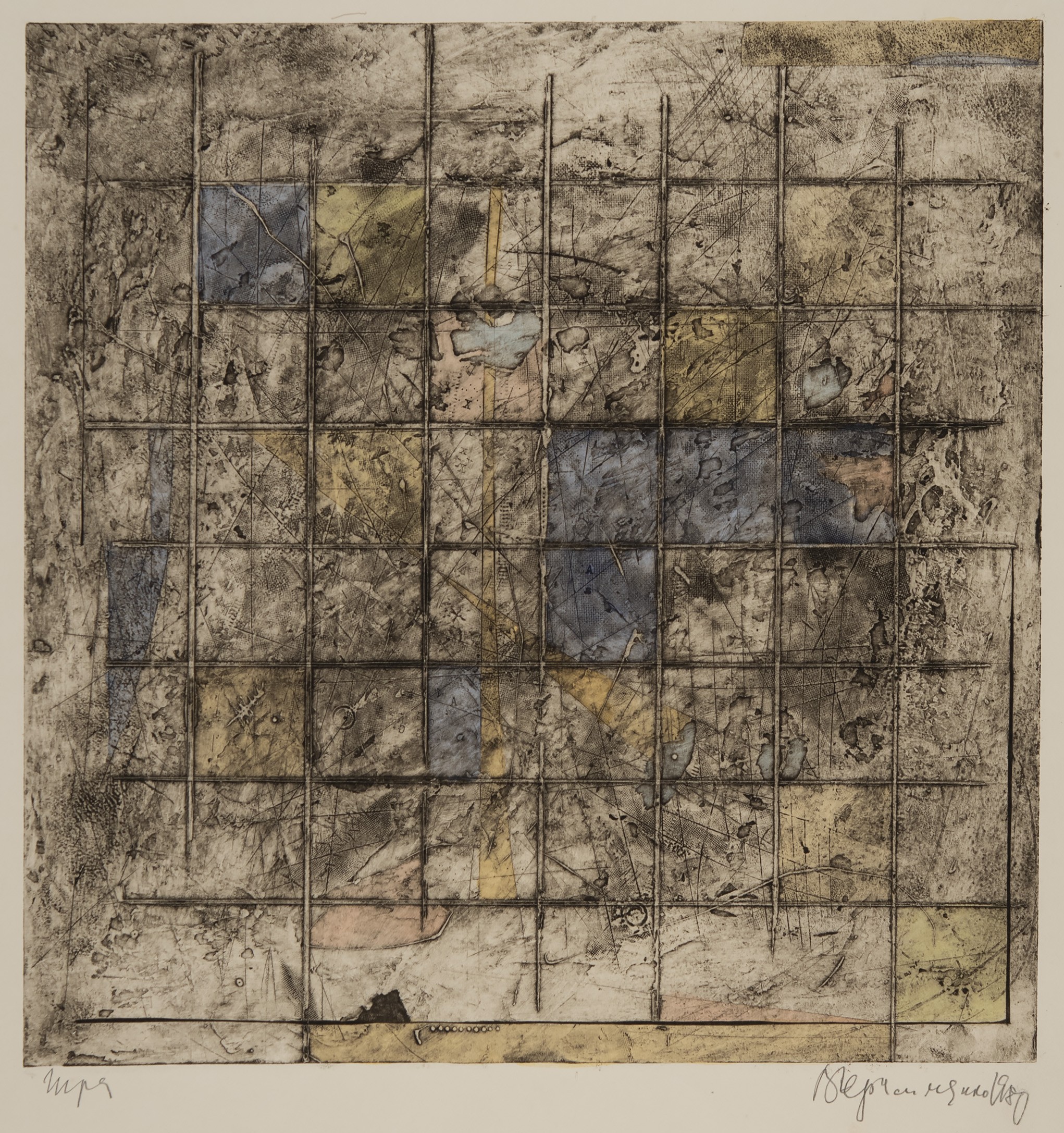
Game, 1989. Etching on paper, 34.6 × 34.4 cm (13 5/8 × 13 9/16 in.). Norton and Nancy Dodge Collection of Nonconformist Art from the Soviet Union. D04567
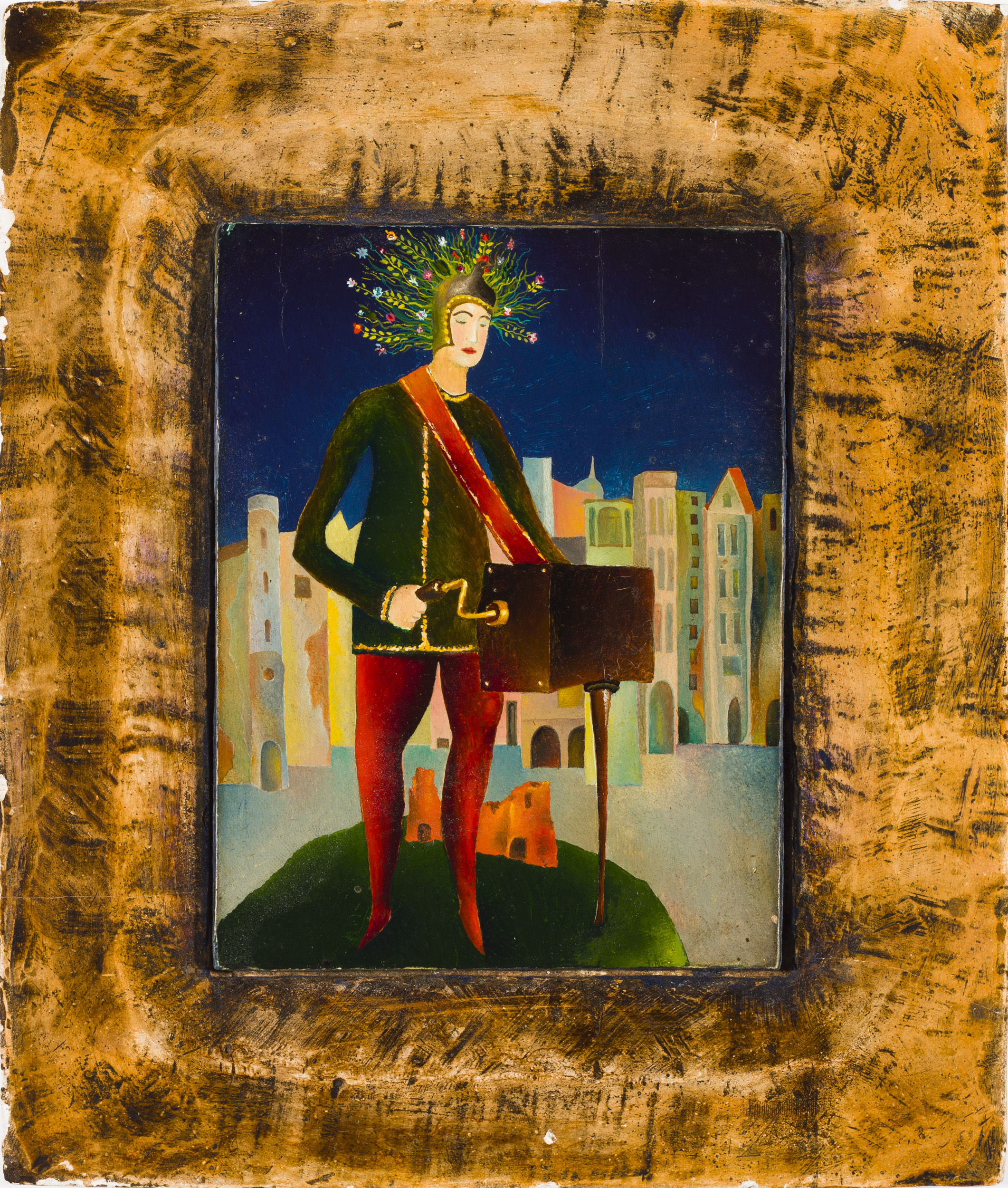
Siren, 1980. Oil on plywood in plaster frame. 22 x 18 cm (8 11/16 x 7 1/16 in.). Norton and Nancy Dodge Collection of Nonconformist Art from the Soviet Union. D04795
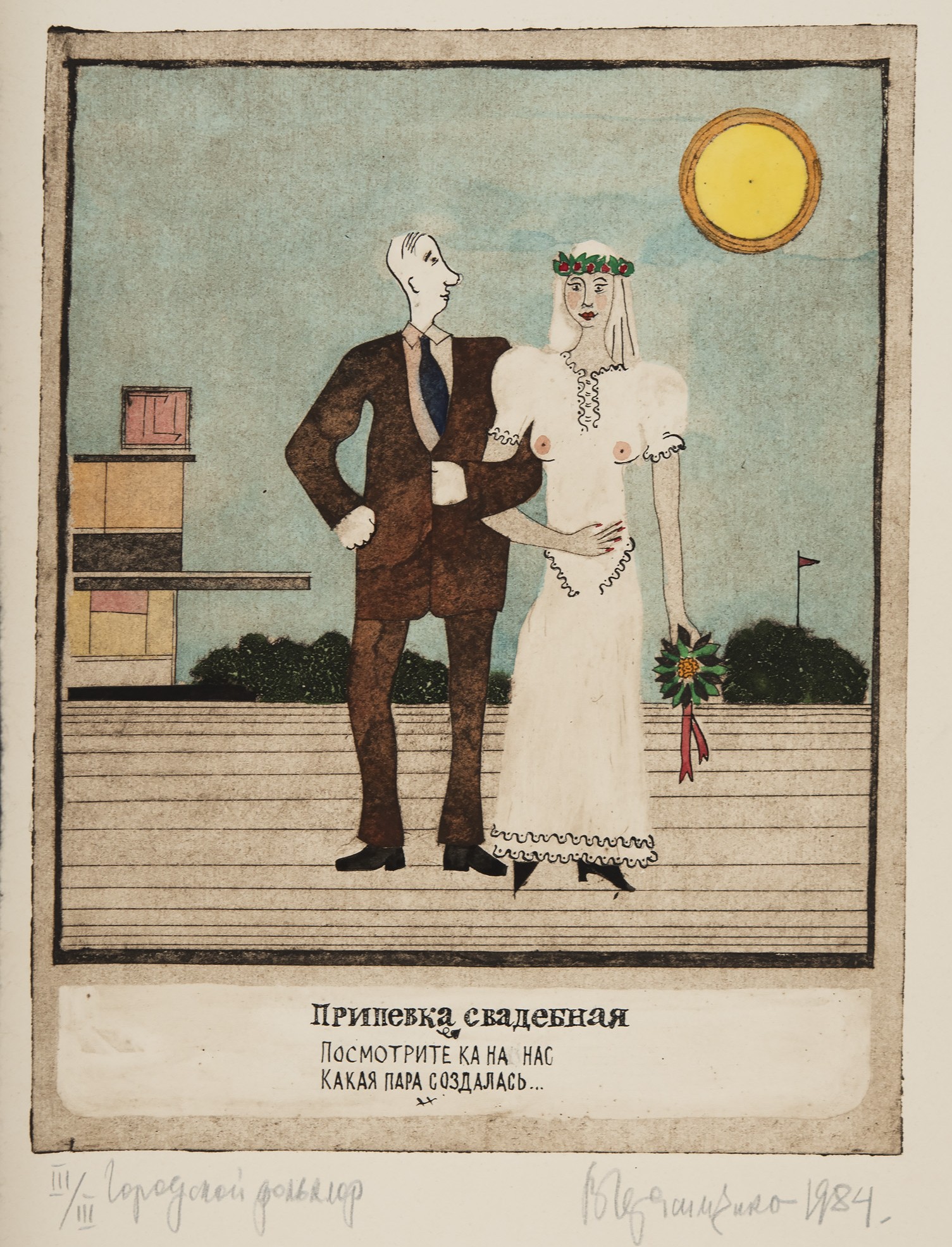
Wedding Song from the series Urban Folklore, 1984. Handcolored etching on paper, 29.2 × 23.5 cm (11 1/2 × 9 1/4 in.). Norton and Nancy Dodge Collection of Nonconformist Art from the Soviet Union. D08726
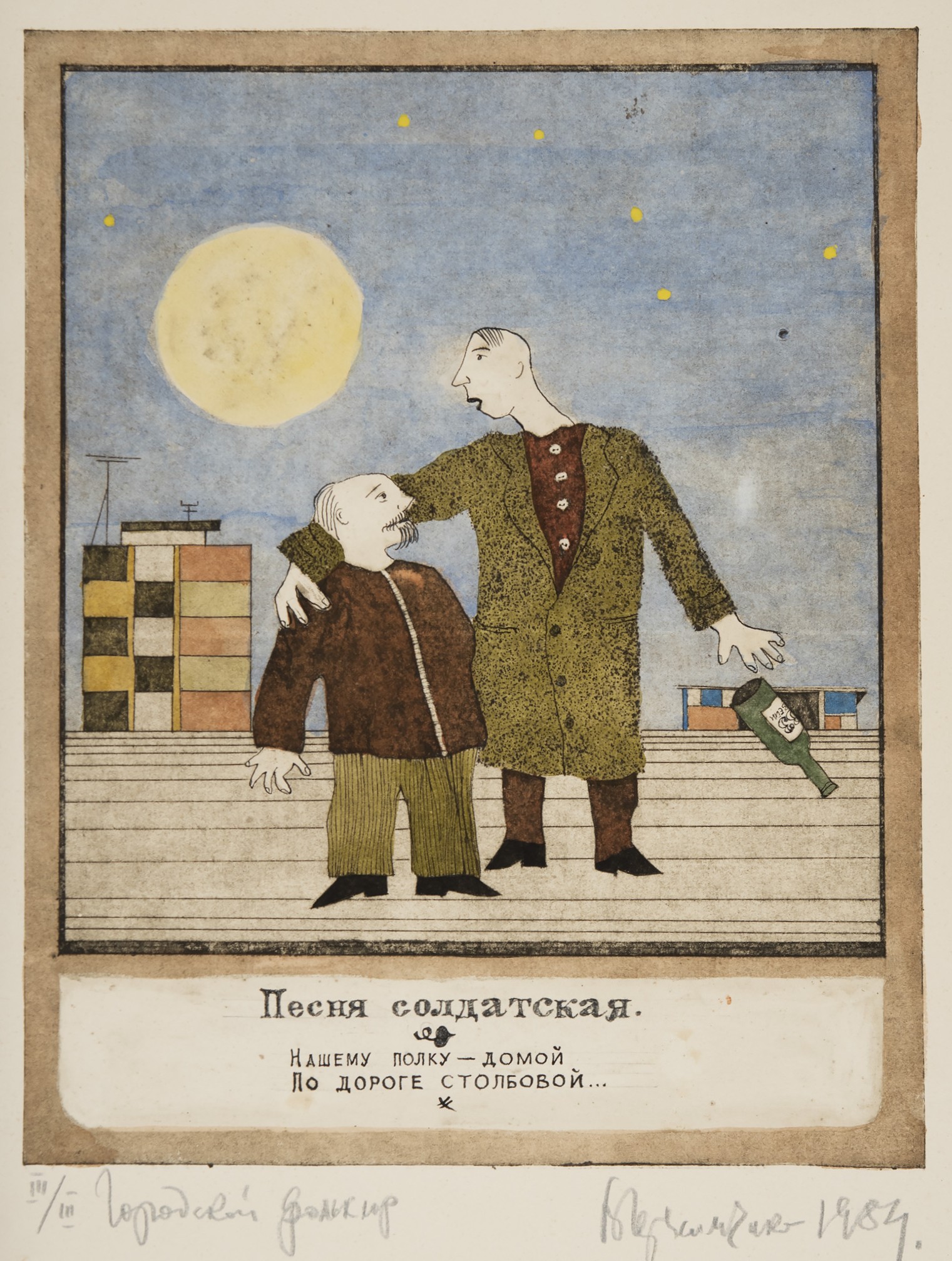
Soldiers Song, 1984. Handcolored etching on paper, 30.2 × 24 cm (11 7/8 × 9 7/16 in.). Norton and Nancy Dodge Collection of Nonconformist Art from the Soviet Union. D08727