
Todar Kopsha
a.k.a. Grigory Yanovich, Grigory Kotsapov
1939 — Prapoysk, BSSR, now Slawharad (Belarus) | 2012 — Minsk (Belarus). Lived and worked in Minsk (Belarus)
Grigory Yanovich (Todar Kopsha) was born in 1939 in Prapoysk (BSSR, now Slawharad, Belarus). He graduated from the Minsk Art College (now the Aleksei Glebov Minsk Art College), although the year does not seem to be documented. His skepticism toward the Soviet system and unwillingness to submit to its rules effectively closed the path to further formal study, leading him to seek out like-minded nonconformist artists, who became his lifelong community. Among them was his compatriot Ales Marachkin (b. 1940).
Kopsha developed his distinctive language by often drawing on small sheets of paper, filling them with marks, dividing the surface of the sheet with curved lines into sectors that he would model with tone and color. Rather than pursuing easel painting, he built a practice rooted in the logic of the sheet: layering, cutting, and assembling forms to create rhythm and tension within a confined surface. These early compositions already anticipate his later collages and mixed-media works, where drawing, texture, and fragment coexist as equal elements of meaning. His nonconformist and bold compositions consist mainly of abstract forms that almost completely fill the sheet. He often used jagged lines and shapes, differentiated by various textures. Emerging in the years after his formal studies, these works mark a conscious departure from academic realism toward a material and conceptual exploration of image making. Through the tactile interplay of tone, line, and surface, Kopsha established an experimental, process-based approach that would remain central throughout his career.
After his early period, focused on drawing and tonal composition, in the late 1960s and early 1970s Kopsha began to incorporate fragments of printed material, such as newspaper and magazine clippings, into his works. This marked a transition from purely graphic exploration toward a more complex collage-based approach. The integration of textual and photographic elements became one of the defining features of his mature visual language.
The medium of collage allowed Kopsha to create multifaceted compositions that densely filled the surface of the sheet, creating complex silhouettes against the white background. Jagged, energetic, and almost musical repeating lines that were reminiscent of flame outlines are characteristic of his collages, paintings, and graphic works. It is as if the clusters and forms condensed in the center of the pictorial space were attempting to spread out to the edges of the support, as if they were trying to break free. In collages, Kopsha used black-and-white or color cutouts to create groups by gluing elements close together. He often introduced fragments, such as clippings, that also contained text. Together, these elements create visually harmonious yet dynamic compositions in which appropriated images and text from print media function as structural elements of the work—lines, shapes, and planes. The two collages titled Anatomy of Instinct (1981, ZAM, D21139, and 1984, ZAM, D16930) represent this mature phase in Kopsha’s practice, where religious symbols, cultural fragments, and body imagery merge into densely layered visual structures. In these works, the artist uses printed clippings not merely as material but as carriers of collective memory and ideology. The recurring motifs create a tension between the sacred and the profane, between personal desire and social conditioning. The title Anatomy of Instinct reflects this duality, suggesting both a dissection of human emotion and an analysis of its manipulation by visual culture. These collages exemplify Kopsha’s shift in the early 1980s toward psychologically charged and culturally reflective compositions.
The pseudonym Todar Kopsha was coined by a friend, the poet Aleś Razanaŭ. In the early Belarusian language, kopsha means “grave spirit” or “gravedigger.” Razanaŭ also often helped Kopsha come up with names for his drawings and collages, so many of his works have poetic titles: Time of Mimicry (1995), Stars for a Casual Acquaintance (1985), or Bridge to the Past (2002).
Kopsha’s paintings, like his drawings and collages, reveal the artist’s interest in abstract form. Using ideas from cubism, futurism, and rayonism, the artist creates dynamic, contrasting, and jagged forms, as seen in the series of paintings Untitled, executed on fiberboard in 1976, or Self-Portrait from 1977. Under the influence of collage, he often introduces images of objects into his paintings, creating surreal and metaphysical compositions, such in Mirror (1974) and Cross (1980).
In the mid- to late 1980s, Kopsha organized a number of important underground art exhibitions, which took place in studios and apartments. Among the most memorable of these events was a series of exhibitions dedicated to Kazimir Malevich (1879–1935), whose art was banned in the USSR at the time. Together with Marachkin, Viktar Markavets (1947–2013), and Razanaŭ, Kopsha also gave lectures on the Vitebsk modernism of the 1920s. He wrote articles on modernism and the avant-garde for underground publications, which is one of the activities that pegged the artist as a dissident during the Soviet period—however, no such articles have been identified. In order to protect his work, he had to resort to various tricks to survive: for example, in the 1970s or ’80s he titled one of his large paintings Dedication to Chilean Poets, although the work was actually dedicated to the Belarusian writers who had been imprisoned and executed during the Stalinist era.
In 1987 the artist joined the laboratory artistic group Halina (Галіна)—an informal association whose name can be translated from Belarusian as both “branch” and “twig.” The leader of the collective was Ales Taranovich (b. 1955). In the same year, amid the active rise of the nonconformist movement in the BSSR, the Halina group became a part of the short-lived Association of Creative Intelligentsia Forma (Аб’яднанне творчай інтэлігенцыі «Форма»), functioning as one of the association’s creative groups. In the late 1980s, Forma organized a series of daring and highly publicized exhibitions in Minsk; Kopsha’s showed works in Perspective (1987) and the scandalous On Kollektornaya Street (1987). Although by 1989 Forma ceased to exist as an official structure, largely due to ideological pressure and lack of institutional support, the Halina group (composed of several artists connected through informal networks) continued to work independently, maintaining the nonconformist spirit and exhibiting privately.
In 1990 the society Pahonia (Пагоня) was founded within the framework of the membership in the Soviet of Belarus Artists’ Union. It was established by artists Marachkin, Yaugen Kulik (1937–2002), Viktar Markavets, Mykola Kupava (b. 1946), and the brothers Uladzimir (1940–2020) and Mikhail Basalyga (b. 1942), with makeshift headquarters in the famous workshop Na Paddashku (Belarusian for “in the attic”). Kopsha was warmly welcomed into the collective and often took part in Pahonia’s exhibitions and meetings. The aim of the society was to develop national Belarusian art, ensure its continuity, enrich its traditions, and preserve and promote the Belarusian cultural heritage.
At the end of 2008, the last exhibition of the Kopsha’s work during his lifetime, In a Draft, took place at the Dobryja Mysli space in Minsk. It featured a selection of late collages and mixed-media compositions that reflected the artist’s sustained engagement with fragmentation, memory, and poetic reconstruction. Kopsha died in Minsk on February 14, 2012, after a long illness. Several years before his death, he almost stopped leaving his house and could no longer paint. Throughout his life, he remained a free person, unfettered by official art, socialist realism, party politics, or Bolshevism, because he was steeped in European culture, especially the art of the late nineteenth and early twentieth centuries. He is often regarded as one of the pioneers of Soviet nonconformism in Belarus, using surrealist and abstract imagery in defiance of state rules.
KALEKTAR platform
Photo portrait: Radio Svaboda
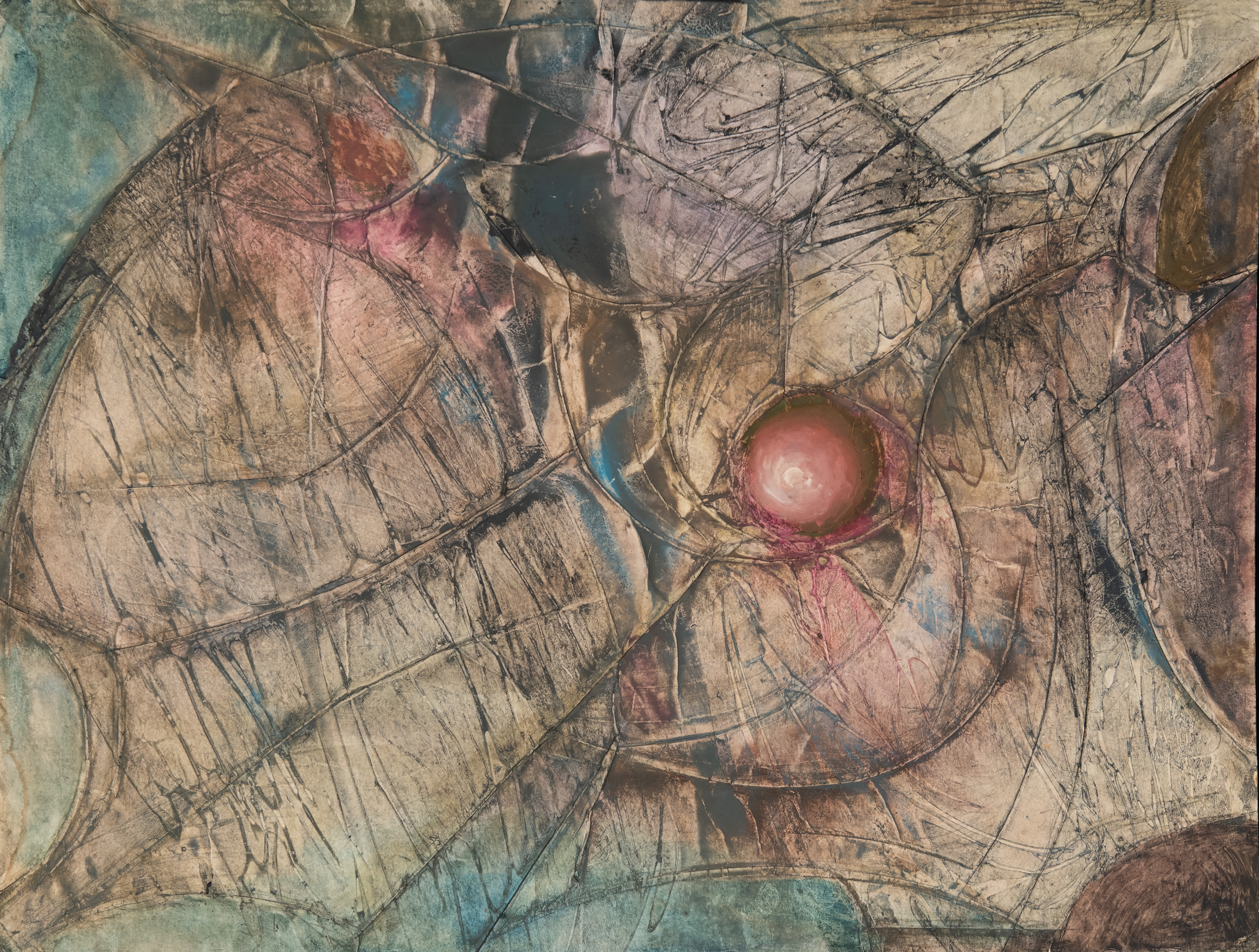
Ball, 1979. Gouache on handmade paper, 59.9 × 47.6 cm (23 9/16 × 18 3/4 in.). Norton and Nancy Dodge Collection of Nonconformist Art from the Soviet Union. D16652
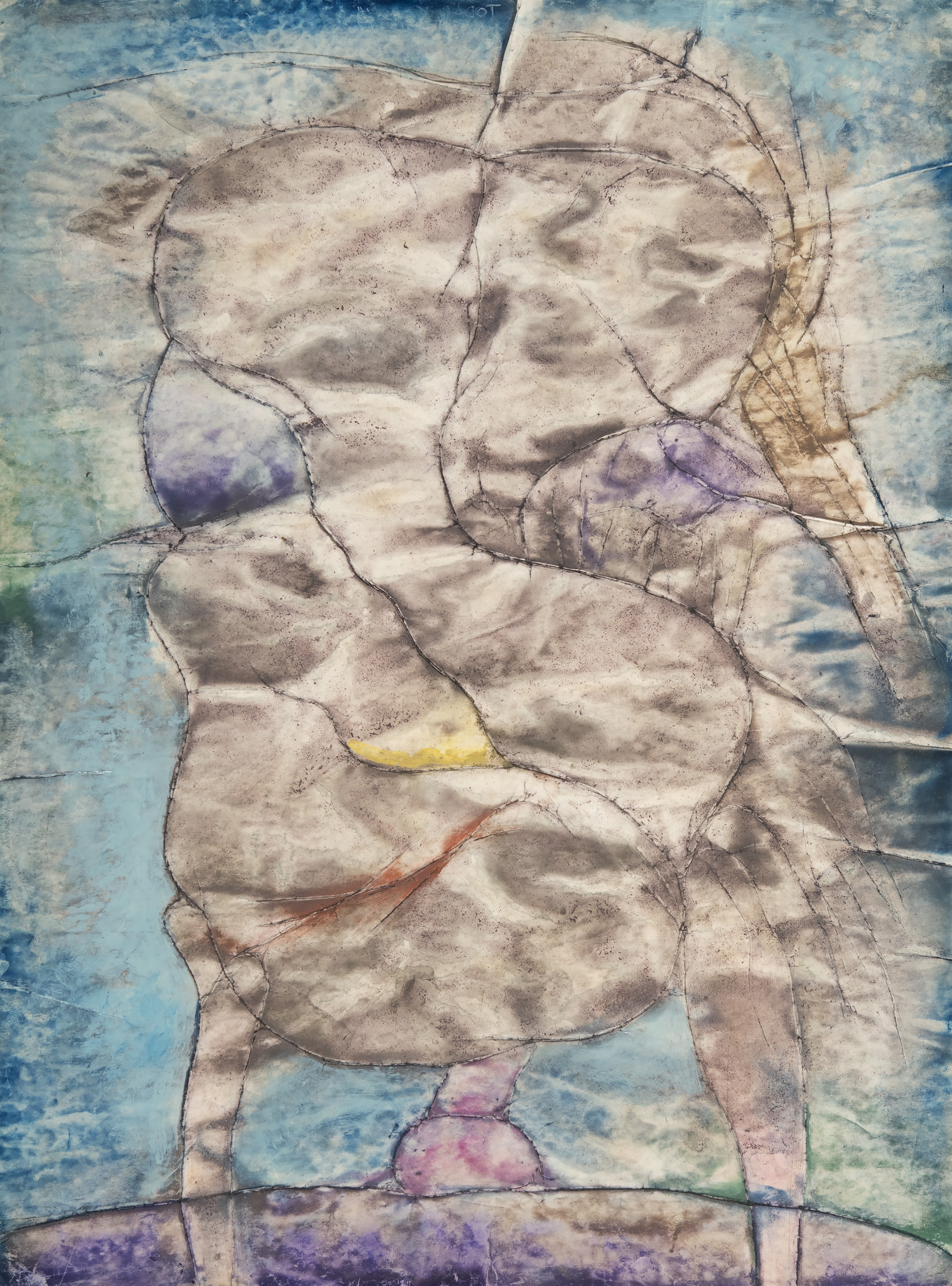
Untitled, 1978. Pastel on paper, 60.1 × 44.6 cm (23 11/16 × 17 9/16 in.). Norton and Nancy Dodge Collection of Nonconformist Art from the Soviet Union. D16665
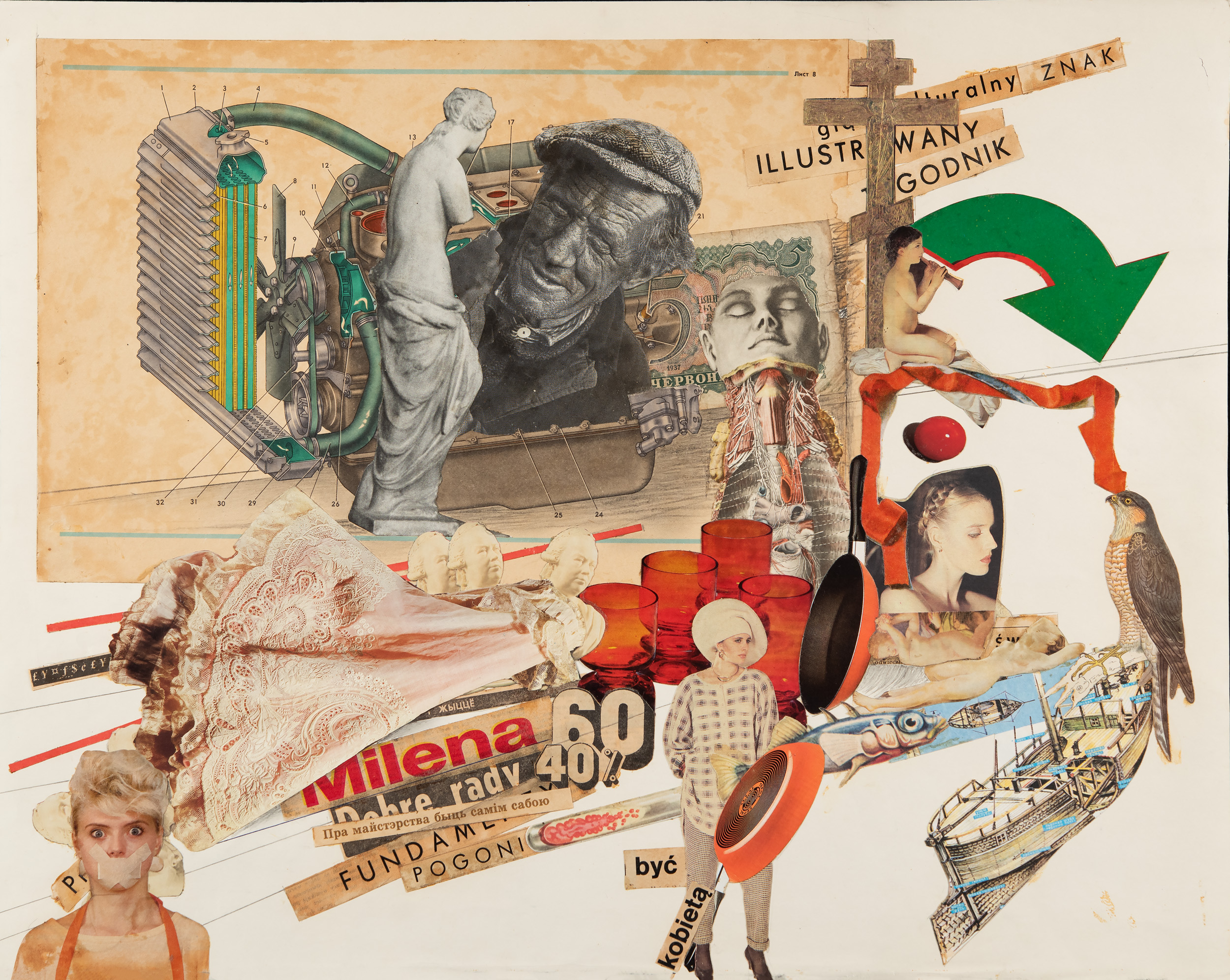
Anatomy of Instinct, 1984. Collage on paper, 52 × 65 cm (20 1/2 × 25 9/16 in.). Norton and Nancy Dodge Collection of Nonconformist Art from the Soviet Union. D16930

Anatomy of Instinct, 1981. Collage, graphite, and colored pencil on paper, 81.6 × 61 cm (32 1/8 × 24 in.). Norton and Nancy Dodge Collection of Nonconformist Art from the Soviet Union. D21139
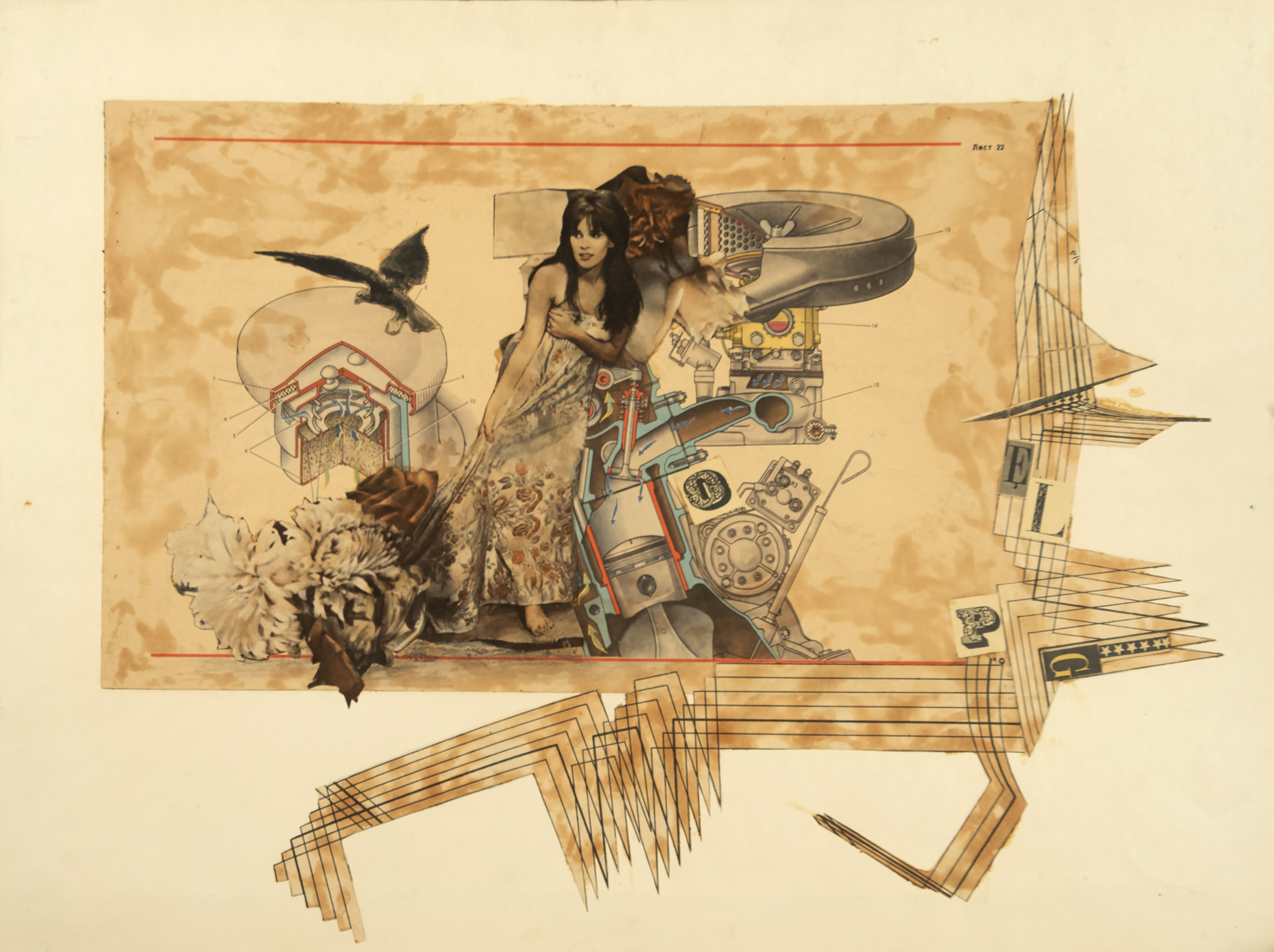
Stars for a Casual Acquaintance, 1985. Paper collage on paper, 47.5 x 60 cm (18 11/16 x 23 5/8 in.). Norton and Nancy Dodge Collection of Nonconformist Art from the Soviet Union. D21144