
Teodoras Kazimieras Valaitis
1934 — Kaunas (Lithuania) | 1974 — Smiltynė (Lithuania). Worked in Vilnius (Lithuania)
Teodoras Kazimieras Valaitis graduated from the State Art Institute of the Soviet Socialist Republic of Lithuania (now the Vilnius Academy of Arts) in 1959. In the 1970s he gained fame for his modernist interior designs for cafés and restaurants and for creating one of Lithuania’s first kinetic sculptures.
Valaitis’s close friendships with Tadas Baginskas (b. 1936), Vytautas Čekanauskas (1930–2010), Eugenijus Cukermanas (b. 1935), and other architects led to numerous commissions to decorate entertainment and cultural venues in Vilnius and Moscow. During the 1960s Lithuania saw a rise in the construction of modern restaurants and cafés, especially in the major cities and Baltic Sea resorts, including the first children’s cafés and cocktail bars. At that time, governmental regulations required that 1 to 3 percent of the cost of public buildings be allocated to decorative art. This policy ensured that the elegant, minimalist interiors of leisure spaces were enriched with original modernist sculptures, ceramics, stained glass, and murals. Valaitis’s playful metal reliefs, often inspired by myths and folklore, brought a unique charm to the interiors of restaurants across Lithuania. In 1963 he forged the metal relief Sun for the Vilnius-based restaurant and bar Dainava, one of the first nightclubs in the Soviet Union.
In the mid-1960s, Valaitis began crafting geometric and biomorphic compositions using metal and synthetic materials, aligning with the global abstract art movement. One of his notable works from this period was a stage wall he designed in 1965 for the restaurant at the Hotel Gintaras in Vilnius. Made of gleaming metal segments that shimmered and pulsed under stage lights, the wall captured the vibrant energy and futuristic glamour that would soon define disco culture. In 1970 Valaitis brought his abstractionist vision to another Vilnius restaurant, Šaltinėlis, where he designed a grand biomorphic relief. The work’s sleek, smooth organic forms and creamy white color evoked porcelain and were reminiscent of the abstractions of Jean Arp (1886–1966) and Henry Moore (1898–1986), artists celebrated in the postwar West but not widely known in Lithuania at the time.
Valaitis’s modernist work in Lithuanian cafés and restaurants soon led to prestigious commissions beyond his homeland. He was invited to decorate Moscow cafés and the Soviet Union’s pavilions at international exhibitions. In 1968, for the café Palanga, located at 25 Lenin Avenue in Moscow, Valaitis crafted a decorative openwork wall from readymade elements. He also incorporated components of the Lithuanian-made Saturnas vacuum cleaners. This vacuum cleaner, designed by Vytautas Didžiulis in 1962, featured a distinctive spherical body and bright colors, symbolizing space-age aspirations and becoming an icon of Soviet design. Valaitis repurposed these spheres, applying an iridescent patina, to create an elegant partition of more than fifty bubble-like forms.
Baltic architects and designers were often tasked with creating the architecture and design of Soviet export exhibitions. The Soviet Union used these exhibitions to mask economic and technological shortcomings, presenting itself instead as a modern, advanced superpower through sophisticated visual propaganda. Valaitis, a gifted modernist artist, became an important figure in shaping this image. For the 1966 Leipzig Spring Fair, he created a display featuring square brass plates with concave lenses and convex rhombus reliefs. This shimmering wall echoed the spirit of contemporary design trends in both the West and the Soviet Union. Some saw in it a playful nod to Spanish designer Paco Rabanne’s bold 1966 collection 12 Unwearable Dresses in Contemporary Materials, while others compared it to the sleek modernist facade of Moscow’s Radio Electronics pavilion from the 1958 Exhibition of Economic Achievements of National Economy. [1] Among Valaitis’s high-profile commissions were a decorative panel for the USSR pavilion at Expo 67 (Montreal) and a semiprecious stone installation for the São Paulo International Exhibition of Industry and Trade in 1969. However, his burgeoning international career was thwarted by the Soviet authorities, who did not allow him to travel to Canada or Brazil to personally oversee his projects and establish international connections. Despite this, Valaitis’s work continued to leave an indelible mark on the Soviet Union’s international image.
Parallel to his interior decoration work, Valaitis constructed meticulously precise cardboard models, which he later transformed into bronze and brass sculptures, such as Taurus (n.d., ZAM, D00412) and Anchor (c. 1970, ZAM, D00592), as well as monumental urban sculptures. During the Soviet era, foreign tourists visiting Lithuania were not only guided through Vilnius’s renowned Old Town, a UNESCO cultural heritage site since 1994, but also taken on tours of the newly built socialist-modernist district of Lazdynai. This introduction to postwar modernist residential architecture featured Valaitis’s sculpture Wind Vane (1973), positioned in the center of a rectangular pool near the Erfurtas restaurant. The abstract kinetic sculpture, moving with the wind, created dynamic reflections on the water’s surface. In 1976 this sculpture, transformed into a dematerialized art object, was included in the exhibition A hūm in Yokohama, Japan.
In 1963 Valaitis married his second wife, fashion designer Mariana Bruni, and spent summers on the Crimean Peninsula of Ukraine, a beloved retreat for Muscovite bohemians. Mariana’s parents, the painter Lev Bruni (1894–1948) and Nina Balmont-Bruni (1901–1989), owned a summer house on the Black Sea coast, providing a romantic haven for the couple. Enthralled by the fervor of their love, the serenity of nature, and the gentle embrace of the southern climate, as well as the profound influence of modernist artists such as the Lithuanian graphic artist Viktoras Petravičius (1906–1989), the Spanish painter Pablo Picasso (1881–1973), and the French Fauvist Henri Matisse (1869–1954), Valaitis immersed himself in sketching and drawing. Upon the couple’s return to Vilnius, he produced paintings, monotypes, and engravings that celebrated the beauty of the human body, the power of eros, and the joy of relaxation. Valaitis’s oeuvre from this period radiates with liberated expressions of sexuality, sensuality, and fantasy, revealing aspects of life suppressed under the Soviet regime.
Laura Petrauskaitė
Notes
1. Giedrė Jankevičiūtė, ed., Teodoras Kazimieras Valaitis, 1934–1974, exh. cat. (Vilnius: Lithuanian Art Museum; Vilnius Academy of Arts Publishing, 2014).
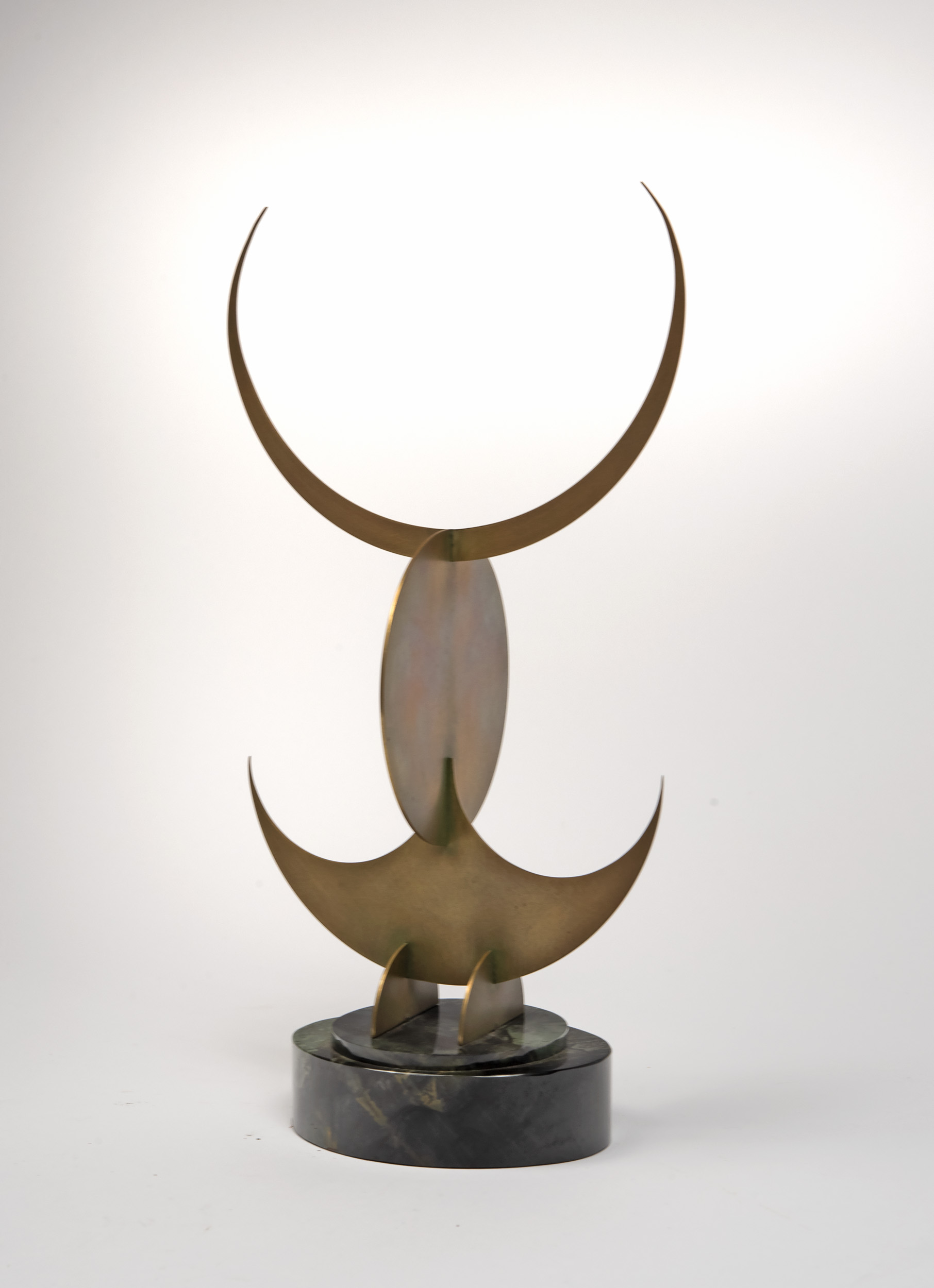
Taurus, undated. Bronze and marble, 24.8 x 13 x 8.5 cm (9 3/4 x 5 1/8 x 3 3/8 in.). Norton and Nancy Dodge Collection of Nonconformist Art from the Soviet Union. D00412
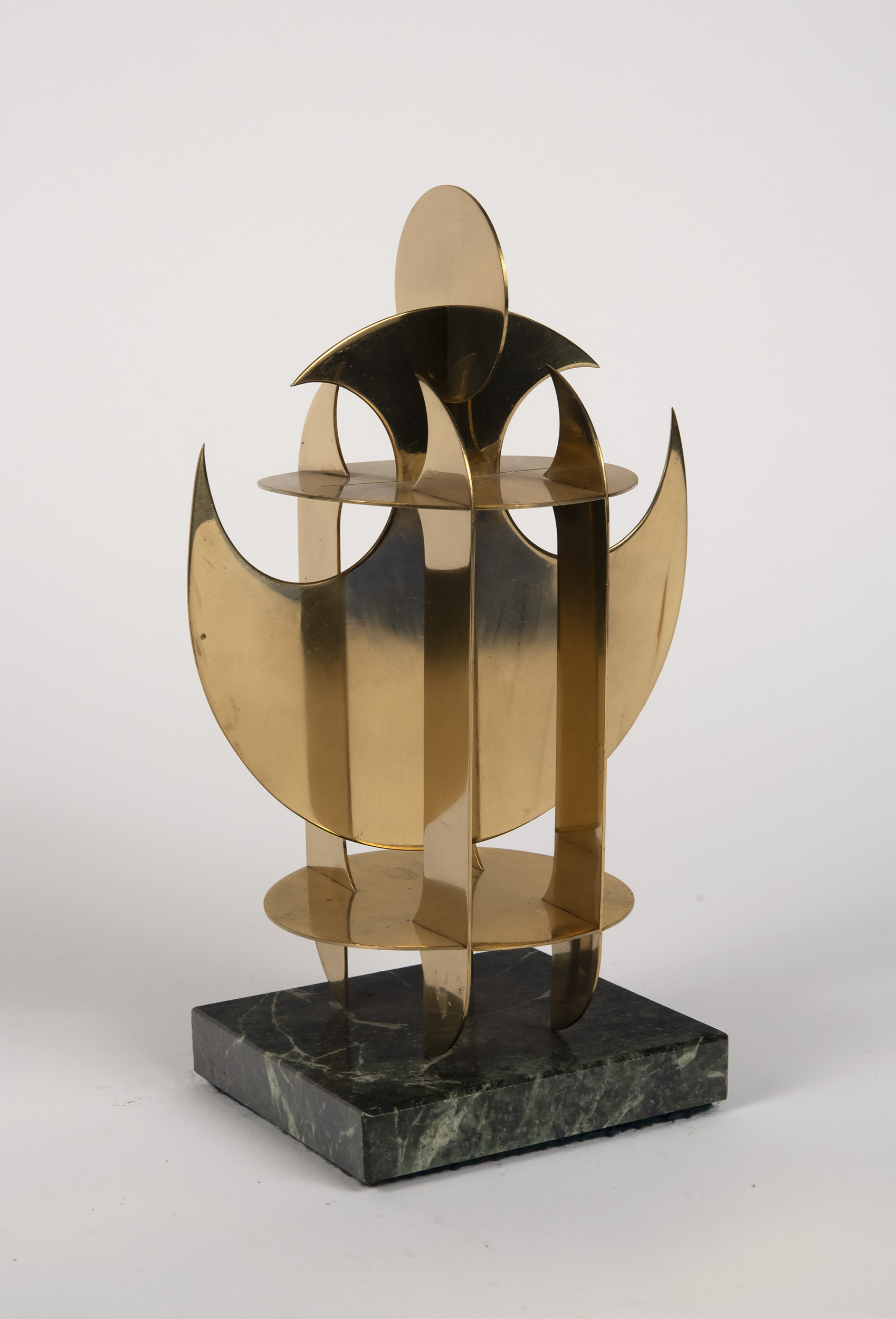
Anchor, c. 1970. Brass and marble, 20 x 12 x 8 cm (7 7/8 x 4 3/4 x 3 1/8 in.). Norton and Nancy Dodge Collection of Nonconformist Art from the Soviet Union. D00592