
Sirje Runge
1950 — Tallinn (Estonia). Lives and works in Tallinn (Estonia)
The painter, designer, and lecturer Sirje Runge graduated from the State Art Institute of the Estonian Soviet Socialist Republic (now the Estonian Academy of Arts) as an industrial artist in 1975. Her vibrantly colored thesis project Proposal for the Design of Areas in Central Tallinn (1975, Museum of Estonian Architecture, Tallinn) envisioned a more livable, dynamic, and democratic Tallinn that would encourage the engagement of city dwellers by activating their senses. The artist went on to create many works that raised psychological questions about the relationship between nature and artificial environments.
Runge’s earliest paintings and drawings date back to the late 1960s and first half of the 1970s. These works, such as the literary Tiigrid linnas [Tigers in the City] (1969, private collection), the student drawing Linn ilma tiigriteta [A City Without Tigers] (1971, private collection), and the surrealistic graphite and gouache composition Linnavaade [View of the City] (1973–74, private collection), show the artist already analyzing her surrounding environment by proffering poetic expressions of spatial relationships and creating architectural, imaginary spaces, resulting in surreal visions on the picture plane. The same features appear in a more abstracted form in the painting Kineetiline maastik [Kinetic Landscape] (1975, Art Museum of Estonia) and in Üheksa ruutu [9 Squares] (1976, Art Museum of Estonia). According to the artist, these spatial paradoxes were inspired by the work of M. C. Escher (1898–1972). She has stated that she finds figurative painting very boring, with the exception of the mystical works of Albrecht Altdorfer (1480–1538) and Fra Angelico (1395–1455) and the “strange” yet interesting worlds of Pieter Bruegel the Elder (1525/30–1569), with their distinct spatial treatments. [1]
In the complex structures of the 1975 colored-pencil drawings Ring [Circle], Ruut [Square], and Kolmnurk [Triangle], and in the painting series Geomeetria [Geometry] (1976)—see, for example, Geometry VIII (1976, ZAM, 1992.1049)—and Ruum [Space] (1977–78, Art Museum of Estonia), Runge plays around with geometric compositions and variations of primary colors. This period also saw Runge synthesizing different visual techniques with these colors and forms, as can be noted in the spatial object Altar (1975), which was exhibited at the event Harku ’75 – Objektid, kontseptsioonid [Objects, Concepts] (Institute of Experimental Biology, Harku, Estonia, 1975). This pop- and op-art-inspired abstract geometric object acts as a bridge between Runge’s earlier work and her 1978 series of paintings and the triptych Ring. Ruut. Kolmnurk [Circle. Square. Triangle] (1978, Tartu Art Museum), composed of three-dimensional renditions of those shapes hung on a wall. Runge considers this work to be the symbolic culmination of the use of geometric shapes and primary colors in her art practice. [1] At the end of the 1970s, she started on the painting series Valgus [Light], which thematically continues the earlier series in its use of the same geometric shapes, but with those shapes now less articulated (see, for example, Light VIII [1980, ZAM, 1992.1011]), a formal change she’d already begun to explore in watercolor and gouache.
An exceptional work from this period is the lithograph Veenus peegliga [Venus with a Mirror] (also known as Still-Life with a Mirror, Still Life, and Mirror; 1979, Art Museum of Estonia), a self-portrait that paraphrases the painting The Toilet of Venus by Diego Velázquez (1599–1660) (also known as The Rokeby Venus; 1647–51, National Gallery, London). In 2017 Runge made a paraphrase of Veenus peegliga. She once again had herself photographed and titled the work Vana Veenus [Old Venus] (Art Museum of Estonia). This digital photograph depicts the artist resting on a metal bed frame, with wildflowers growing around and seemingly through her. Runge uses the work to weave together her young and old self, her life and art.
Although Runge, with her deep engagement with geometric forms and minimalist use of color, stands apart from her Estonian colleagues, she has frequently collaborated with other designers and artists. She participated in the 1970 exhibition Eesti edumeelne taie [Estonian Progressive Art] at the Pegasus Cafe, Tallinn, Estonia, and was associated with the artists group SOUP ’69 as well as with the architects of the so-called Tallinn School. In the 1970s she also developed a creative partnership with her then husband Leonhard Lapin (1947–2022). The pair created the monotypes Karate II (1970, private collection) and Nimetu [Untitled] (1970, private collection) using underwear as a printing tool and showed their work at two joint exhibitions: in the Tartu University cafeteria in 1973 and in the Palm Hall of the Pärnu Theater in 1977. They also took part in a happening at the now closed Lasnamäe Airfield in 1974, in which artists wrapped toilet paper around an open iron structure, creating an enclosed architectural space. [2] The couple’s joint design work includes the 1976 center of the fishing kolkhoz Kirov and the adjacent territory, which was designed by Runge and built by Lapin.
Runge has never positioned herself as simply a designer or a painter. In the 1970s she carried out several design projects in parallel with her appearances at exhibitions, of which perhaps the best known is the kindergarten playground for Kuldne Kodu, a housing cooperative designed by Toomas Rein that was completed in 1977. In the 1970s Runge also illustrated articles and designed posters, including one featuring poems for children written by the Estonian author and actor Juhan Viiding. Her best-known paintings include the 1980s abstract series Maastik [Landscape]—for example, Landscape XXIII [1982, ZAM, D06305]), Objekt [Object] (1983–84), and Katastroof [Catastrophe] (1987–88, Art Museum of Estonia)—which, with their minimalist use of color and light, demonstrate a sensitive and subtle treatment of color. Runge worked in this style for a long time, producing many variations over the ensuing decades, such as Varjud 2 and Varjud 4 [Shadows 2 and Shadows 4] (1993, ZAM, 2023.028.001 and 2023.028.002).
Since the mid-2000s, Runge has been dedicated to teaching art and film to students at Tallinn University. In 2021 she began one of her most significant projects: Suur armastus / Kaunis lagunemine [Great Love / Beautiful Rotting], in which her ten-meter-long painting is left in the open air to decompose among nature—a process viewers can witness online. [3]
Eda Tuulberg
Photo portrait: 1997. Photo by Wim Lamboo. Courtesy of Art Museum of Estonia. EKM j 61783 FK 4853
Notes
1. Sirje Runge, conversation with the author, April 13, 2017.
2. For more on this event, see Mari Laanemets, “Pilk sotsialistliku linna tühermaadele ja tagahoovidesse: happening’id, mängud ja jalutuskäigud Tallinnas 1970. aastatel” [A Look at the Wastelands and Backyards of a Socialist City: Happenings, Games, and Walks in Tallinn in the 1970s], Kunstiteaduslikke Uurimusi: Studies on Art and Architecture 4 (2005): 146.
3. See the artist’s website.

Geometry VIII, 1976. Oil on canvas, 99.5 × 89.5 cm (39 3/16 × 35 1/4 in.). Norton and Nancy Dodge Collection of Nonconformist Art from the Soviet Union. 1992.1049

Geometry VI, 1976. Oil on canvas, 98.8 × 89 cm (38 7/8 × 35 1/16 in.). Norton and Nancy Dodge Collection of Nonconformist Art from the Soviet Union. 1992.1097
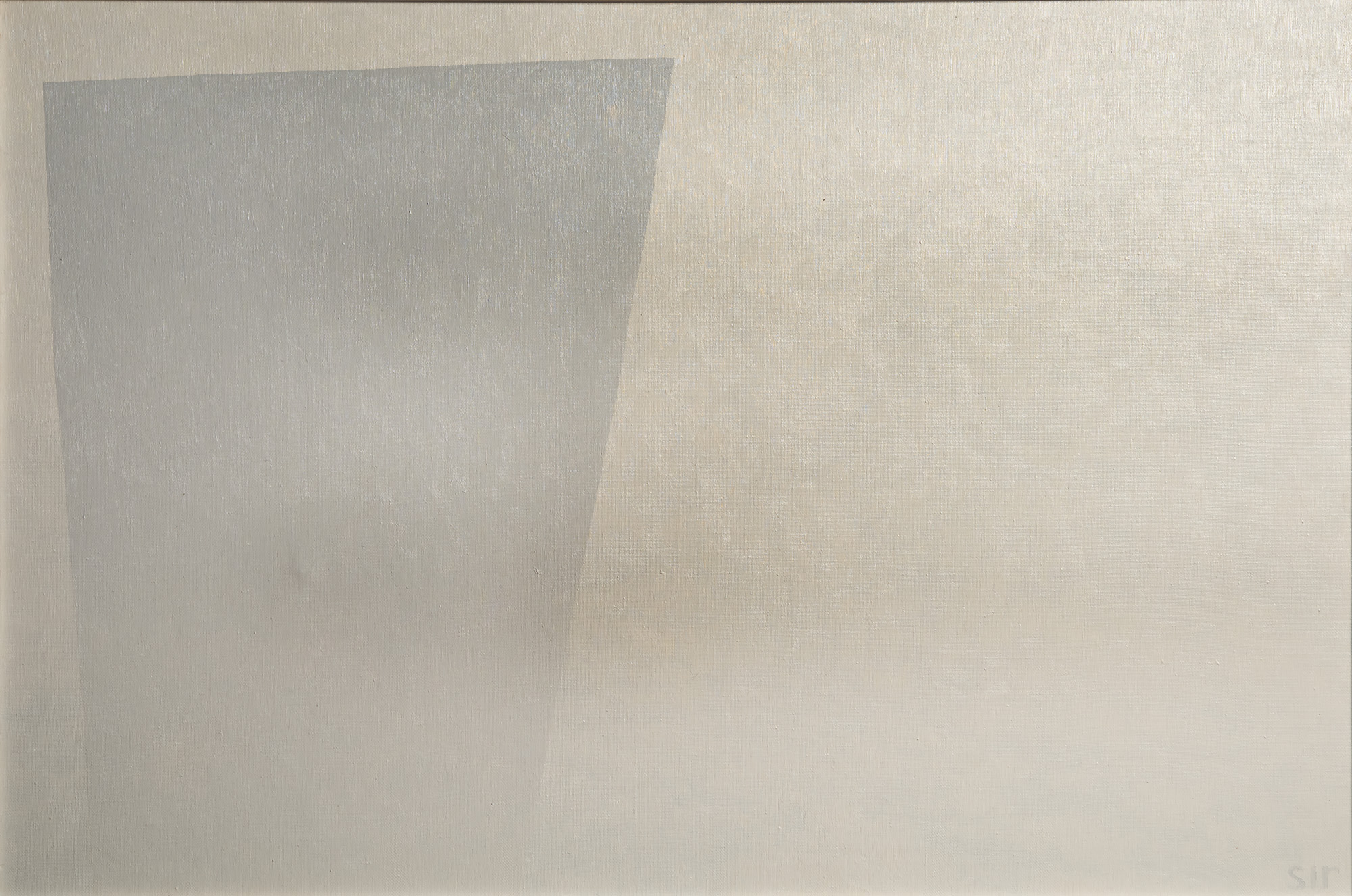
Shadows 2, 1993. Oil on canvas, 80.2 × 119.9 cm (31 9/16 × 47 3/16 in.). Museum Purchase, Avenir Foundation Endowment Fund. 2023.028.001
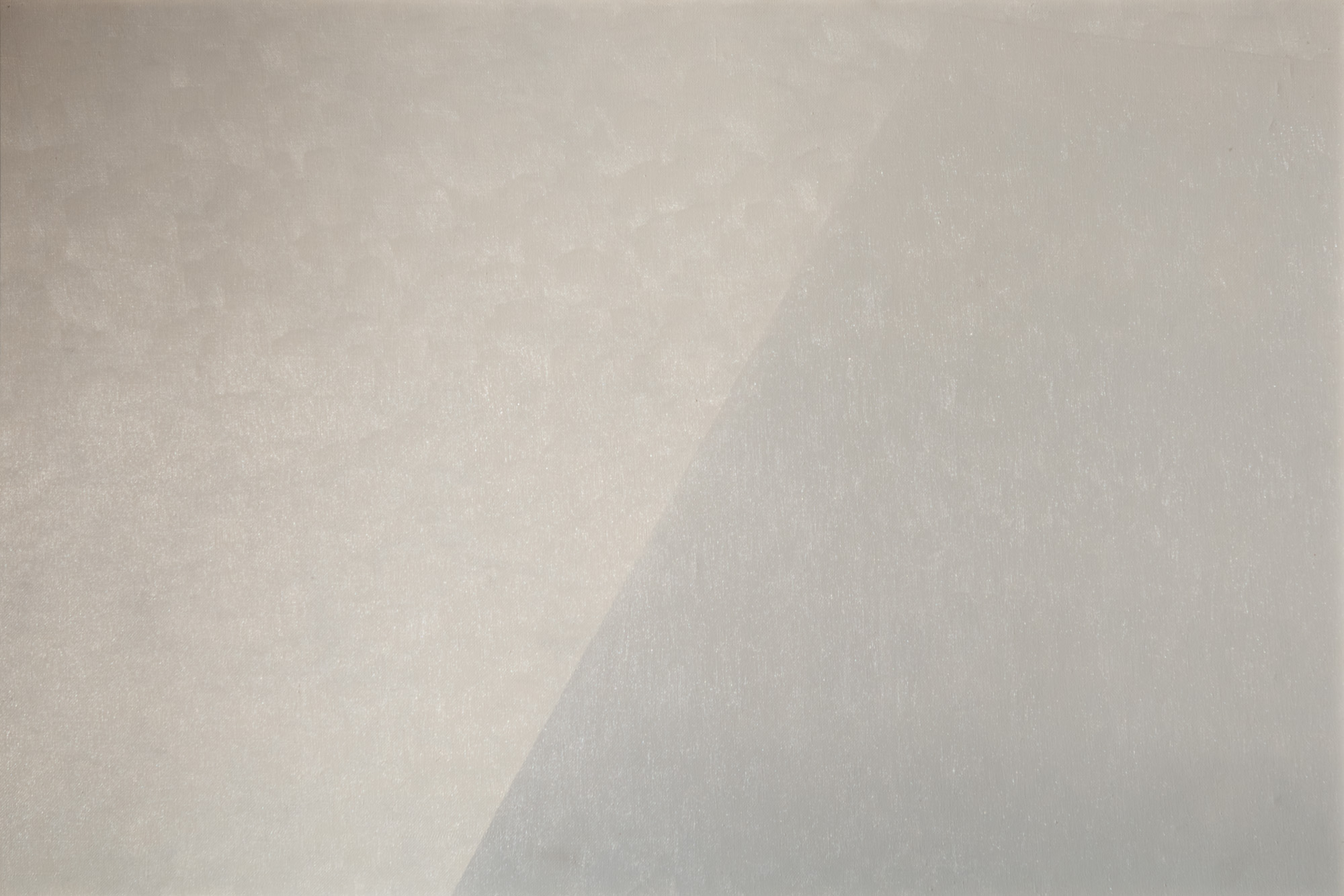
Shadows 4, 1993. Oil on canvas, 79.9 × 119.9 cm (31 7/16 × 47 3/16 in.). Museum Purchase, Avenir Foundation Endowment Fund. 2023.028.002
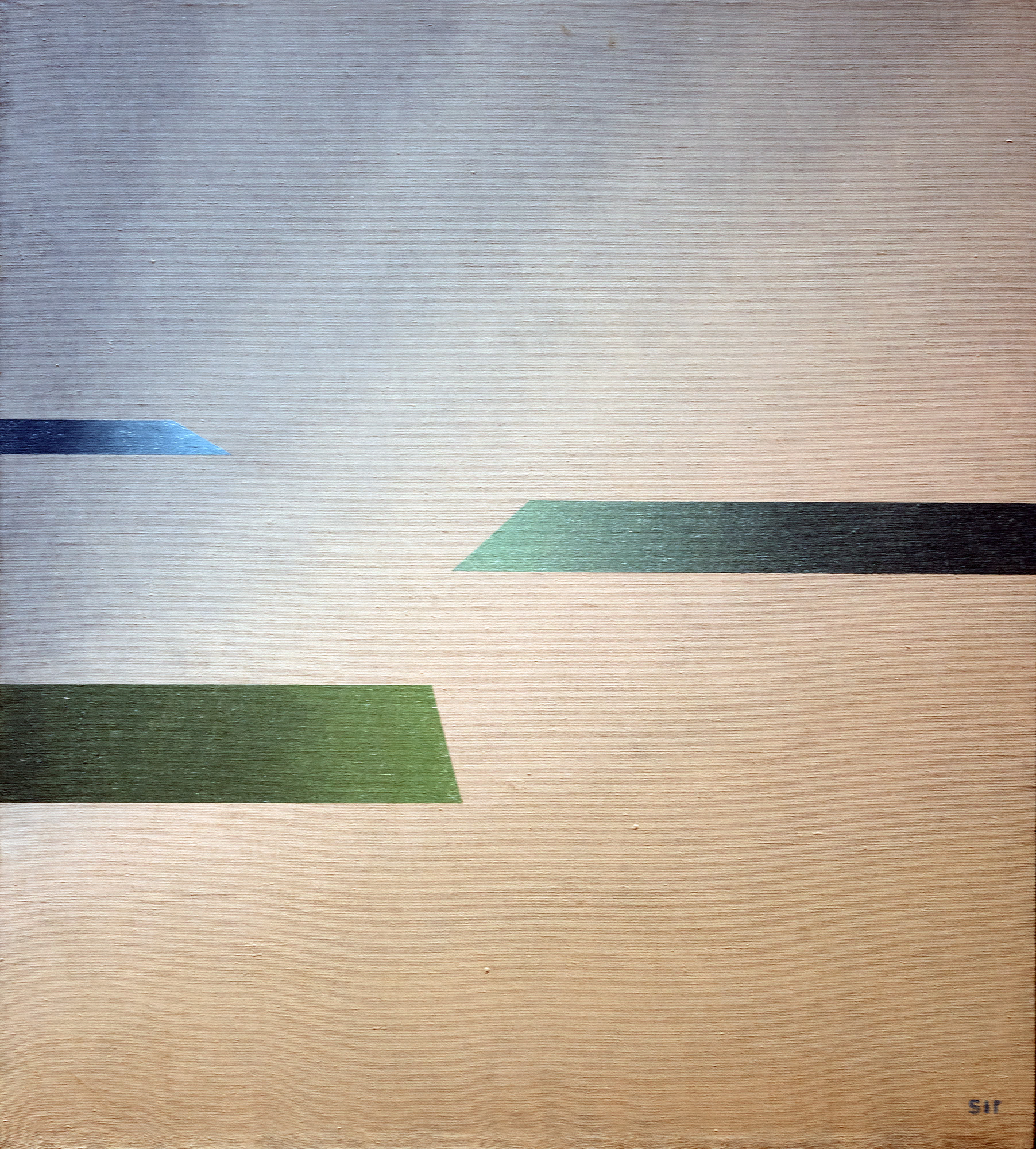
Landscape XXIII, 1982. Oil on canvas, 99.2 x 90.1 cm (39 1/16 x 35 1/2 in.). Norton and Nancy Dodge Collection of Nonconformist Art from the Soviet Union. D06305
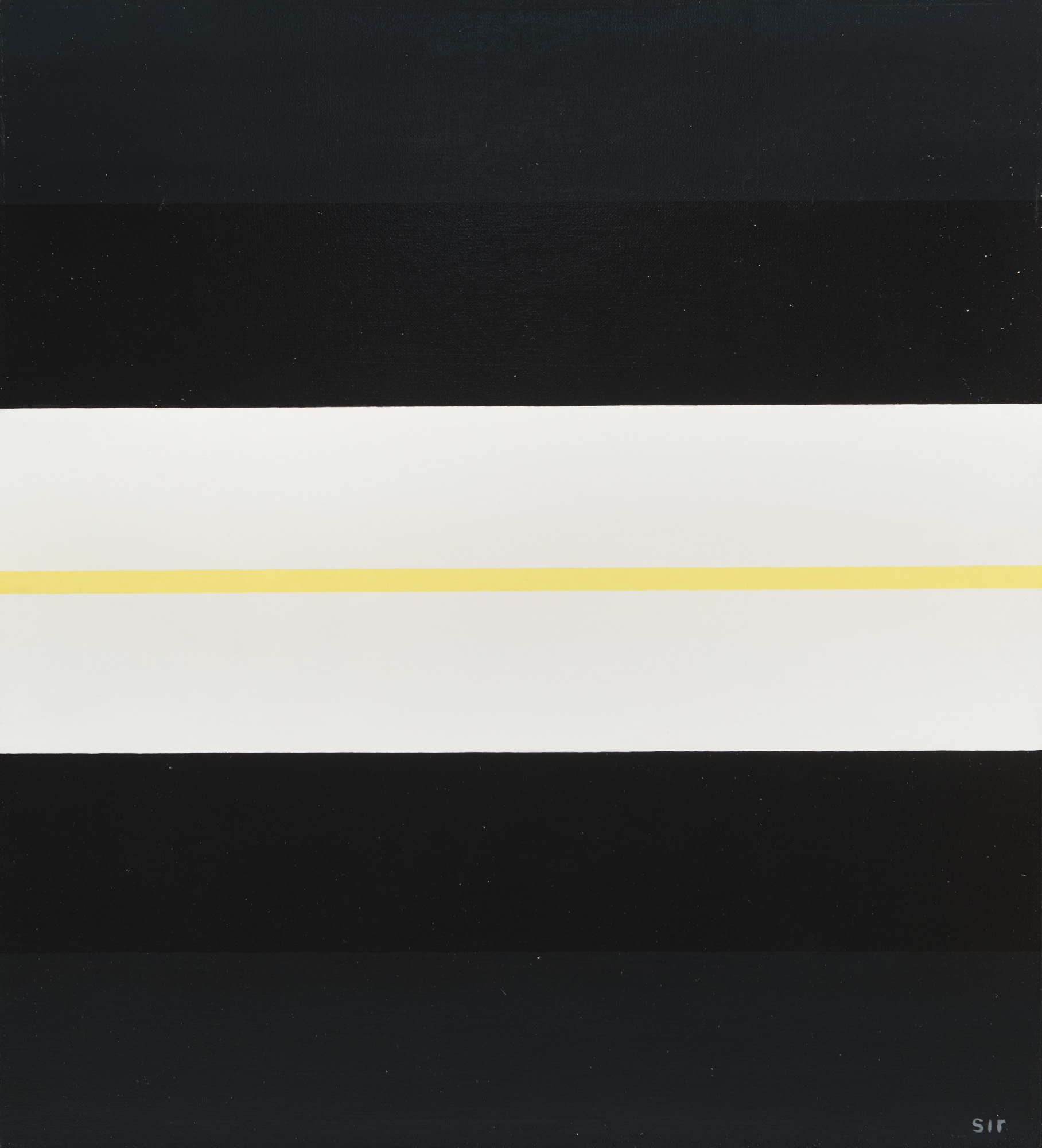
Light VIII, 1980. Oil on canvas, 99.5 x 89.8 cm (39 3/16 x 35 3/8 in.). Norton and Nancy Dodge Collection of Nonconformist Art from the Soviet Union. 1992.1011