
Siim-Tanel Annus
1960 — Tallinn (Estonia). Active in Estonia, Finland, and internationally
Siim-Tanel Annus is an Estonian graphic artist, painter, and performance artist. In graphic art, Annus was a prodigy whose minimalist black-and-white drawings were already in the Dodge Collection by the mid-1970s.
Annus remained an outsider in the official art of Soviet Estonia, as he never acquired a higher education in art and joined the Estonian Artists’ Association (formerly Union of Artists) only after the collapse of the Soviet Union. He graduated from Tartu University in 1984 with a diploma in art history. During the Soviet era, Annus mostly earned his living by gardening, growing chrysanthemums, tomatoes, and cucumbers; his garden also became important as his artistic subject matter and performance site. He started making a living as an artist at the end of the 1980s as borders were opening, along with interest from foreign collectors.
The artist’s graphic works from the 1970s and ’80s are deeply rooted in the modernist tradition, using mostly black-and-white color schemes and geometrically structured, architectonic, and often symmetrical imagery. Minimalist in the beginning, his images became more and more intricate over time. To this day, Annus follows the principle of guided spontaneity, using no sketches and letting the work evolve naturally in the process.
Annus started his art studies as a teenager under the artist Tõnis Vint (1942–2019). In the 1960s and ’70s, Vint’s legendary home studio was an unofficial gathering place for young artists where he taught a uniquely curated curriculum that integrated traditional symbols of different cultures with contemporary pop art aesthetics. Young Annus absorbed new ideas quickly and started creating pictures composed of painstakingly drawn straight lines that form abstract images, such as his earliest untitled works in the Zimmerli collection from 1976 (e.g., D02194, D02195, D02196, D05645).
In 1976 he produced a series of architectonic images of black crosses on a hill against a white background, including the gouache drawing Town (ZAM, D00449). These pictures can be seen as doubly rebellious: On the one hand, the Christian symbol was officially condemned by Soviet authorities; on the other hand, Annus's teacher, Tõnis Vint, was not particularly inclined toward Christianity because of his sympathies for Eastern philosophies. Nevertheless, the religious connotations of Annus’s art have always remained somewhat ambiguous. Another untitled image from the same series incorporates yin and yang dots instead of the cross (D02660). This ambiguity sometimes allowed his drawings to pass through Soviet censorship as innocent “architectural forms.”
Most of the artist’s early drawings, like the series Towers to the Heavens (ZAM, D02438, D02440, D02494, D02495, D02496, D02498, D03773, D03774, D03777, D03778, D03779) and Heavenly Cities (ZAM, D05867, D02436, D02437, D03775, D03776, D05867, D05868), were executed with pen and ruler, requiring up to two weeks to complete. He also drew inspiration from technical drawings, as in A Technical Landscape (ZAM, D08786), and tried to imitate the sterile and anonymous production of a machine (as in the untitled works from 1979 and 1980 in the Zimmerli collection, D08782, D08783, D08784, D08785).
Although seemingly minimal and anti-expressionist, Annus’s images carry an enigmatic and reflective quality, and the viewer cannot shake the feeling that they are some sort of signs, perhaps from another world. For the artist, the whole process of meticulous drawing was a ritual act and a form of therapy. For the viewer, the completed image, often strictly symmetrical, acts as a point of meditation, a sort of modernist mandala (e.g., ZAM, D08874, D08875, D08779).
Annus’s graphic works found their way through the Iron Curtain to exhibitions in New York, Washington, DC, and London. The pictures were sent to these exhibitions with the help of foreign friends and curators or by mail. It was easier for the young artist, in comparison with his officially recognized colleagues, to get his artworks over the border as the work of an “amateur.”
Annus’s pictorial works from the late 1970s enter into a dialogue with the otherworldly performances that he started to organize in his backyard in Tallinn in the early 1980s. Annus was the pioneer of the new generation of performance artists in Estonia during the 1980s. Performance art never was an official genre in the Soviet Union, and Annus’s activities were recognized only by his circle of fellow artists and friends. His carefully prepared Gesamtkunstwerk one-man shows incorporating visual effects, theatrical props, and music were essentially different from the more spontaneous avant-garde happenings of the 1960s and ’70s. This was long before the term “performance art” had even been discovered by local art critics, and Annus called his activities “rituals” and associated them initially with rites of harvest. The visions of his performances grew out of the ritual act of meticulous drawing, together with listening to electronic ambient music during the work process.
During the Perestroika period at the end of the 1980s, Annus’s performing character, wearing a white robe and a crown, was associated with the liberation movement, and he was one of the first performance artists from the Soviet Union to perform and gain recognition in the West. He later abandoned the theatrical props and turned toward a more minimalist approach in his performances. He often uses the symbolism of a singular evocative act to express battling with or overcoming mental or psychological barriers.
Annus’s most iconic backyard performance, Transitions (also known as Mooni 46a, based on its location), took place on December 5, 1987. Finnish TV secured a permit from Moscow to film it. The subsequent documentary film by Katariina Lahti aired in Finland in 1988, making Annus an instant star in the West. In the performance, Annus conducted a fire ritual while dressed in a white robe and wearing a crown. The performance culminated with the blindfolded Annus passing through a gate of fire on a wheeled platform. At the end of the performance, the audience was surprised by the militsiya (Soviet police), who took the artist and TV crew to be interrogated at a local police station. The ambiguity of Annus’s images has created fertile ground for varied interpretations of his performances. The artist has been receptive to these interpretations, saying that he tore down his own wall two years before the Berlin Wall.
In 1997 Annus and fellow artists Jaan Toomik and Raoul Kurvitz were the first to represent independent Estonia at the Venice Biennale.
Recently, Annus has been painting large-scale canvases. The iconlike symbolism of a single suggestive image and the seriality of his work have endured over decades. A circle from the series Circulos (2019) resonates with the circular origin of the world in the series Genesis (2019). A love of transcendental images has been a constant throughout the artist’s career, starting with his early drawings and performances. For Annus, art means abandoning all that is personal and entering the realm of ideal forms. His images seem not so much created as set free by discarding all that is unnecessary. Annus’s work can be interpreted as a therapeutic art that provides viewers with the opportunity to transcend their daily experiences. Under the Soviet occupation, it was a necessary coping mechanism for dealing with the bleak reality. Currently, Annus has taken a strong stand against the Russian aggression in Ukraine in works such as Ukrainian Heartbeat (2022) and Ukraine Spring (2024).
Liis Kibuspuu
Photo portrait: Siim-Tanel Annus, 2017. Photo by Endel Apsalon
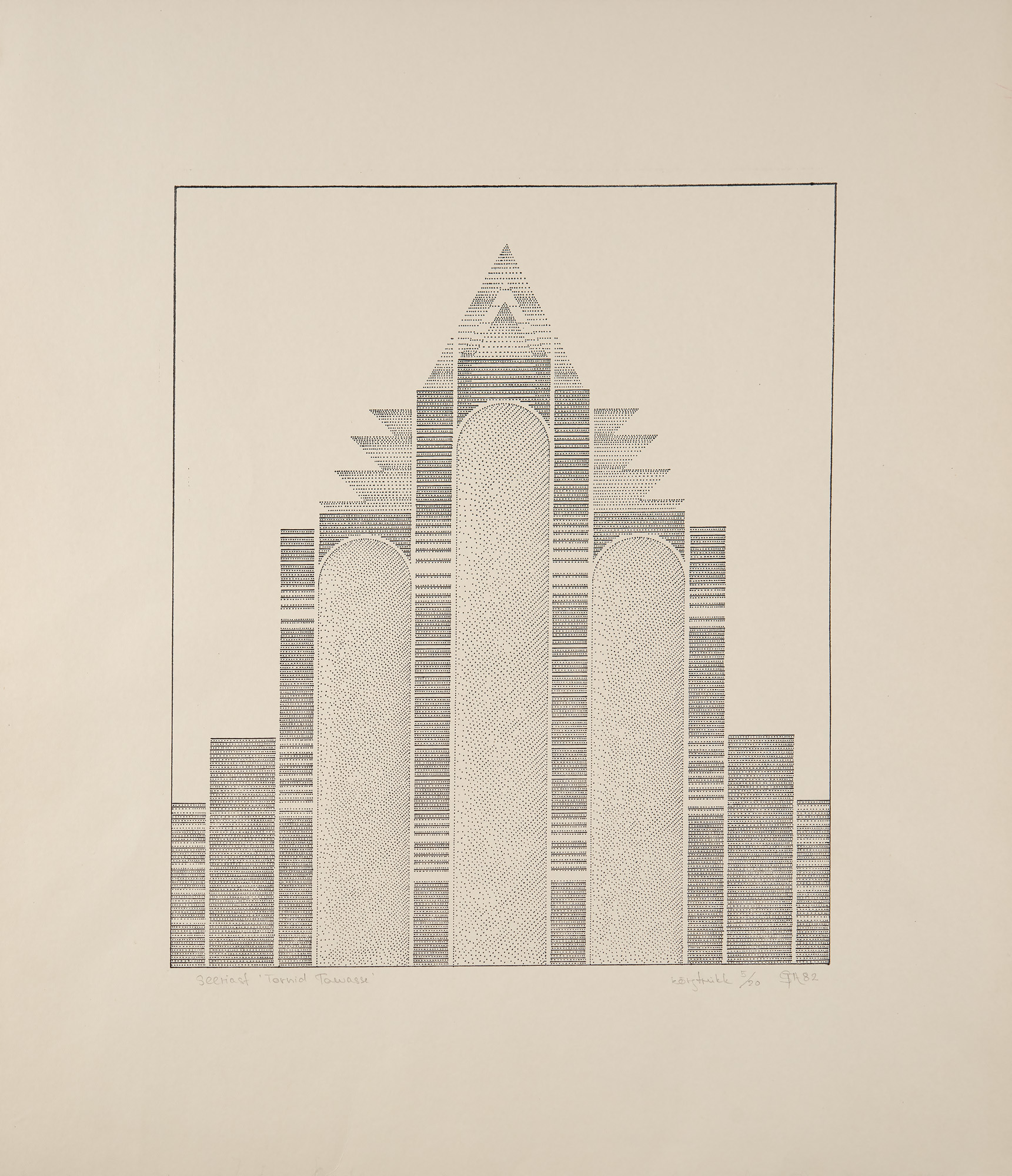
Untitled from the series Towers to the Heavens, 1982. Relief print on paper, 29.4 × 25.1 cm (11 9/16 × 9 7/8 in.). Norton and Nancy Dodge Collection of Nonconformist Art from the Soviet Union. D02495
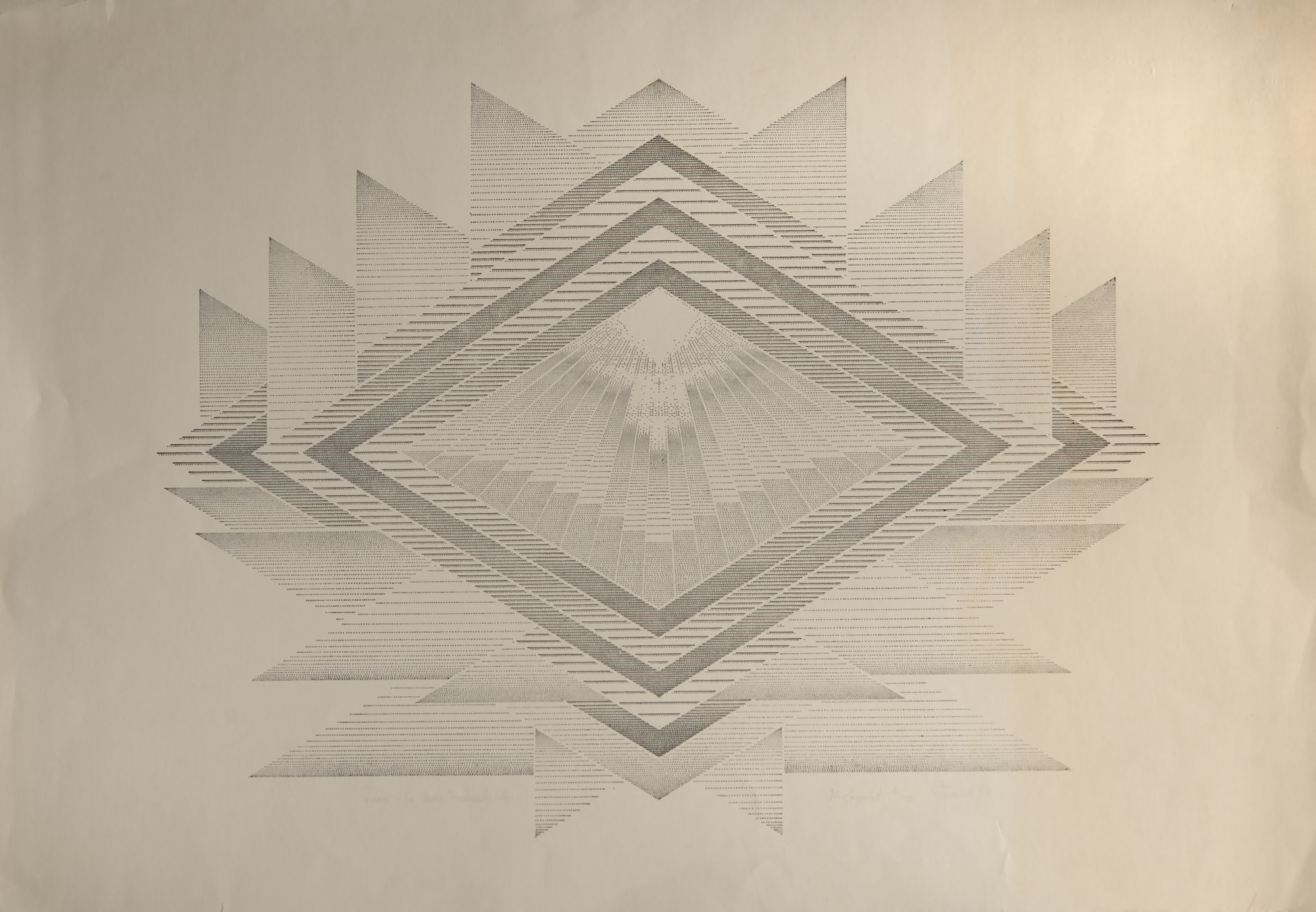
Untitled from the series Heavenly Cities I, 1984. Relief print on paper, 45.2 × 58.2 cm (17 13/16 × 22 15/16 in.). Norton and Nancy Dodge Collection of Nonconformist Art from the Soviet Union. D02436
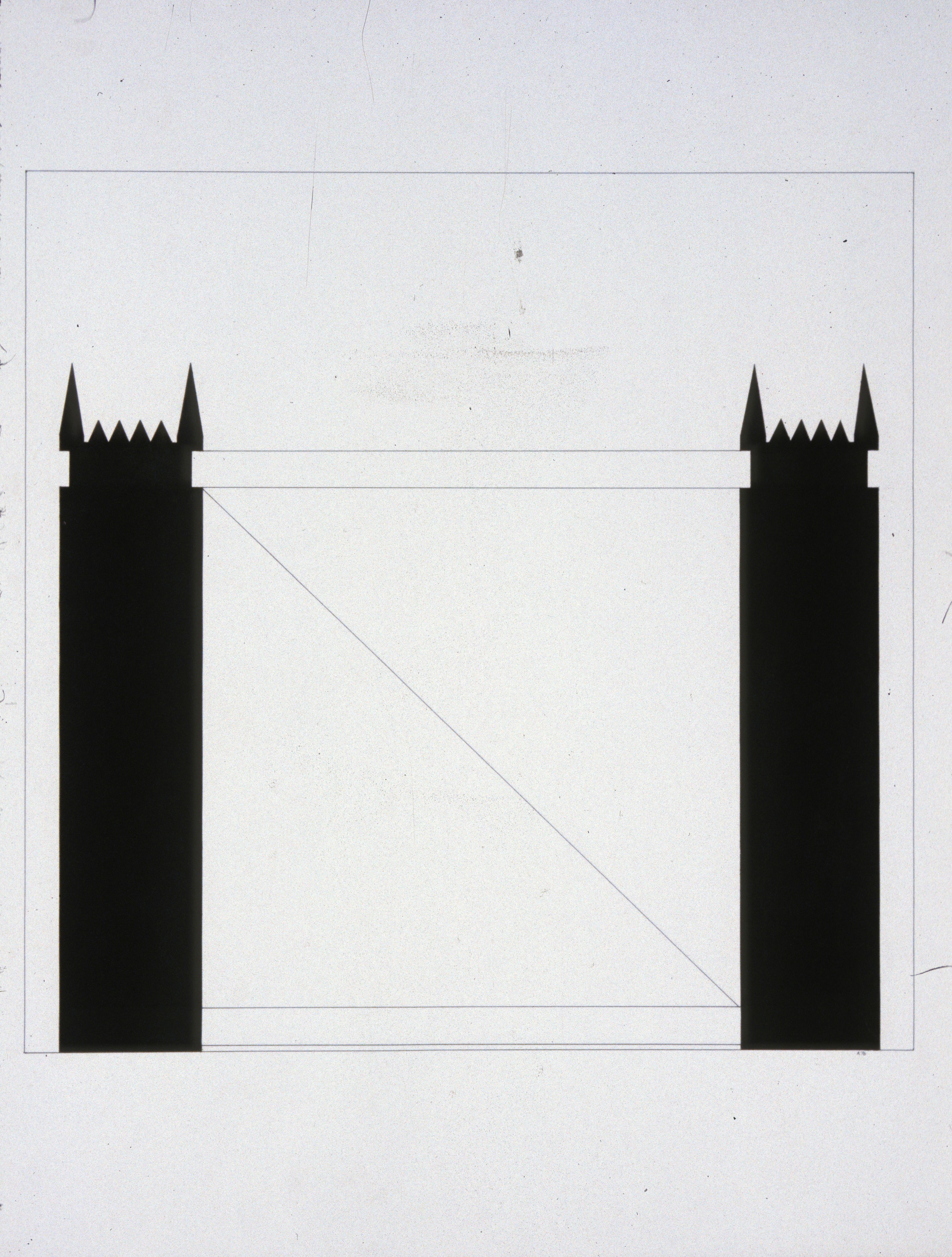
Untitled, 1976. Gouache on paper, 42.8 × 43.1 cm (16 7/8 × 16 15/16 in.). Norton and Nancy Dodge Collection of Nonconformist Art from the Soviet Union. D02661
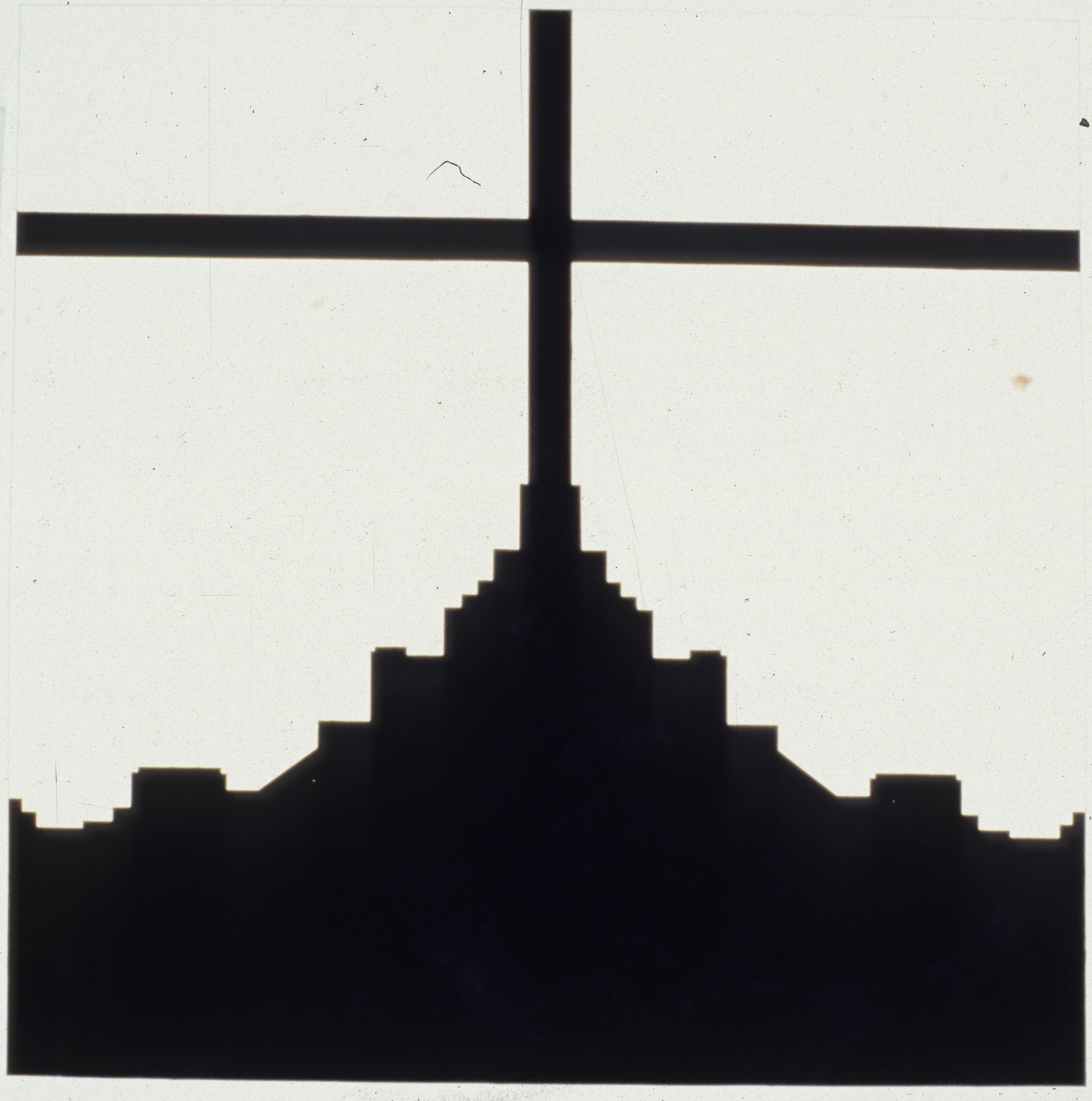
Untitled, 1976. Gouache on paper, 42.7 x 42.8 cm (16 13/16 x 16 7/8 in.). Norton and Nancy Dodge Collection of Nonconformist Art from the Soviet Union. D02662
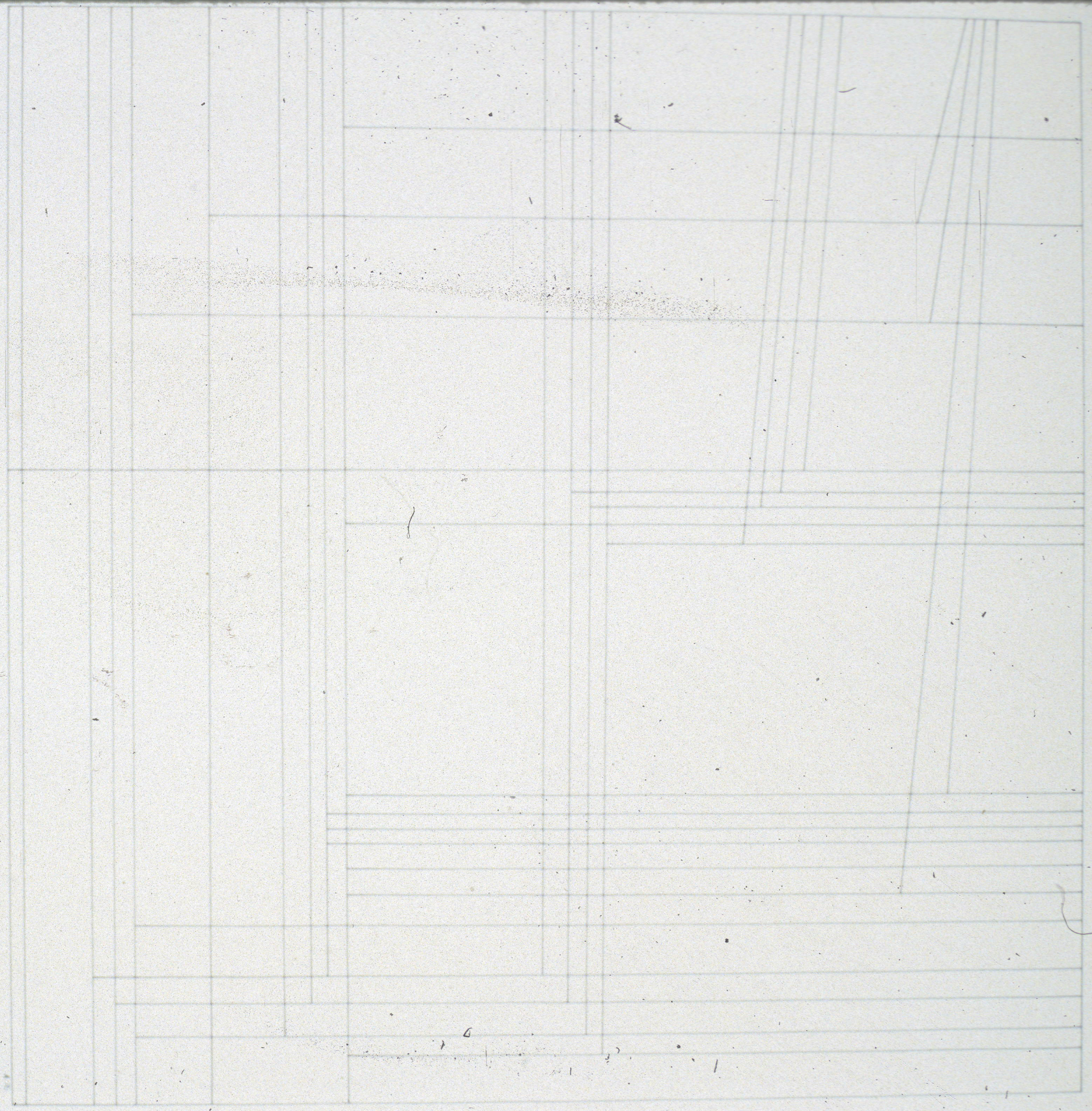
Untitled, 1976. Relief print on paper, 32.1 x 32 cm (12 5/8 x 12 5/8 in.). Norton and Nancy Dodge Collection of Nonconformist Art from the Soviet Union. D02194
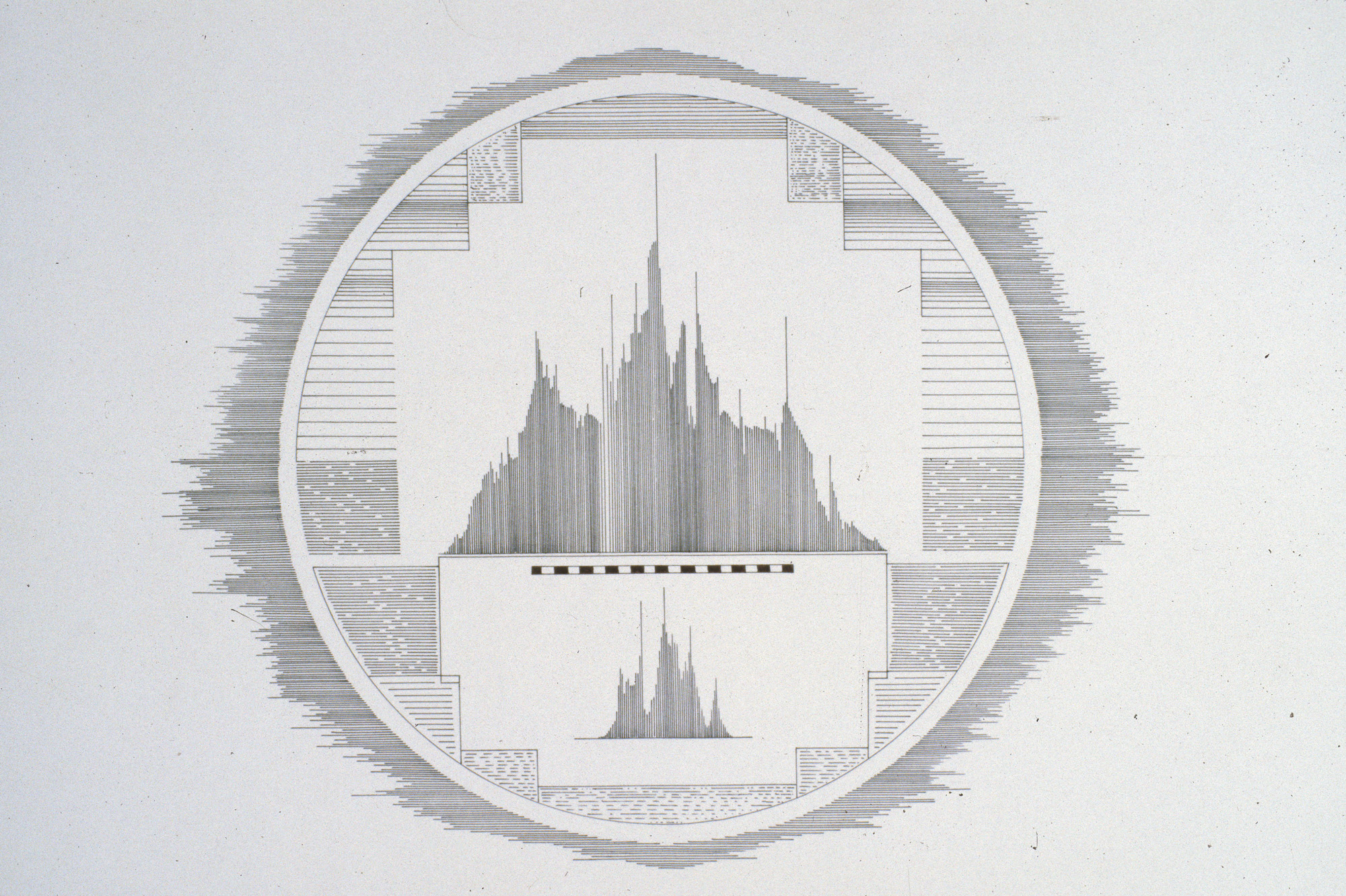
Untitled, 1979. Ink on paper, 32.2 x 39 cm (12 11/16 x 15 3/8 in.). Norton and Nancy Dodge Collection of Nonconformist Art from the Soviet Union. D08779
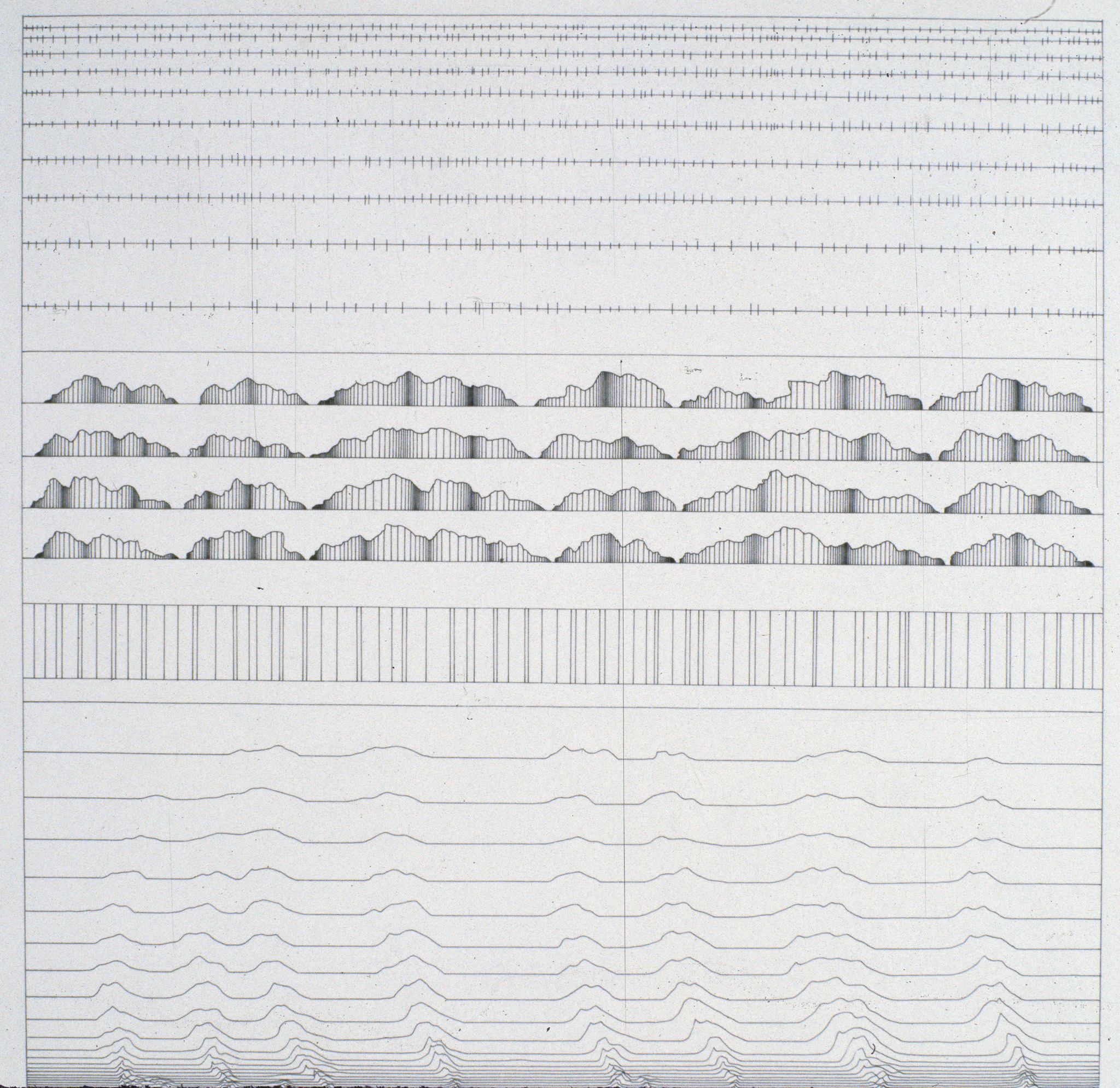
A Technical Landscape, 1980. Ink on paper, 42.1 x 42.2 cm (16 9/16 x 16 5/8 in.). Norton and Nancy Dodge Collection of Nonconformist Art from the Soviet Union. D08786