
05/14/2011 - 11/13/2011

1947 — Moscow (Russia). Lives and works in Moscow (Russia)
Sergei Borisov masterfully combines different types of photography: city reportage (although he does not consider himself a reporter), production, and even conceptual photography.
As a child of twelve, he joined the photography club of the Moscow House of Pioneers. In the 1970s, he worked as a field photographer and, later in the decade, joined the City Committee of Graphic Artists. He also began to collaborate with the Melodiya company, taking photographs of Soviet pop stars to be used on the covers of more than 70 records.
He photographed a gallery of portraits of creative bohemians of the perestroika era and the first post-Soviet years, which brought Borisov fame at home and notice abroad. His works were published in international publications such as Le Monde, Photo, Vogue, and Interview. “In the late 1980s and early 1990s, my studio was besieged by Western journalists. It seemed that they took more photos from me than from TASS. There were literally queues of Western journalists coming to me. They were all interested in the informal youth I hung out with, as well as youth fashion, which interested me no less,” Borisov later told the Art Newspaper Russia. [1]
His lens captured young rock stars such as Viktor Tsoi, Boris Grebenshchikov, and Zhanna Aguzarova; avant-garde musicians and artists such as Sergey Bugaev (Afrika), Sergey Kuryokhin, Georgy (Gustav) Guryanov, Timur Novikov, Konstantin Zvezdochetov, and Vladislav Mamyshev-Monroe; as well as experimental theater directors Anatoly Vasiliev and Roman Viktyuk. At that moment, all this underground culture began to come out of hiding and conquer the public. “All the artists of that generation were wonderful models. You can just [photograph] them all with your eyes closed. They were so used to performing without an audience that it was as if they were constantly performing for the camera,” Borisov later recalled about this time in an interview for the newspaper Kommersant. He knew what he was talking about, because by that time, he already had experience working with Soviet pop stars for the all-union record company Melodiya—he designed about 70 album covers, plus many advertising posters. “Back then, among my colleagues, the person who did an album cover or a poster for Pugacheva was considered the top photographer. And of course, I got caught up in that competition; I made two album covers for her in the ’70s, beat out the competition, and settled down.” [2]
In the late 1970s, he visited the exhibition hall on Malaya Gruzinskaya Street in Moscow and met many nonconformist artists of the older generation, including Ilya Kabakov, Eduard Steinberg, and Anatoly Zverev. In 1980, he exhibited a series of their photo portraits for the first time at that hall. However, he found his paradoxical and uninhibited style when photographing other younger and more desperate characters who were ready to undress in front of the camera. Similarly, he photographed the performance artist German Vinogradov (Bicapo), who performed nude in his own work. During this period of glasnost, nudity served as a metaphor for freedom and emancipation, and everyone began to undress on stage, in movies, and in actions. Later, Borisov held the exhibition Naked Bohemia. If the genre of erotic photography existed in Soviet times, it was underground. Borisov (along with his other colleagues) made it public, and, more importantly, ironic. This erotic aspect distinguishes Borisov’s work from the works of other contemporary photographers who worked in avant-garde culture, such as Igor Mukhin and Andrey Bezukladnikov.
In 1979, Borisov acquired his own workshop on Znamenka Street, which he called Studio 50A. It became a popular place for exhibitions and concerts, and was a spot where the Leningrad crowd and Moscow crowds could fraternize. It is not surprising that the cheerful paintings and objects by new artists were in the background of many portraits. Mikhail Baster, a chronicler and archivist of informal youth subcultures in the late USSR, wrote: “Another photographer would hardly have been able to capture Soviet bohemia the way Sergei did, at least because of the trust and the same level of understanding of modernity between the photographer and the model—the unwritten attitudes of the underground of that period, of which the studio on Znamenka became a part.”
But Borisov’s photography space is not limited to the walls of the studio. He took his heroes out into the streets, sometimes forcing them to lie down on the asphalt (a picture of the rock band Dialogue, parodying the cover of the Beatles’ album Abbey Road), jumping against the backdrop of Stalinist skyscrapers—like the art group World Champions (Flight, 1988, auctioned at Sotheby’s London in 1994), and sometimes climbing on roofs or hugging statues. Borisov chose iconic and recognizable places in Moscow, but often presented them from unusual, not “postcard” angles. Princess Diana selected Flight to appear in a project and also purchased the photograph—which, in the catalogue, Borisov noted proudly, was on a spread with work by Jacques Henri Lartigue. [3] One of his most impressive photographs is Acrobat (1993): a tiny, toylike figure standing on its hands between the giant boots of the collective farmer from the Mukhinsky monument Worker and Collective Farmer. (Singer Oleg Gazmanov played the role of acrobat.) In this combination of lively and cheerful people and the imperial grandeur of Soviet buildings and monuments, Borisov managed to capture the spirit of the times, which the band Vezhlivy Otkaz [Polite refusal] sang about in 1985: “Statues of fathers / Wish children peaceful dreams / Gray pillars / Caress their foreheads with light stones / Old houses / Falling down everywhere, going crazy / Coffee and Citros / Boogie dancing to the noise of the subway.”
In his portrait of the writer Eduard Limonov (1994), the hero is depicted completely naked, standing like an academic model in a picture frame on the windowsill of his ascetic rented apartment. Only the genitals are covered with an object similar to a grenade, popularly called limonka. In fact, this is an ordinary lemon, peeled into the shape of a grеnade. During this period, Limonov plunged into politics and was going to publish the newspaper Limonka, and Borisov himself suggested playing with the word and image, using such a telling detail.
In many ways, it was Borisov’s photos that became associated with the style and image of perestroika. And it’s not just about the rockers and artists who posed for him, but also about the beautiful girls—not so much professional models as enthusiasts of a free lifestyle—who became famous due to his photographs. The lion’s share of Borisov’s success was provided by photo shoots, such as the Ideological Nudes series, that were associated with alternative, so-called untamed fashion, which wittily used all kinds of Soviet symbols—velvet red banners, orders, propaganda posters and newspapers, military dresses and caps, five-pointed stars, sickles and hammers. Borisov’s circle included Garik Assa, the fashion maven who dressed many of the avant-garde stars of the time and the inventor of the “dead scout” style, and the eccentric designer Andrey Bartenev, who took his fantastically costumed models to the front of the Cathedral of Christ the Savior, which was under construction. With his photographs, Borisov anticipated many of the techniques of fashion photography that would flourish in Russia a decade later. At the same time, he left a vivid portrait of the capital of a huge empire in a time of great changes.
As Irina Kulik writes in the article “Vintage of Perestroika”: “The fashionistas of the ’80s, whom Sergei Borisov photographed, were completely obsessed with retro styles—the most stylish people in Moscow at the time dressed at the Tishinsky market, where they bought broad-shouldered vintage coats and suits, for which the term ‘vintage’ hadn’t yet been coined. … At that time, it probably seemed that all these symbols of the still very much alive and dangerous ‘sovok’ were meant to set off the ‘new people’ who were looking toward the future. Now you realize that perhaps they were the first people of the new era not because they foresaw the coming of the future, but because they were the first to see the past fading away —and to bid it farewell.” [4]
Borisov’s photographs are in the collections of the Moscow House of Photography; Moscow Museum of Modern Art; State Tretyakov Gallery; Kunsthaus in Zürich, Switzerland; Musée d’Elysée in Lausanne, Switzerland; and the Museum of the University of Texas in Austin, TX, USA.
Milena Orlova
Notes:
1. “Антисоветский реализм” [Anti-Soviet realism]. In Art Newspaper Russia, March 6, 2017.
2. Borisov, Sergei. “Солидные мне неинтересны” [I am not interested in respectable (people)]. Interview by Irina Kulik, Kommersant no. 137, August 3, 2007.
3. “Антисоветский реализм” [Anti-Soviet realism].
4. Kulik, Irina. “Vintage of Perestroika.” In Kommersant, August 6, 2007.
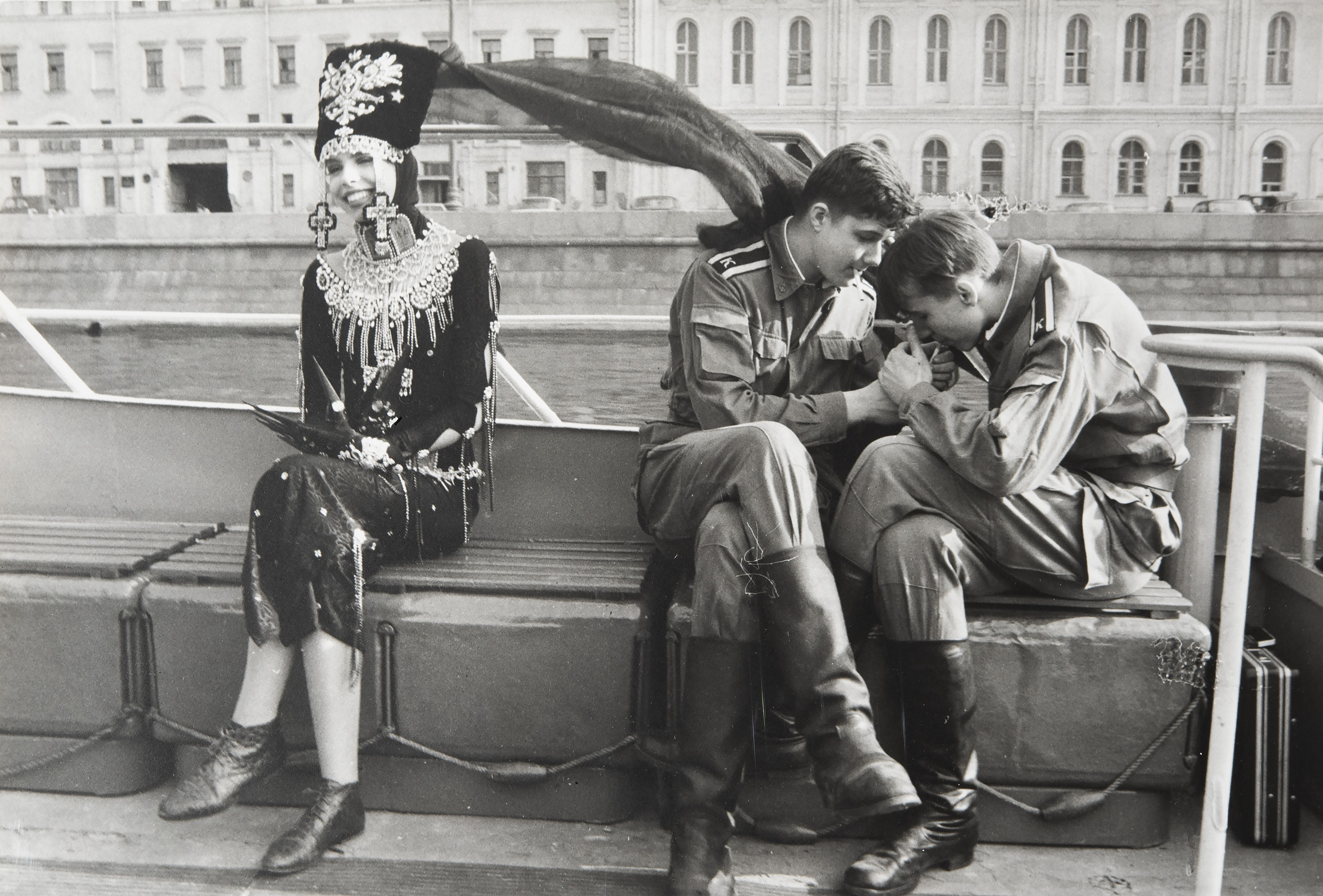
Untitled, undated. Photograph on paper, 19.7 × 29.1 cm (7 3/4 × 11 7/16 in.). Norton and Nancy Dodge Collection of Nonconformist Art from the Soviet Union. D14873
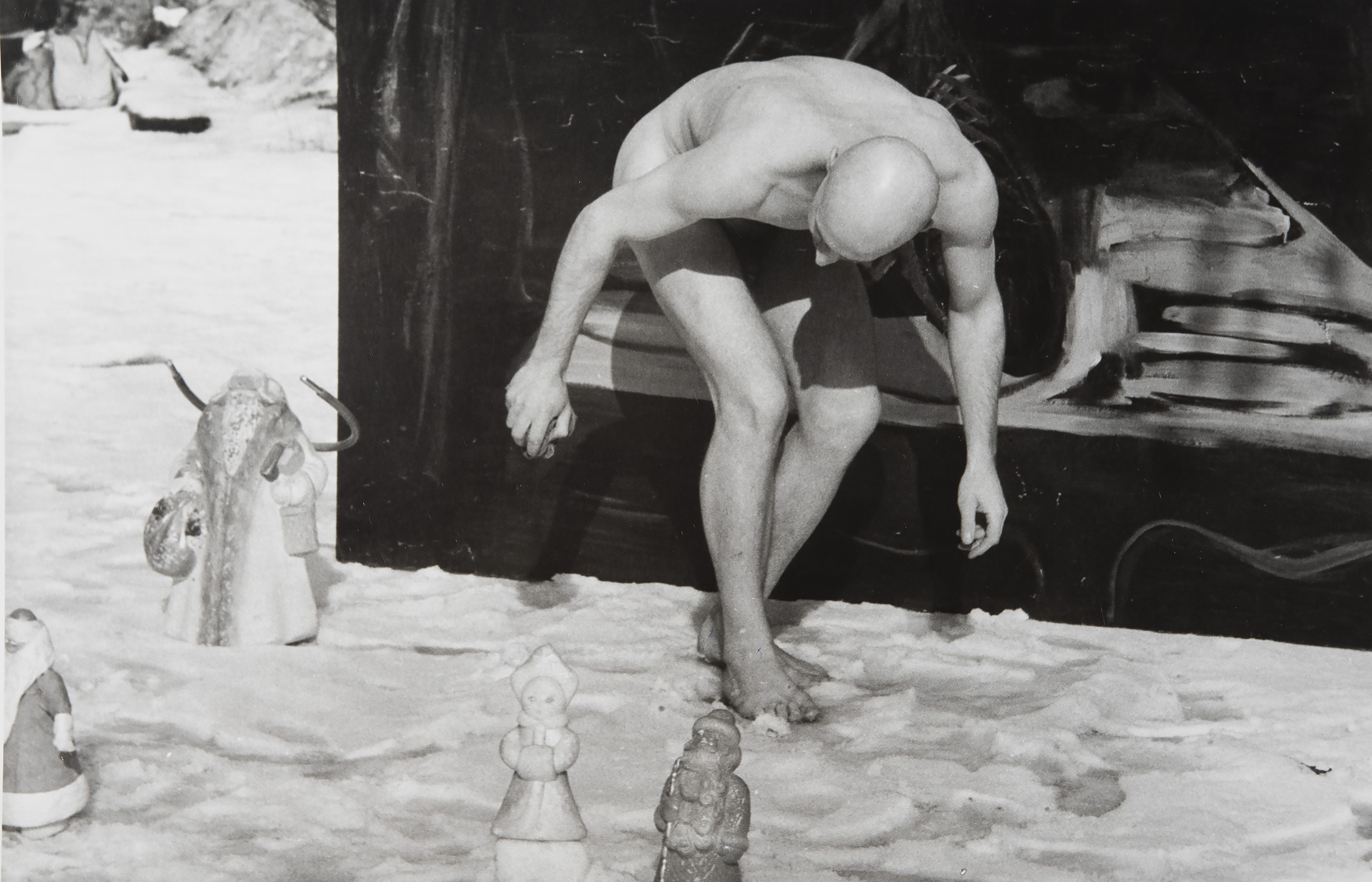
Untitled, undated. Photograph on paper, 19 × 29.6 cm (7 1/2 × 11 5/8 in.). Norton and Nancy Dodge Collection of Nonconformist Art from the Soviet Union. D14876
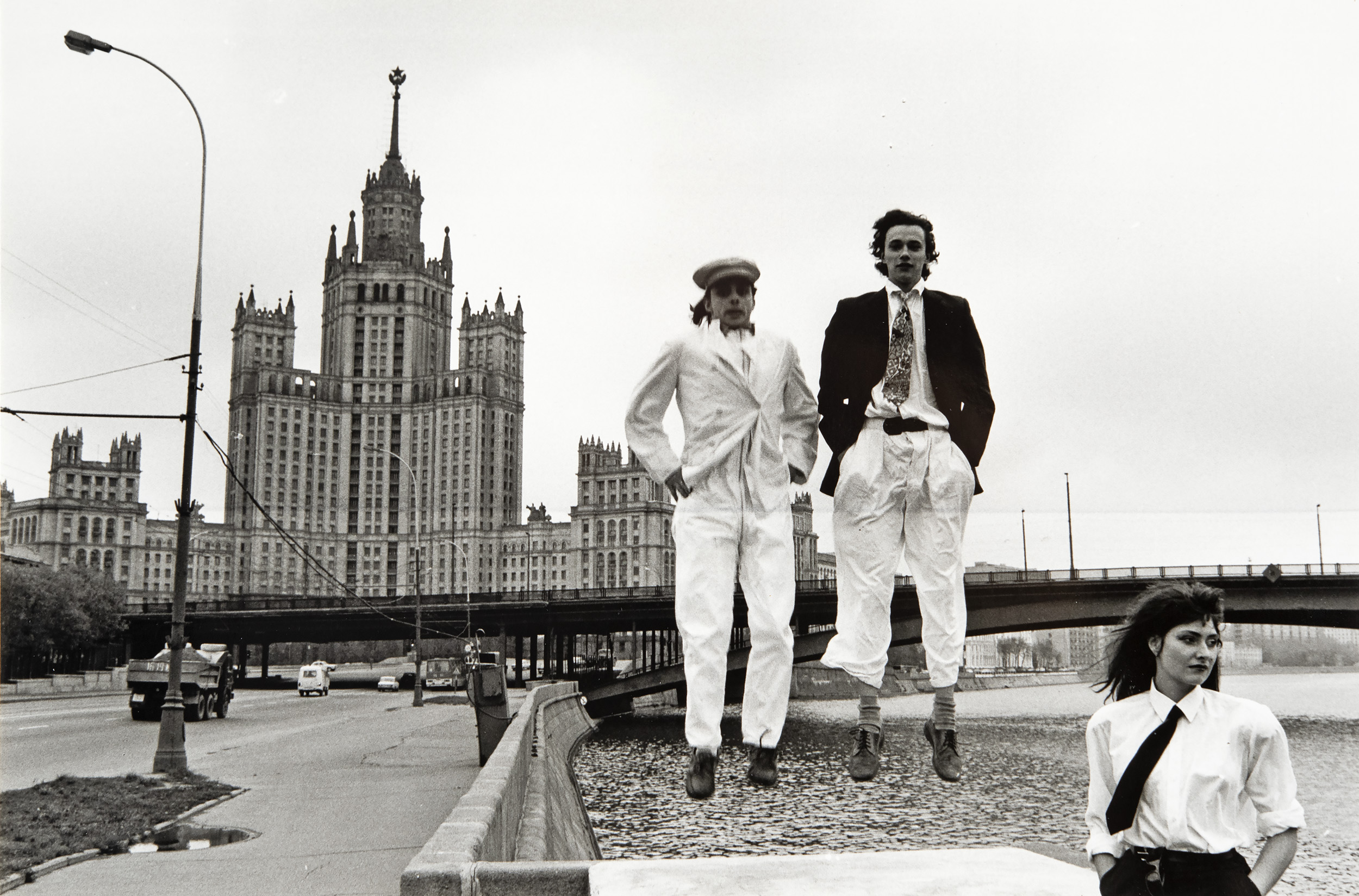
Untitled, early 1980s. Gelatin silver print on paper, 26.6 x 39.9 cm (10 1/2 x 15 11/16 in.). Norton and Nancy Dodge Collection of Nonconformist Art from the Soviet Union. D19301
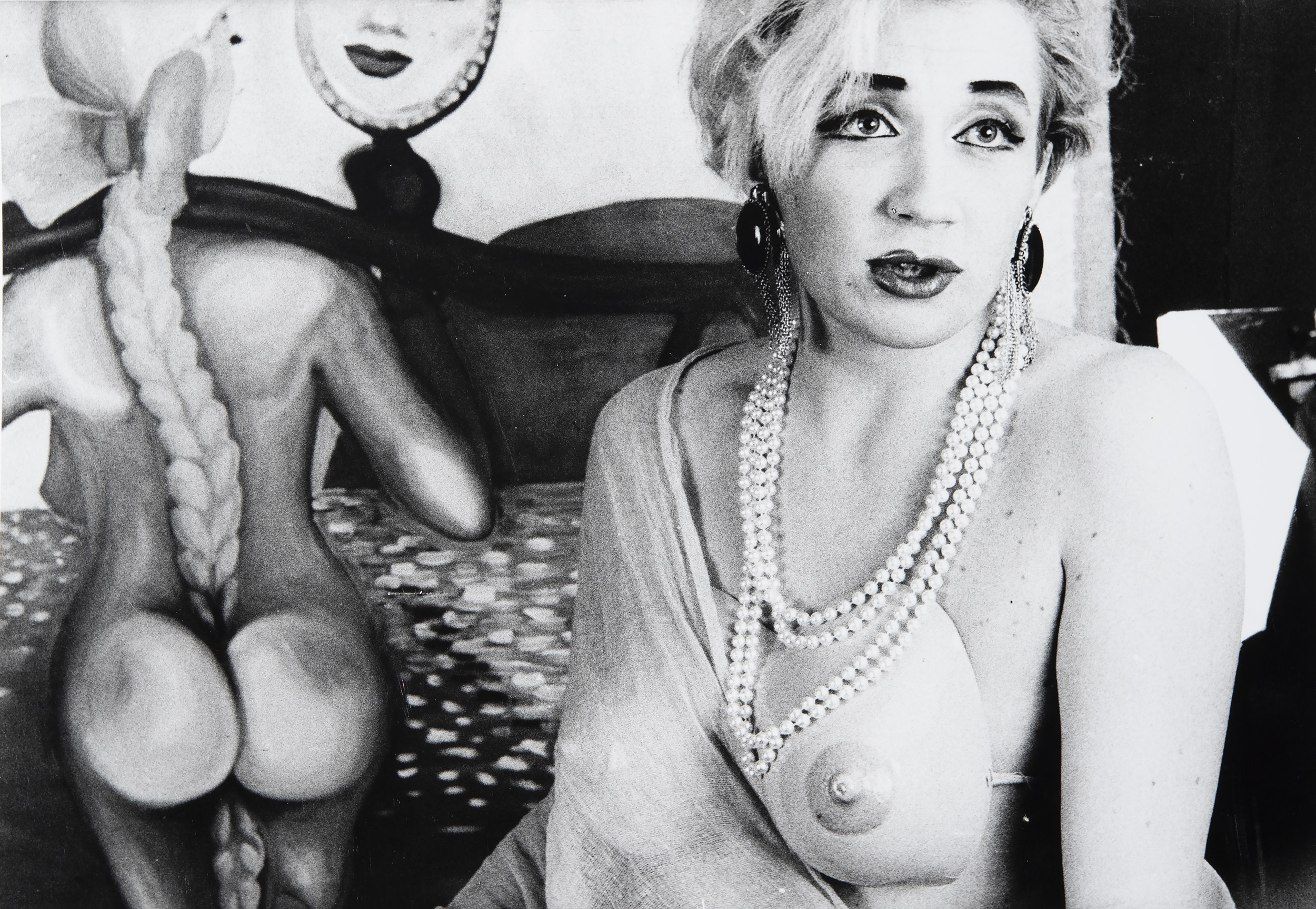
Monroe, undated. Photograph on paper, 24 × 29.5 cm (9 7/16 × 11 5/8 in.). Norton and Nancy Dodge Collection of Nonconformist Art from the Soviet Union. D20056
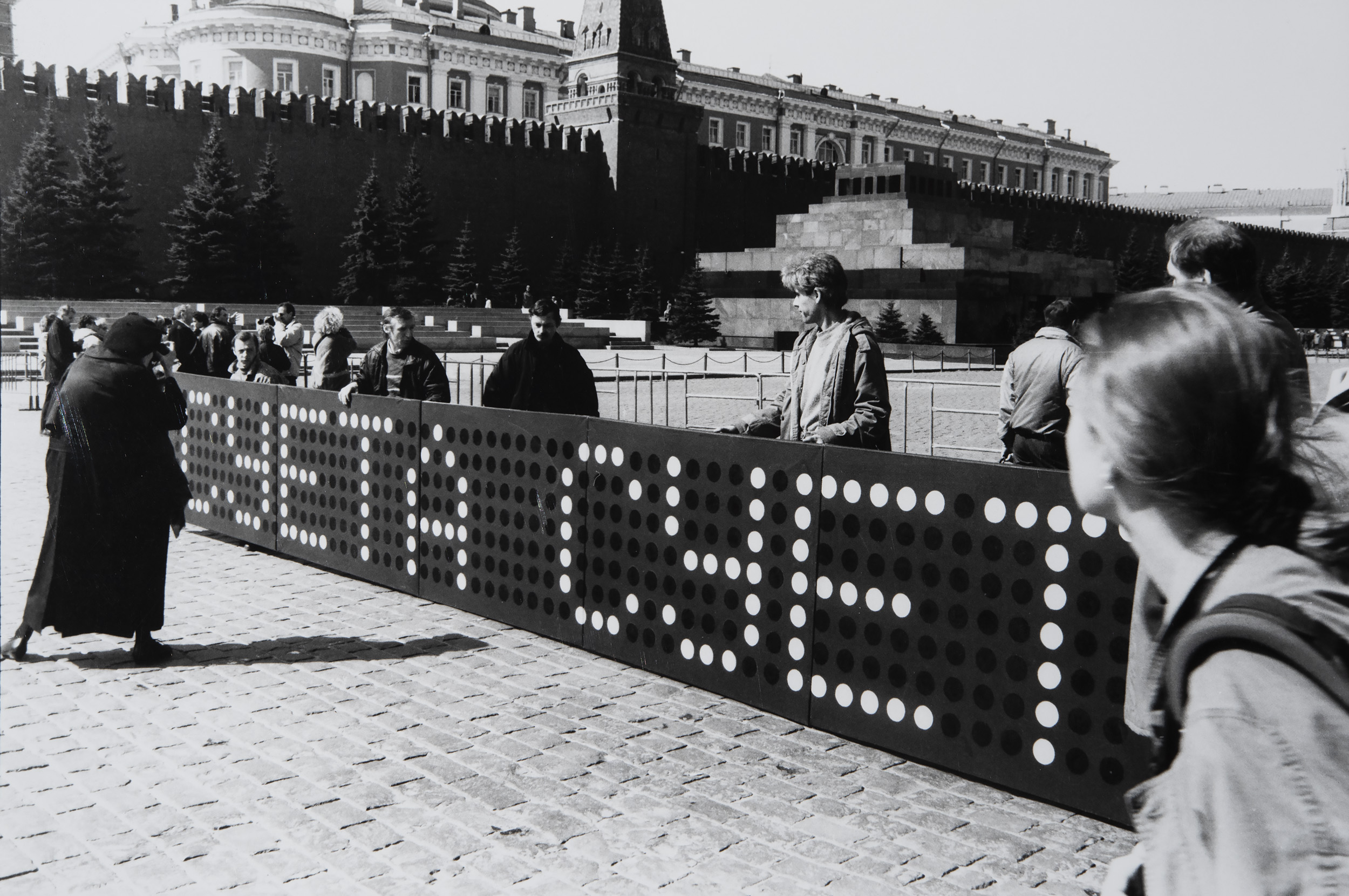
Untitled, undated. Photograph on paper, 22 × 29.5 cm (8 11/16 × 11 5/8 in.). Norton and Nancy Dodge Collection of Nonconformist Art from the Soviet Union. D20057
Selected Exhibitions
1980 Portraits of Nonconformist Artists, Malaya Gruzinskaya exhibition hall, Moscow, USSR (solo)
1989 Zwei Andressen in Mascau, Kunsthaus, Zurich, Switzerland (solo)
1991 Defence of the White House, Tele-center, Moscow, Russia
1994 The Arts of Photography: Russia, Ukraine, Belarus, Central House of the Artist, Moscow, Russia
1997 Portraet einer Zeit. Fotos von Sergei Borisov, from the collection of Rolf Schaerer, Ars et Vinum, Birmensdorf, Switzerland
1998 Generation Next, Alexander Gallery, Washington, DC, USA
1998 People and Fashion of the New Culture, Central Exhibition Hall Manege, Moscow, Russia
2007 Люди и время [People and time], Moscow House of Photography, Moscow, Russia (solo)
2010 La Leçon de l’histoire, Palais de Tokyo, Paris, France
2011 Cast Me Not Away: Soviet Photography in the 1980s from the Norton and Nancy Dodge Collection, Zimmerli Art Museum, New Brunswick, NJ, USA
2011 Mikhail Gorbachev. Perestroika, Central Exhibition Hall Manege, Moscow, Russia
2012 Naked Boheme, Ruarts Foundation, Moscow, Russia (solo)
2012 Video Art by Sergei Borisov, National Centre for Contemporary Arts, Moscow, Russia
2017 Sergei Borisov. Zeitgeist, Moscow Museum of Modern Art, Moscow, Russia (solo)
2024 Город сказка [Dream city], Moscow Museum of Modern Art, jointly with Ruarts Foundation, Moscow, Russia
Selected Publications
Borisov, Sergei. Студия 50А [Studio 50A]. Moscow: RuArts Art Foundation, 2014.
Kulik, Irina. Interview with Sergei Borisov in Kommersant, August 3, 2007.
Petrakova, Anastasia. Interview with Sergei Borisov in The Art Newspaper Russia, June 9, 2017.
Sergei Borisov: album. Moscow House of Photography, 2007. [archived]
Sergei Borisov: Photography. Moscow: Avant-Garde, 1993.
Salzirn, Tatiana. "Sergei Borisov: Selections." Photojournal ХЭ.
Steiner, Arseny. "Замораживание натуры" [Freezing of nature]. In Art Khronika, December 8, 2012.