
Savadov-Senchenko
Arsen Savadov, 1962 — Kyiv (Ukraine) and Heorhii Senchenko, 1962 — Kyiv (Ukraine)
Active as a duo in Kyiv (Ukraine) (1986–1996)
Arsen Savadov and Heorhii Senchenko, both born in 1962 in Kyiv, Ukraine, were leaders of the Ukrainian wave of transavantgarde painting. An artistic duo for much of their careers, they belonged to the “Paris Commune” art squat in Kyiv in the early 1990s. The artists studied at the Kyiv State Art Institute (now the National Academy of Fine Arts and Architecture) and, following their graduation in 1986, the duo worked together (with a short break) until 1996. They created art objects, installations, videos, and multimedia projects, with exhibitions of their work in Ukraine and abroad.
The creative partnership between Arsen Savadov and Heorhii Senchenko began to take shape while they were both studying at the Taras Shevchenko State Art High School in Kyiv, from which they graduated in 1980. Their bond strengthened during their six years at the Kyiv State Art Institute. Savadov studied in the workshop of monumentalist painting, while Senchenko was focused on scenography. In 1987, the duo created the painting Печаль Клеопатри [Cleopatra’s Sorrow], which was exhibited at the State Exhibition of Young Artists in the Moscow Manege and caused an unprecedented stir. The large, bright canvas employed a postmodernist methodology to play with different motifs, plots, and compositional techniques taken from classical and modernist art. In particular, the work contains allusions to the paintings of Diego Velázquez (1599–1660) (e.g., his 1635 Equestrian Portrait of Prince Balthasar Charles), Pablo Picasso (1881–1973), and Salvador Dali (1904–1989). After that exhibition, Cleopatra’s Sorrow was bought by the Galerie de France, and in fall 1987 it was included in the gallery’s stand at the Foire Internationale d’Art Contemporain (FIAC) in Paris. The duo’s debut work became a landmark for the development of the entire Ukrainian painting “New Wave” that was taking form and gaining public attention at this time.
The Ukrainian New Wave was, although belatedly, oriented toward global neo-expressionist trends in art that were dominating the global art scene, along with postmodernism. Painting from this Ukrainian movement came to be designated as “transavantgarde neo-baroque,” for the way it combined its national roots with an international viewpoint, in particular its closeness to the artists of the Italian transavantgarde. [1 However, the influence of the German “Neue Wilde,” American “new image movement,” or French “new subjectivity” on this new Ukrainian painting was also noticeable. New Ukrainian painting also employed other key principles of postmodern art: deconstruction that destabilizes original meaning, radical eclecticism, appropriation, art historical references, grand style, figurativism, expressive painterly language, deliberately diminished painterly quality, and non-finitism, in addition to the introduction of its own nuances.
The next painting by the duo, Вітальний Сезон [Vital Season] (1987), was also acquired by the Galerie de France. In early 1988, the artwork was shown alongside Cleopatra’s Sorrow at the ARCO contemporary art fair in Madrid. For all their postmodern characteristics, Savadov and Senchenko’s early large-scale canvases were also unique in execution. They featured a dematerialized brightness from the light green background of the sky, along with dark stripes of poisonous greens at the top of the canvas. There was also a flatness to their compositions reminiscent of comic books, curving strokes as if engraved, and a red outline introducing a sense of unreality into the painting. In its own way, the use of form in their paintings retained an academic quality and appealed as high art, but it was also compromised: their paintings were simulations.
In 1988, the artists worked independently of one another; then, in 1989, Savadov was invited to a six-month international residency in the French city of Toulouse. There he had the idea for a series of canvases featuring images of monkeys, inspired by eighteenth-century French engravings. Upon his return to Kyiv, Savadov enlisted Senchenko to help realize this idea, and together they started working on a large project with monkeys as its subject. The project also included other thematic and semantic lines of exploration, including the ideas of lost paradise and memento mori (via grisaille studies of funeral urns). The project engaged with a wide variety of technical approaches in addition to painting: elements of sculptural objects embedded in the canvas, silkscreen printing on military tarpaulins, computer graphics, charcoal drawings on bronzed paper, brass plates with etched Chinese characters of poetic quatrains, and light boxes. The project was unveiled in the huge hall of the Central House of Artists in Moscow in November 1991. The exhibited works were perceived no longer as autonomous objects but as components of a larger installation system. Its conceptual tension was built on the paradox of a dialogue between deliberate contradictions, where the complementarity of seemingly irreconcilable approaches was explored: on one side, an unfamiliar visual asceticism and reduction of symbolic elements and, on the other, the spectacle of grandiose triumphalist tones and grotesque monumentalism. In 1992, Savadov and Senchenko’s new project was shown in a condensed form at the Berman Gallery, then located in New York’s SoHo neighborhood.
At the exhibition Calm (1992) in the Kyiv Hall of the Union of Artists, the artist duo presented the installation Байчжан та лис [Baichzhan and the Fox] (1992). The artwork was based on a Chan Buddhist parable about a monk who was turned into a fox, with its main themes including confusion, leaving no trace, and a disavowal of identification. While the hallmarks of a postmodernist methodology are evident in this work, it is the artists’ eclectic approach that is most apparent. The installation consists of two large images with a mound of earth and leaves cast in metal laid in front of the images on the floor. Narratively, the images invoke ideas of burial. One of the images is a drawing, in imitation of a color photograph, which depicts the band Deep Purple at a Berlin cemetery. The second image is a light-box reproduction of the painting Valley of Rest (1859) by Pre-Raphaelite John Everett Millais (1829–1896).
This same work was shown in fall 1992 at the Villa Stuck Gallery in Munich as part of the exhibition Dialogues with Kyiv. The exhibition then opened a four-month residency of a group of Ukrainian artists in the Bavarian capital. At the final exhibition of the residency, Postanaesthesia, the duo presented a papier-mâché sculptural installation based on a painting by René Magritte (1898–1967): a tunnel made of children’s railroads and books and doused with fuel oil, and a number of other paper objects. That exhibition was held at a Munich gallery on Lothringer street and was then exhibited again at the Leipzig Museum of Fine Arts.
In 1993, the artists began making videos: На смерть Голосія (Сніжний хрест) [On the Death of Holosiy (Snow Cross)], Герби [Coats of Arms], Інтермісія [Intermission], and Смерть в опері [Death at the Opera] (the latter coauthored with Volodymyr Muzheskyi). Some of the videos have a performance-based beginning, like in a key film from this period, Голоса Любові [Voices of Love], which was shot for the exhibition Alchemical Surrender. This exhibition took place in summer 1994 on the warship Slavutych in Sevastopol, Ukraine, at the peak of the division of the Black Sea Fleet between Ukraine and Russia. The artists lived on the ship for a week and filmed sailors and guest performers in various mise-en-scènes. The film had no plot as such; the artwork was based on dynamic movement, as something was constantly spinning or being transported. This impression was a sense of spiral twisting and turning. Tautology was used as a conscious technique and the artists intentionally deployed echoes of Sergei Eisenstein’s famous Battleship Potemkin. There were several key ideas to the film: transformation for the sake of aesthetics (i.e., turning a warship into an artwork) and the fusion of militaristic (the warship) and state-political phenomena, represented by the ballet, which was seen by many as symbolic of the breakdown of the Soviet Union. [2] Within Savadov’s entire artistic oeuvre and later series of photographic projects, it was in this movie that male figures in ballet tutus would first appear.
As part of the 1995 exhibition Barbaros: New Barbarian Vision at the House of Artists in Kyiv, Savadov and Senchenko created the installation Бар-бар-ост [Bar-Bar-Ost]. The project comprised a series of shocking artworks, including a video of a real crucifixion (with one inhabitant of Kyiv taking part) and photo-documents containing elements of photomontage of the First Chechen War. The artworks were accompanied by giant decorative spoons (originally theater stage designs), military shell casings, bags with plastic pellets, and cow skins, on which photos were placed. The exhibition employed a smoke machine designed for concerts to give atmosphere to the hall, and the artists themselves dressed in monster masks while playing the roles of bartenders and wine drinkers. In fall of that year in the same hall, Savadov and Senchenko exhibited their multimedia project Злочин і кара [Crime and Punishment] (1995), which was a series of paintings at its core (several of which are in the Zimmerli Museum collection, 1996, ZAM, 2001.1316, 2001.1317, 2001.1318). The works depict the portrait sitters in ballet tutus while engaged in various staged scenes, such as a hare hunt; however, the subjects are painted in a hard realist manner that evokes associations with the paintings of Lucian Freud (1922–2011).
The last creative collaboration between the artists was their participation at Manifesta 1, the 1996 European Bienniale of European Art in Rotterdam. Savadov and Senchenko created an interactive antiwar print installation entitled Freedom Monument. The work was placed in front of the entrance to the public restroom of the exhibition complex. Following the Biennale, the pair ended their artistic partnership.
Oleksandr Soloviov
Translated from Russian by Nathan Jeffers
Photo portrait source: Korydor, December 9, 2016.
Notes:
1. Leonid Bazhanov and Valery Turchin, “Ritorika Totalnogo Somnenia. [The rhetoric of total hesitation],” Tvorchestvo, no. 2 (1989).
2. For more context about the role of ballet in the breakdown of the Soviet Union, see "In 1991, Soviet Citizens Saw Swans On The TV... And Knew It Meant Turmoil" on NPR, August 19, 2021.

Gardens Old and New, 1986–87. Oil on canvas, 93.5 × 146 cm (36 13/16 × 57 1/2 in.). Norton and Nancy Dodge Collection of Nonconformist Art from the Soviet Union. D21728
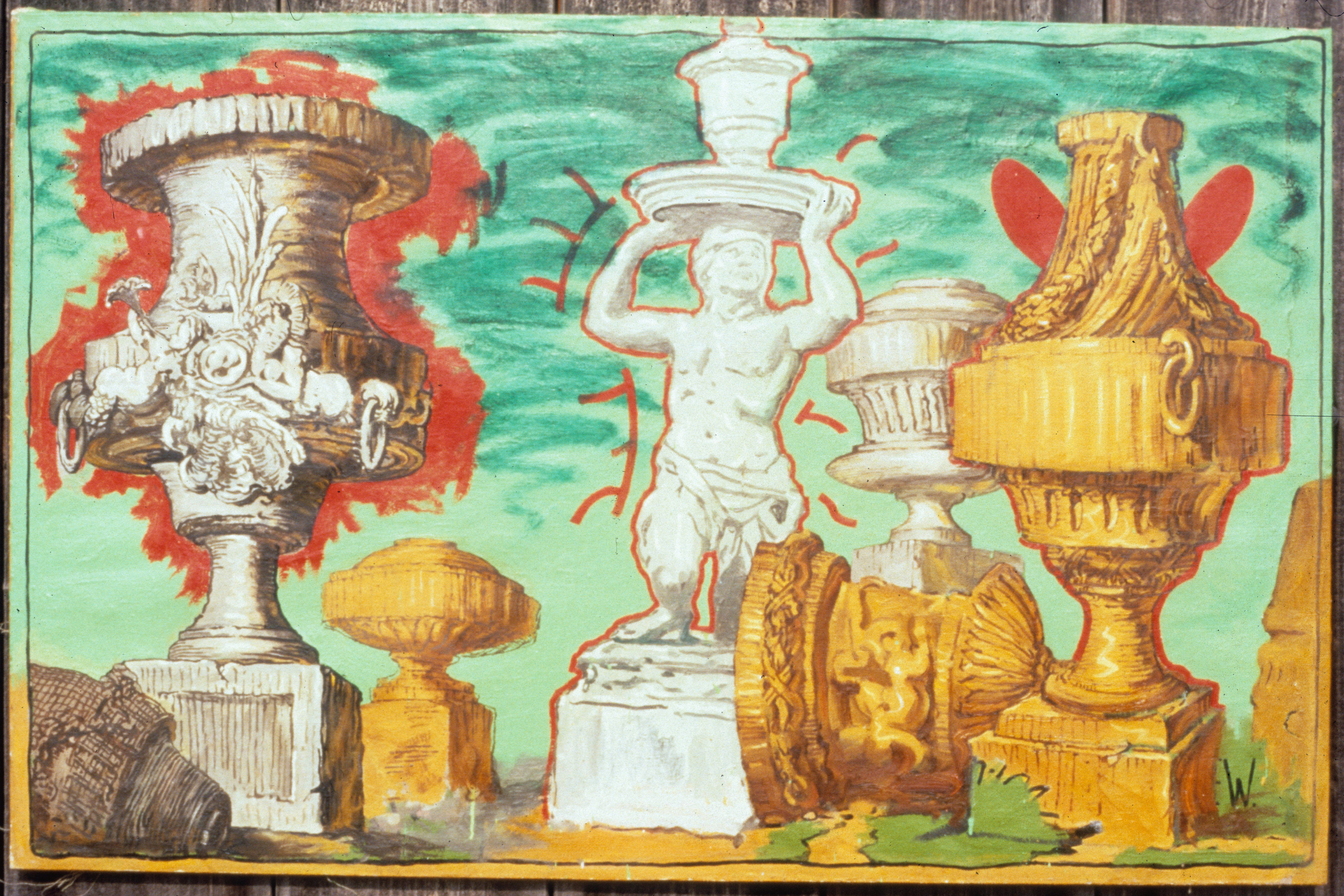
Gardens Old and New, 1986–87. Oil on canvas, 94 × 146 cm (37 × 57 1/2 in.). Norton and Nancy Dodge Collection of Nonconformist Art from the Soviet Union. D21729
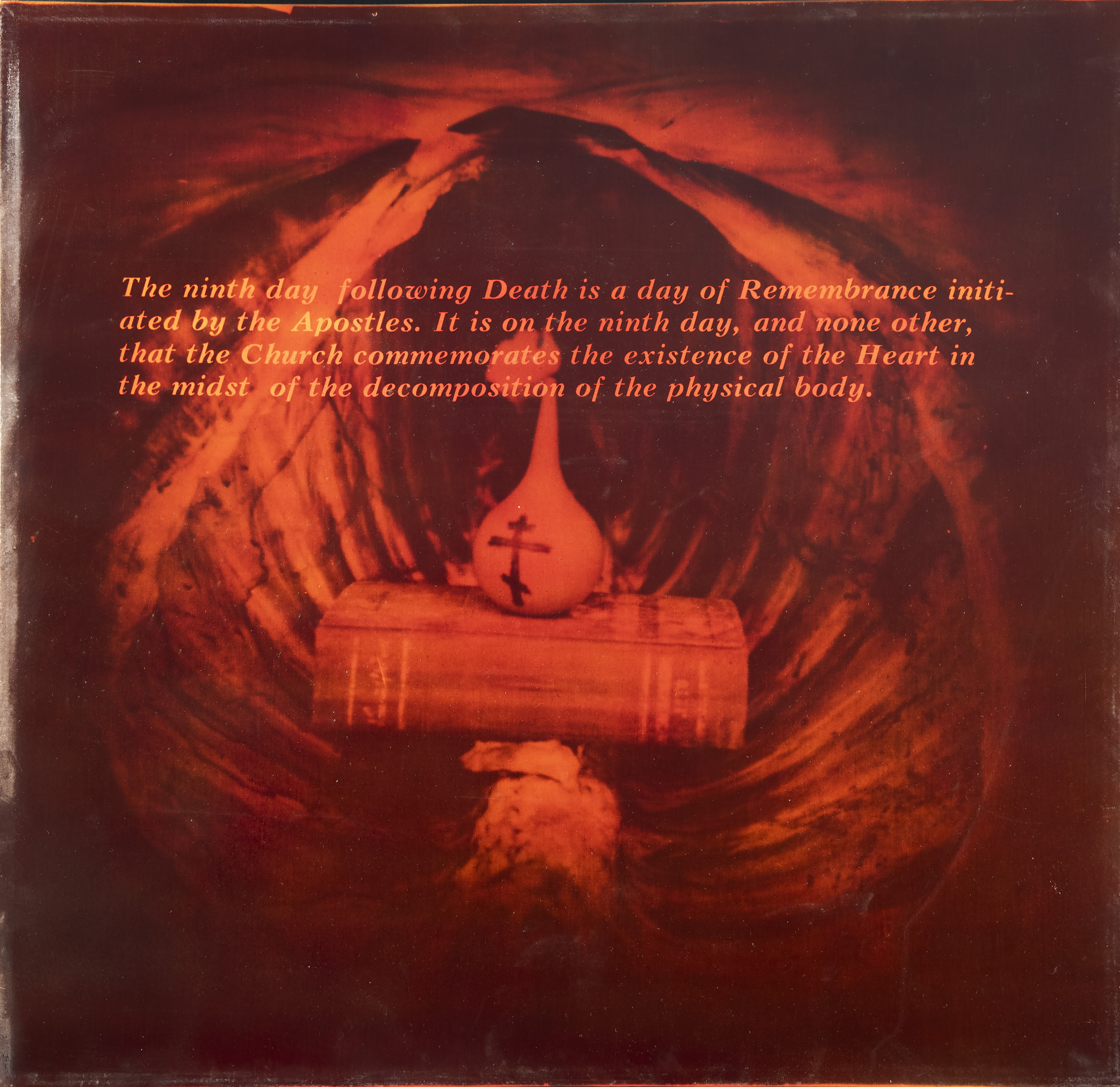
Untitled, 1990. Photo-transfer process on canvas, 95 × 99.5 × 10 cm (37 3/8 × 39 3/16 × 3 15/16 in.). Norton and Nancy Dodge Collection of Nonconformist Art from the Soviet Union. 1996.0748

Untitled, 1990. Photo-transfer process on canvas, 86 × 112 × 10 cm (33 7/8 × 44 1/8 × 3 15/16 in.). Norton and Nancy Dodge Collection of Nonconformist Art from the Soviet Union. 2001.1322