
Peeter Laurits
1962 — Tallinn (Estonia). Works in Tallinn (Estonia)
Peeter Laurits was born into a working-class family and is largely self-taught. His first serious encounter with art was studying painting with a private teacher in the middle of the woods in South Estonia, followed by a stint learning photography as a technical tool in Tallinn. Laurits began working in the 1980s as a commercial and press photographer while also taking a keen interest in photographing theater performances. He simultaneously began experimenting with different approaches toward photography, including working with pinhole aesthetics and solarization but also with more playful techniques, such as decorating his photos with dog bites or processing them with chemicals.
Laurits infuses his art with beauty, escapism, and references to philosophy, literature, and cultural history (for example, elements of surrealism, decadence, and romanticism). In his youth he was part of a new generation of Estonian photographers who were interested in an artistic freedom based on nineteenth-century modernism—meaning not only freedom from state censorship but also license to express one’s fantasies, to interpret the world, to manipulate what is seen. Although these ideas about art had been common since the nineteenth century, they were new to Estonian photography, which in Laurits’s time has still prioritized hewing to reality and making “beautiful copies” of it. “There is more and more aestheticism of modern[ism] in the air,” Laurits wrote in his diary around this time. [1] The human-centered aesthetics of the previous generations of photographers were being replaced by nature motifs or still lifes, although portraits of people from Laurits’s intimate circle still make up a core part of his oeuvre.
The Norton and Nancy Dodge Collection at the Zimmerli Art Museum includes some of Laurits’s earliest works. In the 1980s documentary photography was often subject to Soviet censorship, and so-called art photography was excluded from the art field; photographs were not included in exhibitions, for example, and the Soviet Union of Artists counted no photographers among its members. Small, intimate photographs were exhibited in small, intimate spaces for only a handful of people. “As there was no real chance to communicate with the audience, most of the photographers kept experimenting,” Laurits once noted. [2] Even back then, traces of early and late modernism are clearly visible in his tender approach to his subject matter, as evidenced by his emphasis on atmosphere and light. In No. 3 (1984, ZAM, D16425.03) from the Still Life series, which depicts Laurits’s close friend the poet and philosopher Hasso Krull, the atmosphere is created by light and shadow, by the contrast between darker and lighter surfaces. As this work illustrates, Laurits is concerned not with notions of “image” or “reality” but with the delicate and romantic dramatization of the scene.
Il y aura toujours une pelle au vent dans le sables du rêve [There Will Always Be a Wind Shovel in the Sands of Dreams] (1984, ZAM, D16426), titled after a phrase Laurits found in the papers of surrealist André Breton (1896–1966), and depicting the artist’s younger brother’s head rising from the sand, is the very first work Laurits considered “a real thing.” [3] In works such as this, the poetic references and abundant allusions can be read as a reaction to the politicization of art and as providing an escape from the harsh realities of Soviet rule.
The series Still Life (1984) depicts Laurits’s close friends in Chekhov-like situations. [4] “I tried to make petite bourgeoisie–like portraits with a little decadent touch,” the artist has said. This aligns with the overall romantic sentiment of his works at the time, which also included paradoxical, even disturbing elements, such as the boy’s missing body in Il y aura, sometimes communicated through text written on the surface of the photos. “Romanticism is not the same as sentimentality, although those two often go hand in hand,” he once explained. [5]
Both photography’s status and Laurits’s approach changed dramatically in the beginning of the 1990s, even before Estonia regained its independence in 1991 but more so afterward, when suddenly photography became the focal point of the Estonian art scene. The success was largely due to the group DeStudio, formed in 1992 by Laurits after his studies in New York, together with the photographer Herkki Erich Merila (b. 1964). The group produced several groundbreaking exhibitions of dadaist photo collages, composed of images cut from newspapers and glued “carelessly” to iron sheets. DeStudio’s postmodern, anarchistic, and brutal approach redefined art photography in Estonia, exploring themes like the body, simulacrum, viewing, sex, irony, identity fragmentation, capitalism, image, and the human condition. Through their work, Laurits and Merila demolished the holiness of the photograph, reframing it as one part of an eternal fluxus of pictures.
DeStudio continued until the mid-’90s, when Merila and Laurits started to work more separately. Laurits moved to South Estonia, living in the middle of the same woods where his artistic journey began. This closeness to nature prompted the third phase of his work, which has continued, with some variation, into the present. In these digital photographs, Laurits fuses themes of mythologies, religions, and other features of human civilization (such as capitalism, the arts, and semiotic systems) with nature motifs. In his most extensive series, such as Codex Naturalis (2015, private collection), Sacred Baths (2022, private collection), and Kingfisher in the Underworld (2023, private collection), Laurits explores the Anthropocene from various viewpoints: the revolt of nature, the metaphysics of the woods, semiotics, and the poetry of nature.
In exhibitions, Laurits often collaborates with artists from other fields, like music and film, thus stimulating multiple senses for the viewer. His approach is romantic in the sense that it is interested in feelings, emotions, senses, visions, associations, and perceptions, though he also toys with these notions and explores the cultural history of humankind. In private conservations, he expresses skepticism toward using art as a tool for conveying social or political messages. [6] In his pictures are blurry fragments of plant life; trees covered with ancient signs drawn by humans; visual structures from technology, such as computer processors; and wood. Thus there are also traces of both modernism and postmodernism in his work—an impulse to distance art from the sociopolitical everyday while also using layers of visual hierarchies, from newspaper images to mythological imagery.
Eero Epner
Notes:
1. Laurits began this diary, which is still in his possession, at the end of the 1980s, but the entries are not always dated.
2. Peeter Laurits, “Von Dogma zum Experiment,” [From Dogma to Experiment] in Das Gedächtnis der Bilder: Baltische Photokunst Heute [The Memory of Images: Baltic Photographic Art Today] (Kiel, Germany: Nieswand, 1993), 63–67.
3. Peeter Laurits, in conversations with the author over a span of years. For Breton’s quote, see andrebreton.fr.
4. The Russian playwright Anton Chekhov wrote several plays, including The Seagull (1895) and The Cherry Orchard (1903), that depict in a melancholic manner the downfall of Russian aristocracy. Many of the scenes in these plays take place outside in the sunshine, creating a certain contrast with the overall sense of decay.
5. Peeter Laurits and Peeter Linnap, “Fin de siècle eesti fotos,” Vikerkaar, no. 4 (1987): 63–68.
6. Peeter Laurits, in conversations with the author over a span of years.
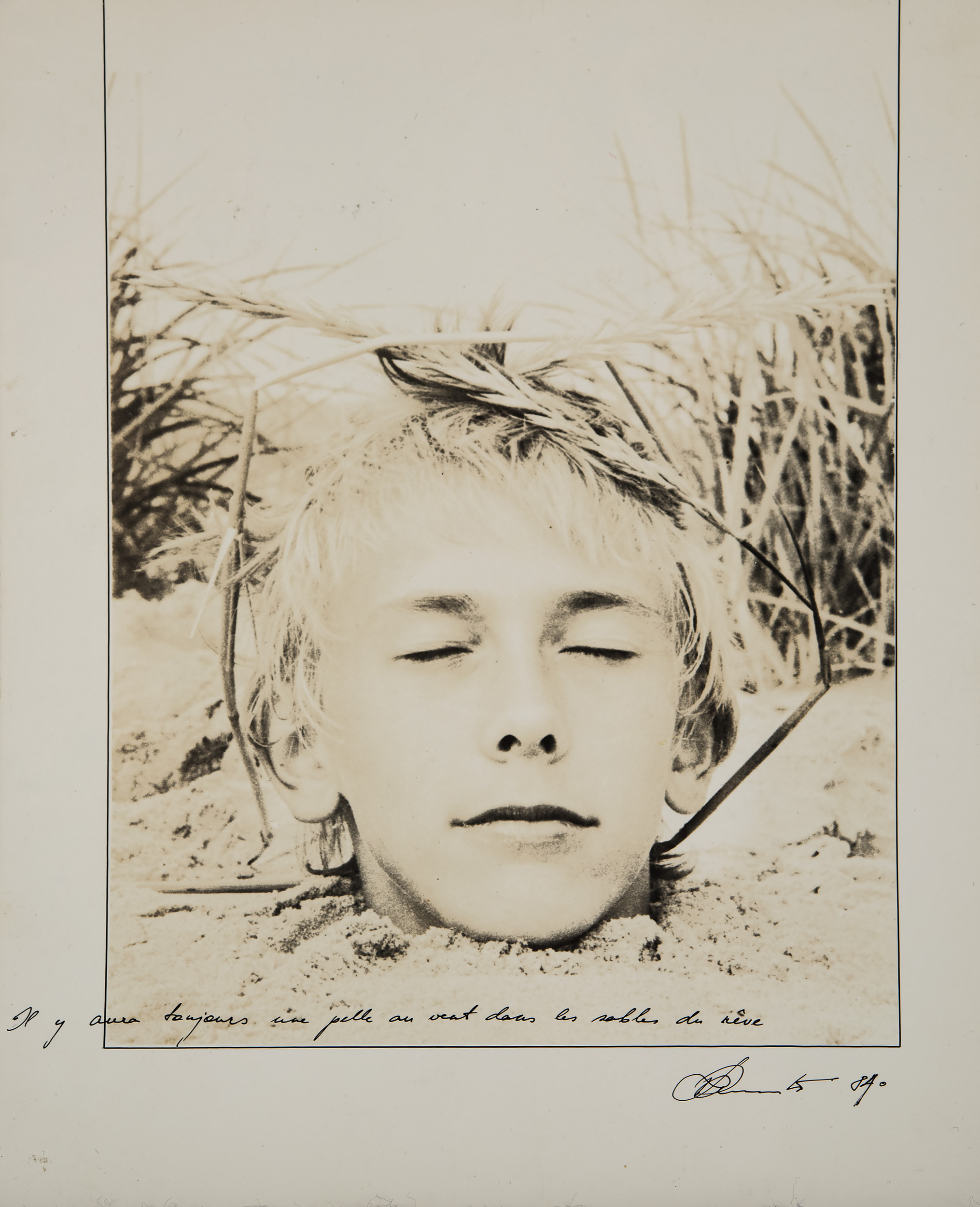
Untitled, 1984. Photograph on paper, 19.5 × 14.4 cm (7 11/16 × 5 11/16 in.). Norton and Nancy Dodge Collection of Nonconformist Art from the Soviet Union. D16426
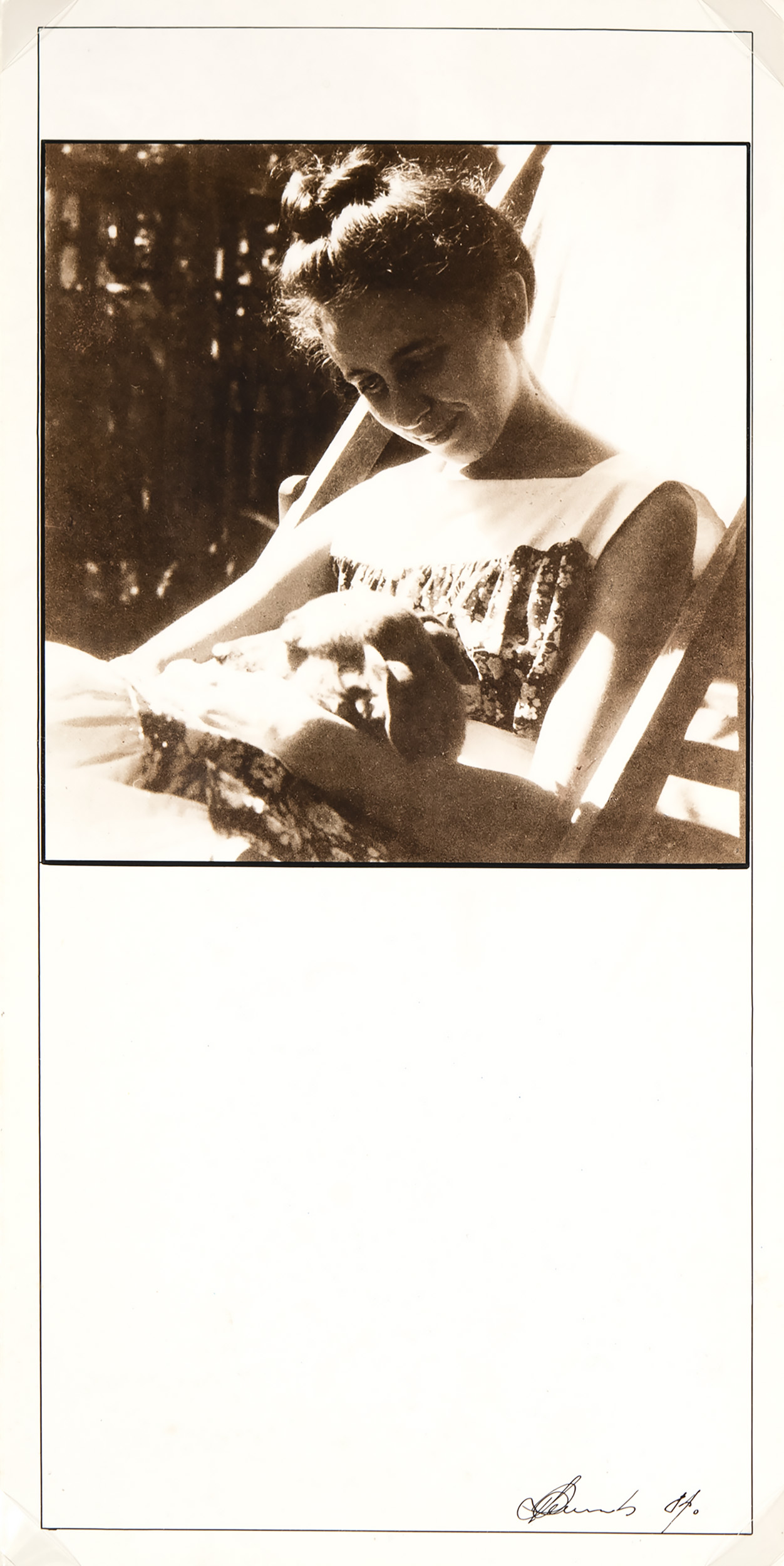
No. 1 from the series Still Life, 1984. Toned gelatin silver print on paper, 12 × 12 cm (4 3/4 × 4 3/4 in.). Norton and Nancy Dodge Collection of Nonconformist Art from the Soviet Union. D16425.01

No. 2 from the series Still Life, 1984. Toned gelatin silver print on paper, 18 × 12 cm (7 1/16 × 4 3/4 in.). Norton and Nancy Dodge Collection of Nonconformist Art from the Soviet Union. D16425.02
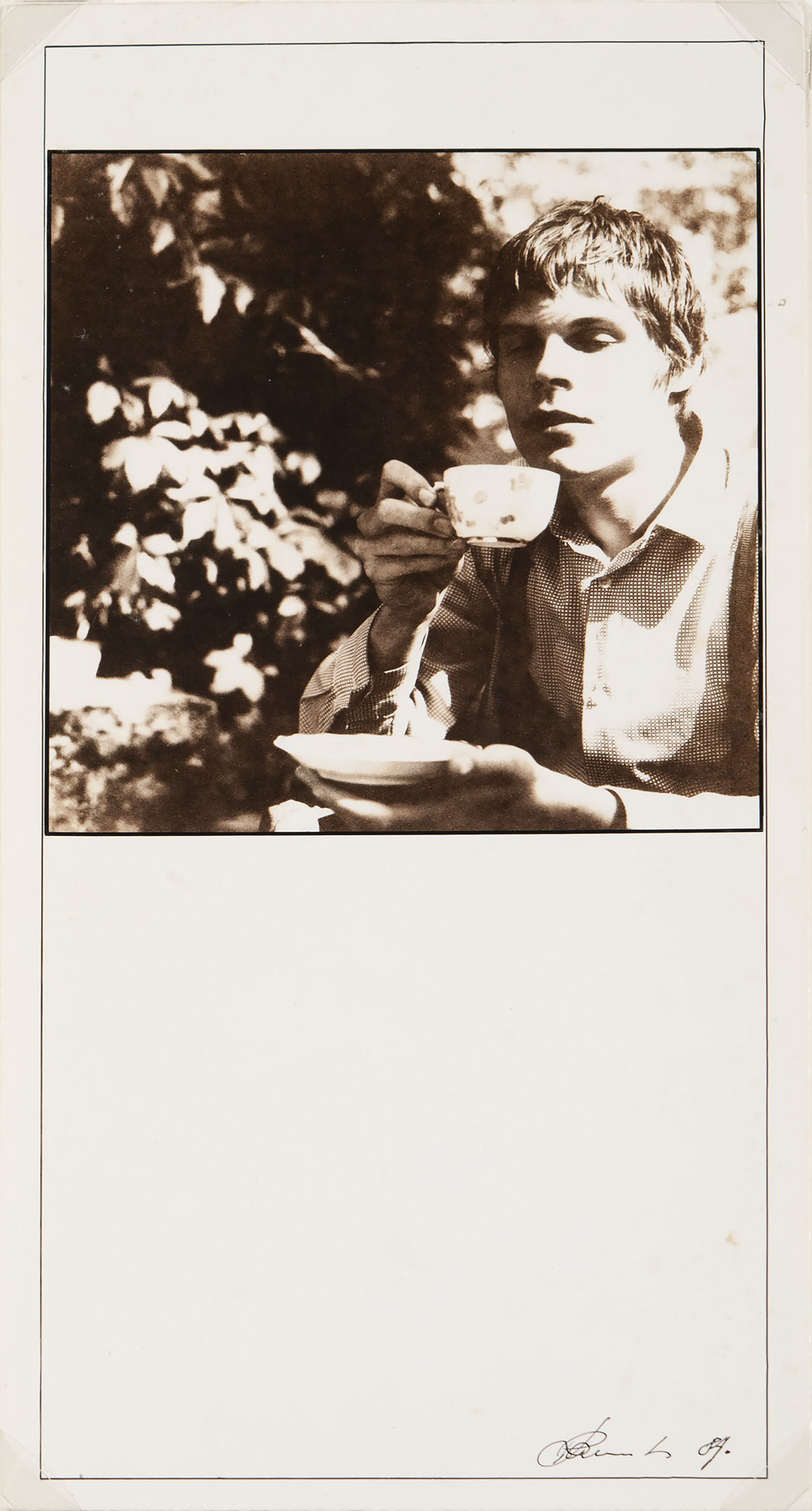
No. 3 from the series Still Life, 1984. Toned gelatin silver print on paper, 12 × 12 cm (4 3/4 × 4 3/4 in.). Norton and Nancy Dodge Collection of Nonconformist Art from the Soviet Union. D16425.03