
Oleksandr Freidin
1926 — Odesa (Ukraine) | 1984 — Odesa (Ukraine). Worked in Odesa (Ukraine)
Oleksandr Borysovych Freidin was a Ukrainian painter and graphic artist of Jewish origin. He was born in Odesa and lived and worked there nearly his entire life, besides being evacuated to Buguruslan (Orenburg Oblast, Russia) from 1941 to 1948. Freidin created genre paintings, landscapes, and portraits. He continued the traditions of the Odesa art school of impressionism and realism, and was a master of the Soviet severe style as well as developing his own personal approach to metaphysical painting. His works are kept in private and museum collections in Ukraine, including the Odesa National Art Museum and the Odesa Museum of Modern Art, as well as in private collections abroad, in particular in the United States, Israel, Germany, and France. From 1948 to 1951, Freidin studied at the department of painting at the Mitrofan Grekov Odesa Art School (now the Mitrofan Grekov Odesa Art College). He was a member of the National Union of Artists of Ukraine starting in 1964, although he was persecuted by the Soviet authorities under accusations of formalism.
Borys Freidin, Oleksandr’s father, was repressed and shot in 1937 during the Stalinist Great Terror, and the artist’s mother and siblings were exiled from Odesa. [1] During the Second World War, when Freidin was a teenager and had been evacuated to Buguruslan, he worked twelve hours a day as a mechanic at a defense plant, then as a diesel engineer at an oil field. In 1946, he was awarded the medal “For Valiant Labor in the Great Patriotic War of 1941–1945.” The Freidin family received permission to return to Odesa in 1948.
From 1948 to 1951, Freidin studied at the painting department at the Mitrofan Grekov Odesa State Art School, where he was taught by the great artist Dina Frumina. In her memoirs, Frumina, who taught at the school from 1948 to 1968, wrote about the peculiarities of the Odesa art school: “Since it was adjacent to the culture and art of Western Europe, the nature of Odesan fine art undoubtedly reflected the features and characteristics of Western art. This gave it a special aesthetic flavor, which became a distinctive feature of the Odesa school. [...] Odesa painting also depended to a large extent on the city’s natural context (the sun, sea, and gentle air) and unwittingly had a plein air character.” [2] Freidin conveys the peculiarities of the southern sunlight in his 1969 painting At the South (ZAM, D04858). The contrast between the streets, roofs, and sky, all bleached by the midday sun, and the walls of buildings immersed in thick shadows creates a metaphysical space with a strange atmosphere, while also including realistically depicted objects.
Yevhen Holubovskyi, an Odesa-based journalist and a member of the Sixtiers, recalled, “Characterizing her student Freidin, Dina Mikhailovna Frumina wrote: ‘He stood out for his remarkable artistic abilities and a wayward, capricious character.’ Unfortunately, in this case, the great teacher Frumina, and the future great artist Freidin did not understand each other. He was no longer a schoolboy, he needed freedom, which he found in the studio of Oleksandr Pavlovych Atsmanchuk.” [3] Indeed, immediately after graduating from college, Freidin worked and studied for several years in Atsmanchuk’s studio. Atsmanchuk belonged to the romantic branch of socialist realist painting, [4] and in his works he creatively reinterpreted the artistic heritage of the Renaissance, boldly experimenting with the compositional structure of his pictures as well as with the formal means of expression used in portrait painting. Later, Atsmanchuk would paint a portrait of his former student and friend, a sharp-lined and expressive profile that accurately conveyed the expressiveness of Freidin’s character (Portrait of the Artist Oleksandr Freidin, 1962, private collection).
In his early works of the 1950s, Freidin continued the traditions that characterized the Odesa school in the late nineteenth and first third of the twentieth century: a unique type of impressionism firmly rooted in realism and an academic style. His works received favorable reviews from teachers. However, Freidin, in search of his own style, would deliberately reject his achievements from this period. In the 1960s, he moved away from a multicolored impressionist palette, reducing his range of colors. Instead, he began to focus on the harmony of simple, achromatic patches of color, which was characteristic of Soviet painting in the 1960s, including the so-called severe style. [5]
Freidin was harassed and persecuted by Soviet cultural officials for what they deemed formalism, specifically for his formal experiments that continued to develop the traditions of modernist art. [6] As the art historian Olha Petrova notes in her article “Looking Back at the 1960s”: “The ideological Union of Artists was not going to push the boundaries of what was permissible. Dissenters from art were not allowed to enter the exhibition halls—a watchful eye was keeping track of innovators and throwing away their work.” [7] Officials often removed artists’ works, including Freidin’s, from exhibitions that had already been approved by art councils (special commissions that selected works for official exhibitions).
Freidin’s painting Funeral in Madrid (also known as You Are with Us, You Are with Us, Though You Aren’t in the Columns ...) was among those banned from exhibitions at the time. The artist had worked on it for five years, from 1969 to 1974. He conceived it as a requiem for the victims of Joseph Stalin’s repressions, including his father. By using the title Funeral in Madrid, he was resorting to Aesopian language, hiding the true idea of the work, a device often used by creative people living under Soviet totalitarianism. The image of the dead being buried in standing coffins came from Mikhail Koltsov’s The Spanish Diary (1938), in which the author describes the funeral of Spanish international brigade fighters who “could be killed but could not be broken.” The original of Freidin’s painting is now kept in a private collection in the United States, while the sketch on cardboard belongs to the collection of the Museum of Odesa Modern Art. It was included in the large exhibition Severe and Stylish (Odesa National Art Museum, 2019), which was dedicated to Odesa art in the 1960s.
Holubovskyi, the journalist, recalls, “1974 was a turning point in the work of Oleksandr Freidin. Perhaps the clash with the Kyiv City Council [which banned Funeral in Madrid from being exhibited at the all-Ukrainian exhibition] along with accusations of ‘formalism’ in republican publications made the artist realize that the legacy of 1937 had not completely faded away. He submitted fewer and fewer paintings to exhibitions, almost refusing to accept commissions. When asked why he was not exhibiting, he said to me, smiling ironically: ‘To work for that scum? Sorry.’” [3]
The years 1974 to 1984 marked the period when Freidin came to maturity as an artist. These were years of solitary work, when Freidin’s own style, building further on the foundation of the Odesa art school and the severe style, became more metaphysical. The works reflect the philosophical tension between freedom and non-freedom, along with the loneliness experienced by a person existing in society. The majority of Freidin’s works held in the Norton and Nancy Dodge Collection come from this period. His self-portrait (1978, ZAM, 2013.006.016) is particularly eloquent, depicting a lonely artist with a canvas at his feet near a fragile tree, set against the backdrop of a conventional landscape that seems ready to absorb the figure.
The art Freidin produced during this last decade of his life frequently features lonely figures and faces in abstract and semi-abstract spaces with artificial lighting. In these works can be detected a transcendent curiosity about the changing emotional state of the figures, conveyed through ascetic tonal painting, sculptural drawing, and textured surfaces. Art historian Oleksandr Tiuriumin noted of Freidin: “The artist constructed a hierarchy of values within his work. Before his death in 1984, he framed the artworks he made in the last decade of his life with his own hands in beautifully crafted frames, individually created for each work. His style was comprised of precise relief drawings, minimalist and clearly constructed paintings, and the texture of the canvas itself was an artistic phenomenon.” [3]
Olena Mykhailovska
Translated from Ukrainian by Nathan Jeffers
Notes:
1. The Great Terror was a state-led campaign that repressed huge numbers of citizens of the Soviet Union between 1937 and 1938. Initiated by the leadership of the Soviet Union and Joseph Stalin himself, it aimed to eliminate real and potential political opponents, intimidate the population, and change the national and social structure of society. In Ukraine, the consequences of the communist terror were the destruction of the political, artistic, and scientific elite, a breakdown in social cohesion, the destruction of traditional and national values, and the triggering of a deep depression in society. The term “Great Terror” was first introduced in Robert Conquest’s work The Great Terror: Stalin’s Purge of the Thirties (1968). In international historiography, this period is also known as the Great Purge. According to historians, in the territory of Ukraine, as many as two hundred thousand people were sentenced to death during the Great Terror, of whom about two-thirds were executed. The rest were sent to prisons and camps, and only 0.3 percent were released.
2. Frumina, Dina. “Iz spohadiv Diny Fruminoi” [From the memoirs of Dina Frumina]. In Obrazotvorche mystetstvo [Fine Art] 1 (2009): 20–21.
3. Holubovskyi, Yevhen. “Oleksandr Borysovych Freidin.” In Oni ostavili sled v istorii Odessy [They left a trace in the history of Odesa]. The Sixtiers were a generation of Soviet and Ukrainian national intellectuals who held strong civic views and who entered the Soviet Union’s cultural and political scene in the second half of the 1950s—i.e., the brief period when communist-Bolshevik totalitarianism was weaker and Nikita Khrushchev’s Thaw, which promoted de-Stalinization and some liberalization, was in effect. This generation was most active in the early and mid-1960s (hence the name), and was the internal moral opposition to the Soviet totalitarian state regime, including on behalf of political prisoners and dissidents.
4. Socialist realism is a term used to refer to the artistic method and style that prevailed in the Soviet Union from 1932 to the late 1980s. This doctrine set government-imposed limits for artists and strictly prioritized ideology and propaganda.
5. The masters of the severe style in the late 1950s and early 1960s drew their inspiration from the avant-garde art of the 1920s, the dismantling of the cult of Joseph Stalin, and also the lives of ordinary people, which the artists sublimely conveyed using their poetic spirit. The resulting images were minimal, expressing meaning through large planes of color and linear contours of figures; the palette was predominantly dark, cold, achromatic, and ocher-brown.
6. Bourgeois formalism was perceived to be a threat to the officially sanctioned art of socialist realism (see note 4). In the 1930s, during Joseph Stalin’s purges, this accusation was levied against artists, and people were killed and imprisoned for it.
7. Petrova, Olha. “Ozyraiuchys’ na 1960-ti roky” [Looking back at the 1960s]. In Naukovi Zapyski NaUKMA [Academic notes from the National University of the Kyiv-Mohyla Academy]. Kyiv: КМ Academy, 2016, bk 179.
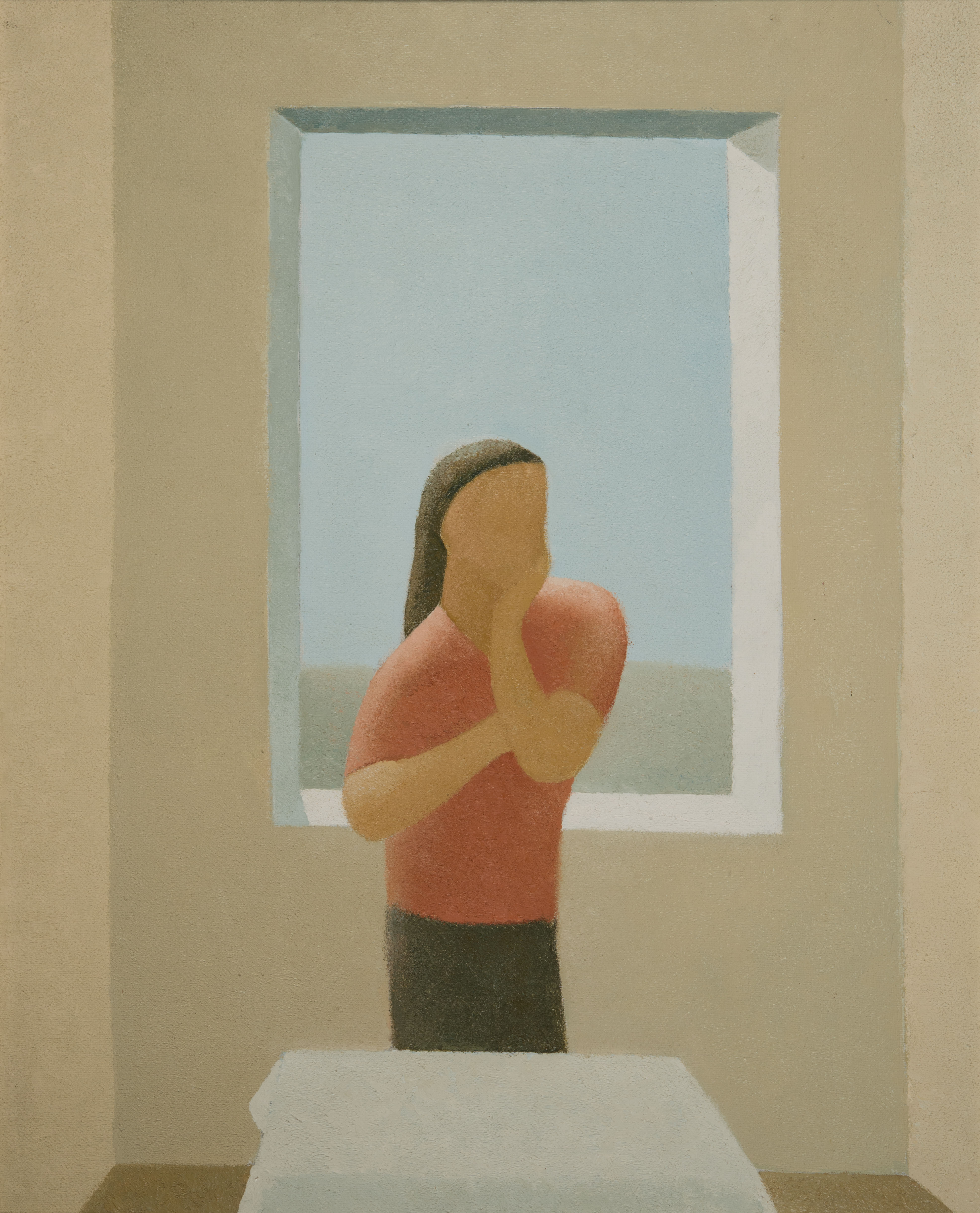
At the Window, 1978. Oil on coarse twill canvas, 69.5 x 55.6 cm (27 3/8 x 21 7/8 in.). Norton and Nancy Dodge Collection of Nonconformist Art from the Soviet Union. 2013.006.015

Self Portrait, 1978. Felt-tip green pen on paper, 42.5 x 42.9 cm (16 3/4 x 16 7/8 in.). Norton and Nancy Dodge Collection of Nonconformist Art from the Soviet Union. 2013.006.016
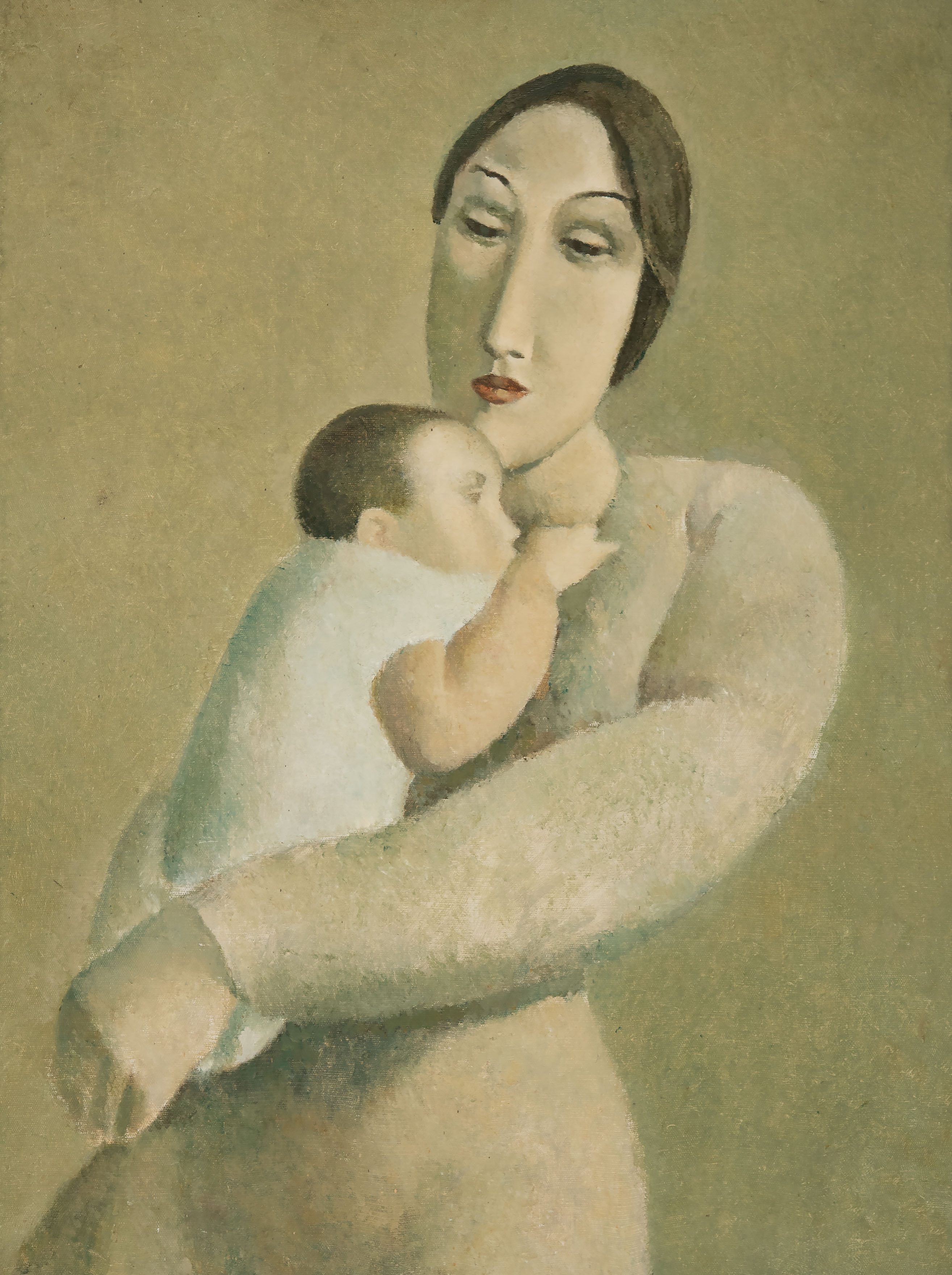
Motherhood, 1975. Oil on canvas, 89.5 × 66.5 cm (35 1/4 × 26 3/16 in.). Norton and Nancy Dodge Collection of Nonconformist Art from the Soviet Union. D00250

Baby, 1982. Pastel on paper, 64.3 × 49 cm (25 5/16 × 19 5/16 in.). Norton and Nancy Dodge Collection of Nonconformist Art from the Soviet Union. D00381

Untitled, undated. Lithograph on paper, 47.5 x 37.5 cm (18 11/16 x 14 3/4 in.). Norton and Nancy Dodge Collection of Nonconformist Art from the Soviet Union. D00739
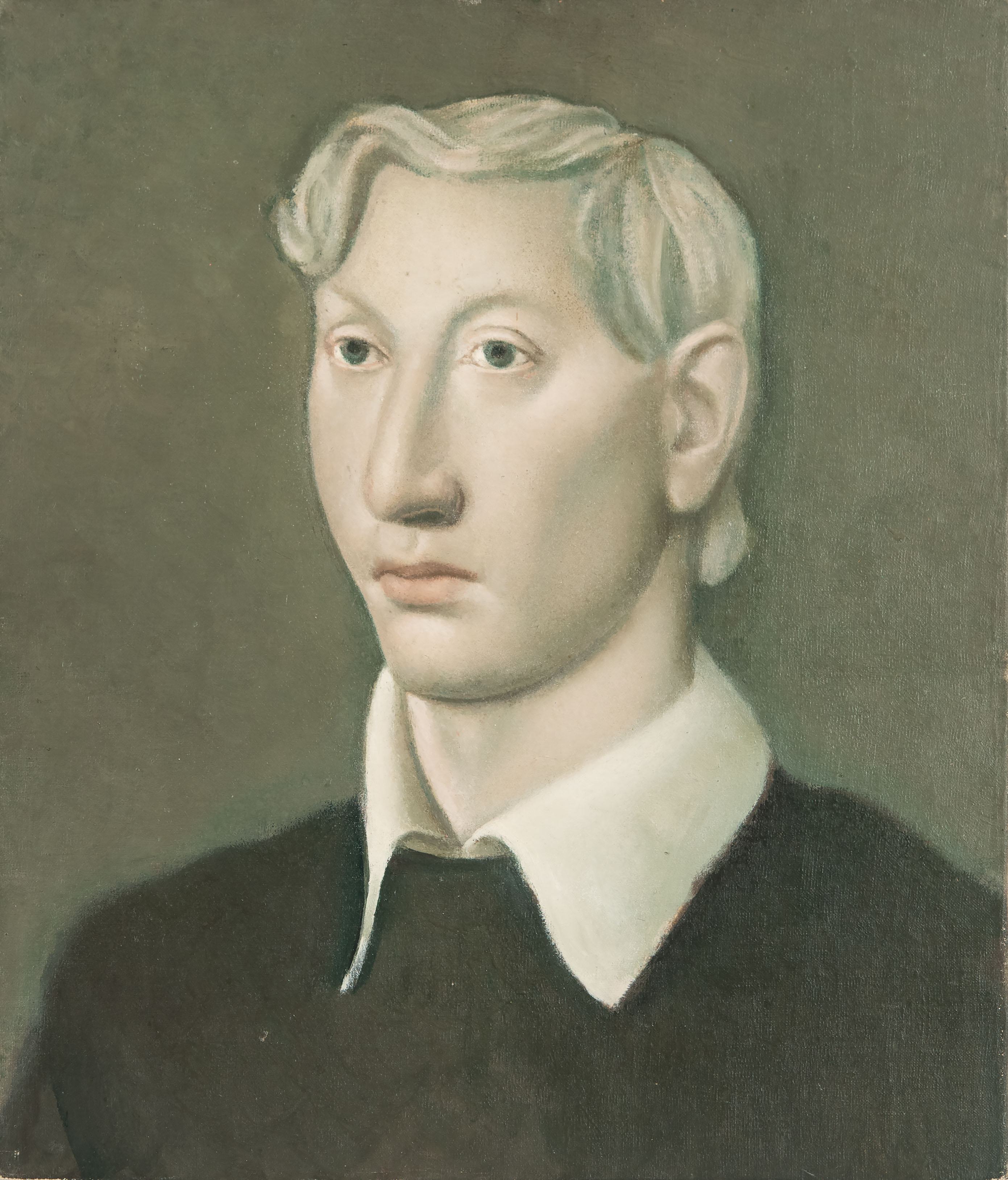
Portrait of a Young Man, 1981. Oil on illustration board, 38.2 × 32 cm (15 1/16 × 12 5/8 in.). Norton and Nancy Dodge Collection of Nonconformist Art from the Soviet Union. D04824

Untitled, undated. Oil on illustration board, 38.7 × 292 cm (15 1/4 × 114 15/16 in.). Norton and Nancy Dodge Collection of Nonconformist Art from the Soviet Union. D04825

Portrait, 1982. Oil on fiberboard, 37 × 36.3 cm (14 9/16 × 14 5/16 in.). Norton and Nancy Dodge Collection of Nonconformist Art from the Soviet Union. D04826
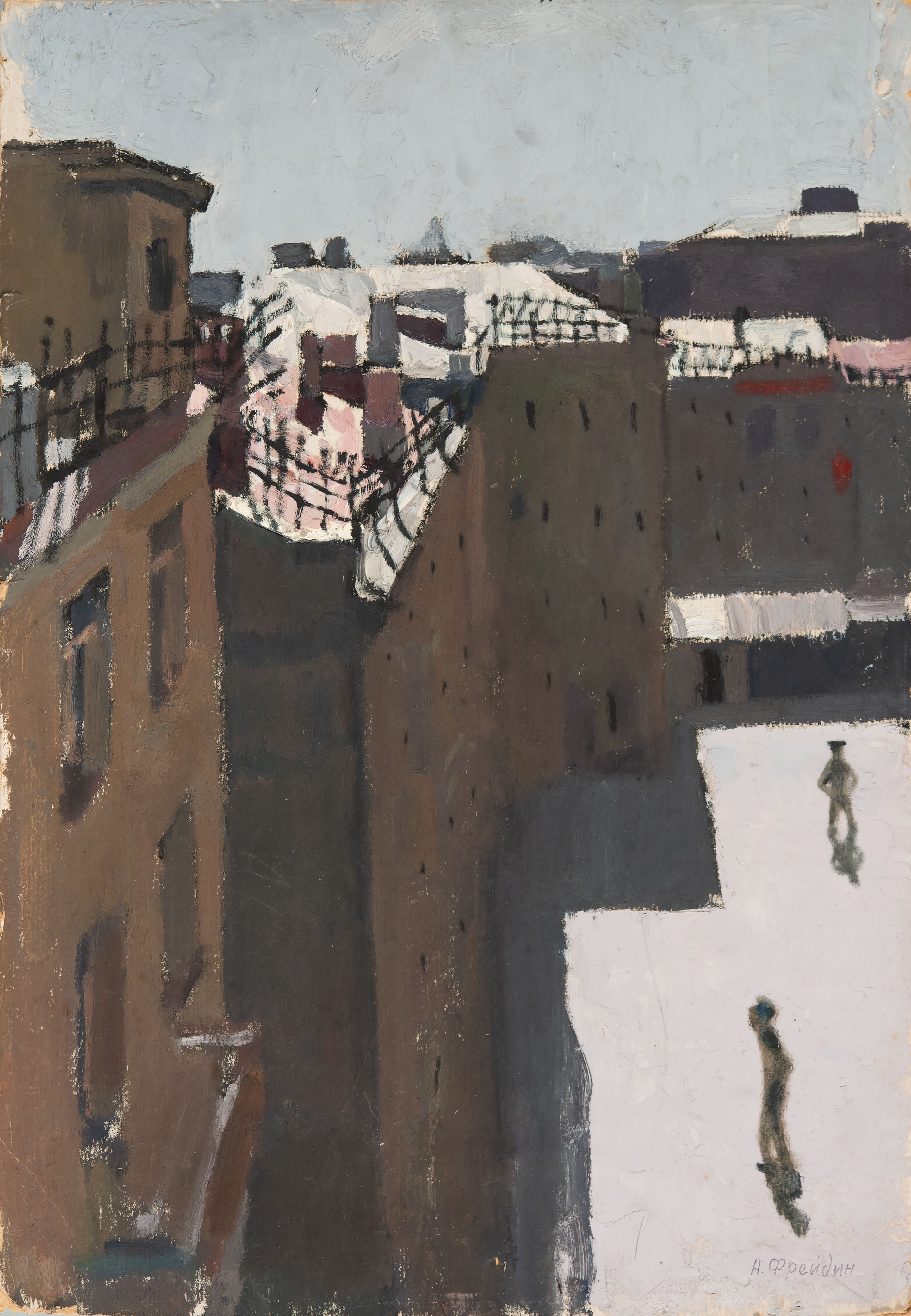
At the South, 1969. Oil on illustration board, 49 × 35.2 cm (19 5/16 × 13 7/8 in.). Norton and Nancy Dodge Collection of Nonconformist Art from the Soviet Union. D04858