
Nikita Alekseev
1953 — Moscow (Russia) | 2021 — Moscow (Russia). Worked in Moscow (Russia), Paris (France)
From 1968 to 1972, Nikita Alekseev studied industrial design and advertising at the Moscow State Academic Art School in Memory of 1905 (since 2016, the Moscow Academic Art School). It was during this period of formal education that, at the age of seventeen, he met two young experimental poets, Lev Rubinstein and Andrei Monastyrski. This encounter marked the beginning of his connection with a circle of artists who would soon become known as the Moscow Conceptual school. At that time, his experimental practice focused primarily on the interplay of image and text—a theme that would shape his artistic trajectory throughout his career. While studying at the Polygraphic Institute from 1973 to 1976 (department of artistic and technical design of printed matter), he made a living by securing commissions as a book illustrator and designer, eventually earning a position at the Moscow Publishing House. In his free time, Alekseev continued his avant-garde practice as an underground artist, using his professional training and eventually creating a substantial body of multimedia and multi-genre artworks with an impressive range of subjects, stylistic qualities, and themes. Among his early works are such notable Moscow Conceptualist projects as large, untitled, minimalist objects made of fiberboard (shown at the Second Open-Air Picture Exhibition, Izmailovo Park, 1974) and the performance Seven Strokes over Water (1976, Crimea), captured by Georgy Kiesewalter. Alekseev’s proficiency in English allowed him to translate key Western art texts from the Lenin State Library (now Russian State Library), positioning him as a vital conduit for the Moscow Conceptualist circle to engage with avant-garde ideas from abroad.
In 1976, together with Andrei Monastyrski, Lev Rubinstein, and Georgy Kiesewalter, Alekseev became one of the founding members of the Collective Actions group (КД / CA), which organized ephemeral, interactive performances known as “empty actions,” in the outskirts of Moscow. Alekseev contributed significantly to the formation of major ideas and aesthetic principles, as evidenced by his theoretical texts related to the first two volumes of the Collective Actions’ documentation materials Trips out of Town. In his individual projects of that period, Alekseev experimented with the phenomenology of large open spaces, for example in the 1980 performance 10,000 Steps. In 1979, Alekseev further collaborated with Monastyrski and other artists to launch the first edition of the Moscow Archive of New Art (Moskovskii arkhiv novogo iskusstva, or MANI), a collection of documentary and artistic materials that reflected the unique poetic and performative nature of Moscow Conceptualism’s self-institutionalization.
The esotericism of CA’s events, which were accessible to only a close circle of invited participants, as well as the excessive theorization evident in the ever-growing textual materials surrounding CA’s art, eventually alienated Alekseev from the group in 1983. In the early 1980s, Alekseev connected with a younger generation of artists, drawn to their humor, strong emphasis on materiality, physical presence, and apparent irreverence. Among these artists were the Mukhomory group, Vadim Zakharov, Yuri Albert, Viktor Skersis, the TotArt group, and others. To bring them together amid the growing lack of exhibition opportunities, in September 1982 Alekseev launched a legendary exhibition space in his private apartment on Dmitry Ulyanov Street in Moscow. The name of the gallery, APTART, was a play on words, combining “apartment” and “art” in both Russian and English transliterations. As he transformed his twenty-nine-square-meter studio into what would later be recognized as the first unofficial gallery in Russia, artworks covered every available surface—from the living room and kitchen to the hallway and bathroom. Art was displayed on walls and windows, ceilings and floors, furniture, and household appliances, creating a dense cultural space bursting with irony and absurdism. However, what truly defined this artistic and curatorial endeavor was not so much the content or style of the exhibited artworks but rather the collaborative spirit among artists and the significantly broader audience compared to CA’s small circle. Spread through word of mouth, APTART shows were open to everyone.
Before APTART was forced to close in May 1984 following a series of KGB raids, Alekseev organized thirteen shows and several events, including two outdoor exhibitions. Among his own projects exhibited at APTART were Stones on My Head (1982, ZAM, 2013.016.003.01-10), in which an extended commentary integrated with a photographic self-portrait, and the series Certain Things (ZAM, 2013.016.005.01-11), which connected the everyday and the divine through the interplay of image and text. For the 1983 outdoor APTART exhibition, Alekseev created Bananas (ZAM, D10063.01-30), a series of felt-tip drawings placed in the natural environment. Combining Moscow Conceptualism’s focus on text with a playful, childlike style, he transformed common verbal and visual motifs into absurd titles and ornaments, highlighting his signature tension between meaning and ambiguity.
While continuing to expand his media and genres in the late 1980s, Alekseev became involved with the punk-rock bands Srednerusskaia Vozvyshennost' (Central Russian Upland) and Pop-mekhanika (Pop Mechanics). Both bands practiced text chanting and rhythmic sound making, often collaborating with nonprofessional musicians, a group to which Alekseev himself belonged.
In 1987, attuning to the new reality of perestroika and opening borders, Alekseev emigrated to France, where he lived for six years. Lacking connections in this new milieu, he worked to reestablish himself as an artist, expanding his experience of Western art and engaging with its audience through solo and group exhibitions not only in France but also in Germany, Japan, and the United States.
Soon after returning to Moscow in 1993, Alekseev abandoned his artistic practice to focus on his critical writing and his new work as a culture editor for the weekly magazine Inostranets (The foreigner). He returned to art making in 2000, integrating it closely with writing and philosophy. His later works continued to explore the series format, emphasizing a sense of time and connecting lyrical and whimsical themes of human existence through a blend of autobiographical and fictional characters. Large series from this period, such as Deathbed Notes (2000–02) and Final Cut (2004), were often designed to be either dispersed among viewers or destroyed by the environment, emphasizing the transient and gestural nature of his art. During the last two decades, Alekseev regularly exhibited his work and wrote books; he was nominated for the Kandinsky Prize and the Innovation Prize.
Olga Zaikina
Photo portrait: Nikita Alekseev in his apartment, from the series If You Love Me, Love My Umbrella, 1984. Photo by Georgy Kiesewalter. Courtesy of Georgy Kiesewalter.

When I put a flat lemon-yellow stone on my head... from the portfolio Stones on My Head, 1982. Hand colored gelatin silver print on paper, 37 x 24.7 cm (14 9/16 x 9 3/4 in.). Norton and Nancy Dodge Collection of Nonconformist Art from the Soviet Union. 2013.016.003.05
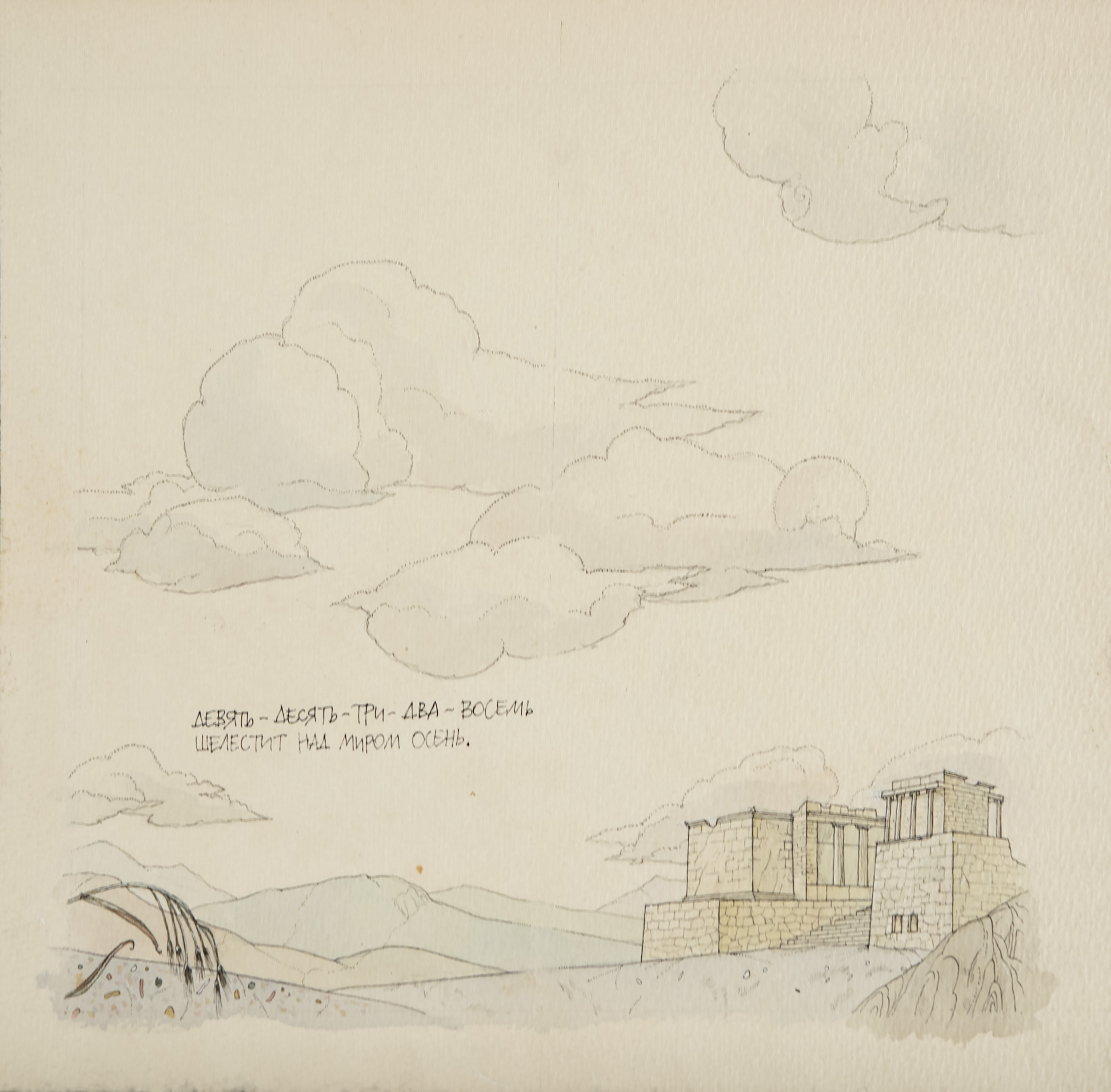
Nine, Ten, Three, Two, Eight - Fall Rustles Over the Earth, 1985. Ink and watercolor on paper, 24 × 26.7 cm (9 7/16 × 10 1/2 in.). Norton and Nancy Dodge Collection of Nonconformist Art from the Soviet Union. D09272
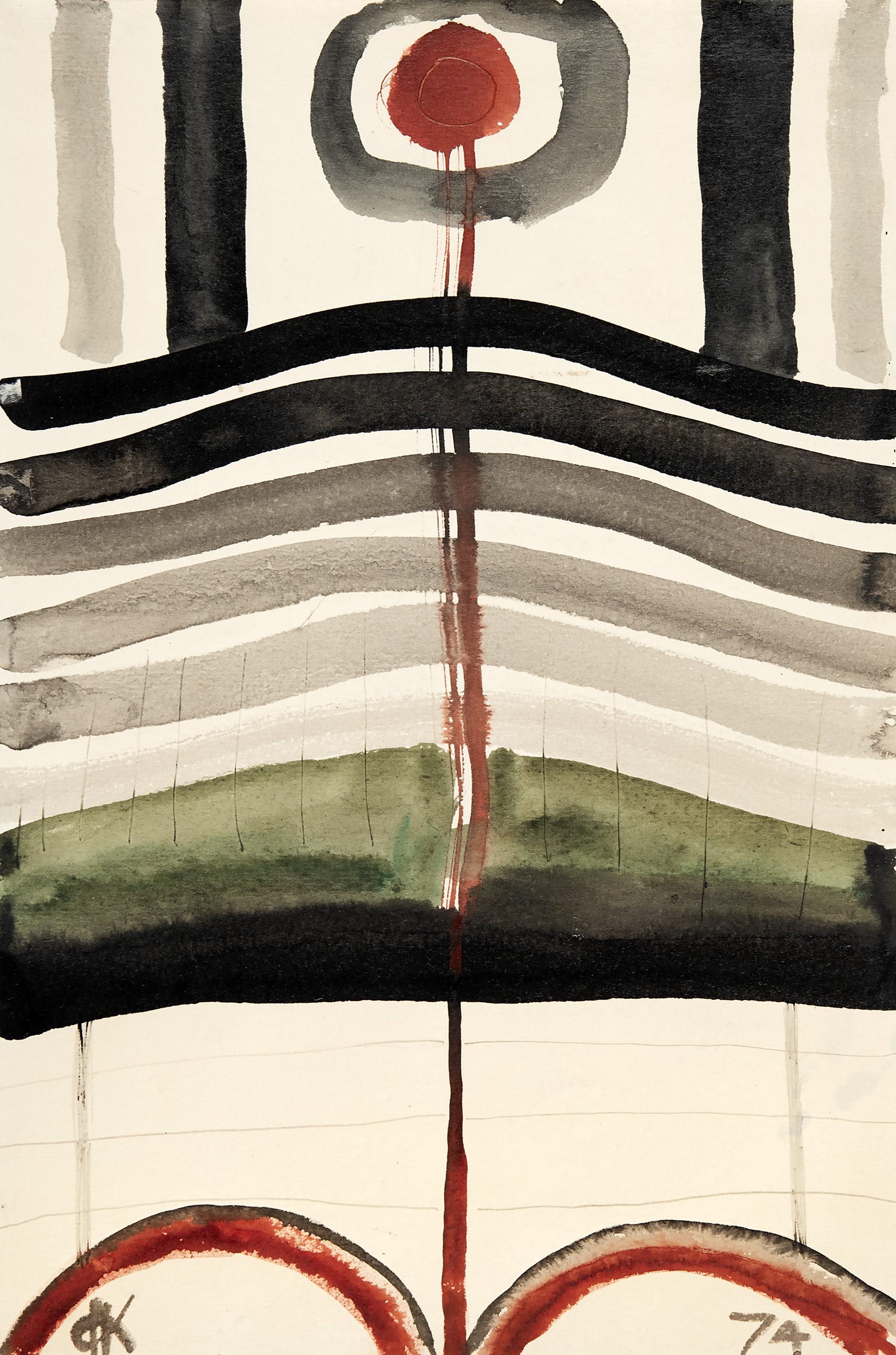
Untitled, 1974. Ink, watercolor, and graphite on paper, 37 × 24.5 cm (14 9/16 × 9 5/8 in.). Norton and Nancy Dodge Collection of Nonconformist Art from the Soviet Union. D09262
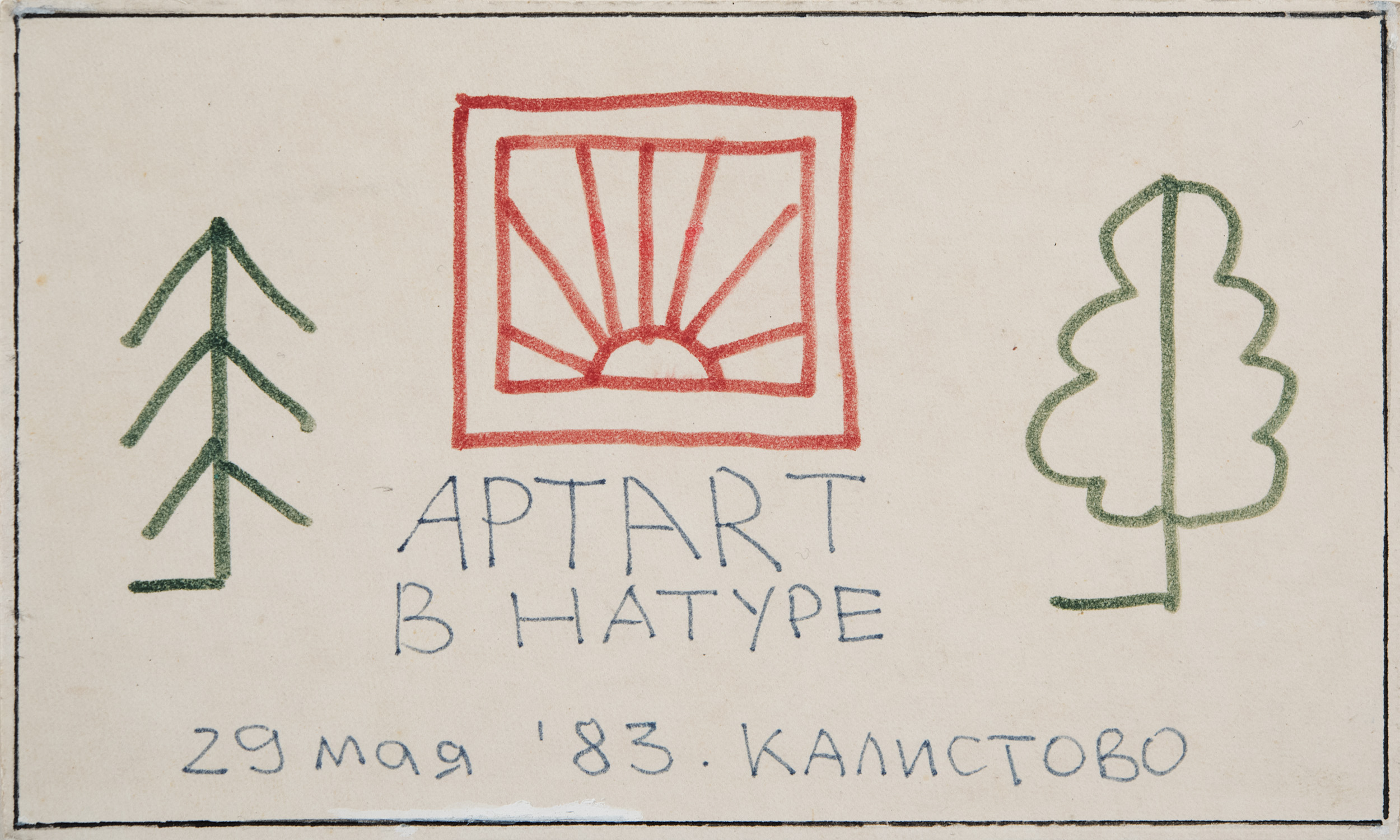
Invitation to APTART en Plein-air, 1983. Ink on illustration board, 7.9 × 12.9 cm (3 1/8 × 5 1/16 in.). Norton and Nancy Dodge Collection of Nonconformist Art from the Soviet Union. 2013.016.004
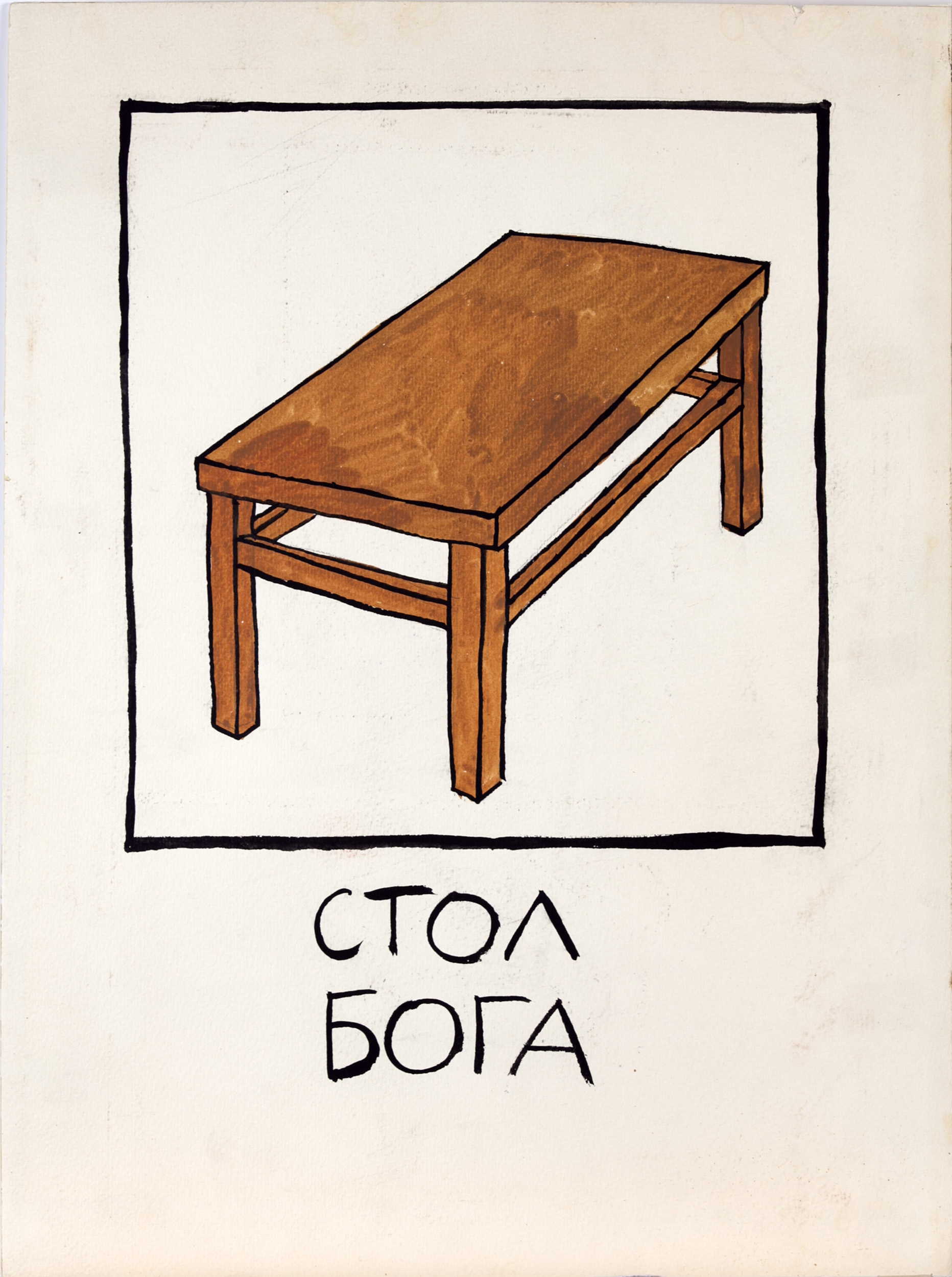
God's Table from the series Certain Things, 1982. Gouache on paper, 47.8 x 36 cm (18 13/16 x 14 3/16 in.). Norton and Nancy Dodge Collection of Nonconformist Art from the Soviet Union. 2013.016.005.02
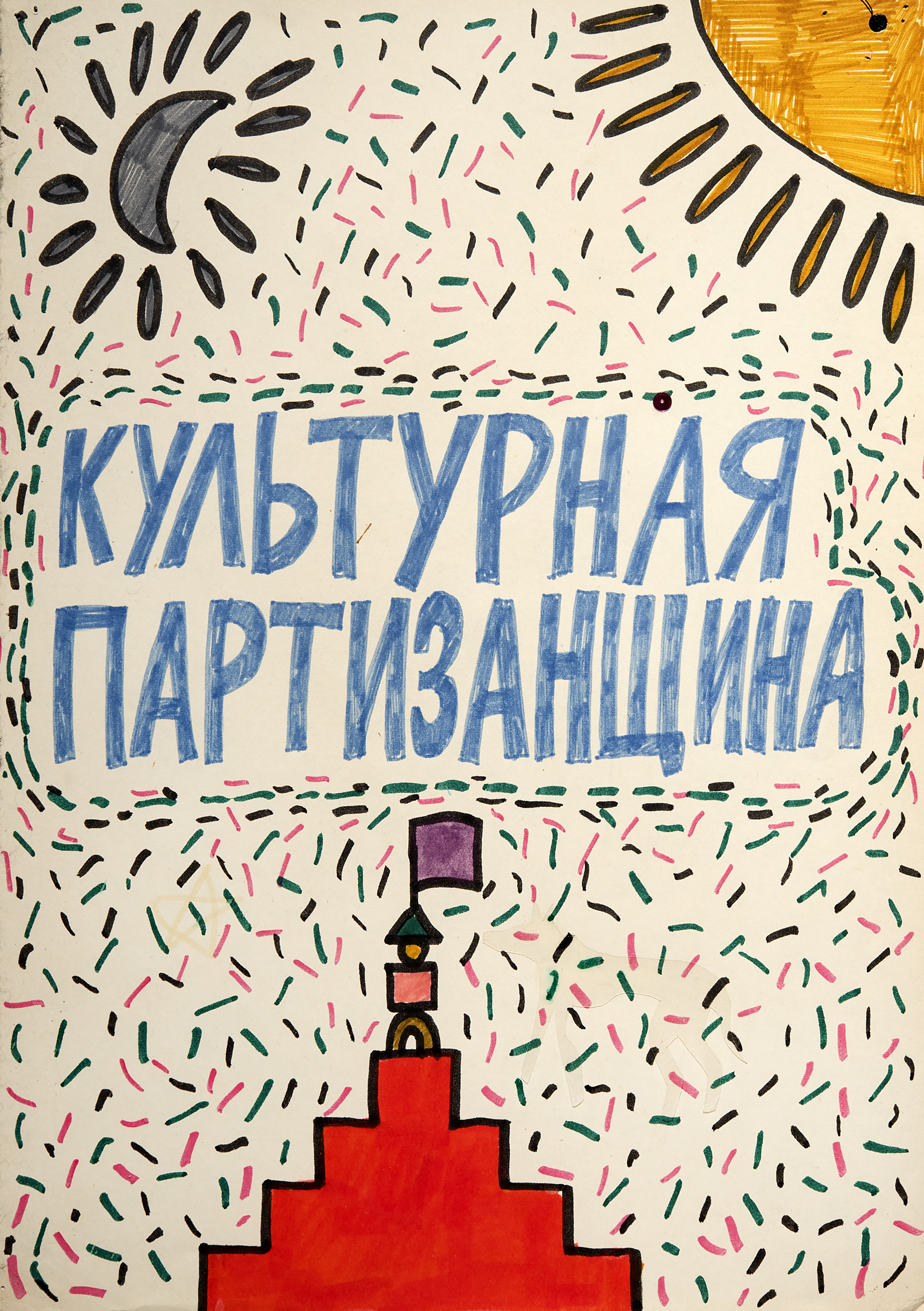
Cultural Partisanship from the series Bananas, 1983. Ink and collage on paper, 54.3 × 35 cm (21 3/8 × 13 3/4 in.). Norton and Nancy Dodge Collection of Nonconformist Art from the Soviet Union. D10063.03