
Nickoloz (Koka) Ignatov
1937 — Tbilisi (Georgia) | 2002 — Gonio (Georgia). Worked in Tbilisi (Georgia), Paris (France), Albany (New York, USA)
Koka Ignatov was a Georgian painter, public artist, graphic artist, cinema and stage designer, and book illustrator whose talents were recognized during his student years at the Tbilisi State Academy of Arts.
Ignatov was born in Tbilisi to Nadezda Chikovani, who was Georgian, and Yuli Ignatov, who was Russian. The family lived in the city’s Vera district on Zandukeli Street.
From 1956 to 1962, he studied in the Department of Theatrical-Decorative Art at the Tbilisi State Academy of Arts. He was still a student when the celebrated Georgian architect Lado Alexi-Meskhishvili invited him to create murals for Iori, a newly built restaurant. Ignatov submitted his sketches for the Iori wall paintings as his diploma work for the Academy. During his studies, he also created stage designs for productions including Federico García Lorca’s tragedy Blood Wedding (1932) and Ariadna Tour’s Moonlight Sonata (1961).
Ignatov served as the production designer on the films Erti Tsis Kvesh [Under One Sky] (1962), Maia Dsqneteli (1963), and Tbilisi–1500 (1958). During 1962–63, Ignatov worked as an art director at Kartuli Filmi (Georgian Film) Studios. Beginning in 1962, he participated in various exhibitions in Georgia and other Soviet republics, as well as other countries throughout the world. In 1963, he became a member of the Artists’ Union of Georgia.
In 1965, he designed the costumes and sets for the Tbilisi Shota Rustaveli State Drama Theater’s 1965 staging of Wisdom and Lies, directed by Nana Khatiskatsi and based on Sulkhan Saba Orbeliani’s titular collection of folktales. Ignatov’s stage design captivated the audience. When the curtain drew back, and a panel appeared at the back of the stage, everyone started to applaud. The panel was subsequently transferred to a wall and to a book cover, followed by Ignatov’s other frescoes; a large-scale sketch created for the production remains among Ignatov’s best-known works. The panel in question presents a fairy-tale-like rendering of Georgia that pictures the country from above—its hills, rivers, churches, towers, and lakes—and at such a high altitude that even the clouds are seen from above. [1] He went on to produce set designs and costumes for numerous productions at that theater, as well as at the Zakaria Paliashvili Tbilisi State Academic Opera and Ballet Theater, the Tbilisi Theater of Young Spectators, the Moscow Central Theater for Children, and the Odessa Russian Drama Theater.
Early in his career, monumental painting figured prominently in his oeuvre. His panels brought him widespread recognition and popularity. A Song About Georgia (1967), Ignatov’s fresco in the Bichvinta hotel, was especially successful. Content-wise and in its composition and manner of execution, A Song About Georgia recalls the back wall from Wisdom and Lies, although on a larger scale. Like the latter, A Song About Georgia presents us with an enormous panorama of Georgia: mountains and valleys, men cultivating land, churches, fortresses and towers, beasts and fowl, chants and hunting, land and water, all at once intimate and large-scale. [2]
In 1972, he painted murals in the banquet hall of the Tbilisi City Council, located on Mount Mtatsminda (Holy Mountain)—the highest point in Tbilisi, offering beautiful views of the city. The murals include a huge composition dedicated to the Georgian self–taught artist Niko Pirosmani. In 1975–76, Ignatov created the panel Berikaoba in the banquet hall of the Cinema House in Tbilisi; the painting originated with Ignatov’s 1974 set designs for Bidzina Kvernadze’s ballet Berikaoba, titled after a pagan festival of fertility and rebirth. Two years later, Ignatov created a mosaic and wall paintings for the exterior and interior of the Tbilisi Central Swimming Pool. In 1987, he painted a mural in the foyer of Tbilisi Rustaveli Theater—the same theater for which he had created sets and costumes some twenty years earlier.
Book illustration was another important aspect of his oeuvre. Throughout his career, Ignatov illustrated numerous volumes, including an anthology of Georgian poetry and Shakespeare’s Titus Andronicus (both 1977), as well as children’s literature. In his illustrations and other graphic works, the white paper surface plays a special role; the compositions are conceived in such a way that the paper has room to “breathe.”
In 1984, Ignatov was appointed professor and head of the Monumental Art studio at the Tbilisi State Academy of Arts.
From 1988, Ignatov mainly lived abroad, in France (Paris), where he had relatives, and in the United States (Albany, New York), where he had friends. In both countries, he created series of paintings and graphic works, among them Expectation, Playing with Apples, and Stones, in which the artist transformed a small pebble into a huge rock.
Boats are another recurrent motif in Ignatov’s oeuvre, symbolizing salvation, safe harbor, and spiritual solitude. In some works, boats are left behind on a seashore, while in others, such as Untitled (1979, ZAM, D02950), they are seen departing from the shore, bound for some unknown destination.
In the United States in 1989, the artist arrived at a distinctive idiom. In his host’s garage, he had discovered numerous discarded objects—cardboard boxes, crumpled paper, and the like—which he then transformed them into the “actors” of his still lifes.
Ignatov had many solo exhibitions throughout the world, in cities including Amsterdam, Berlin, Bologna, Bombay, Brussels, Budapest, New York, Paris, Prague, Moscow, and Munich.
He was the recipient of numerous accolades, including the USSR State Prize (1974), the People’s Artist of Georgia (1978), the State Award of Georgia (1981), the Georgian Medal of Honor (1997), and the Shota Rustaveli State Prize (2001).
Ignatov’s works may be found in museums in Georgia and Russia, including the Georgian National Museum (Tbilisi), the Georgian Museum of Fine Arts (Tbilisi), and the Bakhrushin State Central Theater Museum (Moscow).
Ignatov died on August 6, 2002, in Gonio, at his vacation home on the Black Sea coast. He is buried in Tbilisi’s Didube Pantheon, the final resting place for many prominent Georgian artists, writers, scientists, and other cultural figures.
Ketevan Kintsurashvili
Photo portrait: Koka Ignatov, Paris, 1990s. Courtesy Ketevan Ignatova, the artist’s daughter.
Notes:
1. Ketevan Kintsurashvili, Koka Ignatov: From Monologue to One Word, trans. Marine Tavkelishvili (Moscow: Tvorcheskaia Masterskaia, 2007), 33–34.
2. Kintsurashvili, Koka Ignatov, 36.
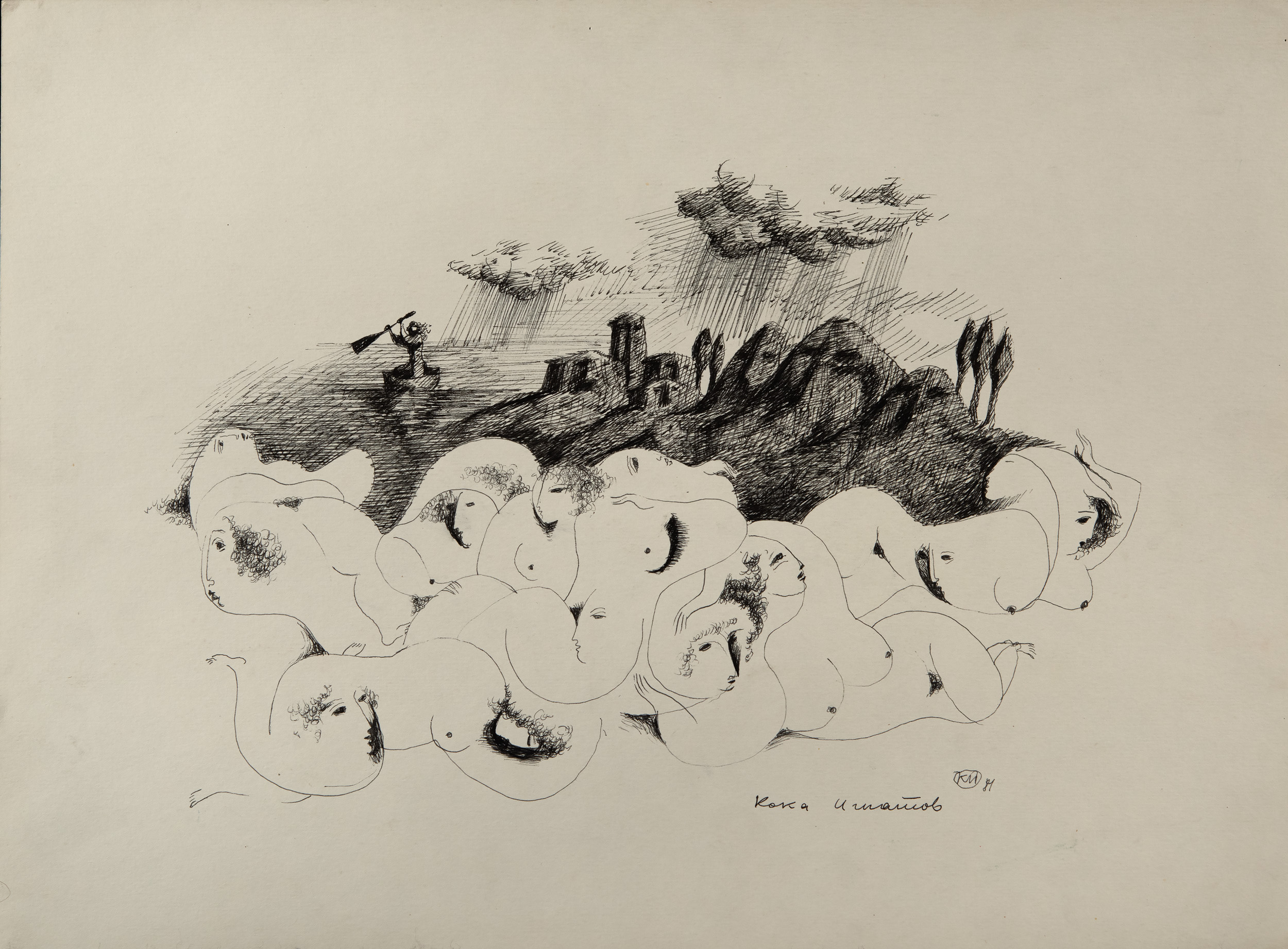
Constable, 1981. Ink on paper, 36 × 48 cm (14 3/16 × 18 7/8 in.). Norton and Nancy Dodge Collection of Nonconformist Art from the Soviet Union. D02866

Untitled, 1981. Graphite on paper, 44 × 31.8 cm (17 5/16 × 12 1/2 in.). Norton and Nancy Dodge Collection of Nonconformist Art from the Soviet Union. D09103
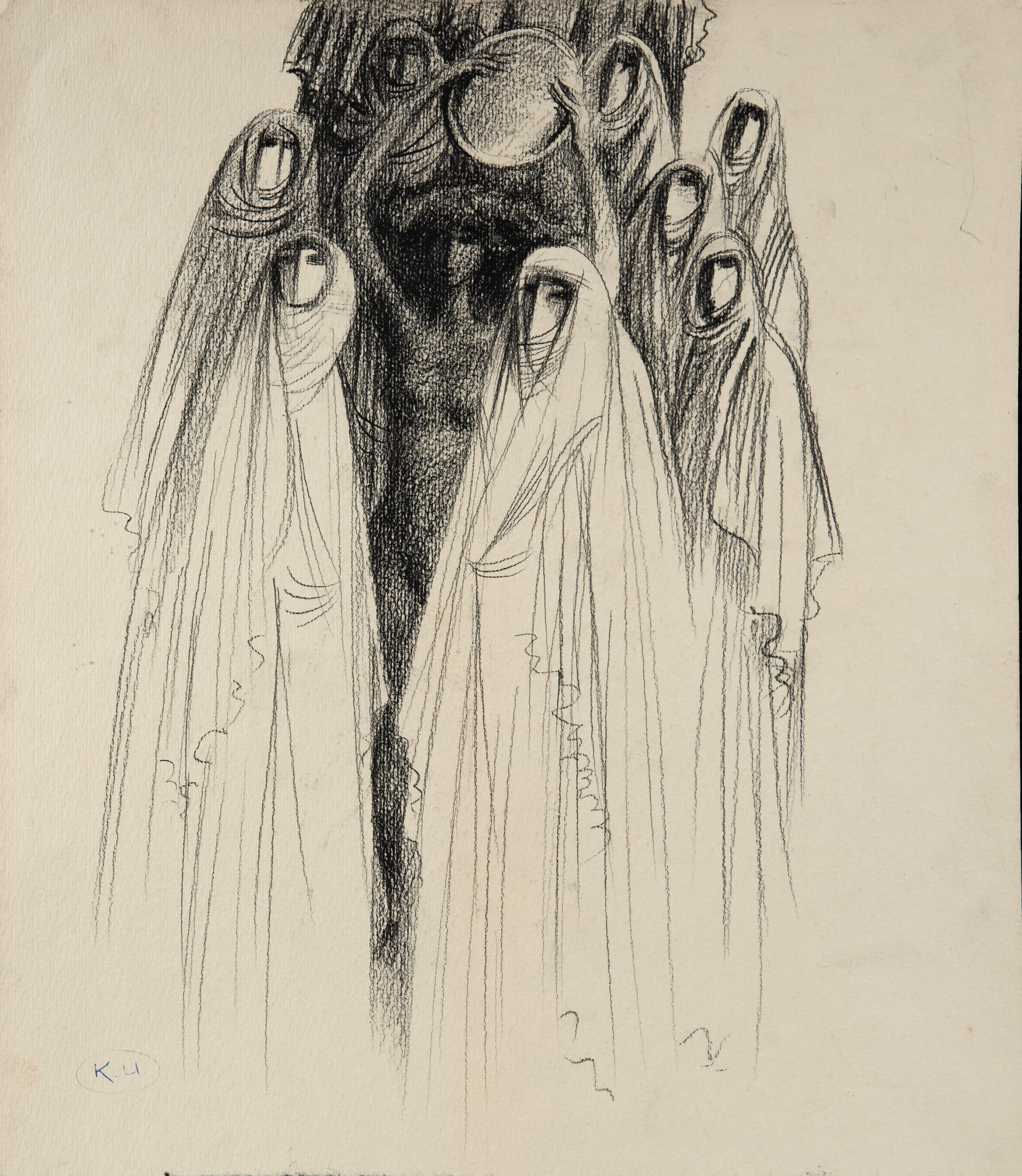
Untitled, undated. Graphite on paper, 41.8 × 36.2 cm (16 7/16 × 14 1/4 in.). Norton and Nancy Dodge Collection of Nonconformist Art from the Soviet Union. D09104
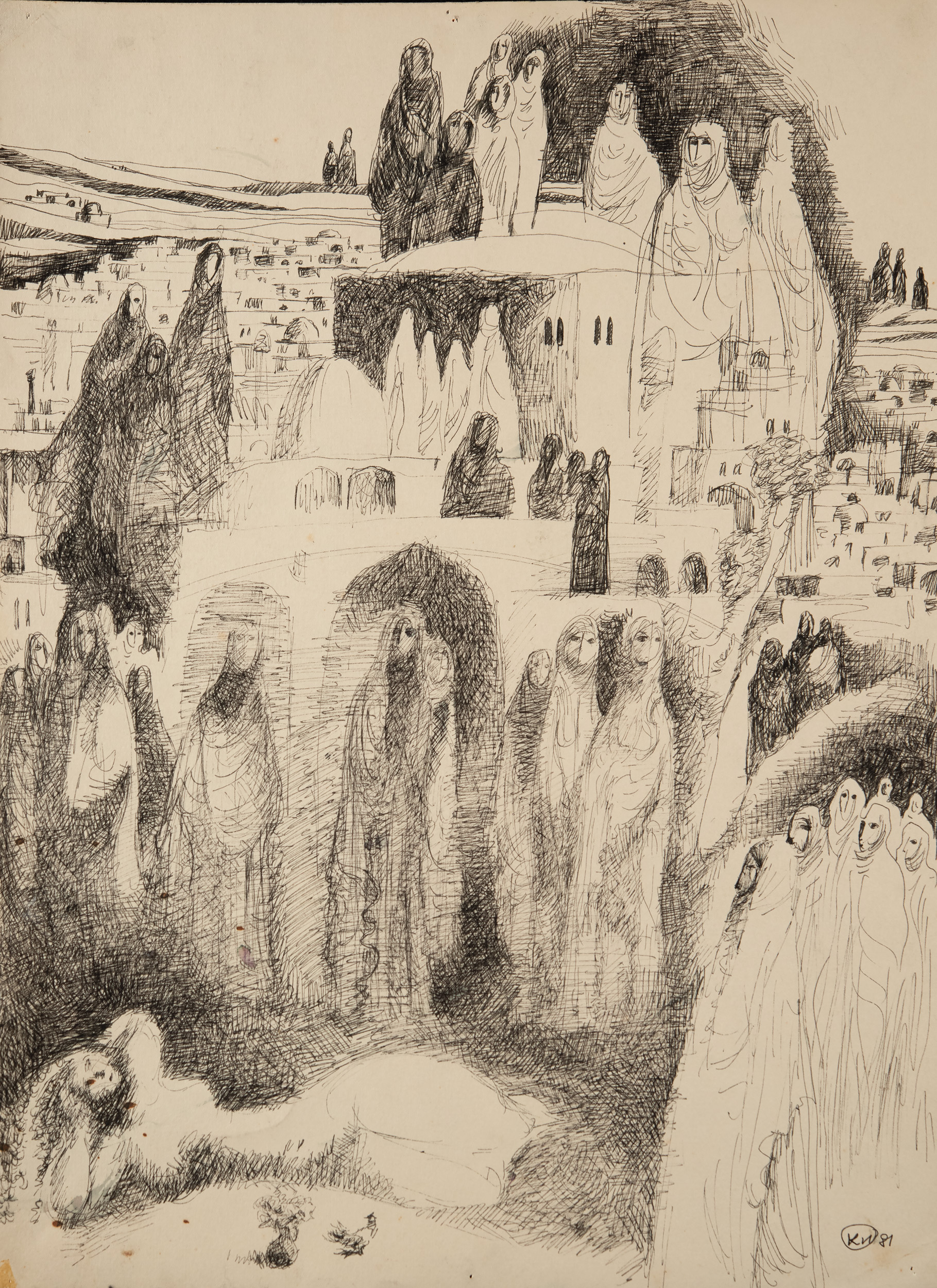
Untitled, 1981. Ink on paper, 48 × 36 cm (18 7/8 × 14 3/16 in.). Norton and Nancy Dodge Collection of Nonconformist Art from the Soviet Union. D09105
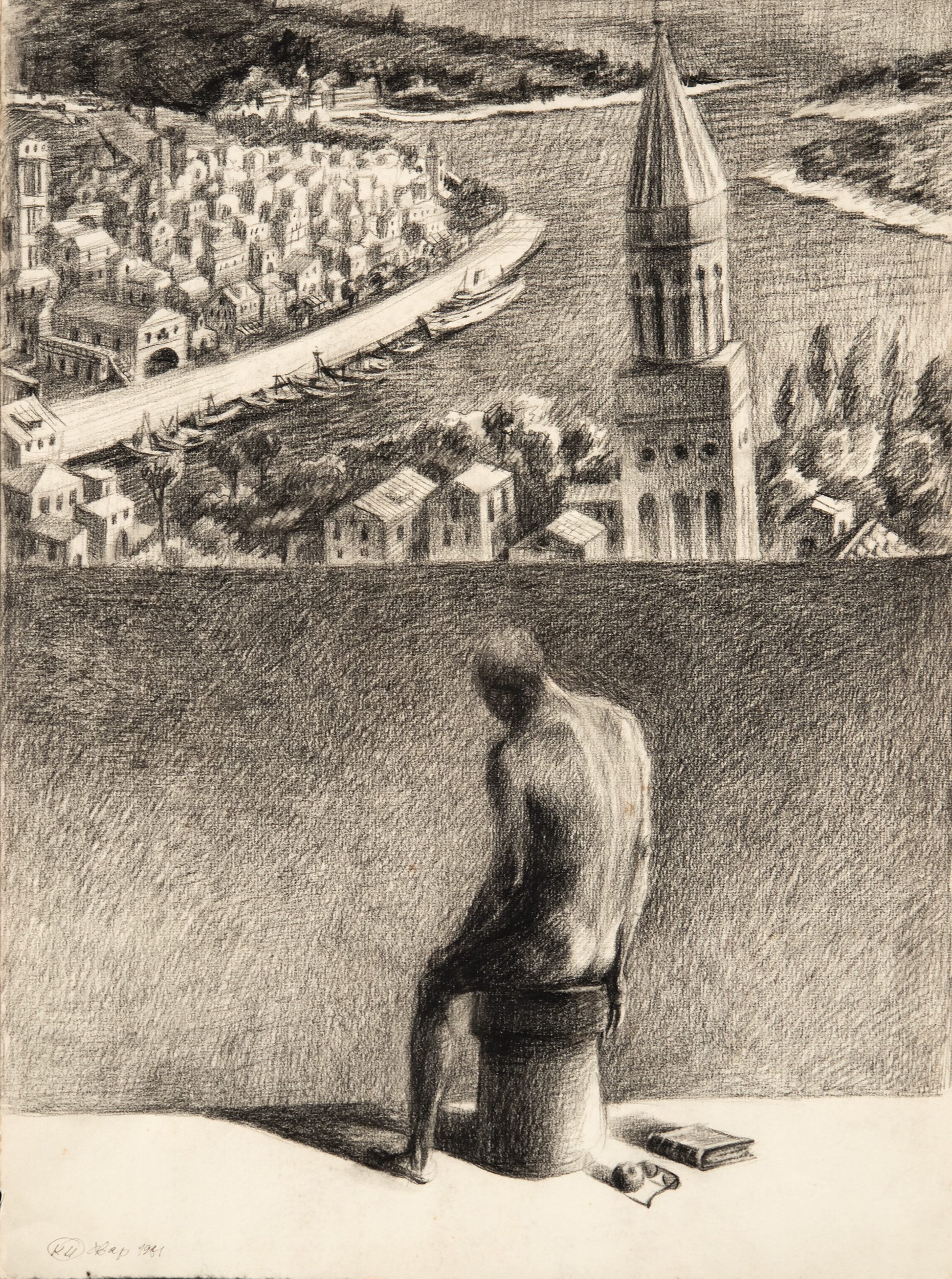
Untitled, 1981. Graphite on paper, 48 × 36.1 cm (18 7/8 × 14 3/16 in.). Norton and Nancy Dodge Collection of Nonconformist Art from the Soviet Union. D09442

Untitled, 1977. Gouache on paper, 48 × 36 cm (18 7/8 × 14 3/16 in.). Norton and Nancy Dodge Collection of Nonconformist Art from the Soviet Union. D02949

Untitled, 1979. Gouache on paper, 47.7 × 35.9 cm (18 3/4 × 14 1/8 in.). Norton and Nancy Dodge Collection of Nonconformist Art from the Soviet Union. D02950

Untitled, 1978. Gouache on paper, 48 × 36 cm (18 7/8 × 14 3/16 in.). Norton and Nancy Dodge Collection of Nonconformist Art from the Soviet Union. D02951