
Natta Konysheva
1935 — Moscow (Russia) | 2022 — Moscow (Russia). Worked in Moscow (Russia)
Natta Ivanovna Konysheva was a Soviet and Russian painter who, starting in the 1960s, was associated with the unofficial and semiofficial artistic circles in Moscow, the city where she spent her entire life. Konysheva graduated in 1959 from the Moscow Polygraphic Institute, an institution that produced specialists in the fields of graphic design, printing, and publishing. From 1958 until 1961, Konysheva also studied in the independent New Reality studio run by a pioneer of abstraction in the post-war period, Ely Bielutin (1925–2012), who introduced his students to works of the Soviet avant-garde of the early twentieth century as well as contemporary Western art. In the 1970s and into the early 1980s, Konysheva had a very close personal and professional relationship with the artist Dima Gordeev (1940–2011), whose work is also represented in the Zimmerli collection. The two were romantic partners and longtime friends, and their work from the 1970s reflects shared interests in similar subject matter and the significant influence they had on each other in developing their respective visual idioms.
In the 1960s and ’70s, Konysheva officially worked as a book illustrator and designer for several different publishing houses. She began to exhibit her paintings in 1965, at first showing her work at apartment exhibitions and later at officially tolerated exhibitions of unofficial art held in public venues, including two of the earliest such events that took place after the scandal surrounding the Bulldozer Exhibition. The Bulldozer Exhibition took place in an empty Moscow lot on September 15, 1974, when a group of artists created an unsanctioned outdoor display of their art and were violently dispersed by police, using heavy construction equipment. The negative international coverage that this event received resulted in the Soviet authorities being forced to create more exhibiting opportunities for unofficial artists. The two exhibitions in which Konysheva participated afterwards included the September 1974 open-air exhibition in Izmailovo Park (held two weeks after the Bulldozer Exhibition) and the September 1975 exhibition held in the House of Culture at VDNKh (abbr. for Exhibition of Achievements of National Economy).
In 1974, she joined MOSKh (Moscow Regional Union of Artists/Московский Союз Художников), and in the mid-1970s, she joined the union known as the City Committee of Graphic Artists (Gorkom Grafikov/Горком графиков). Based on her available exhibition history, she appears to have exhibited with the more socially and artistically conservative MOSKh only once, in 1976. She did, however, clearly share interests with members of the so-called “left wing” of MOSKh, both of whom diverged from the form and subject matter preferred by the dictates of socialist realism. It is notable that in the 1970s, the “left wing” of MOSKh included a number of prominent women painters such as Tatiana Nazarenko (b. 1944), Natalia Nesterova (1944–2022), Olga Bulgakova (b. 1951), and Elena Romanova (1944–2014). Despite their wide range of visual idioms, one of their shared preoccupations was postmodern quotation of the styles, iconography, and even specific images borrowed from the history of Western art, particularly the Renaissance and Baroque periods. [1] This is a tendency that Konysheva also demonstrated in her work, as evidenced in the Norton Dodge collection by pieces such as A. Brussilovsky with Son in Studio (1983, ZAM, D01940). This painting is a portrait of a fellow unofficial artist whose work is also represented in the Dodge Collection, and its composition, color palette, paint handling, and choice of anachronistic attire for the sitters hearken back to the tradition of Western portraiture associated with masters from the sixteenth, seventeenth, and eighteenth centuries, such as El Greco, Rubens, or Sir Joshua Reynolds, to name a few. Similarly, her Untitled bath scene from 1981 (ZAM, D08625) loosely but distinctly references both the Roman tradition of depicting bath scenes and frequent Renaissance and Baroque depictions of bacchanals and other group compositions with multiple nudes. Konysheva cited Venetian Renaissance artists Tintoretto, Veronese, and Titian, as well as the Spaniard Velasquez, as important sources of inspiration. Konysheva’s affinity with the women artists of MOSKh is also suggested by the fact that she joined Irida, an association of women artists founded in 1989, which brought together more than 100 female former members of the Union of Artists after it was disbanded. [2] Membership in Irida also allowed Konysheva opportunities to exhibit and travel, both in Russia and abroad in the post-Soviet period.
One of the consequences of the Bulldozer Exhibition and the subsequent liberalization of the climate for nonconformist artists in Moscow was the official permission they received to establish an independent union by joining the Painters’ Section of the Unified Committee of Graphic Artists, which was nestled within the Union of Cultural Workers (Объединённый комитет художников-графиков профсоюза работников культуры, typically referred to by the shorthand City Committee of Graphic Artists [Gorkom Grafikov/Горком графиков]). From 1976 until 1991, this union operated an exhibition space at 28 Malaya Gruzinskaya Street, which became an important public arena for numerous nonconformist artists. For the first time, they had their own space to show and sell works to the general public. [3] Konysheva actively participated in exhibitions in this space from 1978 through the 1980s; beginning in 1982, she showed together with the so-called Group 21, a group of abstract artists who exhibited together for six years. [4]
Even though she exhibited with so-called “abstractionists,” Konysheva never gave up figuration and focused largely on human figures. Portraiture and genre scenes of everyday urban life, typically (though not always) set in Moscow, dominated her oeuvre in the earlier part of her career. “I am a painter of the city,” she said. “I’m interested in people and their lives. I look for subjects in contemporary life: at parties, festivals, exhibition openings, and gatherings. They don’t let me into night clubs. I go where they do let me in. I’m very inspired by carnivals. My main theme is reportage with elements of the miraculous.” [5] Stylistically, all her work is characterized by loose compositions (she was known for re-painting her works numerous times, sometimes when they were already on view in an exhibition), loose handling of paint, and a gestural quality in her depiction of figures and their settings. As a result, despite having had formal artistic training, Konysheva is sometimes described as a “naive” or “primitive” artist. She gravitated toward working on a large scale and produced many truly monumental canvases in the later part of her career.
In that later part of her career, Konysheva was increasingly inspired by mythological and Biblical subjects, even when depicting contemporary events, producing phantasmagorical images through exaggerated physiognomy and body shapes, extreme contrasts of dark and light, nonnatural or heightened coloration, and surreal juxtapositions of objects and figures. The journalist and critic Leonid Lerner wrote of her work, “Upon seeing her paintings, I was amazed by how much they simultaneously contained beauty and hideousness, madness and an internal logic. Konysheva’s objects and images dance in exuberant fireworks of color; they rush somewhere—either into the past or the future, with figures that are costumed and nude, crying and laughing. This magnificent absurdity is both dark and celebratory, funny and dramatic. Her paintings are both real and fantastical to the point of horror.”[6] Examples of such works produced in the first decade of the twenty-first century include The Antiquarian Salon (Антикварный салон) and Fortuna at the Central House of Artists ("Фортуна" в ЦДX), both from 2006, found in the collection of the ART4 private museum in Moscow. According to the same profile by Lerner, Konysheva was known for being extremely prolific as a painter and disinterested in the commercial success of her work, willing to part easily with it for very little money or in exchange for other things. [6] A publication based on information provided by Tatiana Krol, currently the only Russian scholar of Konysheva’s legacy, estimates her surviving body of work at over 10,000 pieces. [7]
Natta Konysheva died in Moscow at the age of 86 and is interred in the columbarium of the Vagankovo cemetery. She is survived by her son, Kirill Garnisov. In addition to the Zimmerli Art Museum, her work is held by both private collectors and public institutions, including the State Russian Museum, St. Petersburg, Russia; the State Tretyakov Gallery, Moscow, Russia; Moscow Museum of Modern Art, Moscow, Russia; Bryansk Art Museum, Bryansk, Russia; ART4 Museum, Moscow, Russia; collection of Rene Guerra, Nice, France; the Kolodzei Collection of Russian and Eastern European Art, Kolodzei Art Foundation, New Jersey, USA; and the Savitsky State Art Museum, Nukus, Uzbekistan.
Ksenya Gurshtein
Photo portrait : Natta Konysheva, n.d. Photographer unknown. Artist’s personal archive.
Notes
1. Kirill Svetlyakov, Амазонки левого МОСХа [The Amazons of the left MOSKh]. magisteria.ru educational portal.
2. Это было навсегда. 1968–1985 [It was forever. 1968–1985], exh.cat. Moscow: State Tretyakov Gallery, 2020: 55
3. Russian Art Archive Network, “Московский Объединённый комитет художников-графиков профсоюза работников культуры” [Moscow unified committee of graphic artists of the Union of cultural workers]; and A. K. Florkovskaya, Малая Грузинская 28: 1976–1988 [Malaya Gruzinskaya 28: 1976–1988], Moscow: Памятники исторической мысли [Pamyatniki istoricheskoy mysli; Monuments of historical thought], 2009.
4. Yelena Fedotova, “10 выставок неофициального искусства. Как авангард вышел из подполья” [Ten exhibitions of unofficial art. How the avant-garde left the underground], Lavrus, an educational portal of the State Tretyakov Gallery, May 7, 2020.
5. Maria Esmont, ed., Женщины художницы Москвы. Путь в искусстве [Moscow women artists. Paths in art], Moscow: Декоративное искусство [Decorative Art], 2005; and Art Most, “Художник Конышева Натта” [Artist Konysheva Natta].
6. Leonid Lerner, “Nata из Киллерова тупика” [Nata from Killerov Cul de Sac], Огонёк [Ogonyok] N 38, October 22, 2000: 17.
7. Maria Moskvicheva, “Две звезды: сколько сейчас стоят Натта Конышева и Катя Медведева” [Two Stars: How Much Are Natta Konysheva and Katya Medvedeva Worth Now], The Art Newspaper Russia, issue 131, May 20, 2025.
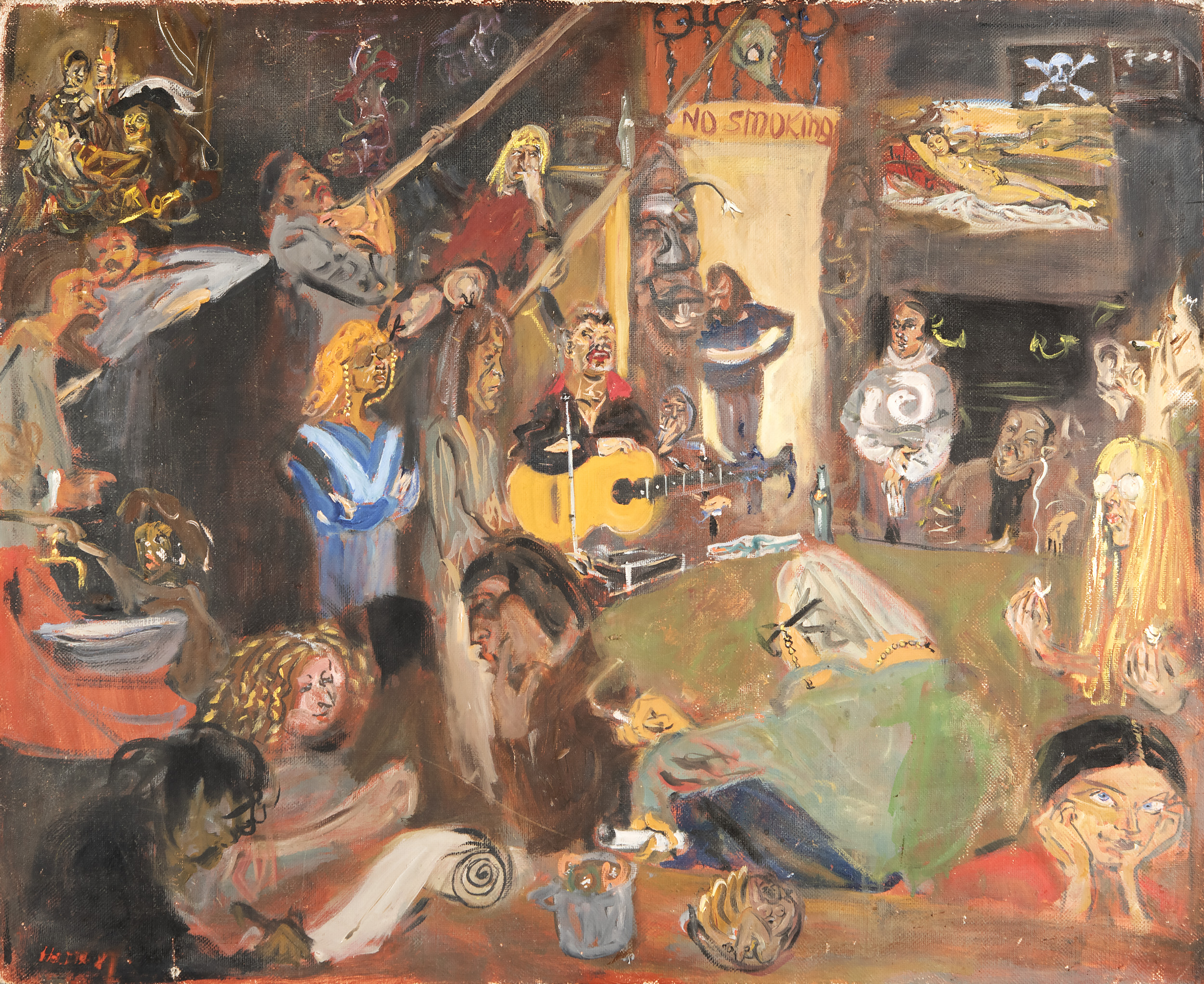
No Smoking, 1981. Oil on canvas, 66.5 × 82 cm (26 3/16 × 32 5/16 in.). Gift of Roman Tabakman. 1994.0164
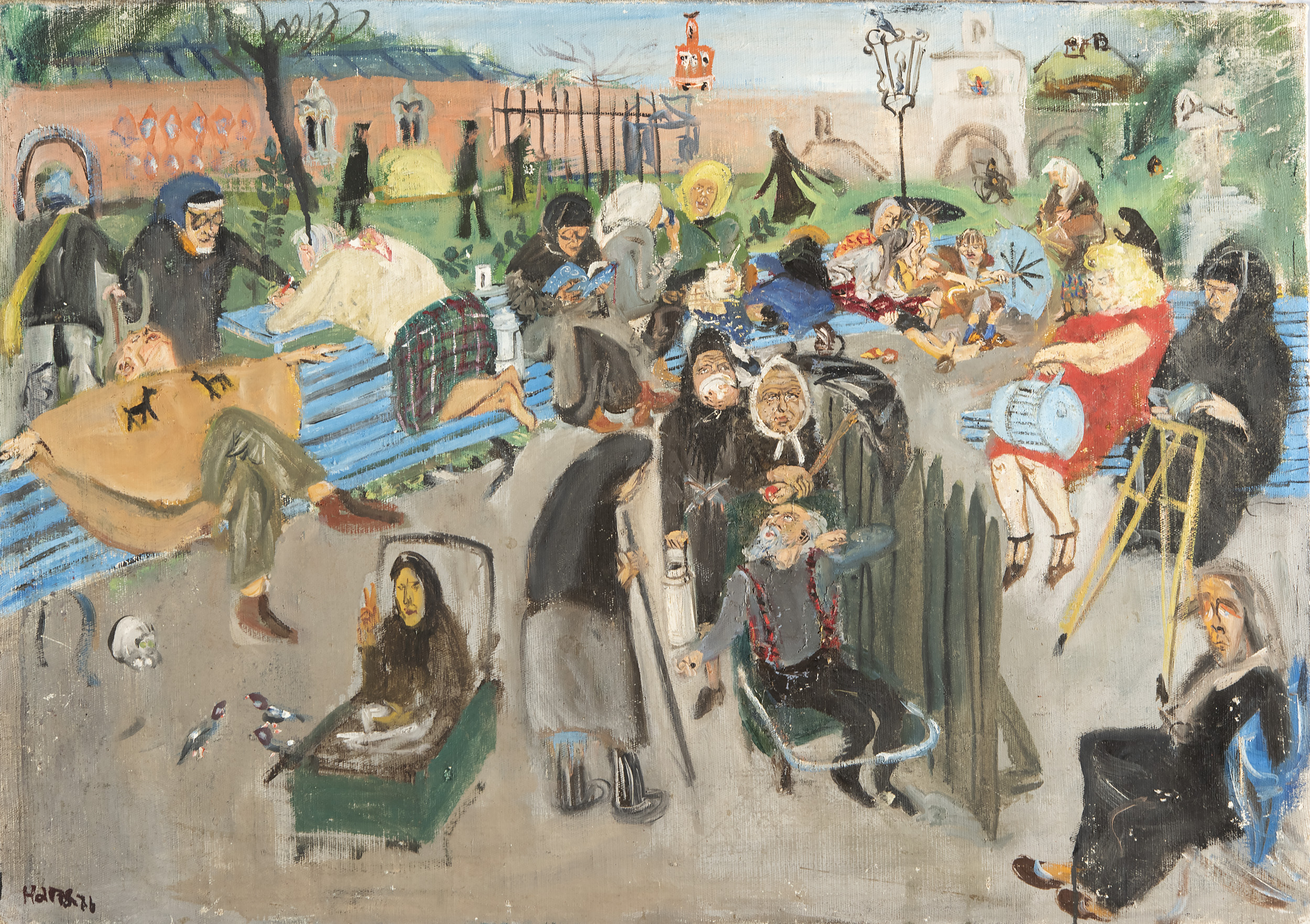
Town of Zagorsk, 1976. Oil on canvas, 79 × 54.5 cm (31 1/8 × 21 7/16 in.). Gift of Roman Tabakman. 1994.0165
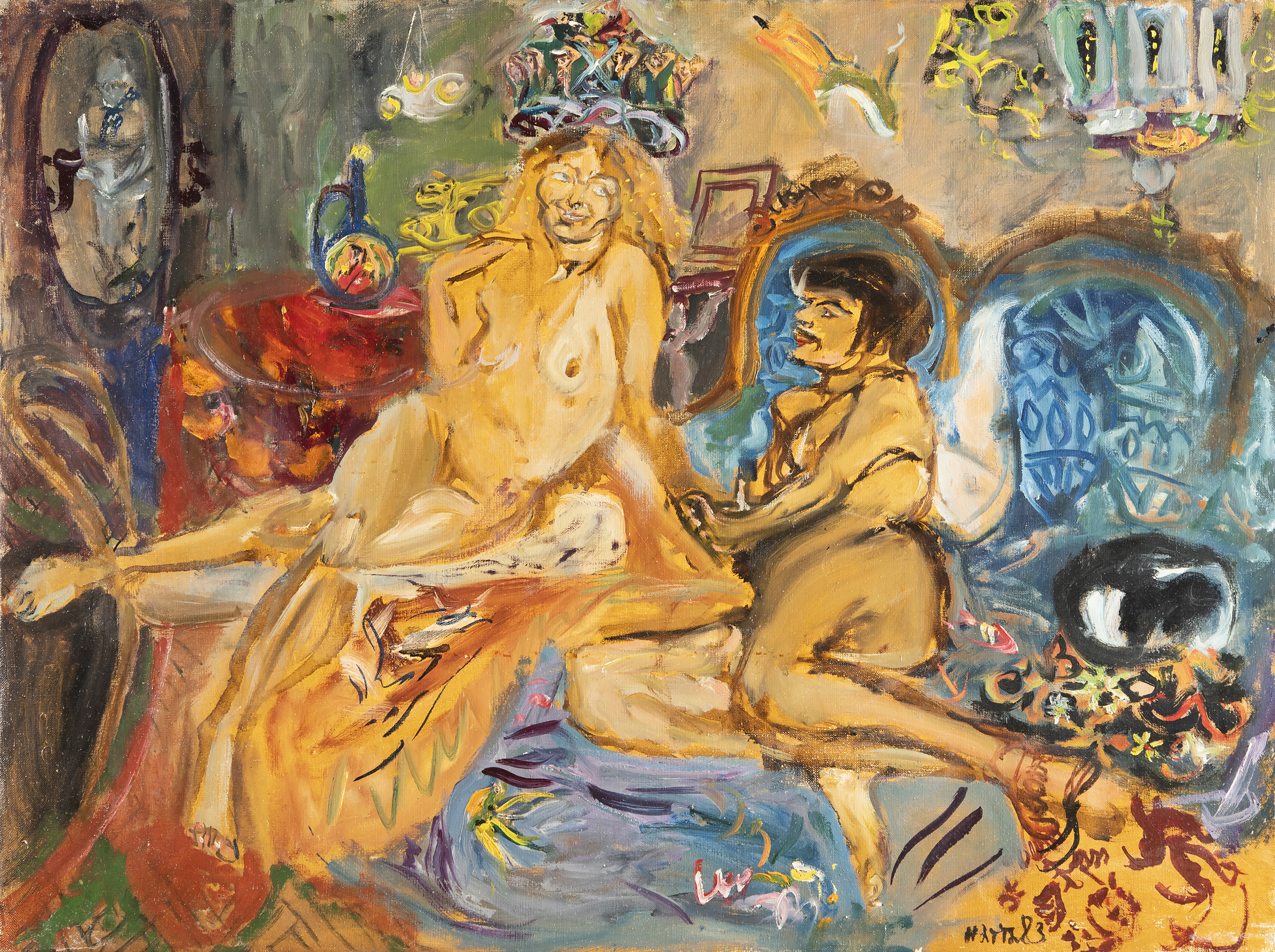
Nude, 1983. Oil on canvas, 57 × 76.5 cm (22 7/16 × 30 1/8 in.). Gift of Vlad Meisher. 1994.0403
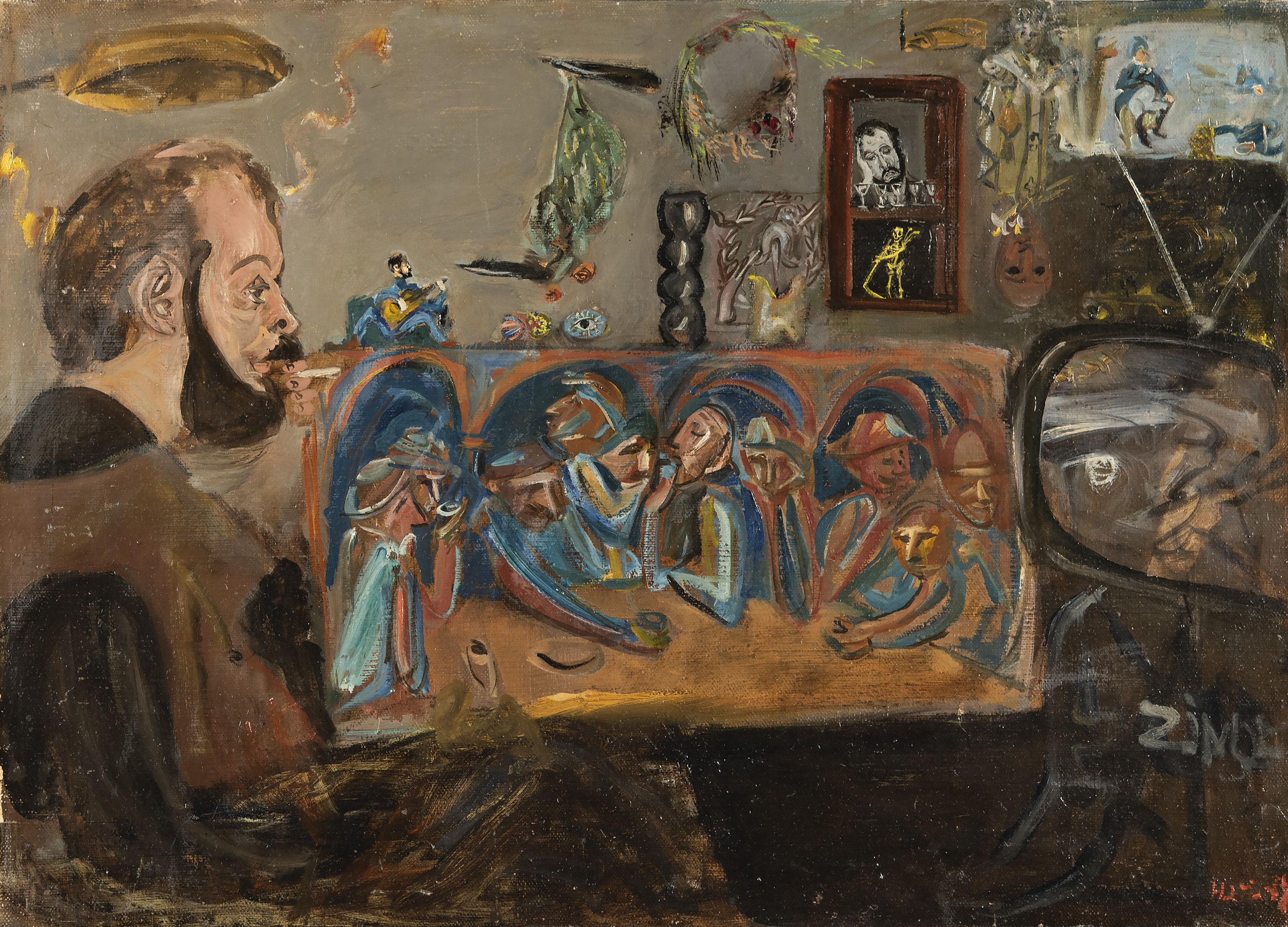
Watching T.V., 1978. Oil on canvas, 50 × 70 cm (19 11/16 × 27 9/16 in.). Gift of Vlad Meisher. 1994.0404
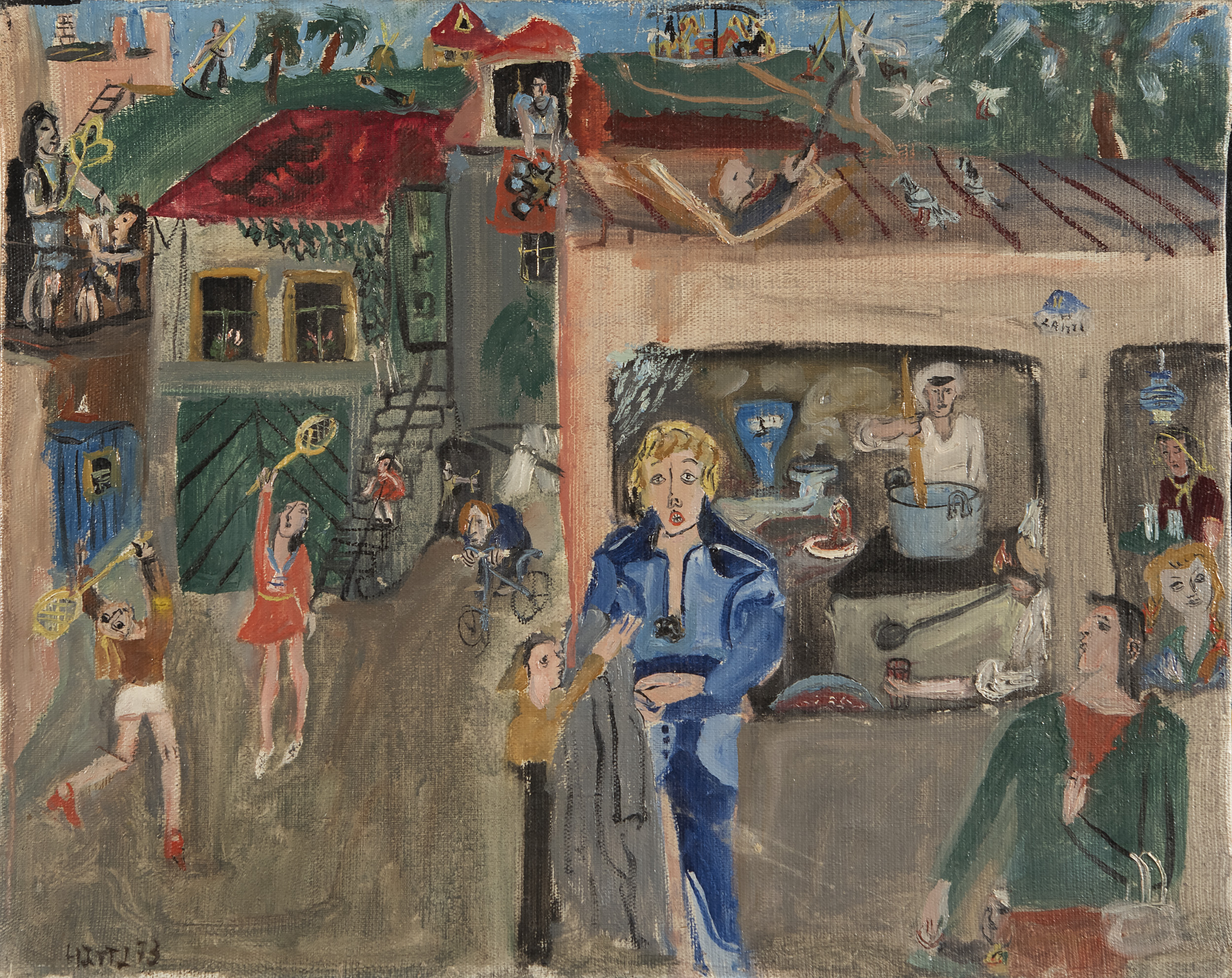
Untitled (Street Scene), 1973. Oil on canvas, 40 × 50 cm (15 3/4 × 19 11/16 in.). Gift of Vlad Meisher. 1994.0405

Witch (Kikimora), 1986. Oil on canvas, 70 × 50 cm (27 9/16 × 19 11/16 in.). Gift of Vlad Meisher. 1994.0406