
Naima Neidre
1943 — Kiviküla (Estonia). Lives and works in Tallinn and Topu (Estonia)
The printmaker and illustrator Naima Neidre was born in Läänemaa, in a seaside village called Kiviküla. Neidre graduated from the Tartu Art School in 1964 with a specialization in decorative design and, in 1971, from the State Art Institute of the Estonian Soviet Socialist Republic (now the Estonian Academy of Arts) with a degree in graphic arts. In her student years, she contributed to the underground magazine Hees. For her graduation work, she created illustrations for Nikolay Alexeyevich Nekrasov’s poem Rüütel tunniks [A Knight for an Hour], for which she later received an honorary diploma from Leipzig University in 1972. Even in these early illustrations, it is possible to discern Neidre’s distinctive style, in which dense lines form the landscape and the figures that organically appear in it.
After graduating, Neidre worked until 1974 as a graphic designer in the Design and Technology Bureau of the Ministry of Meat and Dairy Industry. She began exhibiting her art in 1968, and was a member of the group PARA ’89. Her work spans a variety of mediums, including etching, watercolor, bookplates, illustration, and drawing. She has participated widely in national and international exhibitions, winning numerous prizes. In parallel with her work as a graphic artist, Neidre has illustrated children’s books and poetry collections, including Lydia Koidula’s Mu isamaa on minu arm [My country is my love] (1993), Ene Mihkelson’s Kaalud ei kõnele [The scales do not speak] (1998), and Lilli Promet’s Taputilgake [A small drop of death] (1986).
Nature, especially the sea, has always been an important source of inspiration for Neidre. She spent time at the seashore in her childhood and says that nowadays she likes to see what the waves wash ashore—feathers, stones, and other objects. Her work is characteristically composed in a dense, dynamic grid featuring imaginary figures—very often underwater creatures, people engaged in somewhat mysterious activities, fantastic animals, and lush plants—that form an integrated whole in the picture space. These fantastic figures and creatures—in works such as Maastik inimestega [Landscape with People] (1984, ZAM, D03544), Päev [Day] (1984, ZAM, D08349), and Poolsaar [Peninsula] (1988, ZAM, D08350])—seem to come from a mythological world. The protagonists of several such works are ghostly characters, who seem to be female and have an organic relation to the imaginary world surrounding them. Often the matter-of-fact titles of these works are in stark contrast to the mystery of the image, as with Jutt [Short Story] (1982, ZAM, D03958) and Äratus (Ärataja) [Awakener] (1981, ZAM, D03959). The central figure in Awakener is draped in red hairs that, like fleshy veins or riotous ribbons, give her form while weaving intimate connections to the faded blue female faces around her. Their flocks of hair entangle. Above them, round mounts of heads or breasts radiate upward. In Modell [Model] (1977, Art Museum of Estonia) another female figure emerges like an apparition through a plane of intricate enmeshed patterns. The lines and swirls seem to form a draped textile or a fishing net but can also be seen as a landscape. Delicate lines interweave the seated nude figure and her surroundings; she is neither quite one with nor wholly distinguishable from them. Distinctions between background and foreground, between depth and surface, appear untenable, even meaningless. Nevertheless, the figure’s embodied presence is vividly felt. In Kahekesi [Two Is Company] (1972, Art Museum of Estonia) young women appear to grow in a field, as if in playful mimesis becoming part of and masked by the plant life. In this powerful image, the haunting transformation is depicted with extraordinary nuance and great force. In some of Neidre’s works, she positioned different natural elements in the middle of the picture plane to grow out of a dense, linear grid that forms a landscape, simultaneously showing macro- and microperspectives on nature that are difficult to distinguish, as in Ujuv saar [Floating Island] (1978), Vaikelu [Still Life] (1977), and Veealune I [Underwater I] (1978) (all Art Museum of Estonia). Also distinctive are Neider’s images of animals, more aptly called fantastic creatures, such as Kassid [Cats] (1981, ZAM, D08356) and Loomake [Little Animal] (1985, Art Museum of Estonia).
Several of the artist’s works have a personal backstory, such as Keskpäev Topus [Midday in Topu] (1979, Art Museum of Estonia). Neidre grew up amid the seaside landscapes of Topu in western Estonia. In the print, doll-like children grow out of the dense soil. Or are we seeing a child with her dolls? The pastoral scene is dislocated by the pitch-black and slightly forbidding eyes of the children, emphasizing the ambiguous experience of childhood as both familiar and alienating. Another work mediating the childhood experience in the middle of nature and other living creatures is the symbolic Tüdruk linnuga [Girl with a Bird] (1980, ZAM, D08355), in which a little girl clings to a huge bird that seems to be taking flight. In the context of Maastik jalutuskepiga [Landscape with Cane] (1983, ZAM, D08352), Neidre has recalled that her family kept her grandfather’s walking stick in their country house. Made of juniper, with a crooked end and covered in dark varnish, the stick evoked a sense memory of the many steps and walks in Topu that it had traversed. Neidre wished to capture the feeling of walking with the cane along these paths and being drawn closer to the ground. Used in older age, the cane here is nestled among the plants, grasses, and flowers on the ground, where the cane bearer will eventually also end up.
Neidre’s imagery is often almost abstract and fantastical. In her later works, she gradually moved closer to full abstraction, as can be seen in her series of ink drawings from 1997: Hõbelev [Silvery], Mattev [Burying], and Tumedusse tõmbujad [Retreating into Darkness] (all Art Museum of Estonia). In recent years she has mainly worked in watercolor, creating delicate and abstract compositions with patches of color that are still inspired by nature, such as Aedniku värvid II–IV [Colors of the Gardener II–IV] (2019) and Õietolmu tombukesed I–II [Pollen Grains] (2022) (both private collection).
Eda Tuulberg
Photo portrait: Naima Neidre, 1988. Photo by Kalju Suur. Estonian National Archive. EFA.395.0.146892
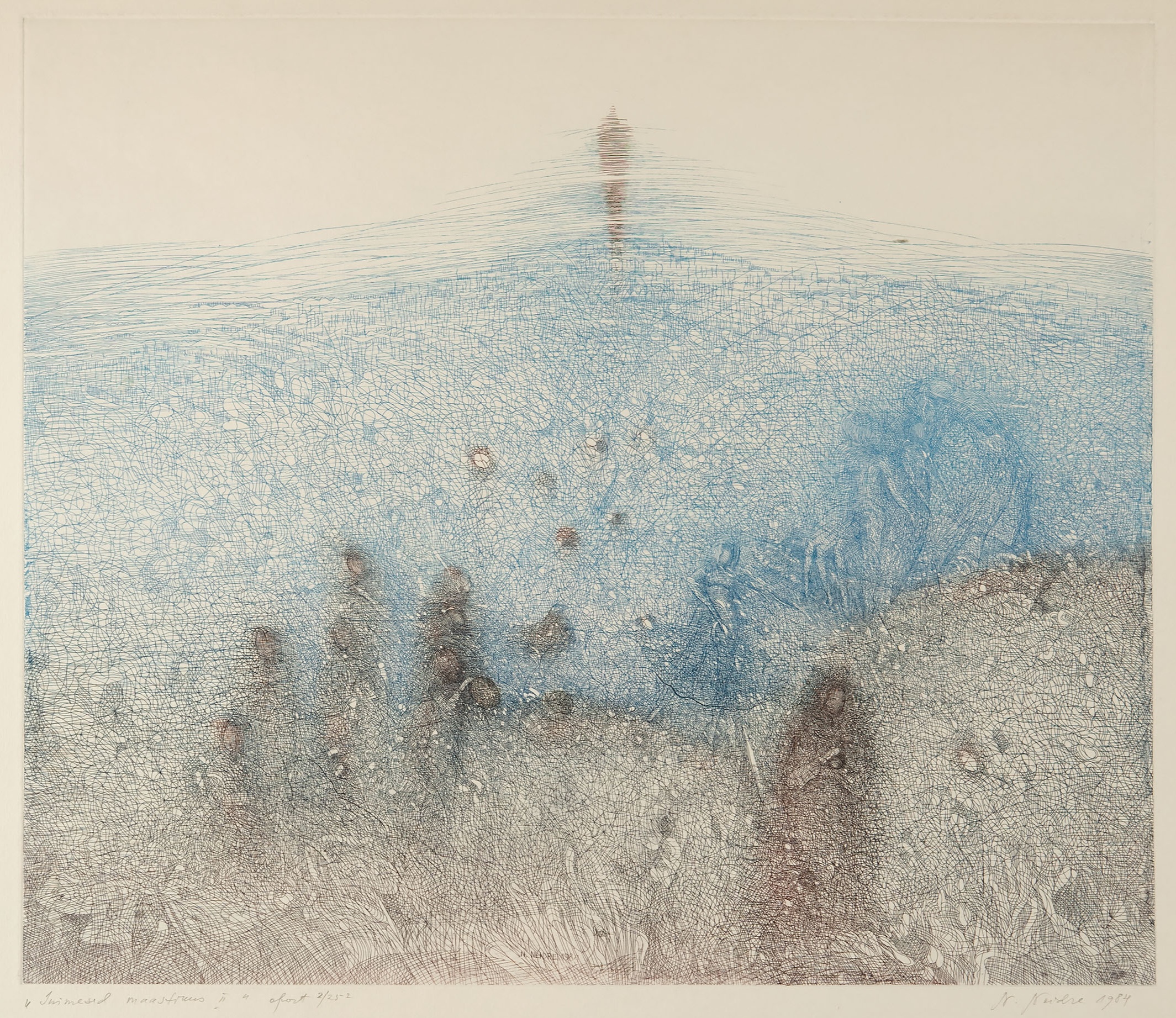
Landscape with People, 1984. Etching on paper, 42.9 × 49 cm (16 7/8 × 19 5/16 in.) / 57.5 × 62.5 cm (22 5/8 × 24 5/8 in.). Norton and Nancy Dodge Collection of Nonconformist Art from the Soviet Union. D03544
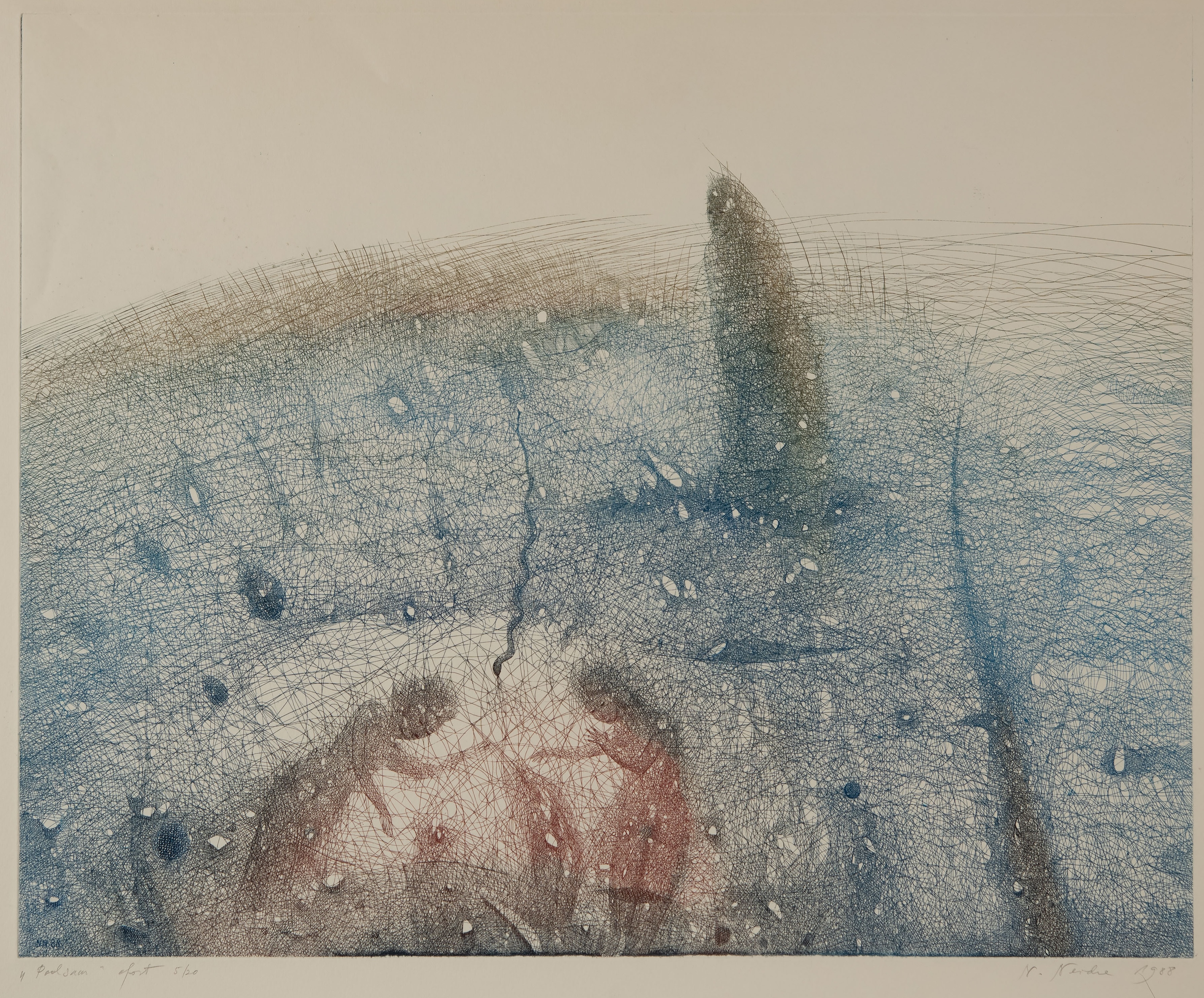
Peninsula, 1988. Etching on paper, 48.1 × 63.2 cm (18 15/16 × 24 7/8 in.) / 60.6 × 71.2 cm (23 7/8 × 28 1/16 in.). Norton and Nancy Dodge Collection of Nonconformist Art from the Soviet Union. D08350
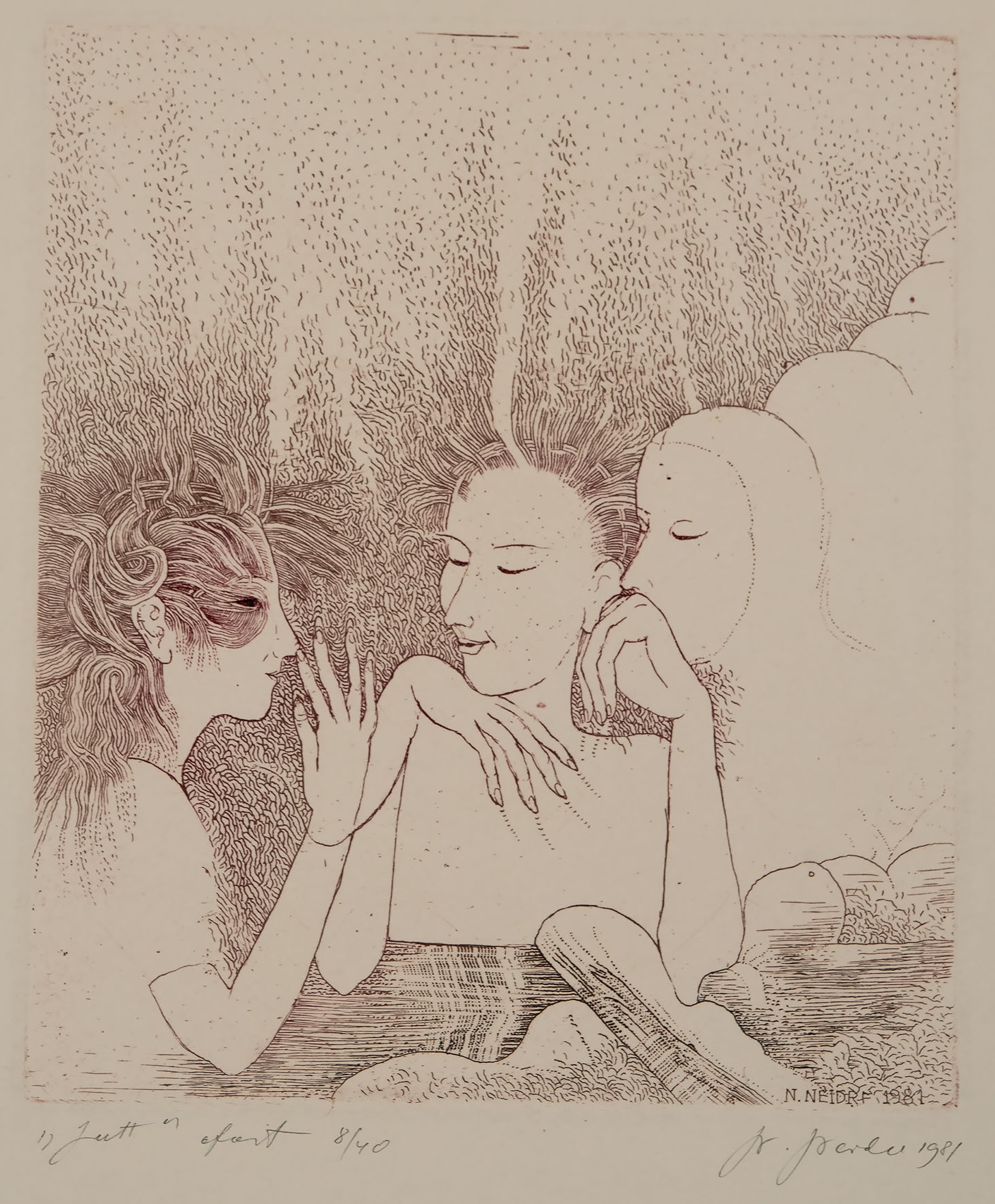
Short Story, 1981. Etching on paper, 16.5 x 14 cm (6 1/2 x 5 1/2 in.) / 38.6 x 34.8 cm (15 3/16 x 13 11/16 in.). Norton and Nancy Dodge Collection of Nonconformist Art from the Soviet Union. D03958
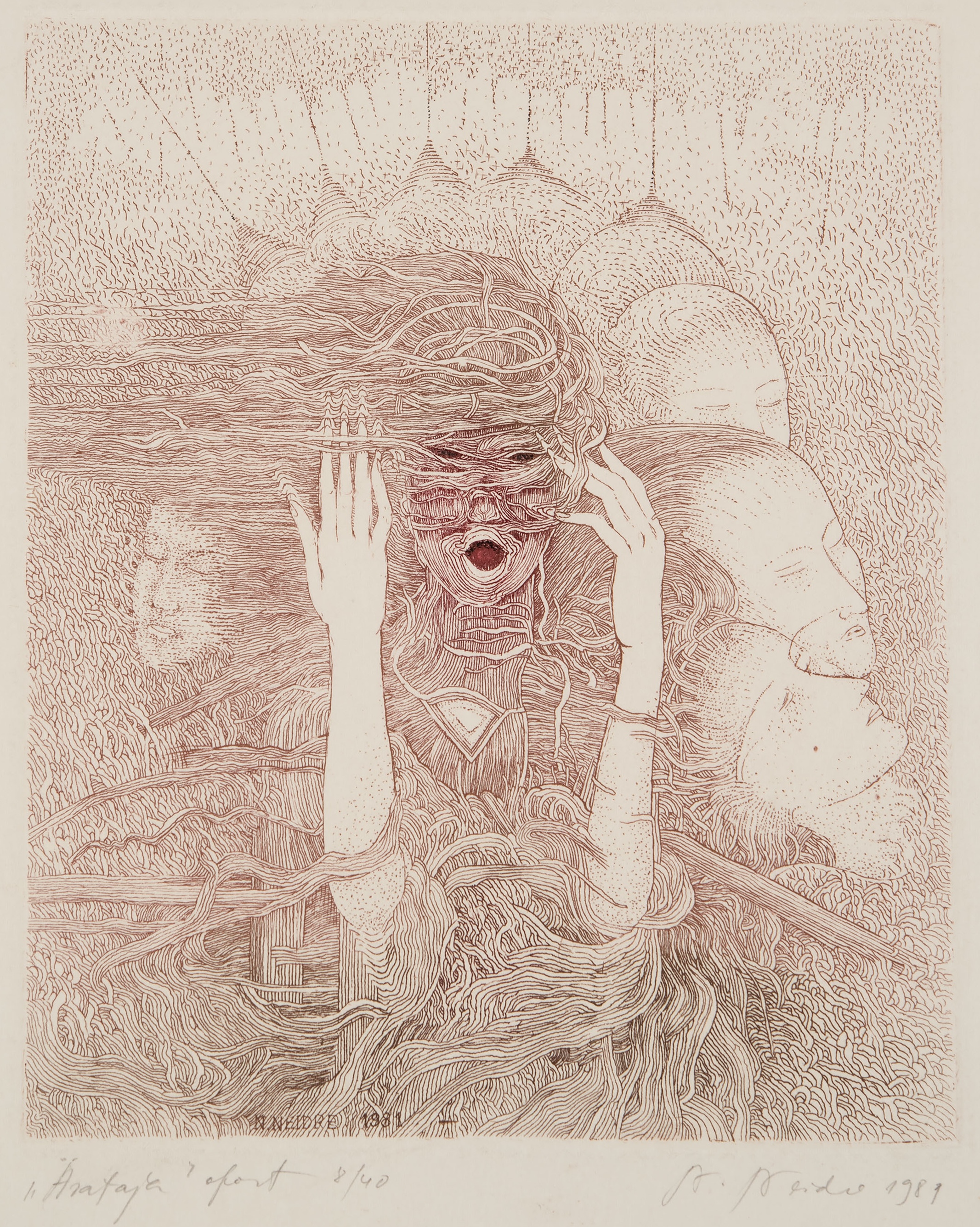
Awakener, 1981. Etching on paper, 16.6 x 13.7 cm (6 9/16 x 5 3/8 in.) / 38.9 x 34.5 cm (15 5/16 x 13 9/16 in.). Norton and Nancy Dodge Collection of Nonconformist Art from the Soviet Union. D03959
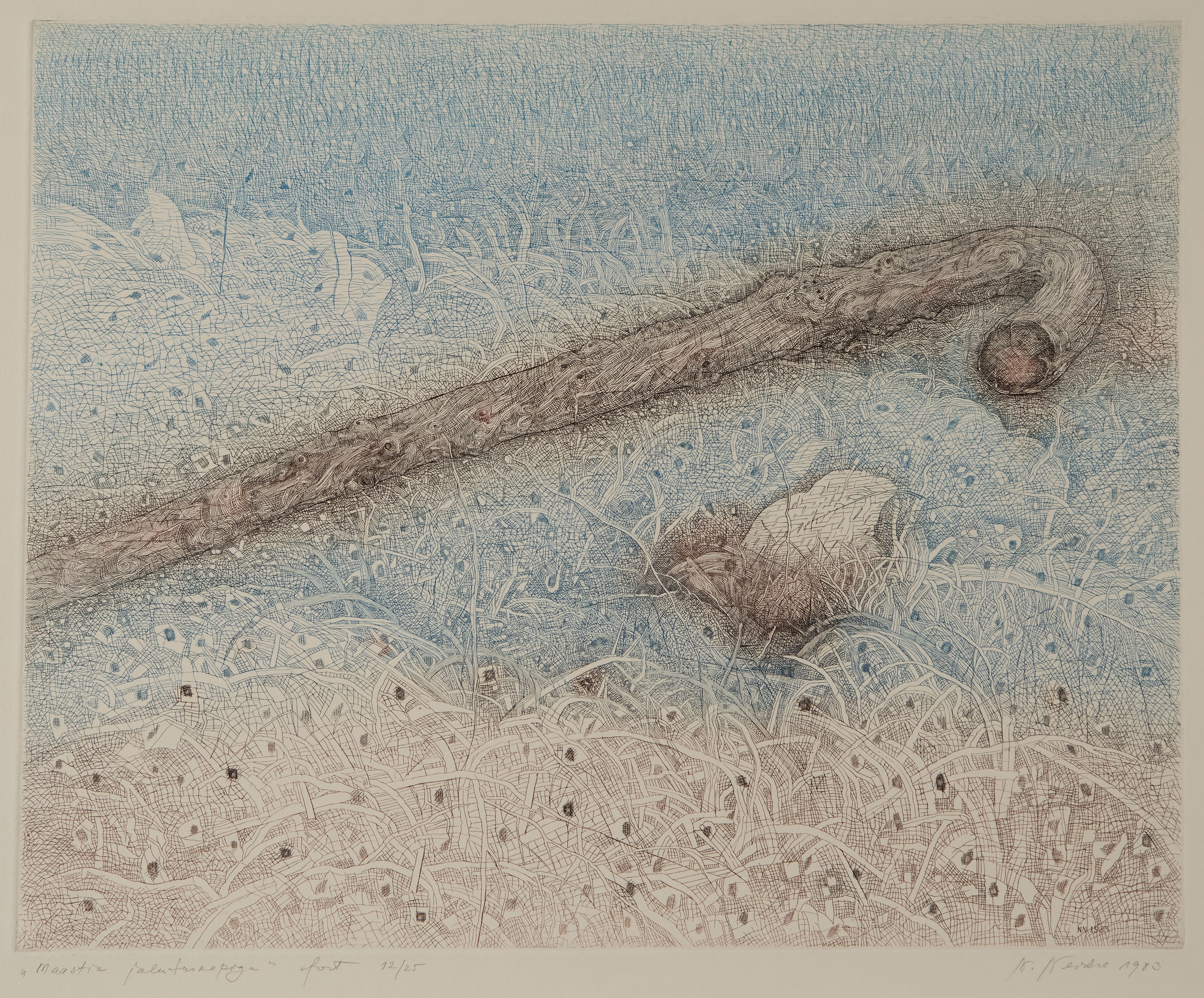
Landscape with a Cane, 1983. Etching on paper, 39.7 × 49.1 cm (15 5/8 × 19 5/16 in.) / 53.7 × 61.5 cm (21 1/8 × 24 3/16 in.). Norton and Nancy Dodge Collection of Nonconformist Art from the Soviet Union. D08352
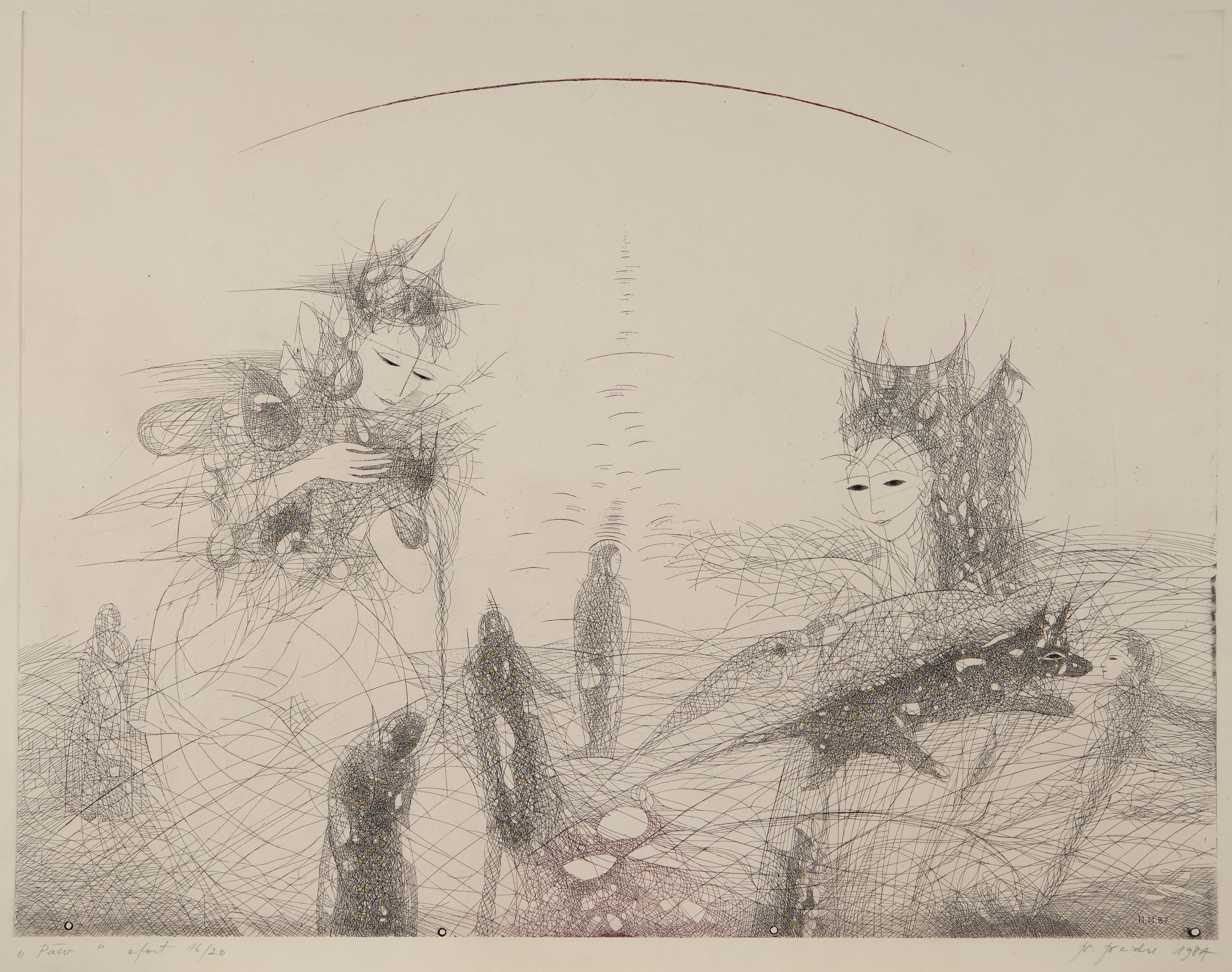
Day, 1984. Etching on paper, 49.3 × 64.9 cm (19 7/16 × 25 9/16 in.) / 58.1 × 72.9 cm (22 7/8 × 28 11/16 in.). Norton and Nancy Dodge Collection of Nonconformist Art from the Soviet Union. D08349
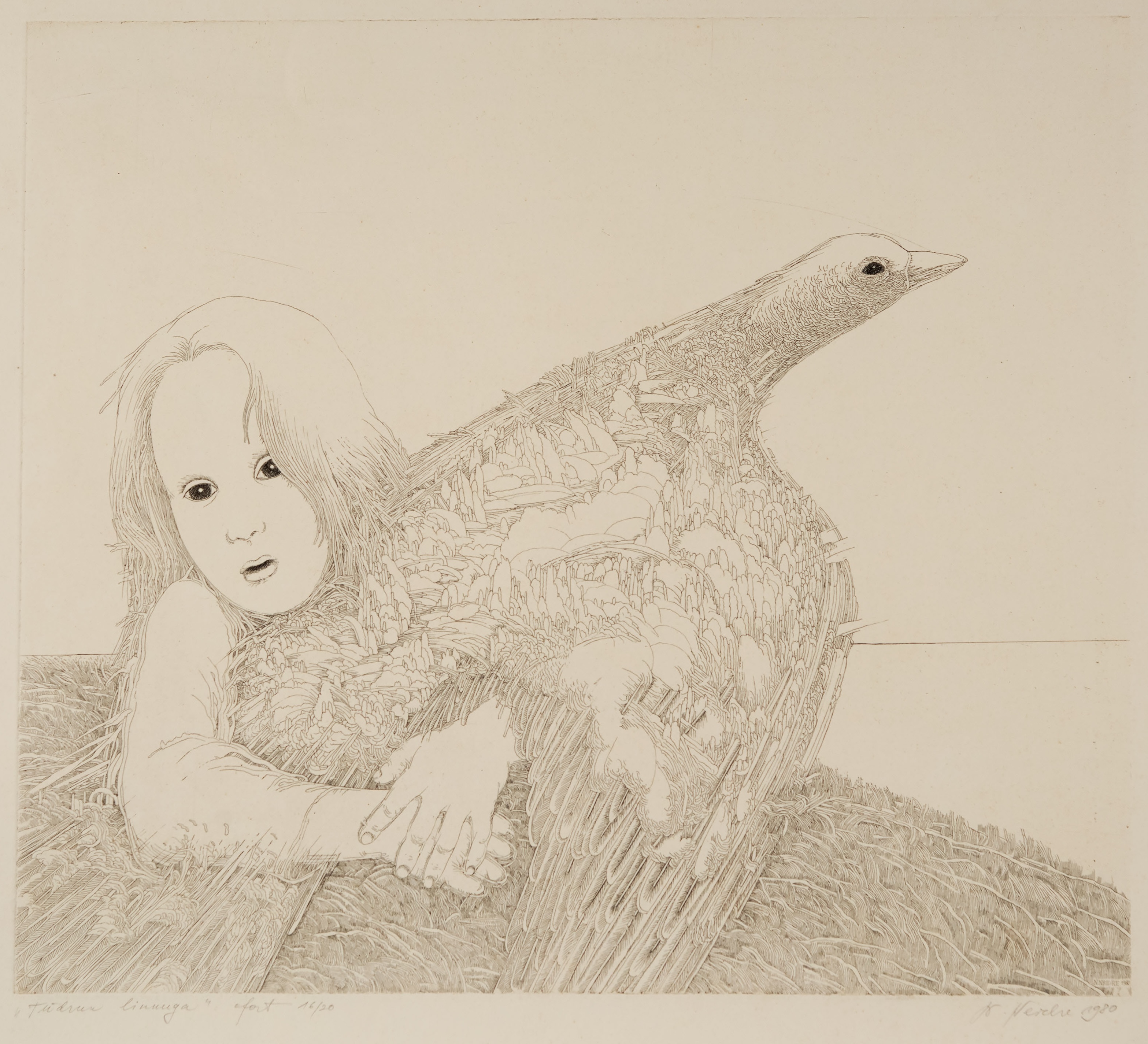
Girl with a Bird, 1980. Etching on paper, 42.8 × 49 cm (16 7/8 × 19 5/16 in.) / 55.2 × 59.7 cm (21 3/4 × 23 1/2 in.). Norton and Nancy Dodge Collection of Nonconformist Art from the Soviet Union. D08355
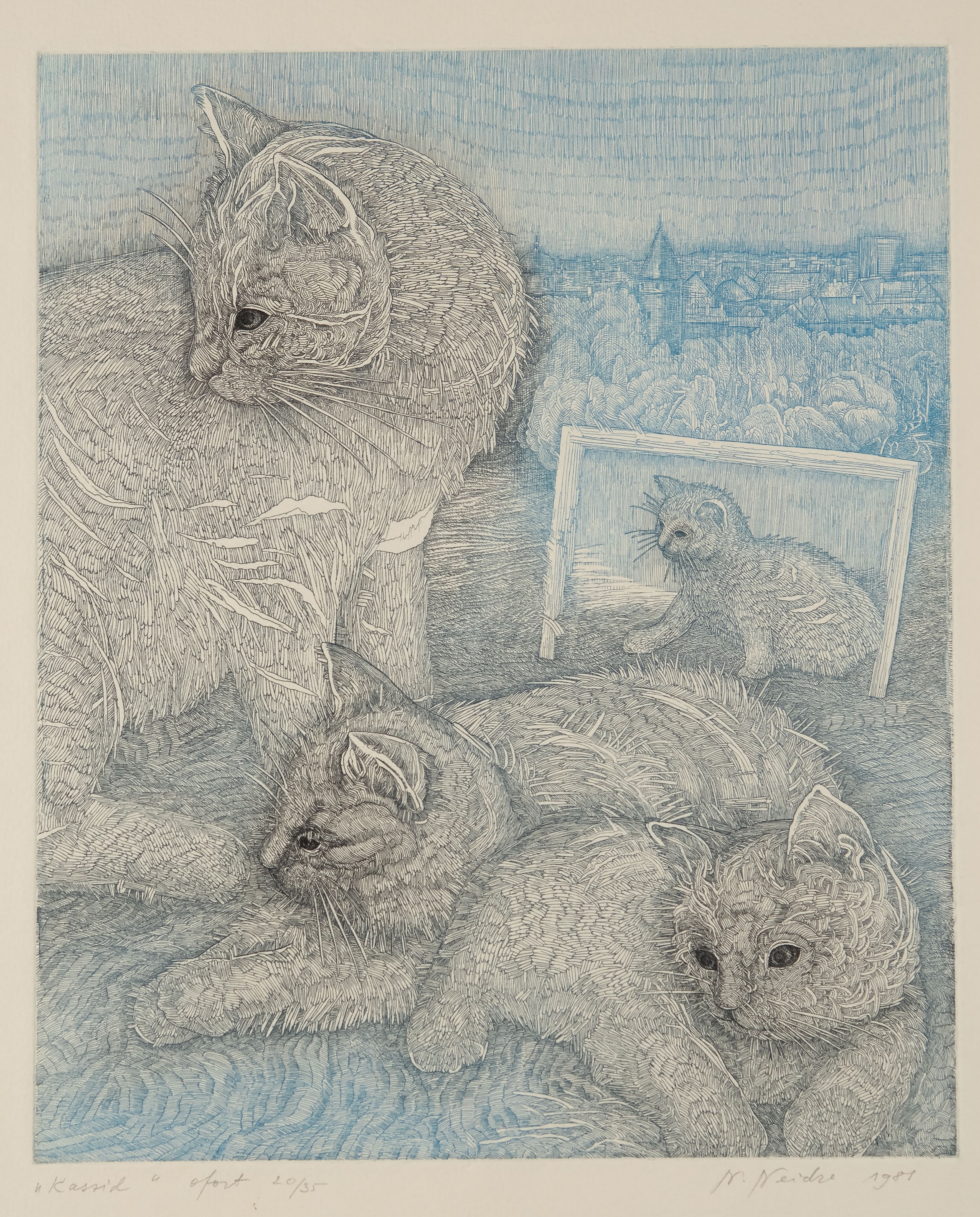
Cats, 1981. Etching on paper, 38 × 31.2 cm (14 15/16 × 12 5/16 in.) / 64.8 × 45.7 cm (25 1/2 × 18 in.). Norton and Nancy Dodge Collection of Nonconformist Art from the Soviet Union. D08356