
Mindaugas Navakas
1952 — Kaunas (Lithuania). Works in Vilnius (Lithuania)
The Lithuanian sculptor Mindaugas Navakas works in the fields of conceptual art, minimalism, and site-specific art. Born into an architect’s family, Navakas initially studied architecture before switching to sculpture. In 1977 he graduated from the Vilnius Academy of Arts, then known as the State Art Institute of the Soviet Socialist Republic of Lithuania, and subsequently taught at the academy off and on until 2015. Navakas’s artistic repertoire includes sculptures, installations, objects, artist books, photographs, photomontages, and stage designs for ballet and opera.
A little-known fact about Navakas is that in Cold War–era Vilnius he hosted the first European staging of Tim Rice and Andrew Lloyd Webber’s rock opera Jesus Christ Superstar. Despite the objection of the Ministry of Culture, the premiere took place on December 25, 1971, in a packed hall at the State Art Institute, with the rebellious Navakas performing the role of the apostle Peter. After the performance, the director, Kęstutis Antanėlis, and members of the cast were interrogated by the KGB, and some were expelled from universities. Resistance to Soviet censorship and cultural stagnation, fueled by anarchic rock music, became one of the strongest impulses shaping Navakas’s bold and radical stance. [1] For him, art became a medium for questioning, proclaiming, and effecting change.
In Soviet Lithuania freedom of assembly was restricted, and artists’ colonies could not be established officially. Nevertheless, like-minded people still gathered in private spaces, such as artists’ homes and studios. In the 1970s and ’80s, a group of sculptors, including Navakas, gained permission to build their workshops and studios in Jeruzalė, then a suburb of Vilnius. Over time they gradually turned these spaces into permanent homes, forming a kind of art colony, where they nurtured alternative cultural and political ideas. Navakas’s enthusiasm for exploring new materials and technologies, his affection for abstract sculpture, and his bold ventures into public space have inspired other sculptors, including those who gathered at the Jeruzalė Artists’ Colony, such as Petras Mazūras (b. 1949), Vladas Urbanavičius (b. 1951), and Ksenija Jaroševaitė (b. 1953). Navakas was the first sculptor in Lithuania to abandon the pedestal, democratizing the display of his objects, like Flat Quadruped (1978), Shield (1980), and Symmetrical (1981), all of which were installed in the Martynas Mažvydas Sculpture Park in Klaipėda.
In the 1980s and ’90s, Navakas was among the first Lithuanian artists to create conceptual sculptural objects that appeared provocative within the context of figurative socialist realist monuments. By opposing the artificial pomposity and monumentality of Soviet art with the aesthetic of work tools like hooks, shovels, and drills, and the grandeur of industrial machinery, Navakas conceptually redefined the very notion of monumentality. Good Steel (1993–94, collection of the artist) and other of his pieces echoed the forms of objects used in the machinery, railway, and construction industries, enlarging them many times over. Through this gesture, the artist deconstructed the stereotype of steel as a merely utilitarian material and liberated the form from its functional purpose.
In his artist book Vilnius Notebook (1981–86, Lithuanian National Art Museum), Navakas proposed a radical architecture akin to the utopian projects of Alex Mlynárčík, Milan Knížák, Tadeusz Kantor, László Rajk, and other East-Central European visionaries. Using a strategy of appropriation, the artist designed hybrids of iconic social modernist buildings from Vilnius, publishing them as a book. His drastic solutions proposed transformations of Soviet-era buildings, disrupting their physical, aesthetic, and political integrity while visualizing a new urban identity. The photomontages of Vilnius Notebook reveal an ironic, self-critical, playful, and open city with dadaist rebellion and impressive architecture at its core.
Navakas’s monumental public installations maintain a balance between dangerous and safe and instill both awe and unease. Displayed at the Ostsee-Biennale 1992 exhibition The Stone Light, held in Rostock, Germany, his fifteen-ton stone piece Axis seemed poised to roll and crush everything in its path. In 1996, at the Centre of Contemporary Art in Vilnius, he constructed an installation from asbestos-cement panels with an allusion to a medieval basilica; what appeared to be a safe haven subtly exuded a scent of death. By incorporating toxic substances into his art, Navakas suggests that beauty carries a hint of danger. After three years, this installation was presented at the Venice Biennale, an international exhibition of contemporary art. Usually Navakas’s giant metal sculptures are neither cemented to the ground nor fixed to the walls but rather ingeniously propped up in urban spaces. Depending on the venue, the artist rearranges the sculptural elements while maintaining a constant note of tension. Passersby were meant to feel intimidated and mesmerized when looking at his Three Large Reliant Sculptures, Two Large Reliant Sculptures, and Four Large Reliant Sculptures (1993–2008, MO Museum, Vilnius), which were displayed in public places in Lithuanian, Finnish, and Polish cities. Three or four metal beams, seemingly haphazardly supported by their tops and rising up to nine meters high, were possible thanks to a precisely calculated balance of physical laws and engineering. In his installation Arctium (2004) at the NEMO gallery in Eckernförde, Germany, giant silicone-impregnated burdock (genus Arctium) leaves form a kind of spatial herbarium, balancing a creepy discomfort with surreal elegance.
From a distance, some of Navakas’s works may resemble giant painterly abstractions, reminiscent of the canvases of the American abstract expressionist Barnett Newman (1905–1970). However, upon closer inspection they reveal themselves to be composed of mundane objects, such as the used tarpaulin awning of a cargo truck in From Afar (2008, collection of the artist). This piece references modernist tradition while also commenting on the endless transit that transforms cultures. Jointed I and Jointed II (2006), made from truck tarpaulins fashioned into giant luxurious baroque curtains, temporarily hung in the historicist interior of the Latvian National Museum of Art, likewise alluding to the constant migration of people, ideas, and images.
More recently, Navakas’s later works―gigantic crooked porcelain vases, reclining columns, phallic sculptures, and other ironic objects—featured in the exhibition Porcelain for the Palace (2024) at the restored seventeenth-century Sapieha Palace in Vilnius, offer a contemplation on the transformations of materials and societies. Porcelain, long used to produce elegant dining sets, is today more often employed in the manufacture of sinks, urinals, and mock-luxury objects. The system of power, prestige, and values has transformed in parallel. These site-specific works subtly evoked reflections on temporality, the ghostly past, and phantomic reality.
Throughout the last three decades of the twentieth century, Navakas became a champion of change in Lithuanian sculpture, legitimizing radical interventions and conceptual art in public spaces. In 1994 he affixed a massive rusted hook to the facade of a Stalinist-style building, the Vilnius Railway Workers Palace, now the cultural venue Kablys (“the Hook”). This work, standing in expressive opposition to the building’s imitative classicism, comments on the hypocrisy of the totalitarian regime of the Soviet Union and today’s Russia. Navakas’s The Hook has been cited by critics as an icon of change and has regularly featured in international publications discussing the transformations in Eastern Europe that began in the 1990s.
In 1995 Navakas was awarded the prestigious international Herder Prize in recognition of his promotion of the peaceful coexistence of nations, modern conceptualization of the sculptor’s art, and internationally acclaimed works that stimulate the democratic renewal of Lithuanian culture. His international recognition continues to be evidenced by his participation in exhibitions and contemporary art fairs across the world, including solo and group exhibitions, the Gwangju Biennale, and the Venice Biennale.
Laura Petrauskaitė
Notes:
1. Elona Lubytė, ed., Šlovė buvo ranka pasiekiama: Mindaugas Navakas / Glory Was at the Fingertips: Mindaugas Navakas, exh. cat. (Vilnius: Lithuanian Art Museum, 2015).
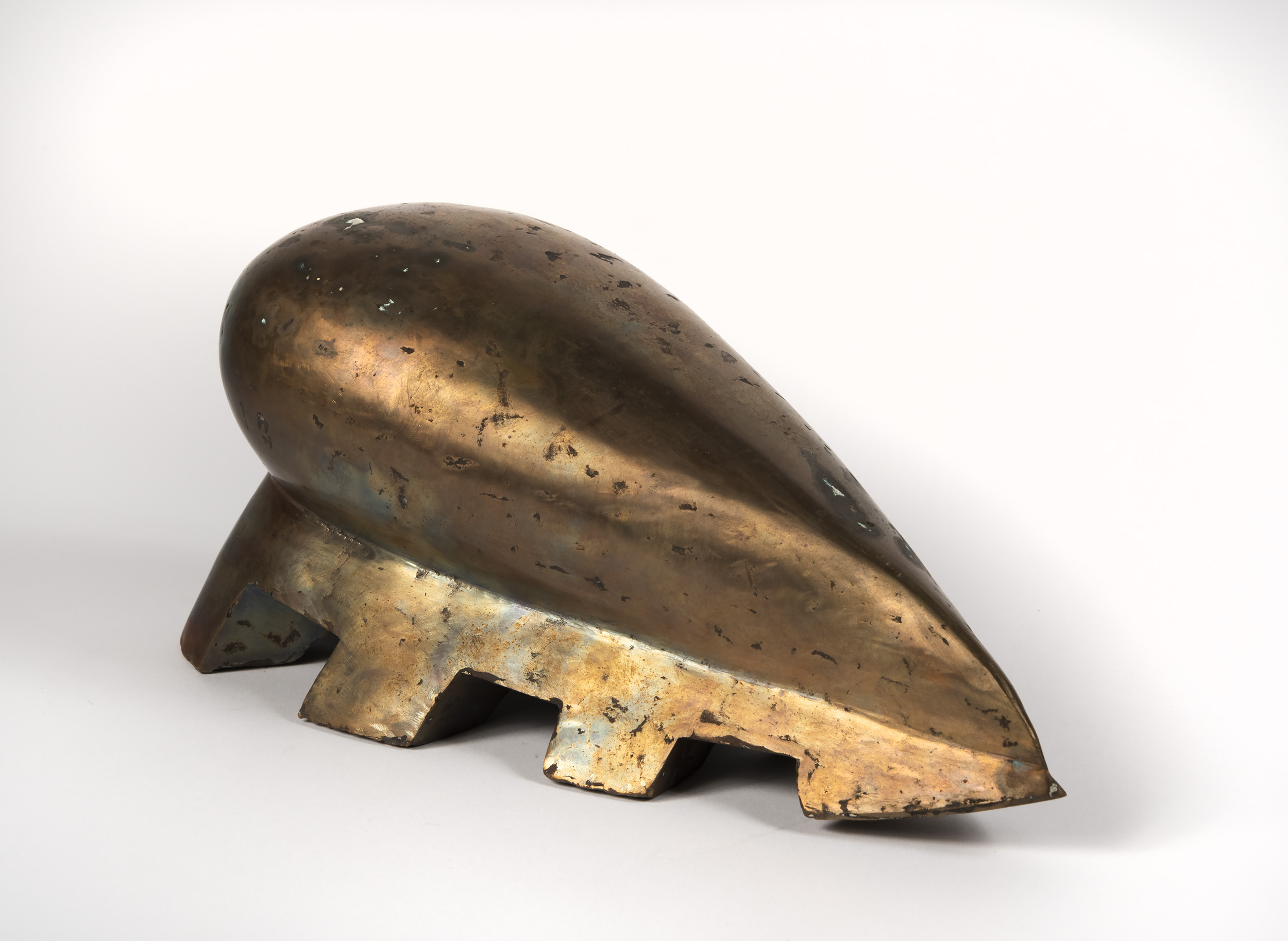
Untitled, undated. Bronze, 17 x 36 x 14 cm (6 11/16 x 14 3/16 x 5 1/2 in.). Norton and Nancy Dodge Collection of Nonconformist Art from the Soviet Union. D01442
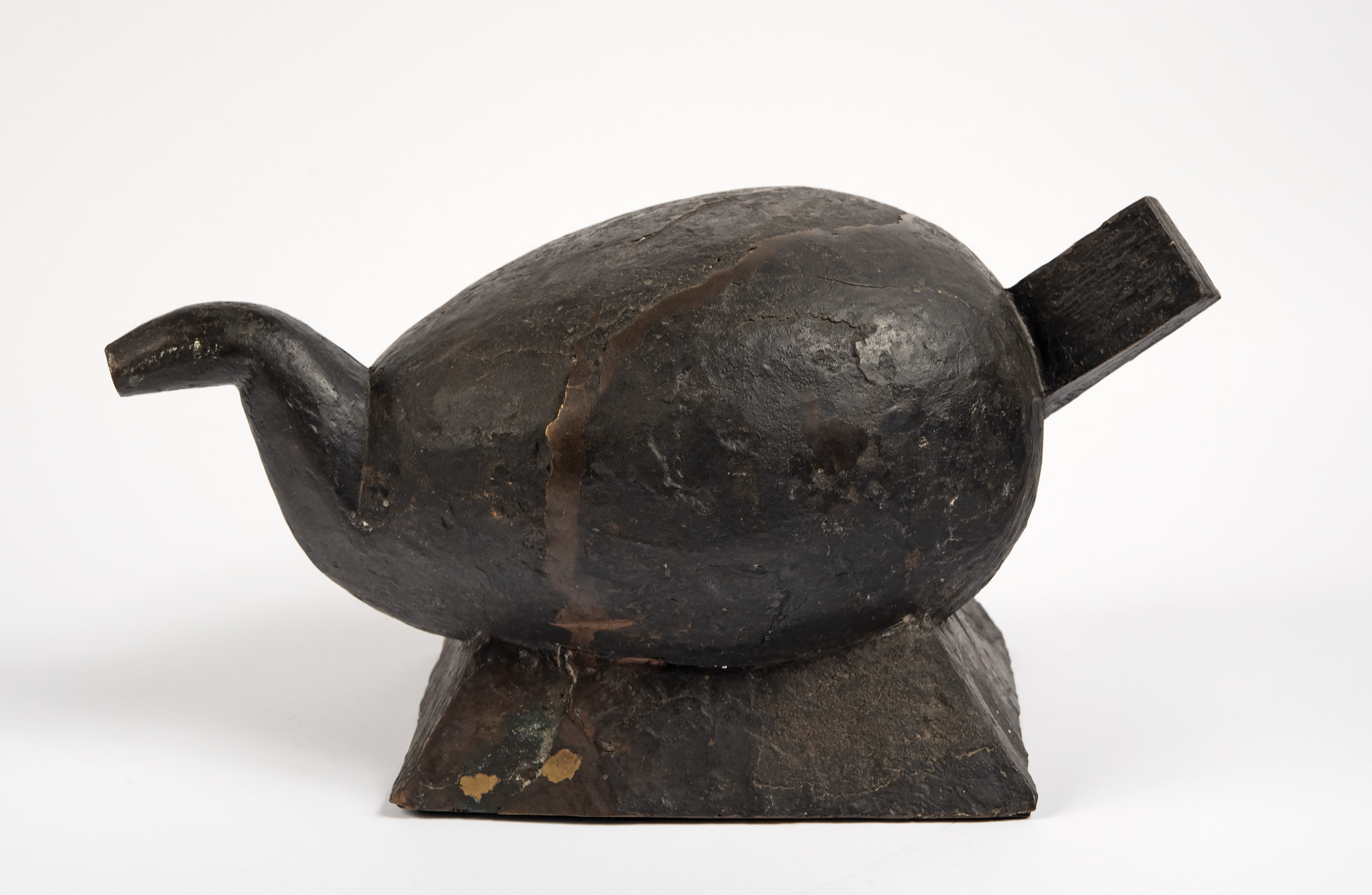
Untitled, 1984. Bronze, 20 × 40 × 18.5 cm (7 7/8 × 15 3/4 × 7 5/16 in.). Norton and Nancy Dodge Collection of Nonconformist Art from the Soviet Union. D04933
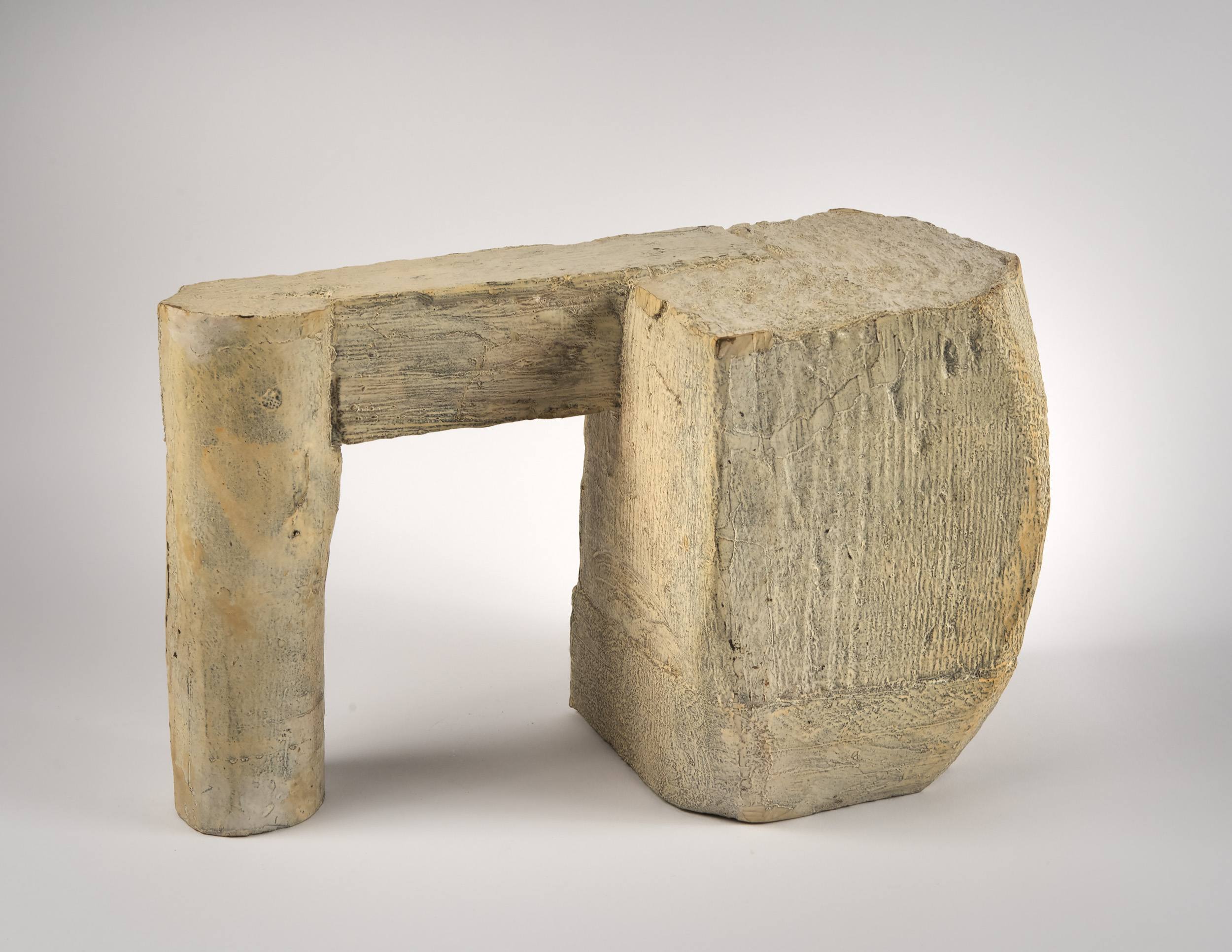
Untitled, undated. Metal and enamel, 18 x 27 x 12.5 cm (7 1/16 x 10 5/8 x 4 15/16 in.). Norton and Nancy Dodge Collection of Nonconformist Art from the Soviet Union. D01576
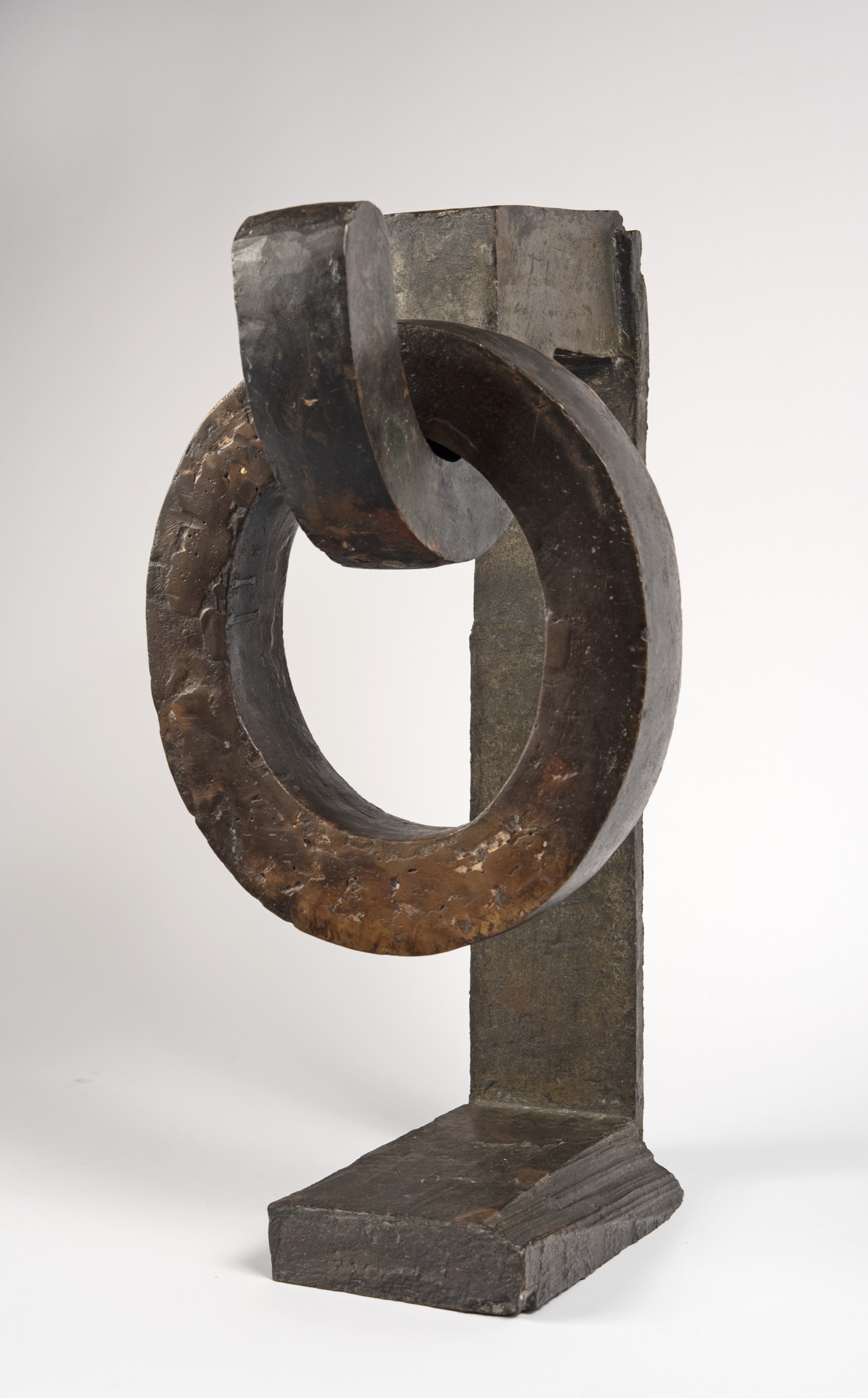
Untitled, undated. Bronze, 46.5 × 23.2 × 27 cm (18 5/16 × 9 1/8 × 10 5/8 in.). Norton and Nancy Dodge Collection of Nonconformist Art from the Soviet Union. D02120