
Marju Mutsu
1941 — Tallinn (Estonia) | 1980 — Tallinn (Estonia). Lived and worked in Tallinn (Estonia)
Marju Mutsu was a notable graphic artist active in the 1970s who worked mainly in etching but also in watercolor and ink. She studied graphics at the State Art Institute of the Estonian Soviet Socialist Republic (now the Estonian Academy of Arts) in Tallinn from 1962 to 1969. In addition to working as a freelance artist, she published aphorisms and articles on theater, sports, cinema, and the everyday life of young people in the youth magazine Noorus in the 1960s, and she wrote and illustrated books such as the children’s book Vappu ja valge hobune [Vappu and the White Horse, 1973]. From 1968 to 1970, Mutsu worked as an editor at Estonian Advertising Films and was one of the founders of the artist group ANK ’64. [1]
Although her artistic career was cut short by her untimely death (her creative period lasted only slightly longer than a decade), Mutsu’s legacy in Estonian art history is significant. Her distinctive style was already evident in her early works. Reis õhupallil [Hot-Air Balloon Ride] (1970, Art Museum of Estonia), for example, presents a playful space with a surreal activity and a very layered image. Mutsu’s surreal, allegorical works stand out for their expressive spontaneity and sensitivity, characterized by airy compositions and skillful, delicate use of the white paper surface, as in Varane hommik [Early Morning] (1970, ZAM, D19408). Her characteristic vague scribbles and abstract lines often do not relate to the subject but rather emphasize the materiality of the artwork and the graphic technique.
Characters often assume absurd poses in Mutsu’s picture space, frequently shown in distorted perspectives. She also depicted various interpersonal relationships. Earlier works such as Õhtu sõpradega II [A Night Out with Friends] (1972) and Suvi [Summer] (1974) (both Art Museum of Estonia) convey the carefree life of young people. A darker existential perspective, very characteristic of Mutsu’s art, is found in works such as Keskpäev [Midday] (1970, Art Museum of Estonia). Although her compositions seem spontaneous, Mutsu’s imagery grew out of a careful observation of humans and their relation to one another and the surrounding environment, conveying the complexity and absurdity of existence.
The artist’s approach to the female body is very distinctive in its variability. She depicted young, sweet, delicate nudes such as Tuul [Wind] (1972) and Sünnipäev [Birthday] (1972) (both Art Museum of Estonia), and Väike akt [Small Nude] (1973, ZAM, D06005), but also women of different ages in, for example, Koduhoidja [Housekeeper] (1978, ZAM, D19406) and Vanapiiga [Old Maid] (1979) (all Art Museum of Estonia). In several of her playful, emphatic, ironic etchings in the Art Museum of Estonia, Mutsu highlighted multifaceted and complex female experience: woman as a sensual human being (Tuul [Wind], 1972), woman as a mother (Madonna lapsega [Madonna with Child], 1977), women sharing intimacy with other women (Üks [One], Kaks [Two], Koos [Together], all 1972), and woman in relation to nature (Mets II [Forest II], 1974; Vesi ja maa [Water and Earth, 1970]). Madonna with Child is an interesting example of an ambivalent treatment of motherhood, expressing the psychological experience rather than the official Soviet heroic rhetoric of motherhood. In several cases Mutsu treated the stage as a metaphor for life, as in Etteaste [Performance] (1976]), and gender roles, as in Lava [Stage] (1977) (both Art Museum of Estonia). Some works, such as Kaasaeg [Modern Times] and Reostus [Pollution] (both 1979, Art Museum of Estonia), offer critical commentary on social issues.
At the end of the 1970s, Mutsu connected corporeality with existential questions, offering a very distinct depiction of the body. By deconstructing the human body, she created powerful metaphorical images such as Inimese sünd [Birth], Valikuvõimalus [Choice], and Elulugu [Life Story] (all 1979). Her fragmentation of the body and visualizion of body dynamics were exceptional in the context of late Soviet Estonian art. In Mutsu’s work, objects and people are usually positioned in an empty space and seem to be in constant motion. Her etchings are like collages, where different objects, characters, times, and spaces are brought together for a moment, only to dissolve again. Her characters and objects are seldom static; for Mutsu, identity is dynamic. Elulugu, one of her last works, may be regarded as a monumental and universal allegory of human life.
Eda Tuulberg
Photo portrait: Marju Mutsu, 1969. Courtesy SA Eesti Kunstimuuseum.
Notes:
1. The artist group ANK ’64 was formed by art students studying at the State Art Institute of the Estonian Soviet Socialist Republic in Tallinn. It was active from 1964 to 1969. The group did not follow any specific style or cultivate any specific philosophy, but they all had a keen interest in contemporary art. The central figure of the group was artist Tõnis Vint, and other members included Aili Vint (b. 1941), Jüri Arrak (1936–2022), Malle Leis (1940–2017), Marju Mutsu, and others. The name of the group has no direct meaning; the members left it open for interpretation. ANK ’64 had connections to the Moscow unofficial art scene of the time.
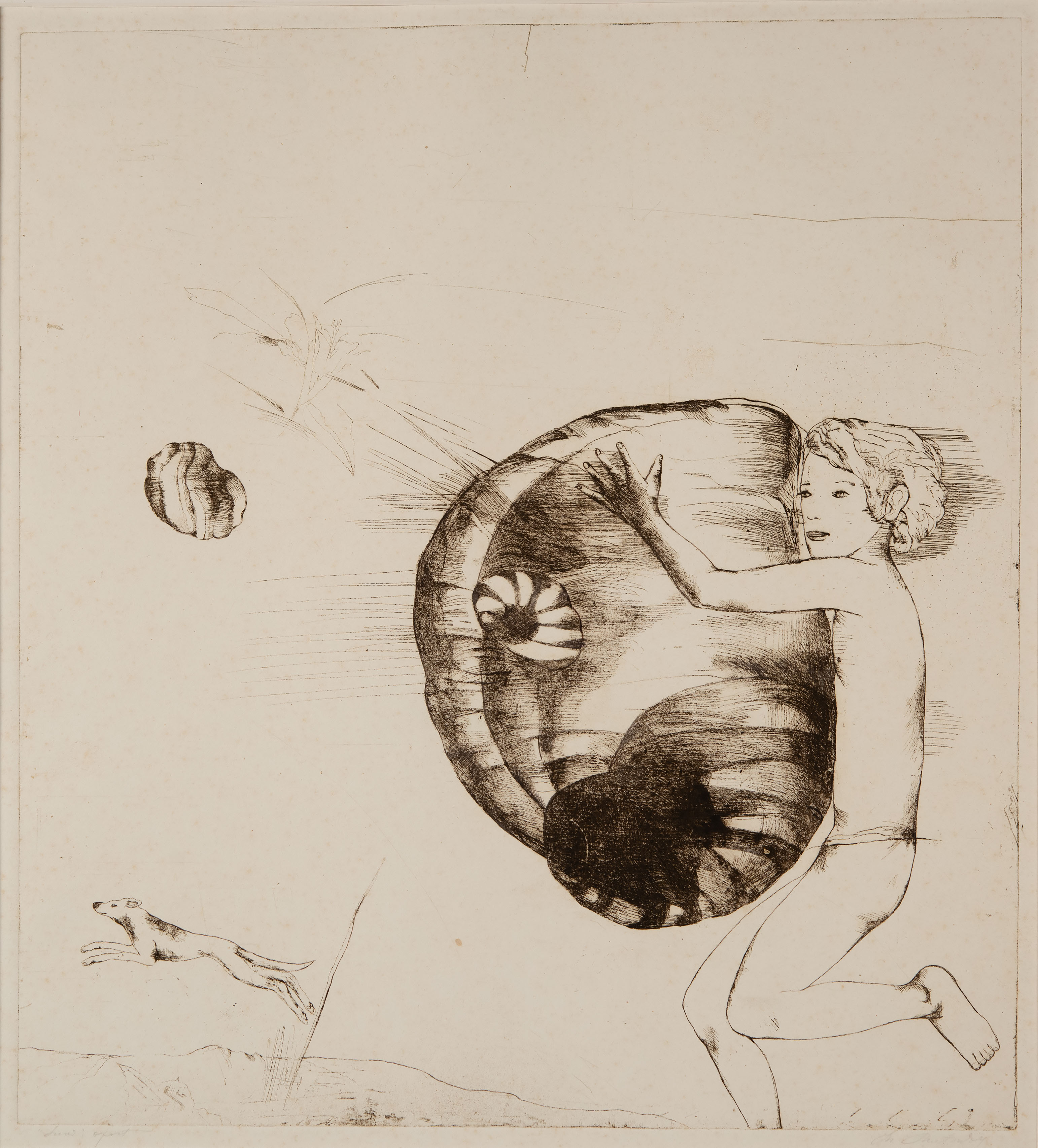
Summer, 1974. Etching on paper, 44 × 39.8 cm (17 5/16 × 15 11/16 in.) / 53 × 46.5 cm (20 7/8 × 18 5/16 in.). Norton and Nancy Dodge Collection of Nonconformist Art from the Soviet Union. D05552

Double Portrait, 1975. Etching on paper, 49 × 39.7 cm (19 5/16 × 15 5/8 in.) / 56 × 45 cm (22 1/16 × 17 11/16 in.). Norton and Nancy Dodge Collection of Nonconformist Art from the Soviet Union. D05811
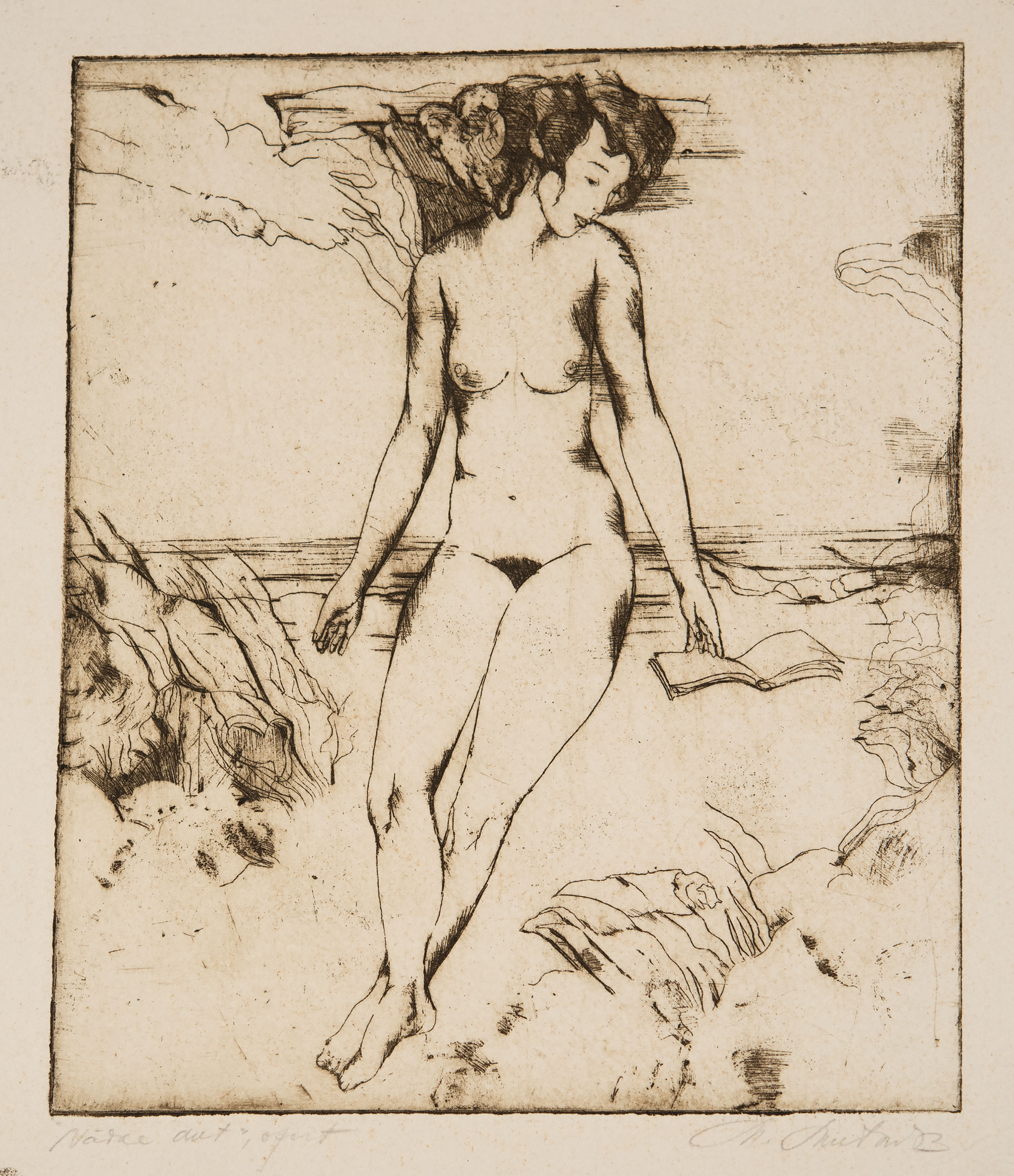
Small Nude, 1973. Etching on paper, 16.5 x 13.7 cm (6 1/2 x 5 3/8 in.) / 19.7 x 16.8 cm (7 3/4 x 6 5/8 in.). Norton and Nancy Dodge Collection of Nonconformist Art from the Soviet Union. D06005
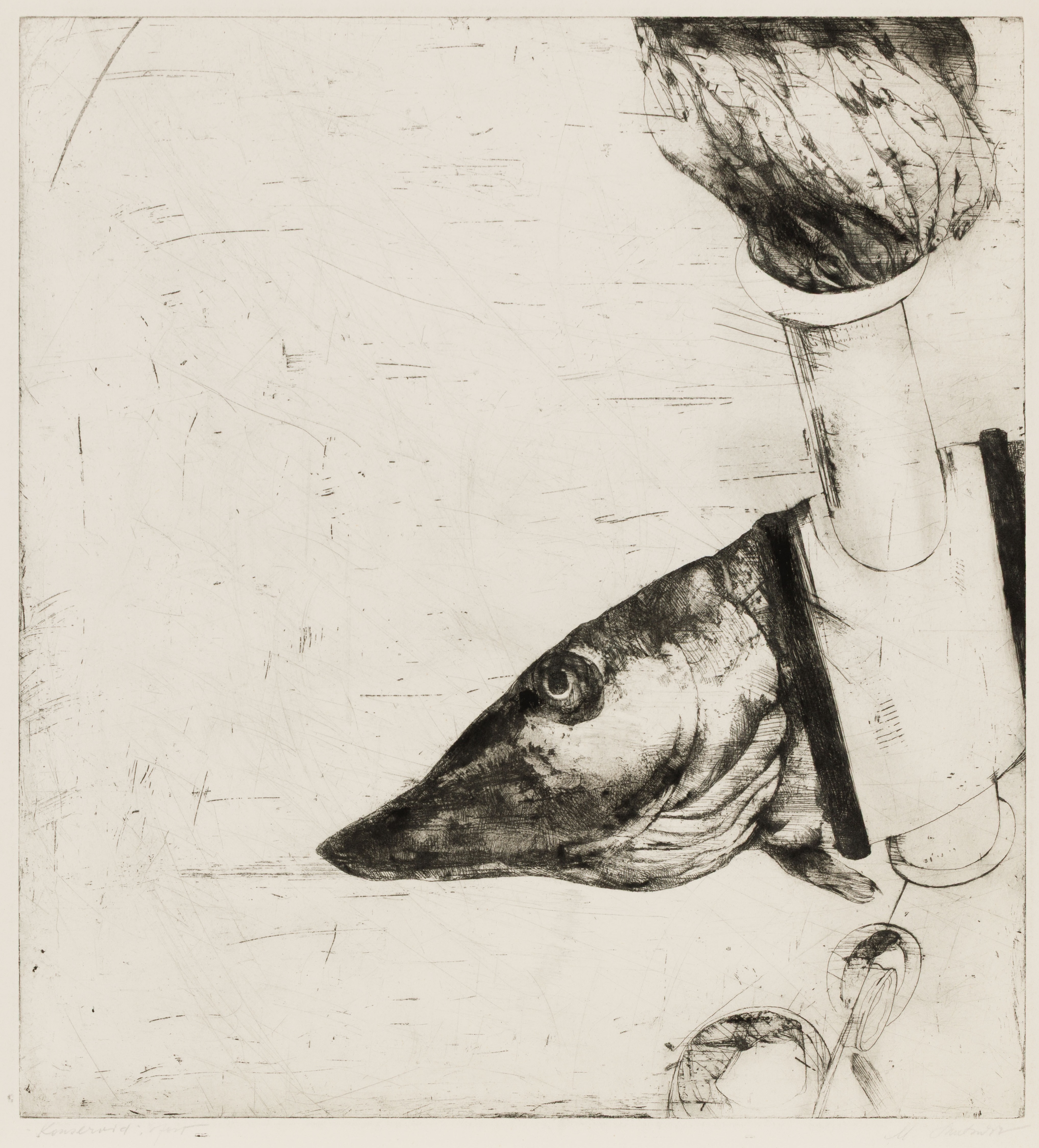
Preserves, 1977. Etching on paper, 37.6 × 34.4 cm (14 13/16 × 13 9/16 in.) / 47.2 × 44 cm (18 9/16 × 17 5/16 in.). Norton and Nancy Dodge Collection of Nonconformist Art from the Soviet Union. D19396
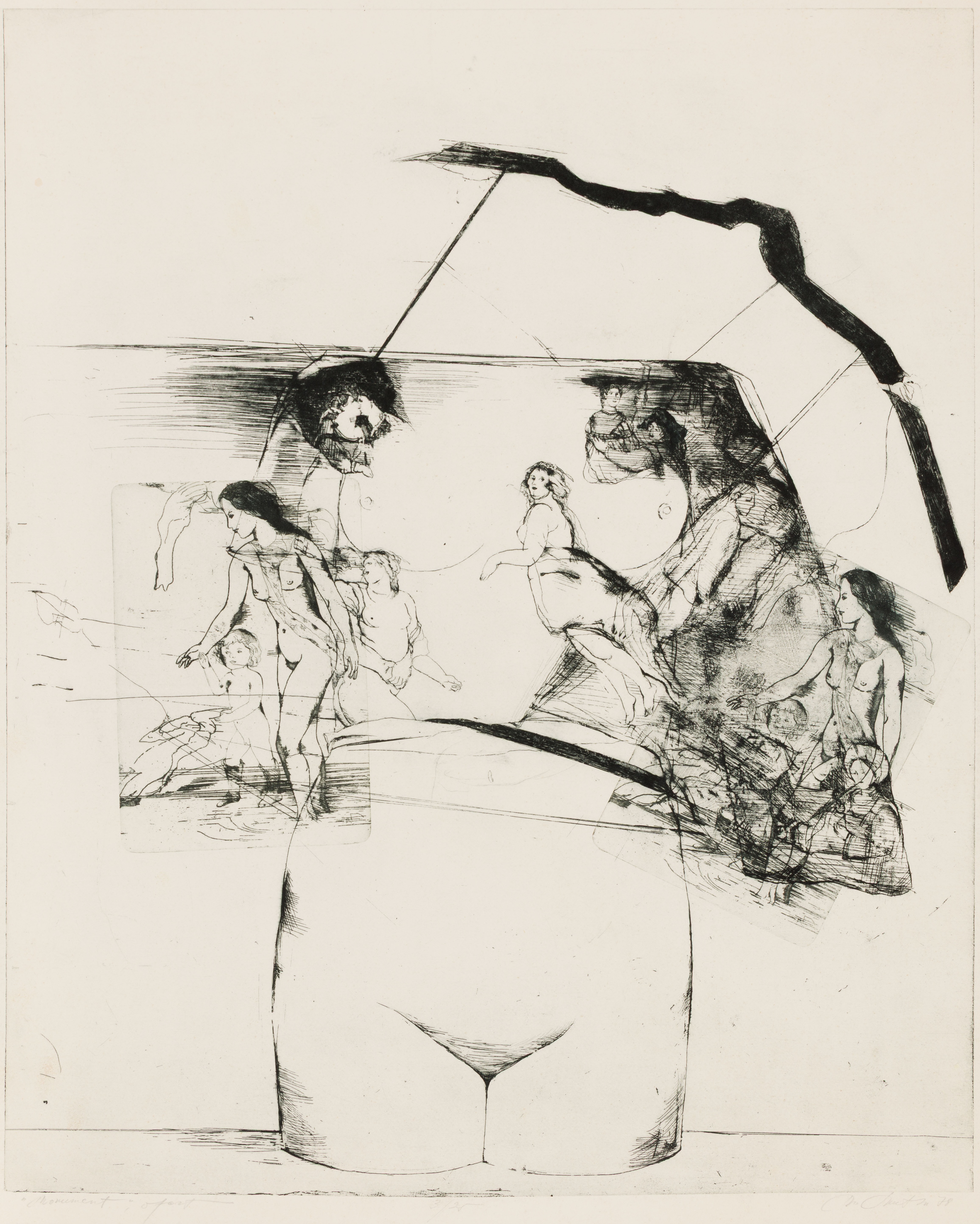
Monument, 1978. Etching on paper, 48 × 39.8 cm (18 7/8 × 15 11/16 in.) / 56 × 44.3 cm (22 1/16 × 17 7/16 in.). Norton and Nancy Dodge Collection of Nonconformist Art from the Soviet Union. D19405
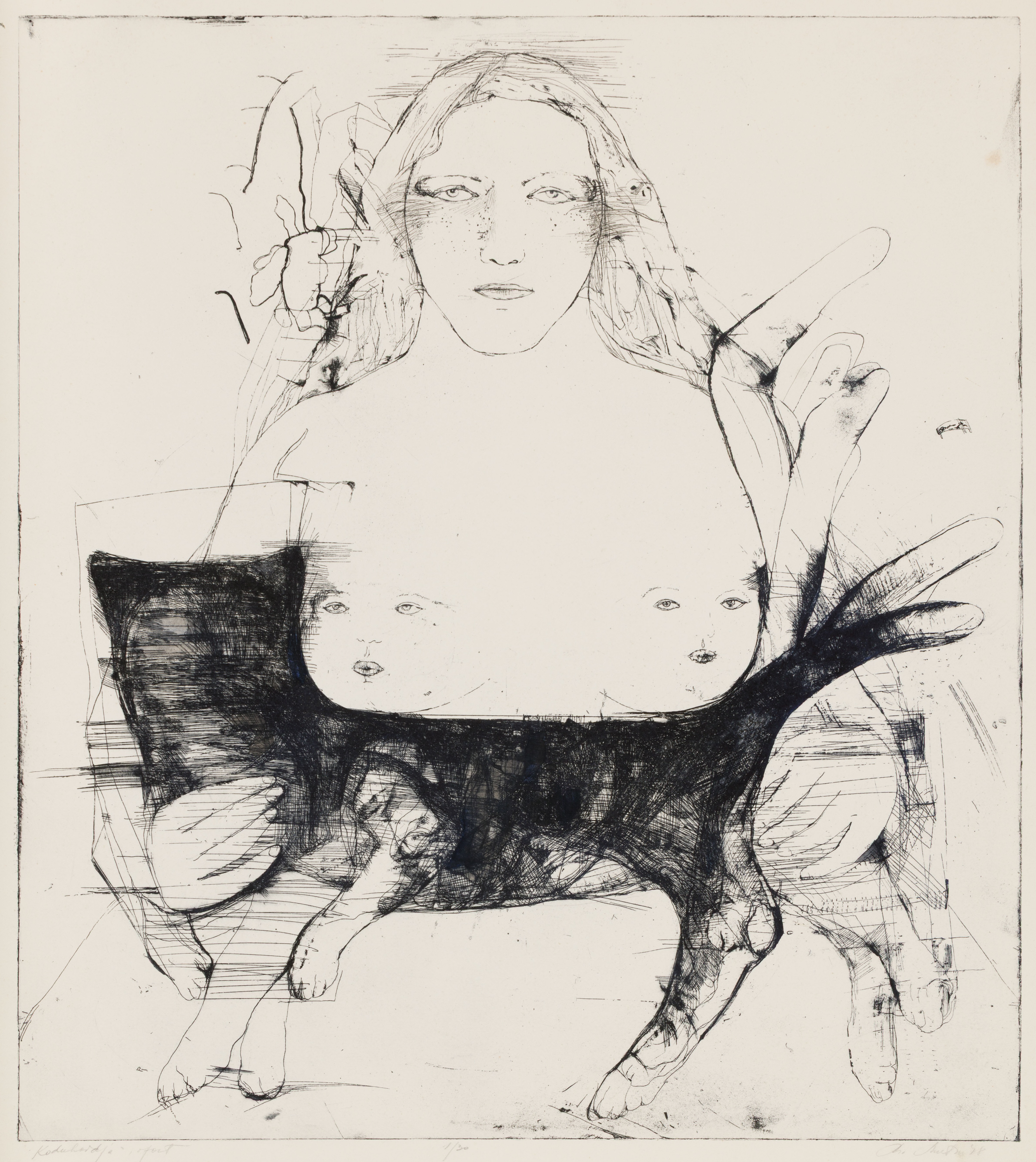
Housekeeper, 1978. Etching on paper, 44.5 × 39.8 cm (17 1/2 × 15 11/16 in.) / 51.8 × 42.4 cm (20 3/8 × 16 11/16 in.). Norton and Nancy Dodge Collection of Nonconformist Art from the Soviet Union. D19406
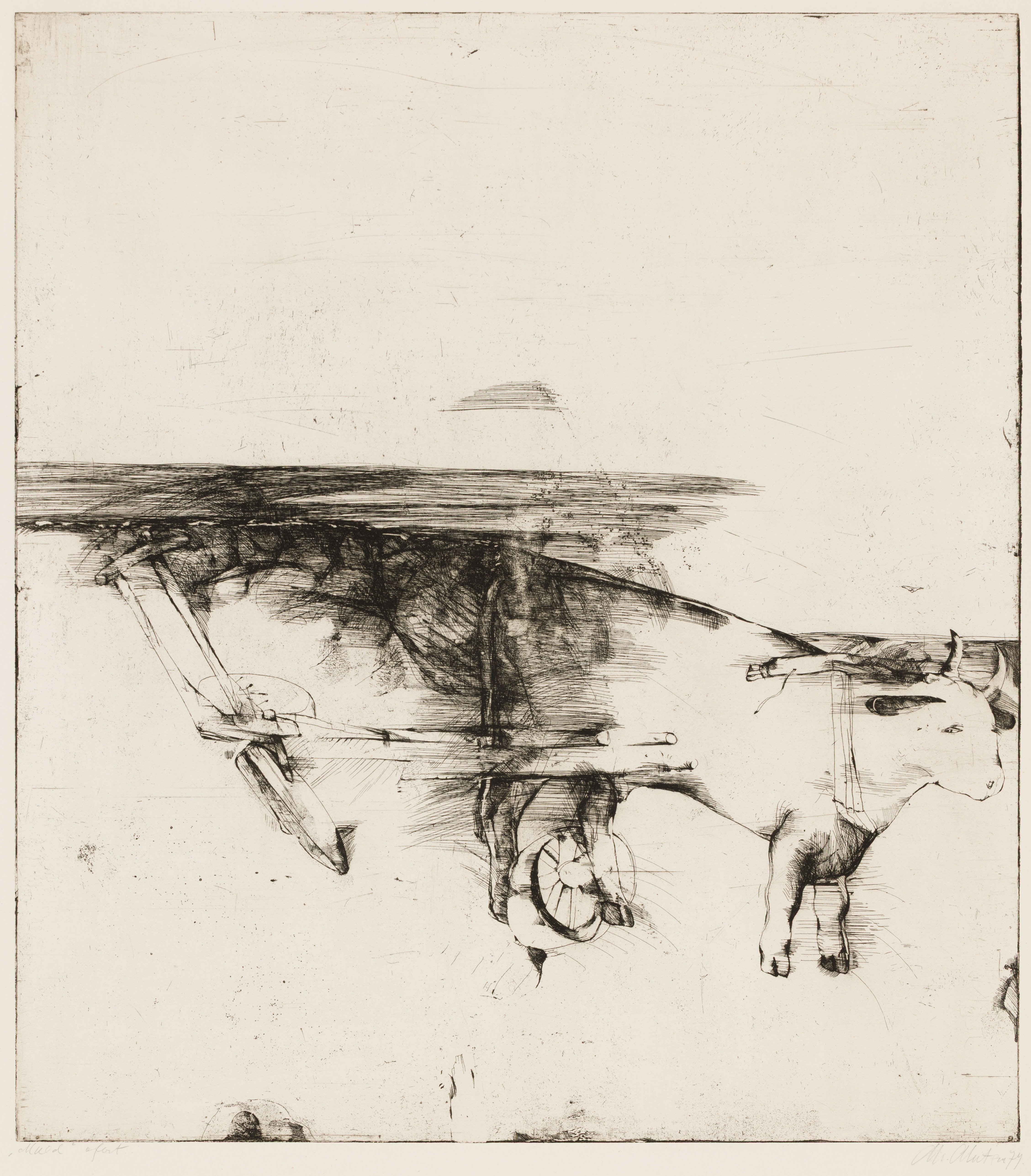
Earth, 1974. Etching on paper, 49.2 × 43.6 cm (19 3/8 × 17 3/16 in.) / 62.3 × 51.5 cm (24 1/2 × 20 1/4 in.). Norton and Nancy Dodge Collection of Nonconformist Art from the Soviet Union. D19407
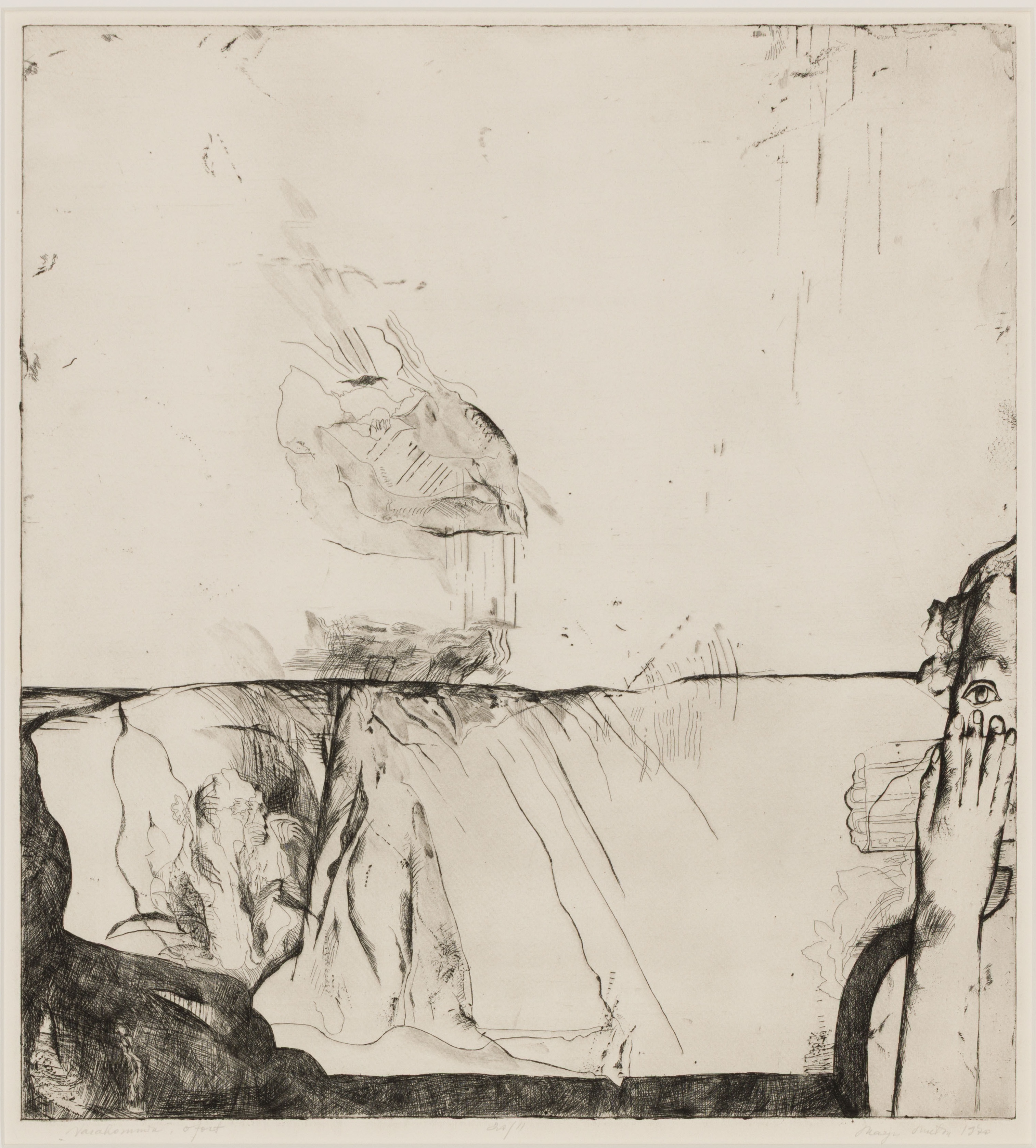
Early Morning, 1970. Etching on paper, 35.6 × 32.4 cm (14 × 12 3/4 in.) / 44.4 × 40.9 cm (17 1/2 × 16 1/8 in.). Norton and Nancy Dodge Collection of Nonconformist Art from the Soviet Union. D19408