
Lolita Zikmane
1941 — Riga (Latvia). Worked in Riga (Latvia); currently works in Jelgava (Latvia)
When Lolita Zikmane was very young, after World War II and under harsh conditions, her family moved from Riga to the Latvian town of Talsi. She attended Pastende Elementary School, and in 1955 she joined the Department of Decorative Sculpture of Riga Secondary School of Applied Arts (since 2016, the Vocational Education and Training Excellence Center, Riga Design and Art School). She then enrolled in the Graphics Department of the Latvian SSR State Academy of Art (today the Art Academy of Latvia), where under Arturs Apinis (1904–1975) in 1965 she defended her thesis, the etching cycle Seasons (Spring, Summer, Autumn, Winter), which was reproduced in the magazine Māksla (Art). She has participated in exhibitions since 1962. Since 1970 she has been a member of the Soviet Artists’ Union of Latvia. She has lived in Jelgava since 1966, and in 2009 she joined the Jelgava Artists’ Society.
The thesis already revealed Zikmane’s characteristically poetic observation of life and the theme of interaction between humans and nature, achieving nuanced tonal transitions through the technique of multistage etching. In a single work, she made multiple, precise intaglio markings on the etching plate, one on top of the other, thus achieving a silvery flicker of the surface, which would become a hallmark of her artistic style.
In the 1960s, Zikmane and her contemporaries Artūrs Nikitins (1936–2022), Aleksandrs Dembo (1931–1999), Inārs Helmuts (1934), Malda Muižule (1937–2022), Māra Rikmane (b. 1939), Baņuta Ancāne (1941–2024), Valdis Villerušs (b. 1942), and Maija Dragūne (b. 1945) turned to works of poetically imaginative expression, which contrasted sharply with the dogmas of socialist realism imposed by Soviet ideology. They sought to avoid harsh Soviet everyday life, creating their own artistic world in which a somewhat surreal and paradoxical system of images and composition reigns; perhaps this kind of escape from reality was also necessary for a society that highly appreciated the work of these artists.
Zikmane’s primary technique became etching. She conducted experiments that resulted in a unique style characterized by a multilayered flickering of stripes and lines, giving the compositions atmosphere and endowing spatiality to images and objects. Perhaps it was the initial studies in the Department of Decorative Sculpture in Riga Secondary School of Applied Arts that strengthened the artist’s spatial thinking on the two-dimensional plane of graphics. Although the works are mostly black-and-white, in some compositions color is seemingly applied as a nuanced symbolic image, sometimes as a line or band, or as a lighter tone on the edges of the sheet. She has also worked in colored linocut and lithography (Self-Portrait, 1968; Pages I–II, 1983). While those techniques were popular among her fellow graphic artists in the 1970s, for Zikmane they were more of a fleeting passion, an episode in her creative development and the search for new artistic forms.
The simple structure of Zikmane’s compositions is deceptive, as soon the nuances and details reveal that they are more complicated. For example, in the etching Bush (1980, ZAM, D02451), the branches of the bush are filled with small birds—however, a closer look reveals tiny human children, while the shape of the nest beneath the bush has outlines of the human heart.
For the artist, universal human values are indivisible from the conservation of nature, which reveals a symbolic and deeply philosophical outlook. She uses specific characters and symbols, which are repeated throughout the work and form their own personal system. She frequently includes the bird, symbolizing life, soul, and the passage of time. Other vital symbols of life in the artist’s system are trees, branches, and leaves, which in seemingly harmonious compositions contain internal tension and drama (Branch Sawers, 1976; the series Leaf, 1983).
The image of the house is also important (In Memory of the Old House, 1975; Wall, 1981, ZAM, D03981), which even where it is shown fragmentarily, carries a deep, multilayered message. This was a counterpoint to standard Soviet dogma and its cult of new construction; it points to some bygone time and people who have departed this world but live on in fleeting memories, as in a dream in the depths of the subconscious. In the Soviet years, ruined country houses were a common sight, abandoned after their hosts were killed, were exiled to Siberia, or emigrated abroad; no one was allowed to talk about this out loud—it was a pain that remained unspoken. But in a veiled way, artists began to address it. Zikmane’s works took the form of lines of poetry; under the prevailing political system, this allowed her friends and viewers to perceive the true message while protecting her from persecution.
She has consistently demonstrated her abilities both in etching, which best reveals her transitions of nuanced halftones, as well as in semantically and philosophically multilayered compositions. One of her most iconic works is The Spring: White Locomotive (1977, ZAM, D02653), which represents a contrast between a steam locomotive as a symbol of progress and industry and nature’s fragile and endangered environment. These forebodings of ecological catastrophe seem rather like a symbolically encoded message. As if in a surreal vision or dream, a large, white steam locomotive has entered a swampy landscape without rails, while around it, large, rare forest birds, turkeys, grouse, and capercaillies, wander about. These birds can also be seen in other works as unique, protected life forms. The white locomotive seems to have stood there unnoticed for some time in the winter snow, and only with the onset of the thaw is it revealed. In the foreground, a young girl’s nude back is visible. Zikmane has also used the image of a man with his back to the viewer in other compositions, creating a mysterious puzzle. The work has won awards and has been reproduced in several publications.
The image of the locomotive can also be seen in the aptly named The Grotesque (1975, ZAM, D06903); the figure of a railway and a man with a dog-sized rhinoceros seems tiny in front of the machine’s hypertrophied wheels. Progress cannot be stopped! On the one hand, this could be seen as an homage to Soviet technical achievements, but on the other hand, it is perhaps a hidden reminder of the memories smoldering in everyone’s minds of the many thousands of fellow human beings tragically deported to Siberia by train. Spring—a thaw after the winter freeze—is associated with the rule of Nikita Khrushchev (1894–1971) after the death of Stalin (1878–1953). Khrushchev’s Thaw brought a certain loosening of the repressive regime. The two works discussed above are reminders of the elephant in the room, acute problems that society pretended not to see and the feelings of the people of that time living under Soviet occupation.
In addition to exhibiting her graphic art, Zikmane has also worked in the field of graphic design, creating posters and postcards that continue the theme of nature protection as well as for various festivals and sporting events. In her poster art, Zikmane uses a much more laconic form, where color is also important (Clean Waters Near Farms! 1975; June 1—International Day for the Protection of Children, 1968; Untitled, or A Poster Dedicated to Peace Policy [a white dove of peace formed by the white silhouettes of many tiny human beings], 1970; Everyone to the Starting Line! 1963).
Zikmane has also etched ex libris (bookplates) and miniature graphics, enjoying success in the Riga Miniature Graphics Triennial (Leaf II, 1983; Leaf V, 1983). She has also achieved international success with her book illustrations. For example, her illustrations for the fairy tales of the outstanding Latvian writer Kārlis Skalbe (1879–1945), the imagery of which organically complements Zikmane’s other works (The Mermaid, How I Journeyed to See the Northern Maidens, 1981), are recognized not only as illustrations for a literary work, but as independent works of art. Her illustrations for the fairy-tale play The Blue Bird (1908) by the Belgian writer Maurice Maeterlinck (1862–1949) are also noteworthy.
In addition to graphics, Zikmane also began painting early in her career, and in recent years she has completely devoted herself to the medium. She employs oil paints, depicting both landscapes and still lifes where simple objects such as a closet or a sweater in the sand continue the poetics characteristic of her graphics. The thematic and reflective, introspective aspects of the artist’s works were eloquently expressed by the title of her solo exhibition Everything Is Everything, which took place in 2018 at the Kuldīga District Museum.
Zikmane has had many solo exhibitions in Latvia—in Jelgava (1984, 1997, 1998, 1999, 2001, 2016), Liepāja, (1984), Madona (1984), Kuldīga (1987, together with Ritma Zikmane-Lagzdiņa), Ventspils (1988), Gallery of the Artists’ Union of Latvia (2011), Jelgava Trinity Church Tower (2015, together with Ritma Lagzdiņa and Gundega Zikmane)—as well as abroad in Vilnius, Lithuania (1978), Tallinn, Estonia (1981), Šiauliai, Lithuania (1983), Stockholm, Sweden (1989), and Santa Fe, NM, United States (1991). Her most significant awards have been at the I Tallinn Graphic Art Triennial (1968), the IV Tallinn Graphic Art Triennial (1977), the VI International Graphic Art Triennial Intergraphics in Berlin, GDR (1980), the I Baltic Republics Book Art Triennial Vilnius–81 (1981), and the I Riga Miniature Graphics Triennial (1983).
Eva Rotčenkova
Translated from Latvian by Philip Birzulis
Photo portrait: Lolita Zikmane, 2020. Photographer Elīza Zikmane. Artist’s personal archive
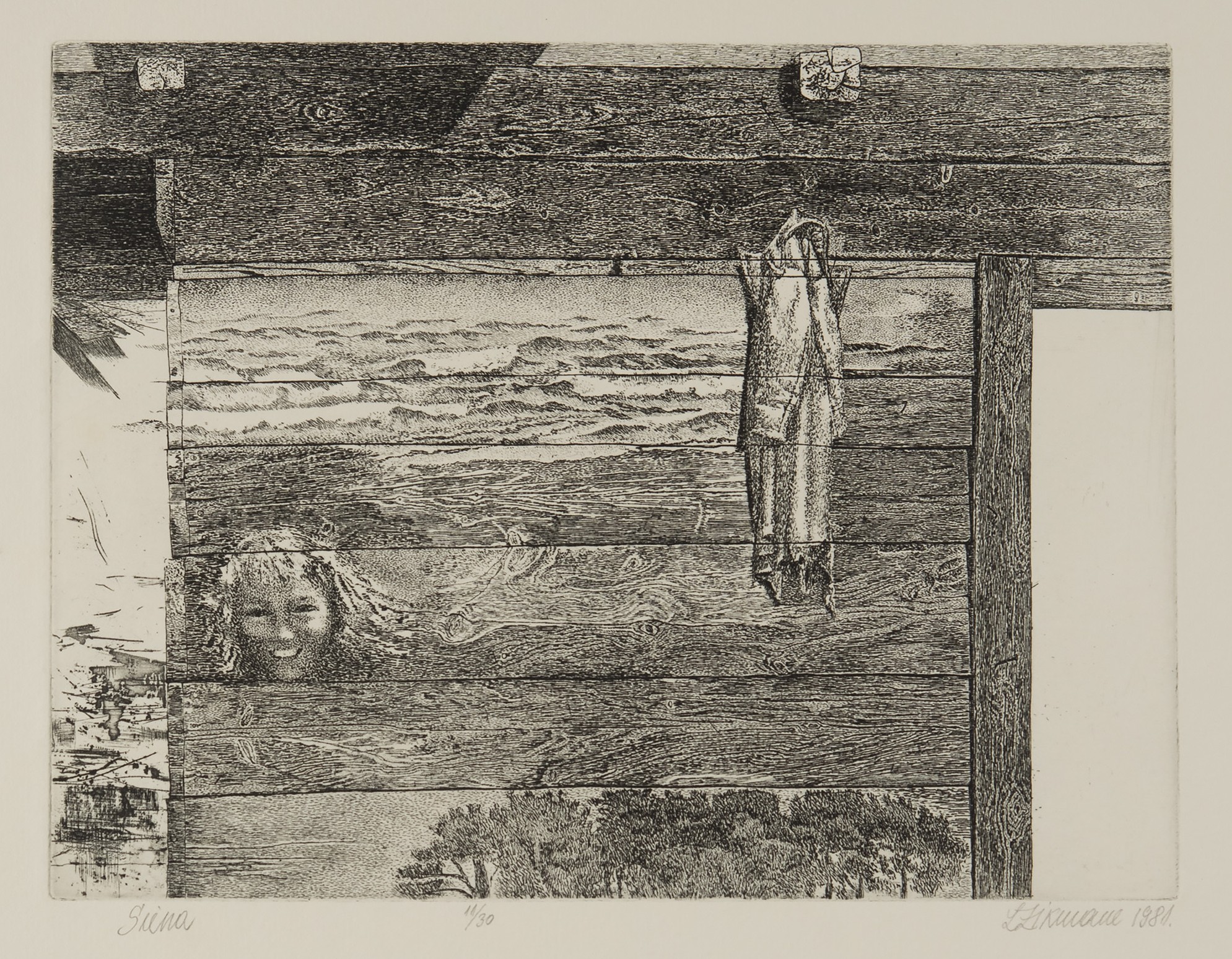
Wall, 1981. Etching on paper, 24.4 × 32.3 cm (9 5/8 × 12 11/16 in.). Norton and Nancy Dodge Collection of Nonconformist Art from the Soviet Union. D03981
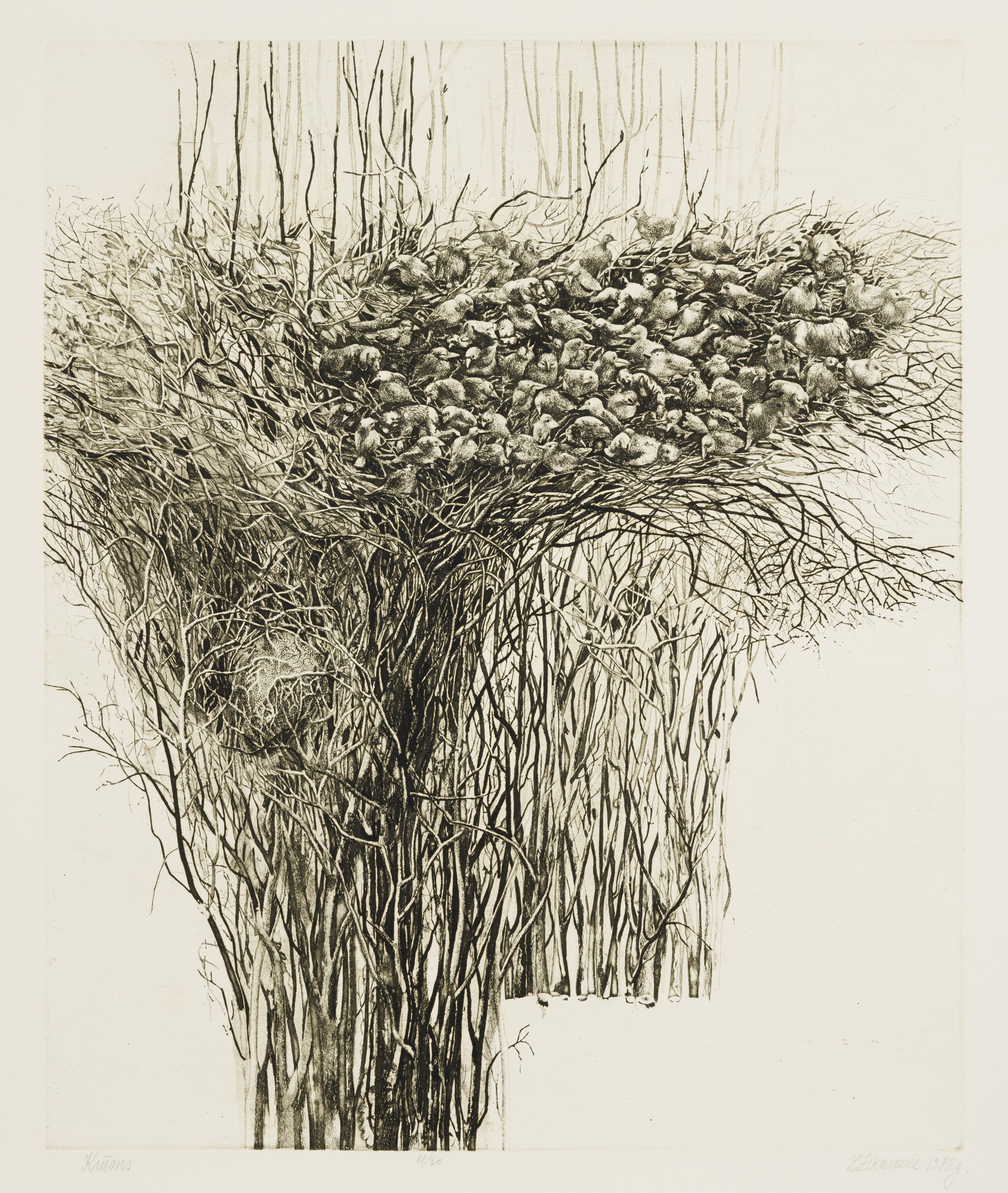
Bush, 1980. Etching and aquatint on paper, 55.5 × 46 cm (21 7/8 × 18 1/8 in.). Norton and Nancy Dodge Collection of Nonconformist Art from the Soviet Union. D02451
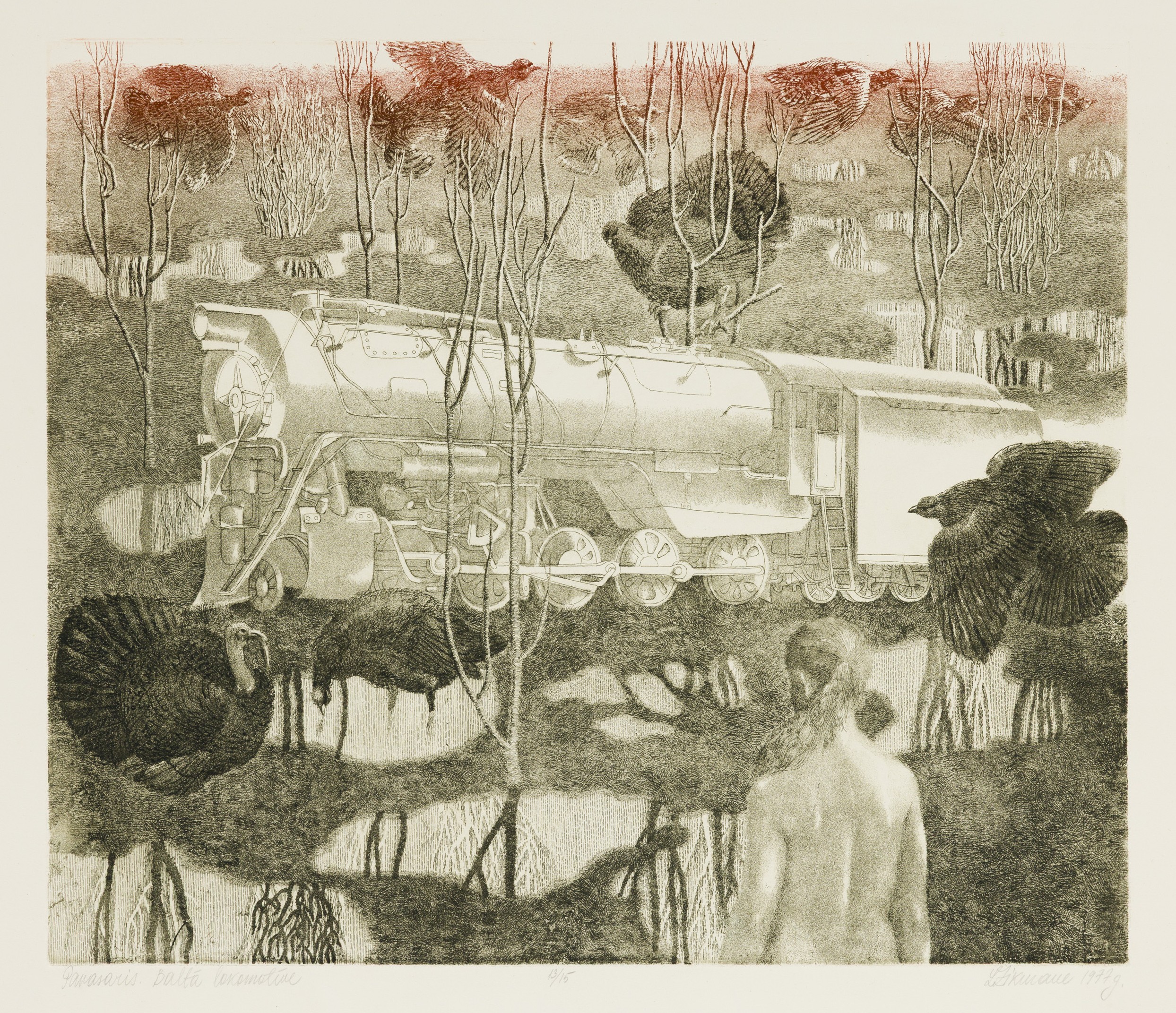
Spring: White Locomotive, 1977. Etching and aquatint on paper, 42.6 × 49.9 cm (16 3/4 × 19 5/8 in.). Norton and Nancy Dodge Collection of Nonconformist Art from the Soviet Union. D02653
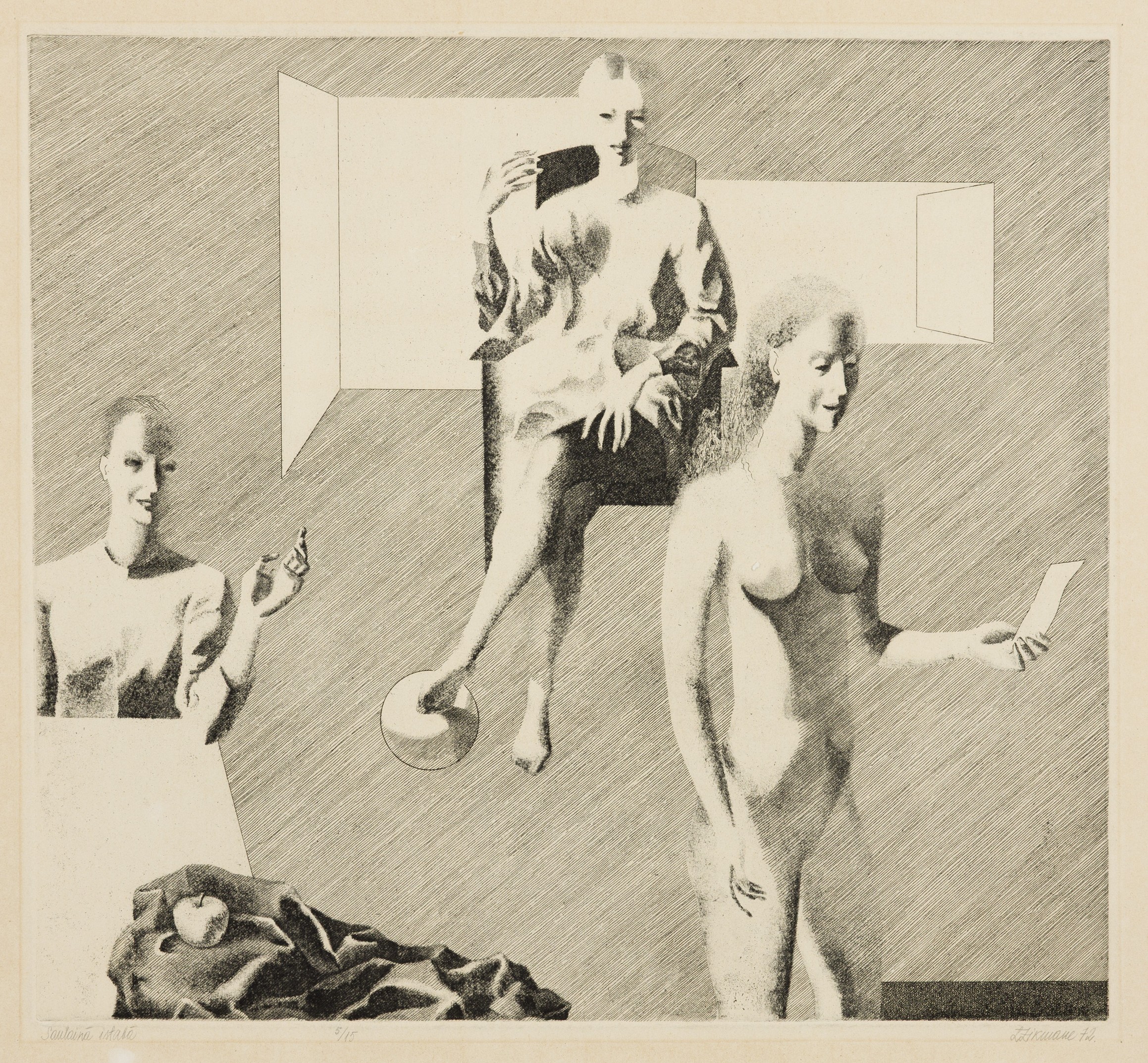
Sunlit Room, 1972. Etching on paper, 44.8 × 49 cm (17 5/8 × 19 5/16 in.). Norton and Nancy Dodge Collection of Nonconformist Art from the Soviet Union. D03074
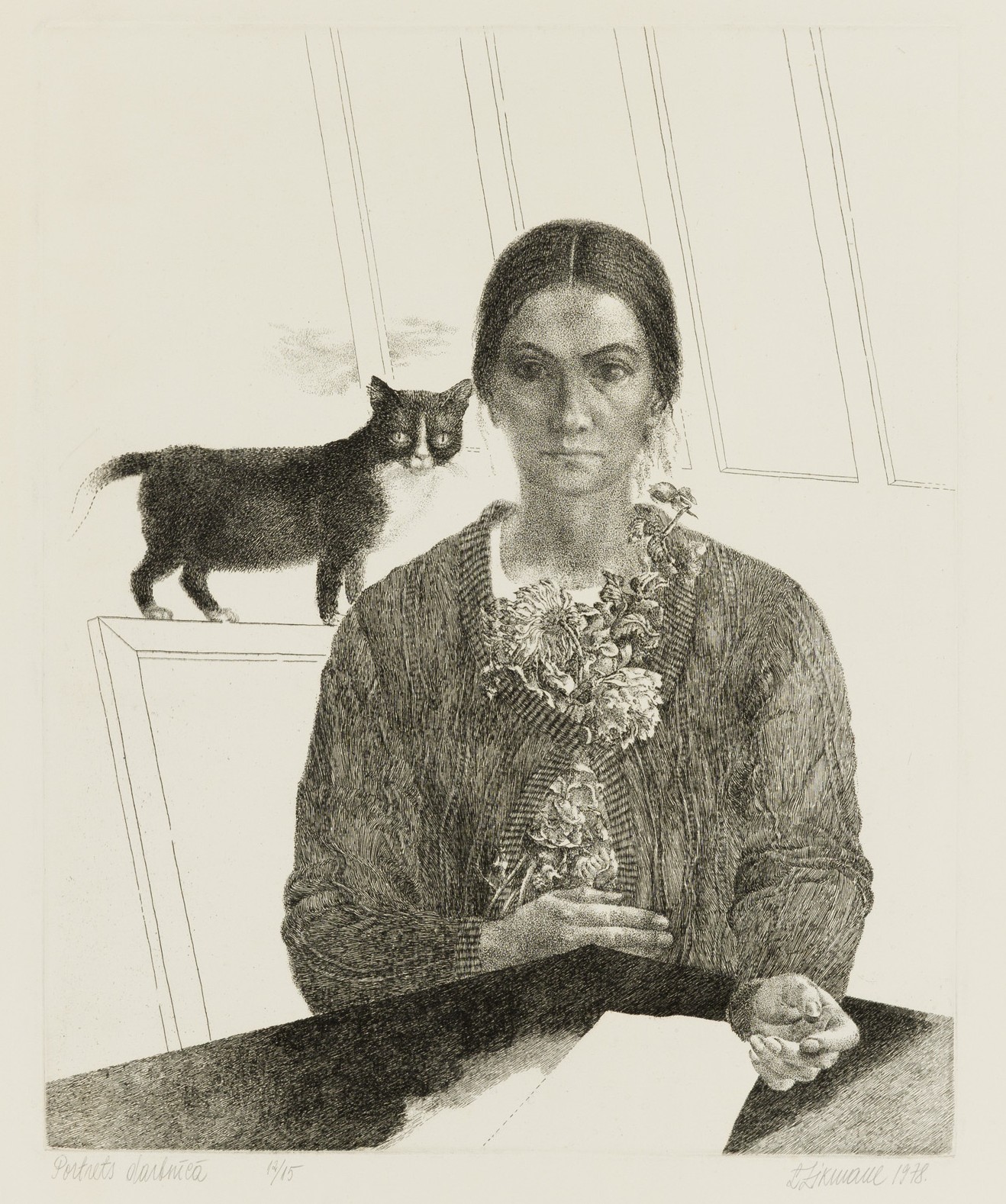
Self-Portrait in Studio, 1978. Etching on paper, 40.5 × 32.5 cm (15 15/16 × 12 13/16 in.). Norton and Nancy Dodge Collection of Nonconformist Art from the Soviet Union. D03096
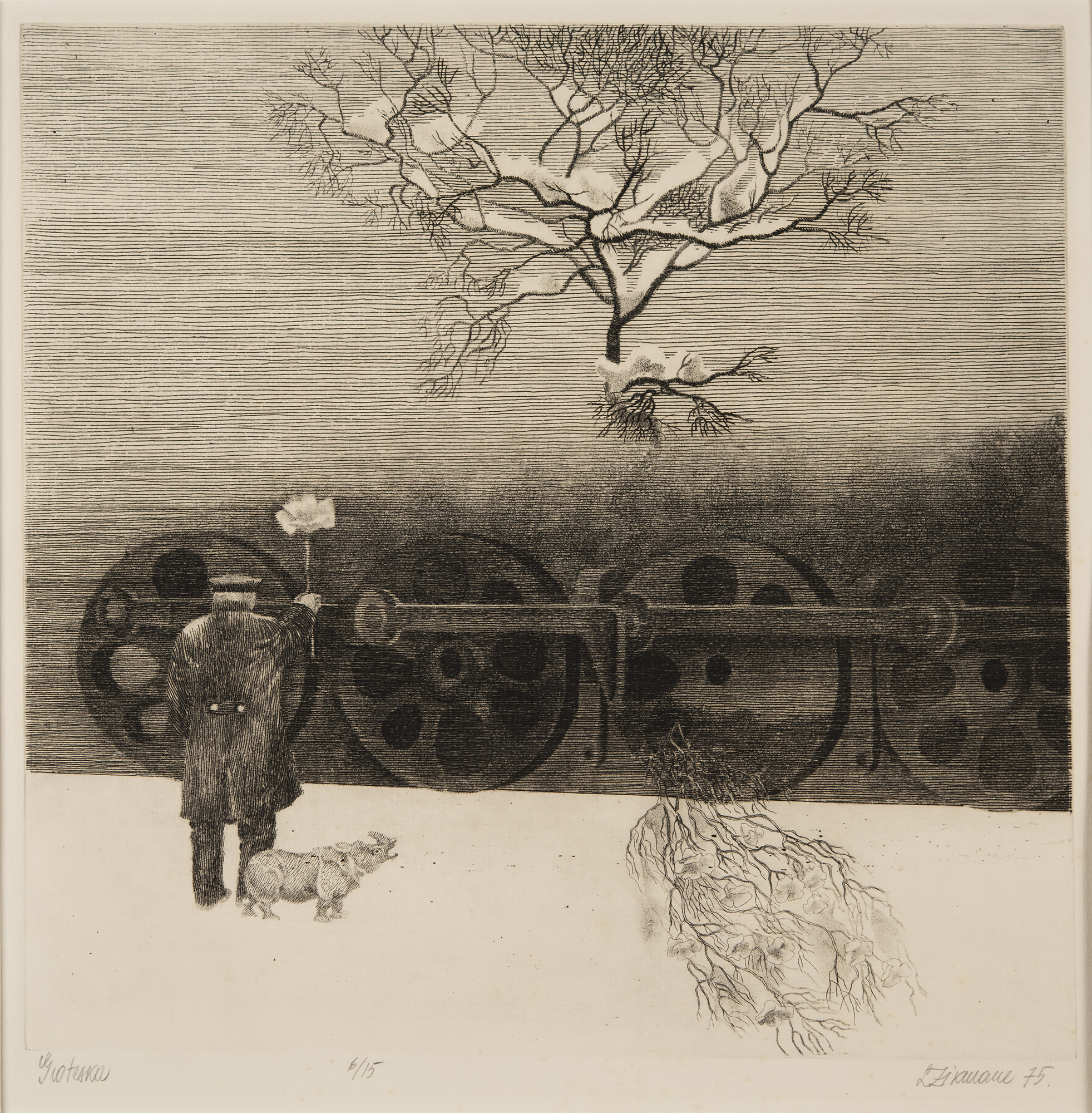
The Grotesque, 1975. Etching on paper, 32.7 × 32.8 cm (12 7/8 × 12 15/16 in.). Norton and Nancy Dodge Collection of Nonconformist Art from the Soviet Union. D06903
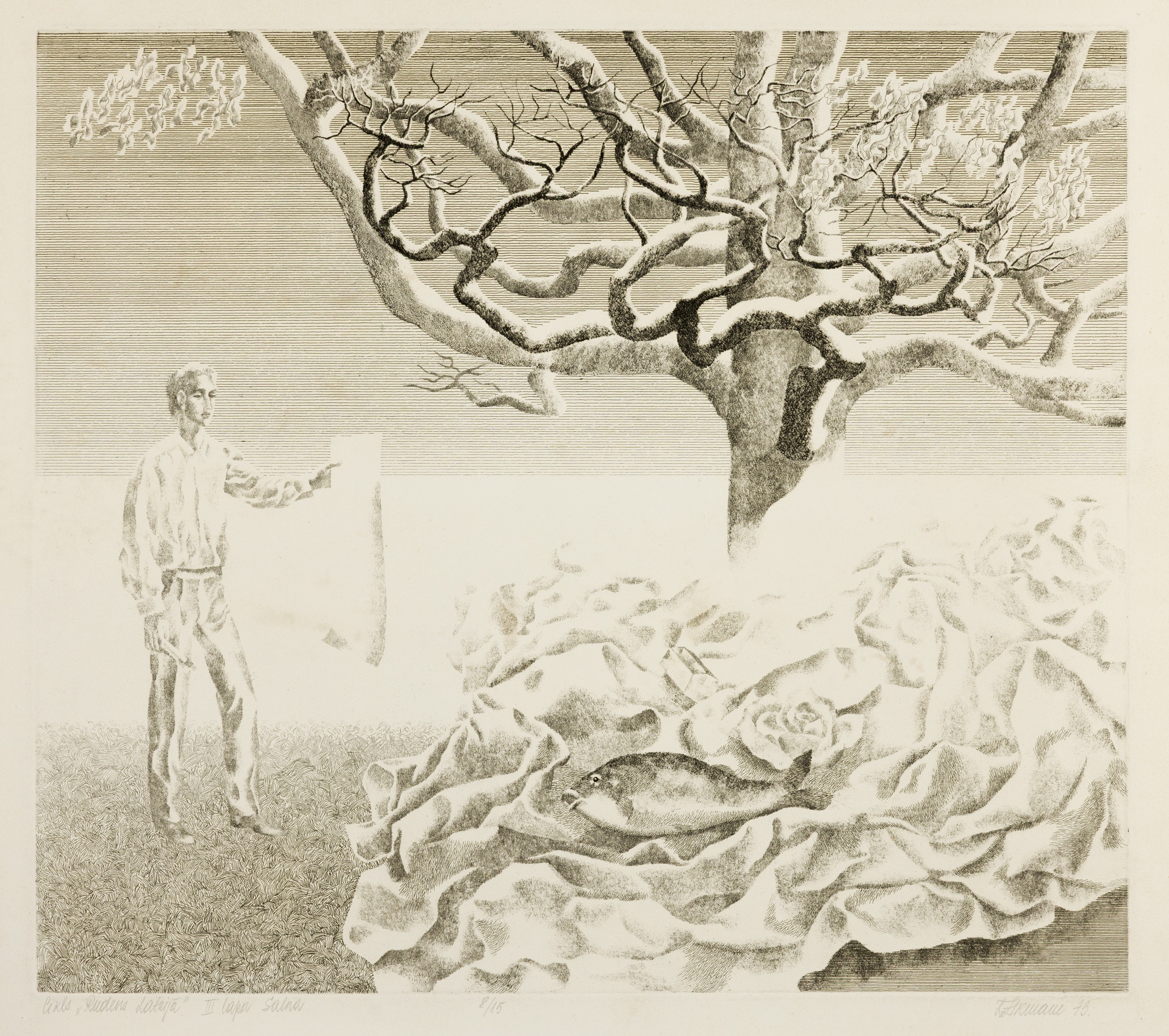
Frost from the series Autumn in Latvia, 1973. Etching on paper, 49 × 60 cm (19 5/16 × 23 5/8 in.). Norton and Nancy Dodge Collection of Nonconformist Art from the Soviet Union. D07027
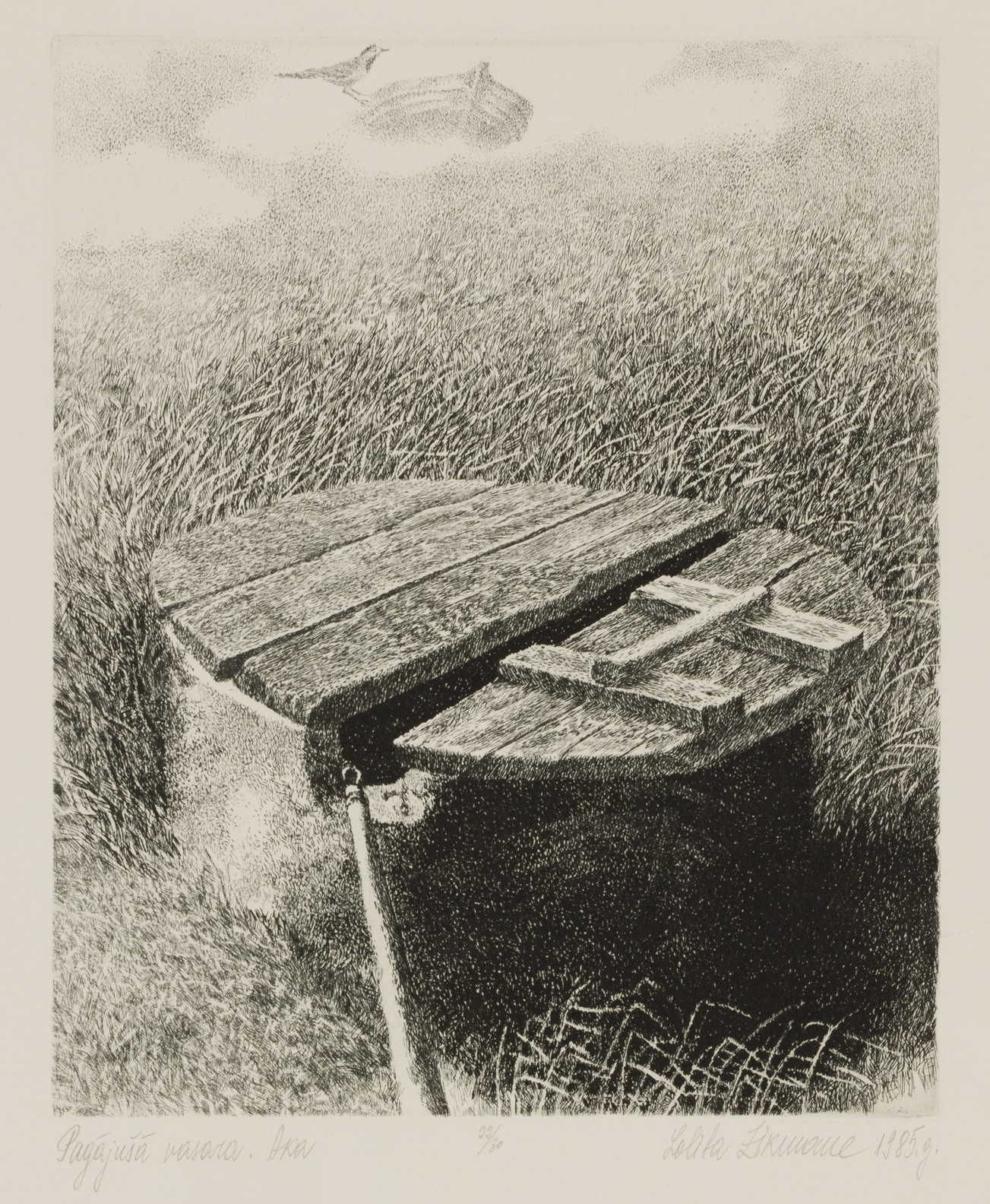
Last Summer. Well, 1985. Etching on paper, 25.5 × 20.8 cm (10 1/16 × 8 3/16 in.). Norton and Nancy Dodge Collection of Nonconformist Art from the Soviet Union. D11337
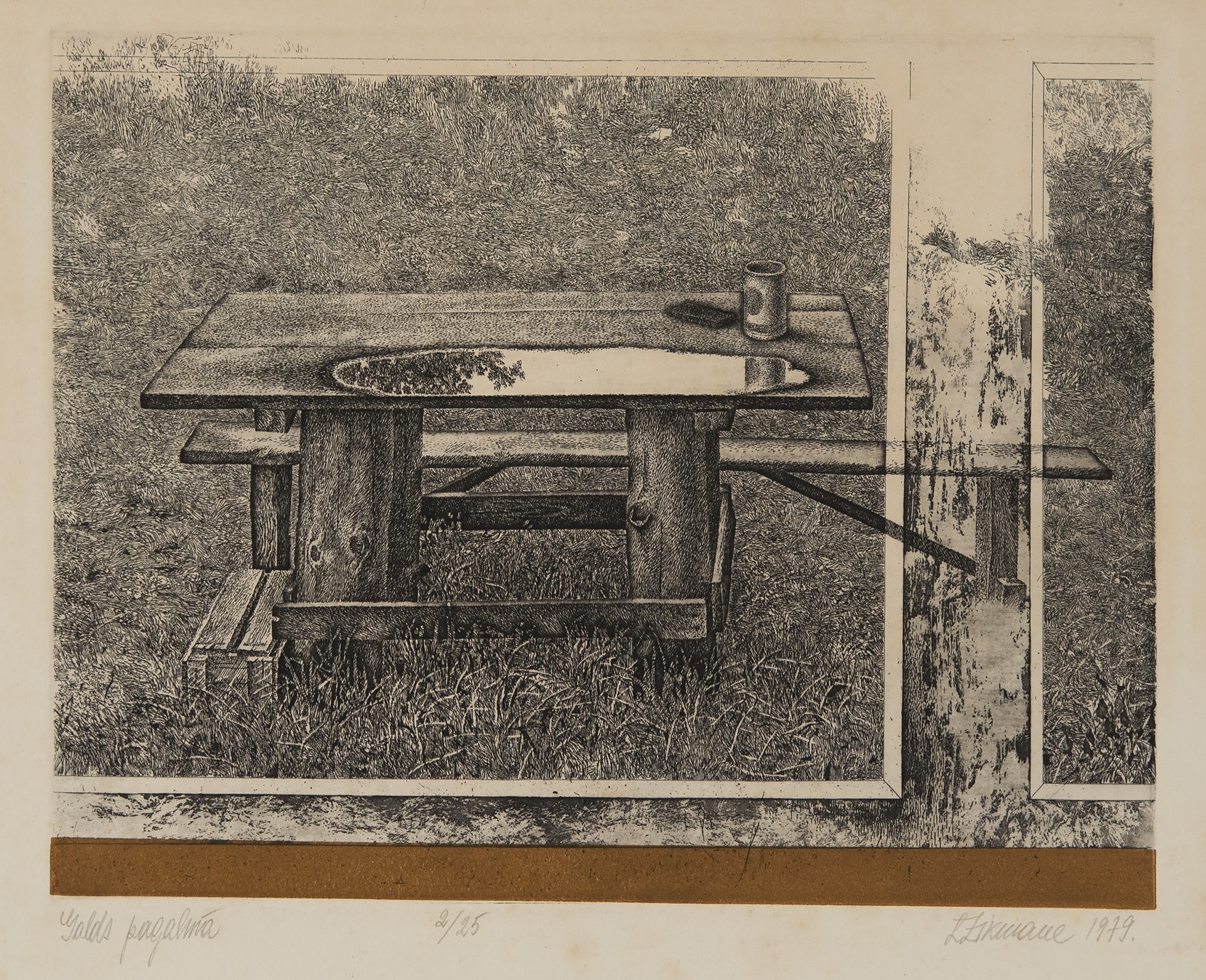
Table in the Yard, 1979. Etching on paper, 25.2 × 31.9 cm (9 15/16 × 12 9/16 in.). Norton and Nancy Dodge Collection of Nonconformist Art from the Soviet Union. D09788