
Lidia Blinova
1948 — Alma-Ata (Kazakhstan) | 1996 — Almaty (Kazakhstan). Worked in Almaty (Kazakhstan)
Lidia (Lida) Alekseevna Blinova lived and worked in Almaty (Alma-Ata during Soviet rule). Her name is associated with unofficial art in Kazakhstan, which focused on formalist experiments that continued the legacy of the Russian avant-garde. She worked within a broad range of creative genres: architecture, fine arts, poetry, book design, and jewelry design.
Blinova started out as a sculptor working with wood, having studied in the workshop of the famous sculptor Isaac Itkind. From 1970 to 1980, she participated in apartment exhibitions, and starting in the mid-1970s, she was a member of the Группа четырёх (Group of Four), which is now considered part of the unofficial art scene, and which also included artists Ablai Karpykov, Boris Yakub, and Rustam Khalfin. In 1981, at Blinova and Khalfin’s Almaty apartment, the Group of Four held an exhibition celebrating the centennial of the Russian artist Mikhail Larionov.
Those who knew Blinova considered her a generator of ideas. In addition to architecture, she was interested in optics, linguistics, philosophy, cultural history, and the history of art and design. A person of many varied gifts, she wrote magnificent prose, poems, and analytical articles.
Her entire countenance, with a piercing brightness, revealed her extraordinarily deep, spirited, and multifaceted personality. She never attached much importance to any external and trivial matters, because on the inside, she was an independent, free, and passionate person. She was always fascinated by the creative process itself, and not by ultimate successes or end results. Blinova and her partner, Khalfin, would stand out in the most exquisite of companies, and she was always the heart and soul of every gathering, bursting with jokes and artistic gestures.
About Blinova, Khalfin wrote: “Everyone loved Lida. I met her in the atelier at the Palace of Pioneers. We were about 13–14 years old. She threw a jar at me, but she missed. This is when our love began. She was a better painter than me. Lida started out as a wood sculptor. She went to Itkind to study in his workshop and made excellent sculptures. Better than Itkind, if you ask me. She was a person of many different talents. She worked with Pavel Yakovlevich Zaltsman on the scenery for the play Затюканный апостол [The Downtrodden Apostle], with Sergei Bodrov. She was a costume designer for his film Непрофессионалы [Amateurs]. She worked on puppet theater shows for children. She worked with resin, made all kinds of jewelry. What remains from these works is a cycle, we called it geological. She was a very modest person and never signed her works. … Lida was a magical, brilliant woman. Fate wanted to take her away so early.” [1]
Blinova’s works were first shown as a solo exhibition for the general public at В честь Л. Б. [In honor of L. B.] only in 2019, in the Aspan Gallery; it was curated by artists Elena and Viktor Vorobyov.
These works are essentially sketches; they are careful, methodological studies. Sometimes they are literal copies, and in some works, according to art historian and family friend Nazipa Ezhenova, the sketches are analytical, serving as a kind of research. Making copy after copy, the artist seems to have modeled the construction of a face using lines and shading to highlight its shape and volume. With a confident, architectural command, she vigorously wielded the pencil like a cutter, drawing the lines of ellipses and ovals, which form the features of human masks, and retracing the contours of figures and generic portrait images of Malevich-like boys and men. Blinova’s favorite materials were wax pastels, sanguine, charcoal, pencils, and paper.
In Blinova’s drawings and watercolors, we can find the basis of the Sterligov technique with a new additional element: a curve, a cup, a dome. With a natural ease, she let pass through her work the influence of the techniques and methods of the artistic and plastic language of her predecessors and contemporaries, from Malevich and Itkind to Sterligov and Zaltsman. She was fascinated by the process itself, not by results or achievements.
In the collection of the Zimmerli Museum is a self-portrait by Blinova in the style of Zaltsman (1968, ZAM, 2000.0040). The artist executed it as a meticulous, painstaking study of every little detail, in which the volume and nuances of light and shades are captured by means of masterful, finely wrought hatching. In her self-portrait, she adopted Zaltsman’s drawing method, which had been transformed, in turn, from Pavel Filonov, the founder of the school of analytical art. [2]
In 1988, I visited the couple’s small apartment, which attracted many free-thinking creative people. It also made an indelible impression on me. An avant-garde poster reproducing a painting by Kazimir Malevich hung on the door, which led to a small hall. The asceticism of their home was in harmony with his bohemianism. On the walls hung drawings, aphorisms, and poems by Blinova, handwritten on scraps of paper and attached with sewing pins. A black architectural chandelier with lights moving in different directions hung from the ceiling. Their friends had brought them resin, that wonderful, universal material, from Moscow and Vilnius. Blinova made amazing things out of it—brooches, pendants, earrings, bead necklaces—and sold them, which allowed Khalfin to devote himself to his painting.
There were times when they would go hungry (chaos and devastation reigned in the country following perestroika), but Blinova was inventive and unrelenting. Perhaps it was the stress of the 1990s that contributed to her falling ill. She carried a lot on her shoulders (she cared for her sick father and she supported Khalfin). The pair were freelance artists who no longer wanted to work in design institutes, in which they would have to morning to night working on other people’s projects. In 1982 Blinova was the first to embark on a free voyage after leaving AlmaAtagiprogor (the State Institute for Design of the City of Almaty). Soon after, Khalfin decided to devote himself to painting and resigned from Kazgorstroyproekt, where he had worked from 1971 to 1983, rising to the position of chief architect of projects.
Blinova wrote poetry, painted, she was overflowing with ideas, among which was the famous ПУЛОТА (pulota, a neologism of her and Khalfin’s invention), Поэма для кошки [Poem for a Cat], the myth of the forgotten avant-garde artist Ignutov. Her ironic attitude to life was also expressed in her humorous performance СтереоСнифер [StereoSniffer], which she performed on her birthday, September 30, 1993. Her idea was to explore painting not only by the usual visual methods, assessing the qualities of its forms and color, but also using smell with the help of the StereoSniffer device she invented, as well as by ear, following synesthesia, the ability to hear, for example, each area of a painting by listening to its pulsation and beating.
Blinova escaped from routine and the commonplace into her ideal world, where stanzas, pencil strokes, and lines; friendly discussions and intellectual and humorous conversations; and pranks and hoaxes intertwined into the patterns of her daily life. She created the famous patterns of her Пальцевой орнамент [Finger Ornament, 1995] using different combinations of the fingers of her own hands, which were captured on film by their family friend, the architect and photographer Larisa Andreeva. Nazipa Ezhenova wrote about this piece in 2011: “These are ten photos, ten finger positions against a black background. The world and the anti-world in a human body, where you do not need to invent anything or seek the truth in the outside world, if you just move your hands, a clearly structured world will appear from out of the fingers of the wise artist. On its own, each figure resembles an element from a geometric ornament or a yogic mudra—black and white, world and anti-world. An ancient or newly invented alphabet?” [3]
I will always remember a line written by her hand on a scrap of paper and affixed to the wall by a pin: “It is the lot of green birds to eat hemp seed and build their nest on the chest of an iron man.” Lidia Alekseevna Blinova died on March 4, 1996, in Almaty, at forty-eight, from a serious illness.
Zitta Sultanbaeva
Translated from Russian by Maria Vassileva
Photo Portrait of Lida Blinova by Larisa Andreeva
Notes:
1. "Lidia Blinova" in Look gallery.
2. Analytical art is a method developed by the Russian artist Pavel Filonov (1883–1941) in a number of theoretical works as well as in his own paintings of the 1910s–30s.
3. Ezhenova, Nazipa. “Пальцы художницы мудры” [The fingers of the artist are wise]. In Mezhdu proshlym i budushchim. Arkheologiia aktual'nosti. Sovremennoe iskusstvo Kazakhstana, 1990-e–2000-e. [Between past and future: Archaeology of relevance. Contemporary art of Kazakhstan, 1990s–2000s], exh. cat. Almaty: Goethe Institut, 2011: 46.
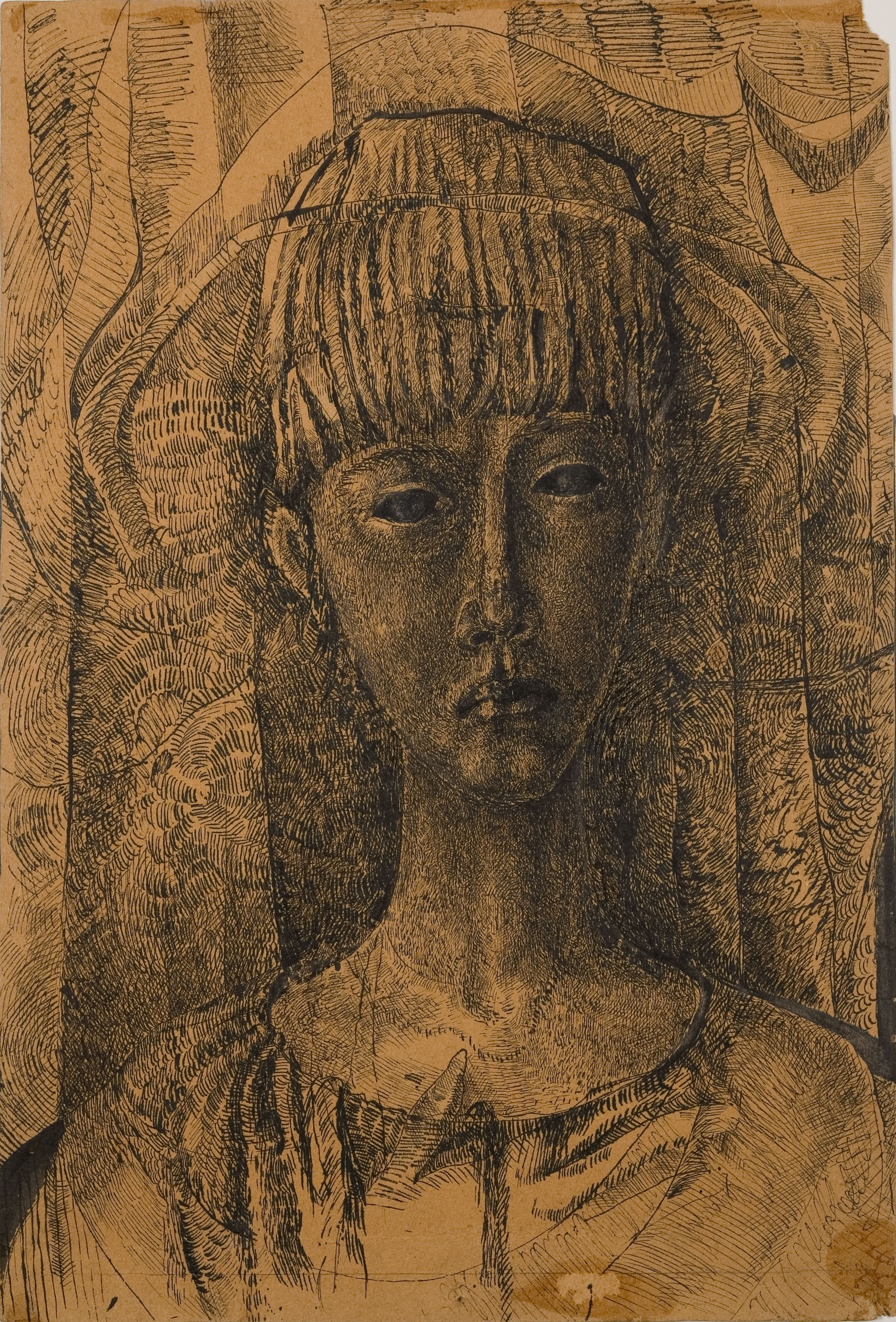
Self-Portrait, 1968. Ink on paperboard, 38 x 28.2 cm (14 15/16 x 11 1/8 in.). Purchased with funds donated by Norton Dodge and Nancy Dodge. 2000.0040
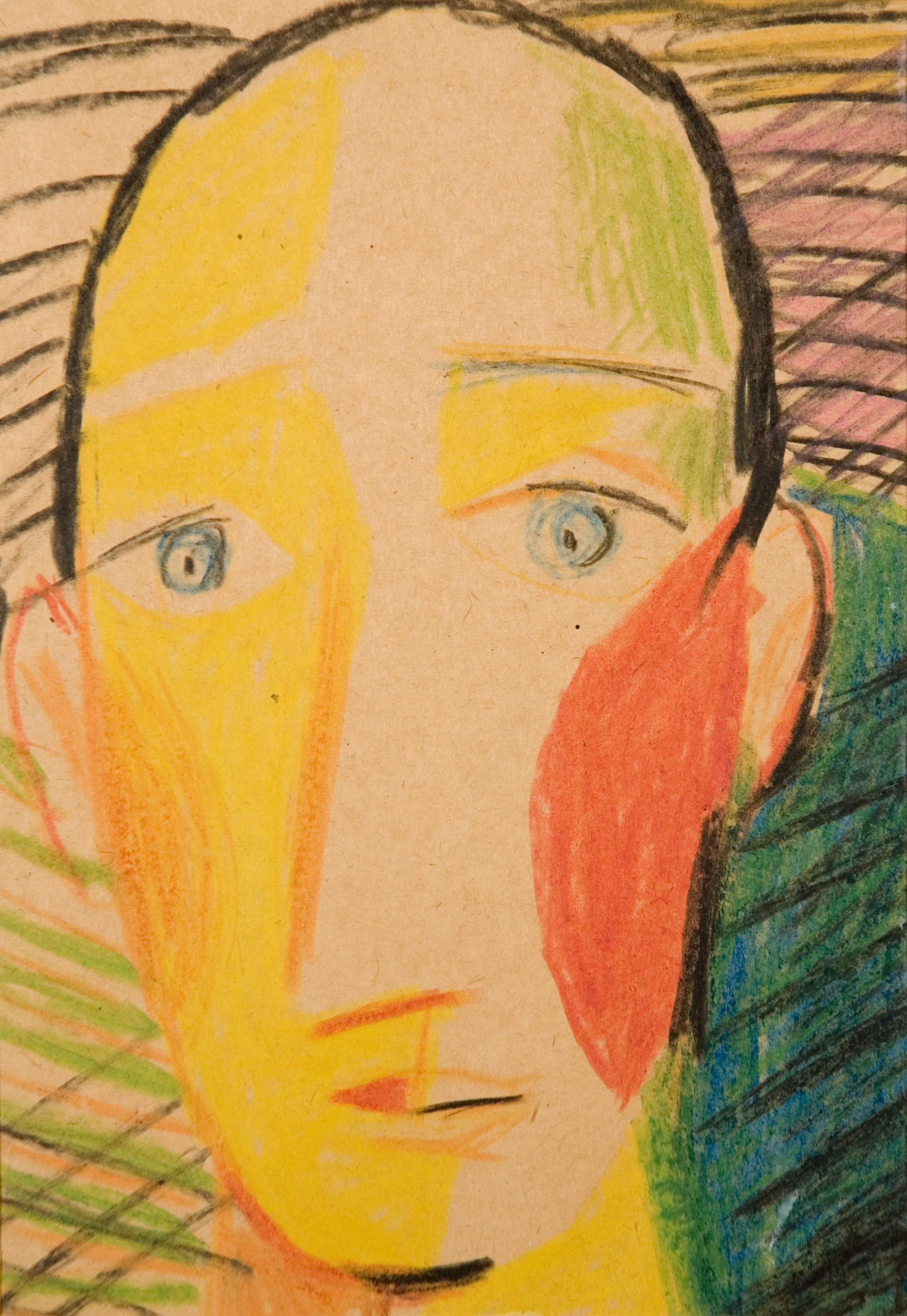
Portrait, 1980s. Oil pastel on paper, 30 x 21 cm (11 13/16 x 8 1/4 in.). Purchased with funds donated by Norton Dodge and Nancy Dodge. 2000.0742
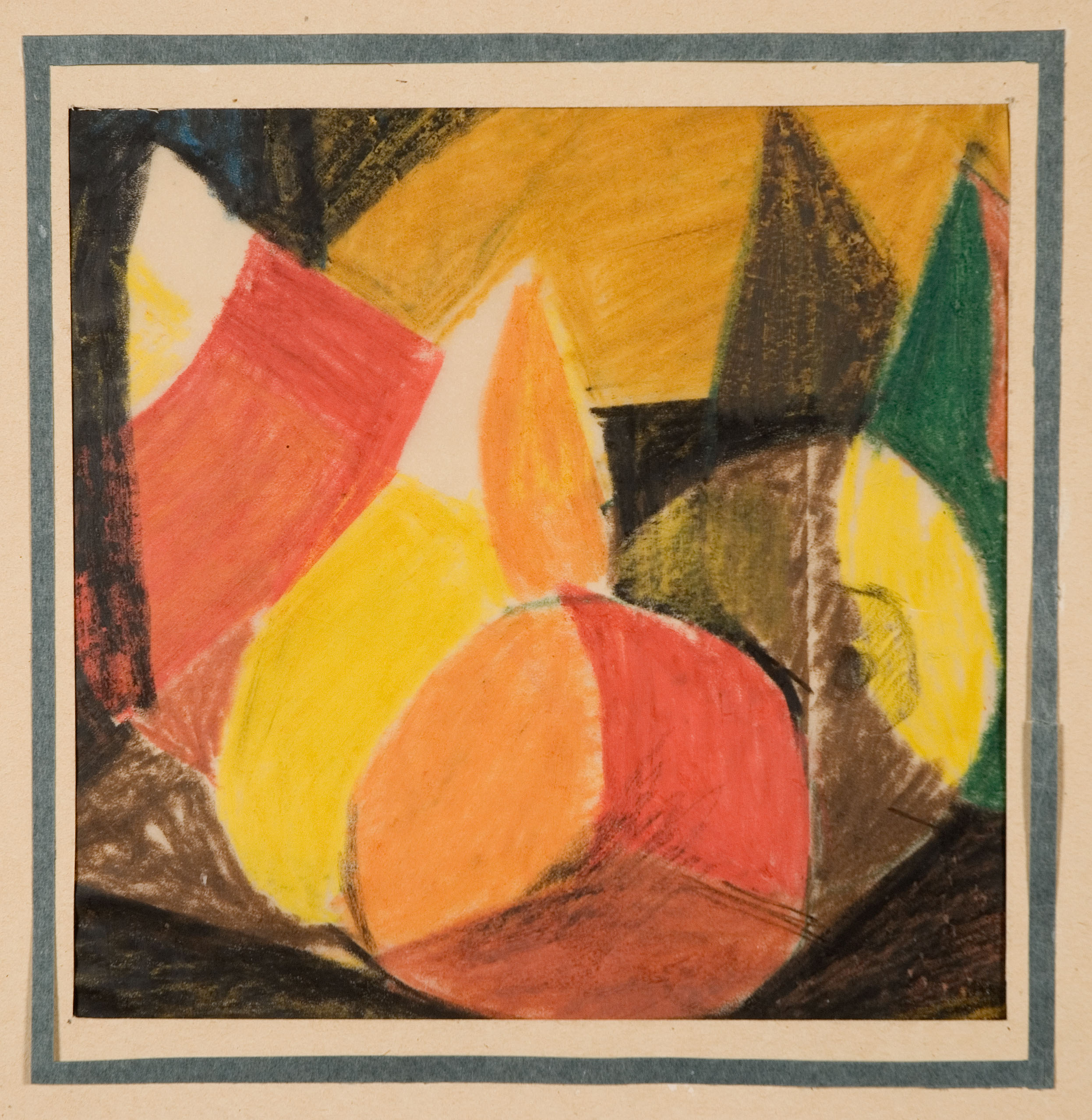
Still Life with Pears, 1980s. Oil pastel and collaged paper on paper, 42 x 29.8 cm (16 9/16 x 11 3/4 in.). Purchased with funds donated by Norton Dodge and Nancy Dodge. 2000.0743
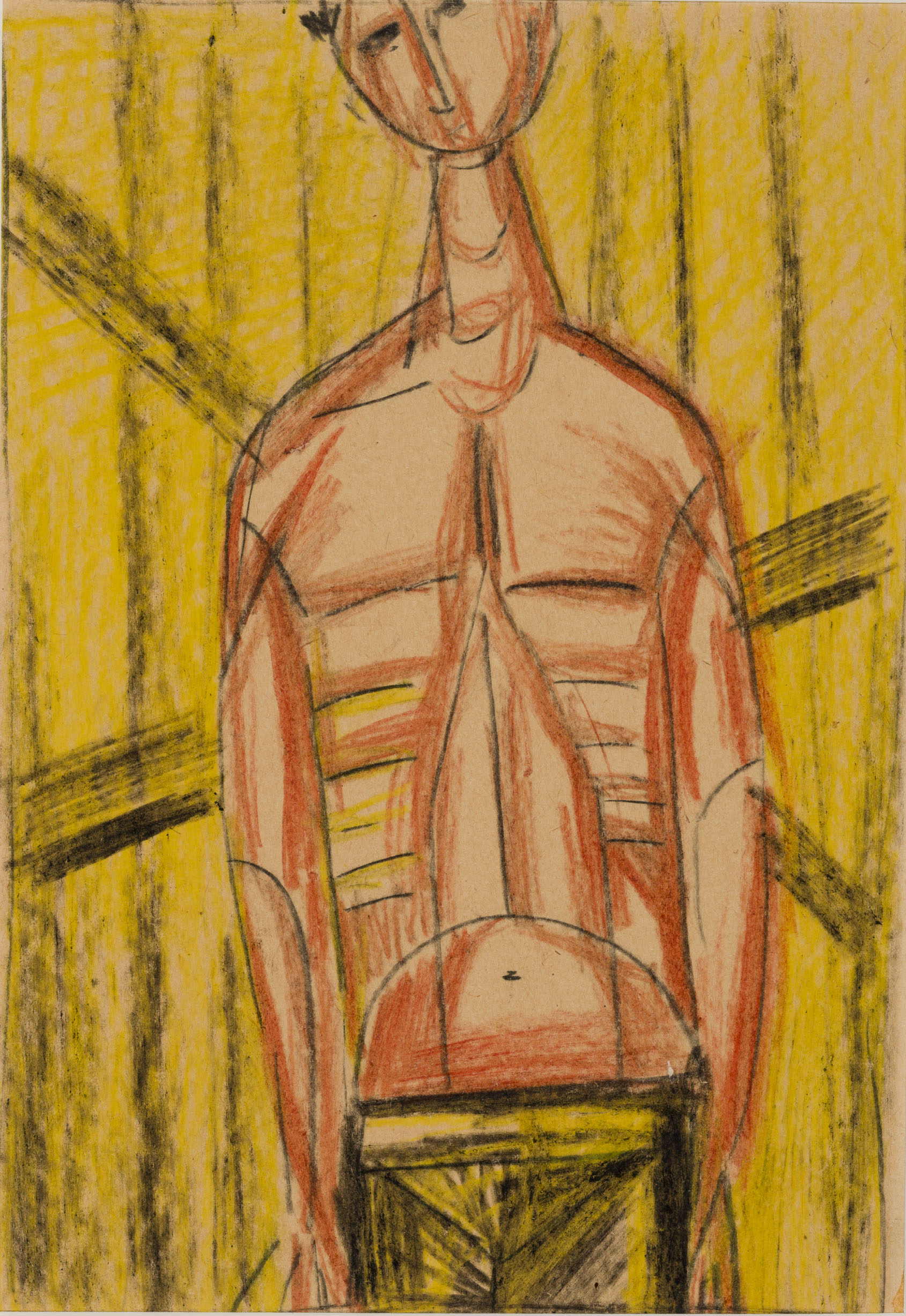
Torso, 1980s. Oil pastel on paper, 30 × 21 cm (11 13/16 × 8 1/4 in.). Purchased with funds donated by Norton Dodge and Nancy Dodge. 2000.0744