
Leonhard Lapin
1947 — Räpina (Estonia) | 2022 — Tallinn (Estonia). Lived and worked in Tallinn (Estonia)
Born in Räpina, a small town in southeastern Estonia, the painter, architect, and theorist Leonhard Lapin enrolled in the architecture department of the Estonian State Art Institute in Tallinn (now the Estonian Academy of Arts) in 1966. His interests extended beyond architecture, however, and while still a student, he became involved in the visual arts. Dissatisfied with the Art Institute’s architectural training and the separation of disciplines, he began to advocate for a holistic artistic practice that transcends the boundaries of a single field.
Lapin’s own work is a prime example of this breadth, including drawings, prints, posters, paintings, and installations. He organized happenings (for which Lapin preferred the Estonian word mäng, meaning “game”) and designed buildings. He has also written poetry (under the name Albert Trapeež) and published numerous articles and essays on art and architecture. As a designer and organizer, Lapin launched several landmark exhibitions in Estonia, including SOUP ’69, Harku’75: Objektid, kontseptsioonid [Harku’75: Objects, Concepts] and Arhitektuurinäitus’78 [Architecture Exhibition ’78].
While at the Art Institute, Lapin was already actively promoting contemporary art and new artistic methods. In the exhibition SOUP ’69, he and his fellow students introduced pop art. He explained that while the methods were borrowed from American artists, the content was strictly local, anticipating a trend that would become known as “‘sots’” art. An example of Lapin’s work from this period is Jänku suudlus [Bunny’s Kiss] (1970, ZAM, D14353), based on an old postcard.
In 1969 Lapin was among the initiators of one of the first happenings in Estonia, Paberid õhus [Papers in the Air]. Participants threw newspapers such as Pravda—the voice of the Communist Party—into the air on the Pirita beach in Tallinn, provoking the arrest of some of them. Inspired by pop art, Lapin produced Estonia’s first comic strip, Benno Bladikorni elurõõm, arvamused ja mõttetu surm kohvikus "Pelergia" [Benno Bladikorn’s Discoveries, Lust for Life, and Thoughtless Death in the “Pelergia” Café] (1970).
After graduating from the Art Institute in 1971, with a thesis on the construction of an entertainment center on the site of the former bastion zone between Tallinn Old Town and the sea, Lapin took a job at the Department of Heritage Protection of the Tallinn city government. Although he was banned from working as an architect because of his critique of the regime, he designed a number of private houses during his career and decisively shaped the discourse of architecture.
In the early 1970s, Lapin began to produce ink and gouache drawings that mixed influences from pop art and surrealism, combining simplified, posterlike imagery with absurd and uncanny features. His work commented on the emerging consumer culture in the Soviet Union as well as more existential themes of threat and uncertainty. Typical of this period are the two-part series Loomine [The Creation] (1974, ZAM, D05824, D05823) and drawings such as Veritsev sõrm [Bleeding Finger] (1971, ZAM, D15216), or Augud pääs [Holes in the Head] (1973, ZAM, D15215) and Voog pähe [Liquid on the Head] (1972, ZAM, D15214), which are based on the human head–shaped targets used in Soviet military shooting ranges.
In 1972 Lapin began the large-scale series Masinad [Machines], which he worked on until 1979 (ZAM, D03677, D03679). Consisting of seven parts (and nearly eight hundred drawings and prints), the series analyzed the relationship between humans and machines, which for Lapin had become the defining reality of modern life. He mainly used simple geometric shapes such as the cross, the square, the triangle, and the oval, working with stencils as technical drawing tools, but the structures became more complex as the series developed. Its clear geometric language shows the influence of both the Estonian graphic artist Tõnis Vint and interest in Soviet constructivism. The Modern Machine Art section contains direct references to the work of Kazimir Malevich, El Lissitzky, and Aleksandr Rodchenko. In parallel with these prints, Lapin made several axonometric drawings of “machine-houses,” two of which were actually built.
Lapin’s interest in the machine and new technology culminated in 1980 with the multimedia performance Multiplitseeritud inimene [Multiplied Man] at the Tallinn Youth Theatre. This production, created for the cultural program of the Moscow Olympic Games, was based on constructivist poetry from the 1920s by the Estonian poet and statesman Johannes Vares-Barbarus. The constructivist influence was evident in the geometric design of the actors’ costumes and the black-and-red, metal-and-wood scaffolding, which was both a stage prop and a functional structure, guiding the actors’ movements and housing the televisions, radios, typewriters, tape recorders, synthesizers, slide projectors, and other media technology used in the play. The idea behind Multiplied Man was that in the future, such technology would be integrated into people’s everyday lives and environment.
In 1975 Lapin had the opportunity to visit George Costakis’s collection in his Moscow apartment, an experience that left a lasting impression on him. In the same year, he also met Pavel Kondratiev, a pupil of Kazimir Malevich, deepening his interest in suprematism. Lapin began to make sculptural objects—from small models to large-scale objects for public spaces—which he called “architectons,” after the works of the same name by Malevich, and which gained particular momentum in the early 1980s, in both Estonia and Finland. According to Lapin, the architecton, as “pure” architecture, offered an opportunity to explore the fundamentals of architecture without the constraints of functionality.
In the mid-1970s Lapin also experimented with painting. His colorful geometric paintings, such as Kosmiline masin [Cosmic Machine] (1975, Art Museum of Estonia) or Silinder ja kera [Cylinder and Sphere] (1976, private collection), stand in dialogue with the work of Sirje Runge, then his wife, who was also using these forms. Valge interjöör [White Interior] (1977, Art Museum of Estonia) takes a more contemplative approach, reflecting Lapin’s fascination with Malevich and his preoccupation with themes such as infinity.
In Märgid [Signs](1977–82), the more politically charged series of conceptual paintings and prints that followed, Lapin once again drew on symbols of the Soviet era that would have been familiar to many: the masthead of the newspaper of Central Committee of the Communist Party of Estonia Rahva Hääl [People’s Voice], the national flag of Soviet Estonia with blue waves on red (ZAM, D06250), or the inscription KONЕЦ (the end) seen at the end of all Soviet films (1992.0293). Political humor can be found in the ambiguous Punane ruut [Red Square] (1978, 1992.0296), a monochrome canvas that refers both to suprematism and to Moscow’s Red Square as a political symbol and epicenter of power.
In the late 1970s, Lapin’s focus shifted to environmental and architectural criticism. His work at the Heritage Conservation Office resulted in an analysis of the architecture of Tallinn’s historic city center and its contemporary renewal, which inspired many artists and architects and also served as a starting point for Lapin’s own later articles on architecture. An energetic personality, Lapin became the intellectual leader of the loose group of architects that was later called the Tallinn school and was one of the organizers of the radical Arhitektuurinäitus’78 [Architecture Exhibition ’78] in 1978, which openly and wittily criticized Soviet mass construction and urban planning. Here, too, the emphasis was on transcending the boundaries of technocratic discipline and seeking dialogue with other cultural fields.
In the 1980s Lapin produced his second major series of prints, Protsessid [Processes] (1980–95, ZAM, D03700, D03706). Radically minimalist and executed only in black and white, the series explored the emergence of form and space on the white page, visualizing a process that can be understood as creation in the broadest sense.
After a brief period of postmodernism, realized in some mythological paintings and prints, Lapin worked in the 1990s on his own concept of “suprealism,” which commented on the impact of consumer society on culture, mainly using collage techniques and readymades. He also created several large-scale installations such as Hommage Soo`mele [Homage to Finland] (1988) at Pori Art Museum, Obelisk [Obelisk] (1990) in Kotka, Finland, and Eesti mets [Estonian Forest] (1994) at the São Paulo Biennial.
Mari Laanemets
Photo portrait: Leonhard Lapin at the exhibition Saku '73. Photo by Jaan Klõšeiko. Art Museum of Estonia. EKM j 55032:1 FK 322:1
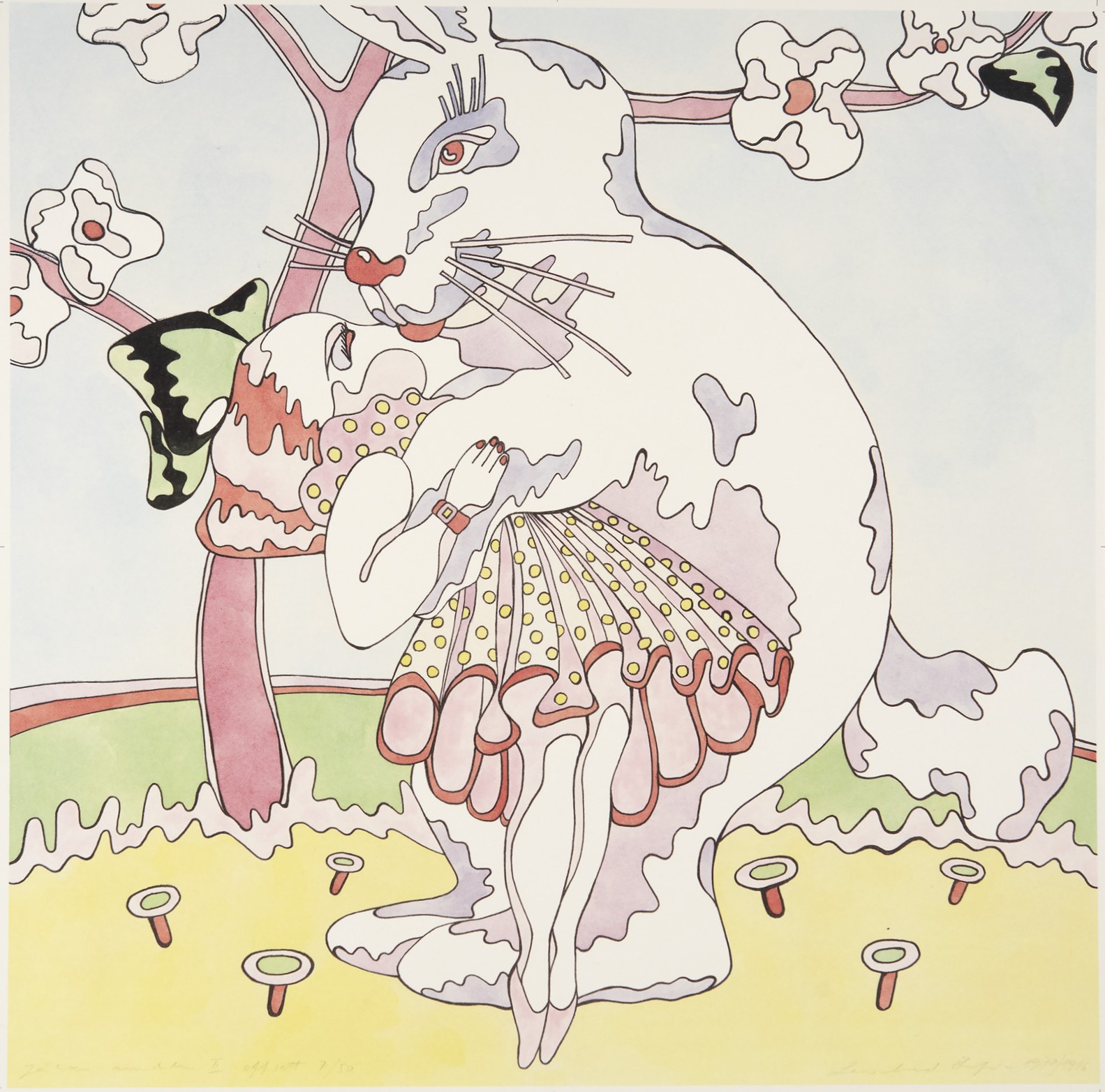
Bunny Kiss, 1970–96. Color offset lithograph on paper, 39.8 × 39.8 cm (15 11/16 × 15 11/16 in.). Norton and Nancy Dodge Collection of Nonconformist Art from the Soviet Union. D14353
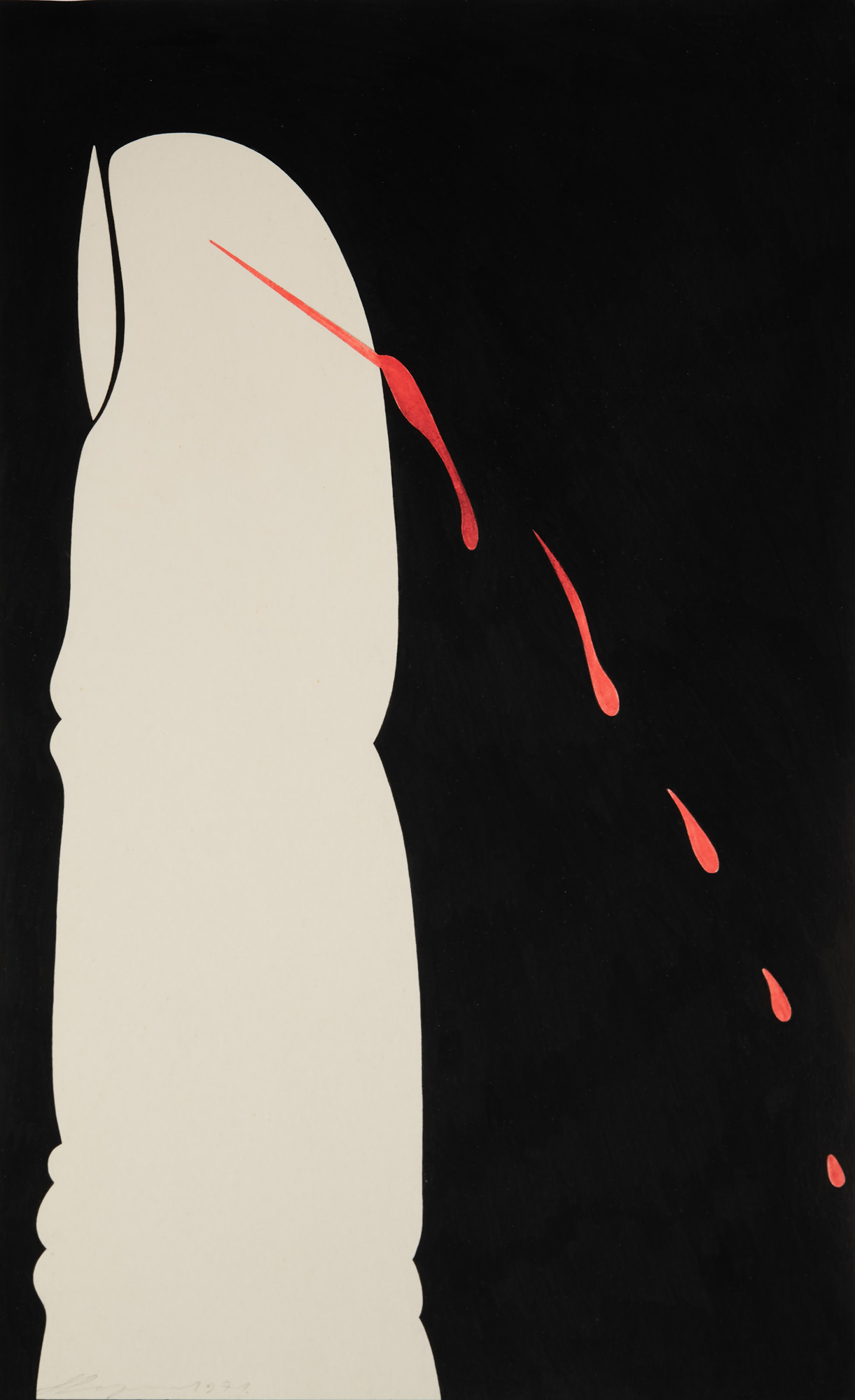
Bleeding Finger I, 1971. Gouache on paper, 43 × 26.5 cm (16 15/16 × 10 7/16 in.). Norton and Nancy Dodge Collection of Nonconformist Art from the Soviet Union. D15216
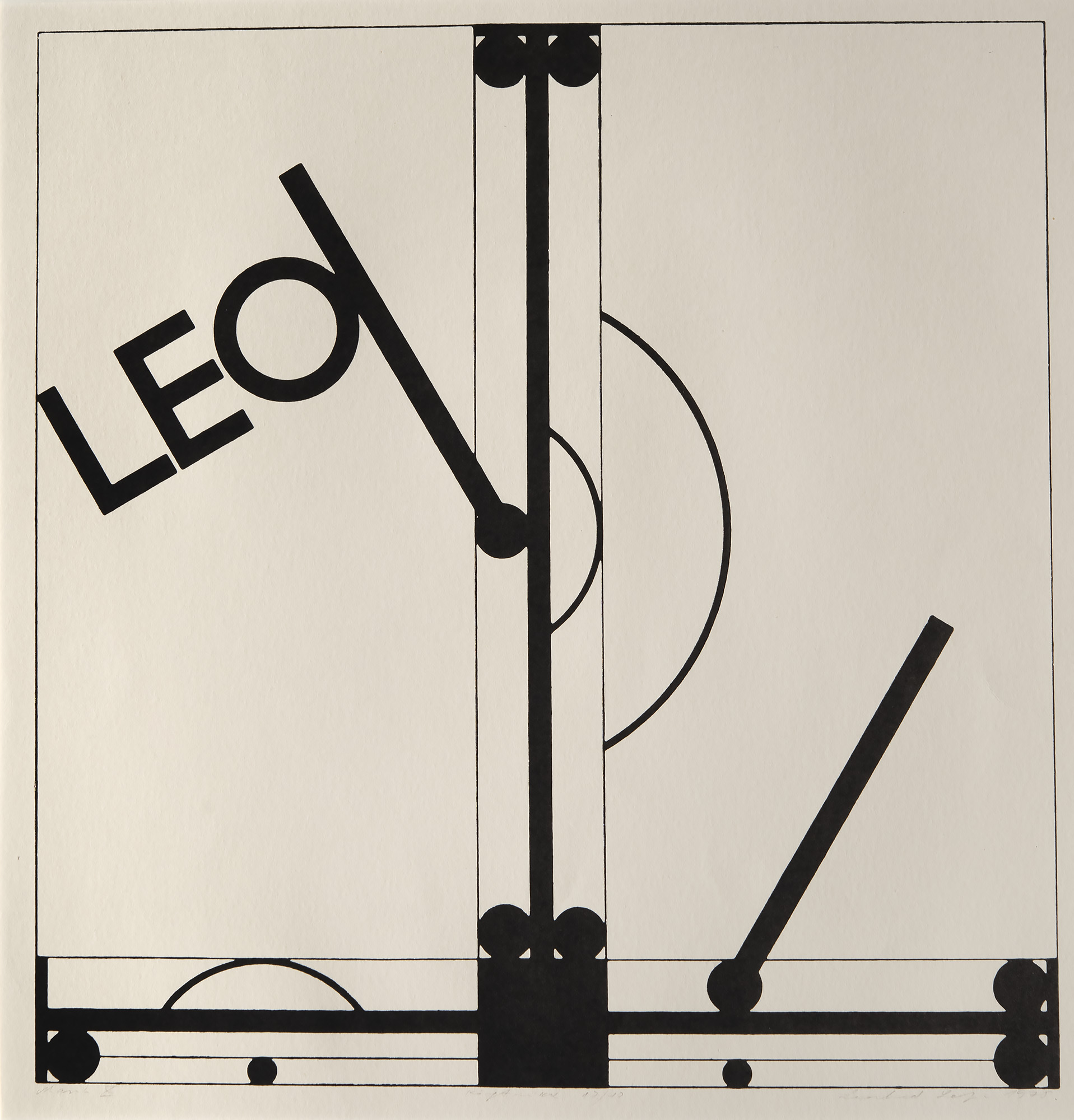
Machine X, 1975. Screenprint on paper, 40.3 × 38.8 cm (15 7/8 × 15 1/4 in.). Norton and Nancy Dodge Collection of Nonconformist Art from the Soviet Union. D03677
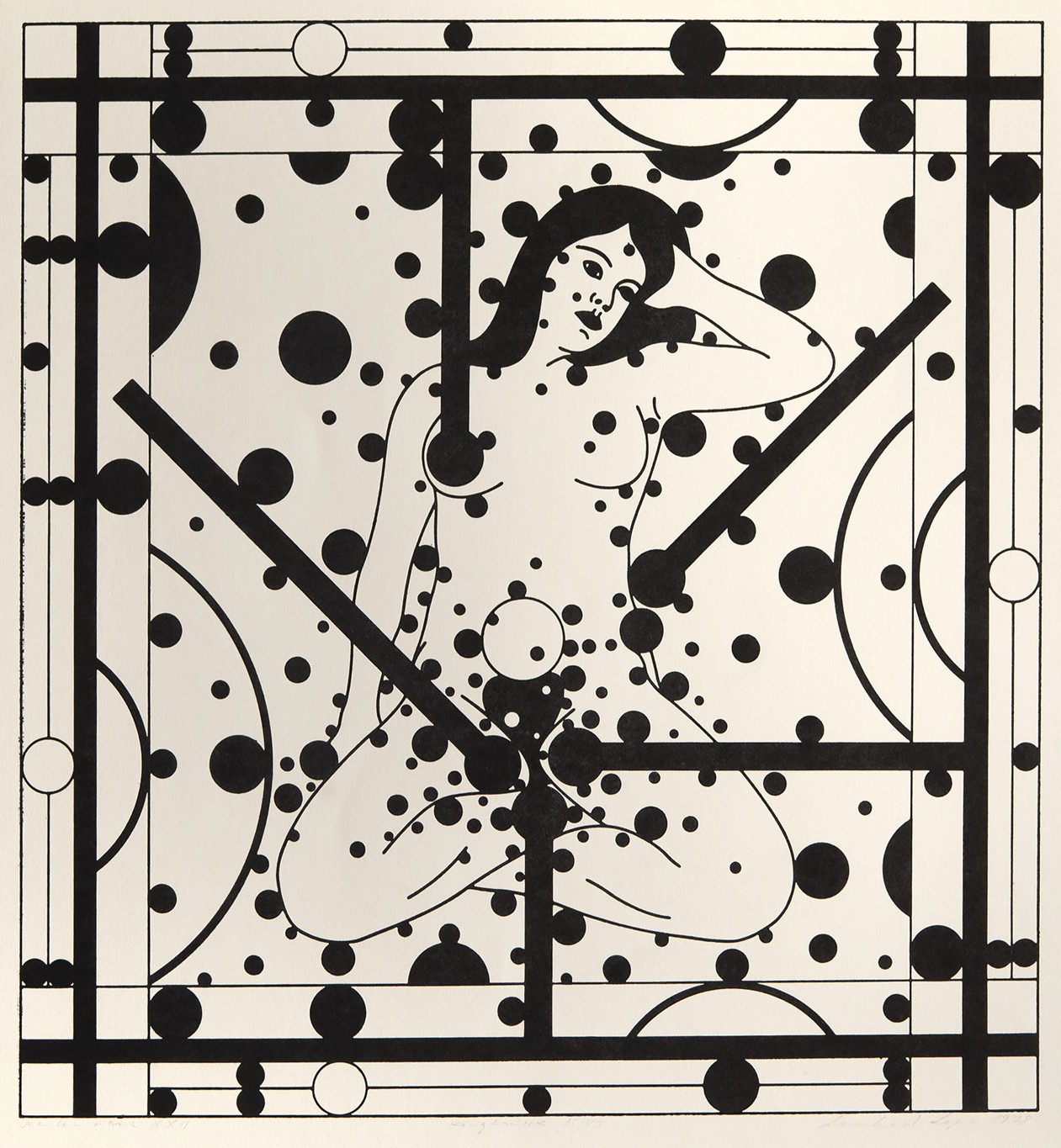
Woman and Machine XXII, 1978. Relief print on paper, 40.2 × 38.2 cm (15 13/16 × 15 1/16 in.). Norton and Nancy Dodge Collection of Nonconformist Art from the Soviet Union. D03679

The White Wave from the series Signs, 1978. Oil on canvas, 99.8 × 90.3 cm (39 5/16 × 35 9/16 in.). Norton and Nancy Dodge Collection of Nonconformist Art from the Soviet Union. D06250

The Black Triangle III from the series Signs, 1978. Oil on canvas, 100.5 × 90.5 cm (39 9/16 × 35 5/8 in.). Norton and Nancy Dodge Collection of Nonconformist Art from the Soviet Union. 1992.0293
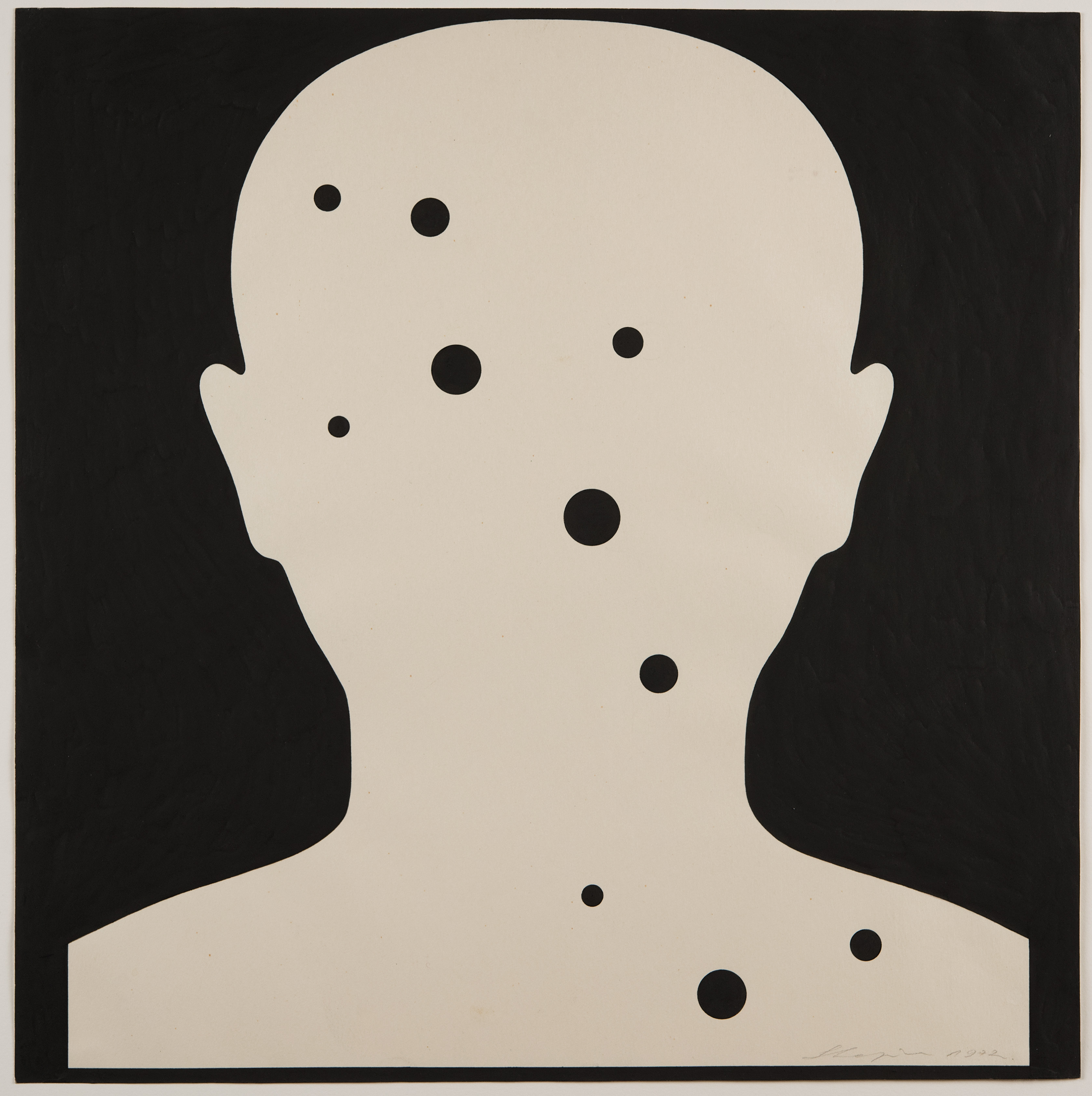
Holes in the Head, 1972. Gouache on paper, 40.1 × 39.9 cm (15 13/16 × 15 11/16 in.). Norton and Nancy Dodge Collection of Nonconformist Art from the Soviet Union. D15215
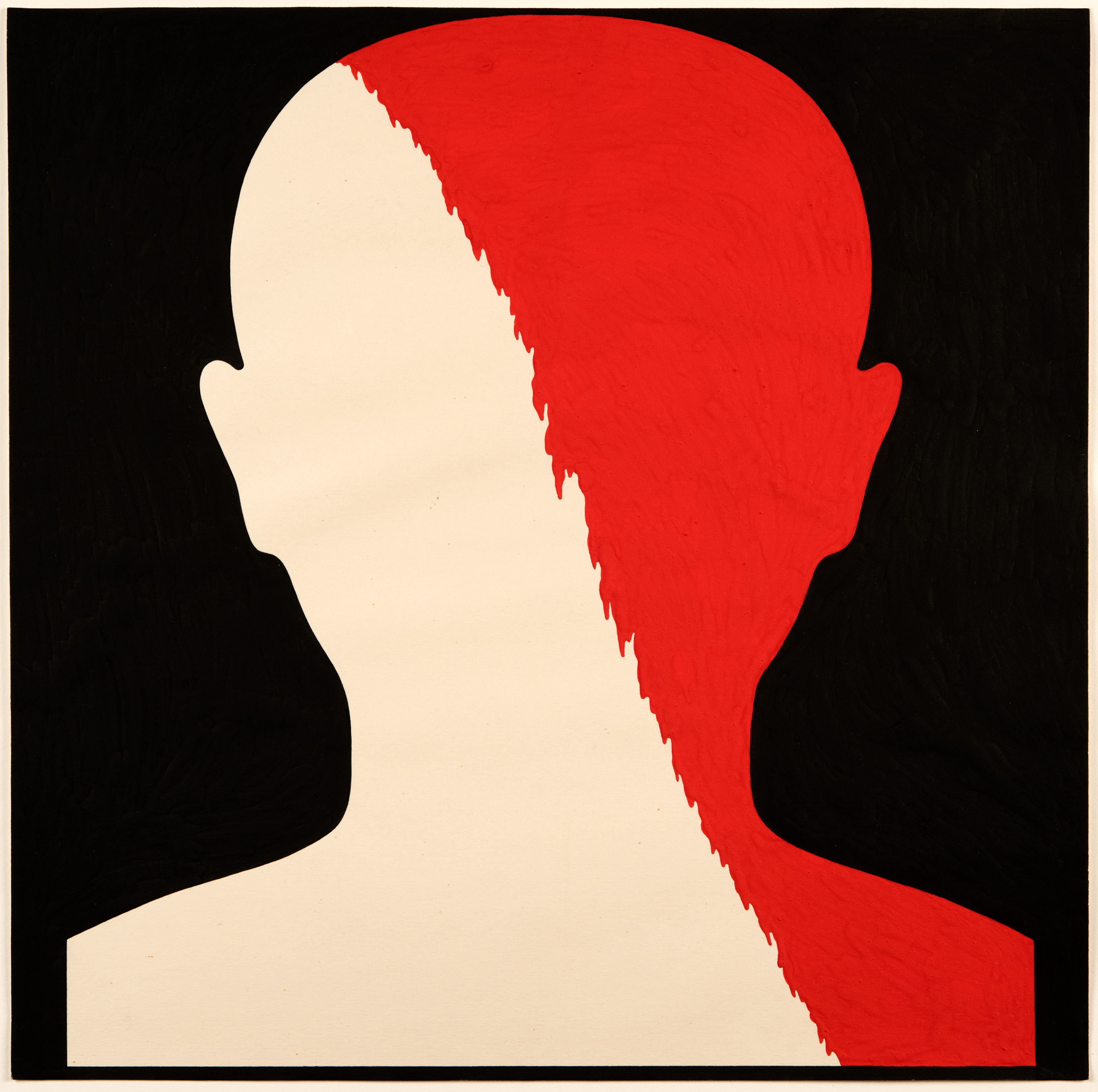
Liquid on the Head from the series Lige Näol, 1972. Gouache on paper, 39.9 × 39.9 cm (15 11/16 × 15 11/16 in.). Norton and Nancy Dodge Collection of Nonconformist Art from the Soviet Union. D15214

Red Square from the series Signs, 1978. Oil on canvas, 100.5 × 90.5 cm (39 9/16 × 35 5/8 in.). Norton and Nancy Dodge Collection of Nonconformist Art from the Soviet Union. 1992.0296.
