
Kaljo Põllu
1934 — Hiiumaa (Estonia) | 2010 — Tallinn (Estonia). Lived and worked in Estonia
The painter and printmaker Kaljo Põllu was born on November 28, 1934, on Hiiumaa, the second-largest island in the Baltic Sea, into a family of fishermen and ship captains. At the age of fifteen, he moved to mainland Estonia to continue his education. Between 1949 and 1953, he studied at the Haapsalu Pedagogical School, where great emphasis was placed on the arts, especially music. He played the violin and the piano, and in 1953 he attended the Tartu Music School (now Heino Eller Music College), adding choral conducting to his studies. At the time he was even considering a career as a musician.
Although music remained very important to Põllu throughout his life, he chose the path of an artist. Between 1956 and 1962, he studied glass art at the Estonian State Art Institute (now the Estonian Academy of Arts) in Tallinn under Professor Maks Roosma. There he also studied all the techniques of printmaking. Põllu made his debut in 1959 at the State Exhibition of Young Artists in the Tallinn Art Hall. His first major solo exhibition took place in 1971 at the Tartu Art Museum.
After graduating from the Art Institute, Põllu worked as the head of the Art Studio of the University of Tartu from 1962 to 1975. Under his leadership, the Art Studio became one of the most important interdisciplinary cultural phenomena in Estonian art history: an alternative art center, almost like an open academy, where students as well as young artists, writers, and scholars came together. The university café became an important platform for the presentation of work by contemporary young artists, hosting forty-seven exhibitions in its gallery between 1962 and 1972, as well as talks and meetings. Under Põllu’s leadership, one of the Art Studio’s most important activities was the translation into Estonian of seminal texts of contemporary art. These banned writings brought contemporary theoretical ideas and trends from the West to the Estonian art world behind the Iron Curtain. A dozen books were translated, and translation collections were compiled—all distributed clandestinely in typewritten, manually reproduced editions.
Under Põllu’s leadership, the art group Visarid (which means “the dissatisfied” in the dialect of the Simuna parish of Estonia) was formed in 1967. Its members used avant-garde artistic language and aesthetics and purposefully introduced new creative methods. The group organized seven exhibitions, and with youthful enthusiasm, they explored pop and op art, abstract art, surrealist drawing, air and water art, and happenings. Põllu also wrote the group’s manifesto.
From 1966 onward Põllu began to experiment with the means of expression of modern art, in the second half of the 1960s becoming one of the most radical neo-avant-garde artists in Estonian art. Constantly searching for something new, Põllu made use of oil painting, printmaking, and photographic collage, as well as readymade materials: metal, glass, commercially available objects, and found objects. He combined painting with objects, experimenting with different variations on pop motifs, and painting compositions with large, clear abstract shapes in unmixed tones. He created three-dimensional works and assemblage paintings with ready-made imagery. By reinterpreting the meaning of the three-dimensional object in the Estonian artistic tradition, Põllu brought pop art principles to Estonian sculpture. He also cultivated action art in, for instance, Maakunsti objekt [The land art object], organized by Noorus magazine on Kabli Beach in the summer of 1969.
From the mid-1960s, Põllu used pop art techniques in his printmaking, where he combined the picture surface with a series of readymade photoreliefs. In Estonian art, Põllu was the first to use cliché print together with traditional printing techniques. Põllu powerfully emphasized the topicality of the issues reflected in his works and, by shifting the fields of meaning, also opened up complex social subtexts. The first of these was Hirm [Fear] (1967, ZAM, 2000.1296), which used images of insects. In the context of the political events of 1968 in the countries of Eastern Europe, the lack of freedom of expression, and the Iron Curtain, Põllu used insect metaphors to great effect in enclosed spaces and frames, as in Naerev mees [Smiling Man] (ZAM, D18736), Hüpe [Bound] (ZAM, 2000.1294), and Meeleolu [Mood] (ZAM, D18735), all 1971. In a rather unexpected way, Põllu also brought national imagery into pop art, reflecting on the meaning of various nationally charged symbols in society. In his Hingekellad [Bells] (1967, ZAM, 2000.1288), he contrasted a posterlike female face typical of mass culture with a row of pictures of a girl in national costume and chiming church bells.
Põllu was very interested in op art in both theory and practice. In the second half of the 1960s, he created works of optical illusion based on the psychology of perception: Op-kompositsioon nr 3 [Op-Composition No. 3] (ZAM, 2000.1289), Op-kompositsioon nr 8 [Op-Composition No. 8] (ZAM, 2000.1293), and Tasakaal. Op-kompositsioon nr 1 [Balance. Op-Composition No. 1] (ZAM, 2000.1290]). He also corresponded with the French-Hungarian artist Victor Vasarely, leader of the op art movement, who sent him an autographed monograph that he dedicated to Põllu. For a number of years, he was fascinated by the play of perceptual optical effects and dislocations of the pictorial surface, and by the representation and theoretical history of multidimensional spatial effects—the so-called impossible spaces and shapes. He worked intensively on this subject in painting and printmaking again in the 1990s and 2000s.
Põllu has a uniquely dual position in Estonian art history. In the second half of the 1960s, he was one of the leading figures of Estonian avant-garde art. His pioneering works from this period are part of a gold mine of pop, op, and kinetic art in Estonian art history. In the early 1970s, his work took a radical turn. Instead of actively and experimentally engaging with Western neo-avant-garde art, the artist now focused his attention on the roots of the Estonian people, the mythical worldview of his ancestors, and, more generally, the ancient culture of the Nordic and Finno-Ugric tribal peoples.
Looking back on his career as a recognized master in 2004, Pollu stated that in the 1970s he had developed a deep conviction and desire to find timeless, strong, and primordial culture beneath Estonia’s professional European-style art, which had barely existed for a hundred years. He was determined to travel into the past to the point of origin, to the roots of folk culture thousands of years before in order to understand the present and the future. Using the technique of mezzotint with exceptional mastery and individuality, the artist created a series of large-scale prints that delved deeper into these themes.
Põllu created his first and most impressive series of twenty-five prints based on the theme of Finno-Ugric mythology, Kodalased [Ancient Dwellers] (ZAM, 2001.1311–14), in 1973–75. In the works of the series, the artist searched for answers to the questions of who we are, where we come from, and where we are going. In these prints we see the daily lives and beliefs of humans amid nature’s timeless silence. In Ancient Dwellers, the artist lovingly explored archetypes of his ancestors. Põllu himself has said that Kahekesi [Twosome] (1974, ZAM, 2001.1313) is the first work in which he captured the true human type, which he subsequently used in almost all his Finno-Ugric works, such as Maa emale [For Mother Earth] (1978, ZAM, 2001.1314].
Põllu’s effective use of a concise, stylized formal idiom suggestive of rock paintings is underpinned by the depth of the mezzotint technique and the nuance of the black and gray tones. One of the highlights of the series, Päikesevene [Sun Boat] (ZAM, 2001.1312), completed in 1974, shows totem animals with magical headgear on a boat following the sun’s path so that, according to ancient myth, the setting sun could rise again each morning as it sailed through the mysteriously dangerous waters of the underworld. Sun boats that assist the sun’s movement in the sky are also depicted in Scandinavian and Karelian rock paintings.
The artist’s second large-scale series of mezzotints, Kaliväg [Kali Peoples] (1978–84), contains sixty-five works and is one of the most powerful series in the history of Estonian printmaking, in terms of both volume and content. In what has been called a tribal epic created in a pictorial language, the artist takes a broader view of the long development of his people, the formation of their worldview, and indigenous values through the generations. His series of forty mythological and colorful woodcuts, Taevas ja maa [Heaven and Earth] (1987–91), continues the story begun in Ancient Dwellers and Kali Peoples, reflecting on the relationship between humans and the universe. The eternity of life, the universe, the infinite passage of time, birth and rebirth, the solar circle, the heavenly and earthly worlds, and the presence of the gods are themes of the artist’s last large series of forty-seven color woodcuts titled Kirgastumine [Enlightenment] (1991–95).
In the last period of his creative career, after the completion of his extensive series of prints, which had won him great public acclaim and affection, Põllu resumed painting.
Põllu also had a highly significant career as a teacher. In 1975 he moved to Tallinn and started working as a lecturer at the Drawing Department of the State Art Institute of the Estonian SSR, becoming a professor in 1988. In 1978 he started what became legendary annual student research trips to Finno-Ugric peoples. For ten years Põllu led the expeditions, which continued for several decades under his students. In 1996, under his leadership, the group Ydi, composed of artists who had participated in the expeditions, was founded. The group declared itself with a manifesto, organized exhibitions, and published its own almanac.
On the basis of his research expeditions, Põllu wrote four comprehensive books on heritage culture. He was awarded the Kristjan Raud Art Award (twice), the Jakob Hurt Prize for National Culture, the Cultural Prize of the Republic of Estonia, the Prize for National Thought of the University of Tartu, and the Order of the National Coat of Arms, Fifth Class. He received honorary doctorates from the University of Jyväskylä, Finland, and the Estonian Academy of Arts.
Kersti Koll
Translated from Estonian by Peeter Talvistu
Photo portrait: Kaljo Põllu, 1970s. Photo by: Jaan Klõšeiko. Art Museum of Estonia. EKM j 57357 FK 1481
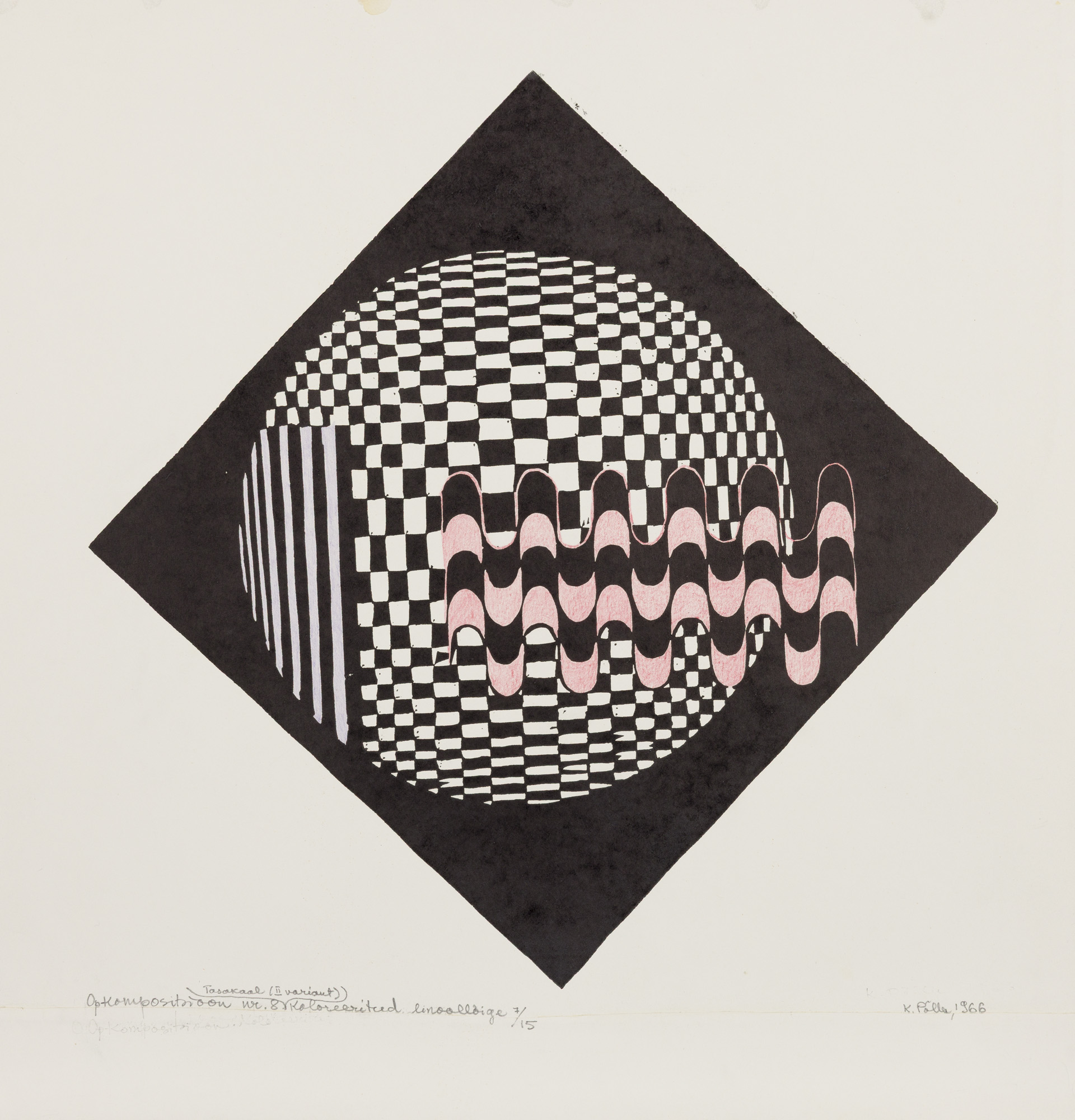
Op-Composition No. 8. Balance (II variant), 1966. Linoleum cut on paper, 37 × 36.8 cm (14 9/16 × 14 1/2 in.). Norton and Nancy Dodge Collection of Nonconformist Art from the Soviet Union. 2000.1293
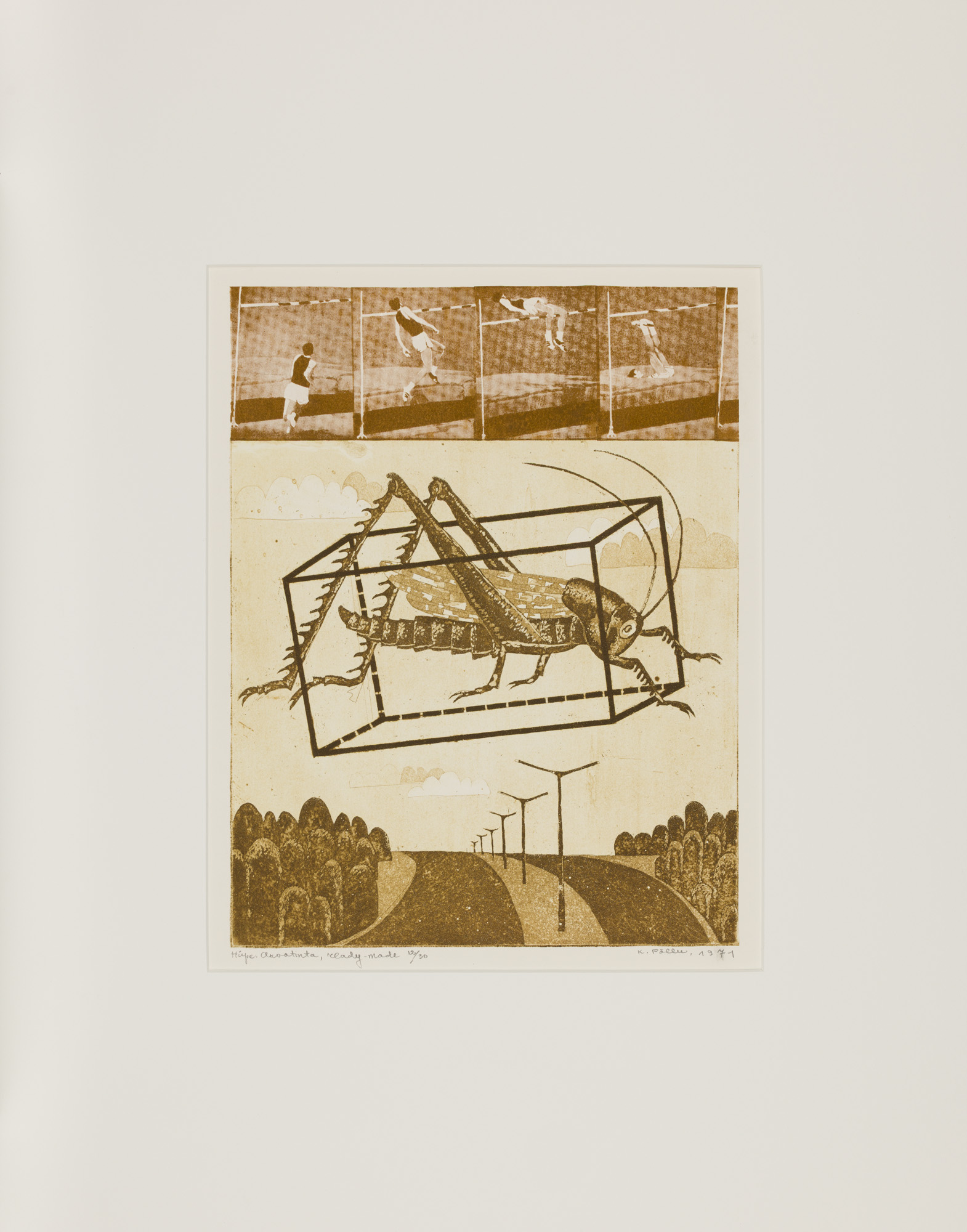
Bound, 1971. Aquatint and photorelief on paper, 37.6 x 29 cm (14 13/16 x 11 7/16 in.). Norton and Nancy Dodge Collection of Nonconformist Art from the Soviet Union. 2000.1294
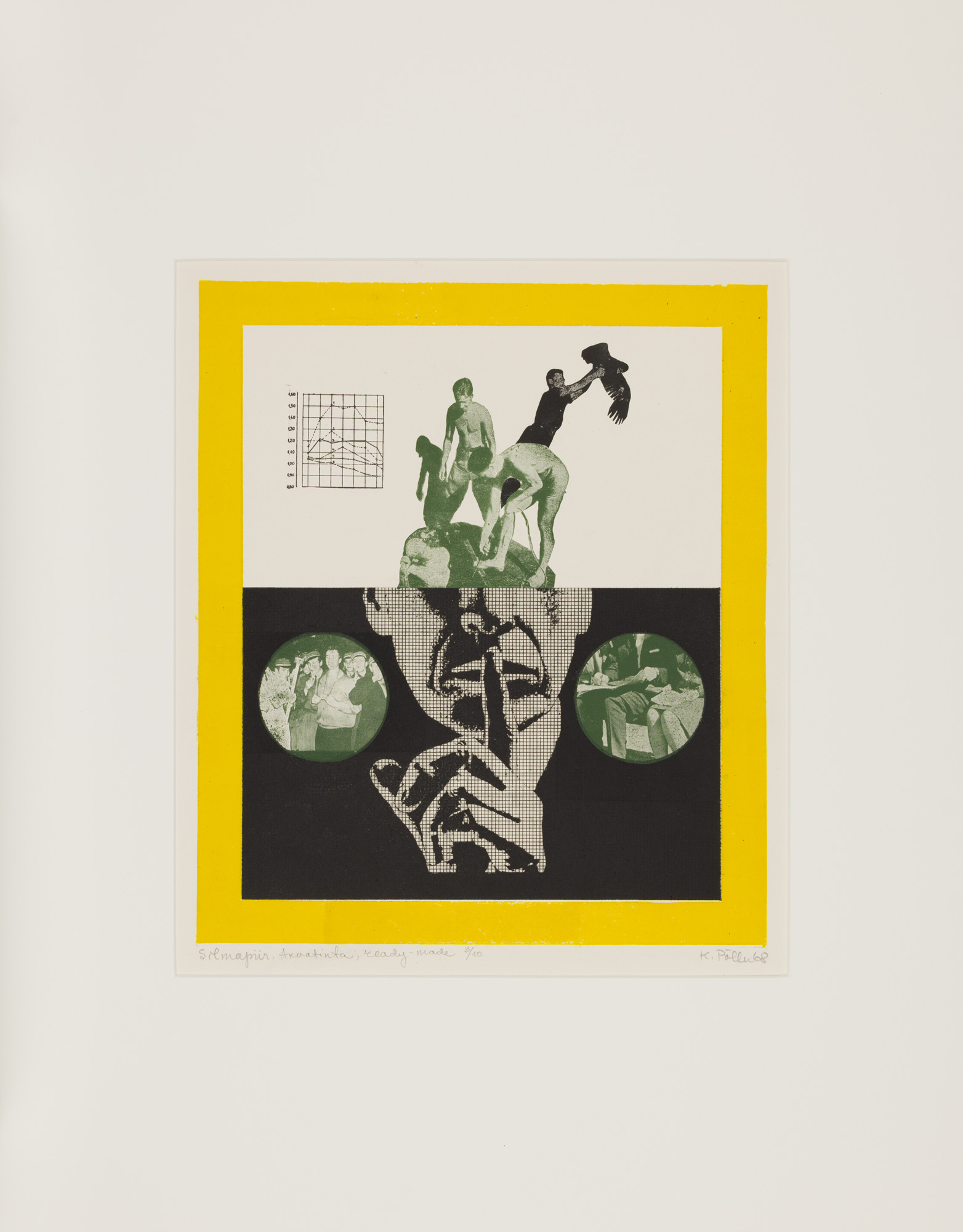
Horizon, 1968. Aquatint and photorelief on paper, 38 x 32.7 cm (14 15/16 x 12 7/8 in.). Norton and Nancy Dodge Collection of Nonconformist Art from the Soviet Union. 2000.1295
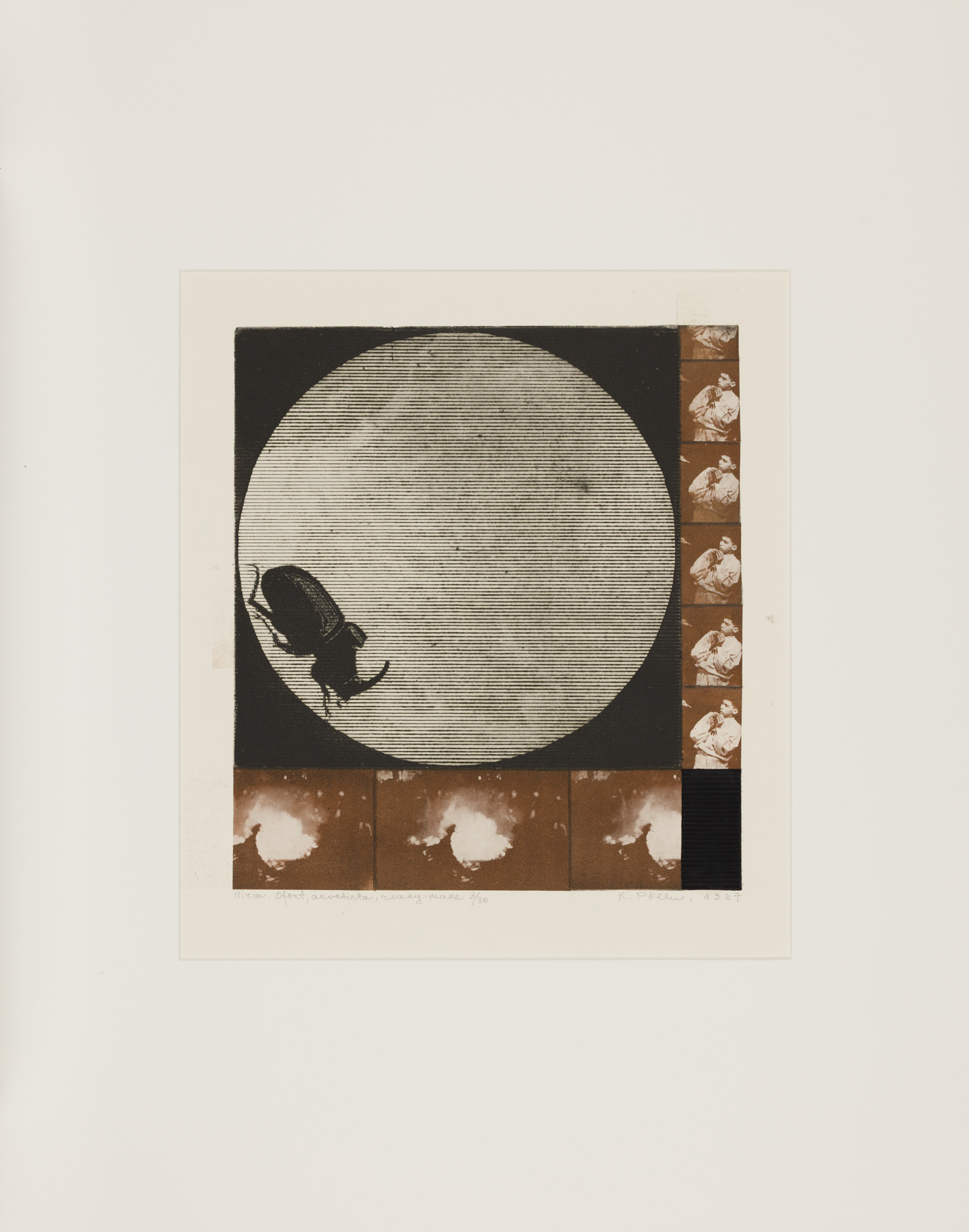
Fear, 1967. Etching, aquatint and photorelief on paper, 32.2 x 29 cm (12 11/16 x 11 7/16 in.). Norton and Nancy Dodge Collection of Nonconformist Art from the Soviet Union. 2000.1296
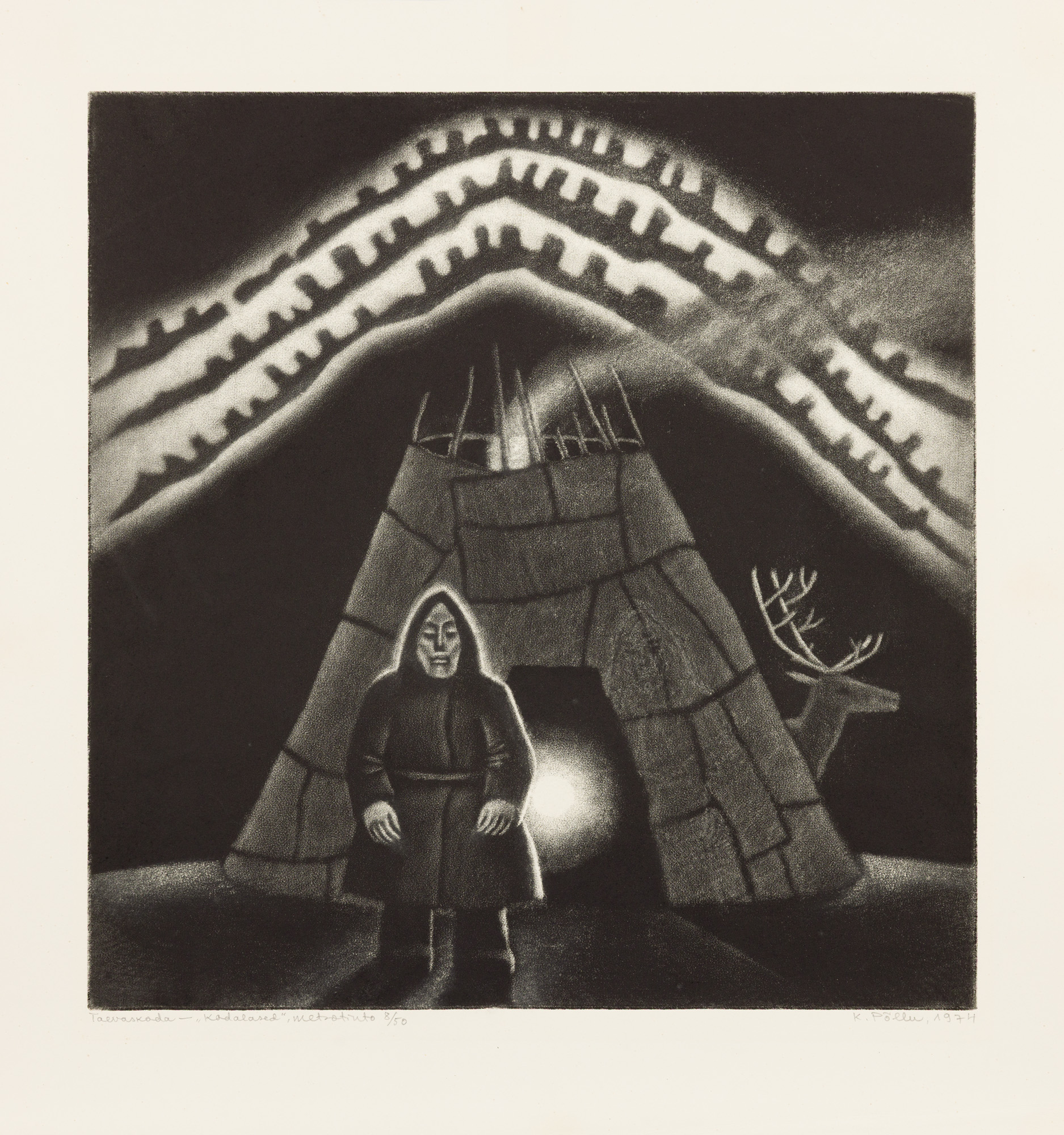
Tent Under the Sky from the series Ancient Dwellers, 1974. Mezzotint on paper, 40.1 × 38.7 cm (15 13/16 × 15 1/4 in.). Norton and Nancy Dodge Collection of Nonconformist Art from the Soviet Union. 2001.1311
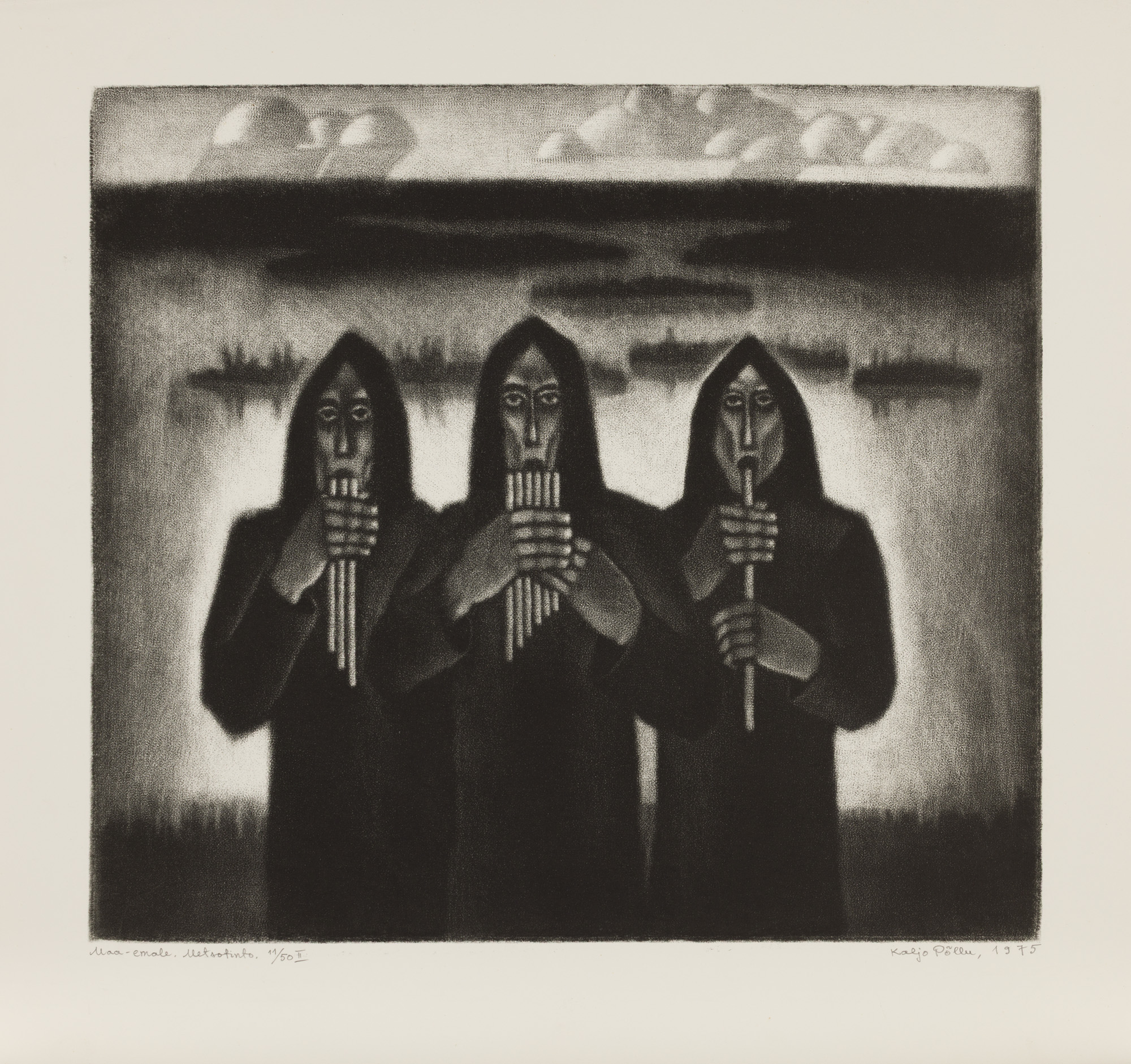
For Mother Earth, 1978. Mezzotint on paper, 38.4 × 42.6 cm (15 1/8 × 16 3/4 in.). Norton and Nancy Dodge Collection of Nonconformist Art from the Soviet Union. 2001.1314
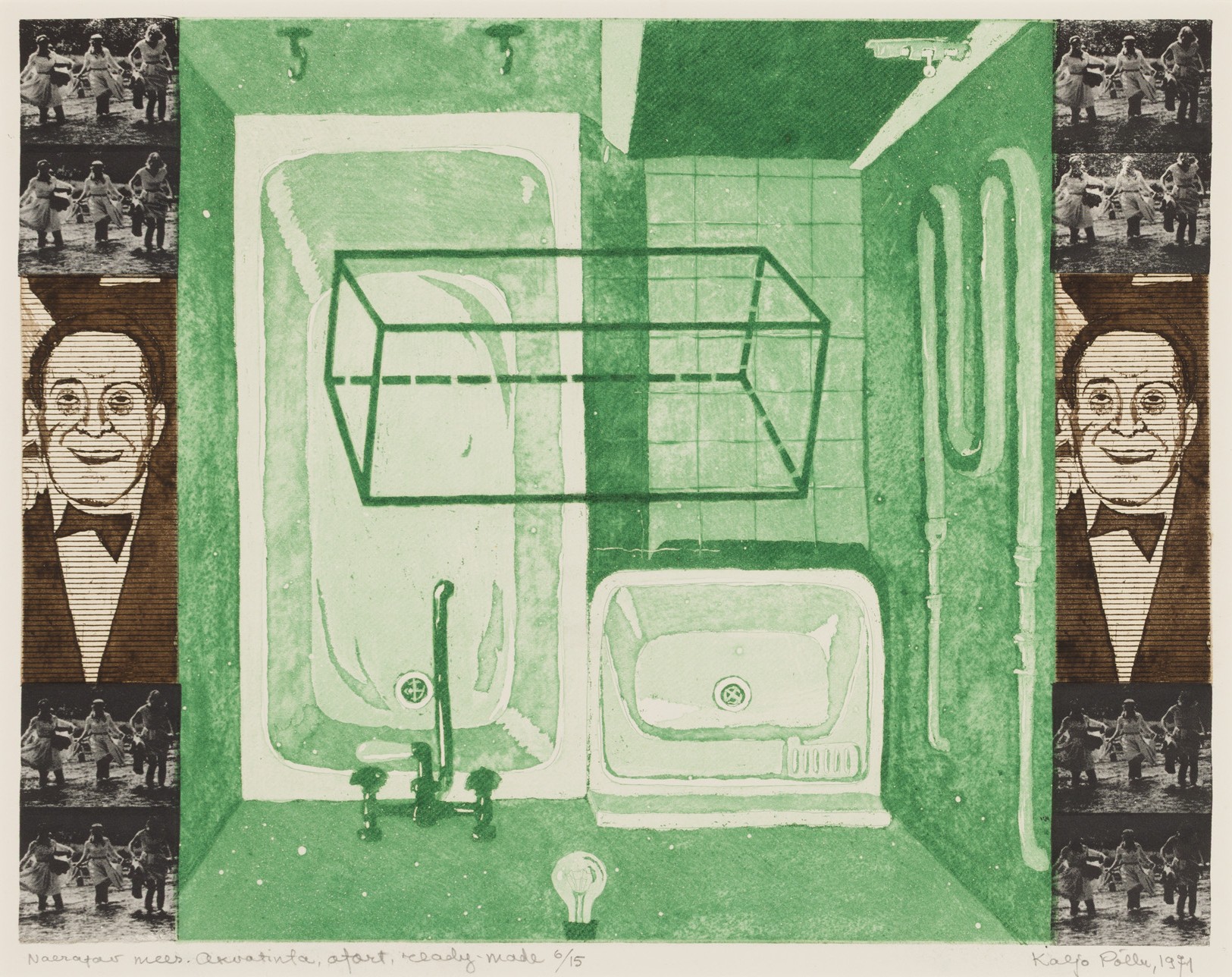
A Smiling Man, 1971. Aquatint, etching, and photorelief on paper, 34.5 × 44.5 cm (13 9/16 × 17 1/2 in.). Norton and Nancy Dodge Collection of Nonconformist Art from the Soviet Union. D18736
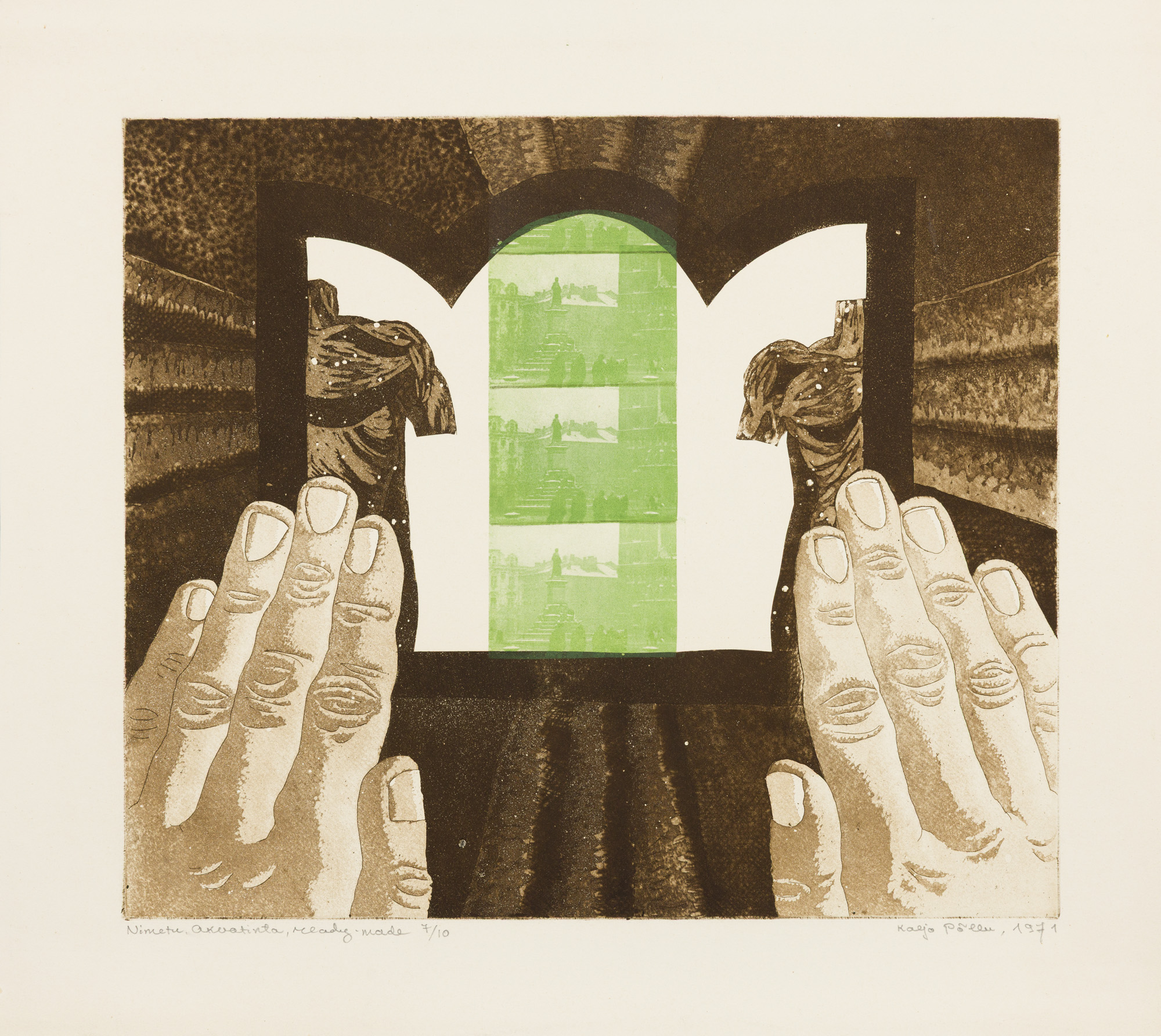
Anonymous, 1971. Aquatint and photorelief on paper, 33 × 38.5 cm (13 × 15 3/16 in.). Norton and Nancy Dodge Collection of Nonconformist Art from the Soviet Union. D18737