
Juzefa Čeičytė
1922 — Aleknos, Rokiškis county (Lithuania) | 2022 — Vilnius (Lithuania). Worked in Šiauliai, Kaunas, and Vilnius (Lithuania)
“A painting is like a prayer and shall be offered as a prayer,” said Lithuanian painter and film and theater artist Juzefa Čeičytė, affectionately called Juta by her friends and colleagues. [1] She was born in 1922 in a small village close to the Lithuania–Latvia border. From 1942 to 1948 she studied painting at the State Institute of Art of the Soviet Socialist Republic of Lithuania (now the Vilnius Academy of Arts), but after her family was brutally deported to Siberia in 1948, she was forced to leave her studies and go into hiding, moving from town to town. Only later, after Joseph Stalin’s death and the Khrushchev Thaw (the partial relaxation of Soviet repressions) in 1953, Čeičytė was accepted to graduate as an external student, although the administration only allowed her to defend a diploma in theater scenography, rather than painting. After that, as art critic Gražina Kliaugienė wrote, the artist continued painting beside or behind the official painting mainstream. “She was accepted neither by the officials nor by her colleagues. Separation between the [artists’] categories at that time didn’t allow for using the term painter for a scenographer who paints. And her paintings didn’t fit the rubrics of current Lithuanian painting.” [2]
In 1945 Čeičytė started working as a scenographer at various Lithuanian drama theaters in Šiauliai, Kaunas, and Vilnius. In 1964 she became a chief artist at Klaipėda Drama Theatre. From 1972 to 1978 she worked as the artist for the Lithuanian Film Studio. In addition, since 1955 Čeičytė’s work had been often exhibited in various group shows of theater artists. The scenography sets offered Čeičytė her first opportunity to experiment publicly with various materials (metal, foil, scraps of textiles) and techniques (collage, stitching). In a 2011 conversation “I’m a Shimmer, Not a Color,” Čeičytė described her creative process: “Grandma’s or grandpa’s sack, full of holes. I embroidered the edges meticulously with accidental stitches. Where there were no holes, I cut them myself, embroidered and made a composition. I didn’t do anything much, only covered this sack with pink paint, and . . . not a bad painting it turned out (I’m not sure where it is now, but one of such kind wanders somewhere).” [3]
The artist’s longtime creative work in theater and film partially became a shield for her painting practice, sometimes even in quite a literal form—some of her paintings used to have double titles, an “official” one borrowed from her theater works and an alternative one. The art historian Kristina Budrytė has noticed that “although facing a dilemma whether to choose an abstract title [for the paintings], or to title them after the names of the theater performances, at that time she chose the latter: Ričardas III[Richard III] in place of her favored Javai [Crops] from 1960, Karalius Lyras [King Lear], 1970 . . . Motušė Kuraž [Mother Courage, after a play by Bertold Brecht], 1966, Otelas [Othello], 1981. Naming her paintings after the plays created more possibilities to publicly show her work; this was her quick-witted trick that constricted her artistic freedom and witnessed the wear and tear of the ideological system of that time.” [4] Although she sincerely enjoyed and was recognized for her work in theater and film, the artist wrote, “Painting was a longing and ache of my life. Whatever I was doing, it was on my mind, my soul. . . . But in painting I always was a loner.” [1]
Even though Čeičytė’s work has been actively presented at group exhibitions by theater artists since the mid-1950s, her first solo exhibition of nontheater work, Juzefa Čeičytė: Scenography, Paintings at the Art Exhibition Palace, Vilnius, opened only in 1982, on the day that Leonid Brezhnev died, beginning a period of national mourning. Her friend, the art historian Audronė Girdzijauskaitė, remembers that there was a huge crowd for the exhibition; this was partly out of fear that the show might be closed down the next day, as had happened before with the exhibitions of abstract artists. [5]
After Lithuania regained independence in 1990, Čeičytė’s paintings were included in more group shows, notably Tylusis modernizmas Lietuvoje 1962–1982 [Silent (Quiet) Modernism in Lithuania 1962–1982 ] and Lietuvos dailė ’97. Galerijos prisistato [Lithuanian Art ’97: Galleries Present], both held in 1997 at the Contemporary Art Center (CAC), Vilnius, Lithuania. Her next solo exhibition at a major museum was Čeičytė Juzefa – laiko ir erdvės metraštininkė [Juzefa Čeičytė: A Chronicler of Time and Space], 2006, at Radvila Palace Museum of Art, Vilnius, Lithuania.
Čeičytė continued to paint, draw, and write poetry up through her nineties. In her later years, however, even though her vision deteriorated, in her semidark state she made what she called her Twilight Drawings: “When she could no longer stand at the easel, she laid the paper on the desk and started drawing with her hand walking the paper through, led by habit and flair.” [6] In 2019 she had her last solo exhibition, titled 97 after her age, at Antakalnio Galerija in Vilnius, Lithuania.
Čeičytė’s work has been included in the most important collections of Lithuanian art, among them the Lithuanian National Museum of Art, Vilnius, Lithuania; the M. K. Čiurlionis National Museum of Art, Kaunas, Lithuania; the Lithuanian Theater, Music and Cinema Museum, Vilnius, Lithuania; MO Museum, Vilnius, Lithuania; and Rokiškis Regional Museum, Rokiškis, Lithuania; as well as in private collections.
Justina Zubaitė-Bundzė
Photo portrait: Aleksandra Jacovskytė. Juzefa (Juta) Čeičytė, scenographer, painter by the Arts Exhibition Palace (now – ŠMC), 1986.
Notes
1. Monika Krikštopaitytė, “Juzefa Čeičytė,” MO Museum.
2. Gražina Kliaugienė, “Jutos tapyba” [Juta’s Painting], in Danutė Zovienė, ed., Gražina Kliaugienė. Su savo tiesa (Vilnius: Nepriklausomi meno kritikai, 2021), 315.
3. Juzefa Čeičytė and Donata Griciūtė-Jutkienė, “Aš ne spalva, o blizgesys. Pokalbis su tapytoja, kino ir teatro dailininke Juzefa Čeičyte” [“I’m a Shimmer, Not a Color”: A Conversation with Painter, Theater, and Cinema artist Juzefa Čeičytė], Krantai 140 (2011): 20.
4. Kristina Budrytė, “Lietuvos abstrakčioji tapyba sovietmečiu” [Lithuanian Abstract Painting in the Soviet Period], PhD thesis, Vytautas Magnus University, 2008, 87.6.
5. A 1967 exhibition of works by Romualdas Lankauskas at the Lithuanian state publishing house, Vaga, had to be dismantled the day after the opening, and the very first solo exhibition of abstractions by Kazė Zimblytė in 1968 (also at Vaga) was shut down two days after the opening.
6. Ramutė Rachlevičiūtė, “Lietuvos abstraktaus meno pradininkės J.Čeičytės-Jutos paroda “97”—Antakalnio galerijoje,” [Exhibition “97” by J. Čeičytė-Juta, Pioneer of Abstract Art in Lithuania, at the Antakalnis Gallery] Bernardinai.lt, September 3, 2019.
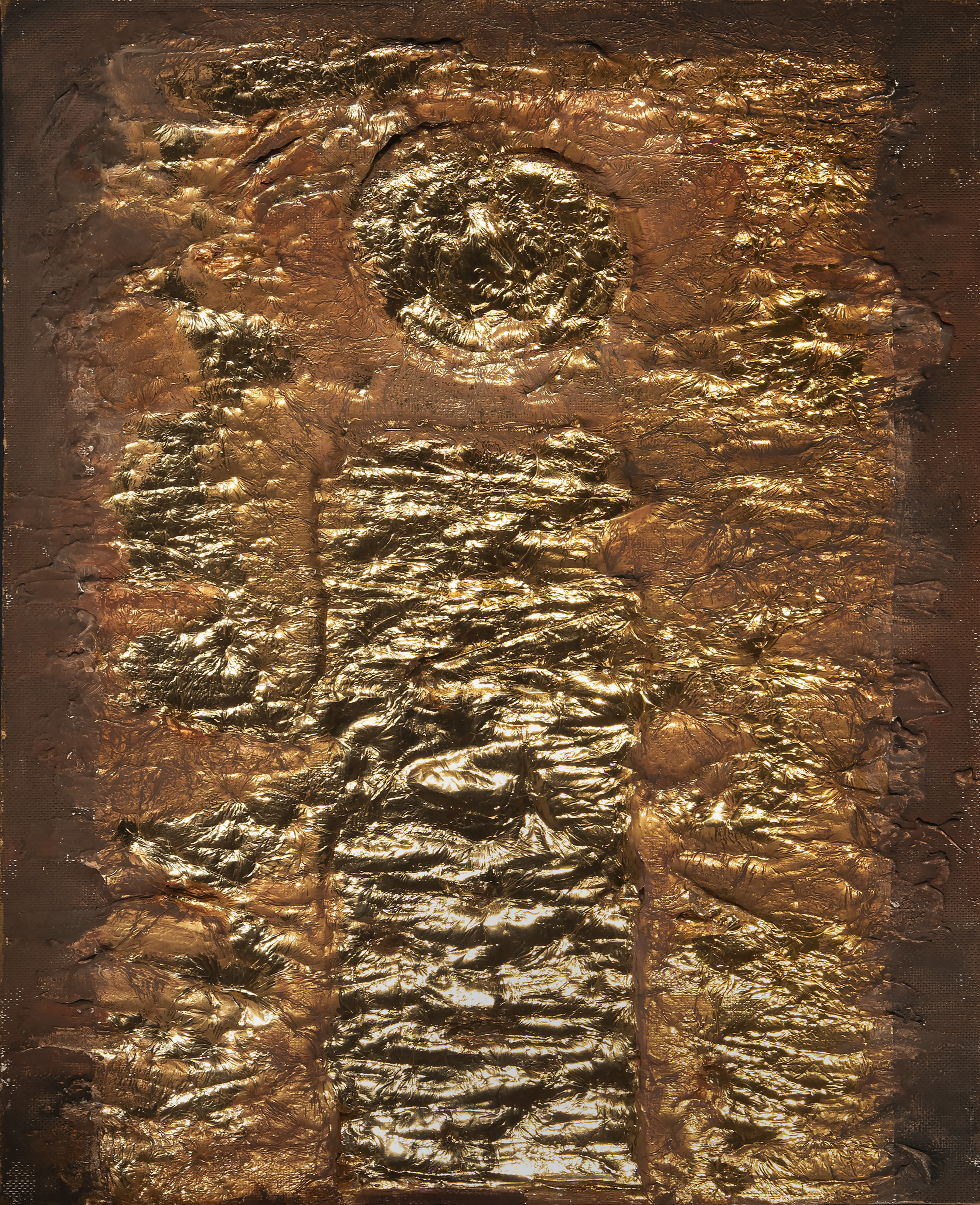
Sunset, 1970. Oil and gold foil on fiberboard, 65.3 × 53 cm (25 11/16 × 20 7/8 in.). Norton and Nancy Dodge Collection of Nonconformist Art from the Soviet Union. D20488

Composition, 1966. Oil, aluminum foil, and mixed media on canvas, 100 × 75.6 cm (39 3/8 × 29 3/4 in.). Norton and Nancy Dodge Collection of Nonconformist Art from the Soviet Union. D20490
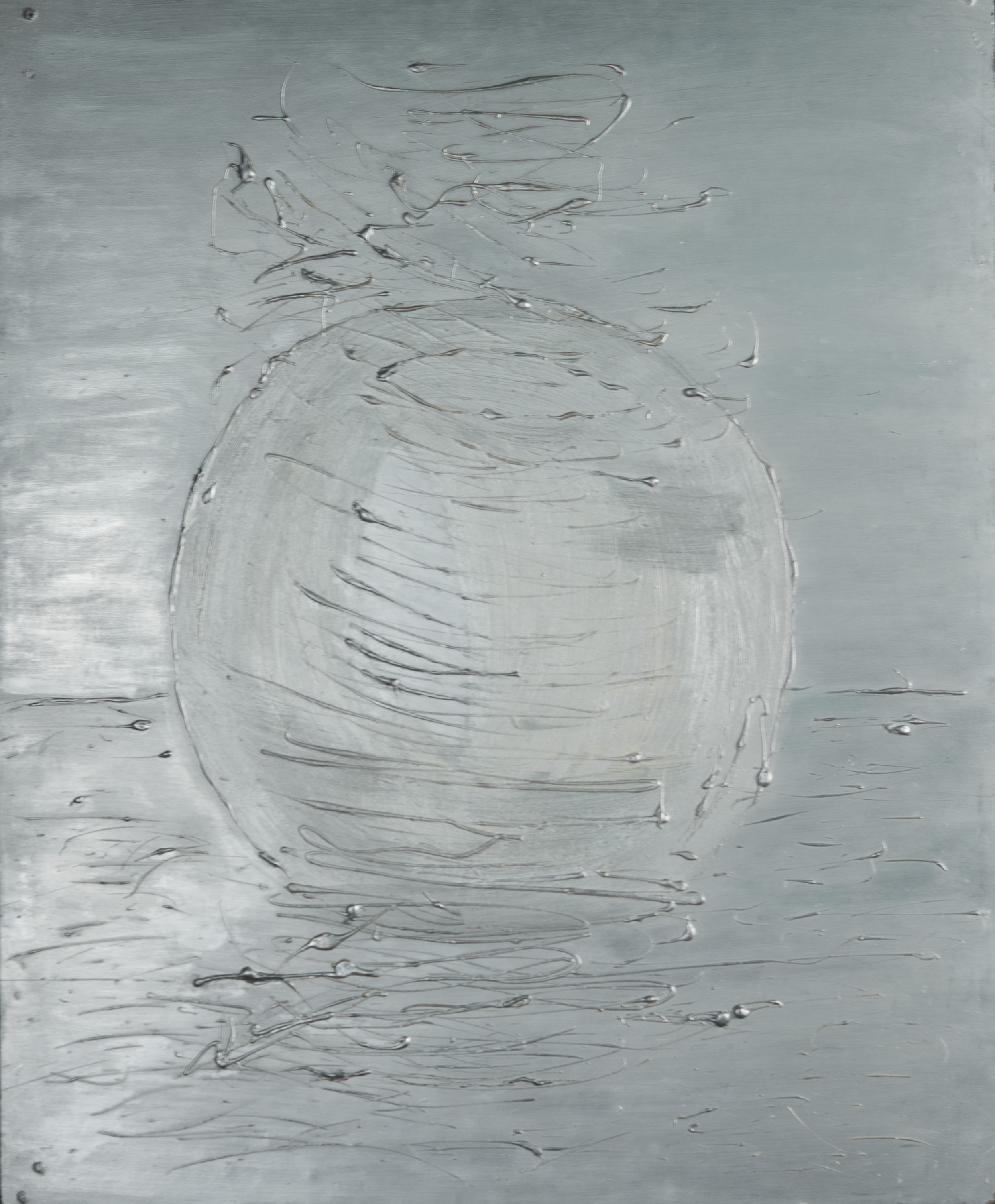
Fog, 1968. Mixed media on fiberboard, 59.8 × 49.6 cm (23 9/16 × 19 1/2 in.). Norton and Nancy Dodge Collection of Nonconformist Art from the Soviet Union. D20491
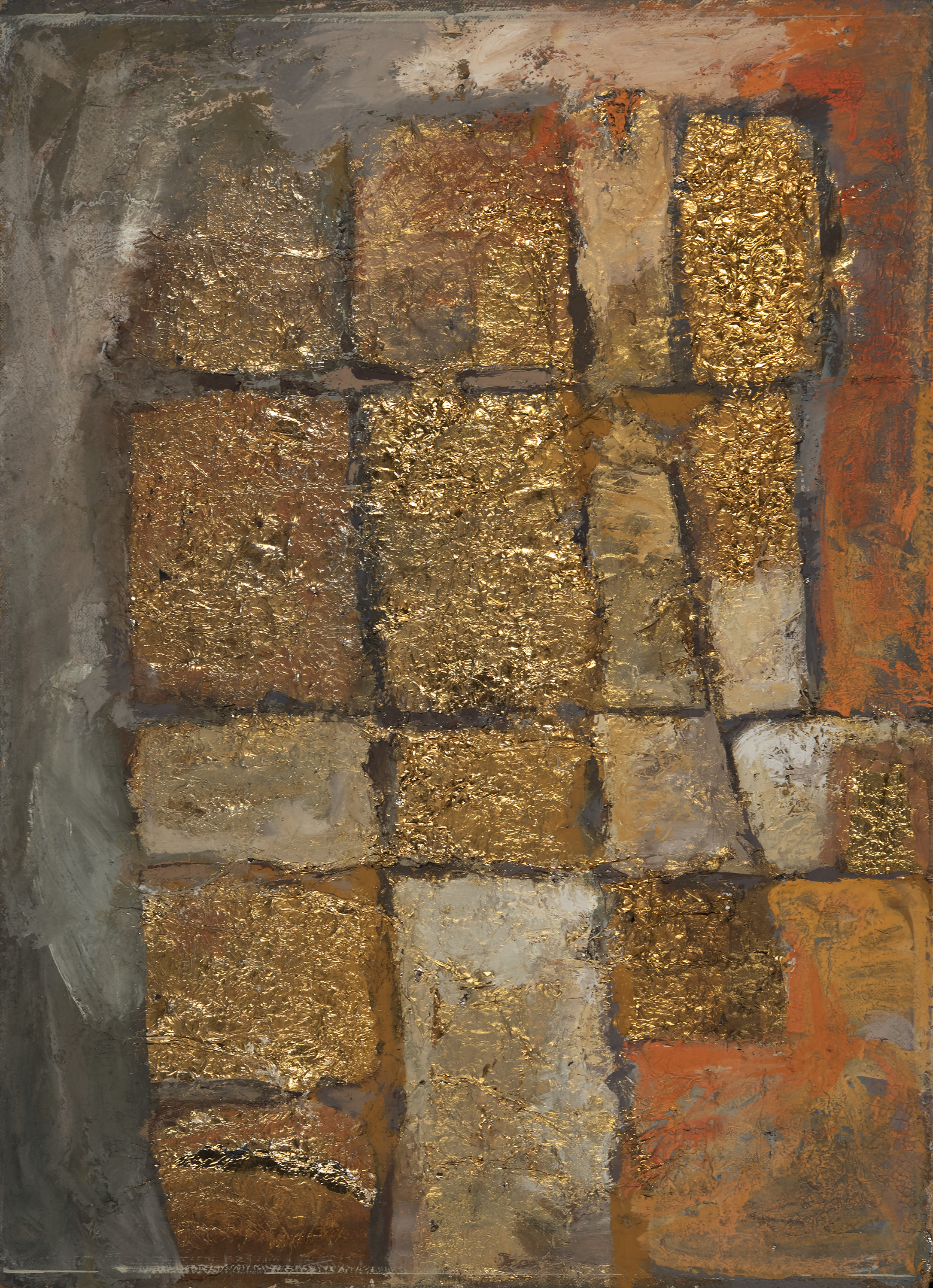
The Wall, 1960. Acrylic and goldleaf on board, 81.9 × 58.4 cm (32 1/4 × 23 in.). Norton and Nancy Dodge Collection of Nonconformist Art from the Soviet Union. D20489
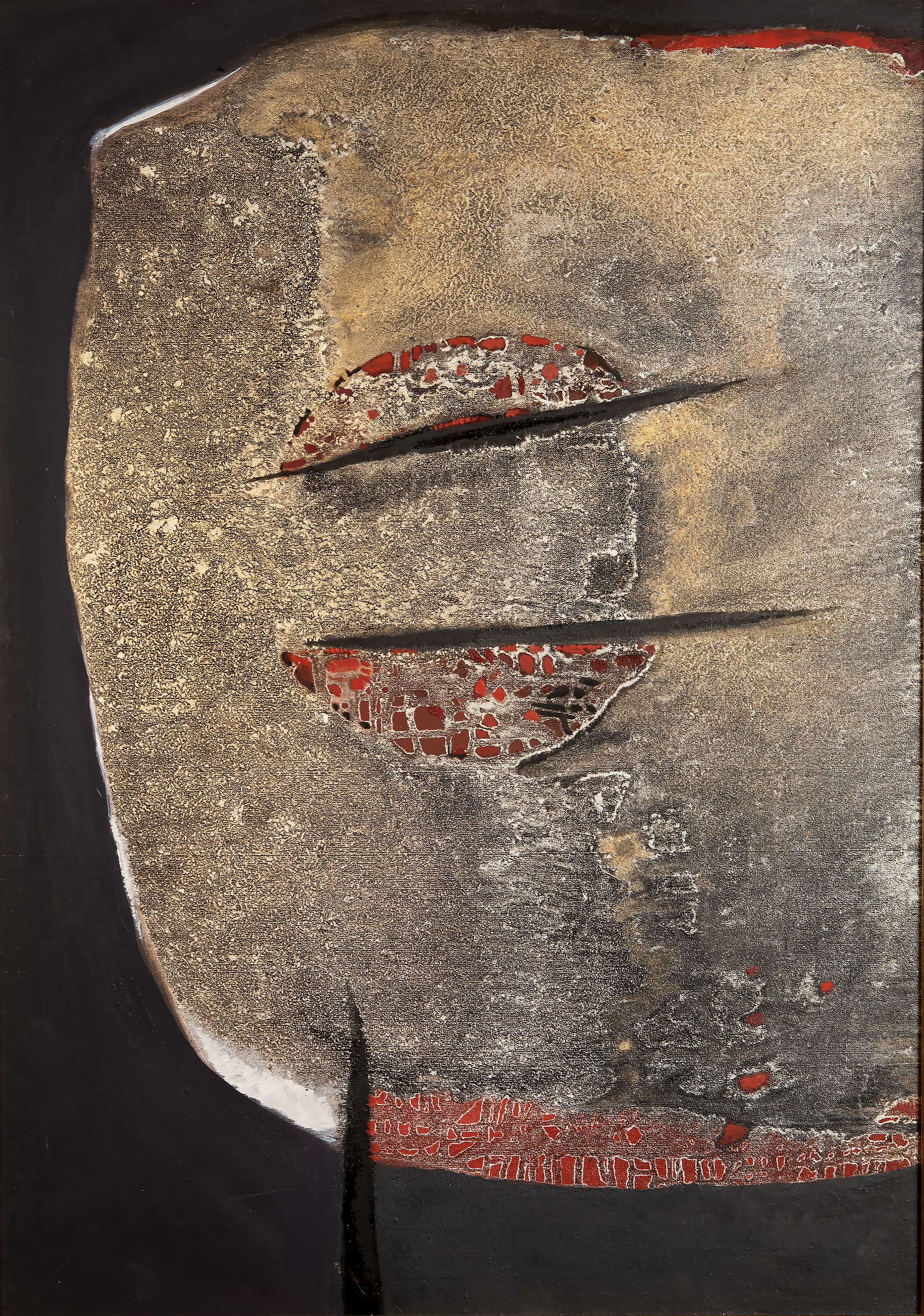
Wall I, 1980. Metallic paint and gouache on fiberboard, 69.2 × 49 cm (27 1/4 × 19 5/16 in.). Norton and Nancy Dodge Collection of Nonconformist Art from the Soviet Union. D20493
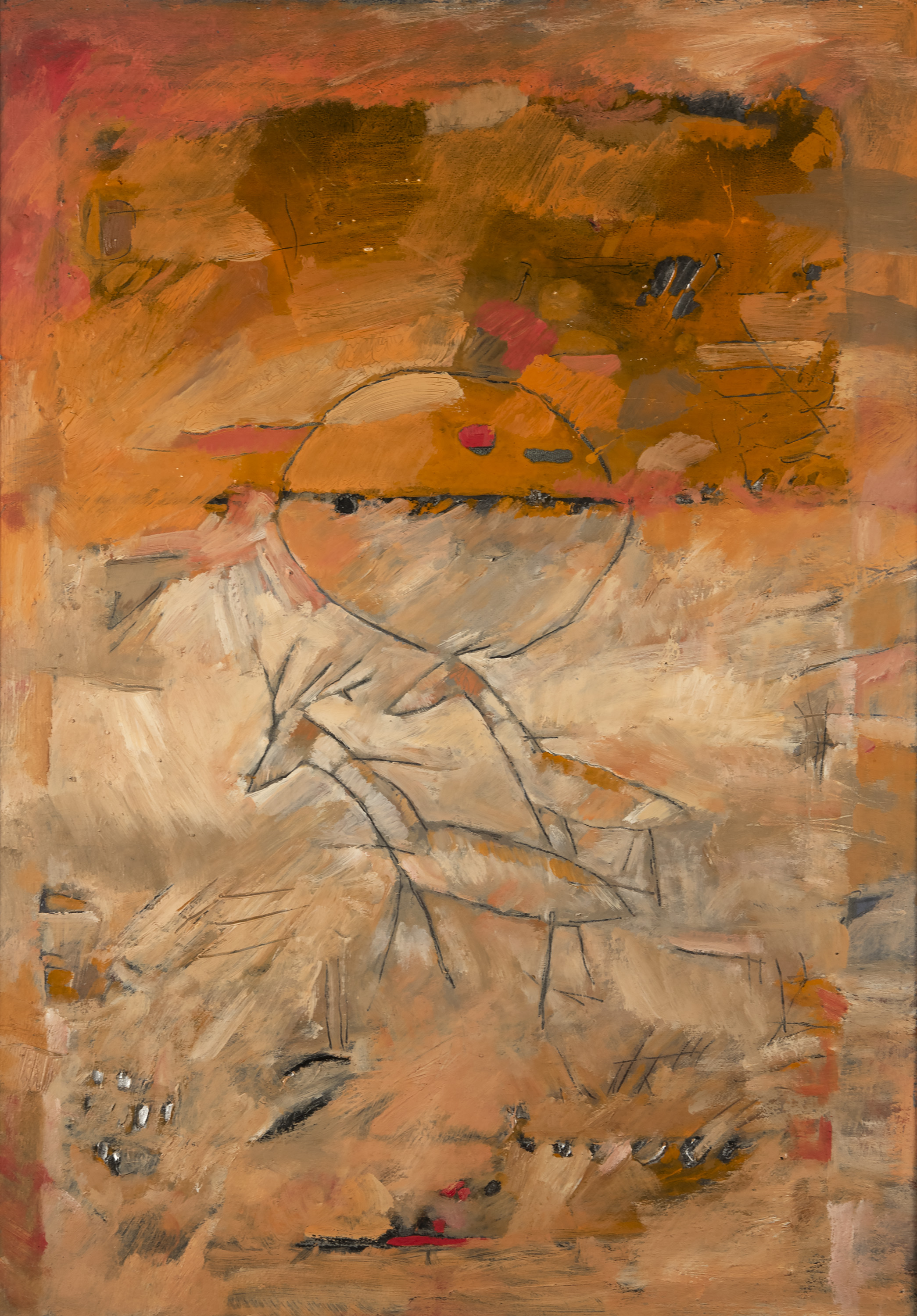
Chronicle IV, 1983. Oil on canvasboard, 70.3 × 50.2 cm (27 11/16 × 19 3/4 in.). Norton and Nancy Dodge Collection of Nonconformist Art from the Soviet Union. D20494
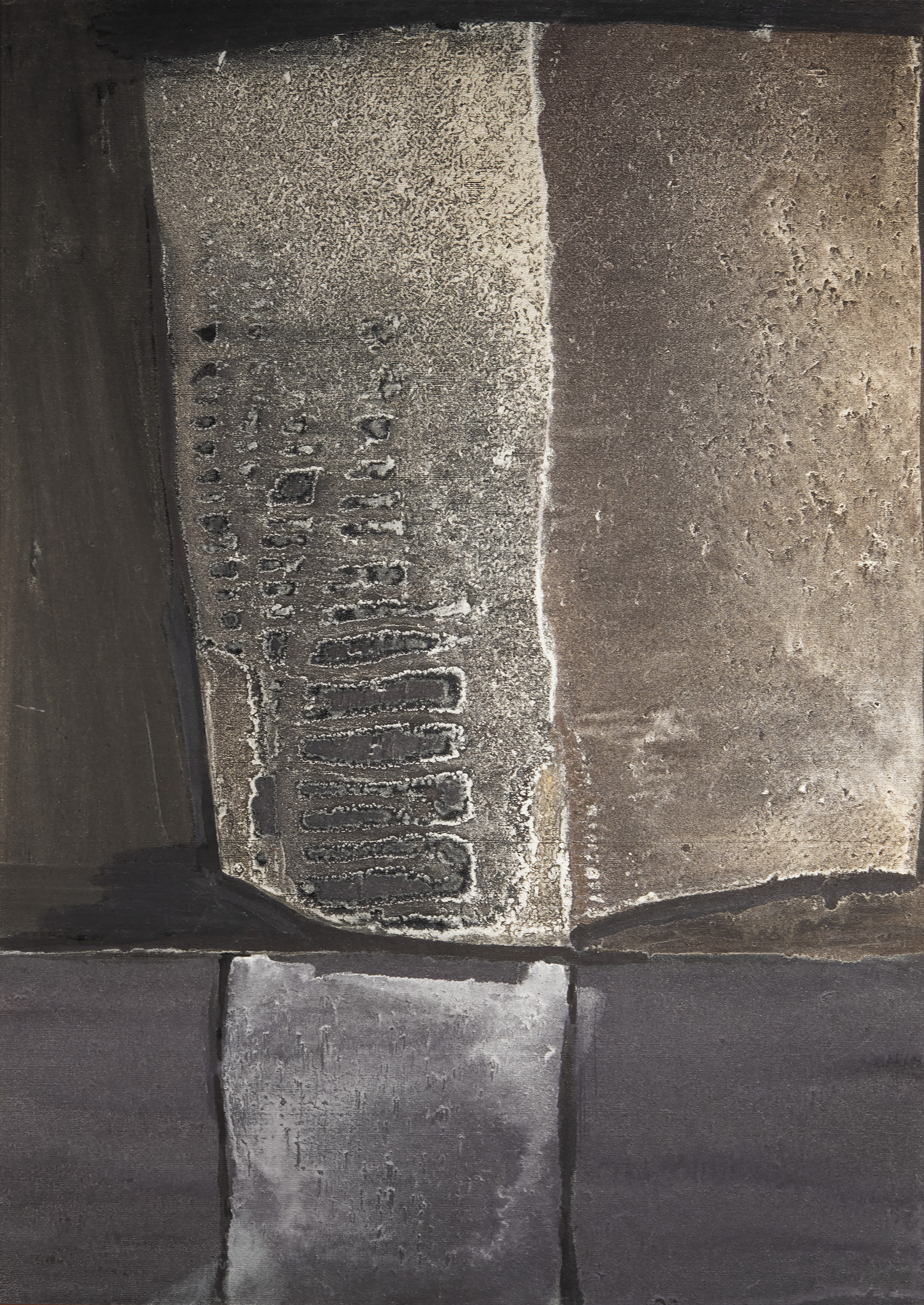
Monuments, 1981. Metallic paint and gouache on fiberboard, 70.2 × 50.4 cm (27 5/8 × 19 13/16 in.). Norton and Nancy Dodge Collection of Nonconformist Art from the Soviet Union. D20531