
Jüri Arrak
1936 — Tallinn (Estonia) | 2022 — Tallinn (Estonia). Worked in Tallinn (Estonia)
Jüri Arrak was born into a family of servants shortly before the Second World War. His father died while fighting in the German army (which many Estonians did, as it was their only way to fight Soviet troops), and he was raised by his mother, who had very little income. Until the early 1960s, Arrak had almost no contact with art. He studied mining and then worked in Leningrad (now Saint Petersburg), where he drove a taxi. It was not until 1961, at the age of twenty-five, that he began his art studies at the State Art Institute of the Estonian Soviet Socialist Republic (now the Estonian Academy of Arts) in the metalwork department.
After graduating in 1966, Arrak started to exhibit as both a painter and a graphic artist. He was not a nuanced or subtle painter but boldly expressive (see, for example, Acrobats [1971, ZAM, D06450]) and, in his early years, even aggressive, focused on the power of color and using nontraditional materials, such as wood and metal. He was a member of the influential avant-garde group ANK ’64 and performed in happenings. [1]
In later years Arrak also worked as a production designer in cinema, a cartoonist, a graphic artist, an illustrator, a stage designer, an ex libris artist, and even a movie actor. He also made large-sized paintings and altarpieces, carpets, and installations; wrote essays about art, religion, and philosophy; and briefly worked as a professor of liberal arts at Tartu University. His characteristic trademark was his grotesque imagery, supported by narrative dramaturgy, expressive color fields, and clear moral messages.
The cornerstones of Arrak’s oeuvre are his distinctive characters, often depicted as if their heads are exploding, and his interest in Christianity. In the 1960s many Estonian avant-garde artists developed an interest in religion, and some of them became deeply religious painters. Arrak was one of them, although his most playful characters blur borders; he recontextualized biblical stories, created unique mythological creatures, and used bright colors more characteristic of pop art than of religious art. He interpreted religious motifs in a not messianic but rather grotesque way. As demonstrated in numerous works—including The Illusionist (1977, ZAM, D05579), Man and Flames (1985, ZAM, D02264), and Puppeteer (1986, ZAM, D06159)—Arrak does not simply illustrate biblical stories but rather builds worlds filled with a variety of myths, archetypes, legends, and characters infused with metaphors, paradoxes, and visions.
“I paint my inner world,” Arrak said in one of his last interviews. “I have always been interested in human relationships and the biological world, from the flea to the elephant.” [2] To show that humans are also animals, part of the organic world, he created hybrid, in some cases anthropomorphic, creatures (as seen, for example, in Bird [1982, ZAM, D05206] and Animal [1982, ZAM, D05207]). Arrak’s animals engage in behavior that reflects but also contradicts the human tendency to be violent and to try to conquer the world, which Arrak was critical of, seeing it mostly as bizarre, funny, absurd, or even insane. During the Soviet era, many of his works stood as critical metaphors of the state. Although he was an established artist who maintained a constant presence in exhibition halls and the media, a number of his paintings can be interpreted as encrypted pokes at the Soviet regime. On many occasions Arrak used a politically loaded blue-black-white combination, representing the colors of the Estonian flag, which was forbidden to be shown. He often depicted in the background a window or door, through which can be seen a brightly lit, idyllic space—a strategy some artists used to show possible parallel worlds that contrasted with the dull nature of everyday life in the Soviet era.
The Norton and Nancy Dodge Collection at the Zimmerli Art Museum boasts nearly 150 of Arrak’s artworks, exploring topics as varied as the human condition, love, death, violence, freedom, obedience, and desire. The human world is, in Arrak’s eyes, comparable to the theater or the circus—a place where people wear masks and play games. Nothing can be taken as sincere. Everything is presented or performed; even animals are often not themselves. These grotesque depictions of hiding, playing, presenting, and pretending can be seen as both political and existential—metaphors for how social conditions under Soviet repression demanded the covering up of one’s true self. Arrak removed all references to his own surrounding reality, instead locating the narratives in abstract, historical, or mythological landscapes. His work asks existential questions: “Who are humans?” “What stories are told in their myths and religions?” “What lies ahead of us?” “What kinds of big changes are waiting?” “What kinds of responsibilities do humans have toward the world and each other?”
The recycling of myths and archetypes has played a central role in all of Arrak’s work but especially in his works from the 1960s. Exploring both Estonian folklore and the Protestant work ethic in his black-and-white prints, the artist widened his repertoire to include themes of the collective subconscious or human experience in a way that combined surrealist, dreamlike situations familiar from his other works with existential undertones.
The distinct way Arrak’s figures and spaces are distorted creates a mythological ecosystem of its own. The scenes, situations, dramaturgy, protagonists, and antagonists can all be seen as part of a wider narrative that continued to develop with each work. Consequently, discussion of his art should focus less on individual pieces and more on his body of work as a whole, which resembles a kind of pictorial Bible. Especially in the 1960s and ’70s, Arrak’s stretched-out forms and expressive colors were an important part of the avant-garde movement that helped refresh the dynamics of Estonian art, which until the 1960s focused more on formal elements such as color and brushwork than on thematic devices like stories and “messages.” His avant-garde experiments not only introduced a different approach, in which artistic details were sublimated in favor of the overall impact of a piece, but also implemented a new way of understanding the function of art. The aim of Arrak’s oeuvre was not to please viewers’ visual senses but rather to provoke analyses of visual, intellectual, and moral paradoxes. “I am deeply interested in the way of mankind, in history, religions, mysticism and legends,” Arrak explained. “Eternity consists of energies and we are only about to get to know this system.” [2]
Eero Epner
Photo portrait: Jüri Arrak, n.d. Photo by Kalju Suur. Courtesy of Art Museum of Estonia. EKMj55390FK680
Notes:
1. The artists’ group ANK ’64 was formed by art students studying at the State Art Institute of the Estonian Soviet Socialist Republic in Tallinn. It was active from 1964 to 1969. The group did not follow a specific style or cultivate any particular philosophy, but all the members had a keen interest in contemporary art. The central figure of the group was the artist Tõnis Vint (1942–2019); other members included Aili Vint (b. 1941), Arrak, Malle Leis (1940–2017), and Marju Mutsu (1941–1980). The name of the group has no direct meaning but rather was left open to interpretation. ANK ’64 had connections to the Moscow unofficial art scene of the time.
2. Jüri Arrak, interview by Jaanus Kulli, Õhtuleht, October 24, 2021.
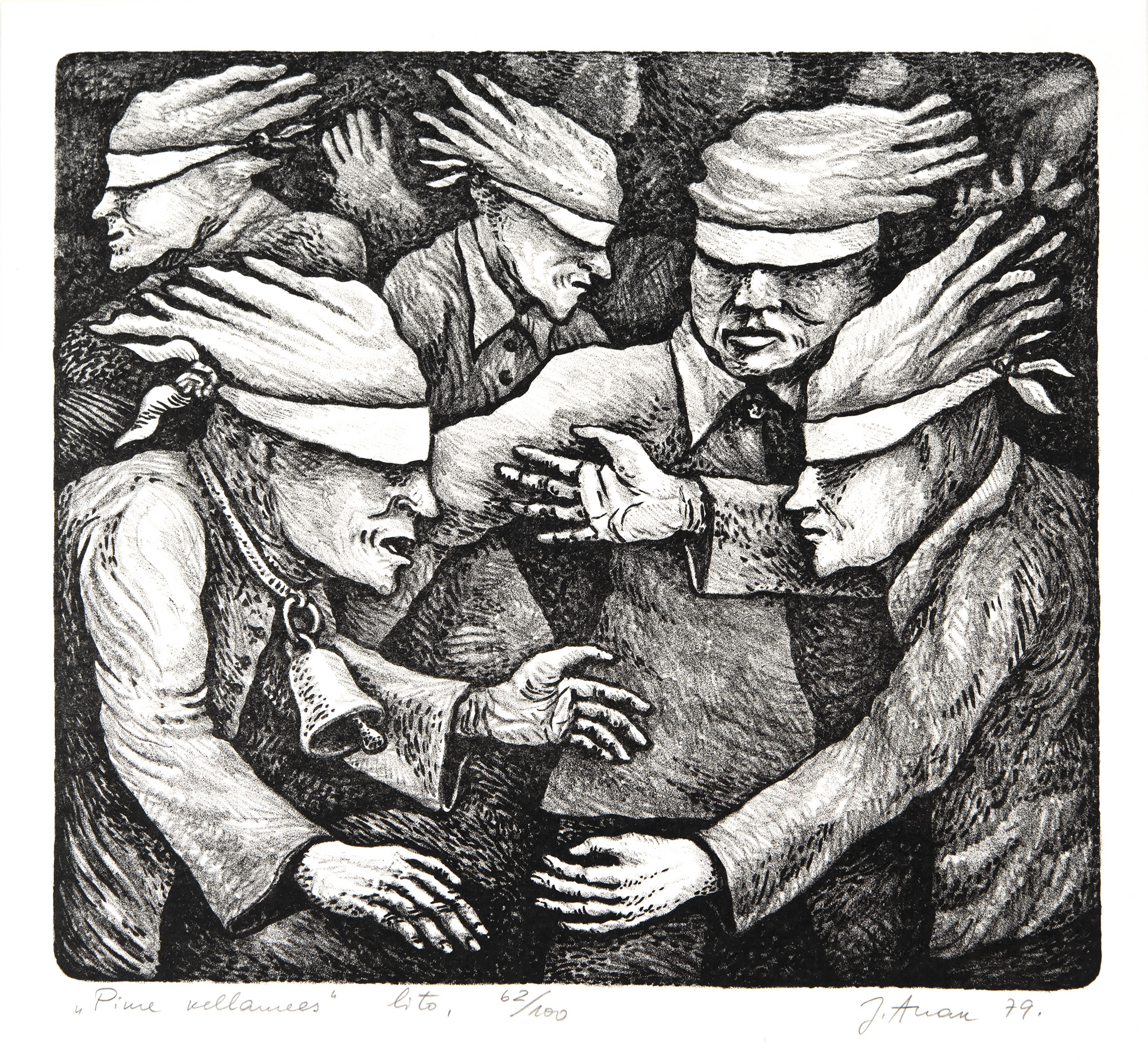
Blind Man's Bluff from the series Estonian Folk Games, 1979. Lithograph on paper, 18.5 × 21 cm (7 5/16 × 8 1/4 in.). Norton and Nancy Dodge Collection of Nonconformist Art from the Soviet Union. D05922
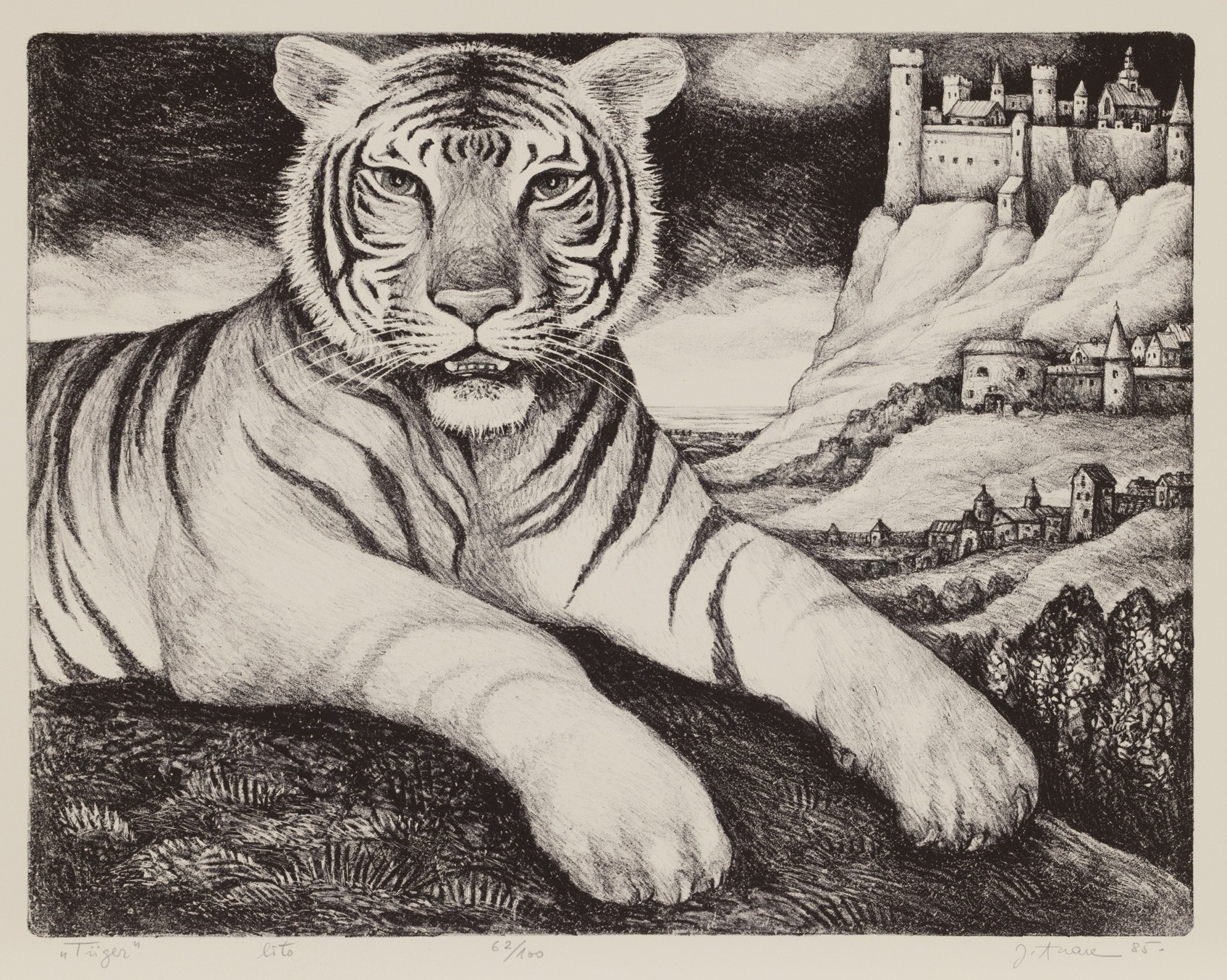
Tiger, 1985. Lithograph on paper, 32.6 × 42 cm (12 13/16 × 16 9/16 in.). Norton and Nancy Dodge Collection of Nonconformist Art from the Soviet Union. D02254
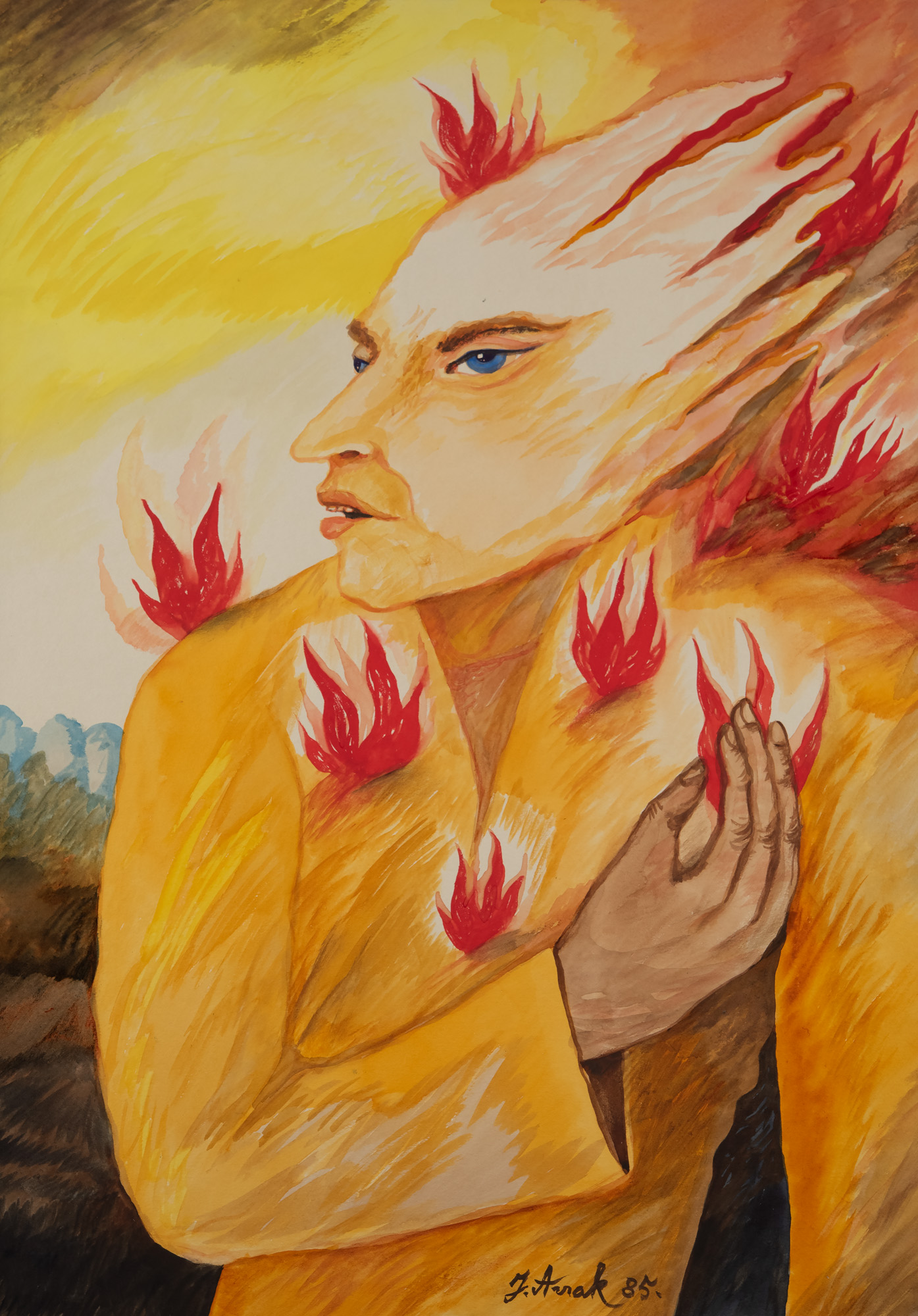
Man and Flames, 1985. Watercolor on paper, 62.2 × 42.1 cm (24 1/2 × 16 9/16 in.). Norton and Nancy Dodge Collection of Nonconformist Art from the Soviet Union. D02264
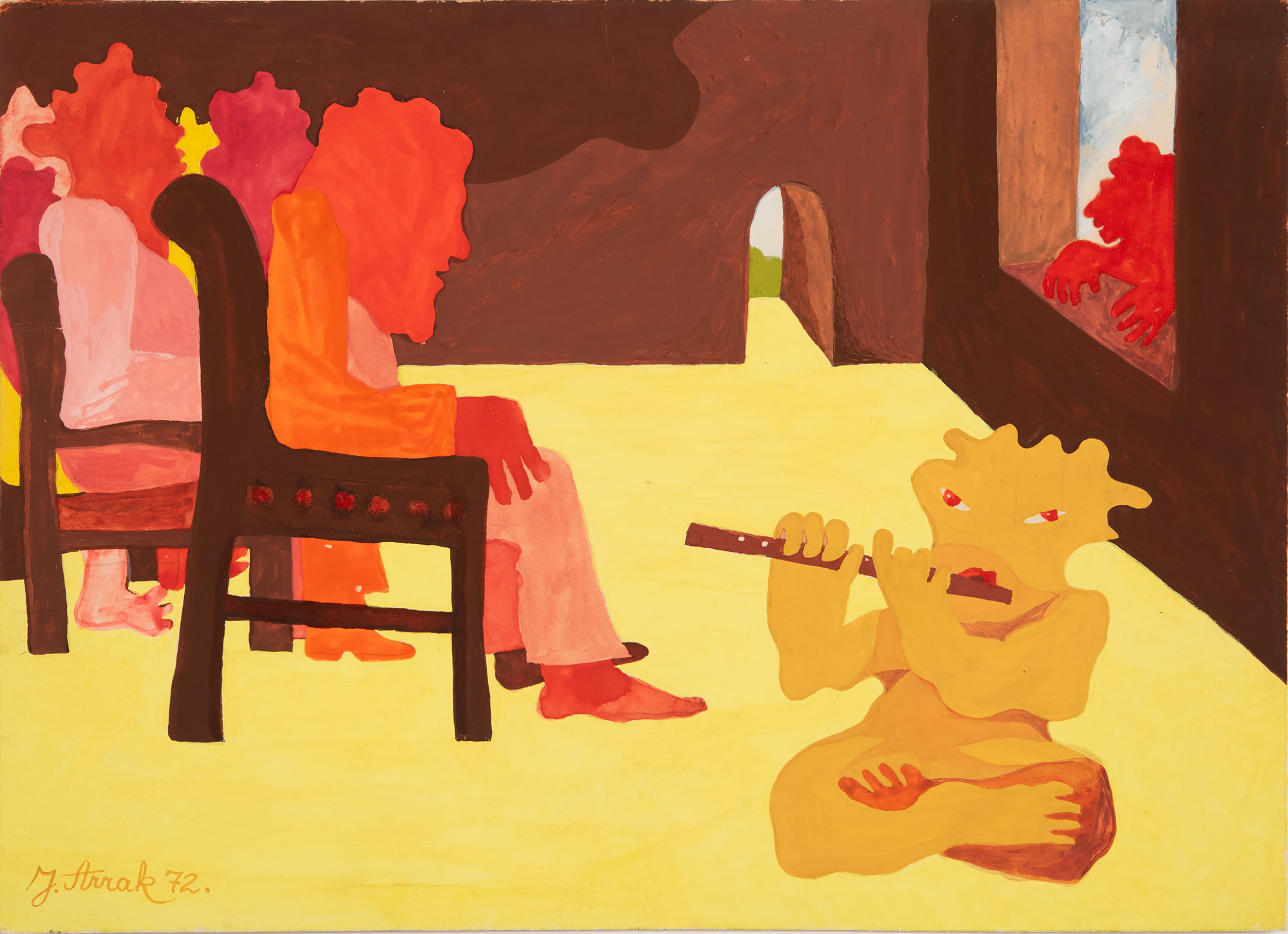
Untitled, 1972. Gouache on illustration board, 16.2 × 22 cm (6 3/8 × 8 11/16 in.). Norton and Nancy Dodge Collection of Nonconformist Art from the Soviet Union. D02355
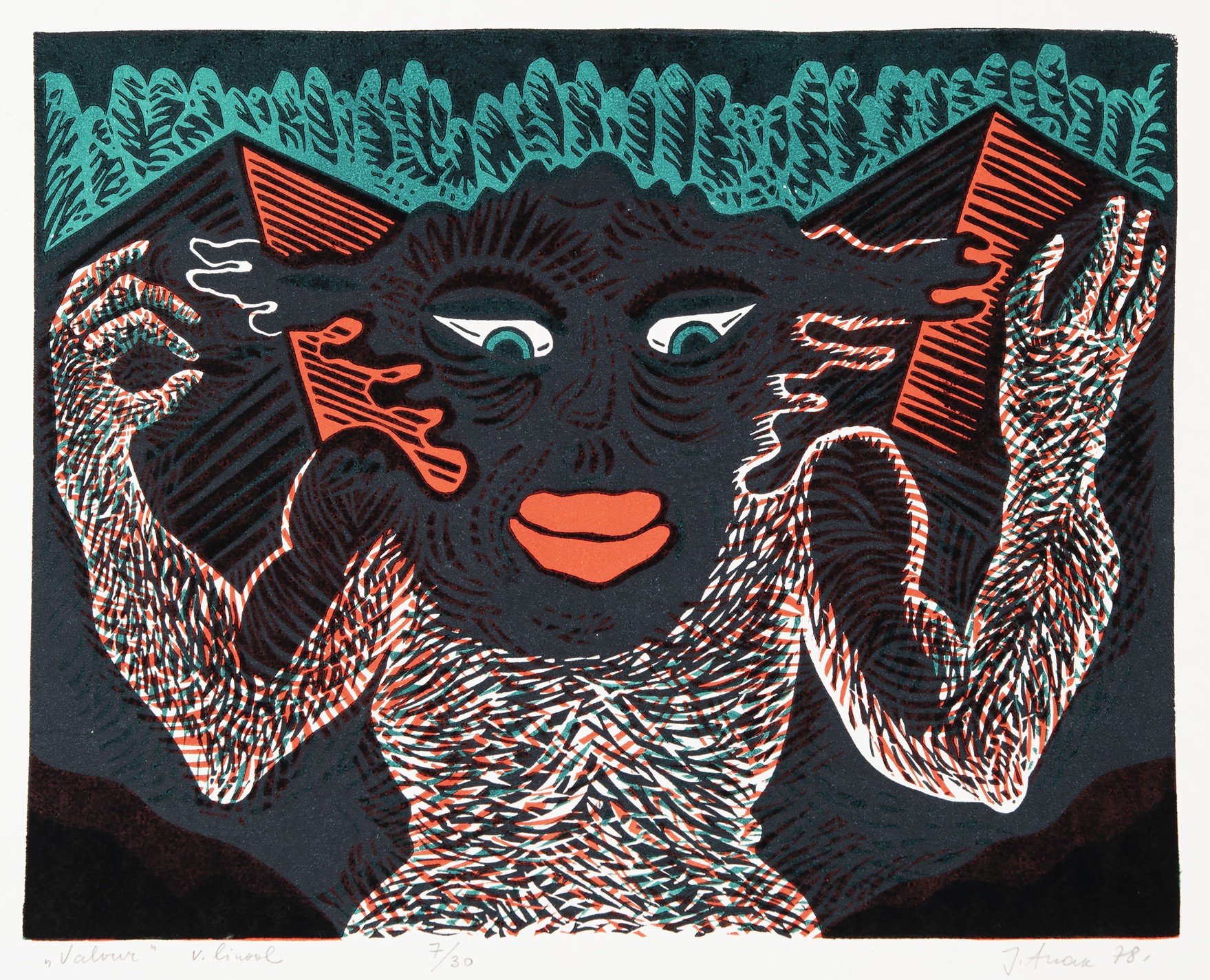
Watchman, 1978. Linoleum cut on paper, 24.6 × 31.6 cm (9 11/16 × 12 7/16 in.). Norton and Nancy Dodge Collection of Nonconformist Art from the Soviet Union. D03611
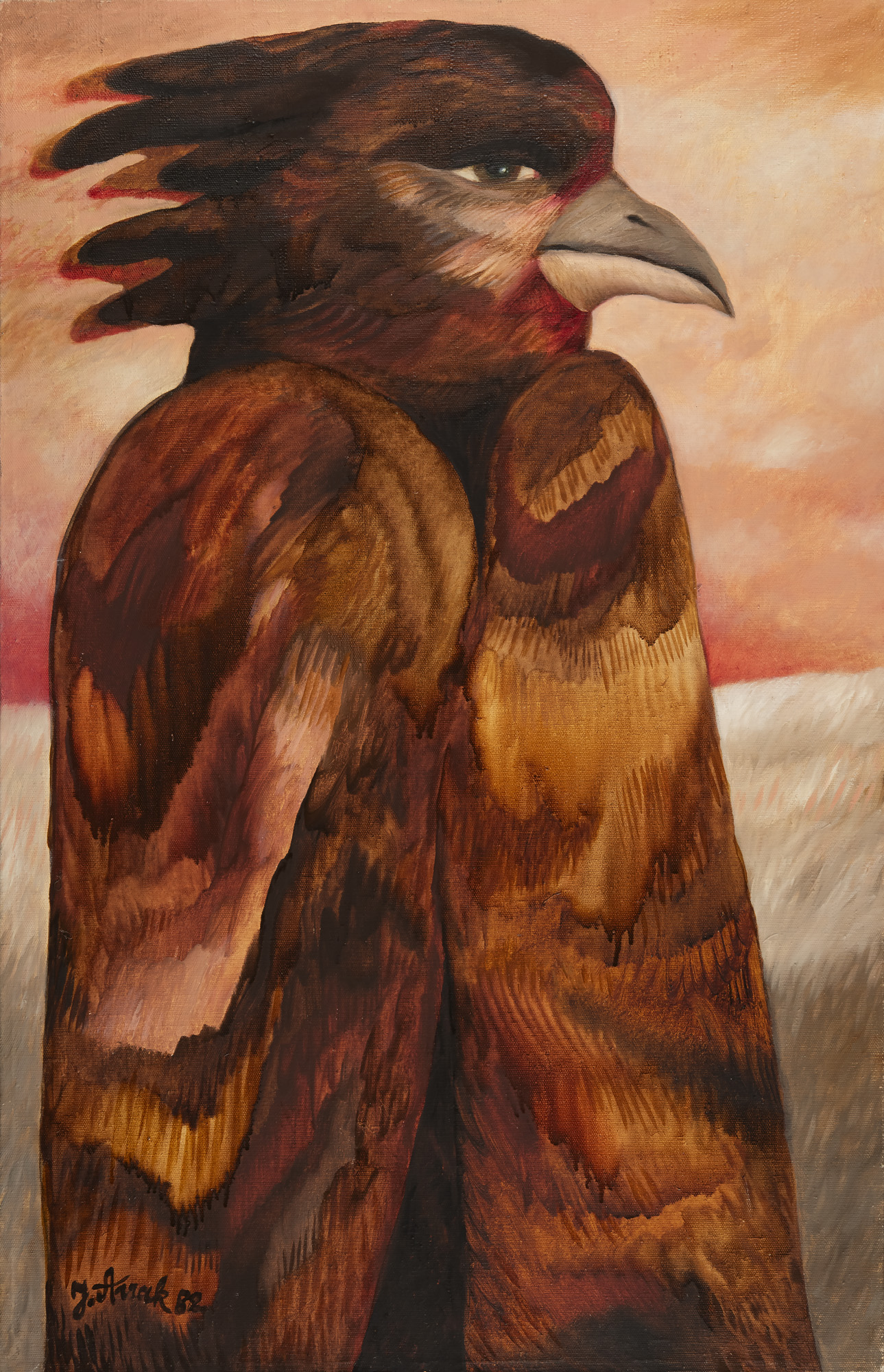
Bird, 1982. Oil on canvas, 95.5 × 60.2 cm (37 5/8 × 23 11/16 in.). Norton and Nancy Dodge Collection of Nonconformist Art from the Soviet Union. D05206
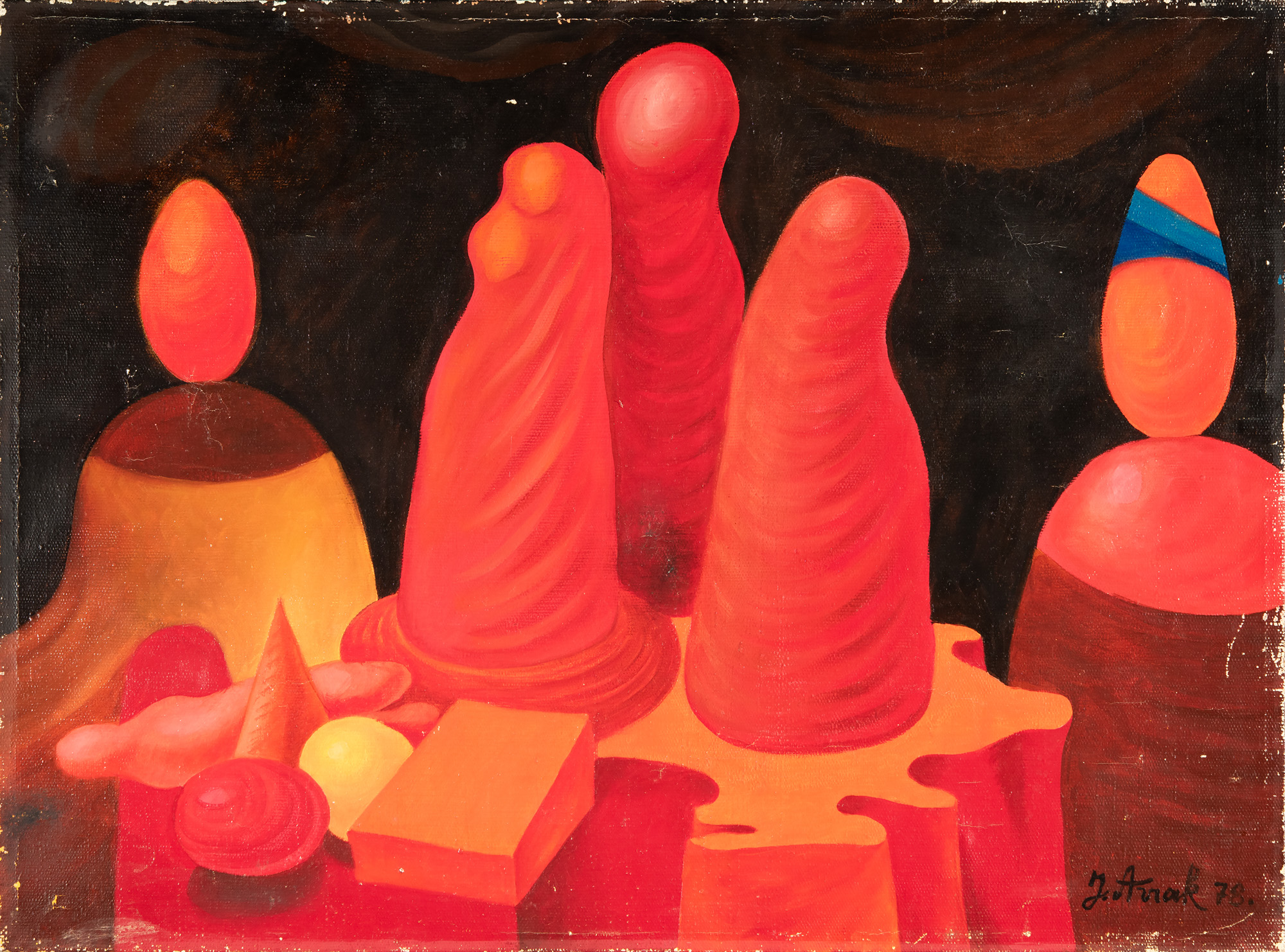
Evening Still Life, 1978. Oil on canvas, 43.2 × 58.5 cm (17 × 23 1/16 in.). Norton and Nancy Dodge Collection of Nonconformist Art from the Soviet Union. D06085
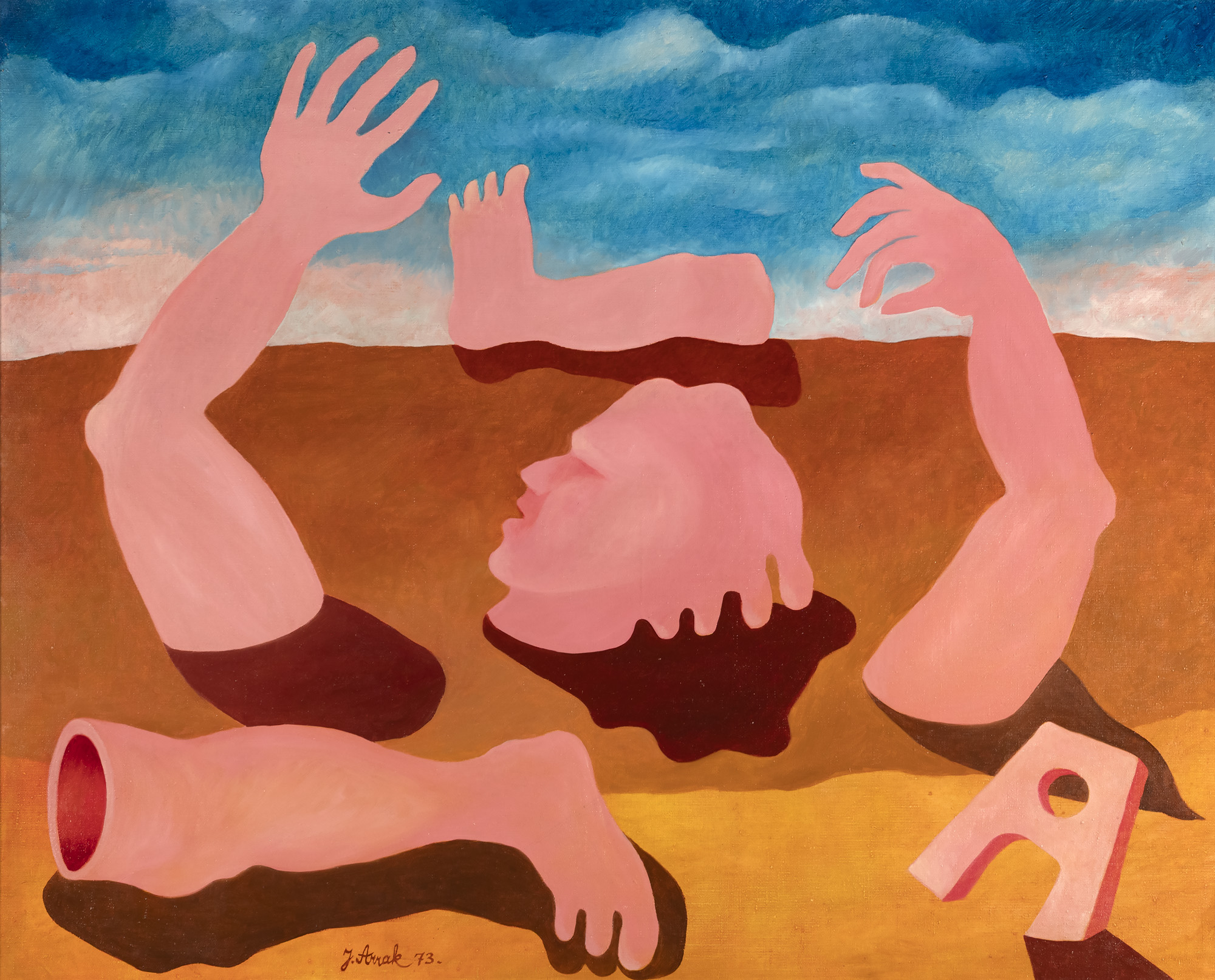
Broken Sculpture, 1973. Oil on canvas, 97.5 × 119 cm (38 3/8 × 46 7/8 in.). Norton and Nancy Dodge Collection of Nonconformist Art from the Soviet Union. D06492
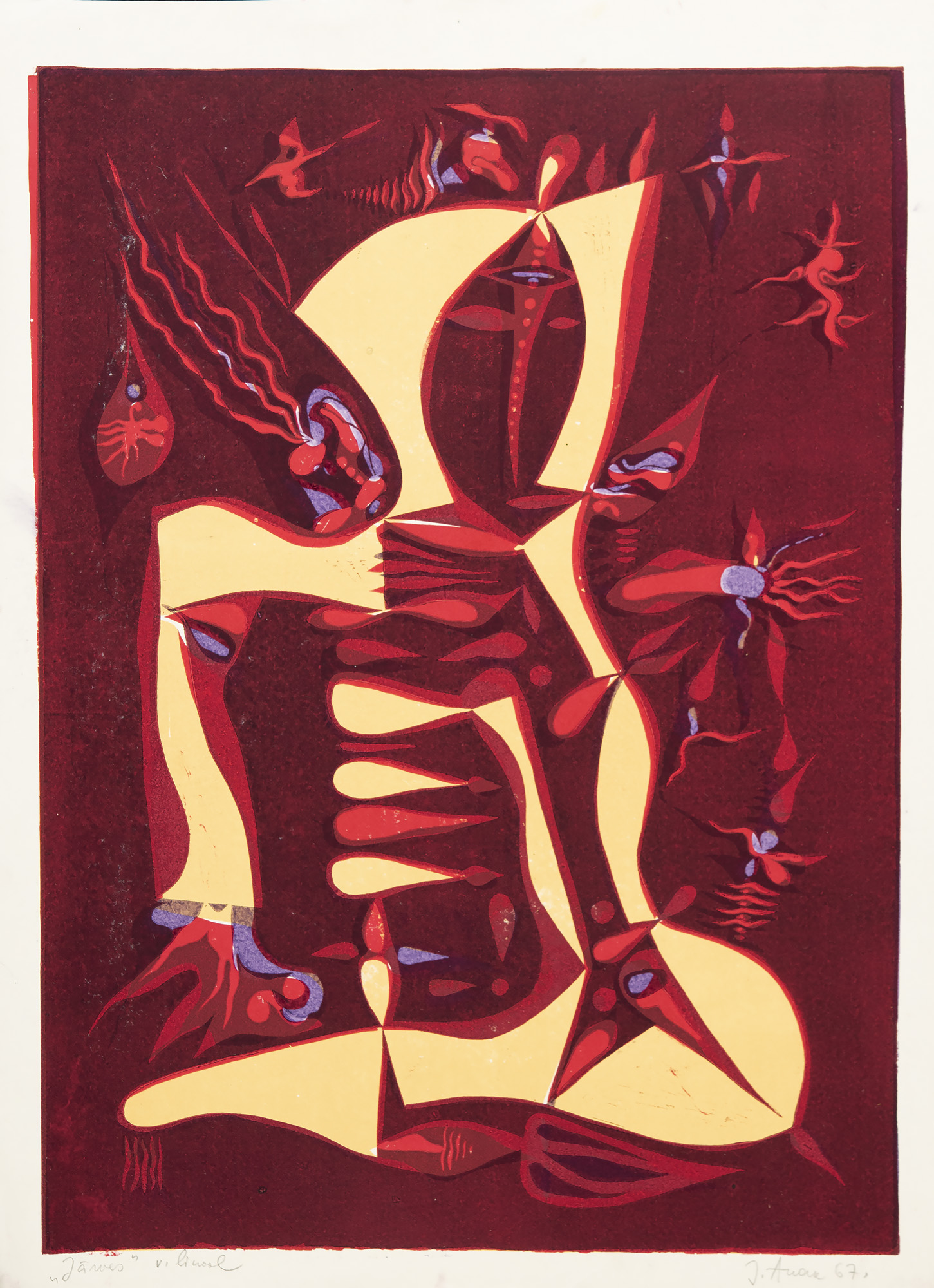
In the Lake, 1967. Linoleum cut on paper, 48.3 × 33.9 cm (19 × 13 3/8 in.). Norton and Nancy Dodge Collection of Nonconformist Art from the Soviet Union. D09024