
Jānis Knāķis
1957 — Riga (Latvia). Works in Riga (Latvia)
Jānis Knāķis is a Latvian photographer best known for his surreal, thought-provoking photomontages from the 1980s. Using photomontage and combination printing techniques, he built and manipulated his visual narratives through his extensive darkroom work.
Knāķis showed an interest in filmmaking at an early age, and while still a high school student, he joined the amateur film studio Spectrum, at the Riga Young Technicians Station (now the Riga Young Technicians Center). Knāķis’s early 8 mm amateur film Divnieks [Failing Grade] (1973, 4.58 min.) reveals a fascination with contrasts between dreams and reality. In 1979, while taking construction engineering classes at Riga Polytechnic Institute (now Riga Technical University), he joined the VEF (Valsts elektrotehniskā fabrika, State Electrotechnic Factory) Culture Palace People’s Art Photo Studio, headed by Gunārs Birkmanis (1931–2011). After graduating in 1980, Knāķis continued to work at the university, and he was invited to manage the Department of Architecture’s photo laboratory. In 1983 he joined Photo Club Riga, one of the leading clubs in the Soviet Union. In the following years, he learned darkroom techniques under the guidance of Mārcis Bendiks (b. 1955), a Latvian photographer and master of darkroom printing. Knāķis learned how to craft a visual story in a single image that conveys a narrative and evokes emotions from Vilhelms Mihailovskis (1942–2018), a Latvian photographer with a distinctive style of humanist photography. Spending countless hours honing his skills in the darkroom, Knāķis soon became adept at a range of techniques and alternative printing processes, including combination printing, collage as a wet process, and masking—methods that involve layering multiple negatives, manipulating photographic emulsions, and selectively blocking light to create complex, handcrafted images.
His work from the 1980s is characterized by rich, imaginative creativity, and although he employed various methods of manipulating images—including coloring, drawing, and other manual interventions—his compositions emerged directly from the darkroom and his own vision. As he explained his priority and vision: “The main thing is the idea. I construct the images. . . I visualize my dreams. Compiling real things to create an image produces an unreal vision.” [1] Combining his technical skills and creative imagination, he carefully constructed images that blend reality and fantasy. Perhaps unsurprisingly, his earliest photomontages, such as The Genie Is Out of the Bottle (1981), seem like something out of a fairy tale and far removed from everyday Soviet life. For this image he dressed up as an eccentric English gentleman wearing a top hat and fur coat and photographed himself sitting at a table and reading a newspaper. The picture has an unusual mise-en-scène, set in a snowy field, and the “genie” steams out of a bottle on the table, which has the same texture as the snowbanks. The protagonist’s arrogant attitude suggests that this image is an allegory of the typical Soviet citizen, who stoically endures stark contrasts in his daily routine. This photomontage was one of over forty photographs from 1981 to 1986 included in his first solo show, Jānis Knāķis: Photographs, organized by Photo Club Riga at the of Polygraphic Culture House in 1986.
Although Knāķis employs a variety of techniques to address a wide array of issues, all of his work displays an overarching commitment to better understanding and finding his place as a human being in the cultural landscape of Soviet Latvia. The photomontages are funny, ironic, disturbing, erotic, thought-provoking, and unexpected. The themes include love, death, dreams, nudes, and disturbing visions from the Cold War. “When working on a photography project, I want to surprise the audience, sometimes maybe even irritate them a little, but certainly not leave them indifferent,” Knāķis says. [2] Captions play a significant role in his work, such as A Modernized Fairy Tale about the Flying Witch and the House on the Chicken Leg (1983), The Crash of an Unidentified Flying Object (1985), and A Two-Headed Dog (1986). His approach to photography has been characterized by satire and absurdity, as illustrated in Life in Three Corners (1983), which humorously captures the confined existence of homo sovieticus, navigating life between the couch, kitchen table, and WC within a single room bordered by exterior walls. Alongside images of professional models and friends and family members, the photographs—such as Fantasy and Reality, or a Self-Portrait with the Family (1983)—often include Knāķis himself.
In the 1980s, as an emerging artist, Knāķis sought to challenge his audience through his art, and also by performative experiments in displaying it. At several exhibitions in 1986 (in Sauka, LSSR, and Krasnogorsk, RSFSR), as well as his display of photographs in a classic manner on the walls, Knāķis provided a live performance by hanging his works on his torso. He later explained that the idea was to evade Soviet censorship and also, as the space for the display was limited, to use his body as a canvas. In that decade Knāķis also produced a lesser-known documentary photography series dedicated to environmental protection and peace. While early in his career Knāķis did documentary photography as well as photomontages, his creative experiments have attracted the most attention in art criticism. And while he mostly used a single image as a tool for storytelling, Knāķis also created series during his long career. The series Who Is to Blame (1986, Zimmerli collection, 2000.1030–2000.1034) includes six photomontages that portray how alcohol addiction can affect children’s lives. Knāķis’s later series, The Bottom (1991–), marks a radical departure from his earlier work, both in terms of aesthetics and concepts. The series incorporates various anonymous models’ nude bodies into a range of isolated settings, emphasizing their backs. The Bottom departs from the surrealist and performative idioms characteristic of Knāķis’s Soviet-era work, embracing a more overtly commercial and erotic visual language shaped by the newly emerging conditions of cultural production and market-driven aesthetics in the post-Soviet period.
Knāķis worked as a freelance commercial photographer and photojournalist in parallel to the expression of his highly personal vision. Starting in the early 1980s, Knāķis published his photographs in various magazines and newspapers, such as Padomju jaunatne [Soviet Youth], Liesma [The Torch], and Avots [The Source]. The major political and economic changes following the restoration of Latvia’s independence in 1991 also affected the photography industry. In the 1990s, as a freelance photographer, Knāķis expanded his commercial photography portfolio, working on advertising photography projects and long-term erotic photography commissions for the adult magazine Melnā Pantēra [Black Panther], and other printed media in Latvia. In 1995 he collaborated with the publishing house Artava.
Knāķis has been involved in Latvia’s national photography organizations, including the Society of the Art of Photography (1987–89), the Latvian Photo Artists’ Union (1989–2002), and the Union of Photography Art in Latvia (since 2002). His work has been exhibited in numerous galleries and museums worldwide since 1986, including the Latvian Museum of Photography in Riga and the Melbourne Camera Club.
Baiba Tetere
Photo portrait: Jānis Knāķis, Self-Portrait, 1986.
Notes
1. Anda Klotiņa, “Rotaļāšanās ar lidojošo šķīvi un citām lietām [Playing with an Unidentified Flying Object and Other Things],” Padomju jaunatne, December 18, 1985. https://periodika.lndb.lv/periodika2–viewer/?lang=fr#panel:pa|issue:127110|article:DIVL224.
2. G. Ārs, “Fragments fotomākslas mozaīkā [A Fragment in the Mosaic of Photo Art],” Rīgas Balss, February 1, 1986. https://www.periodika.lv/periodika2–viewer/?lang=fr#panel:pa|issue:501893|article:DIVL214.
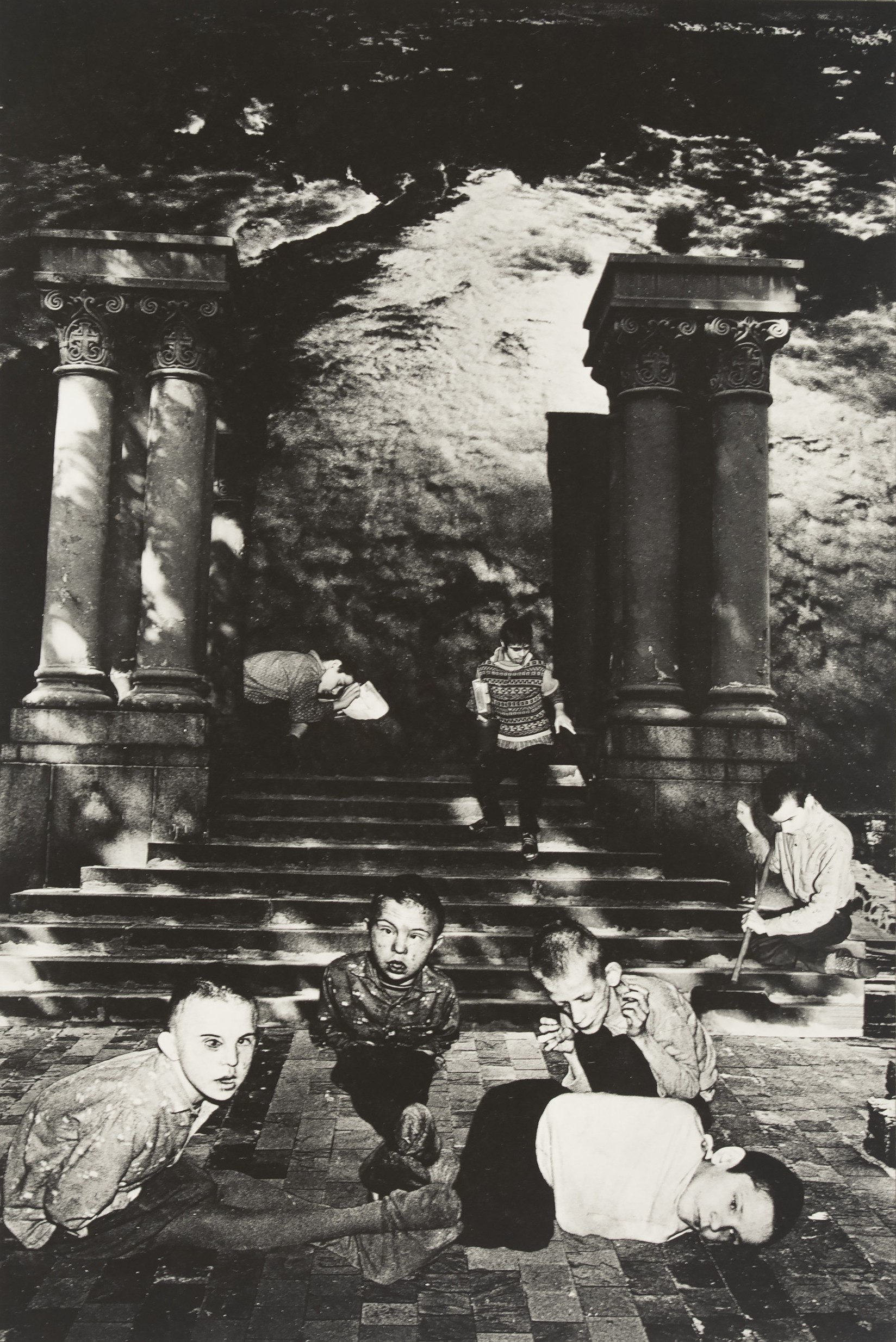
Who Is To Blame I from the series Who Is To Blame, 1986. Photograph on paper, 29 x 19.3 cm (11 7/16 x 7 5/8 in.). Norton and Nancy Dodge Collection of Nonconformist Art from the Soviet Union. 2000.1032
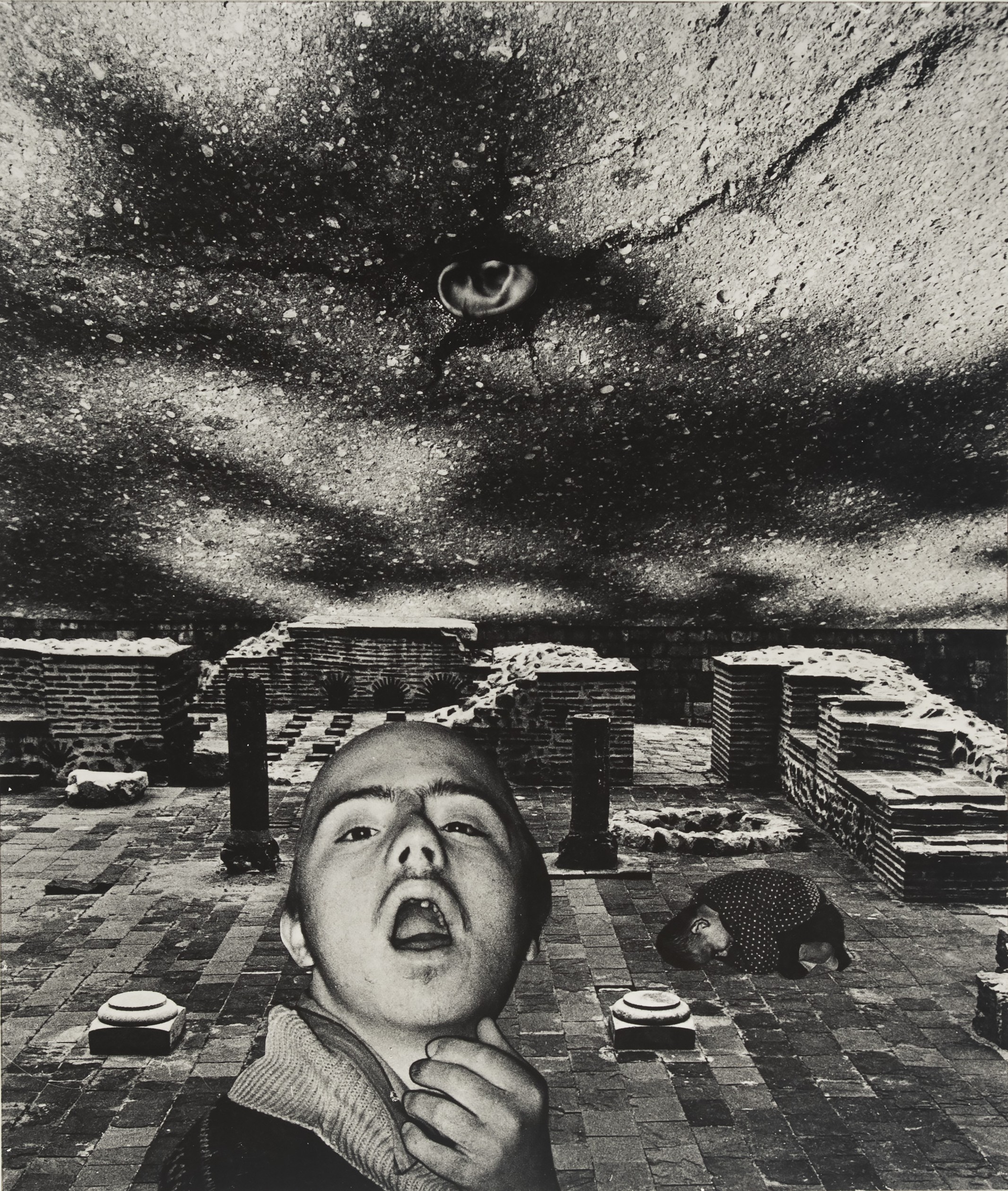
Who Is To Blame II from the series Who Is To Blame, 1986. Gelatin silver print on paper, 26.3 x 22.3 cm (10 3/8 x 8 3/4 in.). Norton and Nancy Dodge Collection of Nonconformist Art from the Soviet Union. 2000.1031
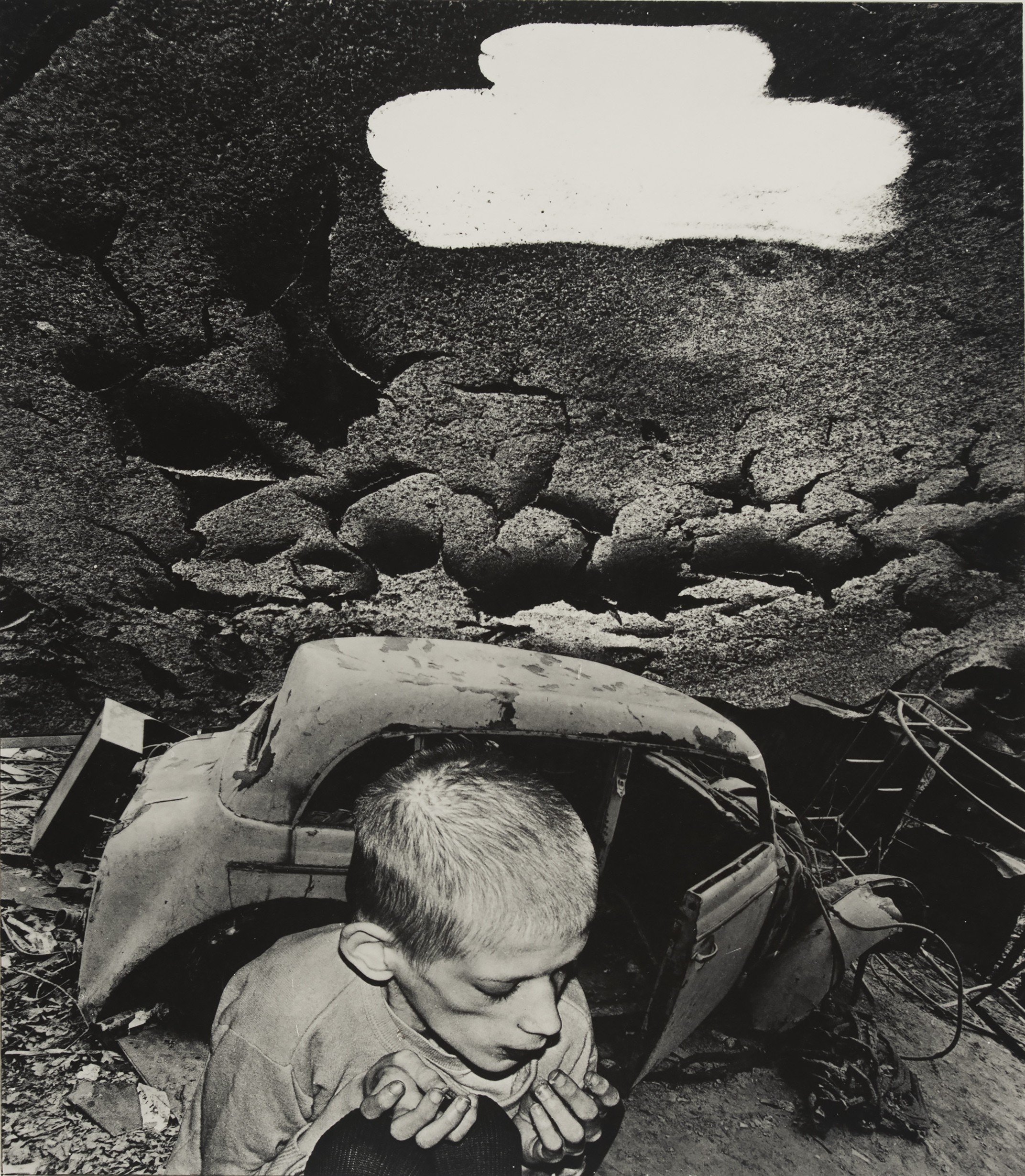
Who Is To Blame III from the series Who Is To Blame, 1986. Photograph on paper, 26 x 22.3 cm (10 1/4 x 8 3/4 in.). Norton and Nancy Dodge Collection of Nonconformist Art from the Soviet Union. 2000.1030

Who Is To Blame IV from the series Who Is To Blame, 1986. Photograph on paper, 25 x 22.2 cm (9 13/16 x 8 3/4 in.). Norton and Nancy Dodge Collection of Nonconformist Art from the Soviet Union. 2000.1034
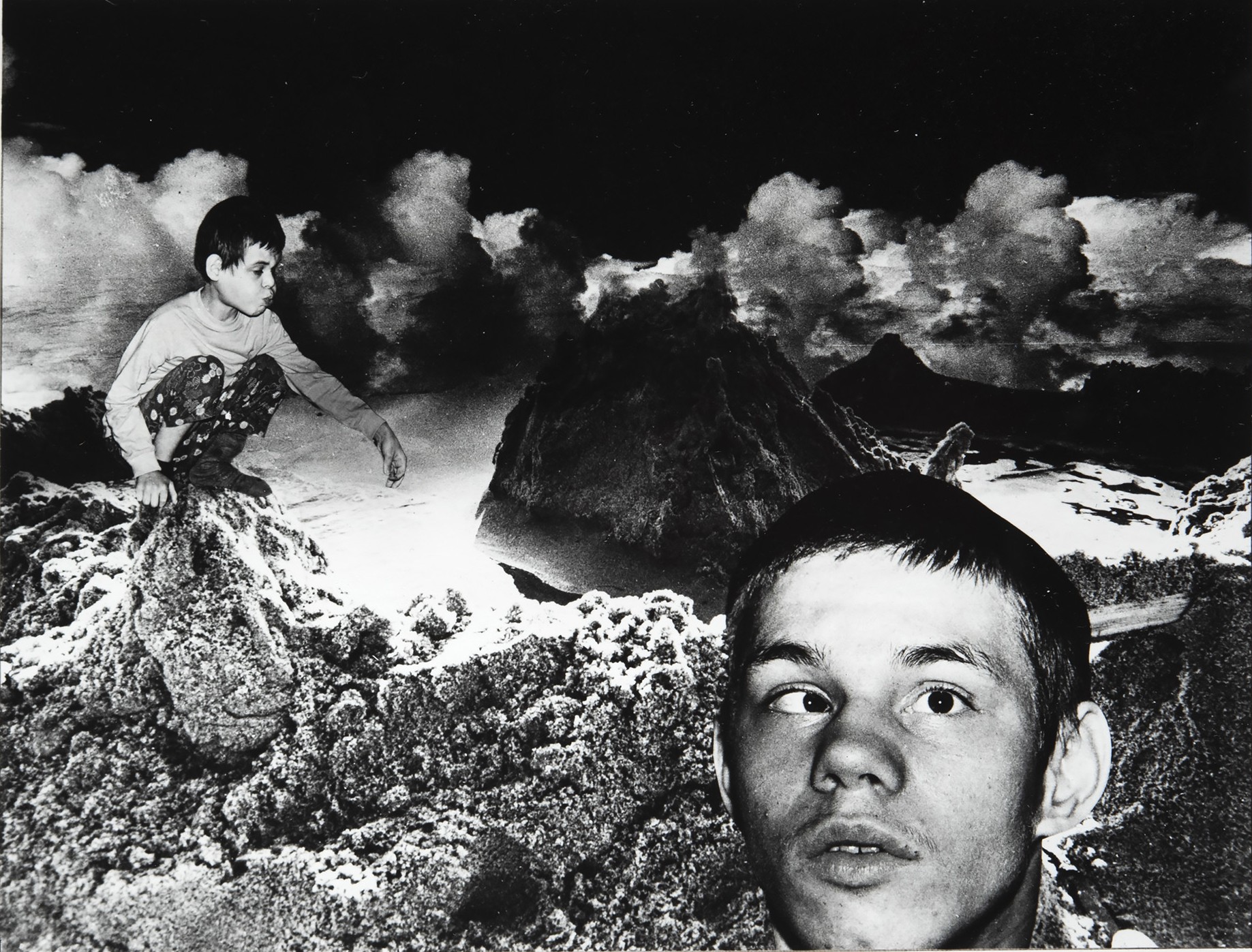
Who Is To Blame V from the series Who Is To Blame, 1986. Photograph on paper, 17.1 x 22.3 cm (6 3/4 x 8 3/4 in.). Norton and Nancy Dodge Collection of Nonconformist Art from the Soviet Union. 2000.1033