
03/12/2016 - 07/21/2016

1946 — Riga (Latvia). Works in Riga (Latvia)
Jānis Borgs has had an enduring creative career that connects the paradigm-shifting cultural developments of the late Soviet period with the contemporary art scene of independent Latvia. Borgs’s contributions are spread throughout the fields of graphic and interior design, journalism, education, and contemporary art. He has described himself as “an observer and evaluator of arts, and an explorer of arts with an inclination toward design.” [1]
Part of Borgs’s early childhood was spent in Stockholm, Sweden, where his father, Bernhards Borgs (1920–1976), a KGB operative, served at the Soviet embassy. They returned to Riga in 1953, settling in the leafy district of Mežaparks. The boy became a frequent visitor at a haven for modernist art, the neighboring household of artists Džemma Skulme (1925–2019) and Ojārs Ābols (1922–1983), whom the artist credits with being his first art instructor. Džemma used him as a model for her Oliver Twist book illustrations.
Borgs studied at the Riga Secondary School of Applied Arts (now the Riga School of Design and Art) until 1965, when he joined the school to teach composition (a post he held until 1990) and he enrolled in the Department of Interiors and Furnishings at the Latvian SSR State Academy of Art (now the Art Academy of Latvia), graduating in 1970. He oversaw the implementation of study materials at the Ministry of Education of Latvian SSR from 1970 to 1975. He was the director of Janis Rozentāls Art High School from 1975 to 1978.
At the same time, Borgs was active in Riga’s nonconformist art scene. In 1971 he took part in an unofficial exhibition of pop art with Laimonis Šēnbergs (b. 1947), Arvīds Priedīte (b. 1946), Atis Ieviņš (b. 1946), and Henrihs Vorkals (1946–2018), held at the House of Knowledge (formerly Riga’s Orthodox cathedral); since it was not a proper art venue, it enjoyed lax censorship. In 1972 the group exhibition Celebration, at the historical Riga Bourse (then the Institute of Scientific and Technical Information and Propaganda), marked the first large-scale showing of Latvian avant-garde during the Soviet occupation. To avoid infringing upon the ideologically conservative domain of art, the exhibition—featuring forays into kinetic and op art—was given the guise of a design show. A contributing artist, Borgs was also a member of its organizing committee in what he has described as “a kind of ideologically protective role.” [2] To avoid accusations of nonconformity, he wrote a Soviet-style introduction for the catalogue and decorated the entrance with a kinetic installation of the hammer and sickle.
Benefiting from his job titles and privileged social standing, Borgs was less restricted than the average Soviet citizen from traveling abroad and accessing information. In 1974 he traveled to Warsaw, where he visited the Foksal Gallery and met one of its founders, Wiesław Borowski (1935–1989). He returned to Riga with a bag full of contemporary art literature and consequently produced his Automatic Sequences I–III drawings (1977). Conceived as an attempt to eliminate creative decisions, Borgs threw dice to generate random sets of lines, noting them on paper. Also noteworthy during the 1970s is Borgs’s friendship and mail art correspondence with artist and New Left activist Valdis Āboliņš (1939–1984), who lived in West Berlin and repeatedly visited Riga.
In 1977 Borgs coauthored the script for Poster-Time, a documentary about Gustav Klutsis (1895–1938), directed by Rūta Celma-Kello (b. 1946). Borgs’s fascination with Klutsis’s legacy brought him together with an informal group of like-minded associates—the Pollucionisti (Emissionists) Māris Ārgalis (1954–2008), Anda Ārgale (b. 1948), Valdis Celms (b. 1943), Jāzeps Kukulis-Baltinavietis (b. 1953) and Kārlis Kalsers. Echoing the rising concern for Latvia’s urban and natural environment under Soviet occupation, their collective output was a series of ironically speculative photomontages titled Bizarre City (1978). Borgs and the Emissionists were also acquainted with allies from the Tallinn scene of contemporary art and architecture—architect Leonhard Lapin (1947–2022) and graphic artist Tõnis Vint (1942–2019).
The group exhibition To Our City (1978), at which several Emissionists exhibited individually, was an opportunity for architects, designers, and artists to present interventions for the renewal of Riga’s urban environment. In his collage Dynamic City (1976, ZAM, D16987), Borgs envisioned animating a street corner with the addition of a Klutsis-inspired kinetic sculpture—a rotating clock. In Epicenter (1976, ZAM, D16988), he planned to visually aggrandize a fountain with painted murals. The proposals are part of the Norton and Nancy Dodge Collection at the Zimmerli Art Museum.
Borgs also contributed to the Latvian poster scene, synthesizing the influences of constructivist and kinetic art into dynamic and boldly expressed geometric compositions. His Chile Triptych (1975), three posters dedicated to the 1973 Chilean coup d’état, are among his most recognized works.
Borgs wrote extensively for Māksla (Art), the principal magazine dedicated to culture, and worked as its artistic editor from 1978 to 1991. His reporting at Māksla covered a wide spectrum of topics—from reviewing regional and global design trends, to acquainting its readership with the art of Vija Celmins (b. 1938) and Andy Warhol (1928–1987) in 1987. Borgs also designed the visual identity of acd magazine (1978)—a groundbreaking short-lived publication dedicated to architecture, construction, and design.
One of Borgs’s most significant contributions to Latvian contemporary art was his assistance in organizing the seminal group exhibition Nature. Environment. Man. As the central event of the annual Art Days festival in 1984, it took place at the Riga Museum of Architecture and Construction (the deconsecrated Saint Peter’s Basilica) in Riga. The exhibition was conceptualized and planned by Ojārs Ābols, who had passed away in 1983. Its realization was carried on by Laimonis Šēnbergs, the chief organizer, and by Borgs, who rallied young artists to participate and wrote an official text to communicate their intentions to the authorities. Borgs was accepted into the Artists’ Union of Latvian SSR in 1984 and into the Journalists’ Union of Latvian SSR in 1985.
After the restoration of Latvia’s independence, Borgs served as the director of the Soros Center for Contemporary Art—Riga (SCCA-Riga) from 1993 to 1999, subsequently reorganized as the Latvian Centre for Contemporary Art (LCCA). During its existence and afterward, SCCA-Riga was the key institution that funded, catalogued, and curated Latvian contemporary art, while also striving to integrate it internationally. Of the several contemporary art shows that SCCA-Riga organized, Geo-Geo (1996) was curated by Jānis Borgs. Notably, it was among the first contemporary art shows to take place outside of Riga, in Pedvāle (Talsi municipality, Latvia) where it explored the possibilities of earth art. As its title suggests, the exhibition conceptualized a framework of geometry, geography, and geodesy to reflect upon the relationship between human intellect and nature.
Borgs is a cofounder of VV Foundation, with Vita Liberte and Vilnis Štrams, a patron of contemporary culture in the Baltic region. The foundation marked its inception in 2018 with an exhibition of paintings by Laris Strunke (1931–2020).
Gustavs Grasis
Photo portrait: Jānis Borgs. Image courtesy of VV Foundation
Notes
1. Latvian National Museum of Art, Museum of Decorative Arts and Design, “Design Stories: Jānis Borgs,” YouTube.
2. Vents Vīnbergs, “When Avant-Garde Art Became Design: Interview with Jānis Borgs,” in Just on Time: Design Stories About Latvia, ed. Kristīne Budže and Inese Baranovska, trans. Uldis Brūns (Riga: Latvian National Museum of Art, 2018), 174.
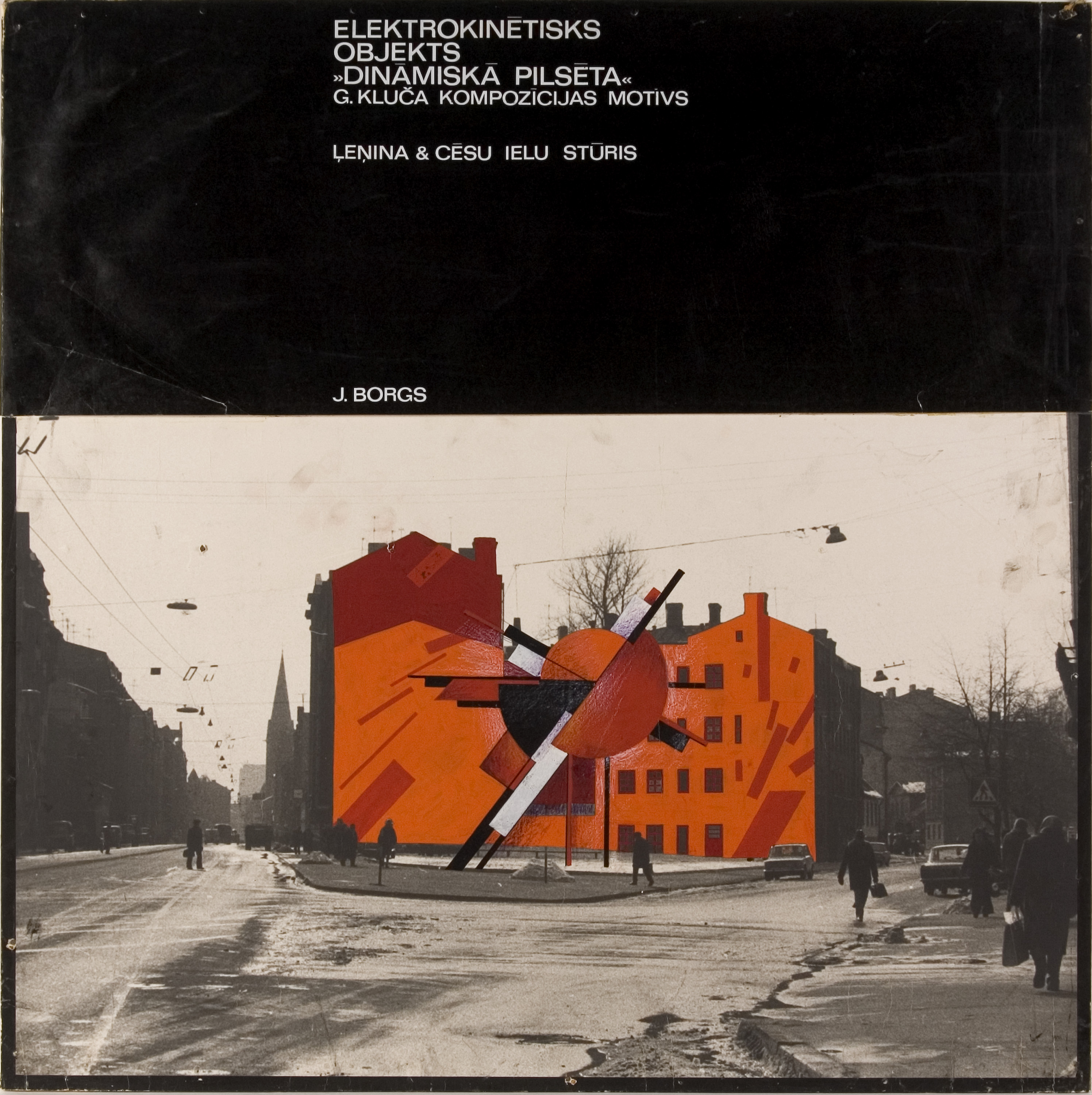
Dynamic City, 1976. Gouache and oil pastel on photograph mounted on plywood, 79.5 × 79.5 cm (31 5/16 × 31 5/16 in.). Norton and Nancy Dodge Collection of Nonconformist Art from the Soviet Union. D16987
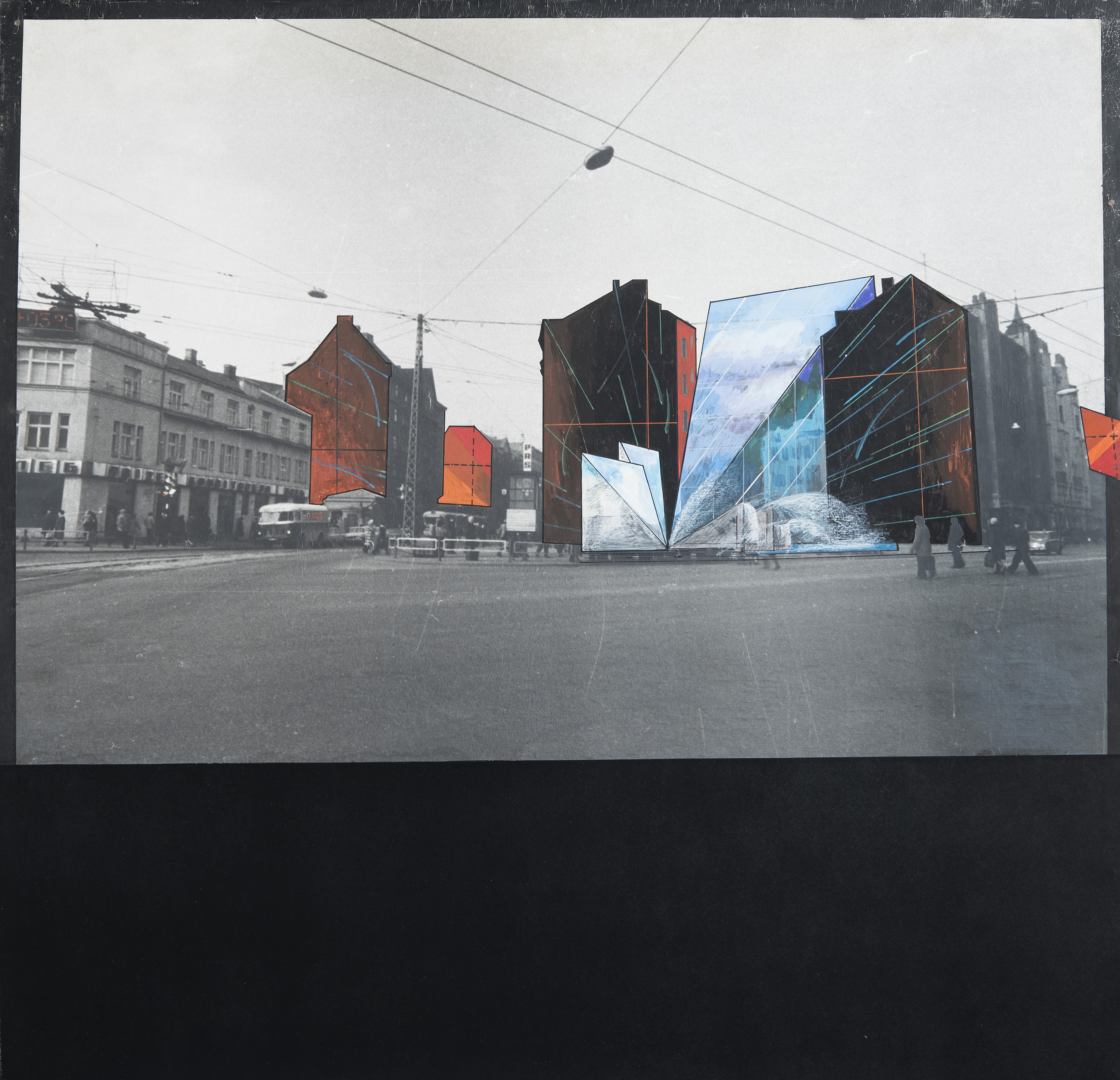
Epicenter, 1976. Gouache and oil pastel on photograph mounted on plywood, 79 × 79 cm (31 1/8 × 31 1/8 in.). Norton and Nancy Dodge Collection of Nonconformist Art from the Soviet Union. D16988
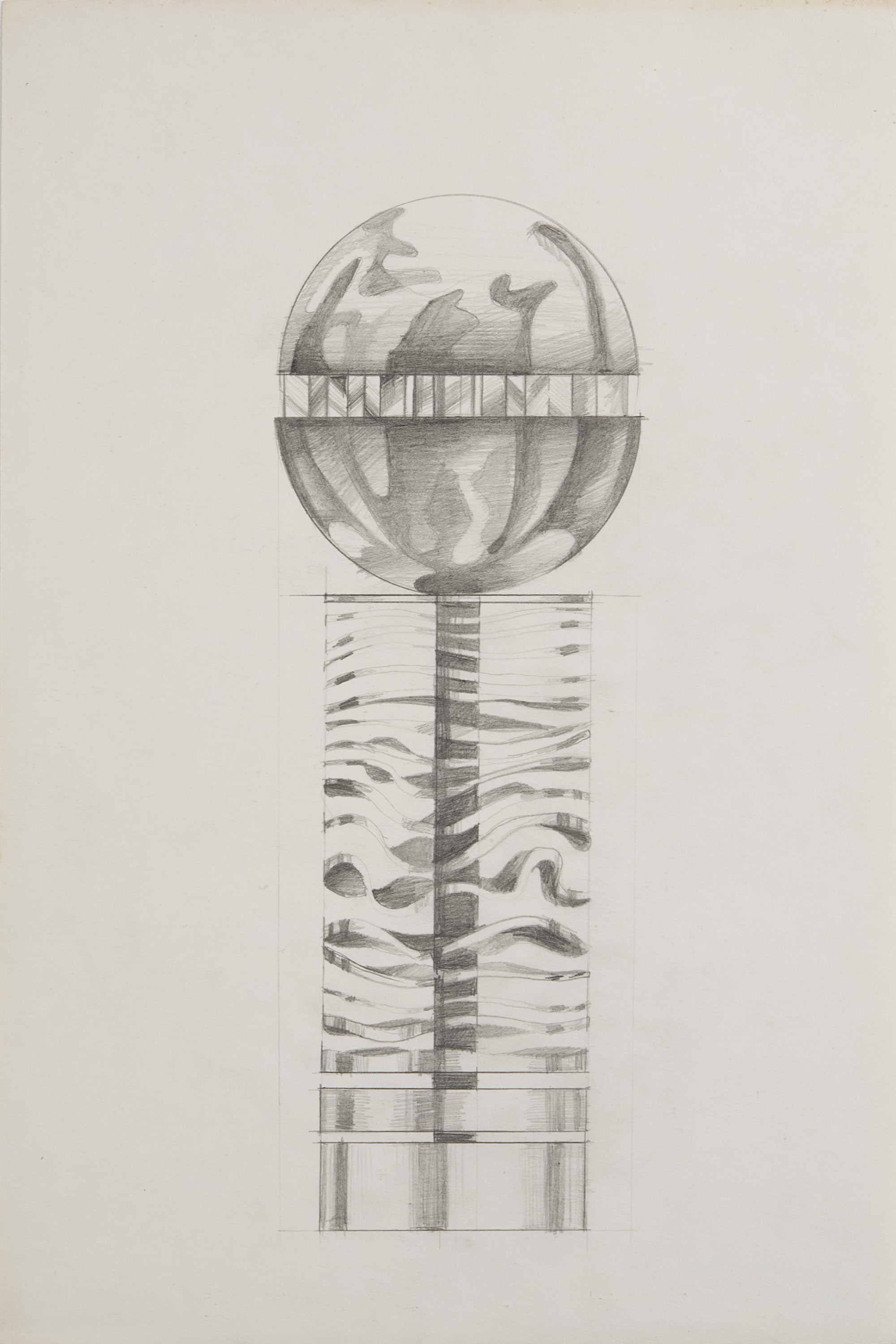
Untitled, undated. Graphite on paper, 30.5 × 20.3 cm (12 × 8 in.). Norton and Nancy Dodge Collection of Nonconformist Art from the Soviet Union. D11577
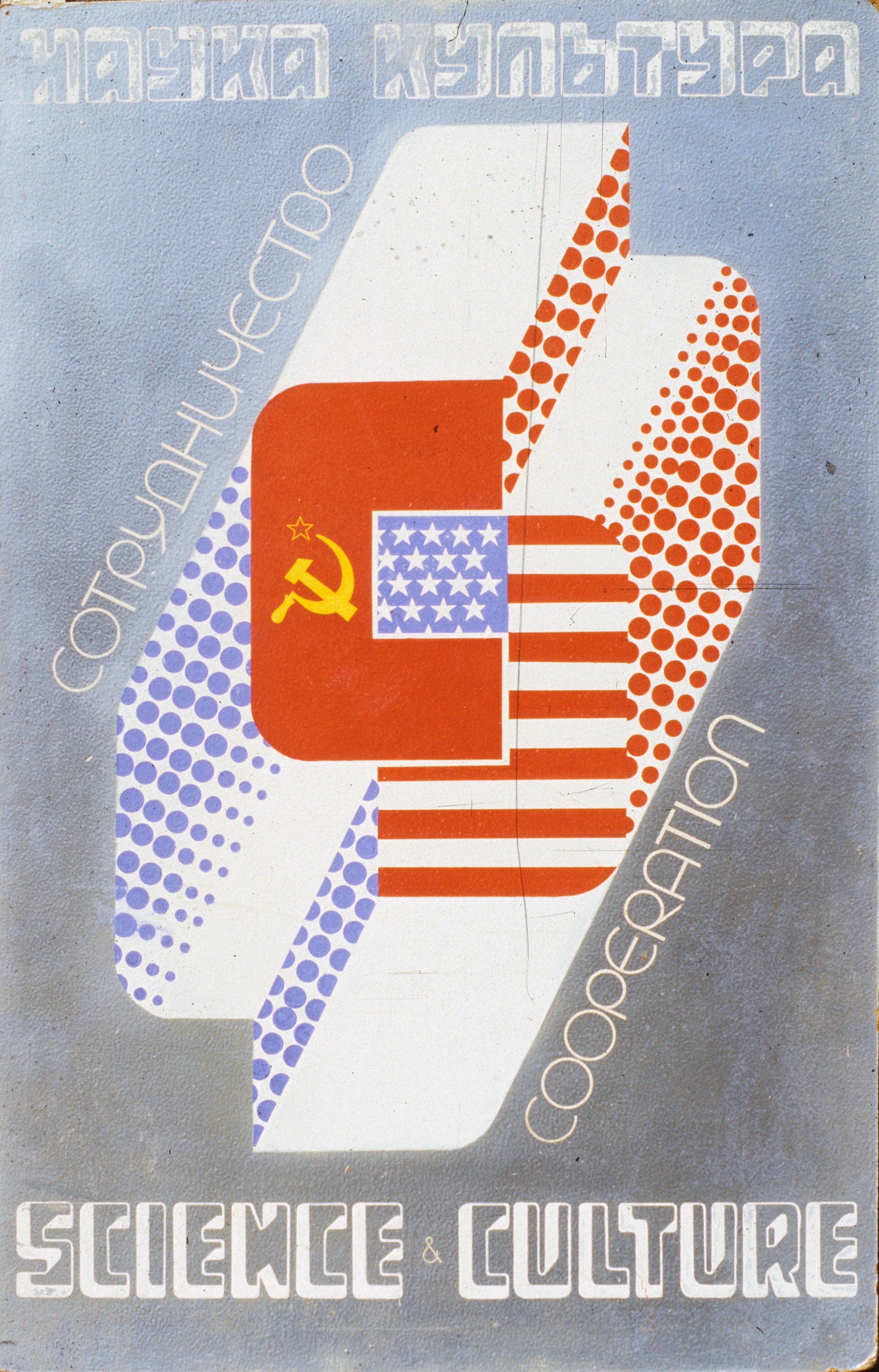
Science and Culture, 1976. Gouache and metallic paint on fiberboard. Norton and Nancy Dodge Collection of Nonconformist Art from the Soviet Union. D11399
Selected Exhibitions
1972 Svētki [Celebration], House of Knowledge (Latvian Republic House of Scientific and Technical Propaganda), Riga, Latvia
1983 Contemporary Latvian Poster Art, New York Institute of Technology, Old Westbury, NY, USA
1984 Daba. Vide. Cilvēks [Nature. Environment. Man], Riga Museum of Architecture and Construction, Riga, Latvia
1996 Geo-Geo, Pedvāle, Latvia
2017 Divdabis, Latvian National Museum of Art, Riga, Latvia
Selected Publications
Astahovska, Ieva. “Jānis Borgs.” In The Self: Personal Journeys to Contemporary Art: The 1960s–80s in Soviet Latvia. Riga: Ministry of Culture of the Republic of Latvia, 2011.
Astahovska, Ieva, ed. Nineties: Contemporary Art in Latvia. Riga: Latvian Centre for Contemporary Art, 2010.
Baranovska, Inese. “On the Sense of Time.” In Nature. Environment. Man. 1984–2004, ed. Inese Baranovska, 9–19. Riga: Artists’ Union of Latvia, 2004.
Borgs, Jānis. “The Rooster on St. Peter’s Steeple Sings Its Early Song: Free Art—a Soviet Product?” In Nature. Environment. Man. 1984–2004, ed. Inese Baranovska, 19–45. Riga: Artists’ Union of Latvia, 2004.
Taurens, Jānis. Konceptuālisms Latvijā: Domāšanas priekšnosacījumi [Conceptualism in Latvia: Prerequisites for Thinking]. Riga: Neputns, 2014.
Vīnbergs, Vents. “When Avant-Garde Art Became Design: Interview with Jānis Borgs.” in Just on Time: Design Stories About Latvia. Ed. Kristīne Budže and Inese Baranovska. Trans. Uldis Brūns. Riga: Latvian National Museum of Art, 2018.