
Inta Celmiņa
1946 — Riga (Latvia). Worked in Riga (Latvia), Liezēre (Latvia), and Slavutych (Ukraine); currently works in Riga (Latvia)
Inta Celmiņa belongs to the first postwar generation of Latvian avant-garde painters, who came onto the art scene in the mid-1970s; these were artists who began to uncover opportunities for expression in painting. In 1964 Celmiņa studied art at the Jānis Rozentāls Art School (then known as the Jānis Rozentāls Art Secondary School), followed by the Art Academy of Latvia (then known as the Latvian SSR State Academy of Art) in the Education Department, from which she graduated under Eduards Kalniņš’s tutelage in 1969 with her diploma piece Midsummer Day.
The artist mainly works with oil paint, preferring large-format canvases. She has also worked with watercolor, drawing, and painting porcelain dishes. From time to time she has turned to monumentalist art, in 1984 painting the walls of Liezēre Cultural Centre (then the Vienība Collective Farm Club House) with her husband, the artist Edvards Grūbe (1935–2022). She also painted three triptychs for a kindergarten in Slavutych, Ukraine (1988).
The artist has worked in various genres, painting still lifes, landscapes, portraits, and nudes, executing brilliant figural compositions. Her early subjects were women, painted in oils and watercolors, all imbued with the mood of that moment, concentrating on capturing feelings and impressions as precisely as possible with the help of color and movement and paying less attention to anatomical accuracy. In 1996 the Bastejs Gallery in Riga hosted her Drawings, the first solo exhibition of Celmiņa’s ink and charcoal drawings. When creating them, the artist studied lace and embroidery patterns and lines from Latvian embroidered tablecloths. Later, she transferred similar motifs to her painting, where the lace and female torso integrate organically and are repeated in several variations.
Celmiņa’s primary source of inspiration is nature and its colors, light, and moods. She attempts to portray natural objects as minimally as possible, with only as much as is required to translate her feelings. On acquiring a countryside property in Vidzeme in 1977, she organically began to treat subjects on the essence of Latvian life. During her family’s summers in the countryside, she created such pieces as Folk Song (1983), Dark Night, Green Grass (2013), Country Women (1982), and other rustic-themed figural works.
At the beginning of her creative life, Celmiņa would work on one painting slowly and for a long time, adding paint layer by layer to achieve the surface relief she wanted. The compositions comprised arrangements of geometric areas and monolithic forms in a close range of colors; she achieved depth by changing the directions of her brushstrokes in works such as The City (1977), Sitting Woman (1972), and Hillocks (1973). Over time, she painted faster and the textures became rougher, the rhythms of the paintings accelerated, and the contrasts between the thick and thin areas became more pronounced. She applied paint in several layers, then often scraped it down to the bottom layer, achieving a turbulently vibrating mood.
One of the most significant topics in Celmiņa’s oeuvre, to which she turned her focus in the mid-1970s and has returned again and again, is princesses, which alongside mice and birds entered her works from the drawings of her daughter. The character of the princess developed, and the emotions and overall mood of the paintings changed from playfully light to dramatically scary. The princess figure embodies and experiences the entire possible spectrum of the artist’s feelings, and is used to speak about universal human themes and ideas.
Celmiņa’s works are characterized by gray tones in varying degrees of darkness and hue, often complemented by bright white, red, yellow, and blue accents. In the 1970s she was already painting very dark landscapes (Shrubs, 1973; Landscape, 1978; Apple Tree, 1979), whose bushes, trees, and hills only become apparent gradually, after looking at them for a long time. She paints nighttime light very carefully and almost imperceptibly; objects are modeled in almost the same tone as the surrounding environment, with most attention being paid to the direction and texture of strokes, allowing the viewer to perceive the scene. The artist also turns to dark landscapes in her later paintings (Black Moonlight, 2014). Night, darkness, moonlight: these are moods and times of day that have fascinated Celmiņa in all periods as being full of mysterious and artistically challenging meaning. The silvery glow of moonlight in the dark creates ghostly shadow tricks and strange nocturnal patterns, awakening what sleeps or hides during the day; it is a place for magic, the unfathomable, visions, witches, ghosts, demons, and apparitions.
Music plays a large role in the artist’s life, both at cultural events and during the creative process. At concerts, she gains inspiration for painting motifs, line rhythms, and moods, and while painting, she is helped by playing classical music in the background. Musical sentiments are expressed not only in the turbulent rhythmic lines in her paintings, but also in her overall concepts: Quartet (1969–70, ZAM, D01222), Trio (1978, Latvian National Museum of Art), Concert, (1981, Latvian National Museum of Art), and Music (1997).
Parallel with her last year of study at the academy, from 1969 to 1976 Celmiņa worked as a drawing and painting teacher at the Riga Art and Design Secondary School (then known as the Riga Decorative Art Secondary School), before becoming a senior lecturer in the Education Department of the Art Academy of Latvia (1976–88). Between 2003 and 2007, she worked as a teacher and associate professor of painting, drawing, composition, and color theory at the International Higher School of Practical Psychology, Riga, on the Faculty of Computer Design.
Celmiņa has taken part in exhibitions since 1969, participating in more than two hundred group shows in Latvia and abroad. Her first solo exhibition took place in 1985 in the exhibition hall of the Latvian Artists’ Union (then known as the Latvian SSR Artists’ Union), Riga. This was followed by more than thirty solo exhibitions in various Latvian museums and art galleries.
Since 1987 she has held regular joint exhibitions with Edvards Grūbe in Latvia. Celmiņa has received many awards for her creative achievements: the Lithuanian SSR Artists’ Union Prize for the Baltic Republics Triennial, Vilnius (1975, 1978); a Salon d’Automne silver medal for the exhibition Traditions and Pursuits, Paris (1984); and the Hansabank Painting of the Year Award at the Asūna Gallery, Riga (2006).
Celmiņa was accepted into the Artists’ Union in 1976. In 1990 she received the title of Highly Merited Art Worker of the LSSR, and in 2011 she became a Knight of the Order of the Three Stars. Her works are held in the Latvian National Museum of Art and the Latvian Artists’ Union Collection in Riga; the Tukums Museum, Tukums, Latvia; the Madona Local History and Art Museum, Madona, Latvia; the Swedbank Collection; the Lithuanian National Museum of Art in Vilnius, Lithuania; the Russian Ministry of Culture Collection, State Tretyakov Gallery, Moscow, Russia; Museum Ludwig, Cologne, Germany; and private collections in Latvia and abroad.
Inese Klestrova
Translated from Latvian by Mara Walsh Sinka
Photo portrait by Renārs Derrings from Inta Celmiņš personal archive
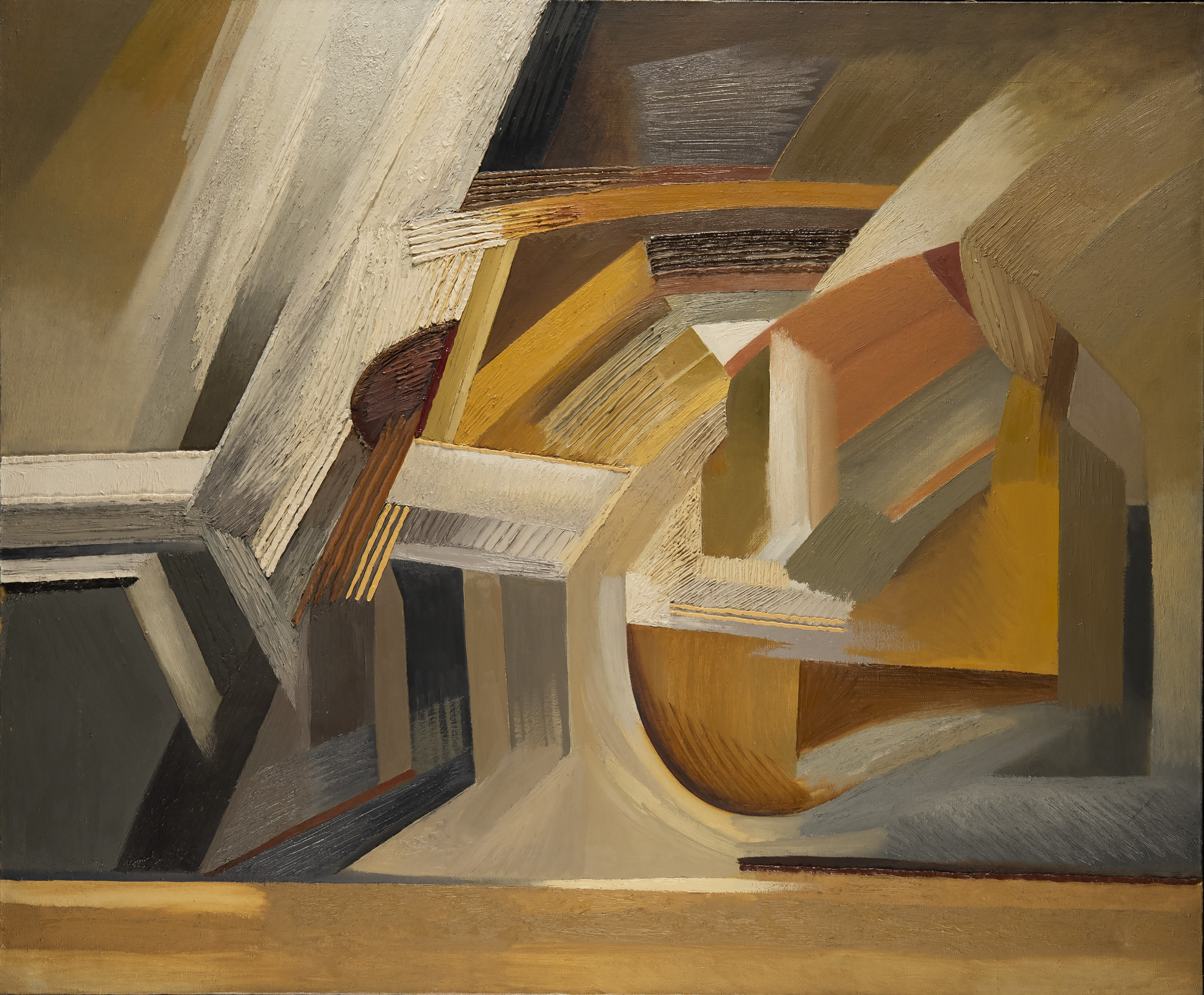
Quartet, 1969-1970. Oil on canvas, 110 × 130.5 cm (43 5/16 × 51 3/8 in.). Norton and Nancy Dodge Collection of Nonconformist Art from the Soviet Union. D01222
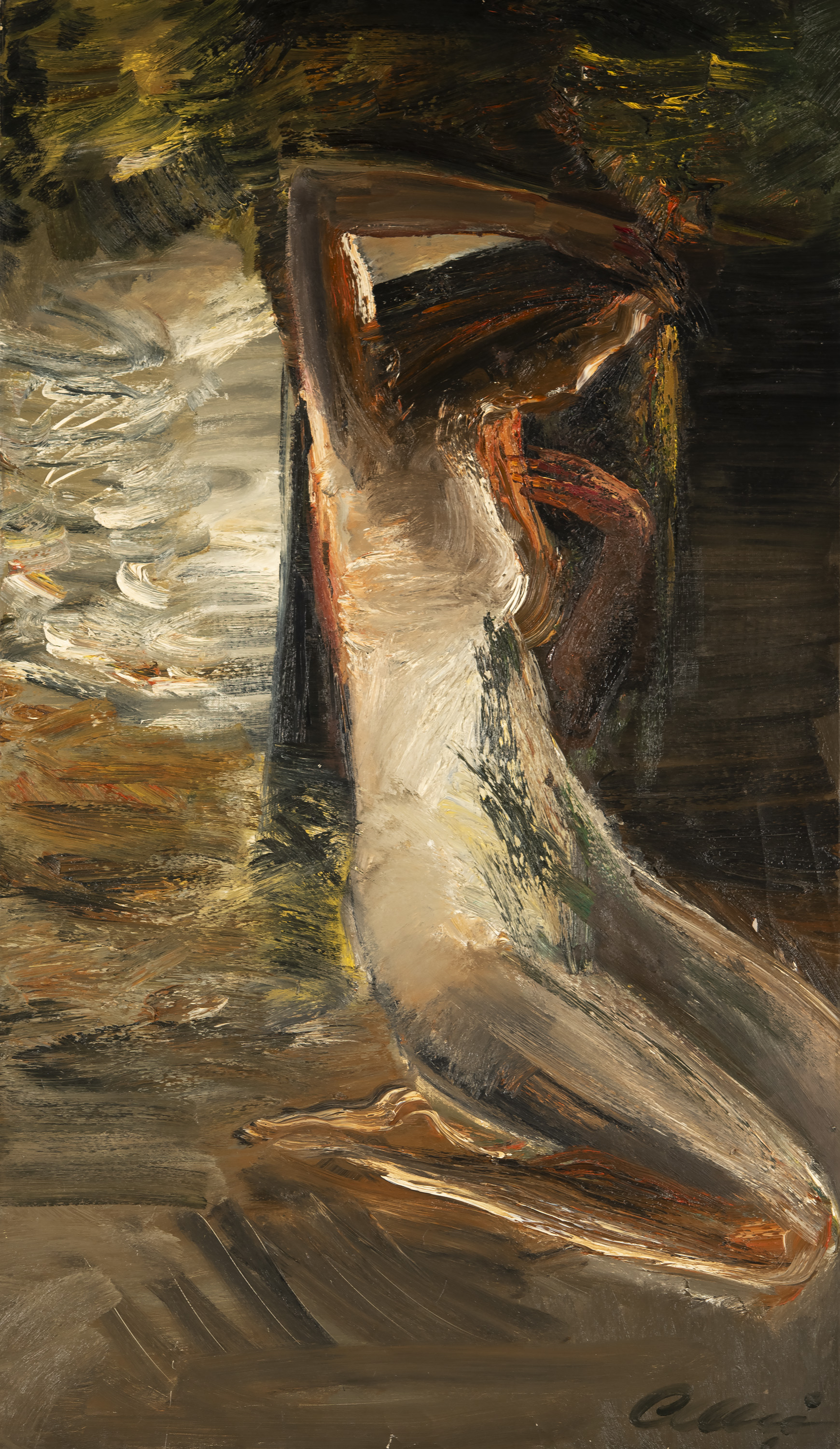
Untitled (Nude), 1974. Oil on canvas, 195 × 114.5 cm (76 3/4 × 45 1/16 in.). Norton and Nancy Dodge Collection of Nonconformist Art from the Soviet Union. D01559