
03/12/2016 - 07/21/2016

1934 — Liepāja (Latvia). Worked in Liepāja (Latvia), Rīga (Latvia); currently works in Lēdurga (Latvia)
In 1941, when Inārs Helmūts was a young boy in Liepāja, Latvia, he was exiled with his family to Siberia, where his father was sent to work in a forced labor camp and died in 1944. For several years, Inārs, his mother, and his little brother struggled to survive in Krasnoyarsk region, western Siberia. Impersonating orphans when he was twelve years old, the two boys returned to Liepāja to live with relatives in 1946, but their mother was deported again by the Soviets and released to return to Latvia only in 1956, after the death of Stalin.
This harsh childhood and early youth, even after he returned to occupied Latvia, was difficult emotionally and delayed his learning. Inārs finished Liepāja Secondary School No. 5, after which he trained as an accountant at the Industrial Polytechnic (today Riga State Technical School). Encouraged and inspired by his maternal uncle, artist Oļģerts Jaunarājs (1907–2003), who was the center of a circle of artists, Helmūts realized that his vocation was art. He attended the Department of Decorators at the Riga Secondary School of Applied Arts (1956–57), where he completed two courses in one year and, without completing the last year of study, entered the Graphics Department of the Latvian SSR State Academy of Art (now the Art Academy of Latvia). He graduated in 1963, with his thesis work under Pēteris Upītis (1899–1989), a cycle of linocut illustrations for Andrejs Upīts’s novel Along the Rainbow Bridge (1926). During his studies, he was fascinated by the work of the Belgian artist Frans Masereel (1889–1972) and tried to imitate his style. From 1965 to 1967 he was the head of the Experimental Printmaking Workshop of the Art Foundation of the Latvian SSR Artists’ Union (now the Latvian Artists’ Union) and in 1968 he became a member of the union. He has participated in exhibitions since 1962.
In the 1960s, Helmūts mostly did classic black-and-white graphics using linocut (Talsi, 1965) and woodcut (Vecais tirgus Kuldīgā [Old Market in Kuldīga], 1972) techniques. His compositions and scenes were conventional until the early 1970s, when he energetically adopted screen printing, experimenting in graphics using paint. Helmūts was one of the first artists to create colorful compositions, experimenting with various graphic techniques, sometimes deploying two or more techniques in a single work to achieve the desired result. The works Trekā [In the Track] (1972), Invāzija [The Infestation] (1977), and Lifts [The Elevator] from the series Mansfelda [Mansfield] (1977), made after visiting that German mining town, are vivid examples of his dynamic and unusual compositional approaches. The graphic compositions are created as if from several fragments of a collage, dividing the page into several planes or zones. Either the black-and-white graphic drawing stands out against a background of brightly colored areas, or the color is merely a signal of attention, as in the series Zinātnieki [Scientists] (1975). The detailed human body segments and folds of clothing contrast with clean, rationally laconic shapes and areas of color. To enable him to faithfully depict the appearance and working environment of scientists, cosmonauts, and workers, Helmūts visited a space research center, various factories, the Liepājas Metalurgs foundry, the Mansfeld mine, and the atomic reactor of the Institute of Physics of the Latvian SSR Academy of Sciences (the Salaspils nuclear reactor). His prints depict humans as science researchers and athletes, while their surrounding environment is a demonstration of technology—cars, helicopters, factories, and highways. He uses signs—arrows, road signs, and highway indicators—to represent the dynamics and direction of movement.
Helmūts’s work Lidojums [Flight] from the cycle Modernie ritmi [Modern Rhythms] (1973) won first prize at the prestigious Kraków Graphics Biennale (Kraków, Poland, 1974) and the Tallinn Graphics Triennial (Tallinn, Estonia, 1974). The composition is divided into three horizontal registers. Blue skies and space occupy the upper part, where aircraft and rockets, space probes, and satellites soar. Modern high-rise buildings are seen in the middle section, while at the bottom, as if in three columns, are the historic buildings and church steeples of Old Riga. In the center of the composition, the Vitruvian Man of Leonardo da Vinci (1452–1519) stands in a bright circle, with butterfly wings in the middle. This is a seemingly narrative composition that combines different periods of history and celebrates the ideal person, who corresponds to the ideological strictures of Soviet art; yet at the same time, the artist demonstrates his individual style and graphic craftsmanship.
In his works from the 1980s, Helmūts’s most characteristic motif is the car, but now rather than being part of technology, it is juxtaposed with nature, its protection, and ecology. This corresponds to a significant concern in the artworks of other artists of that generation, as it has become more relevant over the years and up to today. Izbraukums zaļumos [A Trip to the Country] (1983, ZAM, D03555), and Through the Window (1985, ZAM, D03556) are significant works by Helmūts in the Zimmerli collection that characterize his approach toward artistic expression. They belong to a cycle of prints that Helmūts created over a long period, united by its title Habitat—a word that is inscribed, sometimes as a fragment, on many of the images. Here, too, he has combined several graphic techniques: the dark lines of the drawing are in etching, as a stroke, and individual areas are rendered in various gradations of grayish tones using the aquatint technique, while the light greenish areas, which resemble a flood of watercolor paint in the transition between tones, are applied in the linocut technique. While both compositions play with aspects of reality, they also conjure a surrealistic mood, achieved by reflecting the landscape in different angles and his placements in the windows of the open doors and the trunk. In 1986, the work Through the Window was shown in the Ninth British International Print Biennale in Bradford, UK, where it was purchased by representatives of the Biennale.
Helmūts has created fine art graphics, book graphics, and applied graphics, using a variety of techniques, including linocut, silkscreen printing, lithography, aquatint, and, most of all, etching. His bookplates are done using a refined woodcut technique. The artist has also created miniature graphics, a specialty in itself, with its own set of requirements dictated by size. Working for many years at the publisher Liesma, he created illustrations and designs for more than a hundred books, as well as stories and novels in periodicals. Helmūts’s applied design works include record album cover art. His illustrations for two collections of poems by Ojārs Vācietis (1933–1983), Visāda garuma stundas [Hours of All Lengths], 1974, and Zibens pareizrakstība [The Correct Spelling of Lightning], 1980, are particularly noteworthy.
In April and May 2016, Grafika [Printmaking], an exhibition of Helmūts’s works, was held at the Ojārs Vācietis Memorial Museum in Riga. In the same venue, on May 21, during Museum Night 2016, the multimedia project/installation Awakening was displayed as a multimedia meeting of the creative works of both Helmūts and Vācietis. The video projections were based on animated works by Helmūts from Vācietis’s poetry collections Visāda garuma stundas and Zibens pareizrakstība, supplemented with unique audio recordings of Vācietis reading his poems. The authors of the project were Vitālijs Vinogradovs and Ļubova Pimenova.
From 1991 to 2008, Helmūts taught graphics and drawing at the Department of Pedagogy at the University of Latvia. In the first decade of the twenty-first century, the artist turned to abstraction, creating several cycles experimenting with relief and intaglio printing techniques (Tower, 2004; Rainbow, 2004; Coffin, 2005).
Since the early 2000s, the artist has been painting more, often participating in artists’ plein-airs in different parts of Latvia, as well as painting his surroundings, landscapes, and still-life compositions.
His works are in collections at the Latvian National Museum of Art and the Museum of the Latvian Artists’ Union, as well as in museums and private collections in the United States, Sweden, Australia, the United Kingdom, Estonia, Russia, Lithuania, and Bulgaria.
Eva Rotčenkova
Translated from Latvian by Philip Birzulis
Photo portrait: Inārs Helmūts, 2024. Photo by Eva Rotčenkova
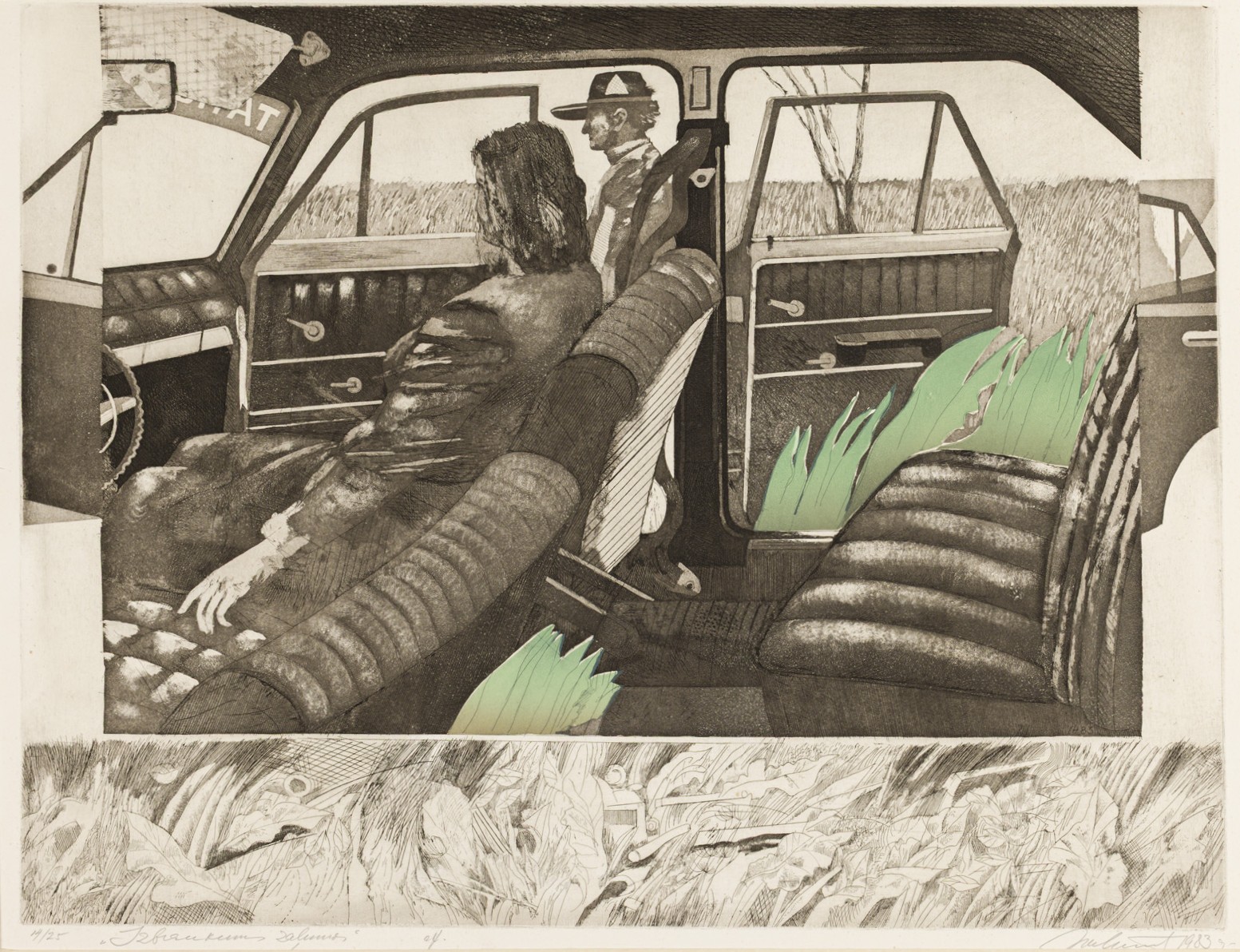
A Trip to the Country, 1983. Handcolored etching and aquatint on paper, 49.6 × 64.6 cm (19 1/2 × 25 7/16 in.). Norton and Nancy Dodge Collection of Nonconformist Art from the Soviet Union. D03555
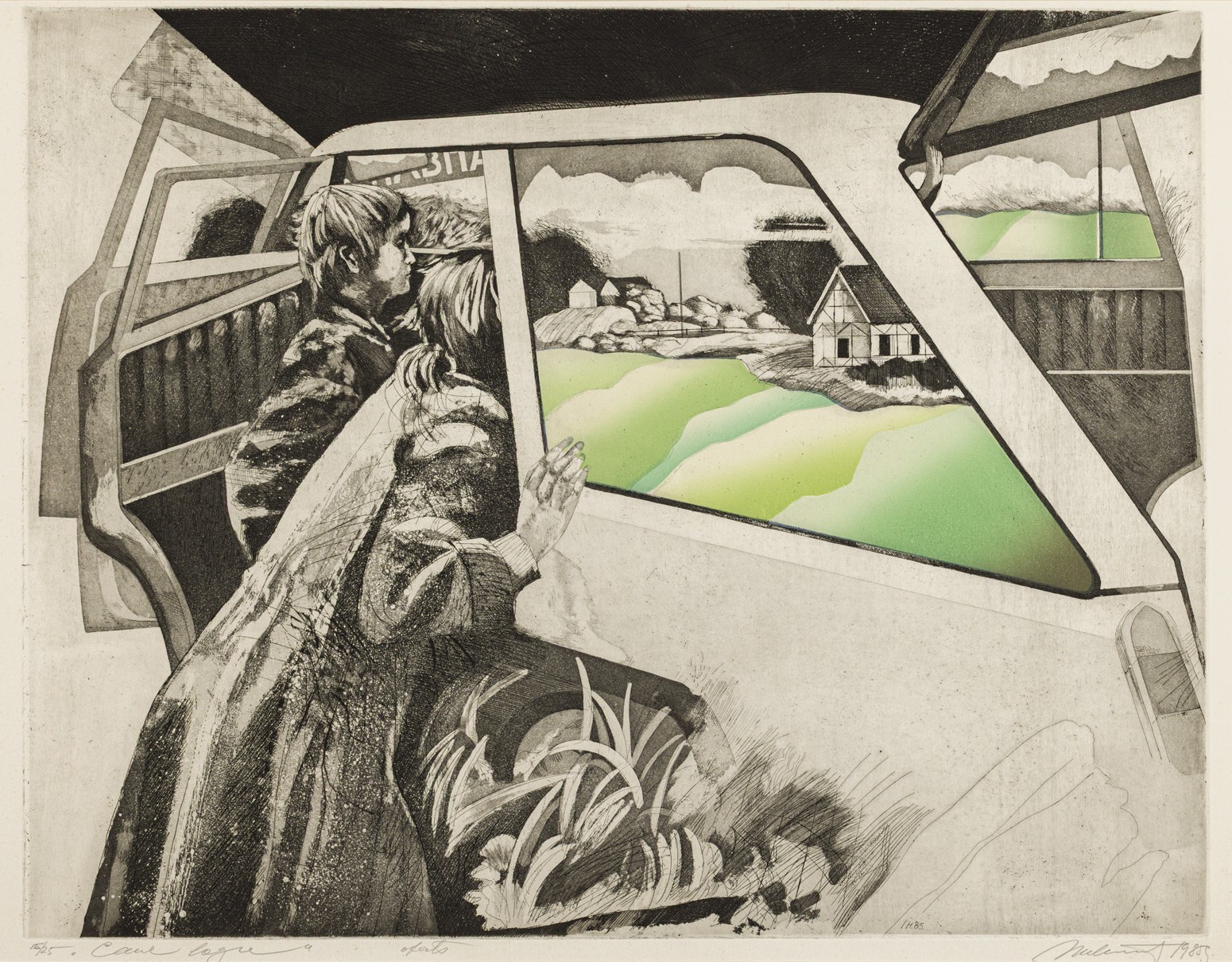
Through the Window, 1985. Handcolored etching and aquatint on paper, 49.7 × 63.1 cm (19 9/16 × 24 13/16 in.). Norton and Nancy Dodge Collection of Nonconformist Art from the Soviet Union. D03556
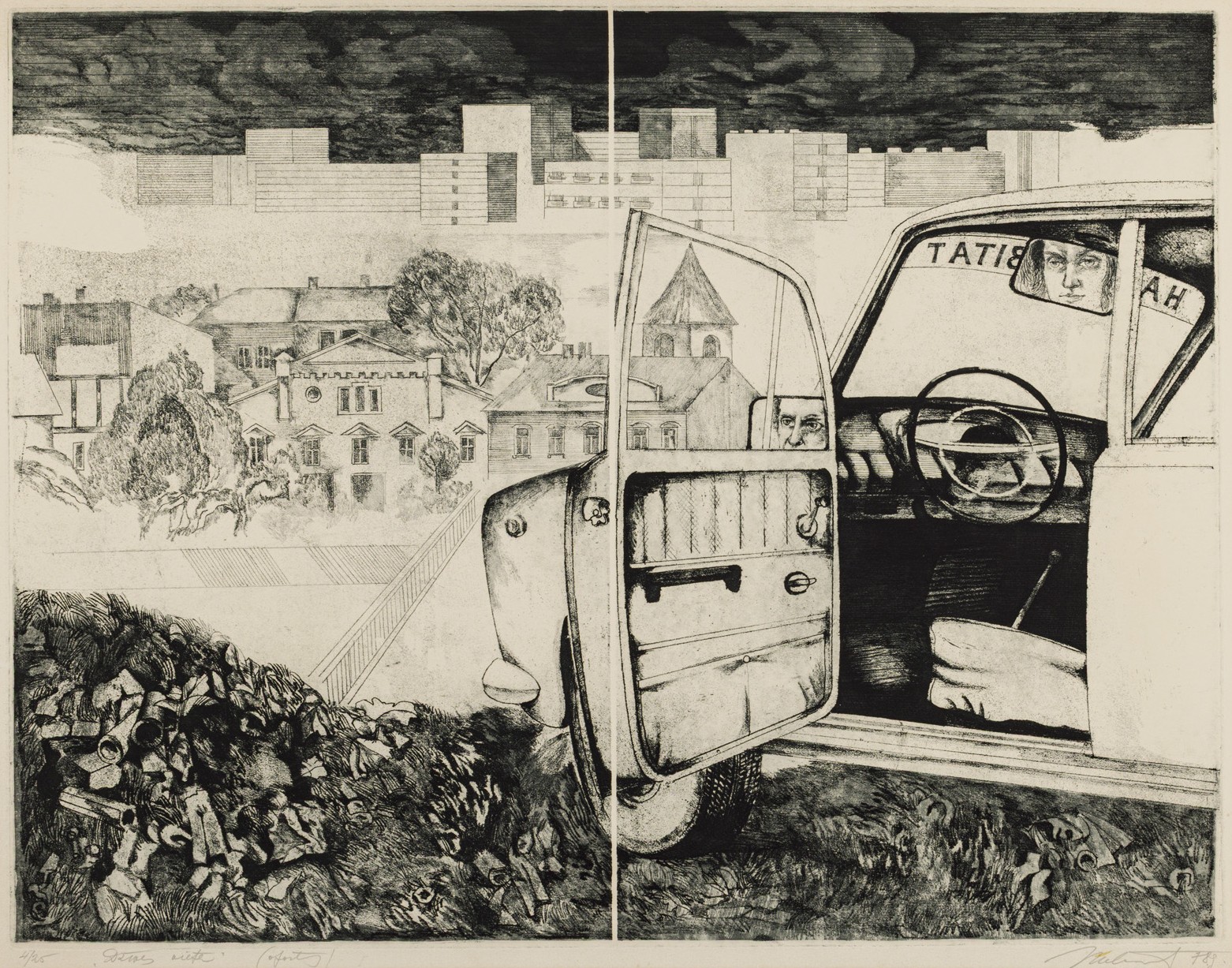
Dwellings, 1978. Etching and aquatint on paper, 49.3 × 63.5 cm (19 7/16 × 25 in.). Norton and Nancy Dodge Collection of Nonconformist Art from the Soviet Union. D03839
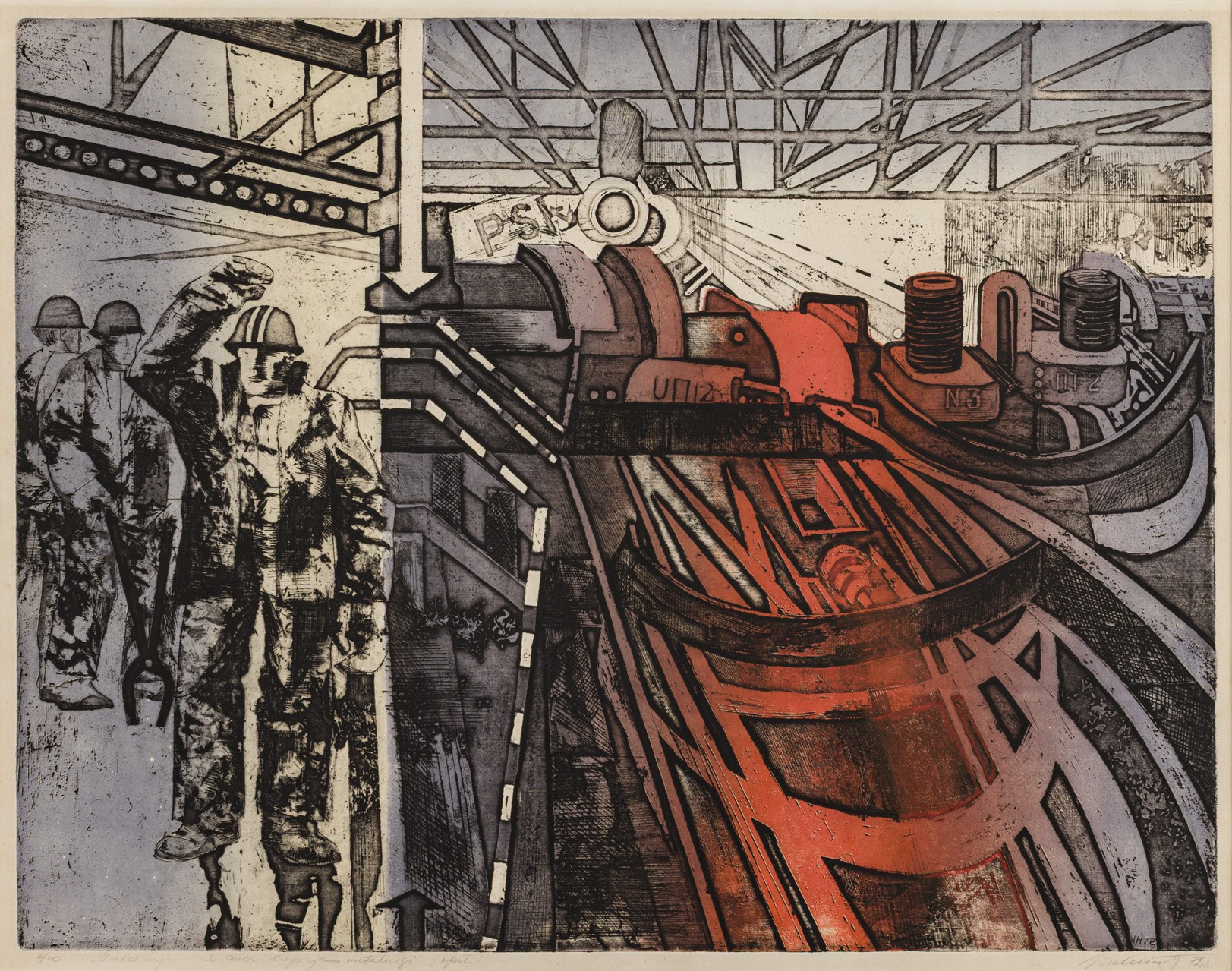
Rolling Mill Operators from the series Liepāja Metallurgists, 1972. Etching on paper, 49.9 × 64.1 cm (19 5/8 × 25 1/4 in.). Norton and Nancy Dodge Collection of Nonconformist Art from the Soviet Union. D07094
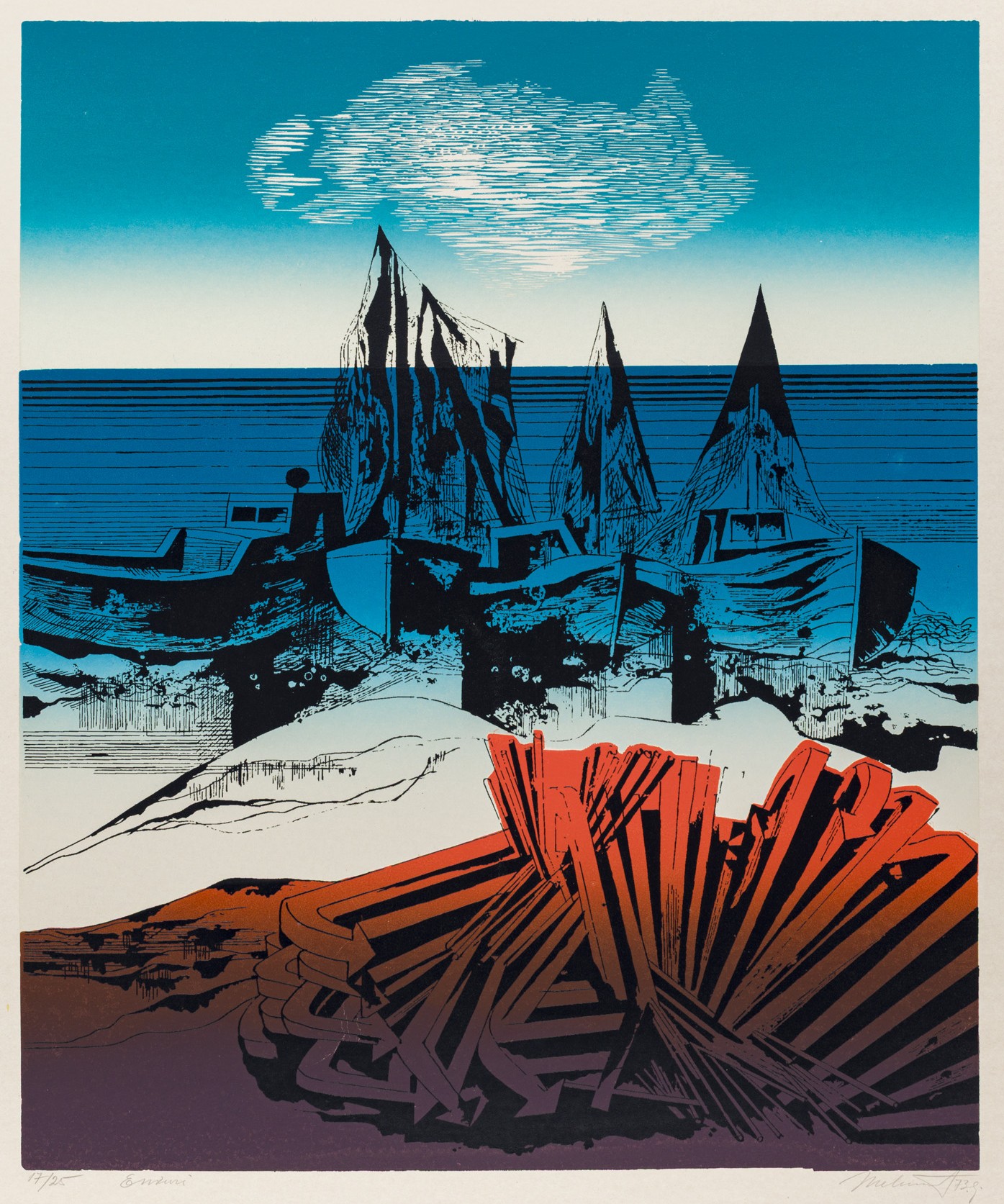
The Boats, 1973. Linoleum cut and screenprint on paper, 61.9 × 51.5 cm (24 3/8 × 20 1/4 in.). Norton and Nancy Dodge Collection of Nonconformist Art from the Soviet Union. D09520
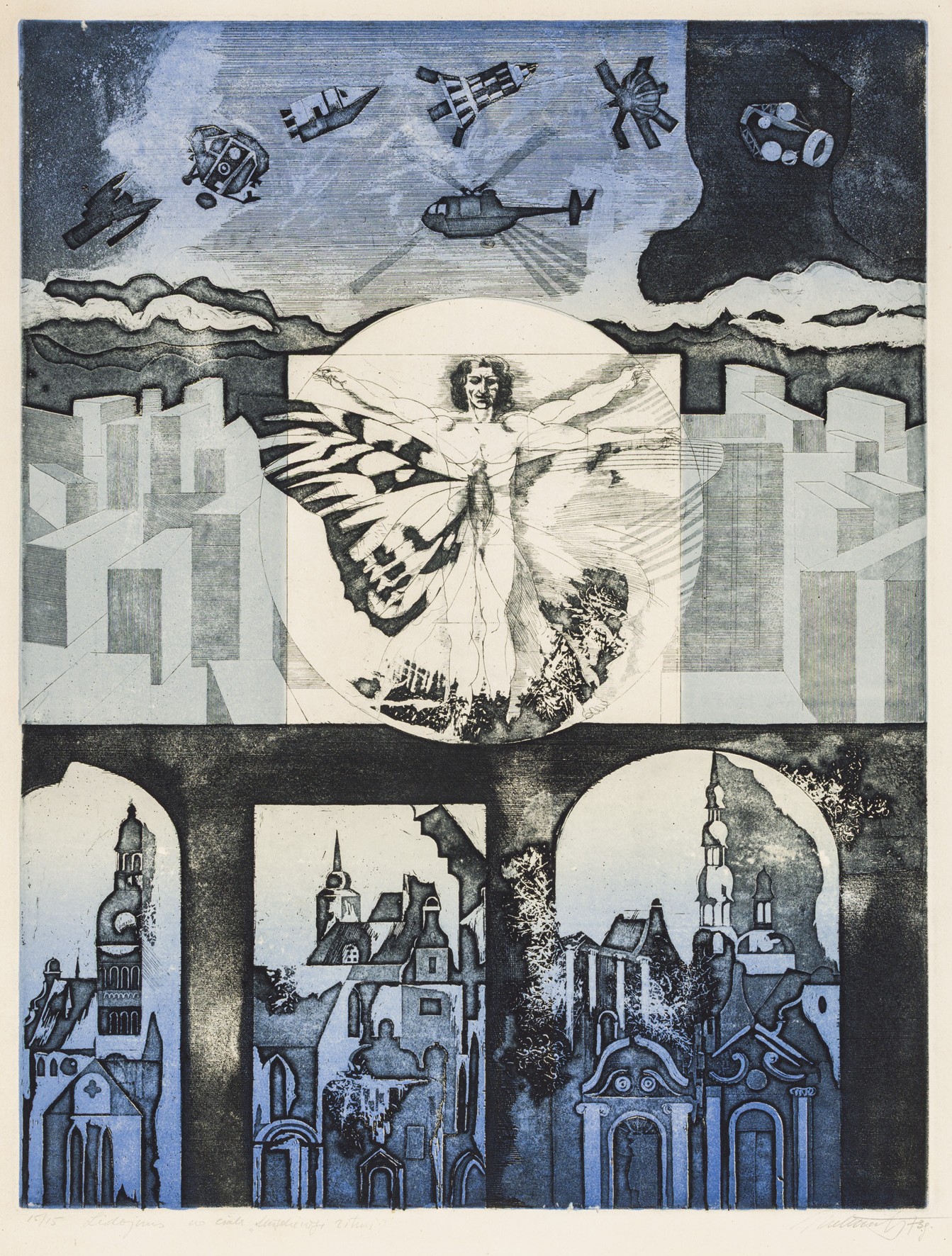
Flight from the series Rhythms of Our Days, 1973. Etching and aquatint on paper, 64.7 × 49.5 cm (25 1/2 × 19 1/2 in.). Norton and Nancy Dodge Collection of Nonconformist Art from the Soviet Union. D09524
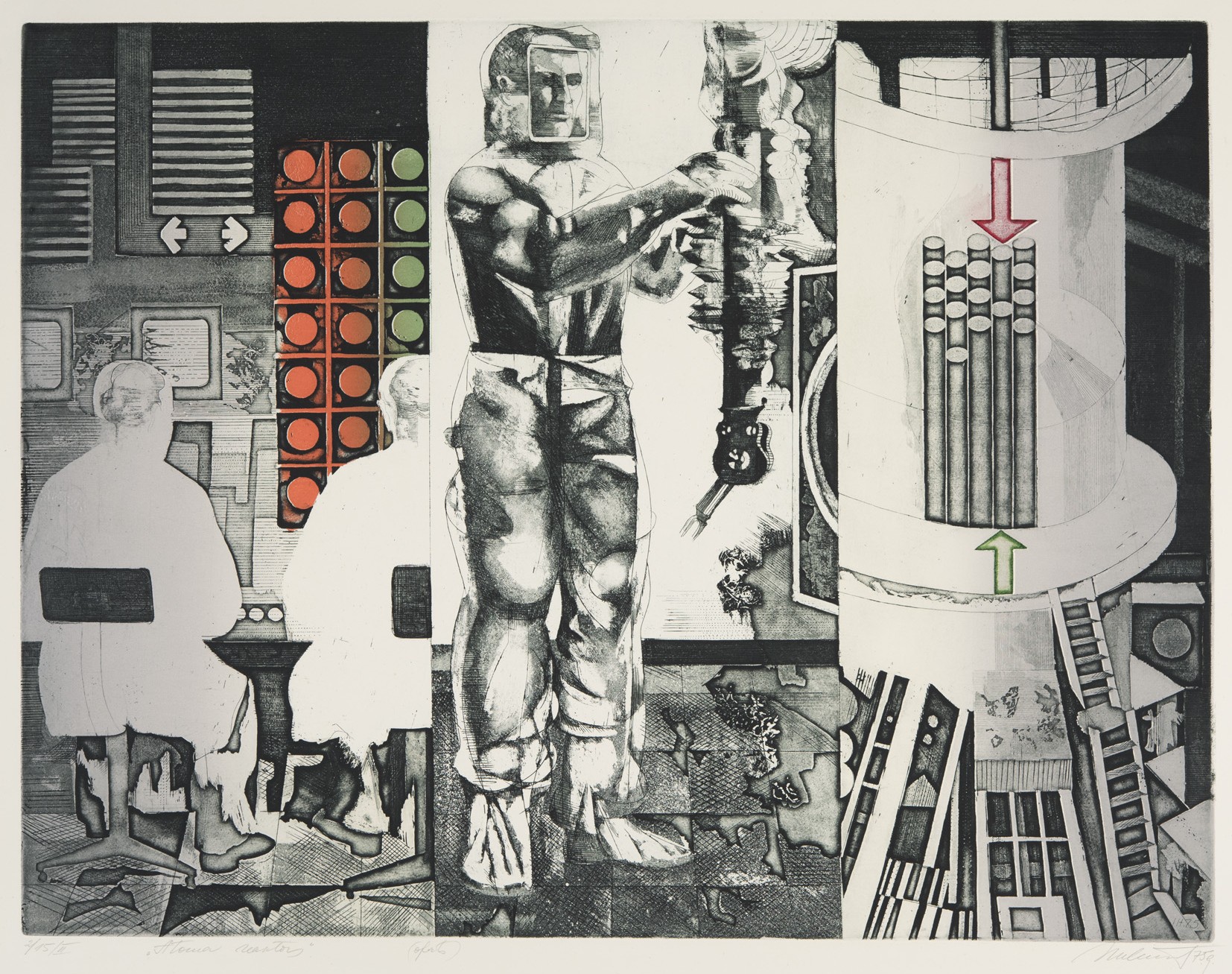
Atomic Reactor from the series Scientists, 1975. Color etching and aquatint on paper, 50 × 64.6 cm (19 11/16 × 25 7/16 in.). Norton and Nancy Dodge Collection of Nonconformist Art from the Soviet Union. D09523
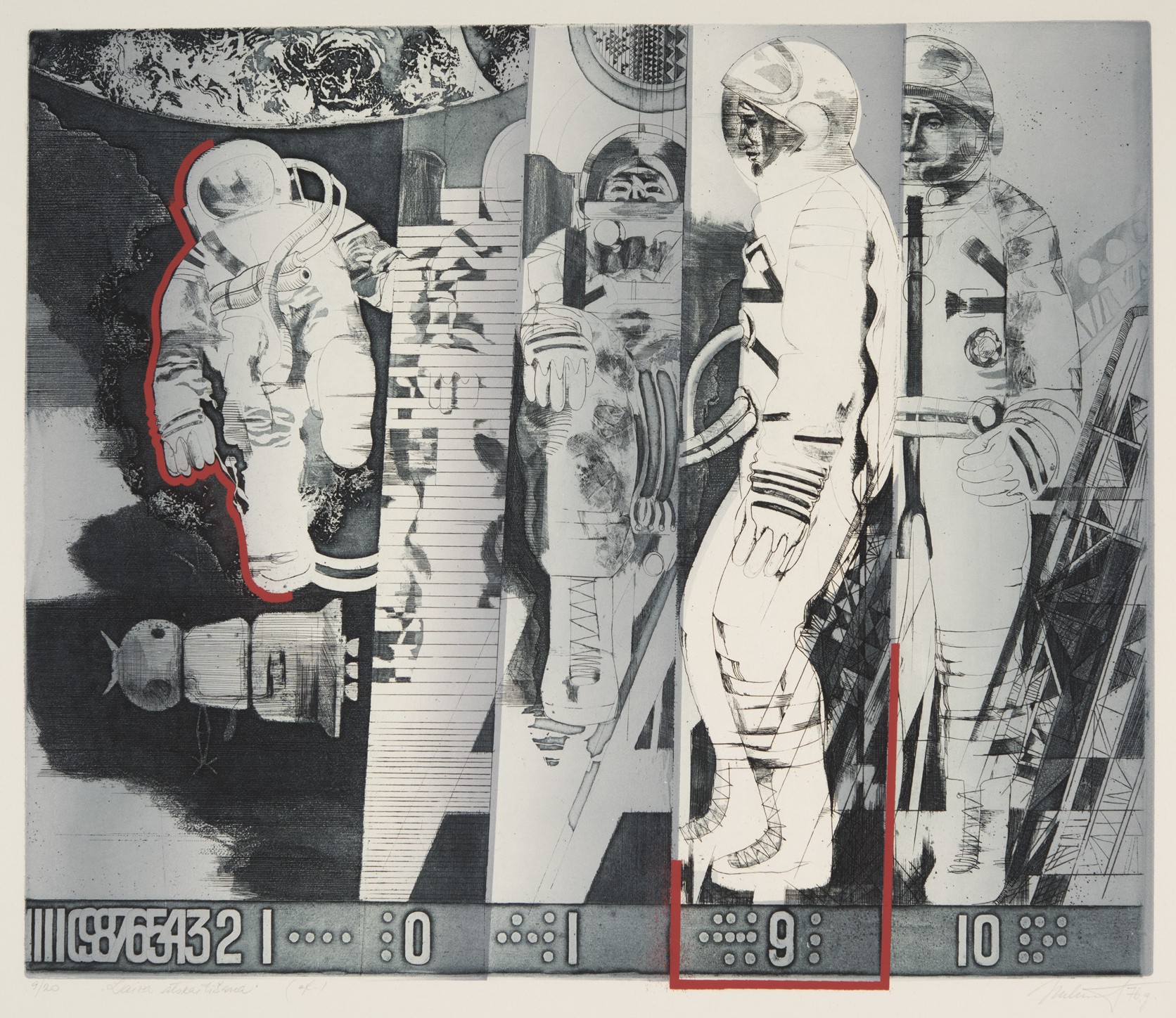
Countdown from the series Cosmonauts, 1976. Color etching on paper, 50.8 × 65 cm (20 × 25 9/16 in.). Norton and Nancy Dodge Collection of Nonconformist Art from the Soviet Union. D06979
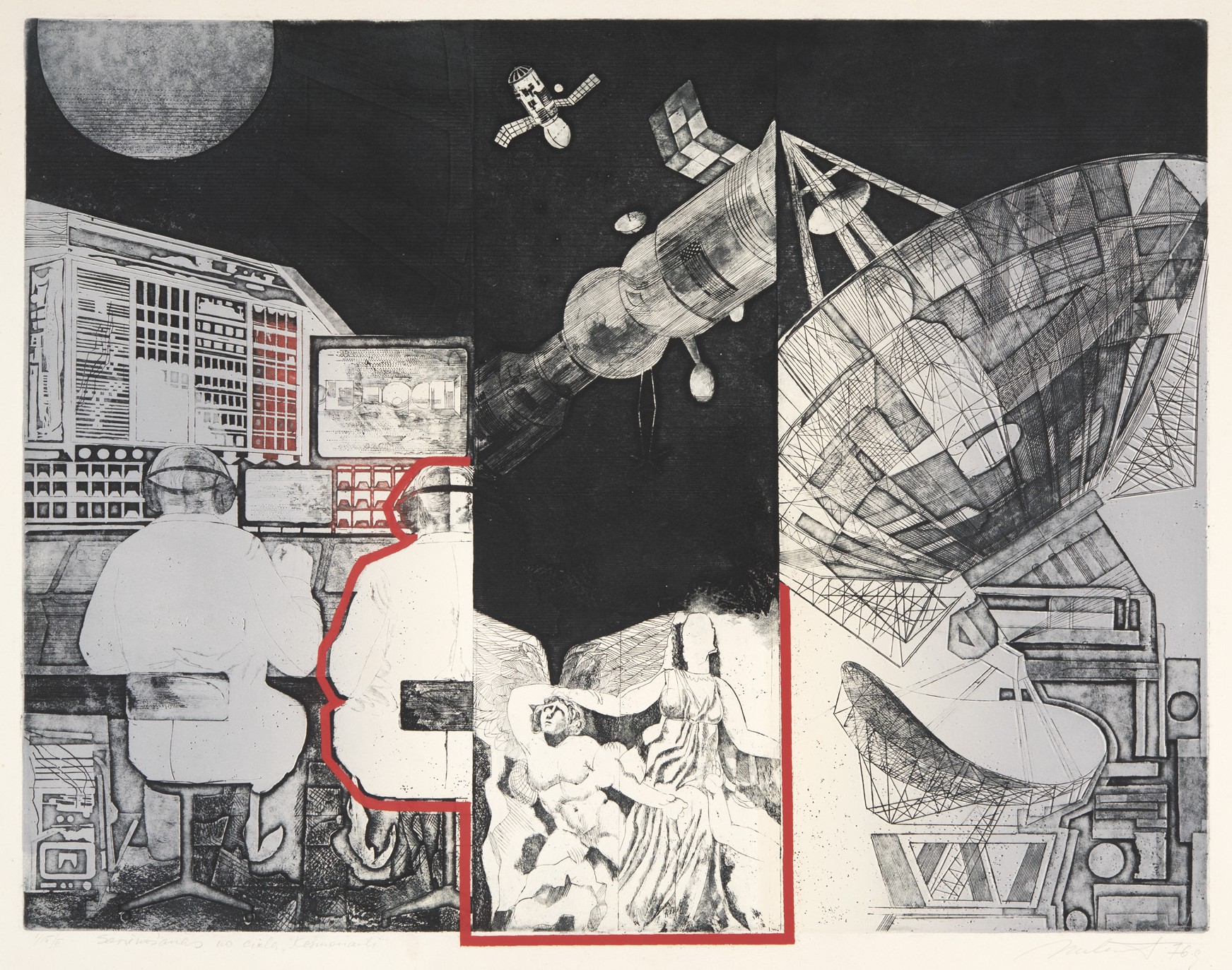
Connection from the series Cosmonauts, 1976. Color etching on paper, 50.4 × 63.6 cm (19 13/16 × 25 1/16 in.). Norton and Nancy Dodge Collection of Nonconformist Art from the Soviet Union. D09698
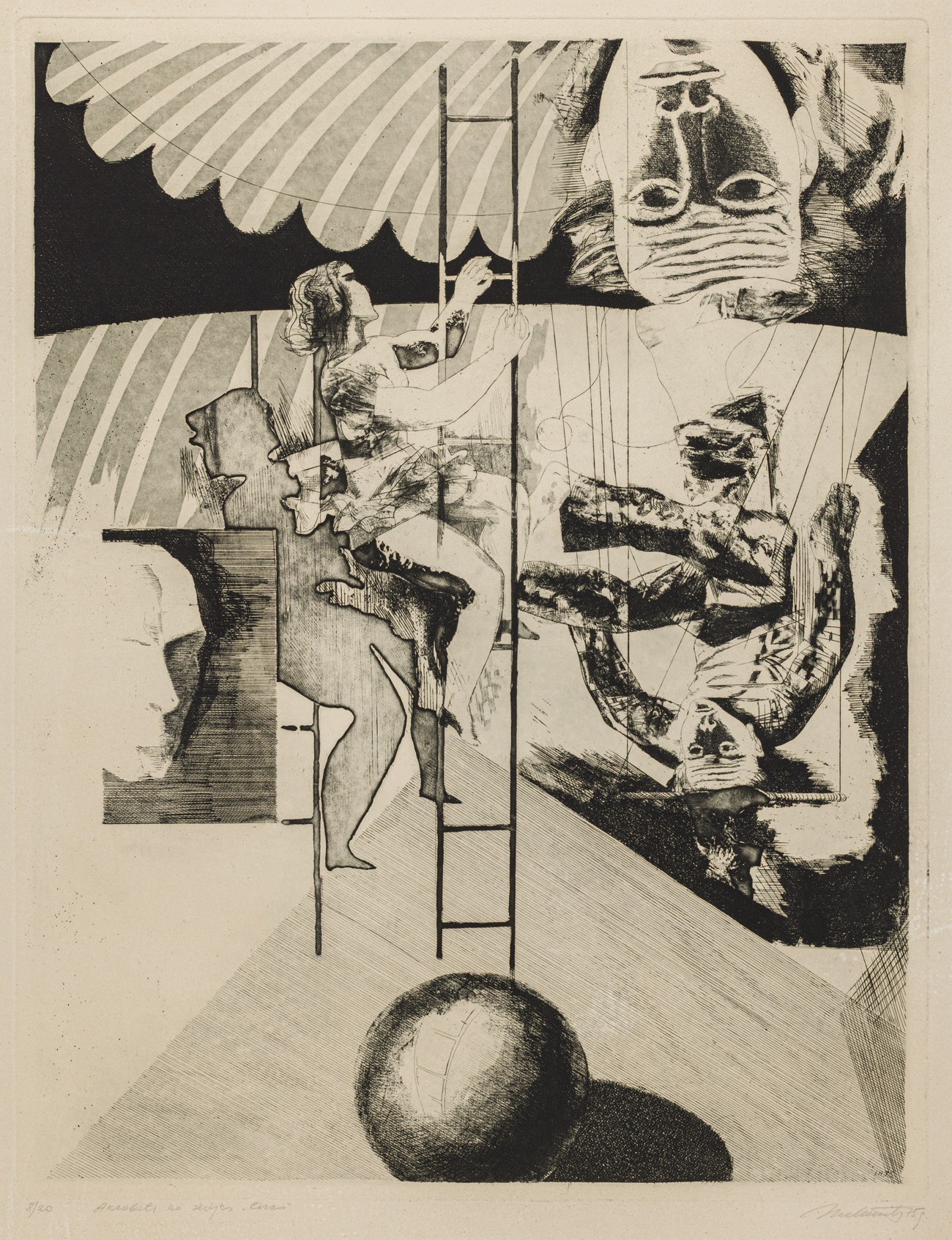
Acrobat from the series Circus, 1975. Etching on paper, 64.6 × 50 cm (25 7/16 × 19 11/16 in.). Norton and Nancy Dodge Collection of Nonconformist Art from the Soviet Union. D06848
Selected Exhibitions
1973 10th Biennial of Graphic Arts, Ljubljana, Slovenia
1974, 1984 International Print Triennale, Krakow, Poland
1976, 1980 Inter Grafik, Berlin, Germany
1974, 1976, 1979, 1986 Bradford Triennial, England
1981 European Graphics Biennale, Heidelberg, Germany
1968, 1971, 1974, 1983, 1986 Tallinn Graphics Triennial, Estonia
1983 PSRS dienas Francijā ietvaros Ināra Helmūta personālizstāde [Inārs Helmūts’s Solo Exhibition as Part of the USSR Days in France], Paris, France
1986 Banská Bystrica international exhibition, Banská Bystrica Regional Gallery, Slovakia
1988 Latvijas mākslinieku darbu eksportpreču izstāde [Latvian Artists’ Works at the Export Goods Exhibition], Jacob K. Javits Convention Center, New York, USA
2016 Grafika [Printmaking], Ojārs Vācietis Memorial Museum, Riga, Latvia (solo)
2020 Nenorunātas tikšanās [Unexpected Encounters], Arsenāls Exhibition Hall of the Latvian National Museum of Art, Riga, Latvia
Selected Publications
Helmūts, Inārs. Saskares: Autobiogrāfisks apcerējums [Encounters: An Autobiographical Reflection]. Cēsis: Sava grāmata, 2020.
Kornetchuk, Elena. “Contemporary Soviet Prints: A National Diversity.” Print News, October 1980.
Kornetchuk, Elena. “Inars Helmūts and the Latvian Graphic Tradition.” Printed World, April 1981.
Reihmane, Laima. “Inārs Helmūts.” Māksla un arhitektūra biogrāfijās [Biographies of Art and Architecture], edited by Andris Vilsons. Rīga: Latvijas enciklopēdija, 1995, 1: 198.
Staņa, Ārija, and Reihmane, Laima. Ināra Helmūta darbu izstādes katalogs [Inārs Helmūts’s Exhibition Catalogue]. Bauska: Bauska Museum of Local Lore and Art, 1978.