
Ina Stūre
1958 — Irlava (Latvia) | 2006 — Riga (Latvia). Worked in Riga, Vecmokas, Tukums region (all in Latvia)
Ina Stūre was active in the field of photography for a relatively short time, but her works—mostly staged portraits—stand out with their experimental and multimedia techniques and a focus on the materiality of the image, as well as exploration of themes related to female identity. Stūre initially pursued architectural studies at the Riga Technical School of Construction (1978), later turning to photography under the mentorship of the well-known Latvian photographer Gunārs Binde (b. 1933) at the Photo Club Riga in 1985–86. In the early 1990s she joined the club’s experimental group, led by Mārtiņš Krūmiņš (b. 1961). From 1996 to 2002 she studied icon painting and printmaking techniques at the Latvian Christian Academy, where her thesis work in etching was supervised by artist Nele Zirnīte (b. 1959).
In 1989, Stūre became a member of the Latvian SSR Photo Artists’ Union. From the late 1980s to the late 1990s she participated in numerous local and international exhibitions. Her solo exhibitions were held in Riga, Pärnu, and Lübeck, while she also contributed to group exhibitions such as Baltic Horizons (Helsinki, 1992), Stepping Out of Line (various locations, USA, 1992–93), Photography from Latvia (Vienna, 1997), and Contemporary Latvian Photography (Vilnius, Bratislava, 1998), among others. [1] Embracing the opportunities presented by the fall of the Iron Curtain, she enjoyed engaging in cross-border initiatives and communication.
While she intermittently spent time in Riga due to studies and work, Stūre’s primary residence and creative base was a picturesque yet crumbling old house in the village of Vecmokas in the Tukums region of Latvia. The dusty, historical interior and surrounding rural landscape served both as an inspiration and a backdrop for her artistic endeavors. Stūre’s creative burgeoning at the turn of the 1980s and 1990s coincided with a tumultuous period of economic and social upheaval in Latvia. Perestroika and the early years of renewed independence ushered in a mixture of hopefulness and practical everyday challenges, including material scarcity. Facing shortages in photographic materials and technologies, Stūre, like other photographers of the time, exhibited remarkable resourcefulness, often employing do-it-yourself methods. Stūre’s work consciously pushed the conventional boundaries of the photographic medium, integrating analog black-and-white photography with painting and graphic techniques, and layering diverse methods and effects. This included unconventional filters and emulsions, multiple exposures, collage, painting, drawing, and tinting with various materials, as well as commercially available products such as hair dye. This fusion of various forms of artistic expression contributed to a redefinition of the possibilities of photography at the time.
However, in its staged and often fantastical nature, Stūre’s work went against the grain of the era’s dominant paradigm of documentary. Art historian Alise Tīfentāle, reflecting on the 1990s in Latvia, has highlighted a tendency to glorify photography rooted in social realism and perceived objectivity. This inclination, she suggests, stemmed partly from the previous impossibility of creating socially critical work, and as a backlash against the insular technical experimentation associated with the Soviet era and salonism. [2] Stūre’s work, in contrast to the straight photography favored by more prominent local peers such as Inta Ruka (b. 1958) or Andrejs Grants (b. 1955), strongly relied on imagination and manipulation. She remarked, “In my photographs I can live my dreams. . . I don’t photograph reality, because I don’t know what reality is; we are surrounded by decorations and illusions.” [3] Despite their highly aestheticized appearance and references to symbolism and mythology, Stūre’s images still grapple with significant social themes. While her work is rarely explicitly political, pieces like Tour in the Animals Carriage (1987–88) or Next Frame (1991) exhibit a keen awareness of and commentary on both the enduring legacy of Soviet occupation and Latvia’s ongoing reckoning with its past and envisioning of its future.
Moreover, the evocative dreamscapes crafted by Stūre reflect themes of identity, creative autonomy, and the changing roles and expectations of women. While drawing some inspiration from the old masters of Latvian photography (such as her tutor Binde), Stūre’s whimsical and otherworldly images of the female body challenge the predominantly male gaze prevalent in the field. Her work emphasizes the act of photography as collaboration, often involving a close circle of female associates. Elaborate backdrops and props, fashioned from paper, fabric, or plants from nearby fields, interact with the natural light filtering through old windows and typical still-life elements to offer predominantly abstracted visions of the female form. The resulting compositions unveil the performative aspects of femininity and explore its infinite possibilities, along with a discernible sense of self-awareness and irony, particularly evident in pieces such as Attic at the Fringes of Europe 2 (1991).
Poet Iveta Šimkus (b. 1964) was a neighbor of Stūre’s in Vecmokas and they formed a close friendship, both navigating the challenges of raising young children while pursuing their respective creative endeavors. Along with a handful of other female friends and relatives, Šimkus frequently served as a model for Stūre’s meticulously staged scenes; the two often prepared for the photography sessions together. The photographer’s work also features in a number of poetry publications by Šimkus, including Absence, 2007, which is dedicated “to Ina,” and Heavenly Groundwater (2007), attesting to their strong creative and personal bond.
Despite being represented in various collections, including the Latvian Museum of Photography, Stūre’s work remains largely underrecognized and has faded from public attention since her passing. Until recently, the majority of her archive was in storage in the house at Vecmokas. In 2023, artist Kristīne Krauze Slucka (b. 1979) and curator Liāna Ivete Žilde (b. 1985) began the task of exploring and digitizing Stūre’s archive in collaboration with several institutions in Latvia, shedding new light on her artistic legacy.
Liāna Ivete Žilde
Photo portrait: Ina Stūre, c. 1985. Photographer unknown. Artist’s personal archive
Notes
1. Inga Šteimane, “Stūre, Ina,” in Māksla un arhitektūra biogrāfijās [Art and Architecture Biographies], ed. Anita Vanaga (Riga: A/S Preses nams, 2000), 3: 122.
2. Alise Tīfentāle, “No fotomākslas līdz fotogrāfijai mākslā” [From Photoart to Photography in Art], in Deviņdesmitie, ed. Ieva Astahovska (Riga: LLMC, 2010), 296–306.
3. Dace Micāne Zālīte, “Formas un līniju daiļuma cildinājums” [The Celebration of Beauty of Form and Lines], Laiks 4 (January 17, 1996): 3.
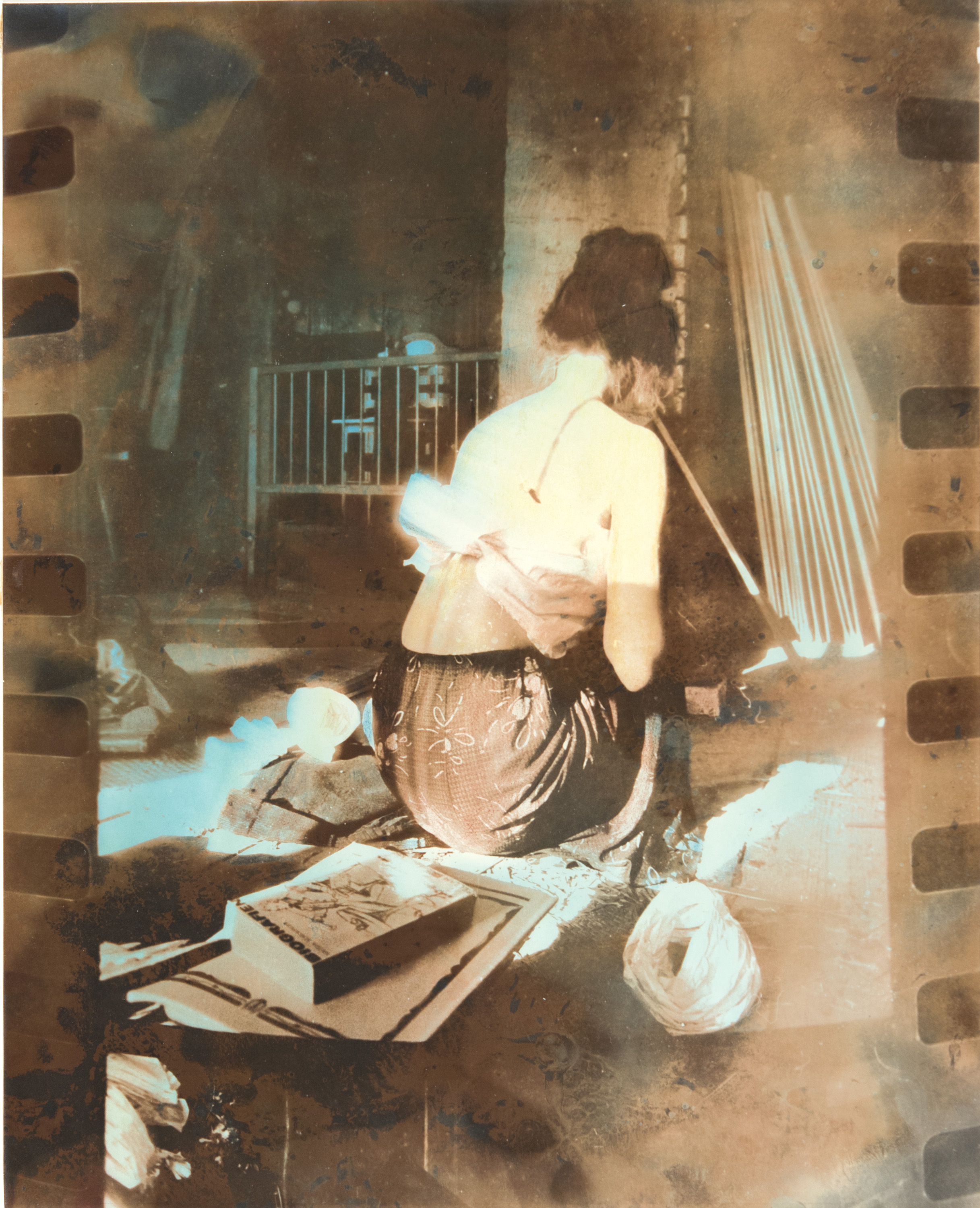
Biography, undated. Hand-tinted gelatin silver print on paper, 26.7 × 21.5 cm (10 1/2 × 8 7/16 in.). Norton and Nancy Dodge Collection of Nonconformist Art from the Soviet Union. 2000.1393
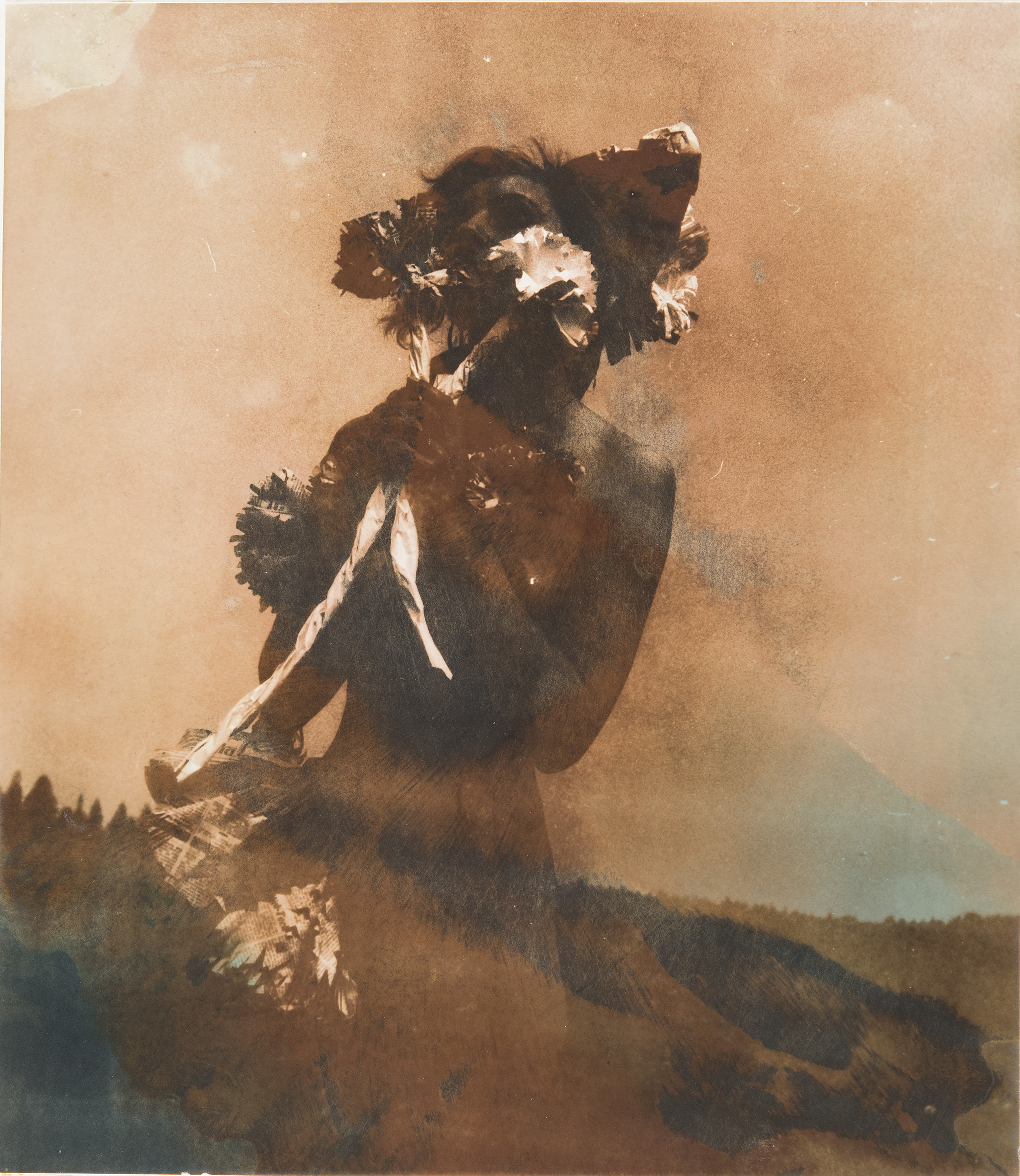
To Forget, For A Moment, undated. Hand-tinted gelatin silver print on mat board, 24.8 × 32.4 cm (9 3/4 × 12 3/4 in.). Norton and Nancy Dodge Collection of Nonconformist Art from the Soviet Union. 2000.1394
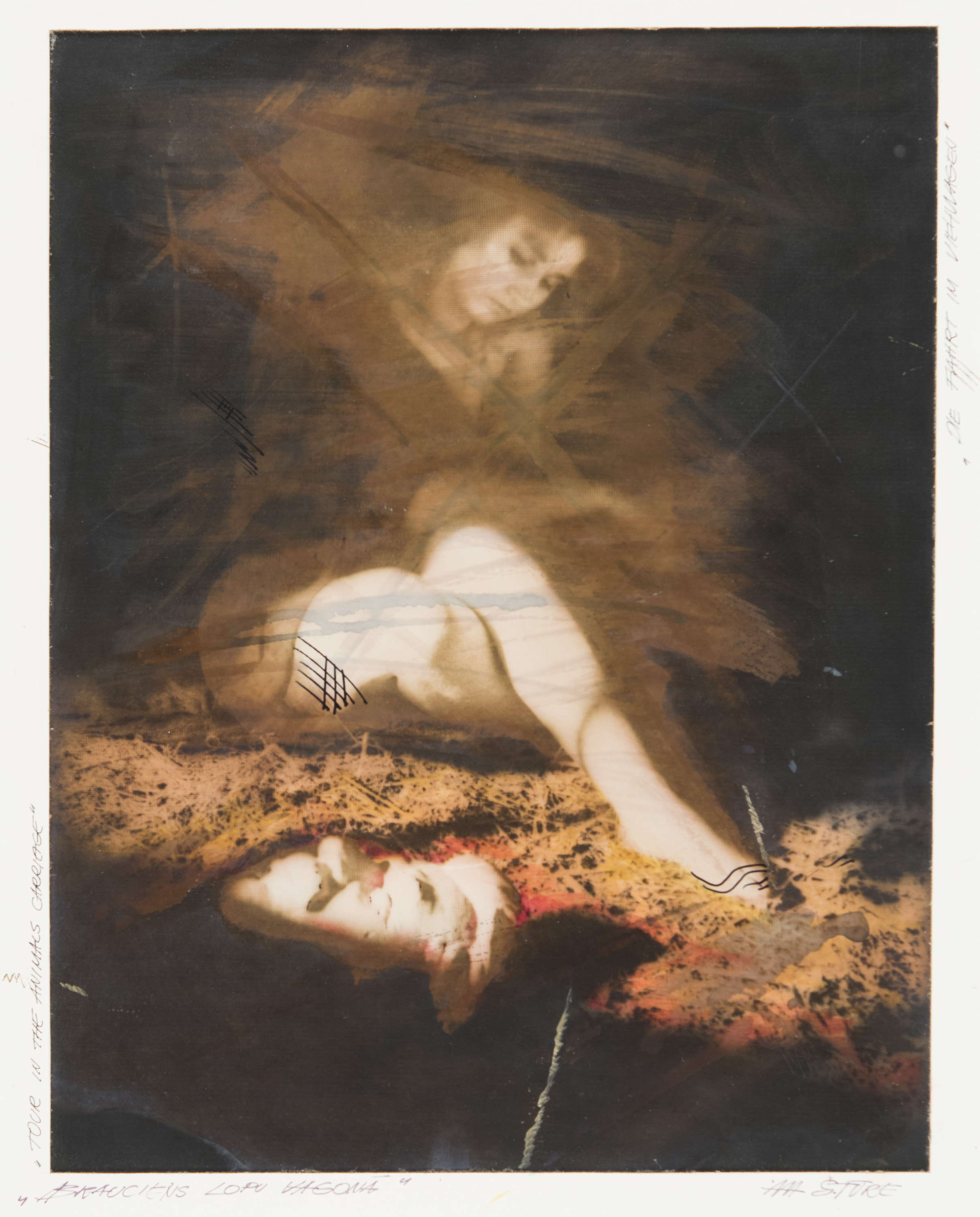
Tour In The Animals Carriage, 1987-1988. Hand-tinted gelatin silver print on mat board, 26 × 20 cm (10 1/4 × 7 7/8 in.). Norton and Nancy Dodge Collection of Nonconformist Art from the Soviet Union. 2000.1395
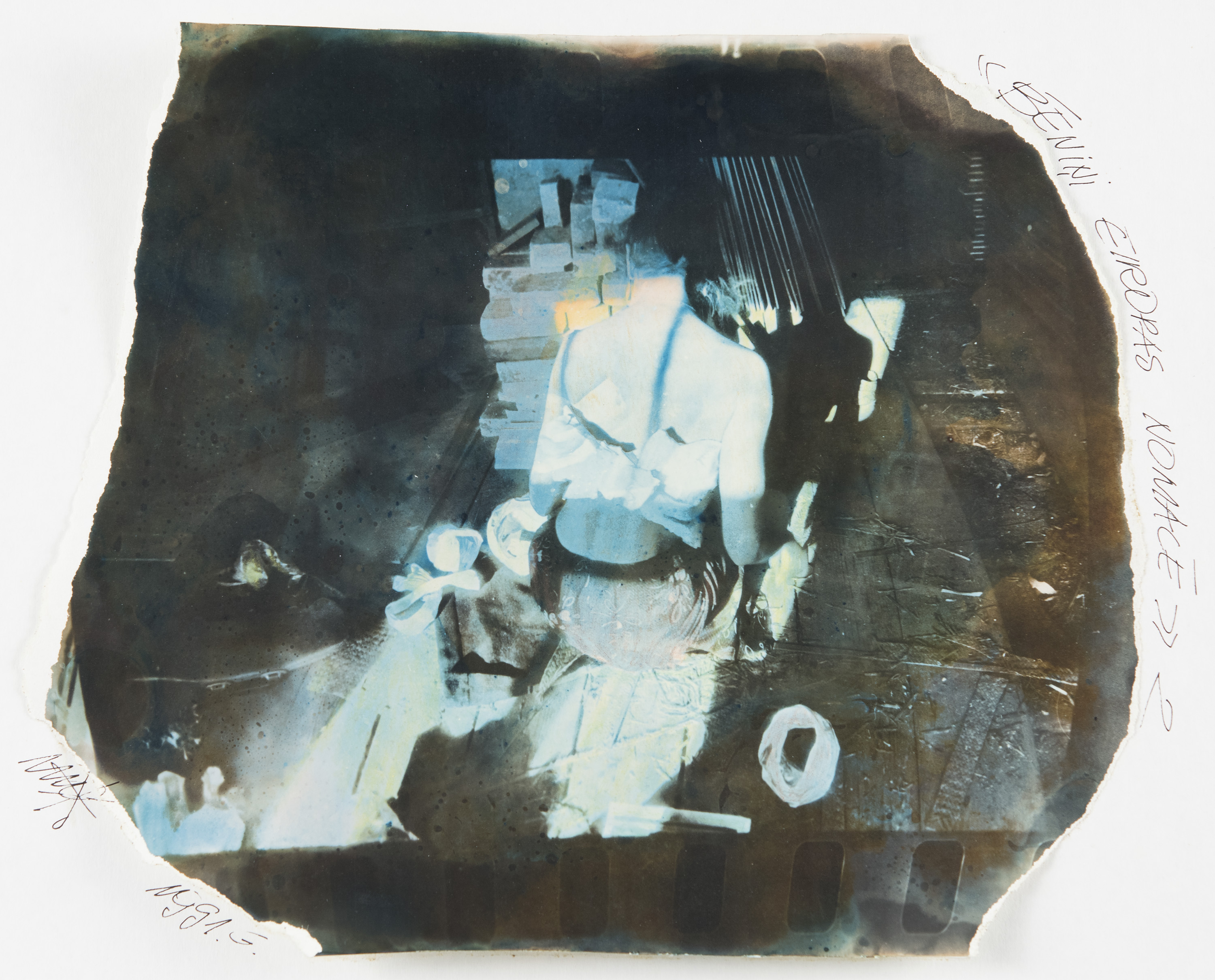
Attic At the Fringes of Europe 2, 1991. Hand-tinted gelatin silver print on mat board, 24.2 × 29.3 cm (9 1/2 × 11 9/16 in.). Norton and Nancy Dodge Collection of Nonconformist Art from the Soviet Union. 2000.1396
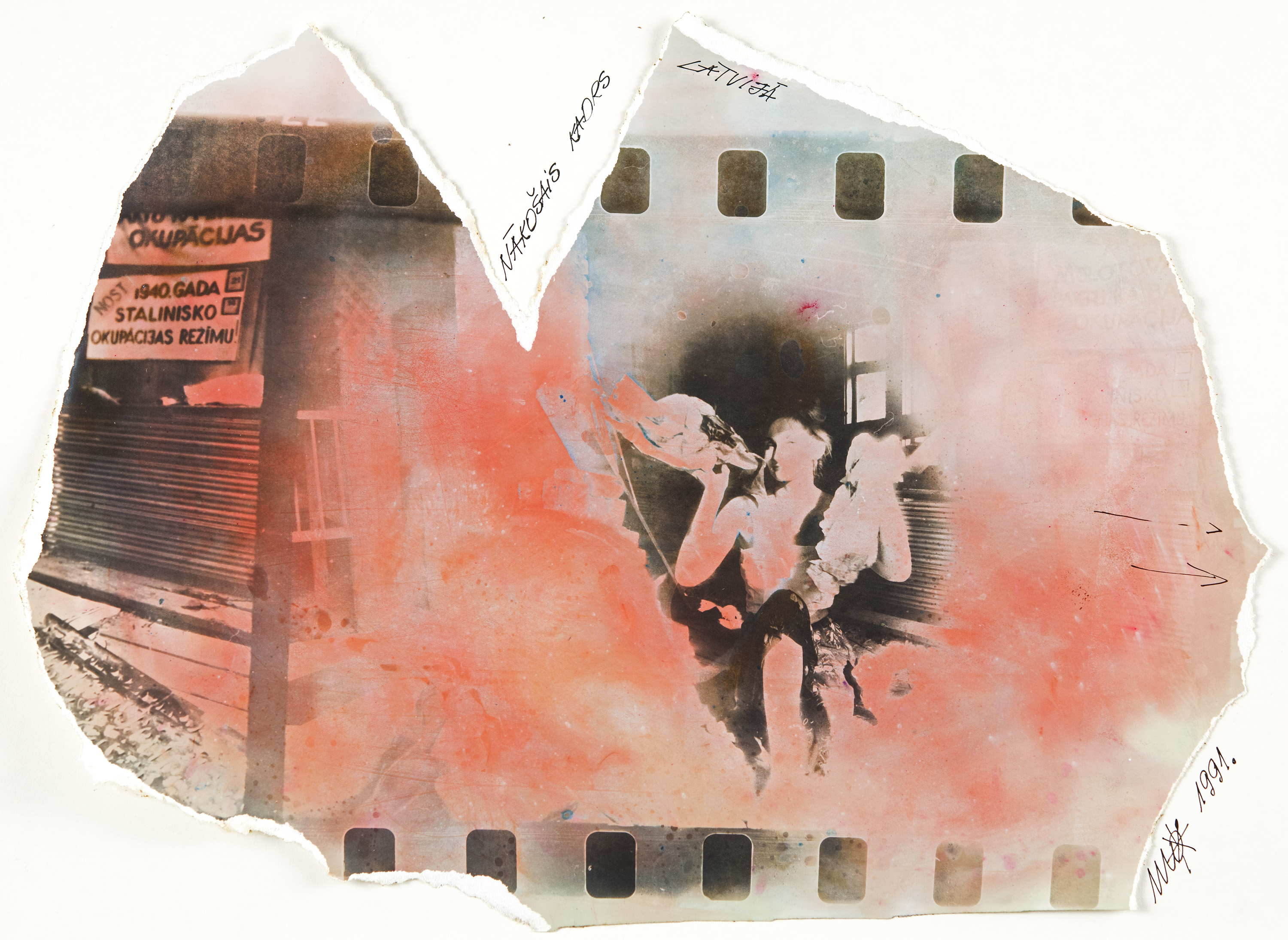
Next Frame, 1991. Hand-tinted gelatin silver print on mat board, 26.4 × 35.7 cm (10 3/8 × 14 1/16 in.). Norton and Nancy Dodge Collection of Nonconformist Art from the Soviet Union. 2001.1385