
Igor Savchenko
1962 — Minsk (Belarus). Lives and works in Minsk (Belarus)
Photographer, artist, and curator Igor Savchenko was born in Minsk on November 14, 1962. He began taking photographs while still in high school with his first camera, which he received as a birthday present. However, instead of pursuing photography as a career, he enrolled in the Minsk Radio Technical School (now Minsk Radio Engineering College, part of Belarusian State University of Informatics and Radioelectronics), where he studied cybernetics and automatic control systems, graduating in 1985 with a degree in electrical engineering. He worked as an engineer in Minsk until the early 1990s.
At the same time, in the late 1980s, Savchenko continued his experiments with photography, searching for an original mode of creative expression. This search resulted in a series of photographs, Алфавит жестов 1–2 [Alfavit zhestov 1–2, Alphabet of Gestures 1–2], created between 1989 and 1994. The photographs are made by reshooting images from family archives that date from the 1930s to the 1960s. He rephotographed sections and fragments of individual images, cropping them, and thus altering the meaning of the original photograph. As the title of the series suggests, Savchenko’s primary interest here was in the hand gesture—a nonverbal communicative sign placed at the center of the image. Removed from their original contexts, the gestures in the photographs take on an open-ended and mutable meaning: uncanny and melancholy, they embody ordinary life made strange. In this respect, the series is representative of Savchenko’s practice as a whole: He is interested in the life of a photograph, as well as the life in a photograph, a duality that questions the relationship between memory and representation as well as the nature of the passage of time.
Savchenko continued these explorations in the series Тени [Teni, Shadows] (1989–93), which focuses on the human figure, presented both alone and as a part of a group. Removed from their original contexts and placed against a schematic, almost abstract background, these figures appear as signs that have lost their photographic indexicality. In other words, rather than reproducing a specific reality, they appear as open-ended symbols, inviting the viewer to assign meaning to them within an imagined narrative context. Savchenko’s works thus also raise questions about the nature of photography as a medium, highlighting its subjective and constructed nature. In this respect, his practice belongs not only within the Minsk school of photography that emerged in the 1980s but also within broader trends in Eastern European and international photography that emphasize conceptual approaches to the photographic practice.
In the late 1980s Savchenko began to exhibit his work, first at the Minsk and Panorama photography clubs, and later both locally and internationally. In 1990 he was awarded the Kodak-Pathe Foundation Prize at the Salon International de la Recherche Photographique in Royan, France. In 1991 Savchenko’s work was included in the important exhibition Photo Manifesto: Contemporary Photography in the USSR that took place in Baltimore in the US. In the same year, he also participated in the exhibition New Wave in Photography from Russia and Belarus, which was held in the Central Museum of Cinema in Moscow. Along with the work of Galina Moskaleva (b. 1954) and Sergey Kozhemyakin (b. 1956), Savchenko’s photographs were shown at the Hasselblad Center in Gothenburg, Sweden, in the exhibition entitled Past-Future: The Point of Transition, which took place in 1998. These and other exhibitions in the 1990s helped establish Savchenko’s international reputation and defined him as one of the central figures of the Minsk school of photography, along with Vladimir Shakhlevich (b. 1949), Moskaleva, Kozhemyakin, Uladzimir Parfianok (1958–2024), and other Belarusian photographers.
In the 1990s, he continued to work in a serial format, producing series such as Мистерия 1-6 [Misteriya 1–6, Mysteria], Без лица [Bez litsa, Faceless], Война [Voĭna, War], Сакральные ландшафты [Sakral'nyye landshafty, Sacred Landscapes], Невидимое [Nevidimoye, Invisible], and others. In these photographs he continued to work with preexisting, found images, reshooting, rescaling, cropping, overpainting, scratching, and otherwise manipulating the original images to create complex, moody, and expressive original works. The serial approach is particularly significant here, allowing the photographer to develop a particular editing strategy in multiple images, while also suggesting an intentionally open-ended and mysterious narrative or thematic overtone.
In 1997 Savchenko declared that he was taking a break from photography and turning to literature, conceptual art, and other forms of expression. That year he developed the concept of what he calls “textual photography”: [1] substituting an image with lines of text, which due to their evocative and open-ended nature cannot be quite reduced to the categories of a title or a description, but rather function as a clue or an instruction for the viewer’s imagination to produce an image. In these works, the artist invites viewers to use their imagination and interpret the text as a mental image, not only exploring the interplay between language and visual perception but also questioning the very essence of what constitutes a photograph. Over the next few years, Savchenko worked on a number of projects using text and mixed-media techniques. For example, in Небольшое исследование современных шифрованных радиосообщений [Nebol'shoye issledovaniye sovremennykh shifrovannykh radiosoobshcheniy, A Small Research on Contemporary Encrypted Radio Transmissions] (1999), the artist applied his method of serial investigation to shortwave radio transmissions, intercepted between February 19 and April 1, 1999, during his stay in Boswil, Switzerland. The resulting work consists of audio fragments, uncoded texts, and reports by the artist that oscillate between fiction and reality. Acting as both an intelligence and counterintelligence agent, Savchenko draws attention to the numerous, largely invisible networks through which information circulates, highlighting its materiality.
In 2006, after a break of nearly ten years, Savchenko resumed his photographic practice, and his recent work continues to push the boundaries of the photographic medium, challenging technical conventions and conceptual frameworks. In 2008 and 2009, the artist began experimenting with direct-positive photography. Using a large-format plate camera, he captured scenes directly onto photographic paper. In this process, the paper is exposed inside the camera and then processed as a reversal material, creating a positive image on the same piece of paper. Unlike traditional photography, where an image is transferred from a negative to paper through printing, this process eliminates any intermediate steps. The resulting image is a direct document of the scene, giving it a unique status similar to that of a negative. Each photograph, or “paper shot,” is therefore one of a kind.
In 2012, Savchenko produced the series Tautology, which consists of pairs of the same text, presented in two different forms: one as a typed text and the other as a photograph of the same text as it appears in a particular yet indeterminate context (for example, the word “Berlin” vs. a fragment of what appears to be a business advertisement featuring the same word). [2] This series not only examines the relationship between text and image but also highlights the subtle nuances and shifts in meaning that occur when the same information is conveyed through different means of expression.
Savchenko is a prolific artist who occupies a central place in this history of contemporary Belarusian art. In his photographic and conceptual practice, he continues to invent new modes of creative expression, raising important questions about the nature of representation, the limits and boundaries of artistic media, and the relationships among memory, vision, language, and our experience of the world.
Tatsiana Zhurauliova
Photo portrait by Sergey Mikhalenko. Source: KALEKTAR
Notes
1. Artist’s website: Titles to Photos.
2. Artist’s website.
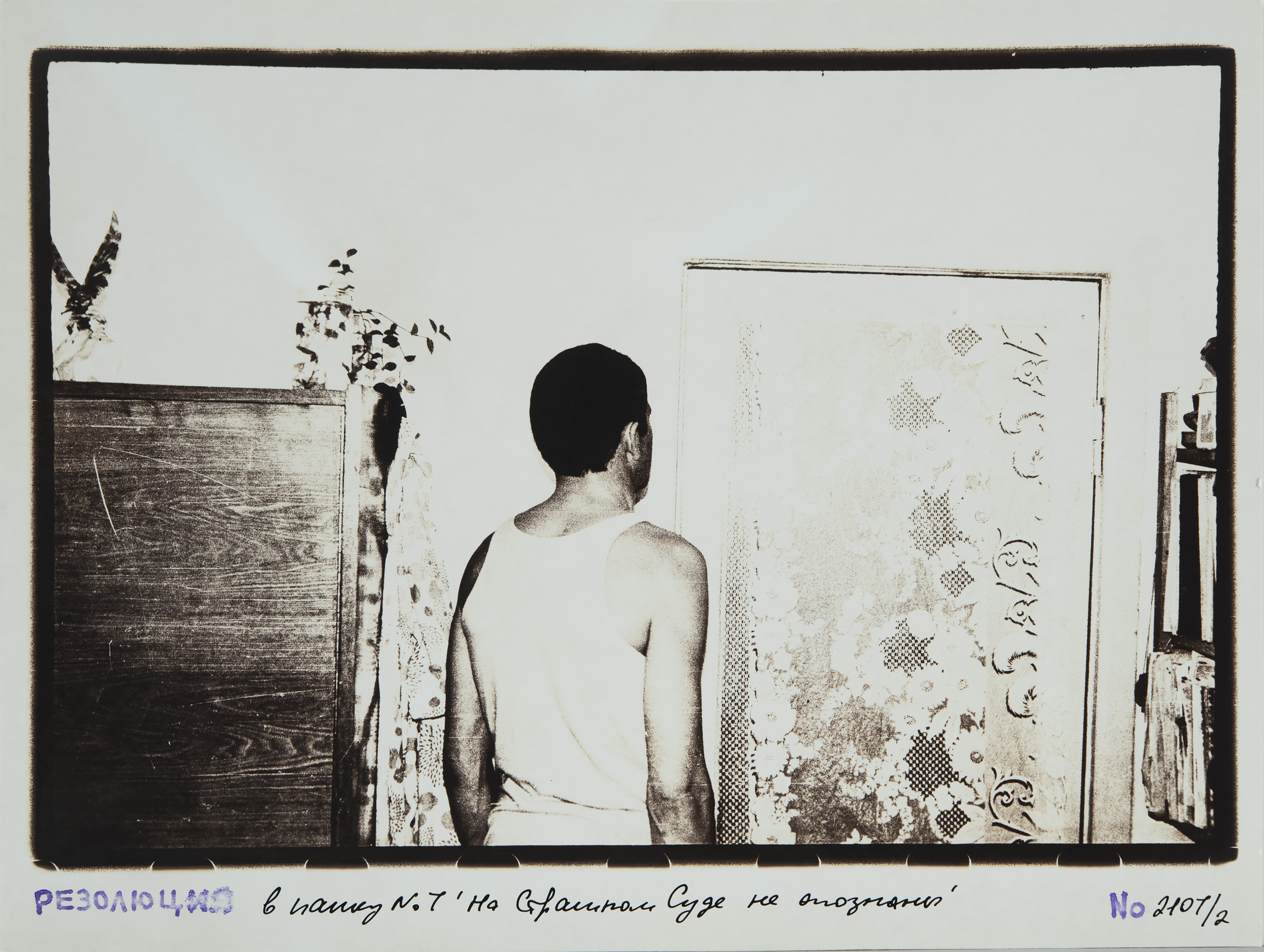
Resolution: To the Folder #7 "Those Who Are Not Identified on the Last Judgement", 1985. Toned gelatin silver print and ink on paper, 16.5 × 21.8 cm (6 1/2 × 8 9/16 in.). Norton and Nancy Dodge Collection of Nonconformist Art from the Soviet Union. 2000.1313.01
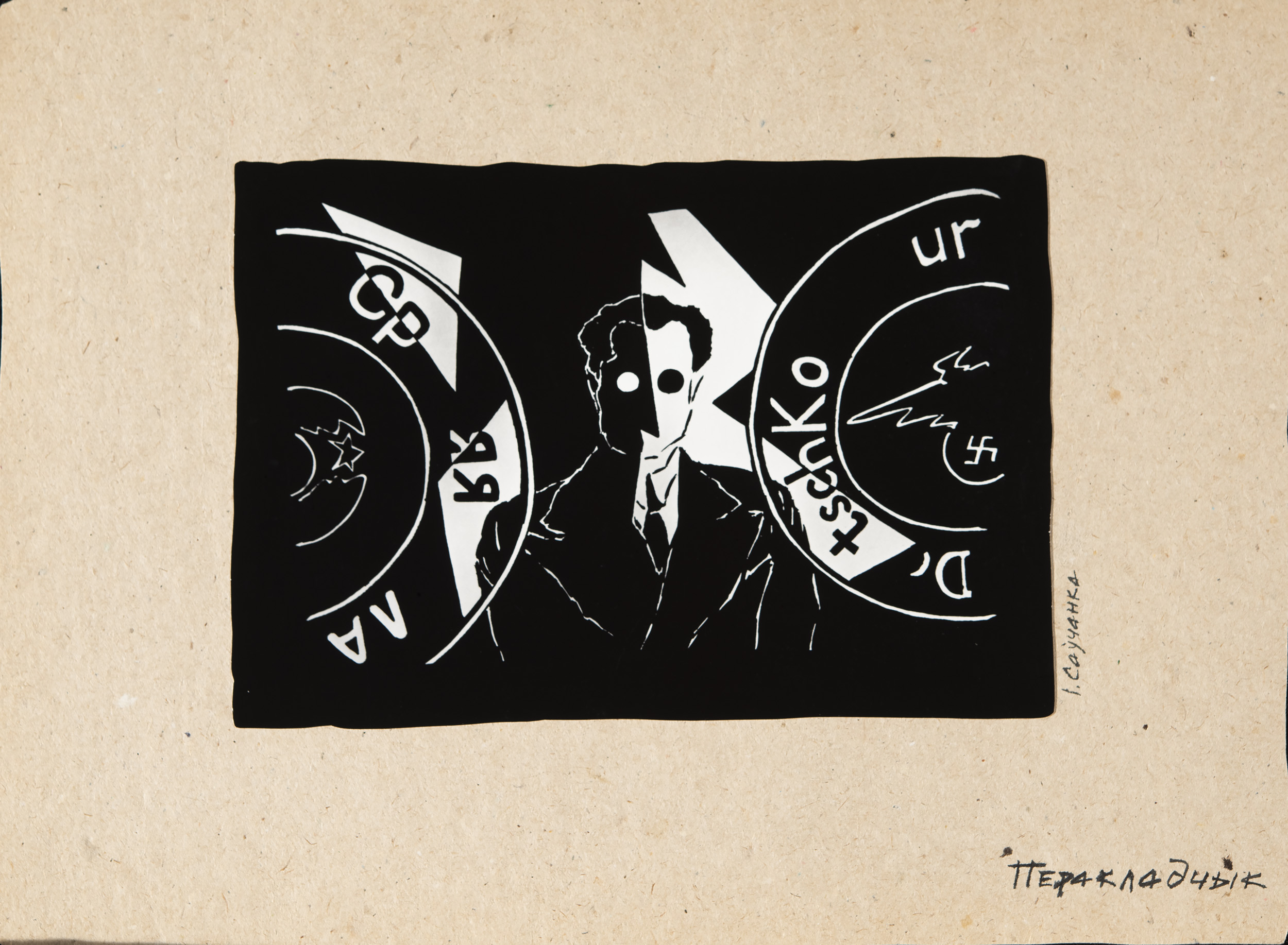
Interpreter, 1985. Gelatin silver print and ink on paperboard, 24.8 × 33.5 cm (9 3/4 × 13 3/16 in.). Norton and Nancy Dodge Collection of Nonconformist Art from the Soviet Union. 2000.1314
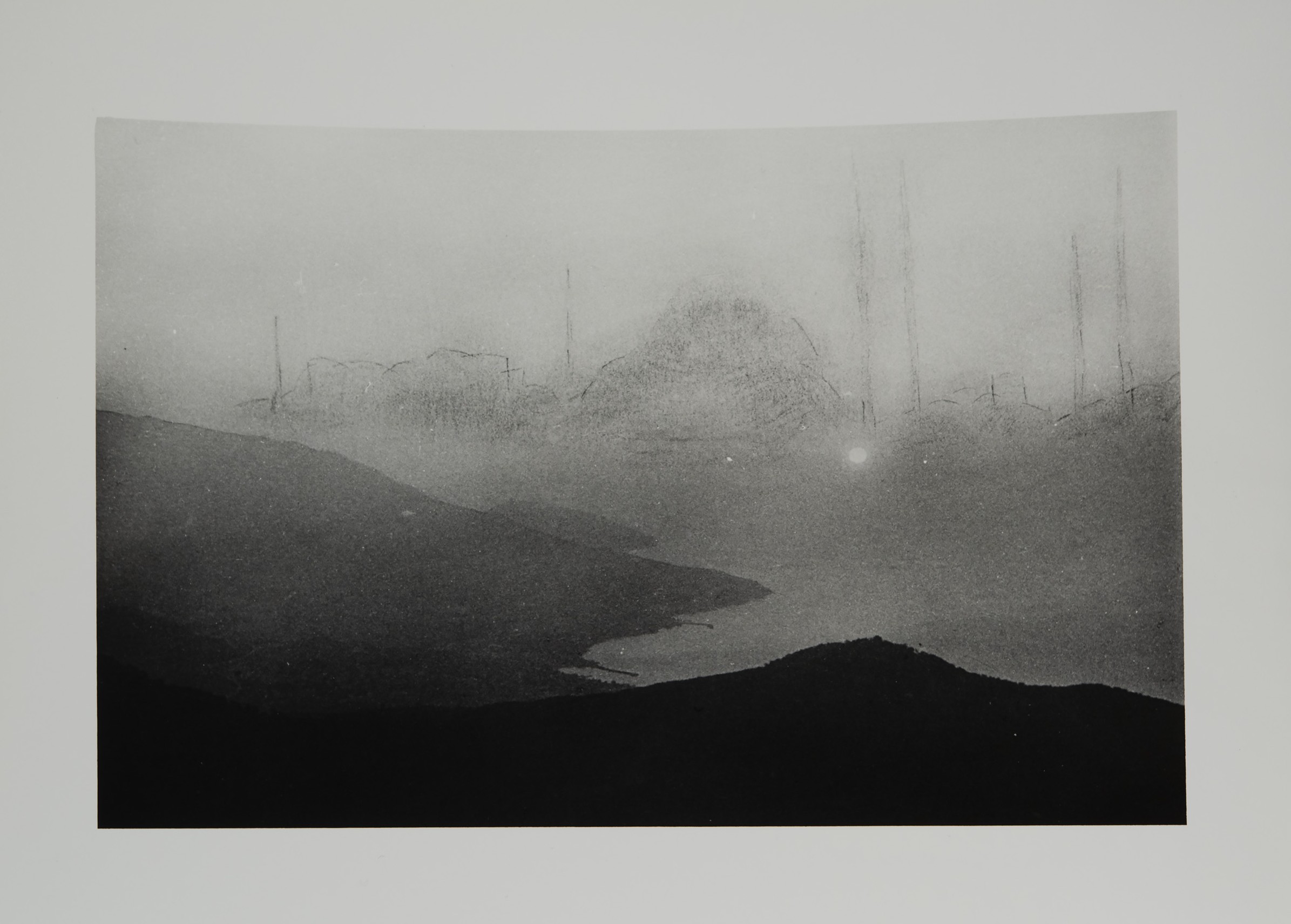
Untitled, 1986. Gelatin silver print on paper, 20 × 30.8 cm (7 7/8 × 12 1/8 in.). Norton and Nancy Dodge Collection of Nonconformist Art from the Soviet Union. 2000.1317
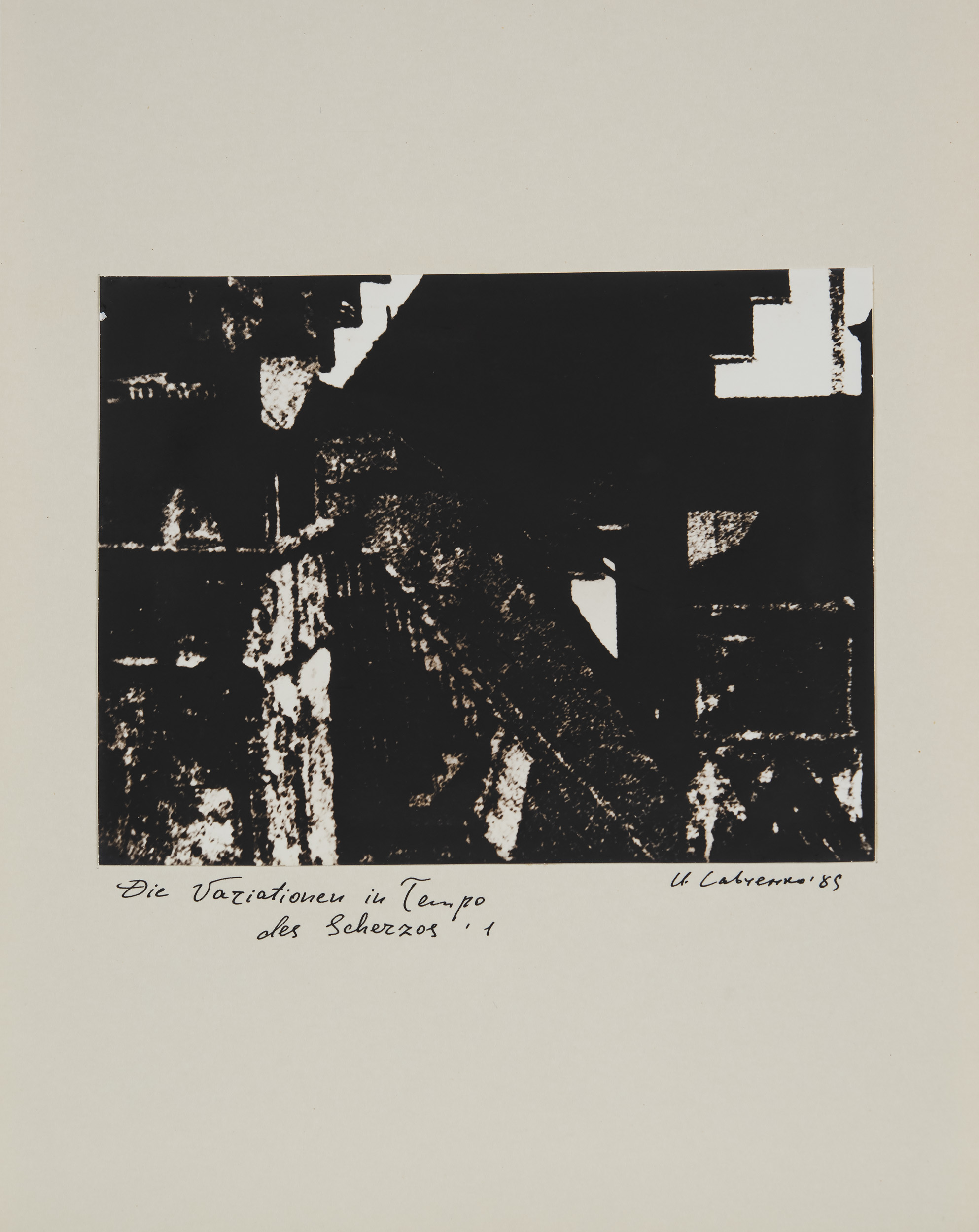
Die Variationen in Tempo des Scherzos (1 of 3), 1985. Toned gelatin silver print on paper, 11.6 × 15.1 cm (4 9/16 × 5 15/16 in.). Norton and Nancy Dodge Collection of Nonconformist Art from the Soviet Union. 2000.1326
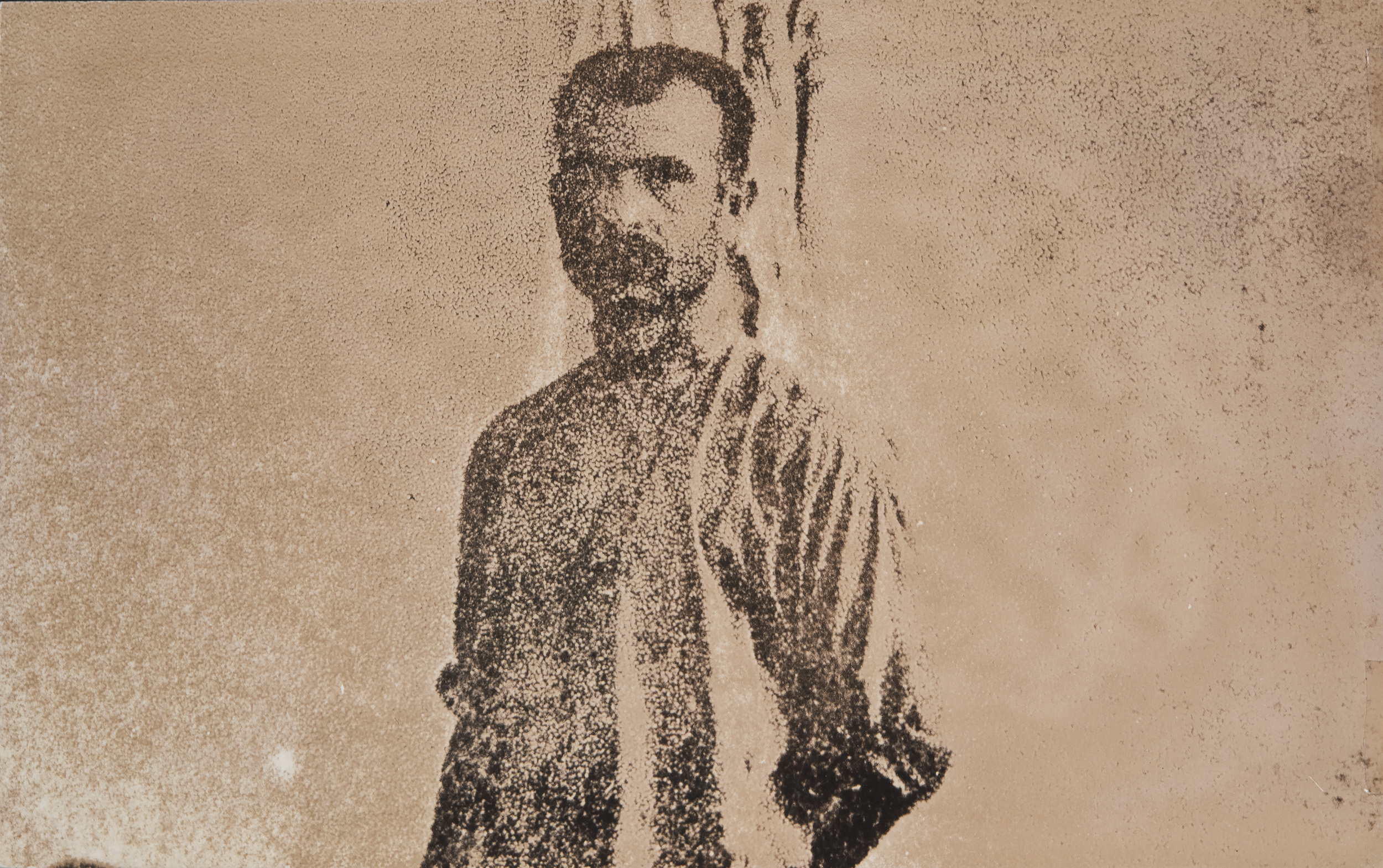
Untitled album, 1985. Toned gelatin silver prints and paper collage on paper, 12.2 × 19.6 cm (4 13/16 × 7 11/16 in.). Page 1 of 10. Norton and Nancy Dodge Collection of Nonconformist Art from the Soviet Union. 2001.1323.001-010