
Igor Chelkovski
alternative spelling: Shelkovsky
1937 — Orenburg (Russia). Worked in Moscow (Russia) and Paris and Élaincourt (France)
Igor Chelkovski is a versatile and prolific artist who was trained as a painter but switched to sculpture early in his career (although he returned to painting from time to time). His own artistic practice is often overshadowed by his work as a magazine publisher who brought underground Russian artists out of obscurity in the late 1970s and ’80s. The story of his magazine is closely intertwined with the history of the Norton and Nancy Dodge Collection.
Chelkovski’s parents were among the many victims of Stalin’s purges. His father, editor-in-chief of a local Communist newspaper, was arrested and shot two months before his son was born. A few days after the birth, his mother was also arrested, and Chelkovski had to spend the first months of his life with her in a prison cell. After she was transferred from prison to a labor camp, his grandmother came and took the child to Moscow, where they stayed throughout World War II. In 1954, Chelkovski enrolled in the Moscow Gosudarstvennoe akademicheskoe khudozhestvennoe uchilishche pamyati 1905 goda (Art School Named in the Memory of 1905), graduating from the department of stage design in 1959. During his first year at the school, he met the artist Fyodor Semyonov-Amursky (1902–1980) at the Pushkin State Museum of Fine Arts, in front of a Matisse painting that was fresh from the storeroom where “formalist” art had been kept during Stalin’s reign. Semyonov-Amursky invited Chelkovski and his friends to his apartment to look at his work and discuss art. Their friendship lasted many years and complemented the young Chelkovski’s artistic education.
After graduation, he briefly turned to abstract painting, but soon became disillusioned with his works and destroyed them. From 1962 to 1966, he made his living as a restorer of church murals. The turning point came in 1971, when he first tried his hand at sculpture. The following year, Chelkovski, Boris Orlov (b. 1941), and Rostislav Lebedev (b. 1946) rented a studio for the summer in Abramtsevo, a village near Moscow, where Chelkovski continued to experiment with sculpture using salvaged old wood. “It seemed to me that in painting everything had already been said, but in sculpture—not yet,” he said in an interview as part of the Oral History Project. [1] The artist compared his sculptures to “drawings in the air.” [2] At first he preferred the natural color of wood, but soon he began to cover his sculptures with paint. This early work has a distinctive feature that could be called a painterly approach to sculpture: the interplay of color and shadow on the surface is no less—if not more—important than the structure beneath. Many of his works challenge the distinction between painting and sculpture: often mounted on the wall, they seem to belong to both worlds. In fact, one of the artist’s preferred mediums is colored relief.
Over the years, Chelkovski’s style has become more minimalist, and the rigorous, almost architectural structure of his work has been stripped of all extraneous detail, even volume. His early sculptures are abstract, often assembled from many pieces of wood glued together: they have simple, laconic shapes and intricately cut relief surfaces. Later, they become figurative yet border on abstraction. As the volume disappears, all that remains are thin, rigid, rectangular bars outlining the simplified contours of an object, such as a vase of flowers or a human figure. After moving to France, where different art materials were easily available and studio space was not a concern, Chelkovski began using metal for these pieces, especially the larger ones, which reach twice human height. In describing his Vases of Flowers [Vasy s tsvetami] series in a video interview for the project Ab Artist Talks, he said, “[M]ere contour, no volume, no planes, the eye penetrates, everything is transparent.” [2] The art critic Yevgeny Barabanov called his style “lyrical constructivism.” [3] Working in series, he returns to the same motif of flowers in a vase, a tree, a tower, or a walking human figure.
In 1975, Chelkovski married Sylvia Bonadurer, a Swiss scholar of Slavic culture who often visited Moscow for her work. The following year, she sent him an invitation to visit her in Switzerland. Even though they were legally married, they had to wait an extended period for the paperwork required to allow Chelkovski to leave the Soviet Union. Suddenly, just when his papers were ready, his wife retracted the invitation and told him she wanted a divorce. But he went on a short trip anyway, realizing that it might be his first and last chance to see the West. During the trip, he changed his mind and decided not to return to the Soviet Union. In 1976, after a series of trials and tribulations in Switzerland and Austria, he settled in France, where he participated in group exhibitions, contributed to émigré publications, and was given a studio in a former Templar abbey in Élancourt, near Paris. In 1977, his works were purchased by the National Foundation for Contemporary Art of France (FNAC), and he soon found himself, almost inadvertently, at the helm of an ambitious publishing project: an annual art magazine called A-Ya (from the first and last letters of the Cyrillic alphabet).
According to Chelkovski, the idea to launch a magazine on Soviet underground art came from a conversation with Swiss businessman and art collector Jack Melkonian, who offered to finance the first issue. The aim was to provide an overview of the Soviet Union’s underground art scene for readers both inside and outside the country, with articles written by artists, critics, and philosophers. The magazine was published in three languages (Russian, French, and English), and seven regular issues and one special literary issue were published from 1979 to 1986. Photographer and jewelry restorer Aleksandr (Alik) Sidorov (1941–2008) was editor in Moscow, and another émigré artist, Alexander Kosolapov (b. 1943), soon became editor in New York City. As an editor, Chelkovski never featured his own art in A-Ya, even though working on the magazine consumed most of his time and income. Sculpture sales were few and far between, so at one point he had to renovate private apartments to make a living. The materials Sidorov collected in Moscow were often confiscated during KGB searches. In addition, Sidorov was afraid to send letters and materials by regular mail, so the editors had to rely on scholars, journalists, diplomats, and other foreigners who regularly crossed the border. Still, correspondence was often lost on the way. Issues of the magazine were smuggled into the Soviet Union in the same way.
The magazine was a labor of love for its creators: Chelkovski made the layouts himself, all three editors worked without pay, and contributors received no honoraria. But money was needed to pay the printing bills. After the first issue was published, Melkonian withdrew from the project, and printing of the second, third, and fifth issues was financed by the Paris art dealer Dina Vierny. To obtain funds for further issues, the artists made an arrangement with art collector Norton Dodge: Soviet underground artists such as Igor Makarevich (b. 1943) and Ivan Chuikov (1935–2020) would donate their artwork for the magazine, Dodge would buy it, and the money would be used to pay the printer’s bills. “He was interested in keeping the magazine going. The magazine was like a glorification of his collection,” Chelkovski once said of Dodge. [3] Many of the artworks featured in the first issue and others were later acquired by the collector. In 1986, Chelkovski decided to stop publishing the magazine; he felt it was no longer necessary, since, as ideological restrictions in the Soviet Union began to relax during Gorbachev’s perestroika, unofficial art was coming out from underground. He was now able to focus on his own career, establishing contacts with art dealers in France and Germany.
Chelkovski was stripped of his Soviet citizenship in 1985, but it was restored in 1990, and he was finally able to visit the Soviet Union. In the 2000s, he began to spend more and more time in Moscow, where the Artists’ Union provided a modest attic studio for him in the historic city center. He also started a new family, marrying the journalist Natalia Timasheva. In 2008, he was awarded the State Prize “Innovation” (together with Sidorov, who received it posthumously) for his life’s work in publishing A-Ya. The magazine was reprinted, and letters related to its editorial process were published as a book. Chelkovski had solo exhibitions in major museums, including the State Tretyakov Gallery and the Multimedia Art Museum in Moscow, and his works entered the collections of these and other institutions. He experimented with unfamiliar techniques such as silkscreen printing and ceramics, and his ambition to create larger works was realized: his sculptures now adorn Moscow’s Malevich and Gorky parks, and he created a striking wooden installation, Gorod Dorog (a play on words meaning City of Roads or City Dear), for his eponymous solo exhibition at the Tretyakov in 2017. But his long-held dream of creating, on the plains of Siberia, a colossal monument to the victims of Stalin’s repressions remains unfulfilled. He has made a model of it (2007, property of the artist), which has been shown at several exhibitions. In 2022, Chelkovski left Russia with his family and returned to France, where he currently lives in Paris.
Ekaterina Wagner
Photo portrait: Igor Chelkovski, 2014. Photographer unknown. Courtesy of D. B. Sporov, I. S. Chelkovski, and the Oral History Foundation. Oral History Department of the Scientific Library of Moscow State University
Notes
1. Устная история: Сборник “Игорь Шелковский,” беседа 1/4 [Oral History Project: Collection “Igor Shelkovsky”], March 22, 2013.
2. Igor Chelkovski, interview by Irina Gorlova, documentary series Художник говорит [An artist talks], State Tretyakov Gallery, 2018.
3. Евгений Барабанов, “Сложность простоты” [Yevgeny Barabanov, “Complexity of simplicity”], in Игорь Шелковский: Город дорог [Igor Chelkovski: Gorod Dorog]. Moscow: State Tretyakov Gallery, 2017: 8.
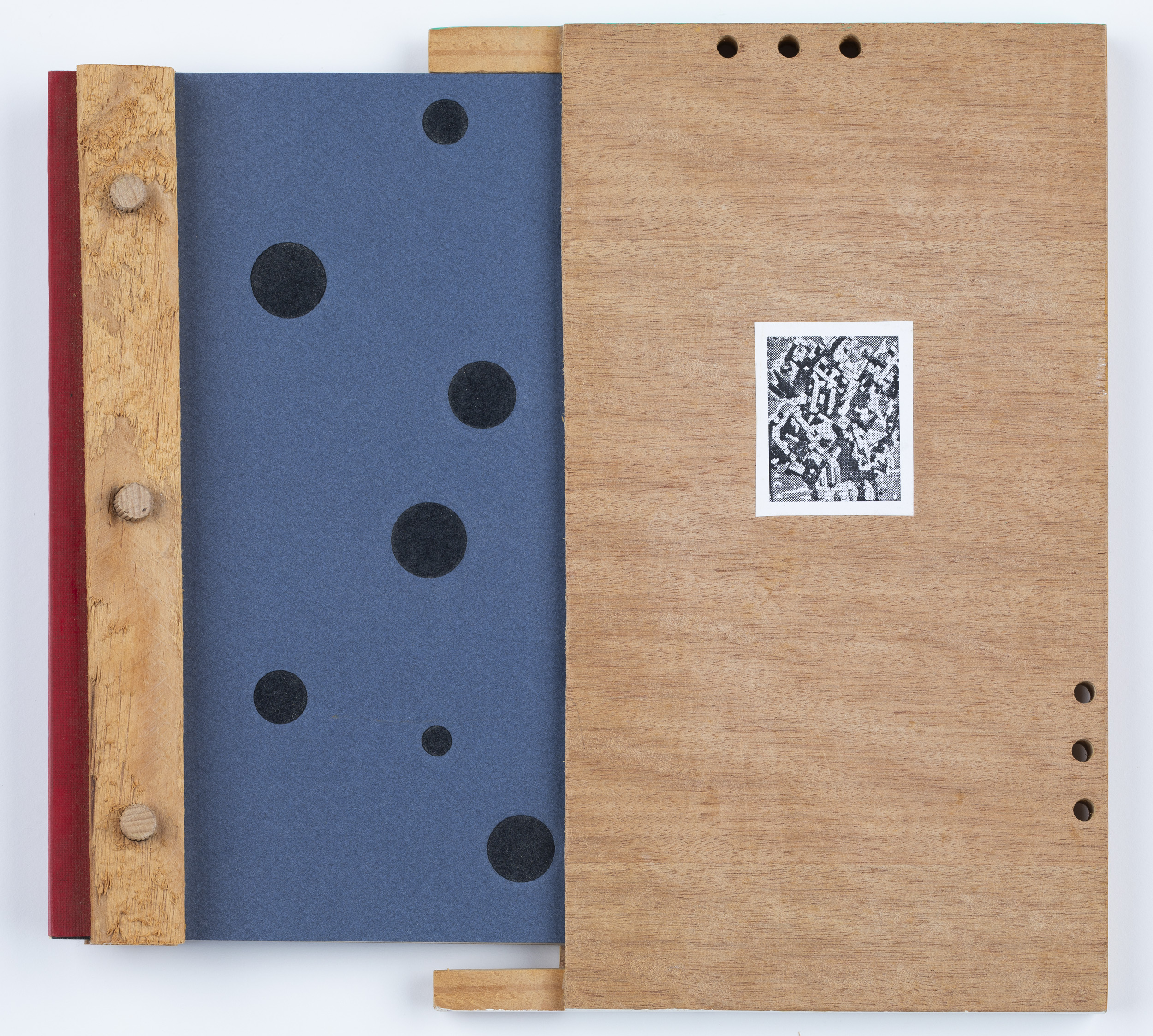
Untitled, 1994. Paper book bound in wood inside a wooden sleeve, 36.5 × 18 cm (14 3/8 × 7 1/16 in.). Norton and Nancy Dodge Collection of Nonconformist Art from the Soviet Union. D26934
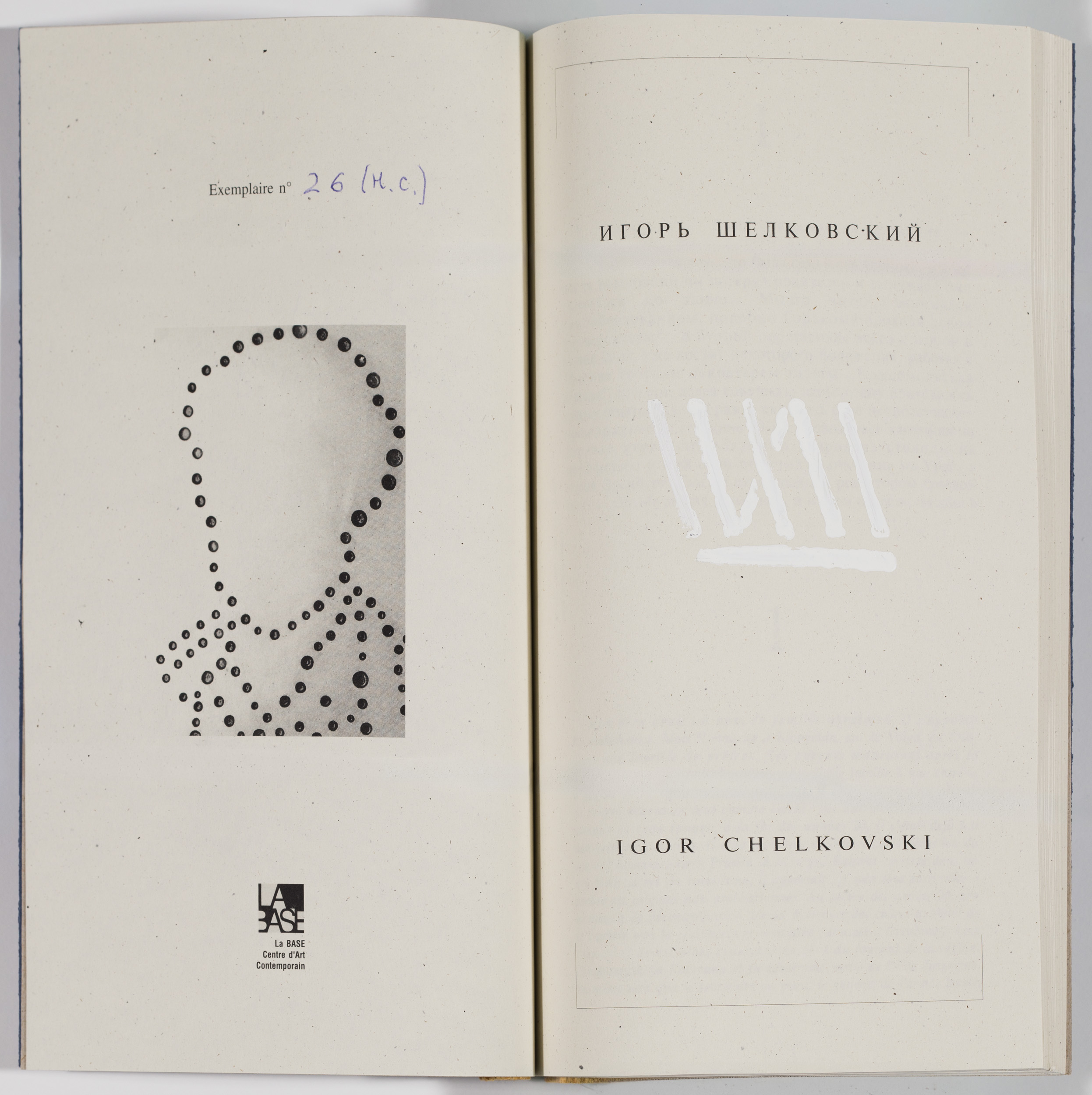
Untitled, 1994. Paper book bound in wood inside a wooden sleeve, 36.5 × 18 cm (14 3/8 × 7 1/16 in.). Front spread, 23.5 × 17 cm (9 1/4 × 6 11/16 in.). Norton and Nancy Dodge Collection of Nonconformist Art from the Soviet Union. D26934
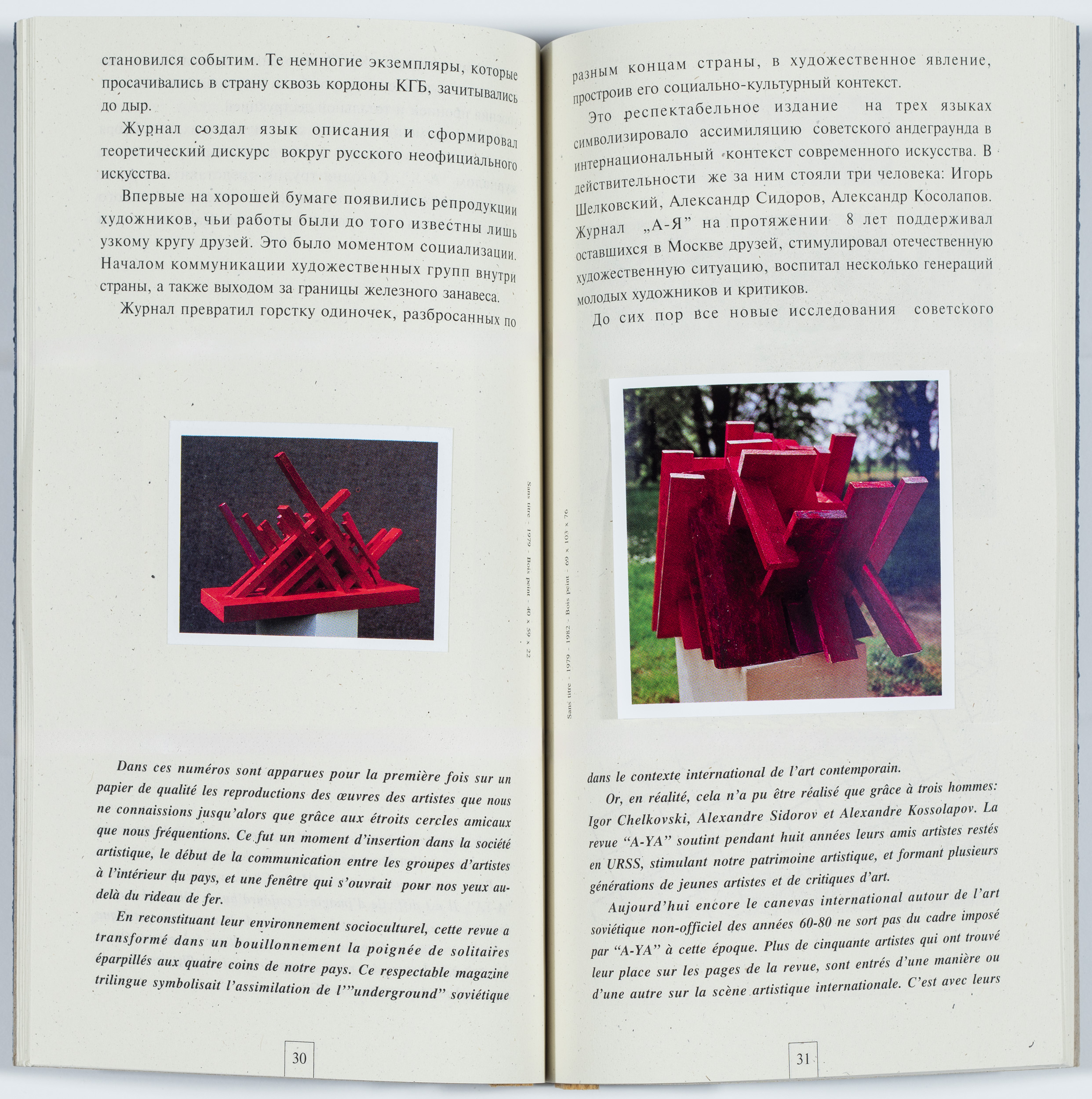
Untitled, 1994. Paper book bound in wood inside a wooden sleeve, 36.5 × 18 cm (14 3/8 × 7 1/16 in.). Book spread, 23.5 × 17 cm (9 1/4 × 6 11/16 in.). Norton and Nancy Dodge Collection of Nonconformist Art from the Soviet Union. D26934
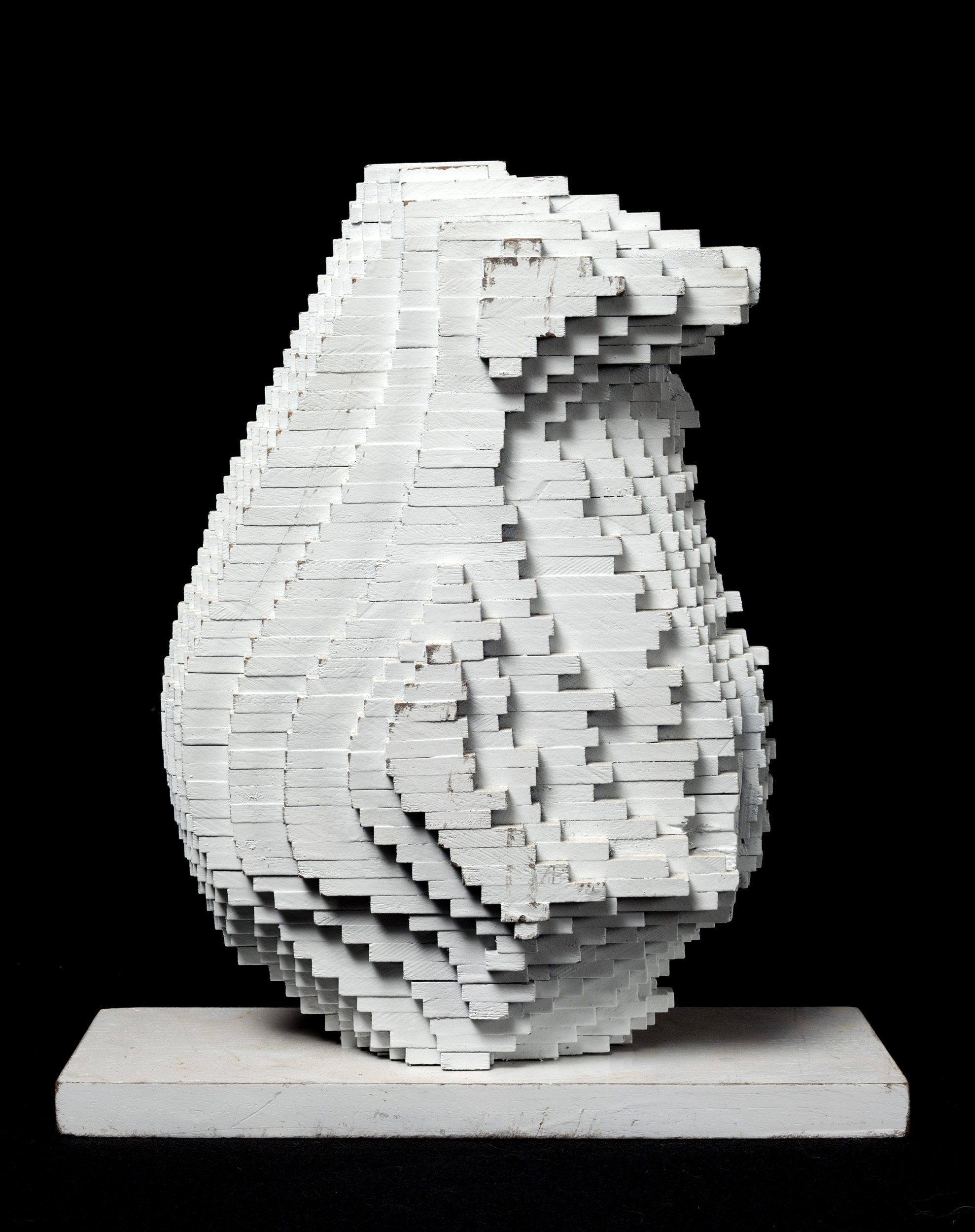
Untitled, undated. Painted wood, 42 x 35.8 x 13.2 cm (16 9/16 x 14 1/8 x 5 3/16 in.). Norton and Nancy Dodge Collection of Nonconformist Art from the Soviet Union. D01422

Untitled, 1971. Painted wood, 21 x 74 x 52 cm (8 1/4 x 29 1/8 x 20 1/2 in.). Norton and Nancy Dodge Collection of Nonconformist Art from the Soviet Union. D08730