
Heorhiy Yakutovych
1930 — Kyiv (Ukraine) | 2000 — Kyiv (Ukraine). Worked in Kyiv and Dzembronia, Carpathian Mountains (Ukraine)
Heorhiy Yakutovych was a recognized master of Ukrainian art and a leading figure of the Kyiv graphic school in the second half of the twentieth century. He worked in the mediums of book illustration and printmaking, specializing in linocut, woodcut, and etching. Yakutovych was also a film production designer, notably working on Sergei Parajanov’s 1965 film Shadows of Forgotten Ancestors. Yakutovych was an Honored Artist of Ukraine (1968), laureate of the Taras Shevchenko State Prize of the Ukrainian SSR (1983), laureate of the Taras Shevchenko State Prize of Ukraine (1991), a Corresponding Member of the Academy of Arts of the USSR (1988), People’s Artist of Ukraine (1990), a professor of the Ukrainian Academy of Arts (now the National Academy of Fine Arts and Architecture) (1993–2000), and an Academician of the National Academy of Arts of Ukraine (1997–2000).
From 1948 to 1955, he studied at the Kyiv State Art Institute and graduated from the workshop of book illustration under the guidance of Ilarion Pleshchynskyi. He also studied with Vasyl Kasyan (1896–1976). From 1955 to 1957, Yakutovych continued his studies at the Kyiv branch in the workshop of Mykhailo Derehus (1904–1997) at the Academy of Arts of the USSR. For his postgraduate work, he presented a series of illustrations for Mykhailo Kotsiubynskyi’s book Fata Morgana (1957).
The artist’s works for Fata Morgana became the starting point for the emergence of a new style paradigm in Ukrainian illustration in the second half of the twentieth century. In his pieces, Yakutovych demonstrated a new artistic language that emphasized the adaptable nature of linocut, breaking with the tradition of realistic three-dimensional rendering of images. These works were filled with a heightened sense of expression and contained a tragic tone, far from the idealization that was demanded by socialist realism at that time. In the illustrations, the images of peasants seem to have a shifting relationship with the land, with its furrows and blackness, thus emphasizing that the land is their breadwinner, dream, and meaning of life.
The artist’s works immediately drew attention and received critical acclaim from his peers. During this period, Yakutovych became fascinated by the art of Mexican printmakers and the art of Giorgio Morandi (1890–1964). He saw the original works of these masters in Moscow, exhibited at the Sixth World Festival of Youth and Students (1957). At the same time, Yakutovych studied and immersed himself in the theory of book art, as expounded by Vladimir Favorsky (1886–1964). The artist presented his own theoretical reflections in his published articles, “On literacy, mastery and modernity of thinking” and “Art must be monumental.” [1]
From 1961, Yakutovych taught at the Kyiv State Art Institute in the department of book illustration. However, his teaching lasted only a semester and a half because he left the institute in protest of the administration’s decision to dismiss his peer, Hryhorii Havrylenko (1927–1984), from teaching. Havrylenko, a nonconformist artist and fellow student, was a like-minded person and close friend of Yakutovych throughout his life.
From the late 1950s, Heorhiy Yakutovych discovered the Carpathians and was inspired by the special way of life led by the Hutsuls. He felt that the people in the Carpathians were far removed from busy urban environments and sociopolitical pressures. They revered the grandeur of nature and the beauty and symbolism of rituals. In the illustration Аркан [Arkan] (1959), the artist glorifies folk dance, where the energy of movement reigns and people rotate in a rapid circle, firmly holding each other’s hands, as if the forces of nature support and fill them. In Yakutovych’s linocut “у мене топір, топір . . .” [“I Have an Ax, an Ax . . .”] (1963), a young man demonstrates pride and skill in his dance with the free expression of youthful life force, while the artistic language of the artwork boldly conveys stylistic cubism.
During this period, the artist also discovered the graphic work of Ukrainian Boychukist artists, which were banned at that time. Destroyed by the Soviet regime in the late 1930s on charges of formalism and nationalism, the work of these masters was greatly valued by Yakutovych as a model of Ukrainian modernist art. This new passion was reflected in his illustrations for the book How Dovbush Punished the Lords by M. Bilyi and Volodymyr Hrabovetskyi (1961), and for the children’s fairy tales The Poor Kid and Rich Mark and The Lime Tree and the Greedy Old Woman (1961).
In 1963, Yakutovych was invited by Sergei Parajanov to collaborate as a production designer on the film Shadows of Forgotten Ancestors, which was based on the novella by Mykhailo Kotsiubynskyi. Yakutovych’s design on the film greatly influenced his subsequent work. The selection of props, which were mostly authentic items of Hutsul life, the work on costumes, the selection of landscapes for each scene, and the time constructing the visual frame (together with the director and cameraman) all gave the artist much material for consideration and experience of collective creativity.
A few years later, Yakutovych went on to illustrate Shadows of Forgotten Ancestors (1967), this time relying solely on his own artistic choices while creating the series of works. He settled on printmaking for the task and purchased expensive cypress boards for his woodcuts. Through subtle strokes, the composition of the illustrations was tightly controlled while managing to retain a particular dynamic rhythm. His illustrations convey the world of the Carpathians in a holistic, poetic, and even menacingly tragic manner. And to this day, this image created in Yakutovych’s engravings, which fuses man with the world of mountains and spruce forests, is unsurpassed in Ukrainian fine art.
In 1966, the artist illustrated Ukrainian folk epics as presented in Maria Pryhara’s book, Cossack Holota. Yakutovych created linear, tightly compressed compositions, in which the images of the heroes were given no visual depth or sense of volume, as if they were just flat imprints. This represented memories that symbolize the events of the distant past. In the next illustration series for Dmytro Pavlychko’s book The Golden-Horned Deer (1970), which takes place in the Carpathians, the artist masterfully played with the style of folk artists working in embroidery and tile decoration.
In 1971, Yakutovych again worked as a film artist on Zakhar Berkut, based on the story of the same name by Ivan Franko, directed by Leonid Osyka. This time, the artist studied the historical realities of the film’s setting in thirteenth-century Carpathian Rus. Work on the film allowed him to visit historical places in search of locations for filming: the Carpathians, Buryat-Mongolia, Tuva, Khakassia, Kyrgyzstan, and Uzbekistan. At the same time, there was a tourist trip to Sweden, during which the artist found answers to his questions about ancient costumes and props while visiting local museums. He also spent time studying the collections of museums in Moscow, Leningrad (now St. Petersburg), Tbilisi, and cities in Central Asia.
After working on the film, Yakutovych began creating illustrations for the novel Zakhar Berkut (1972). He employed printmaking for these pieces, specifically a combination of etching and the new technique of open bite etching, which intentionally leaves areas of the plate exposed to the acid, creating a rough texture. When pressed, this application conveys a flickering black depth and in turn evokes a centuries-deep sense of time. The artist summed up his work on the illustrations for the novel as follows: “The [specific historical] reality had already been left in the cinema, that was where we searched for history’s texture. In the illustrations, we found the historical aura.” [2]
Yakutovych worked across various genres in book illustrations, including stories, poems, fairy tales, folk epics, and legends. He consistently looked for the key to correctly interpreting a literary text through the visualization of time and space, whether it be historical, mythopoetic, subjective, created by the writer-author, or an impression of an anonymous cultural epic or song.
Among his graphic works are cycles of illustrations for Vasyl Stefanyk’s collection of stories Maple Leaves (1977), and for Nikolai Gogol’s story Viy (1979–1984). In Maple Leaves (ZAM, D14081, D14082, D14083), the artist used bold compositions to visualize the numerous restrictions a person carries through their life, and the combination of time passing, both real and emotional. In Viy (ZAM, D14084), he combined material-realism (associated with a person’s primal instincts) and an everyday conformism, with the surreal perception of the world as seen by a person under the influence of witchcraft.
Heorhiy Yakutovych continually explored historical themes throughout his artwork. He explained, “Interest in history is caused by the desire to understand the modern situation, to understand what has caused what is happening right now, who is to blame and who is to thank. A desire to get to the original source. Turning to history is an opportunity to continue living at the expense of the past. A person lives as long as he remembers.” [3]
Yakutovych’s work is often associated with the theme of Kyivan Rus’. He created illustrations for the publication of Ivan Kocherha’s plays Yaroslav the Wise and Candle Wedding (1968), as well as the series of easel works based on The Tale of Igor’s Campaign (1977). The culmination of these illustrations was his design of the book The Tale of Bygone Years (1981). For this work, the artist made forty-three large illustrations and ninety-one illustrative headpieces. He produced the illustrations in ink and pen, with the use of stippling and thin lines allowing reproduction of objects down to the smallest detail. His stippled dots created a continuous silvery aura in the works, which united the entire image and helped give a historical flavor to the artworks.
From 1984 to 1991, Yakutovych created a series of linocuts Люди села Дземброні [People of the Village of Dzembronia]. The prototypical characters for the linocuts were based on the artist’s neighbors. The work Ґазди [Gazdy, the Masters of the House] (1988) depicts a couple, an elderly man and woman, posing as if for a photograph. Despite this modern framing, Yakutovych highlights the strength and pagan nature of their world. Across the works in this series, the viewer feels as if they are beginning to understand the roots beneath us and the strength of energy flowing through the natural world. Hands and faces are formed from separate small planes created in strokes, just as the life of these people is formed by ongoing layers of annual cycles, where each distinct year is similar within the whole.
Textuality permeates the artistic language of Yakutovych’s works, as he injects each object with a literary-symbolic attitude. His book illustration skill set is also reflected in his easel works, where the text comes to life. The artist explored increasingly abstract compositions in his later work; the pieces are light, built on the juxtaposition of white and black spots and linework, and framed by the interaction of arching, diagonal energetic rhythms. Looking at them, you can feel the artist’s artistic mastery and his ability to solve complex compositional tasks with precision.
Throughout his fruitful creative path, Heorhiy Yakutovych always remained an experimenter and discoverer of new means of artistic expression. He was forever developing a new style and aesthetic language, tirelessly taking an interest in art and life, which inspired both his admirers and followers. After his death in 2000, the Heorhiy Yakutovych Higher Prize in the art of Ukrainian graphics was founded by the National Union of Artists of Ukraine.
Olha Lagutenko
Translated from Ukrainian by Nathan Jeffers
Notes:
1. Heorhiy Yakutovych, “O gramotnosti, masterstve i sovremennosti myshleniia [On literacy, mastery and modernity of thinking] in Tvorchestvo [Creativity] 11 (1962); Heorhiy Yakutovych, “Iskusstvo dolzhno byt monumentalnym” [Art must be monumental] in Isskustvo 11 (1962).
2. Heorhiy Yakutovych, interview by Olha Lagutenko, Ukraine, March 17, 1985. Author’s personal archive.
3. Heorhiy Yakutovych, interview by Olha Lagutenko, Ukraine, October 9, 1984. Author’s personal archive.
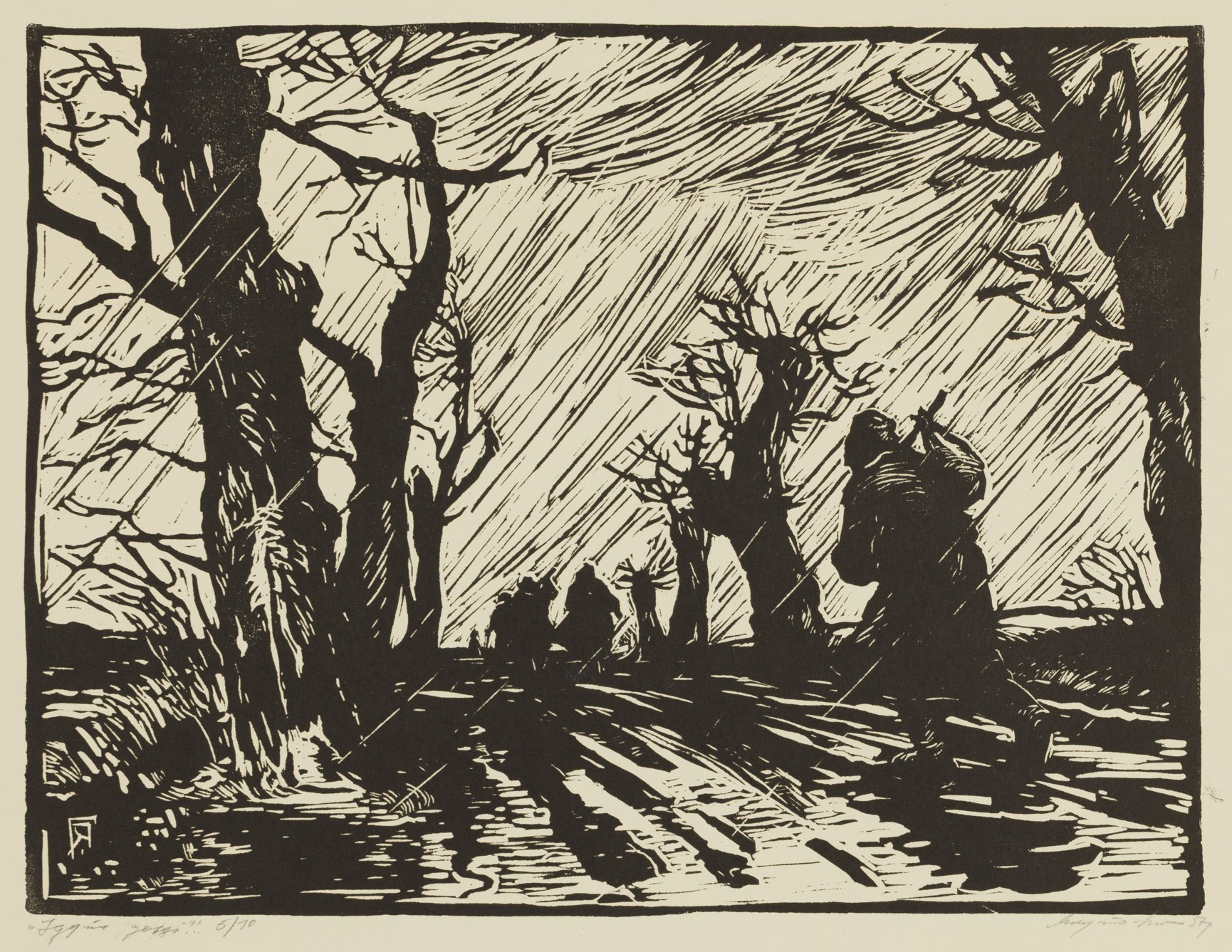
It's been raining, 1957. Linoleum block print on paper, 28.3 × 37.2 cm (11 1/8 × 14 5/8 in.). Norton and Nancy Dodge Collection of Nonconformist Art from the Soviet Union. D14079
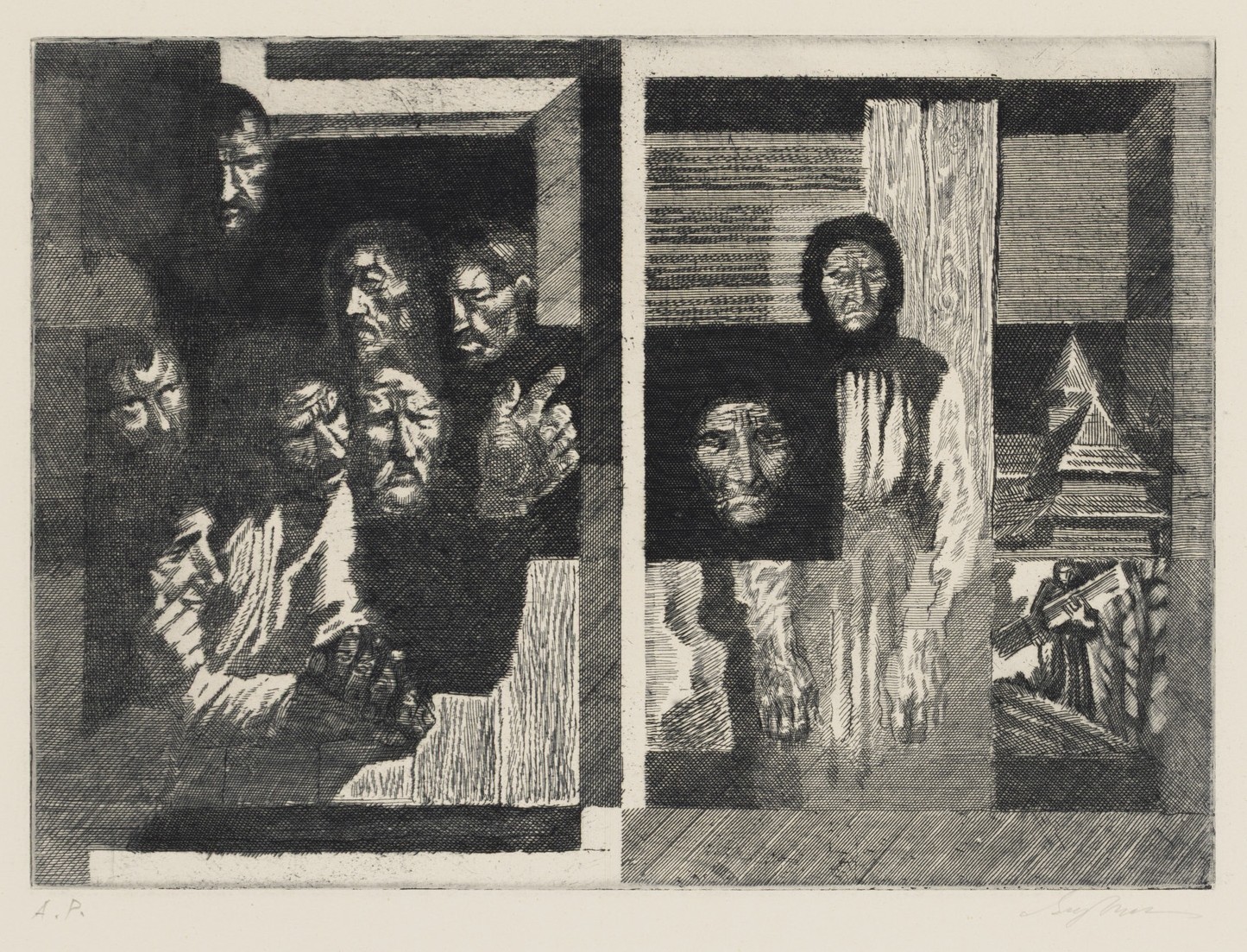
Untitled, 1981. Etching on paper, 22 × 30.2 cm (8 11/16 × 11 7/8 in.). Norton and Nancy Dodge Collection of Nonconformist Art from the Soviet Union. D14081
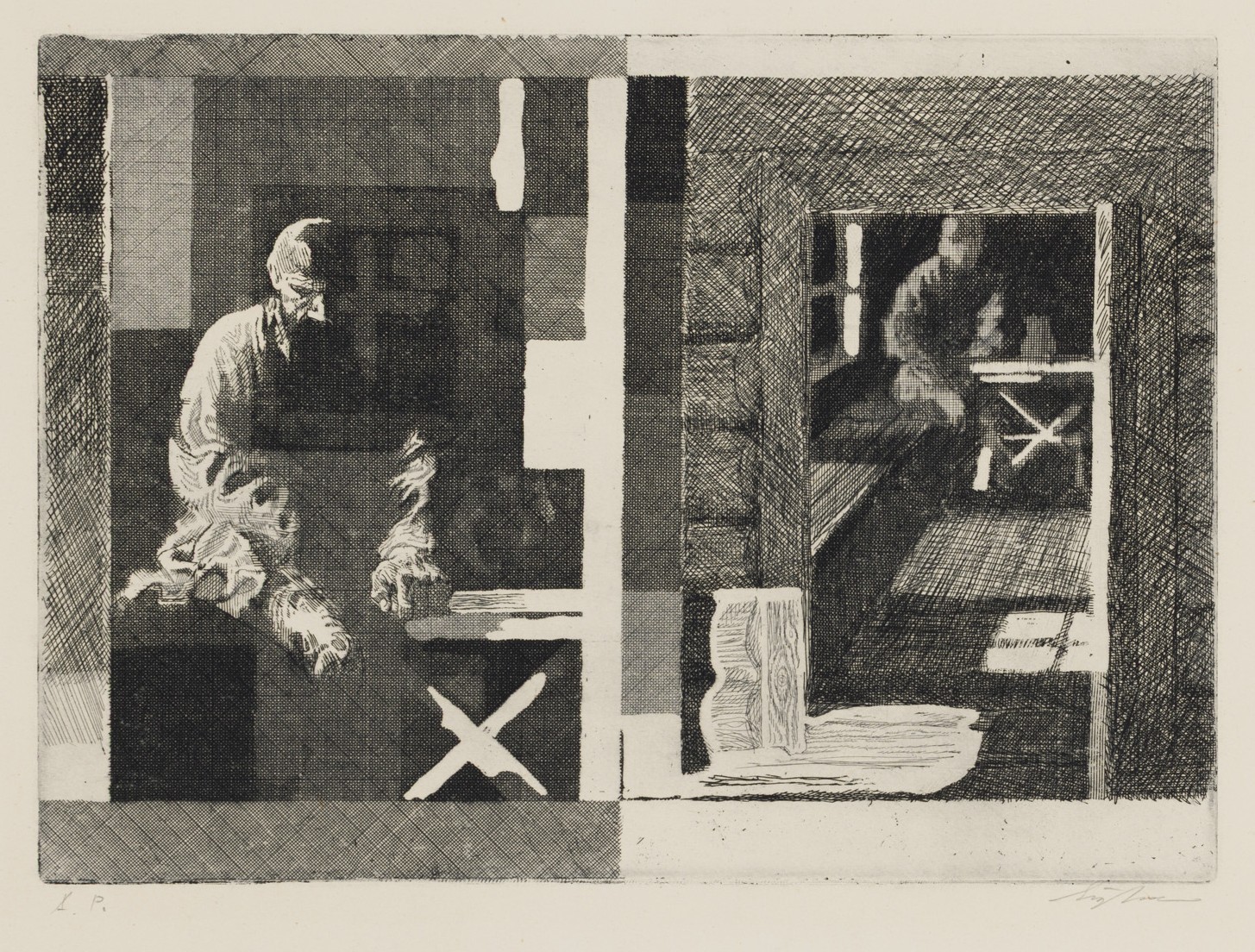
Untitled, 1981. Etching on paper, 21.5 × 30 cm (8 7/16 × 11 13/16 in.). Norton and Nancy Dodge Collection of Nonconformist Art from the Soviet Union. D14082
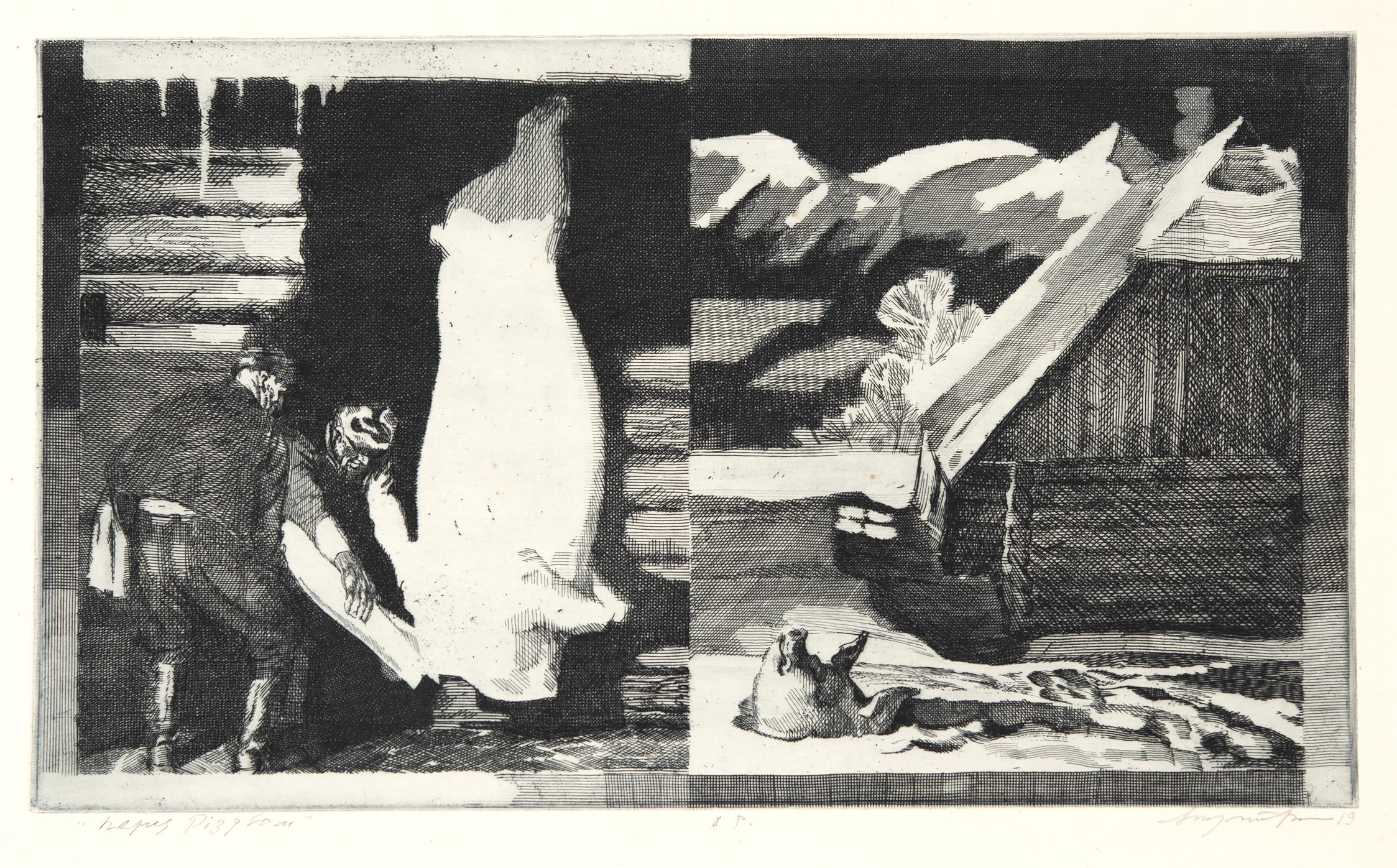
Untitled, 1981. Etching on paper, 23.5 × 40 cm (9 1/4 × 15 3/4 in.). Norton and Nancy Dodge Collection of Nonconformist Art from the Soviet Union. D14083
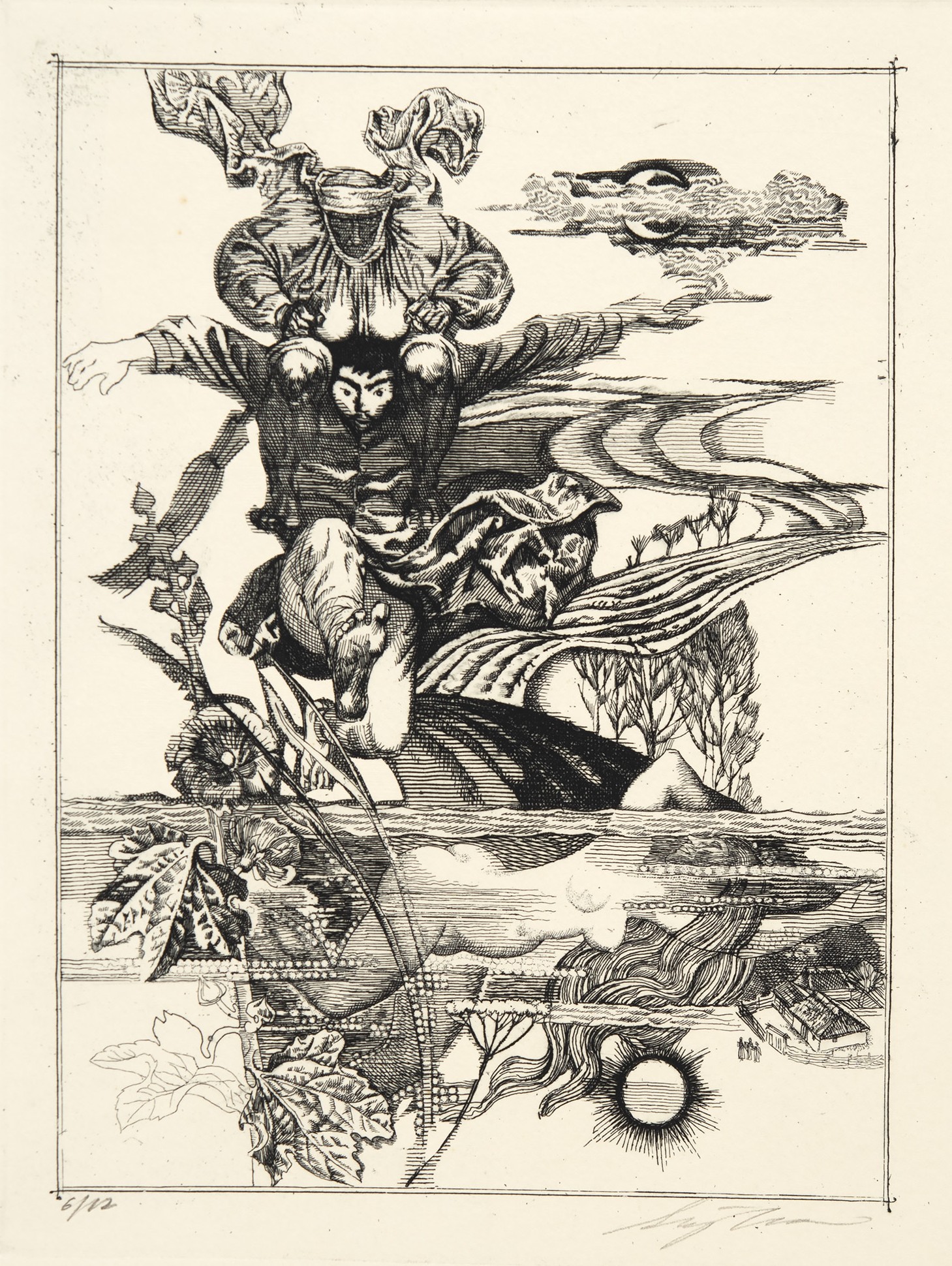
Untitled, 1982. Etching on paper, 23.8 × 17.5 cm (9 3/8 × 6 7/8 in.). Norton and Nancy Dodge Collection of Nonconformist Art from the Soviet Union. D14084