
Gnezdo (Nest)
Active 1974–1979
Gennadii Donskoi, 1956 — Moscow (Russia). Worked in Moscow (Russia)
Mikhail Roshal-Fedorov, 1956 — Moscow (Russia) | 2007 — Moscow (Russia). Worked in Moscow (Russia)
Victor Skersis, 1956 — Moscow (Russia). Worked in Moscow (Russia); currently works in Bethlehem, PA (USA)
Artists Gennadii Donskoi (b. 1956), Mikhail Roshal-Fedorov (1956–2007), and Victor Skersis (b. 1956) first burst onto the art scene in 1975 in a blockbuster group show of unofficial art that Soviet authorities had allowed only begrudgingly. Work by the Nest, a group also known as “Donskoi. Roshal. Skersis,” almost single-handedly pushed late-Soviet unofficial art from its moribund position at the periphery of European modernism toward a vibrant twenty-first-century postmodernism open to all. One of the canonical Nest works, which was included at the 1975 exhibition at Moscow’s VDNKh, was the multiday performance that first gave the group its name. The teenage artists’ appearance in a handwoven nest of leaves and branches opened their artistic practice to the public with startling experimental verve: Hatching a Spirit gave exhibition-goers the opportunity to join the artists in the nest in real-time contemplation of a livelier and more accessible future for contemporary art. The late-Soviet “underground” creative scene would never be the same.
Nest artists were profoundly influenced by their teachers, Vitaly Komar and Alexander Melamid, both active members of the unofficial art world in Moscow in the late 1960s and early 1970s. Donskoi and Skersis first met, in fact, as pupils in after-school art classes Melamid was offering at an art school in the center of the city. Melamid soon connected them to Roshal as well, and the friendship that resulted—along with mentoring they received from both Melamid and Komar—changed not only their personal fates, but the shape of Moscow Conceptualism, to which they all eventually contributed. Protégés of the older duo, Donskoi, Roshal, and Skersis participated in Komar and Melamid’s elaborate installation and performance piece Paradise, created some of the first works of sots art along with their inventive teachers, and served as witnesses to the 1974 Bulldozer Exhibition, in which artworks displayed in the open air were destroyed by the Soviet authorities. The diplomatic scandal resulting from that debacle led directly to the VDNKh exhibition where Nest artists first met their public with such bravado.
The connection to Komar and Melamid was definitive, but the Nest’s determined focus on open access and participatory performance art moved beyond the experience of their teachers in unprecedented ways. Their artistic position initially struck even those in the unofficial art milieu as incomprehensible and foreign: the artist Viktor Pivovarov recalled Hatching a Spirit as “revolutionary in the extreme” and “difficult to swallow because it overturned all expectations” of what art could be. [1] Yet Nest “happenings,” “actions,” and interactive objects—including the now-legendary Communication Tube, which gave users control of the artistic message, and their equally interactive work Pump the Red Pump!, both of which were also displayed at the VDNKh exhibition—made it clear that this group of younger artists was playing by different creative rules. Their innovations drew negative attention as well; an article in the Soviet press noted that the artists were old enough to know that their work “had nothing in common with real art.” The Nest response was unequivocal: “everyone can hatch whatever they want.” [2] Nest activities signaled that they had moved beyond traditional media and modernist piety to adopt an experimental, participatory, and broadly accessible approach to art itself.
Nest pieces provided Moscow Conceptualism with some of its most iconic moments, as the artists worked to secure their imaginative place in a global conversation about art. Their classic Iron Curtain (1976, State Tretyakov Gallery, Moscow) put responsibility for art-making directly in the hands of anyone interested in the venture; the work, made of iron scavenged from a building site and featuring a text in English, effortlessly crossed linguistic, political, and artistic boundaries. Their 1976 performance Help for the Soviet State in the Battle for the Harvest—documented in black-and-white photographs by Igor Palmin that are part of the Dodge Collection (2013.016.036.03–05)—similarly made unconstrained artistic experimentation a viable option for all takers. The emphasis on fun that is visible in that work’s mock-heroic reenactment of Soviet agriculture marks many of their performances. Fertilization of the Earth, another 1976 performance documented in the Dodge Collection (2013.016.037.01), overcomes taboos about sexuality and nudity in favor of embodied, collaborative effort. These and other Nest works demonstrate an evolving model for collaborative artistic exploration that is free of pathos and dismissive of notions of the artist as solitary genius. In place of such modernist preoccupations, the Nest’s open-ended performances substitute belief in shared investigation, unconstrained spectator participation, and mutual construction of meaning.
The artists were still students when their works were included in the 1977 Biennial of Dissent in Venice. Such recognition was flattering, though it drew the unwelcome attention of hostile Soviet authorities and upset the artists’ personal and professional lives. Both Roshal and Skersis studied at the Moscow Polygraphic Institute, but Skersis was forced to leave before graduation in 1979 following a campaign of harassment by officials. Conflicts with both authorities and family complicated Donskoi’s prospects as well; he faced pressure to submit to mandatory military service and, like all Soviet citizens between 1961 and 1991, was liable to charges of “parasitism” unless engaged in socially useful labor. Like many in the unofficial art milieu, the artists occasionally took odd jobs to avoid being charged with that political offense. Skersis, for example, worked preparing bodies for use in a medical college and served in the art department of a Moscow factory before eventually finding a position as art director in a Soviet art publishing house. Skersis and Roshal benefited from the professional advice and informal mentoring of Alexander Yulikov, an artist who also helped Yuri Albert, Vadim Zakharov, and others in the younger generation secure freelance jobs or permanent employment.
Such work was always secondary to the artists, who believed their unofficial activity was an integral part of the global art scene. The 1977 performance Let’s Become a Meter Closer! made cross-border artistic collaboration a focus of their campaign for better relations across ideological barriers. Like many other Nest works, the piece insisted on the literal meaning of words in even highly charged political discourse, urging “friends” everywhere to “take up shovels” in an imaginative attempt to draw closer. This focus on materiality and collaborative effort similarly infused works like the Nest’s 1978 action Race Toward Jerusalem, which brought the unofficial art community and “guests of the capital” together for unconstrained exploration of where contemporary art might take them. That open-ended event, at which the artists Yuri Albert and Nadezhda Stolpovskaya also first demonstrated their own performative works, injected a spirit of play, brio, and broad accessibility into the unofficial art world. Nest artists expressed their belief in expanded creative boundaries in other works from 1978 as well, including A Half-Hour Attempt to Materialize Komar and Melamid (documented in the Dodge Collection, ZAM, 2013.016.038.01-08), Hypnotization of a Canvas, A World Minute Without Breathing: In Defense of the Environment, and others that posited imaginative crossing of borders in an artistic world open to all.
The Nest’s ability to sustain that spirit of openness and possibility throughout their time together is perhaps best demonstrated by their work Art to the Masses. The 1978 performance epitomized the Nest’s irreverent reuse of creative tradition and the group’s willingness to question both political and artistic hierarchies. The artists’ audacious decision to carry an unsanctioned banner across a Moscow street foreshadowed developments in engaged art performance that were echoed only years later in works by Russian actionists and street artists everywhere. Leaving the banner unsigned, as they did with many other works, highlighted the artists’ commitment to open access and shared artistic experimentation. Their insistent call for real-world connections fell on deaf ears in the late Soviet Union, but it resonates now, as does their bold 1979 collaboration with Komar and Melamid to auction off “souls” their teachers had purchased in the West. At Souls for Sale, certificates representing the souls of artist Andy Warhol, collector Norton Dodge, and others were offered in wooden cages to the highest bidder in a surprising transnational performance of creative independence, social commentary, and artistic innovation. Warhol’s spirit—and the freedom it represented—still resides in Moscow, vibrant proof that the Nest legacy is more relevant than ever today.
Mary A. Nicholas
Photo portrait: Victor Skersis, Mikhail Roshal, Gennadii Donskoi, 1976. Photo by Igor Palmin. 2013.016.036.04
Notes:
1. Pivovarov’s comments are part of his discussion with artist Yuri Albert, one of a series of such conversations with conceptualist artists published in Albert’s Moskovskii kontseptualizm. Nachalo [Moscow Conceptualism: Origins], exh. cat., (Nizhnyi Novgorod, 2014), p. 136.
2. See the critical reaction and Nest responses to it in an article about the VDNKh exhibit in M. Shpagin’s “Soblazny fioletovoi kar’ery” [Temptations of a purple career], in Moskovskii komsomolets, October 15, 1975.
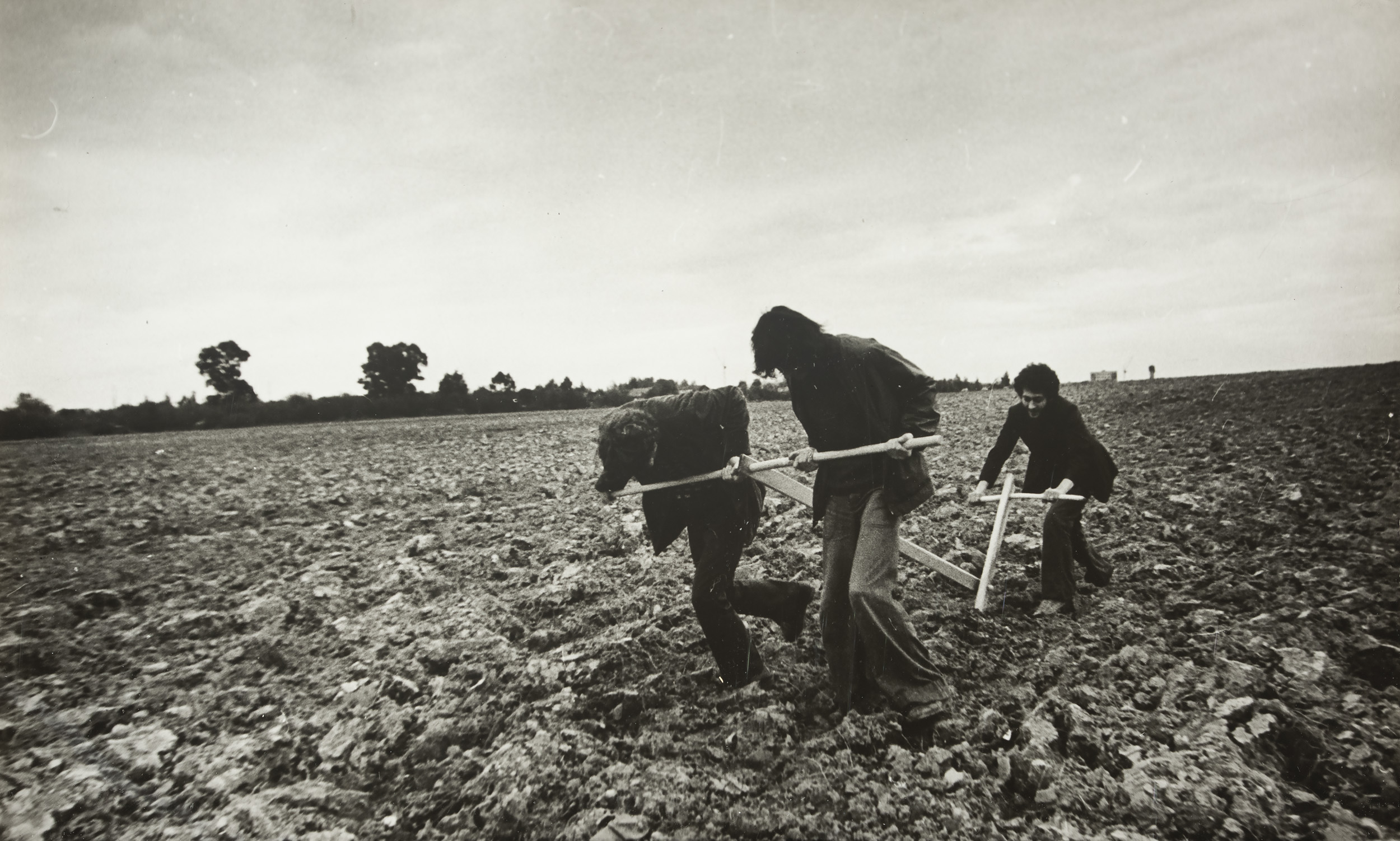
Help for the Soviet State in the Battle for the Harvest, 1976. Gelatin silver print on paper, 24.4 × 39.8 cm (9 5/8 × 15 11/16 in.). Norton and Nancy Dodge Collection of Nonconformist Art from the Soviet Union. 2013.016.036.01
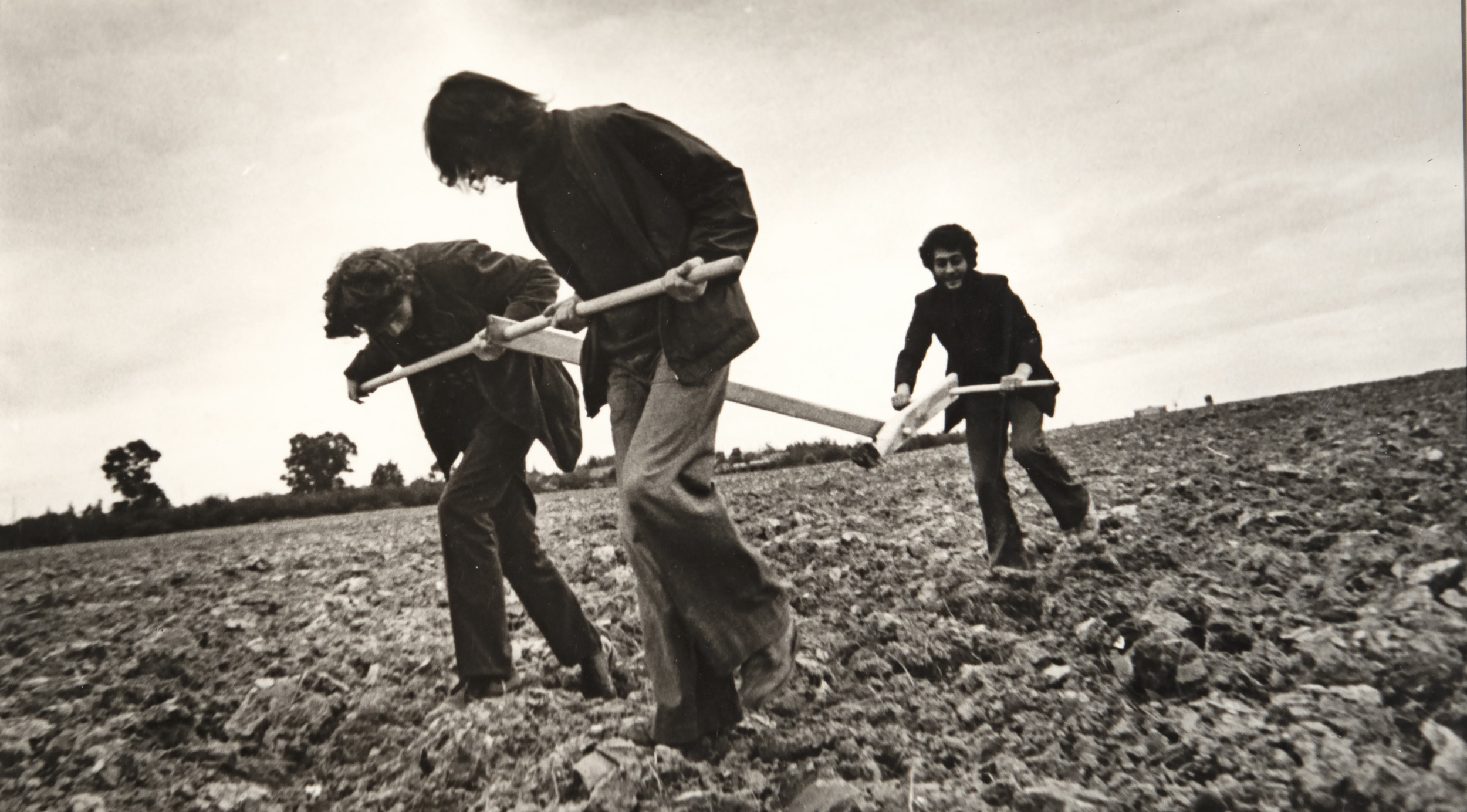
Help for the Soviet State in the Battle for the Harvest, 1976. Gelatin silver print on paper, 28 × 50 cm (11 × 19 11/16 in.). Norton and Nancy Dodge Collection of Nonconformist Art from the Soviet Union. 2013.016.036.05

Help for the Soviet State in the Battle for the Harvest, 1976. Gelatin silver print on paper, 29.2 × 50.3 cm (11 1/2 × 19 13/16 in.). Norton and Nancy Dodge Collection of Nonconformist Art from the Soviet Union. 2013.016.036.06

Help for the Soviet State in the Battle for the Harvest, 1976. Gelatin silver print on paper, 24.6 × 39.7 cm (9 11/16 × 15 5/8 in.). Norton and Nancy Dodge Collection of Nonconformist Art from the Soviet Union. 2013.016.036.03
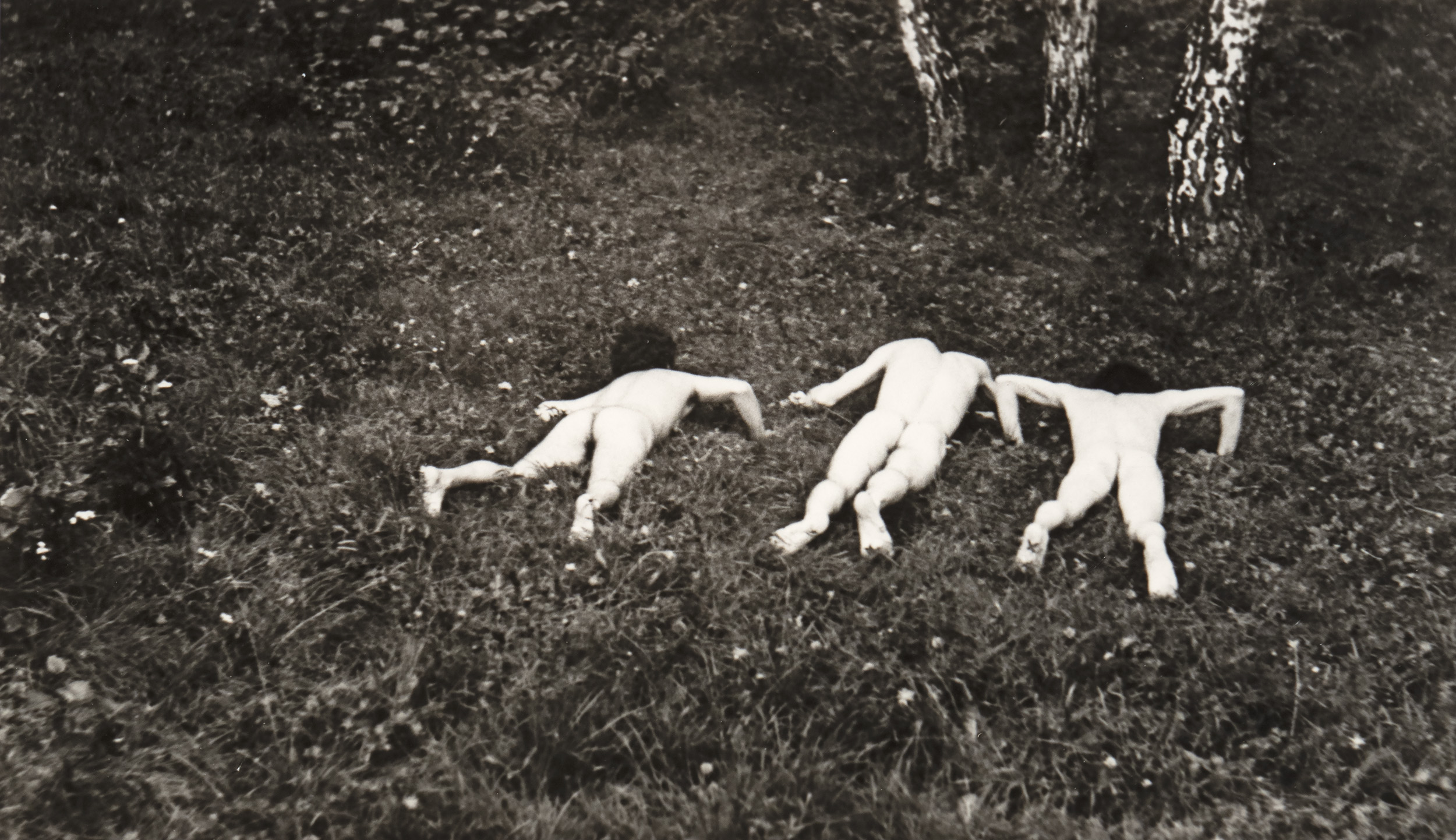
Fertilization of the Earth, 1976. Gelatin silver print on paper, 24.9 x 39.8 cm (9 13/16 x 15 11/16 in.). Norton and Nancy Dodge Collection of Nonconformist Art from the Soviet Union. 2013.016.037.01