
Farit Gubaev
1951 — Kazan (Tatarstan, USSR). Worked in Kazan and Moscow (Russia); currently lives and works in Barcelona (Spain)
Farit Gubaev combines two ways of seeing in his photography: as a harsh critic of reality, sharply noting the shortcomings of his epoch in mirror-like fragments; and as a gentle Tatar son respectfully in love with his culture. He was the first photographer who seriously portrayed Tatar culture, not only in theatrical performances during holidays, but also in the simple moments behind the scenes, or outdoors, when families come to celebrate national holidays. In the twentieth century, Tatar culture has not lost its connection to nature, its ancestral love for horses, or its love for the earth and its own communities. For official news media, during the stagnant Soviet times, Tatar culture was presented as an assemblage of folk holidays. Official journalism published slogans about the friendship of different peoples, but, at the same time, cultural differences were rarely seen as an important part of Soviet life. Gubaev, on the other hand, documented cultural differences: his people living in their own homeland, with their own families and villages in the small republic of Tatarstan inside a bigger Russia. In the 1970s, when people spoke about Gubaev’s countrymen, they thought not about living, contemporary people, but about ancient Tatars who came from many centuries ago and remained a part of historical legend. For Gubaev, who was a native Tatar and grew up in the countryside, the life of his nation was a part of his personal experience. He went into professional photography in the era of the USSR, but Soviet culture did not interrupt his own identity. He retained the ability to see his own culture.
Farit Gubaev was born in 1951 in Kazan, Tatar ASSR, Soviet Union (now Kazan, Republic of Tatarstan, Russian Federation), so he lived in the same city in both the USSR and Russia, except for two periods: from 1991 to 1996, he lived in Moscow, and from 2019 to 2023, he lived in Zelenodolsk, a small town near the city of Kazan. He now lives in Barcelona, Spain.
He was interested in writing and photography since childhood and dreamed of being a storyteller. In 1976, he graduated as a journalist from the Ulyanov-Lenin Red Banner Kazan State University (now Kazan Federal University). Since the mid-1970s, Gubaev has worked as a literary journalist and photographer for periodicals in Kazan—Komsomolets Tatarii [Komsomol Member of Tataria] and Vechernyaya Kazan [Evening Kazan] among them—as well as for different republic presses. Since the mid-1980s, he has also contributed to periodicals in Moscow, including such magazines as Ogonyok [Little Flame] and Sovetskoe FOTO [Soviet PHOTO], and newspapers Izvestia [News], Komsomol’skaya pravda [Komsomol Truth], Rossiya [Russia], and Obozrevatel’ [Observer].
With his documentary photography, Gubaev is one of the key representatives of the Kazan school of photography. From 1968 to 1974, he was a member of the Kazan amateur photographers club VOLGA. The younger generation, including Gubaev, eventually left that union, and Gubaev was one of the founders of the photo group TASMA [1] in 1974. TASMA stayed active until the late 1980s. “We tried to shoot real life, fixing ‘decisive’ moments by using a full frame, without cropping in printing, retouching, and other ‘designing’ methods. We tried to connect documentation of fact with creativeness of vision in photography,” Gubaev says. [2]
In Kazan, he was a professional photojournalist for progressive newspapers during his youth, and he was the first to photograph the Tatar national revival, which had started in the 1970s. He photographed it not only as a spontaneous act of the Tatar people, but as a political struggle for genuine autonomy within a multinational country. His work as a documentary photographer of national culture made him a political photographer. What he photographed was new and could only have been done during the period of perestroika. Stagnant Soviet internationalism often meant the loss of one’s own national identity to the point of depersonalization.
Gubaev became part of the Kazan Tatar and Russian intelligentsia. Entering that circle of artists and writers, he turned into a chronicler of their lives. He lived through the Kazan Cultural Renaissance during the last two decades of the USSR’s existence, when Kazan became one of the notable centers of culture in Russia. He photographed Andrei Tarkovsky, Rudolf Nureyev, Andrei Sakharov, Alfred Schnittke, Sviatoslav Richter, Bulat Okudzhava, and other famous people.
In the early 1990s, Gubaev was temporarily living in Moscow and working as a “capital photographer,” witnessing the widespread freedom there, when he accepted the invitation to photograph for the national newspapers mentioned above. In Moscow, Gubaev was part of a narrow circle of “new photographers” attracting the attention of foreign curators and gallery owners. These photographers were seen as a new phenomenon in photojournalism, and through their eyes, the world was able to observe the changing, previously unknown Russia. Gubaev was a participant in the new photography’s shows abroad, including Changing Reality: Recent Soviet Photography at the Corcoran Gallery of Art in Washington, DC, in 1991, curated by Leah Bendavid-Val.
Gubaev has also been a photo editor, creator of photo albums, and curator of photo exhibitions. From 1992 to 1995, he headed the department of exhibitions at the exhibition hall Fototsentr [Photo Center] in Moscow. During that time, he worked as a second photo editor and a photographer for the major publication The Russian Century: A History of the Last Hundred Years. [3] A characteristic feature of Gubaev’s documentary photography is his integration of portraits and the places where people live in such a way that the landscape is animated, infused with their energy. For example, in the 1980s and 1990s, he visited Solovki, a White Sea archipelago, where a famous monastery has been located since the fifteenth century. After its destruction during the Soviet period, from the 1920s to the 1950s, gulag labor camps were set up there. Even after the camps were disbanded, Solovki was practically closed to outsiders for several decades. Gubaev’s arrival coincided with the first publications in the new press about the tragic history of the islands during the Soviet period. He shot this place, full of dramatic allusions, in a way that created something special: in Gubaev’s series, Solovki is not about the eradicated past, but is rather described by the clarity of the air, the ghostly morning mist from which the silhouettes of the locals appear, in which old walls breathe. The air, its materiality, is very important to Gubaev—in his photographs, the air is not figuration (he is not a formalist-impressionist developing the flatness of the image), but an atmosphere into which the viewer is drawn, past the figures in the foreground and all of the melting lines, wandering through the expansive landscapes that Gubaev creates.
Gubaev is an honorable art worker of the Republic of Tatarstan; a member of the Union of Artists of Russia, the Creative Union of Artists of Russia, the Union of Journalists of Russia, and the International Federation of Journalists; and an honorable member of the Russian Union of Art Photographers.
In the twenty-first century, he became officially recognized at home: in addition to receiving the Governmental Honor of the Republic of Tatarstan in 2002, he won the award at the Tatar Republic Journalism Competition Бәллүр каләм [Crystal Quill] in the category “View through the Camera Lens” (2007); the special Government Prize at the 2008 Crystal Quill Journalism Competition; the medal commemorating “The 100 Years of the Creation of the Autonomous Tatar Soviet Socialist Republic” in 2023, “for the significant contribution to the strengthening of the social and economic potential of the Republic of Tatarstan and the many years dedicated to productive work.” Also in 2023, he was awarded the main prize by the Russian Union of Journalists, the “Golden Quill of Russia,” in the category “Golden Shelf” for his books, Pobeda. Odna na vsekh [Victory. One for All] and Iskusstvo prisutstvia [The Art of Being Present]. These awards did not influence the photographer’s decision to leave the country in 2024 and settle down in Spain, where he continues to photograph.
Irina Chmyreva
Translated from Russian by Anastasia Skoybedo
Notes
1. The art group TASMA was founded in Kazan, Tatar ASSR (now Republic of Tatarstan, Russian Federation); it takes its name from the local industrial plant, Tatar Sensitive Materials, which produces light-sensitive materials (TASMA is an acronym). The group’s approach became known as the Kazan school of photography; art historian Anri Vartanov first used this term in the late 1970s. This photography depicts regional life with its multinational character, local festivities, and holidays that reflect ancient traditions. The regional schools of photography, including the Kazan school, which was a school of documentary photography, had a special focus on documenting local ethnicities and cultures. Among TASMA members were Vladimir Bogdanov (the head of the group), Zufar Bashirov, Yuri Filimonov, Farit Gubaev, Lyalya Kuznetsova, Rif Yakupov, Vladimir Zotov, and others. The group ended in the late 1980s.
2. Gubaev, Farit. Iskusstvo prositstvia. Fotoal’bom. [Art of Being Present. Photo Album.]. Kazan: Logos-Press, 2022.
3. Moynahan, Brian. The Russian Century: A History of the Last Hundred Years. New York: Random House, 1994.

Tatarstan, 1980s. Gelatin silver print on paper, 25 × 37.7 cm (9 13/16 × 14 13/16 in.). Norton and Nancy Dodge Collection of Nonconformist Art from the Soviet Union. D18811
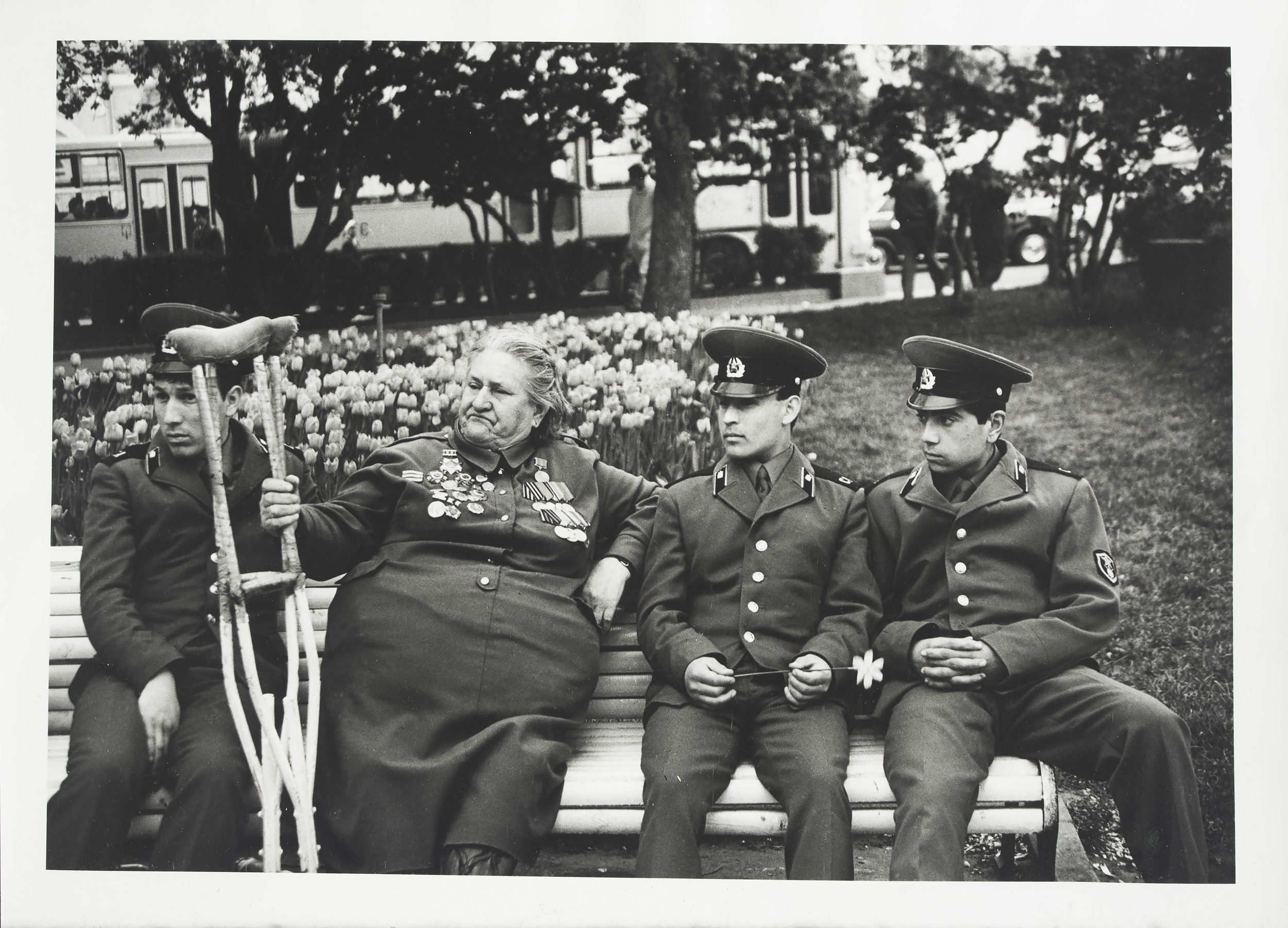
Moscow, 1980s. Gelatin silver print on paper, 25 × 37.5 cm (9 13/16 × 14 3/4 in.). Norton and Nancy Dodge Collection of Nonconformist Art from the Soviet Union. D18812
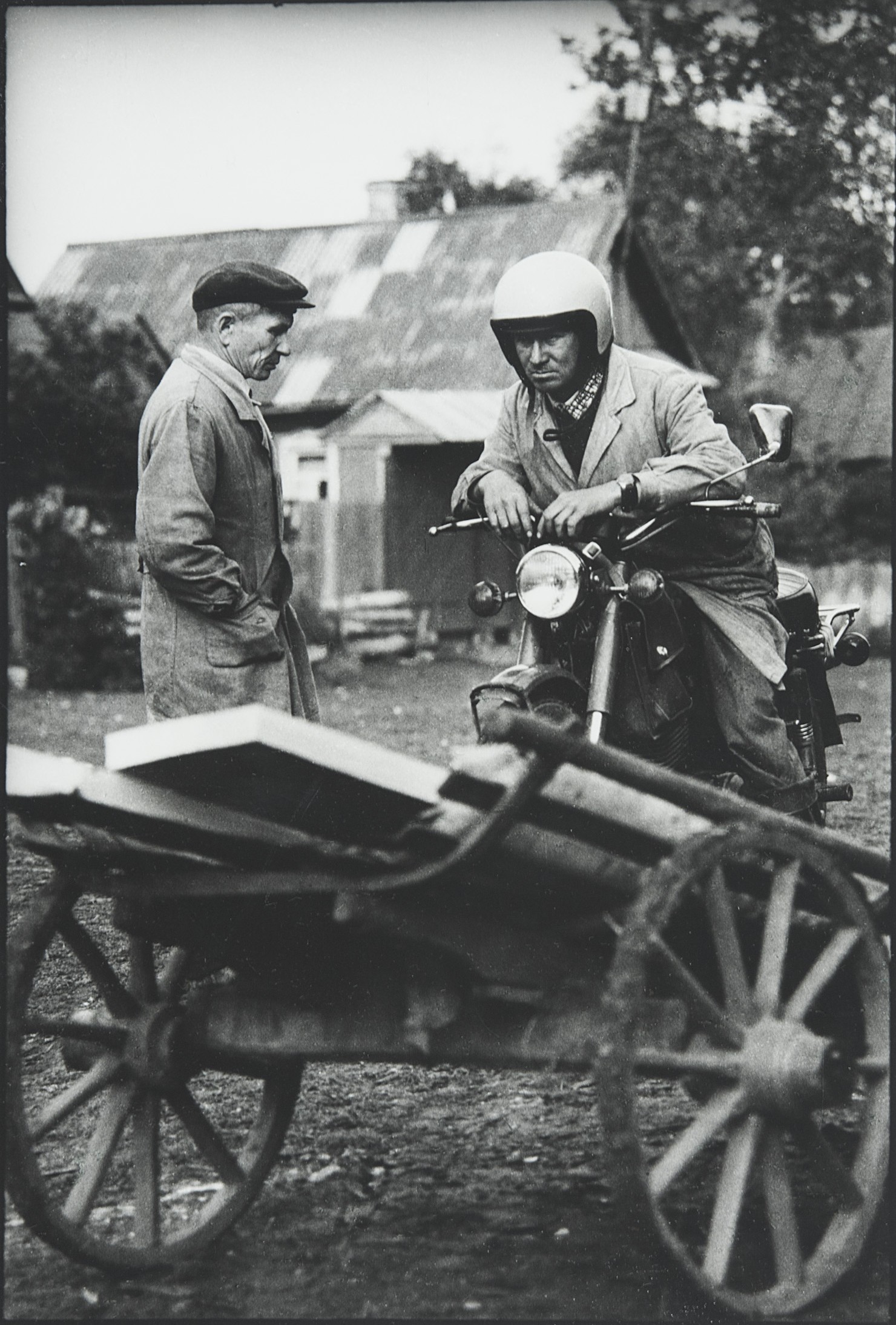
Untitled, 1980/1995. Gelatin silver print on paper, 32.7 × 22.1 cm (12 7/8 × 8 11/16 in.). Norton and Nancy Dodge Collection of Nonconformist Art from the Soviet Union. D18756
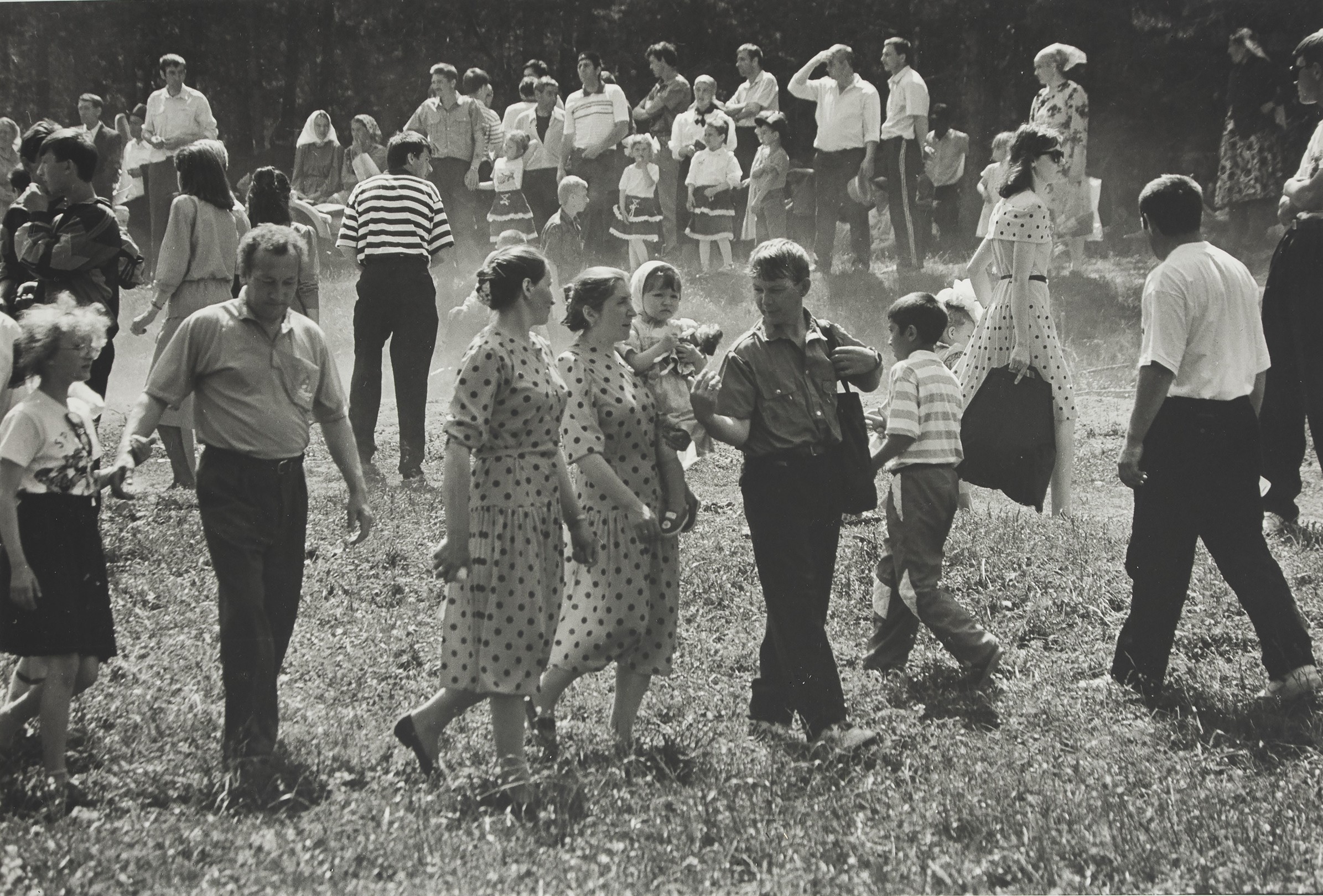
Untitled, 1982/1995. Gelatin silver print on paper, 25.2 × 37.7 cm (9 15/16 × 14 13/16 in.). Norton and Nancy Dodge Collection of Nonconformist Art from the Soviet Union. D18747
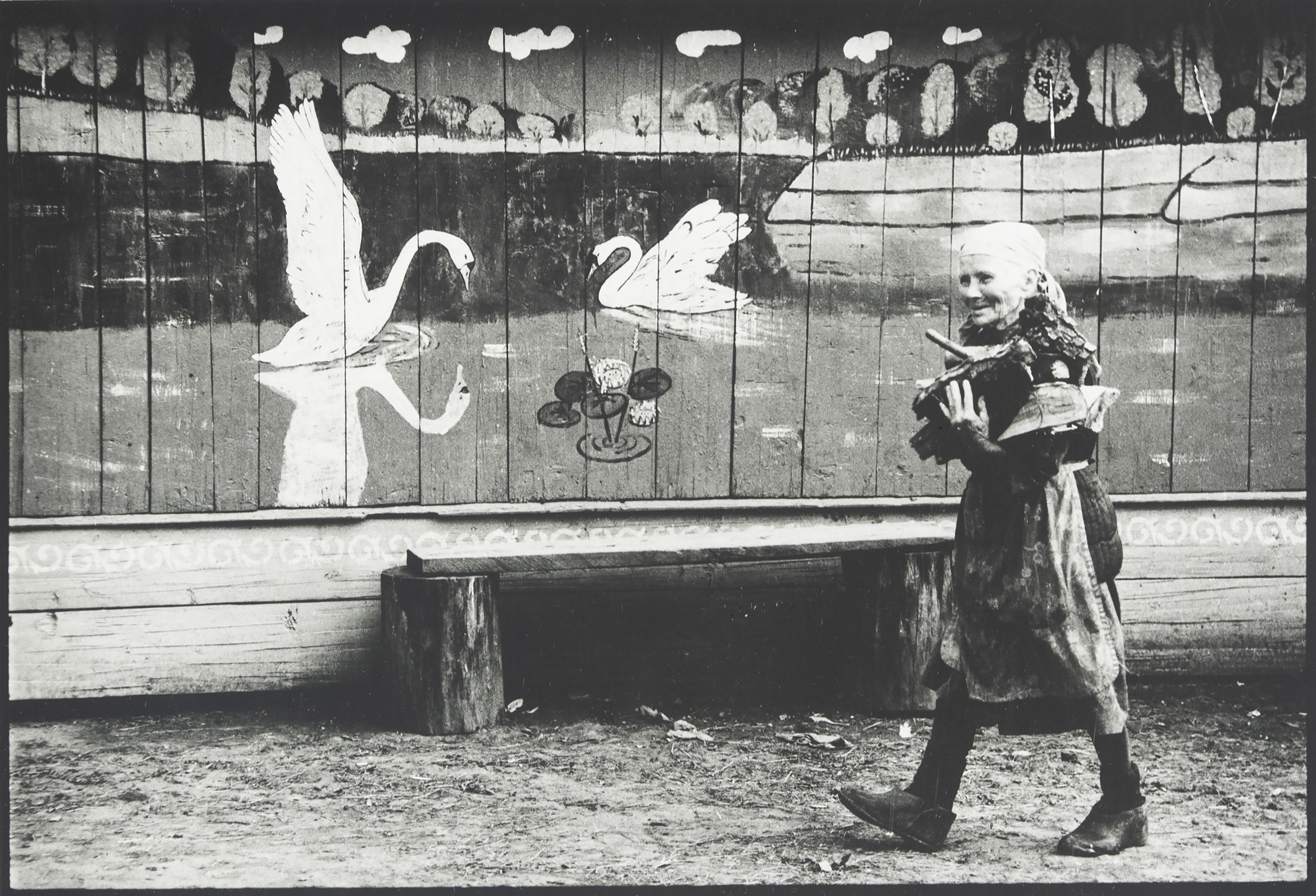
Untitled, 1982/1995. Gelatin silver print on paper, 19.3 × 28.2 cm (7 5/8 × 11 1/8 in.). Norton and Nancy Dodge Collection of Nonconformist Art from the Soviet Union. D18748