
Evi Tihemets
1932 — Tapa (Estonia)
Evi Tihemets was born in 1932 in Tapa. In 1935, during the national campaign for transforming foreign names to Estonian ones, her family changed its original German surname, Tittman, to Tihemets. After graduating from the Tapa High School, Tihemets studied in printmaking at the State Art Institute of the Estonian Soviet Socialist Republic (now called the Estonian Academy of Arts) from 1952 to 1958. Her graduation works, illustrations for August Kitzberg’s play Werewolf, were relatively realistic and characteristic of the era.
A year after graduation, Tihemets had the opportunity to travel to the Russian part of the Kola Peninsula and to Karelia, Russia, on a two-month creative trip with the established masters Priidu Aavik, Elmar Kits, and Viktor Karrus, who were among the most prominent Estonian artists of the time. The trip resulted in numerous drawings, paintings, and prints that showed Tihemets’s skill at capturing nature and people en plein air. Even a half century later, she recalled how the experience of being treated as an equal by these three men bolstered her confidence in her career. She traveled to Crimea in 1961 and Armenia in 1962, later publishing her works and journals from these trips in the book Goodbye, Sixties: Three Hikes and Pictures (2015).
Tihemets participated in her first exhibition in 1958, and her 1959 colored lithograph View from Toompea earned her a prize at the young artists’ exhibition in Moscow. That same year she also became a member of the Estonian Union of Artists (now Artists’ Association) and started her lifelong career as a freelance artist. Her early works already displayed increasing abstraction and expressive line. When she started making colored lithographs in 1959, printmaking was still considered a black-and-white medium. Tihemets herself has said that she had not seen many colored prints before she started doing them. [1] Even though she created works in the severe style, the common method of depicting workers and industry at the time, the added colors give them a unique lightness, as in At the Construction (1961), Kohtla-Järve (1965), and Chemical Plant (1965). The abstraction and color of her prints might also have been the result of painting together with the artist Olga Terri in the 1960s; since then, her works have retained a painterly element. Despite Tihemets’s youth, her works were mentioned and analyzed in most of the articles about the exhibitions in which she participated in the 1960s.
At the end of the 1960s, color grew increasingly important and intense in works such as Warning! (1967–68), Red Flower, (1968), and Composition with Red (1968), and the artist moved toward a more pop art–influenced approach. Colorful geometric shapes began to appear in her works, often complementing gray-scale elements; the best example is Artist and Her Work (Tiiu Pallo-Vaik) (1968). After spending a long period working in lithography, she sought a technique that she could practice without any assistance and turned to soft-ground etching.
During this time, Tihemets secretly sent her works abroad and they were shown in Switzerland, Austria, and Norway, and even at the 1972 Venice Biennale. She earned the foreign artist award at the Kraków Print Triennial and the special prize at the Tallinn Print Triennial for The Madonna of Tallinn (1974), which combined etching and photoengraving. At the end of the decade, Tihemets started a series of strangely surreal soft-ground etchings of Estonian cultural figures that expertly combined realistic portraits with interiors and other elements.
In the 1980s Tihemets turned toward nature, and her works became increasingly abstract and minimalist with more limited colors, as in Meadow (1984), Stone (1986), and Storm (1989). She was masterful at creating seemingly static scenes that could become dynamic and even chaotic by means of just a few added lines or a new choice of color, such as in Forgotten (1987). The 2009 series Stones of Iceland introduced a new and static or restrained quality to her works based on nature.
At the end of the 1980s, Tihemets undertook increasingly somber themes, creating works about Estonians’ deportation to Siberia under Stalin. The common motif in these works was the symbol of the cross, which she introduced in the 1988 series Memento, bravely using the Estonian national colors of blue, black, and white, and used again in the large composition Cross (1990), in which individual abstract images were combined into the shape of a cross. In the following decade, she introduced more color back into her works, although now they were usually more muted and natural hues. She actively adopted new approaches, culminating with a 2006 series that combined etchings with collage elements. In 2012 the artist celebrated her eightieth birthday with seven solo exhibitions.
In 2002 Tihemets was selected as the honorary member of both the Estonian Artists’ Association and the Association of Estonian Printmakers. The latter also selected her as the printmaker of the year in 2001. Tihemets has illustrated more than two dozen books by authors including Debora Vaarandi, Hans Christian Andersen, Anton Hansen Tammsaare, and Mall Hiiemäe. She has twice been recognized with the Kristjan Raud Award (in 1992 and 2013).
In 1964 Tihemets married the cultural historian Ants Viires (1918–2015) and changed her name officially to Evi Viires, though she continued using Tihemets professionally. Her daughter Epp Viires (b. 1973) is also a painter, and they have presented several exhibitions together. Tihemets has been making art for more than seven decades, making her active professional career one of the longest in Estonian art.
Peeter Talvistu
Photo portrait: Evi Tihemets, 2008. Photo by: Wim Lamboo. Art Museum of Estonia. EKM j 61938 FK 5008
Notes
1. Vappu Thurlow, Evi Tihemets (Tallinn: Vappu Thurlow, 2022), 48.
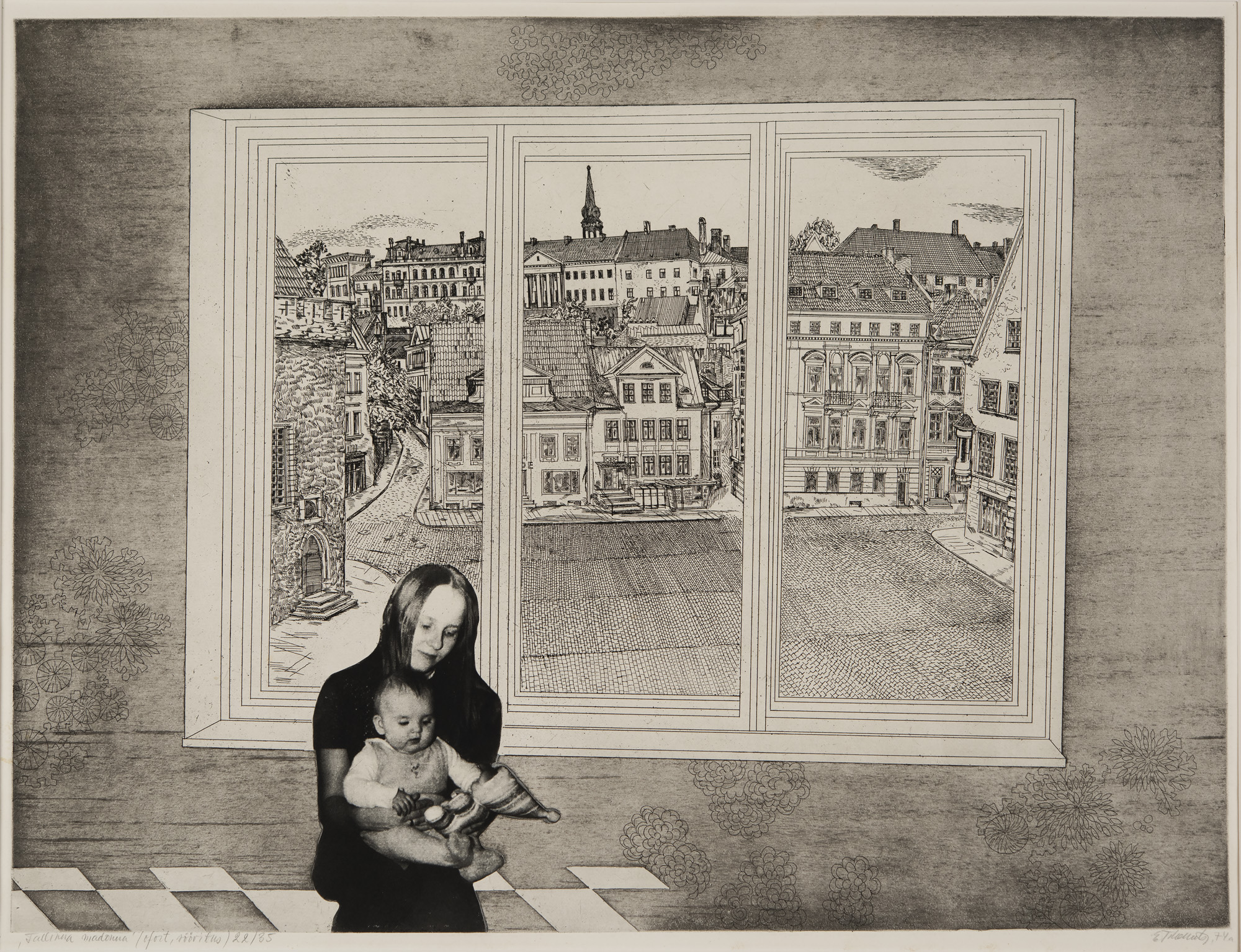
The Madonna of Tallin, 1974. Etching and photoengraving on paper. 49.2 × 64.7 cm (19 3/8 × 25 1/2 in.) / 57 × 74.5 cm (22 7/16 × 29 5/16 in.). Norton and Nancy Dodge Collection of Nonconformist Art from the Soviet Union. D05624
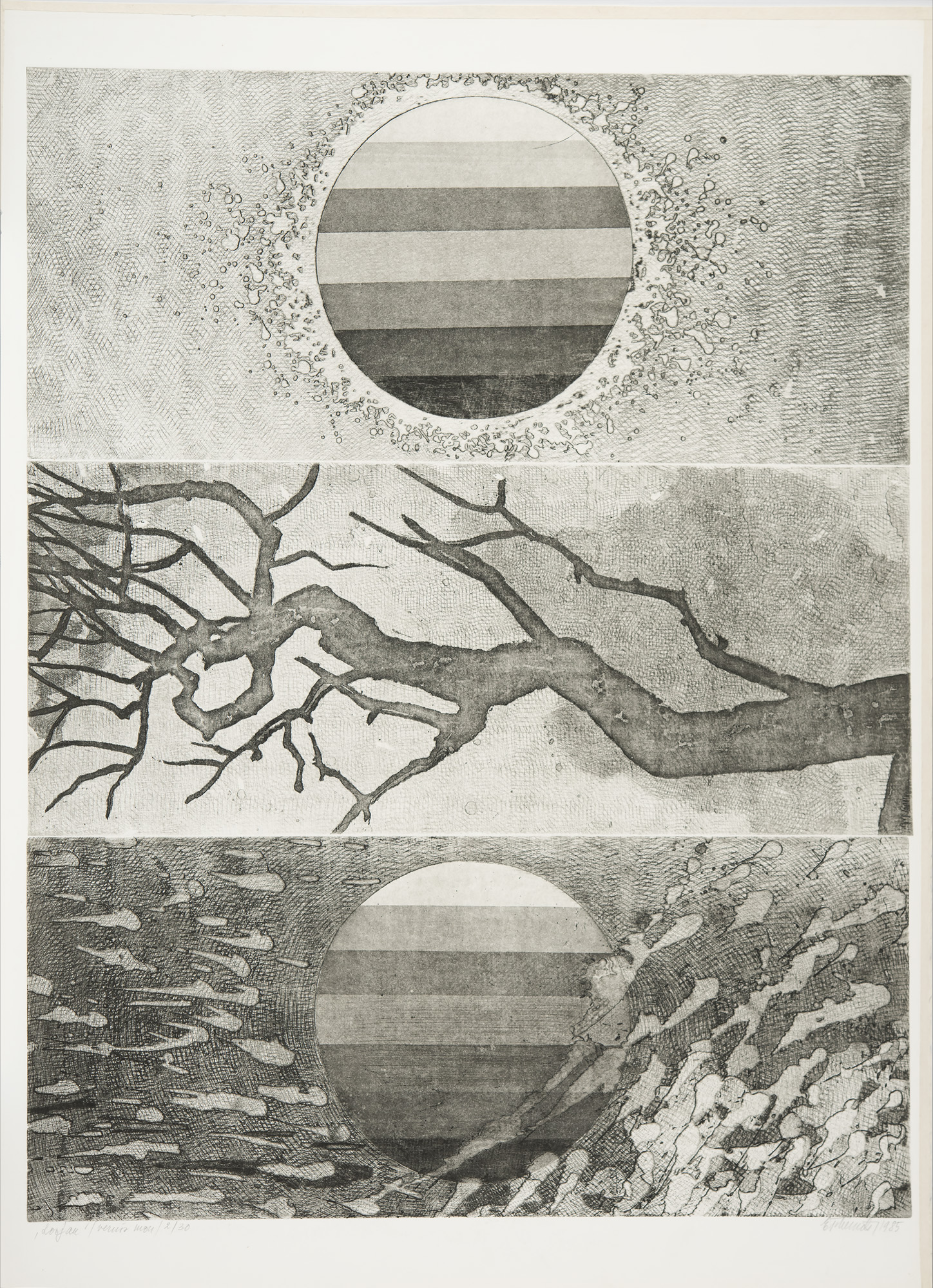
Sunset, 1985. Etching on paper, 73.3 × 59.2 cm (28 7/8 × 23 5/16 in.) / 82.9 × 62.8 cm (32 5/8 × 24 3/4 in.). Norton and Nancy Dodge Collection of Nonconformist Art from the Soviet Union. D03097
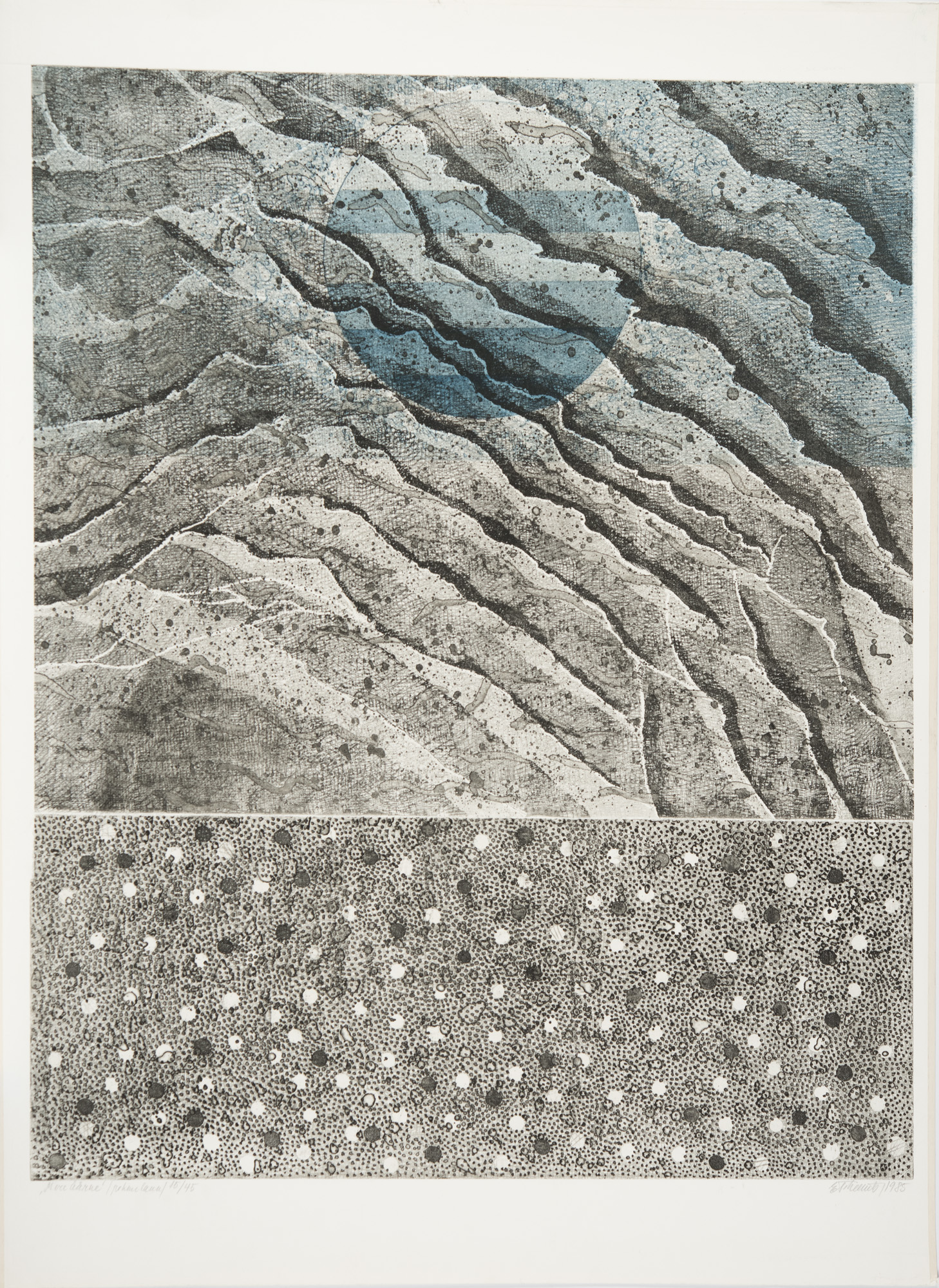
Seaside Landscape, 1985. Etching on paper, 71.8 × 59.4 cm (28 1/4 × 23 3/8 in.) / 83.8 × 63 cm (33 × 24 13/16 in.). Norton and Nancy Dodge Collection of Nonconformist Art from the Soviet Union. D03101
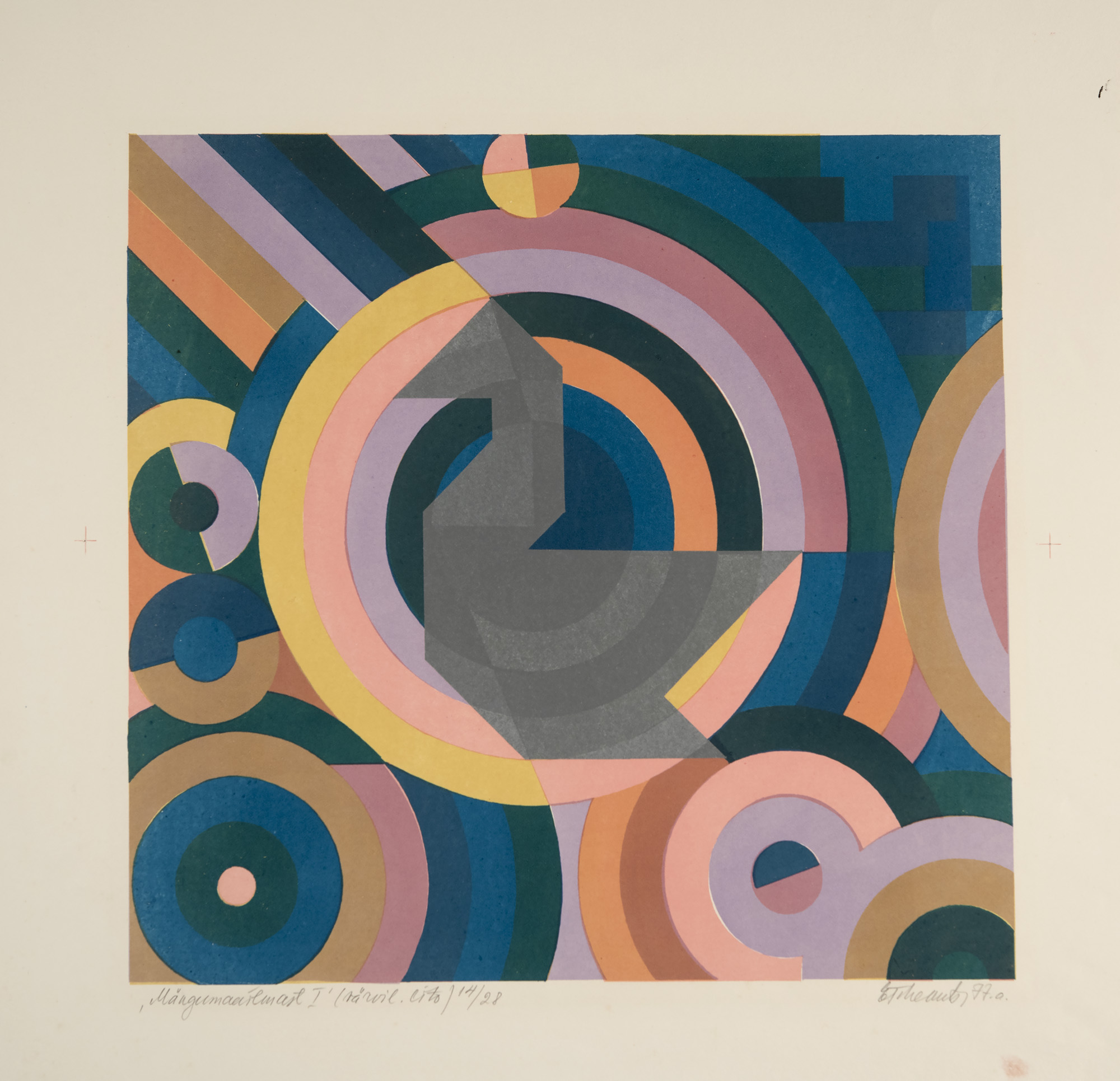
World of Games I, 1977. Lithograph on paper, 34 × 36 cm (13 3/8 × 14 3/16 in.) / 61.9 × 47 cm (24 3/8 × 18 1/2 in.). Norton and Nancy Dodge Collection of Nonconformist Art from the Soviet Union. D05576
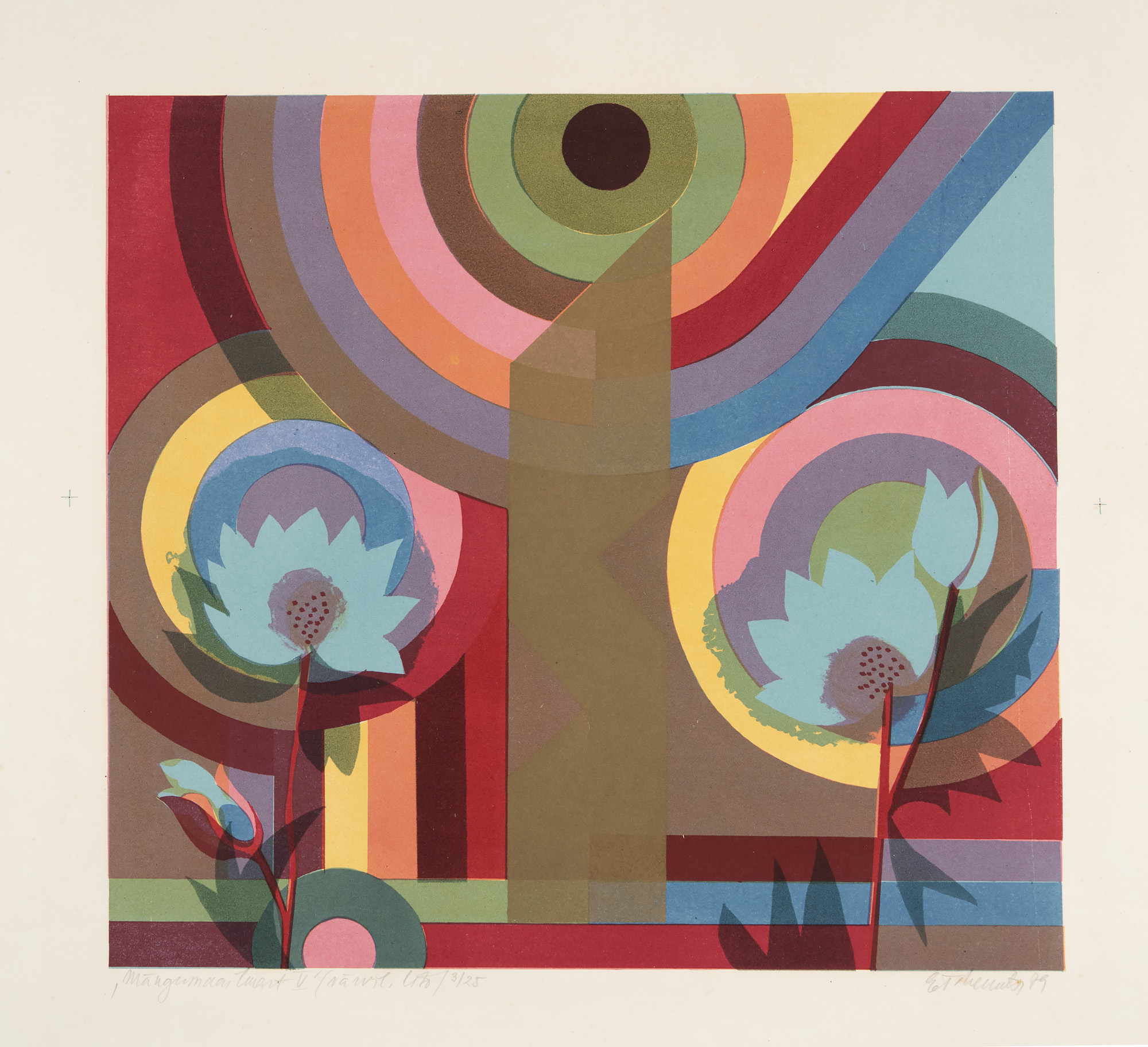
World of Games V, 1970. Lithograph on paper, 34 × 36 cm (13 3/8 × 14 3/16 in.) / 62.2 × 47.2 cm (24 1/2 × 18 9/16 in.). Norton and Nancy Dodge Collection of Nonconformist Art from the Soviet Union. D05575

Blue (Orient), 1967. Aquatint on paper, 62.7 × 58.9 cm (24 11/16 × 23 3/16 in.) / 77.5 × 56.8 cm (30 1/2 × 22 3/8 in.). Norton and Nancy Dodge Collection of Nonconformist Art from the Soviet Union. D05713
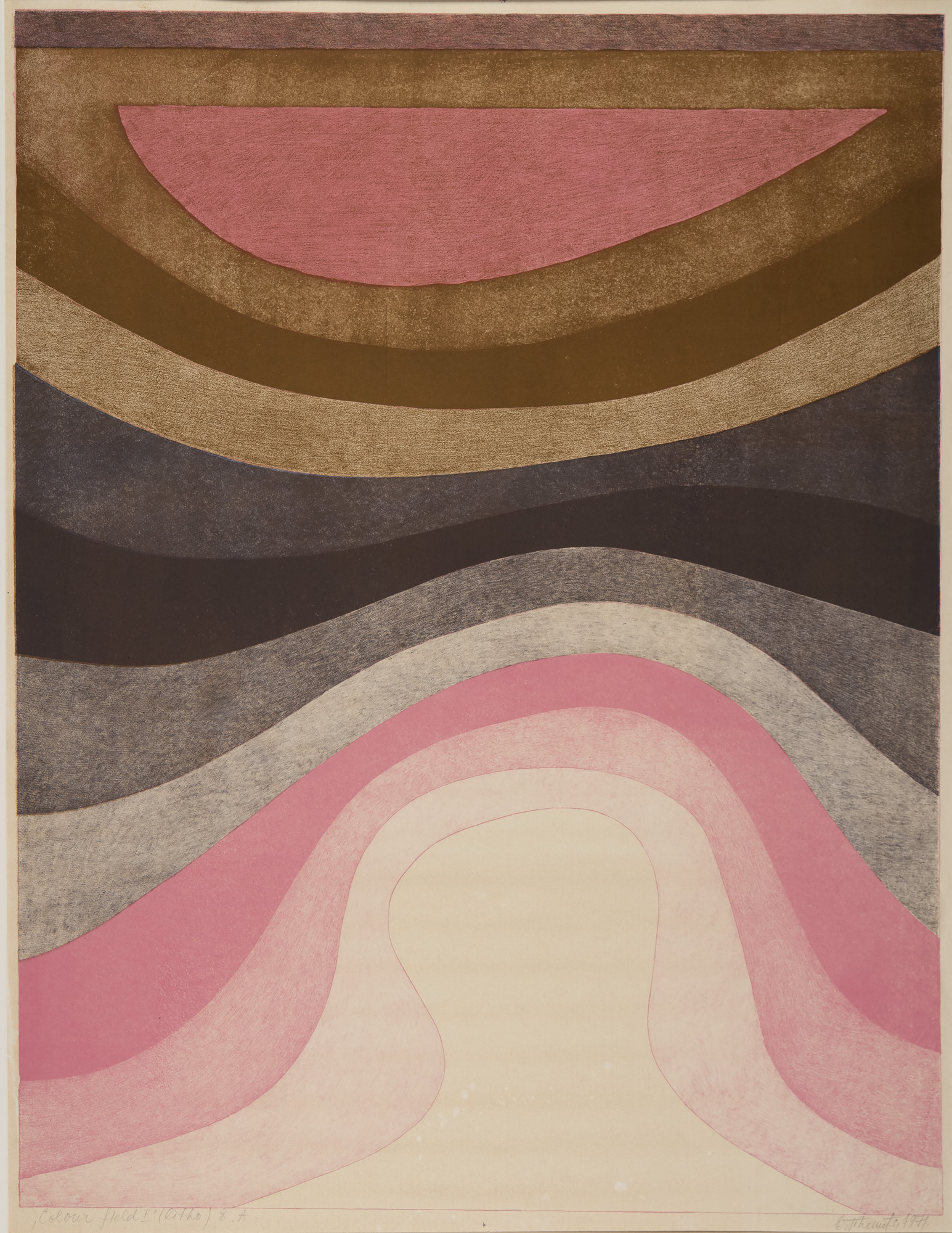
Color Field I, 1971. Print on paper, 83.5 × 64.5 cm (32 7/8 × 25 3/8 in.) / 83.5 × 64.5 cm (32 7/8 × 25 3/8 in.). Norton and Nancy Dodge Collection of Nonconformist Art from the Soviet Union. D07449
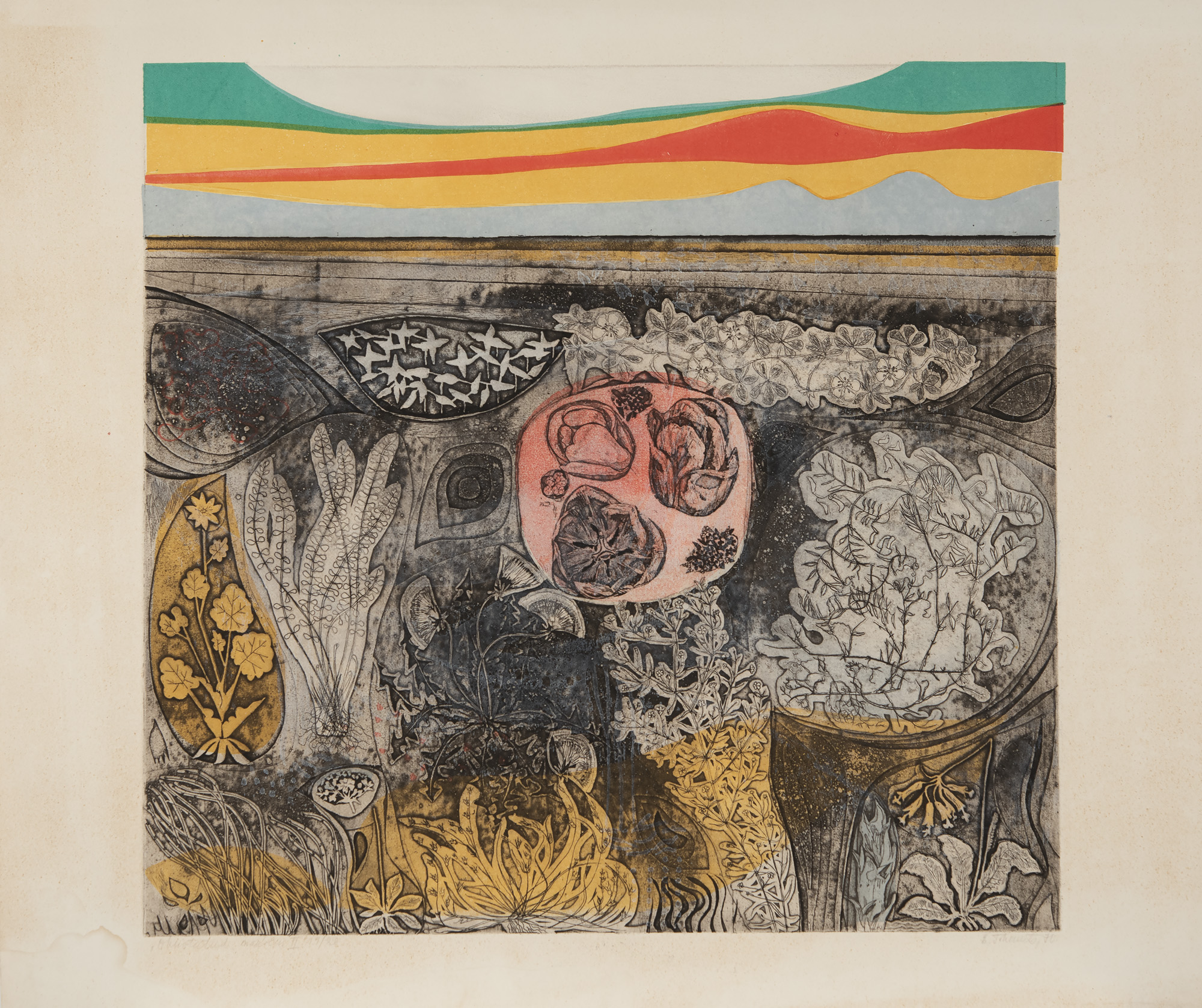
World in Danger II, 1970. Etching (?) on paper, 46 × 49.2 cm (18 1/8 × 19 3/8 in.) / 54.5 × 66.5 cm (21 7/16 × 26 3/16 in.). Norton and Nancy Dodge Collection of Nonconformist Art from the Soviet Union. D09795