
Eižens Valpēters
1943 — Bogdanovich, Sverdlovsk region (USSR) | 2024 — Riga (Latvia). Worked in Riga, Rundāle (both Latvia), and New York (USA)
Eižens Valpēters was one of the central figures in the circle of freethinking artists and intellectuals that formed in Riga in the mid-1960s. A key participant in experimental developments in theater and performance art, he was a member of the Riga Pantomime Theater; the experimental theater group Birojs, or the Office; and a participant in several happenings organized by the artist Andris Grinbergs (b. 1946). His artistic output is preserved mainly in documentation of these events and in his drawings.
Valpēters developed an interest in art during his childhood by flipping through interwar cultural magazines at his parents’ home. He learned Polish from his mother, who, while Latvian, came from a historically Polish-governed region of Latvia. [1] As a teenager, Valpēters participated in the leading amateur folk-dance ensemble, Dancis (Dance). The year he left the group, in 1963, he was invited to join the Riga Pantomime, an amateur theater studio led by Roberts Ligers (1931–2013). The Riga Pantomime was influenced by the French mime theater and contemporary pantomime theaters in Poland—most notably the Wrocław Mime Theater of Henryk Tomaszewski (1919–2001). In addition, according to Valpēters, it was influenced by German expressionist theater, which emphasized the role of movement and dance, music, light, and stage makeup. The Riga Pantomime was the first mime theater in the USSR. [2] Valpēters stayed in the group until 1967.
The novel, modern, experimental approach of the Riga Pantomime attracted participants from different fields of art who would befriend Valpēters: the actors and later theater directors Modris Tenisons (1945–2020) and Ansis Rūtentāls (1949–2000); stage designer Andris Freibergs (1938–2022); composer Imants Kalniņš (b. 1941); and, as actors, Valpēters’s lifelong friends painter Laima Eglīte (b. 1945), graphic artist Ruta Kreica (b. 1946), and adherent of the hippie movement Ieva Brašmane (b. 1943).
Coinciding with his years with the Riga Pantomime, in 1963 Valpēters joined a circle of young artists and intellectuals who gathered in the legendary café Kaza (named after a brand of the Hungarian coffee machine Casino) in Riga’s Old Town. There he met up with his closest friends from the Riga Pantomime, as well as students of theater directing: Māra Ķimele (b. 1943) and Mudīte Gaiševska (1935–2021), painter Biruta Delle (1944–2025), photographer Māra Brašamane (b. 1944), and Andris Grinbergs (b. 1946). The creative community of Kaza, although not politically dissident, sought to live beyond the restrictions of the Soviet period, engaging in innovative forms of all the arts, inspired by whatever news they could find on international developments in the fields. For his part, Valpēters could translate and share cultural news from the liberal Polish fashion and satirical magazines. [3] Kaza’s clientele also expressed their freedom through beatnik or hippie dress and interests in international cultural trends. Despite their limited means, Valpēters and his friends traveled to Moscow International Film Festivals, concerts, museum collections, and contemporary art exhibitions in Moscow, Leningrad, and elsewhere.
Many of Valpēters’s drawings originated during his years as a fixture at Kaza. Some of his spontaneous drawings reveal influences of surrealism, Pablo Picasso (1881–1973), Paul Klee (1879–1940), or Joan Miró (1893–1983); others are portrait sketches of friends; his more abstract works contain symbols, sometimes mapping out patterns of interpersonal relations. During his Kaza years, Valpēters decided not to enroll in an art school, as he believed the Soviet education system had almost nothing to contribute to his development. [4] From the 1960s to early 1970s he supported himself first by working at the State Electronic Factory VEF, then as an assistant for a geodesic measurements team. During this time he changed his surname (Ivanovs) to his mother’s maiden name, Valpēters.
Kaza’s regulars were devastated by the 1968 Soviet invasion of Czechoslovakia, which smothered hope of liberal socialism; a number of them were subjected to KGB surveillance until authorities closed the café Kaza in 1971.
That year, Valpēters was invited by the future film director Ivars Skanstiņš (1945–2011) to join an informal experimental theater group called Birojs, or the Office, founded by graduates of the Peoples’ Film Acting Studio of the Riga Film Studio. The group aimed to create a “new theater.” It was influenced by ideas of existentialism and semiotics, the latter discovered through publications of the Tartu School of Semiotics. It also followed the work of the Polish director Jerzy Grotowski (1933–1999), some of whose writings Valpēters translated. The Office was an absolutely unofficial initiative: evening rehearsals were held in a room of the Bureau of Film Propaganda, available to them through an informal arrangement. The most active members of the Office were Skanstiņš, Juris Civjans (b. 1959), Rūta Broka (1946–2014), Gaiševska, Valpēters, Grinbergs, and Dzintars Veits (1944–2015). Exercises and études, mainly prepared by Skanstiņš, Gaiševska, and theater director Fēlikss Deičs (1937–2019), sought to activate intuition and the individual and collective unconscious of the actors, which was then channeled into a conscious performance action. [5] The Office performed to an audience only once, in 1971, at a students’ festival in Tartu, Estonia. Having no opportunity to show their work publicly, members of the group decided to create a series of experimental 16mm and 8mm films on the theme of a self-portrait. Each of the five films, completed in 1972, was directed by a core member of the group: Civjans, Gaiševska, Grinbergs, Skanstiņš, and Valpēters. Valpēters’s unfinished film, Robert, portrayed Roberts Delle, the six-year-old son of his friend, the painter Biruta Delle, who was building his own garden house. Valpēters was interested in the creativity of a child before his enrollment in the Soviet school system. Members of the Office acted in their colleagues’ films, and Valpēters also created newspaper collages that are featured in the film by Skanstiņš. Around 1972, the Office began to attract the attention of the state security authorities. After an informal apartment screening of films by Grinbergs and Civjans, the KGB confiscated the film by Civjans, and Grinbergs’s house was searched, yet his landmark film Self-portrait was not discovered. However, the footage by Valpēters disappeared from his apartment while he was traveling. Out of the five films, only Grinbergs’s Self-Portrait (1972) and Skanstiņš’s Twilight Plays with the Mirror (1972) are preserved, with only a few fragments left from the others. Deprived of the possibility to show their work, the Office stopped its activities in 1974.
In the early 1970s, Valpēters took part in several happenings initiated by Grinbergs, who had been the pioneer of performance art in Latvia and Valpēters’s companion at Kaza and the Office. Valpēters was one of the participants in the legendary event The Wedding of Jesus Christ (1972), a two-day happening and the ecumenical wedding ceremony of Grinbergs and his partner Inta Jaunzeme (1955–2022), staged at the seacoast in Carnikava. [6] The same year, he took part in Grinbergs’s happening Two Faces, where participants covered half of their faces with heavy makeup, creating an image of their “real” selves, unaffected by communication with other people. [7] In 1977 Valpēters participated in the happening The Old House,[8] an improvisational event initiated by Grīnbergs in an empty apartment building, with participants assuming different roles. Valpēters presented himself engaged in a gender play, dressed in a heavy leather jacket and a dress.
In the early 1970s, disillusioned by the repressive climate of the Brezhnev era and exposed to surveillance, several members of the Kaza circle chose to leave Riga for the countryside. In 1972 Valpēters, too, started a job as restorer at the rococo-style Rundāle Palace Museum, a workplace and shelter for several of his friends. In 1982 he joined the restoration team of the Imperial Palace in Yalta, Crimea, and other restoration projects in Latvia and abroad, spending a couple of years in the USA in the early 1990s. Valpēters was the initiator and chief editor of the book Nenocenzētie: Alternatīvā kultūra Latvijā XX gs. 60-tie un 70-tie gadi [The Uncensored Ones: Alternative Culture in Latvia in the 1960s and ’70s]. At the end of his life, he was working toward an English translation of this publication and experimenting with photography.
Māra Traumane
Photo portrait: 1970 by Māra Brašmane
Notes
1. Eižens Valpēters, interviewed by Māra Traumane, April 22, 2024, recording in the archive of the author.
2. The Polish student theater Bim-Bom was another influence for Ligers. See Daina Auziņa and Vilnis Vējš, “Saruna ar Robertu Ligeru par Rīgas pantomīmu” [Conversation with Roberts Ligers About Riga Pantomime], for the project “Documentation and Preservation of the Nonconformist Legacy of the Soviet Period for the Collection of the Museum of Contemporary Art,” June 11, 2009, unpublished, Archive, Latvian Center of Contemporary Art, Riga, Latvia. Digital repository: X:\IIE_Informacijas Centrs\Informacijas Centrs\Projekts un citi\Petijums_saturs\Petijums_teksti_fin\2_Materiali par procesiem, notikumiem, kontekstu\Procesi, notikumi; File: Rigas_pantomima_intervija ar Robertu Ligeru_DA, VV.
3. Māra Traumane, “Intervija and Eiženu Valpēteru” [Interview with Eižens Valpēters], for the project “Documentation and Preservation of the Nonconformist Legacy of the Soviet Period for the Collection of the Museum of Contemporary Art,” April 1, 2010, Archive, LCCA. Digital repository: File: Birojs-5_intervija ar E. Valpeteru_MT.
4. See Ivars Skanstiņš, “Būtu bijis” [Would Have Been], in Eižens Valpēters, ed., Nenocenzētie: Alternatīvā kultūra Latvijā XX gs. 60-tie un 70-tie gadi [The Uncensored Ones: Alternative Culture in Latvia in the 1960s and ’70s] (Riga: Latvijas Vēstnesis, 2010), 200–207; and in the same volume, the text by Mudīte Gaiševska, 210–11.
5. The participants in the performance were Andris Bergmanis (1945–2009), Irēna Birnbauma, Māra Brašmane, Ināra Eglīte (1948–2020), Gaiševska, Aija Grinberga, Grinbergs, Jaunzeme (Grinberga), Atis Ieviņš (b. 1946), Ninuce Kaupuža-Leimane (b. 1954), Ingvars Leitis (b. 1943), Ināra Podkalne (b. 1956), Sandrs Rīga (b. 1939), Skanstiņš, and Valpēters.
6. The participants in the performance were Grinbergs, Valdis Kļaviņš, Miervaldis Polis (b. 1948), Līga Purmale (b. 1948), and Valpēters.
7. The participants in the performance were Iraklijs Aveliani, Brašmane, Džonītis (Jānis Silzemnieks), Eglīte, Gaiševska, Grinbergs, Grinberga, Anita Kreituse (b. 1954), Ķimele, Jānis Kreicbergs (1939–2011), Leonards Laganovskis (b. 1955), Ingvars Leitis, Po (Juris Brīniņš) (b. 1957), Valpēters, and Māra Zirnīte (1943–2024).
8. Eižens Valpēters, ed., Nenocenzētie: Alternatīvā kultūra Latvijā XX gs. 60-tie un 70-tie gadi [The Uncensored Ones: Alternative Culture in Latvia in the 1960s and ’70s] (Riga: Latvijas Vēstnesis, 2010).
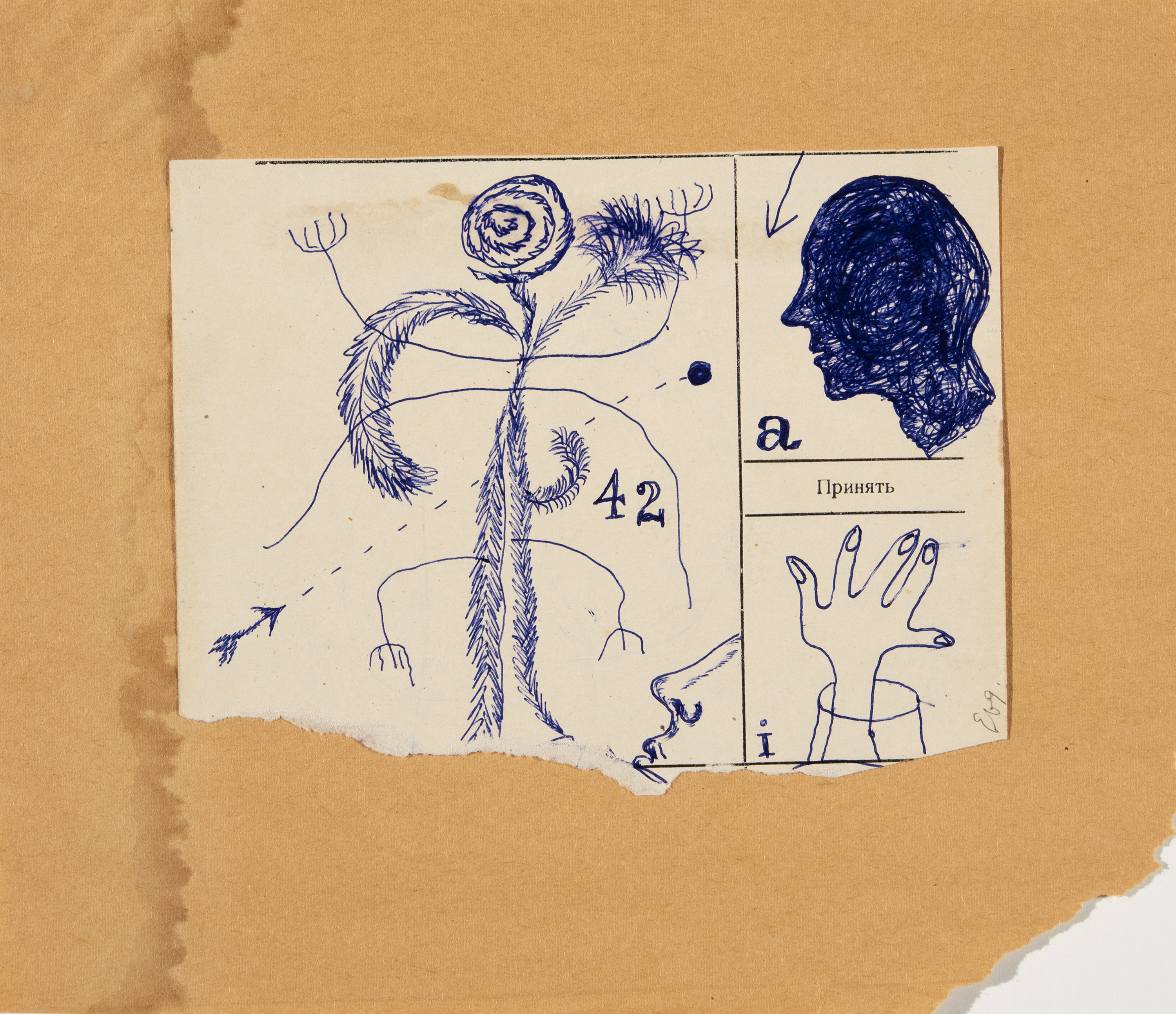
After Saul Steinberg, 1969. Ink on paper, 11.5 × 14.7 cm (4 1/2 × 5 13/16 in.). Norton and Nancy Dodge Collection of Nonconformist Art from the Soviet Union. D18389

Untitled, undated. Graphite on paper, 20.5 × 14 cm (8 1/16 × 5 1/2 in.). Norton and Nancy Dodge Collection of Nonconformist Art from the Soviet Union. D18397

Untitled, undated. Graphite on paper, 19 × 13 cm (7 1/2 × 5 1/8 in.). Norton and Nancy Dodge Collection of Nonconformist Art from the Soviet Union. D18398
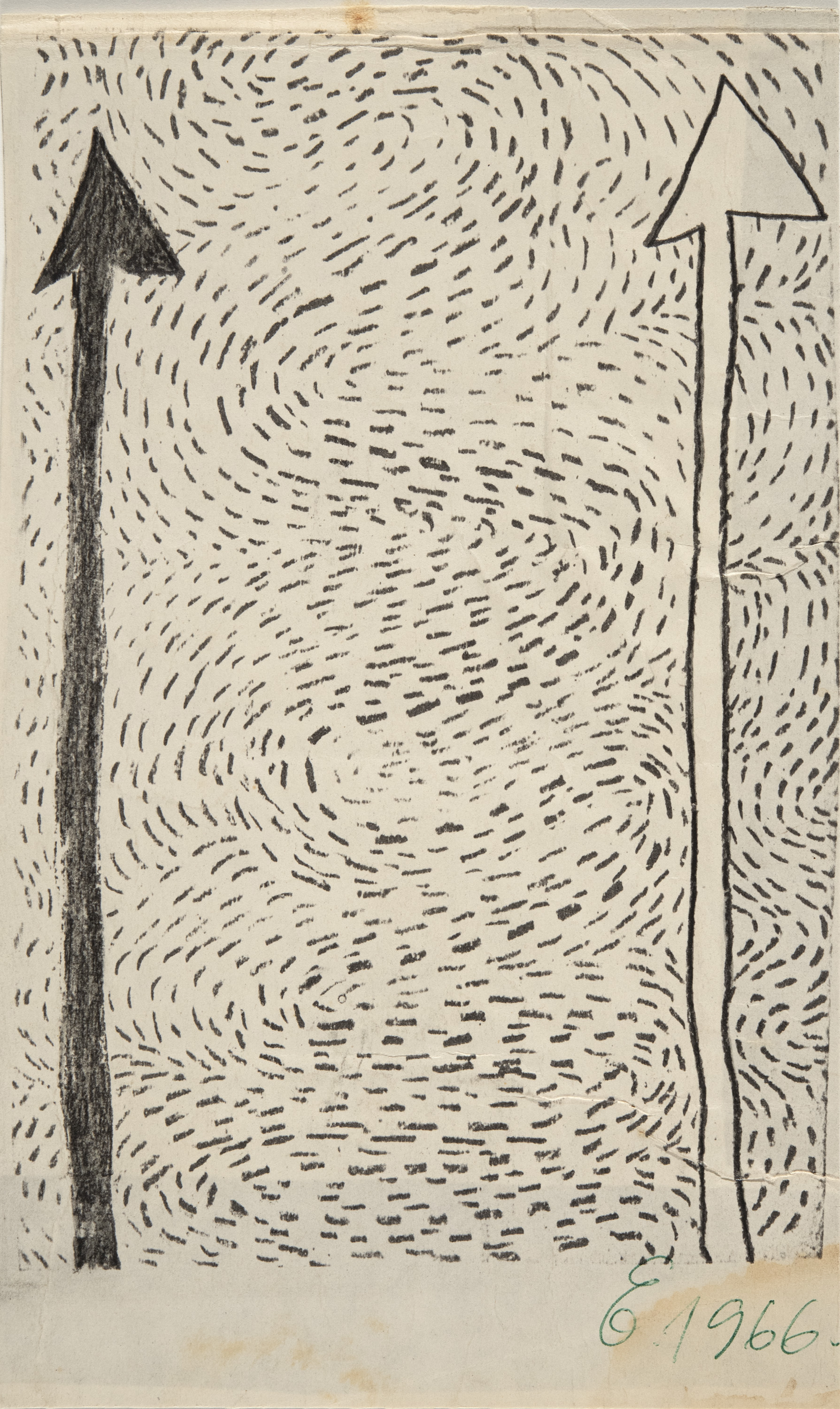
Untitled, 1966. Graphite on paper, 21 × 12.8 cm (8 1/4 × 5 1/16 in.). Norton and Nancy Dodge Collection of Nonconformist Art from the Soviet Union. D18401
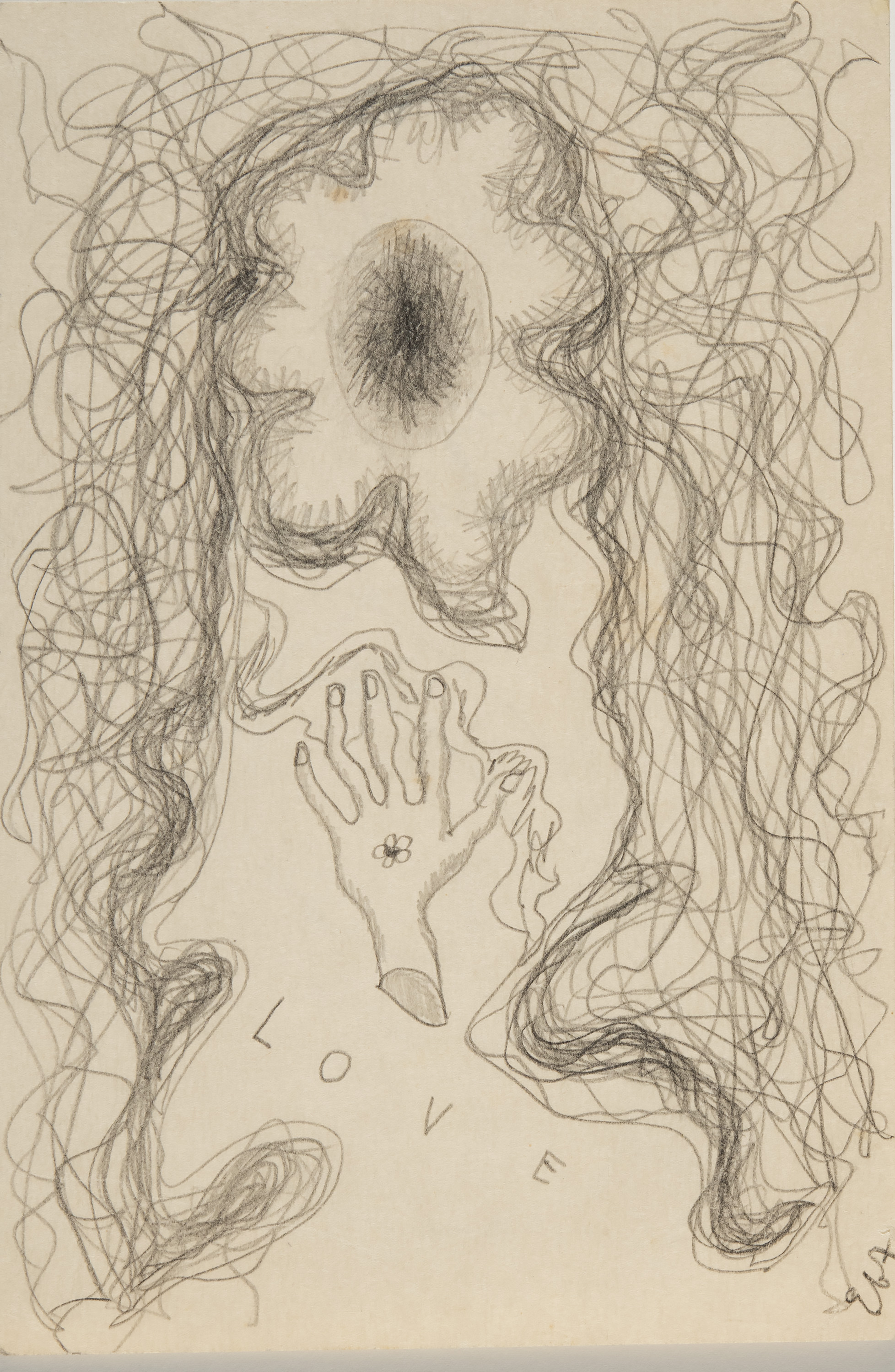
Love, 1967. Graphite on paper, 19 × 13 cm (7 1/2 × 5 1/8 in.). Norton and Nancy Dodge Collection of Nonconformist Art from the Soviet Union. D18402
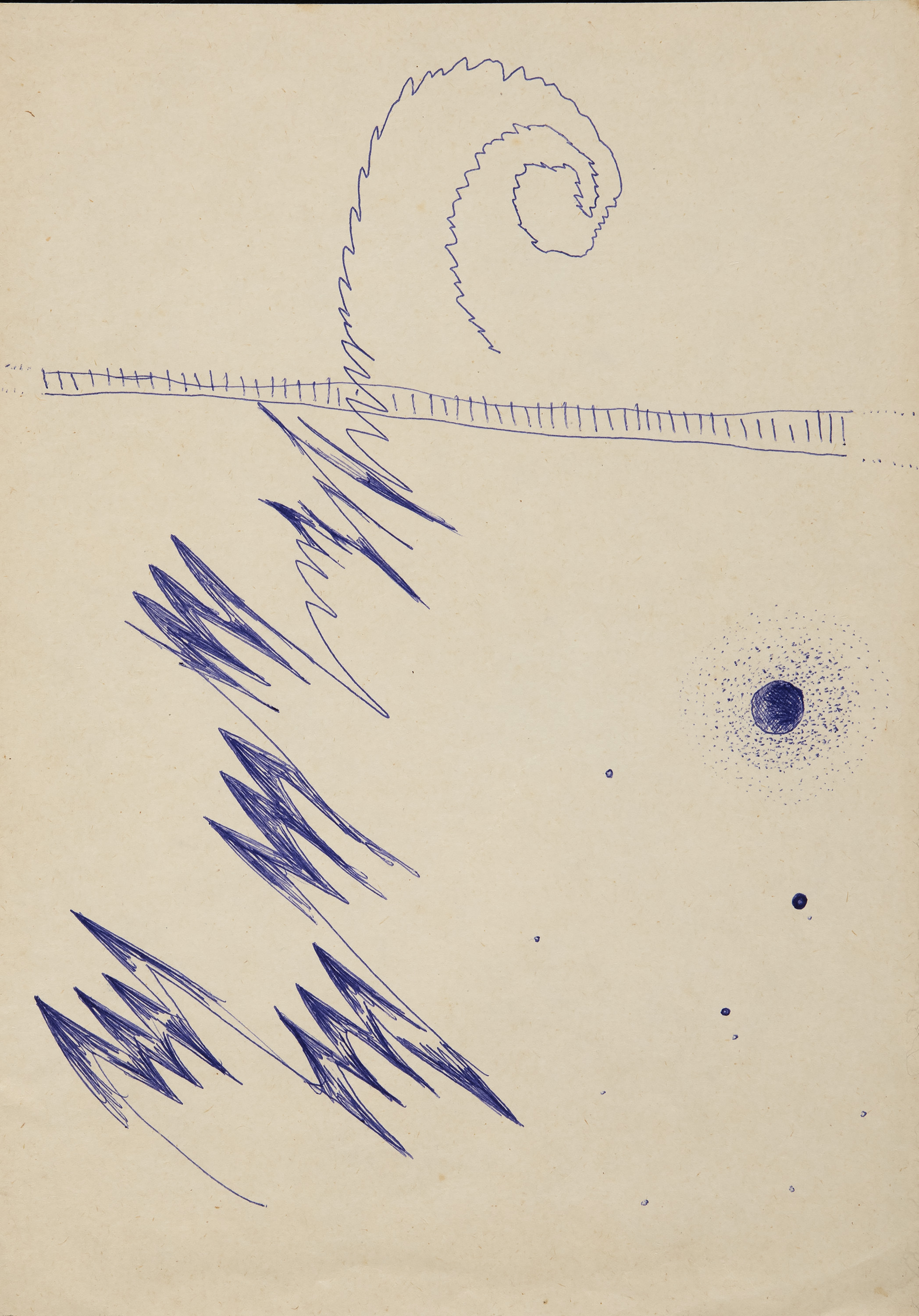
In Memory of Latvian Red Infantrymen, undated. Ink on paper, 27 × 19 cm (10 5/8 × 7 1/2 in.). Norton and Nancy Dodge Collection of Nonconformist Art from the Soviet Union. D18404

Portrait of theater director Mara Kimele, 1965. Graphite on paper, 26 × 18.5 cm (10 1/4 × 7 5/16 in.). Norton and Nancy Dodge Collection of Nonconformist Art from the Soviet Union. D18407
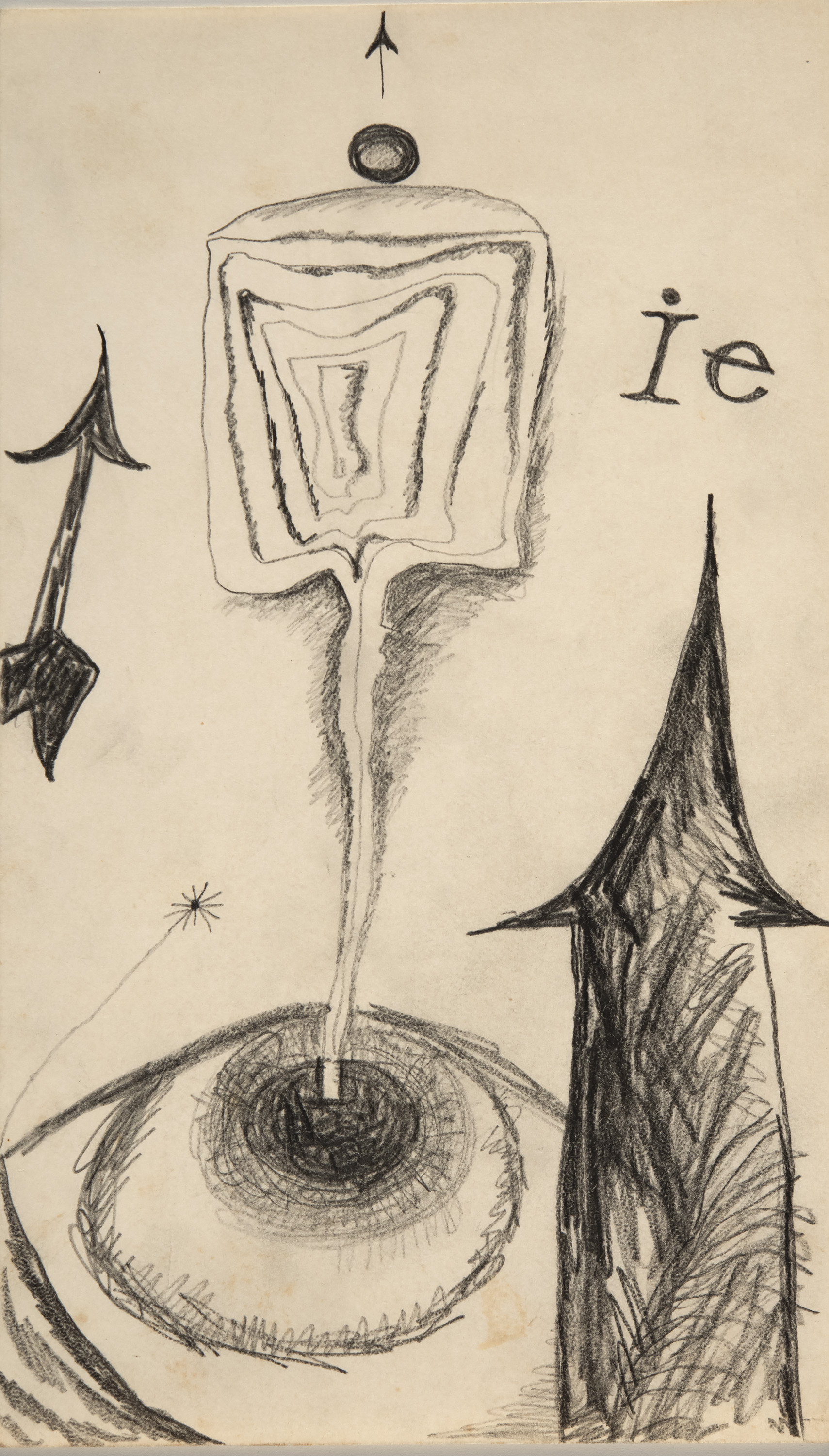
Untitled (eye), undated. Graphite on paper, 24 × 14 cm (9 7/16 × 5 1/2 in.). Norton and Nancy Dodge Collection of Nonconformist Art from the Soviet Union. D18409
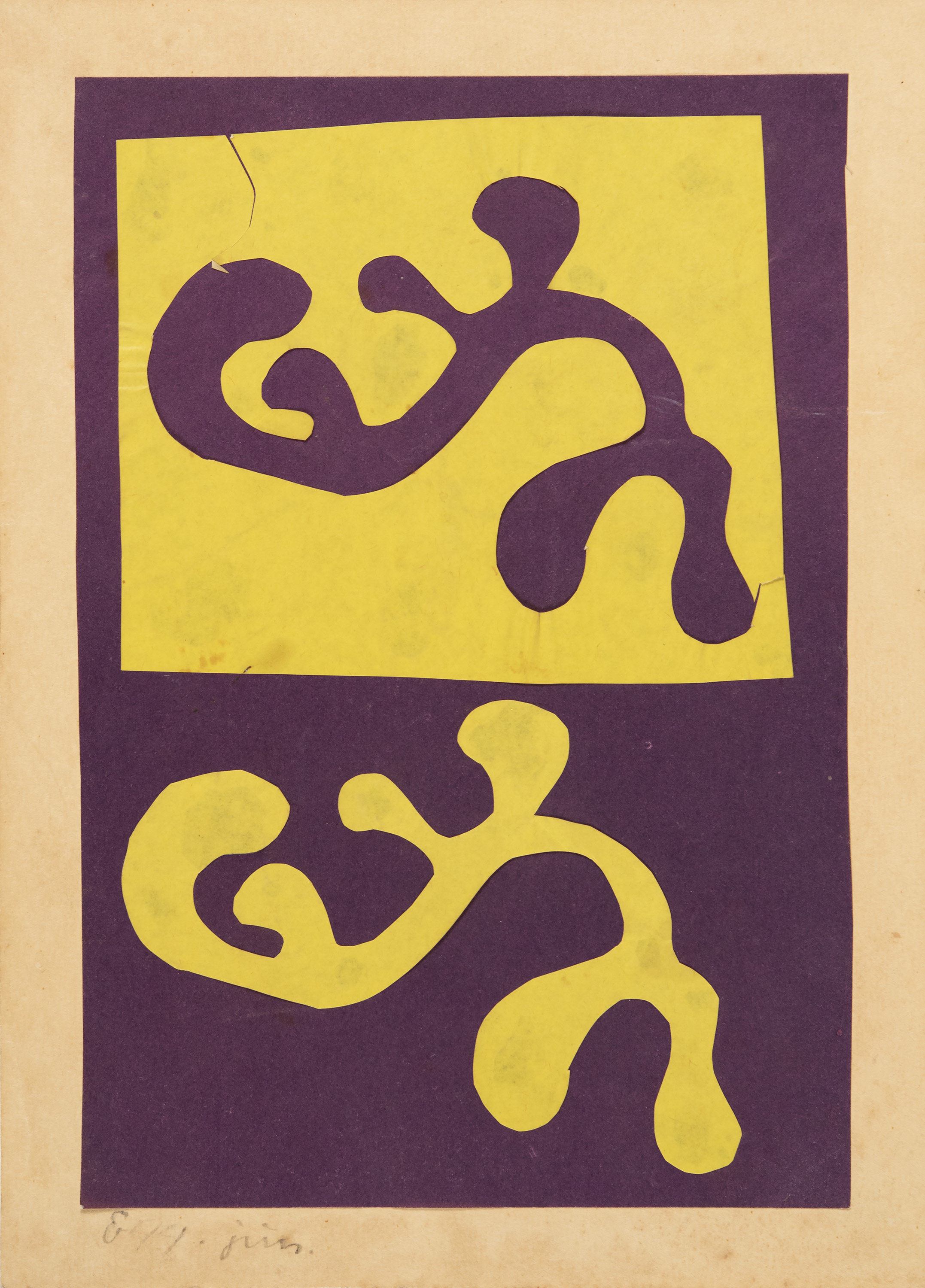
Untitled, 1974. Cutout paper collage on paper, 23.5 × 17.2 cm (9 1/4 × 6 3/4 in.). Norton and Nancy Dodge Collection of Nonconformist Art from the Soviet Union. D18406

Grow!, undated. Ink on paper, 10.5 × 13 cm (4 1/8 × 5 1/8 in.). Norton and Nancy Dodge Collection of Nonconformist Art from the Soviet Union. D18399
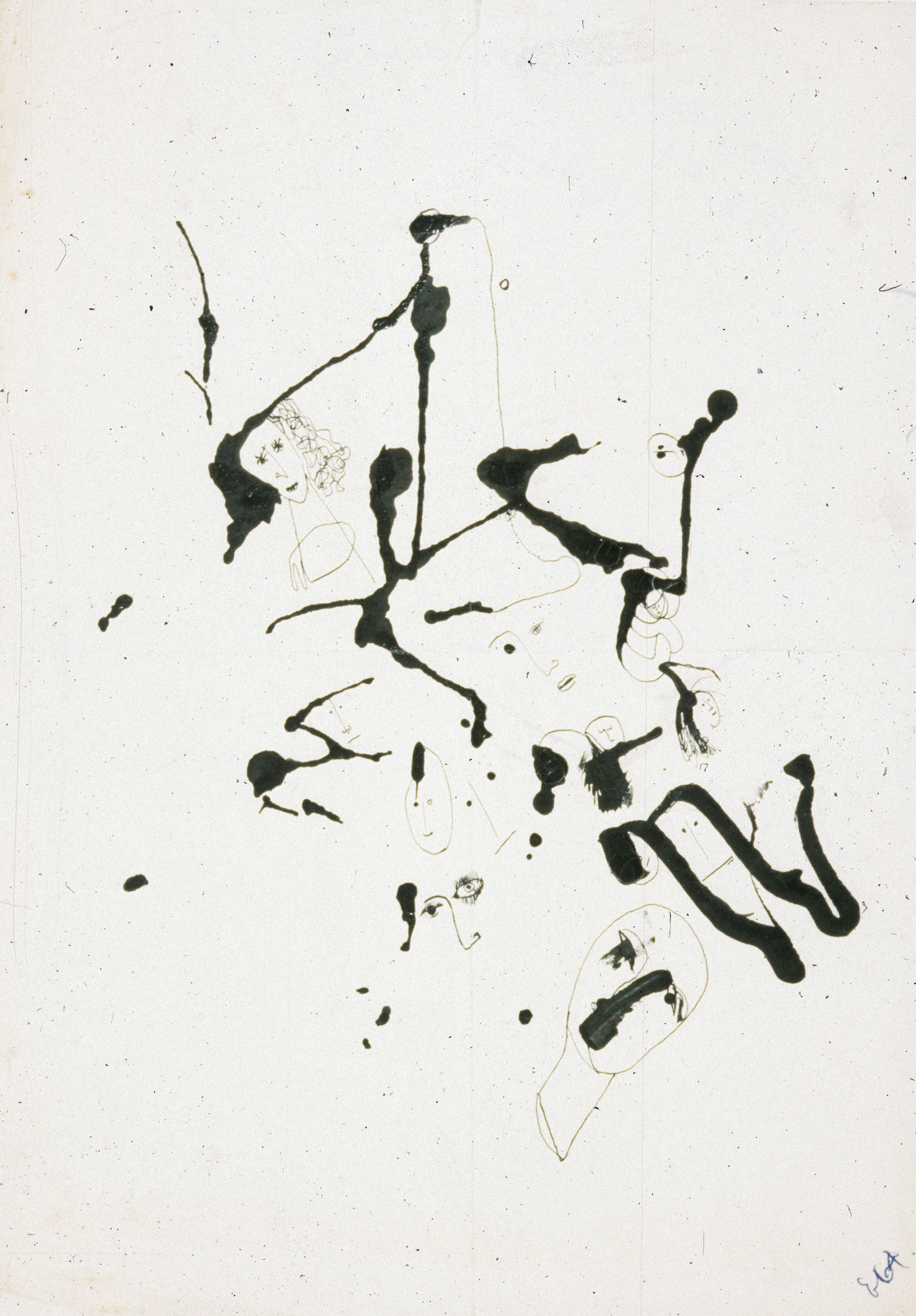
To Ieva on her birthday, 1964. Ink on paper, 29 × 20.5 cm (11 7/16 × 8 1/16 in.). Norton and Nancy Dodge Collection of Nonconformist Art from the Soviet Union. D18408