
Džemma Skulme
1925 — Riga (Latvia) | 2019 — Riga (Latvia). Worked in Riga (Latvia)
Džemma Skulme was one of the key figures in Latvian art and politics after World War II. She was born into a family of artists. Her father, painter and set designer Oto Skulme (1889–1967), was a confident modernist in the first half of his career and served as rector of the Art Academy of Latvia (then the Latvian SSR State Academy of Arts) from 1940, when Latvia was occupied by Soviet Russia, until 1961 (with a break during the German occupation). He radically changed his style in the direction of socialist realism. Džemma’s mother, Marta Liepiņa-Skulme (1890–1962), was a recognized sculptor, while her paternal uncle Uga (1895–1963) and cousin Jurģis (1928–2015) were painters.
Džemma Skulme was married twice, first to actor Artūrs Dimiters (1915–1986) from 1947 to 1953, then to Ojārs Ābols (1922–1983), a painter and art theorist. Both her children, Juris Dimiters (b. 1947) from the first marriage and Marta Skulme (b. 1962) from the second, became artists.
Under the guidance of her father, Skulme graduated from the Latvian SSR Academy of Art in 1949 with honors. Her painting Song Festival (1949) depicted the traditional Latvian event in the manner of socialist realism. She continued her education in a doctoral program in the Ilya Repin Institute of Painting, Sculpture and Architecture in Leningrad (now Ilya Repin Saint Petersburg State Academy), from which she graduated in 1955 with a work of a similar theme, Our Festival (1956). Over the next decade, the young artist stuck to themes permitted in Soviet art—scenes from the lives of workers and collective farms—portraying them in a stylized severe style, rendering the figures as types, and in idealized, massive forms.
Skulme’s painting changed rapidly in the mid-1950s during Khrushchev’s Thaw, as she joined the movement to modernize state and art. Her brushwork became broader and more expressive, and the surface gained a coarser texture, making the figures less uniform. Individual fragments of Skulme’s paintings can be perceived as almost abstract, akin to European postwar expressionism. She painted on horizontal canvases using large brushes intended for construction work. Her scenes are dominated by folkloric and ethnographic motifs; her subjects are often generalized men in World War I uniforms or women in ethnographic clothing, so-called folk maidens, who are large and strong. Tragic conflicts soon appear in her paintings. After the events of 1968, when the USSR suppressed the Prague Spring in Czechoslovakia, she painted several canvases with fallen or screaming folk maidens (Folk Song, 1970). In the 1970s, she juxtaposed the folk maidens into unified compositions with paraphrases about ancient Greek caryatids (War Caryatids, 1976) and the infantas painted by Diego Velázquez (Dialogue, 1975). Skulme worked mainly in oil and watercolor but often experimented with materials—for example, painting on wood with acrylic. She also did illustration.
Skulme joined the Communist Party in 1954 and in 1956 joined the Latvian SSR Artists’ Union, an organization that supported artists’ professional activities but subjected them to state supervision. In 1976 she was awarded the title of People’s Artist. She headed the Artists’ Union from 1977 to 1992. Skulme and her husband Ojārs enjoyed certain privileges: For example, they were allowed to go on trips abroad and to receive guests from the West who visited the USSR. At the same time, they served as a bridge for exchanging information between the rest of the local artistic community and their colleagues in the West, through telling stories about what they saw abroad and sharing books and magazines. Under Skulme’s leadership, the Artists’ Union grew into a relatively progressive organization (in contrast to the more conservative Art Academy), with the requirement for artists to comply with the official doctrine of socialist realism becoming merely a formality.
Skulme held a powerful position as a chairperson of the board of the Artists’ Union of LSSR between 1977 and 1982 and from 1982 to 1992. While working at the Artists’ Union she promoted the activities of younger artists, especially during the annual Art Days, a festival where artists could bypass censorship and communicate with a wide audience, and which welcomed the first improvised exhibitions and performances in the public space in Latvia.
Skulme’s works were often exhibited in solo exhibitions in Riga (1968, 1985) and in prestigious exhibition halls in Moscow (1969, 1984), Vilnius (1976), and elsewhere. Her prominent public position also enabled her to participate in Soviet art exhibitions in Western Europe and the US (for example Art Expo in Chicago, 1984) and to hold solo exhibitions in Geneva, Milan (both 1971), and Vilnius (1976), among many other places. Skulme was among the few Latvian artists whose works were acquired by the most important museum of the USSR—the Tretyakov Gallery in Moscow.
In 1984 Skulme was awarded the highest official award, the Soviet State Prize, and was elected a deputy of the Supreme Soviet of the USSR, where she served in the Council of Nationalities. Under the glasnost policy initiated by Mikhail Gorbachev, Skulme took the opportunity to encourage the country to embrace change, and in 1988 she was one of the people who supported the inception of the Popular Front of Latvia and served as one of their representatives in the public. In 1989 she was elected to the Congress of People’s Deputies of the USSR as a representative of the Popular Front. The Popular Front was the largest social movement in Latvia that nonviolently campaigned for the restoration of Latvia’s independence. After Latvia regained independence in 1991, Skulme continued her creative and public activities, but she ceased engaging in politics. She held solo exhibitions in Riga (1992, 1994, 1995); Cēsis, Latvia (1996) Kyiv, Ukraine (1997) and Fredrikstad, Norway (1994, 1995). After the fall of the Iron Curtain, Skulme’s works were included in the group exhibitions in New York (1989), Munich and Bonn in Germany, and Pittsburgh, PA (1993). Near the end of her life, Skulme painted oversized works, inspired by children’s drawings. In 1995 she received the highest award of the State of Latvia—the Order of the Three Stars. Throughout her career, she also received many other honorary titles and positions. In 2019, at the age of ninety-three, she received the Purvītis Prize for lifetime achievement in the arts.
Vilnis Vējš
Translated from Latvian by Philip Birzulis
Photo portrait by Laimonis Stīpnieks, date unknown

Velazquez Motif, 1986. Watercolor on paper, 101.8 × 73 cm (40 1/16 × 28 3/4 in.). Norton and Nancy Dodge Collection of Nonconformist Art from the Soviet Union. 1991.0900
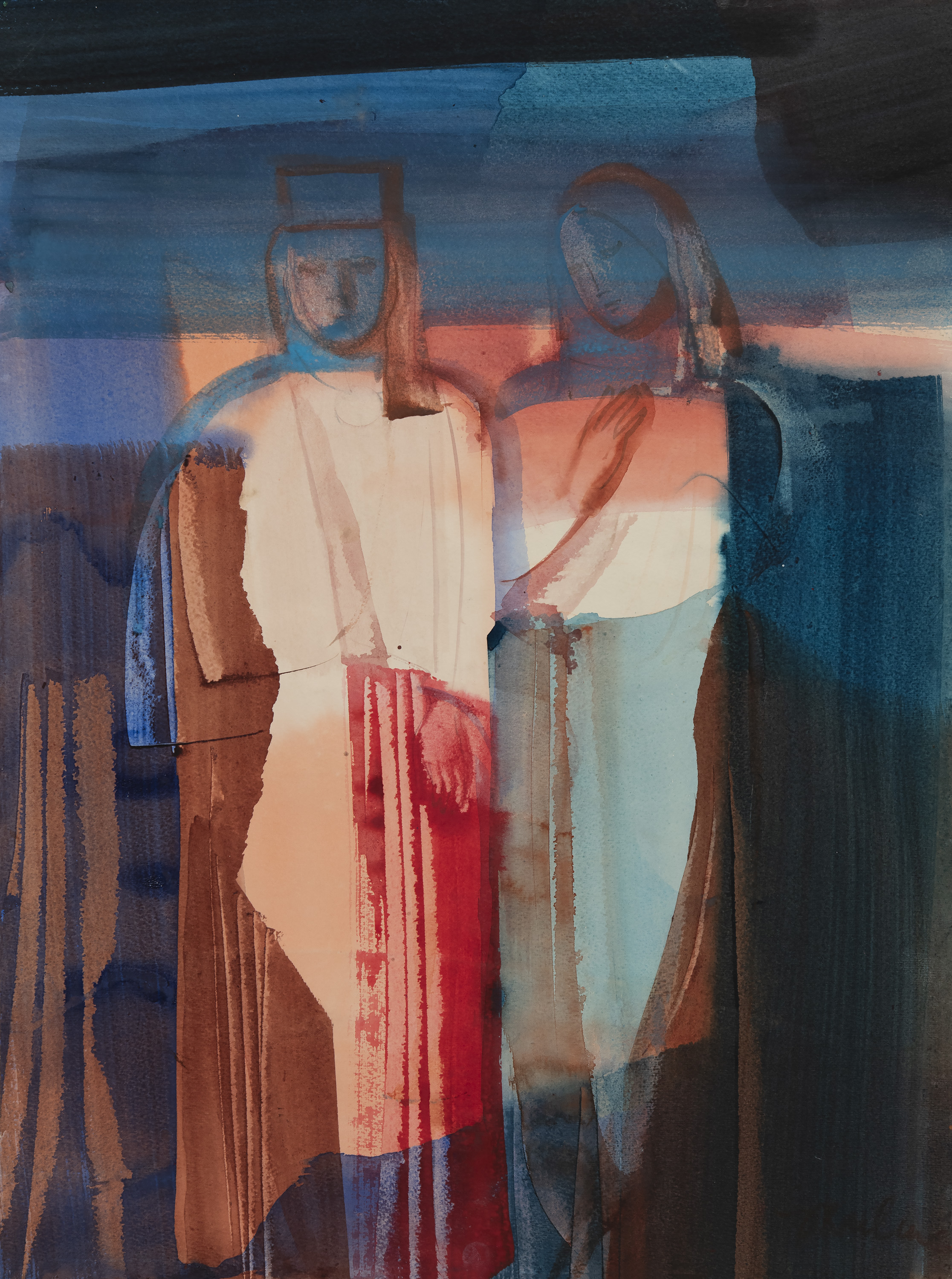
Untitled, undated. Watercolor, 71 × 53.5 cm (27 15/16 × 21 1/16 in.). Norton and Nancy Dodge Collection of Nonconformist Art from the Soviet Union. D07325
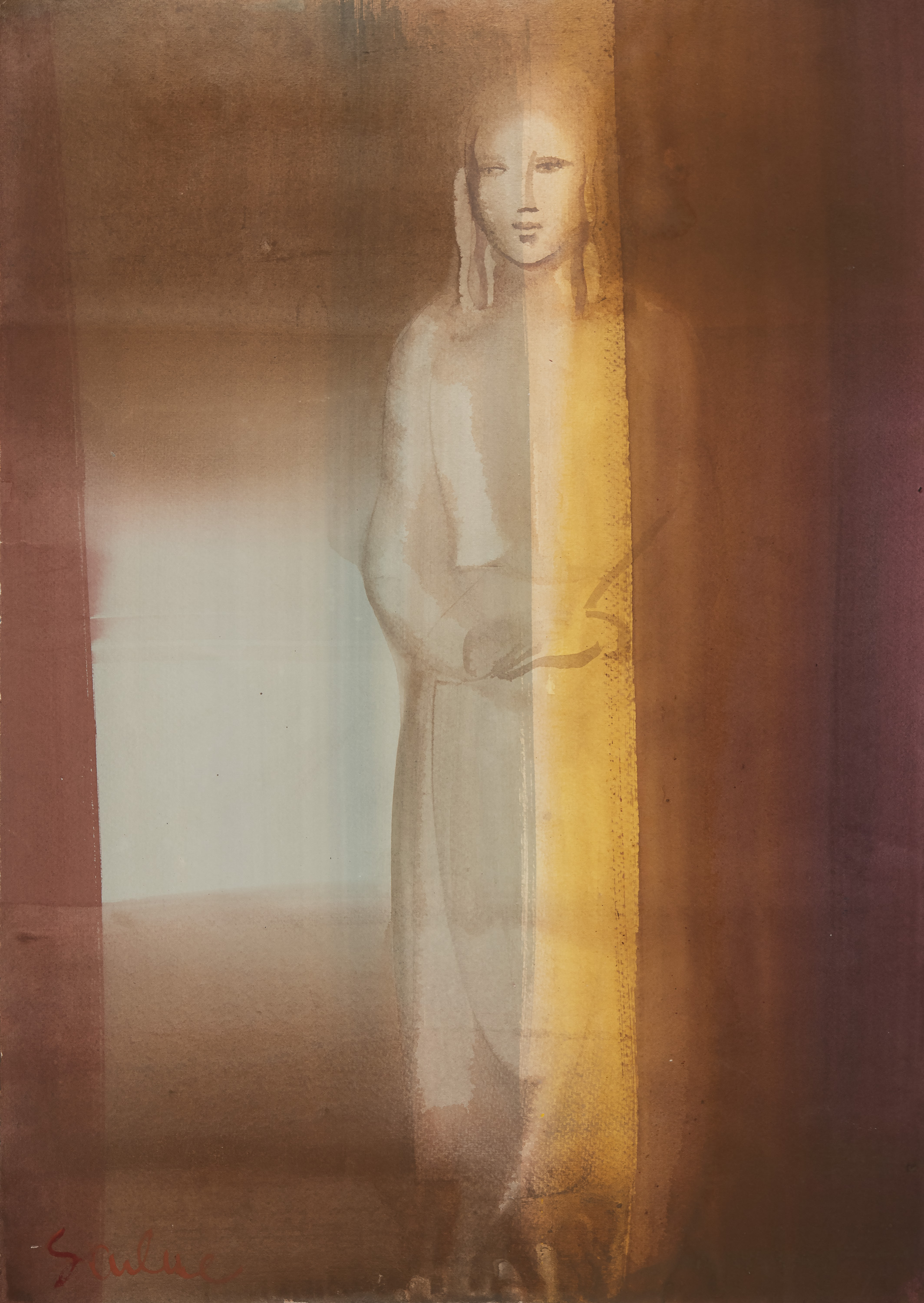
Requiem, 1980. Gouache and watercolor on paper, 73.3 × 50.9 cm (28 7/8 × 20 1/16 in.). Norton and Nancy Dodge Collection of Nonconformist Art from the Soviet Union. D11015
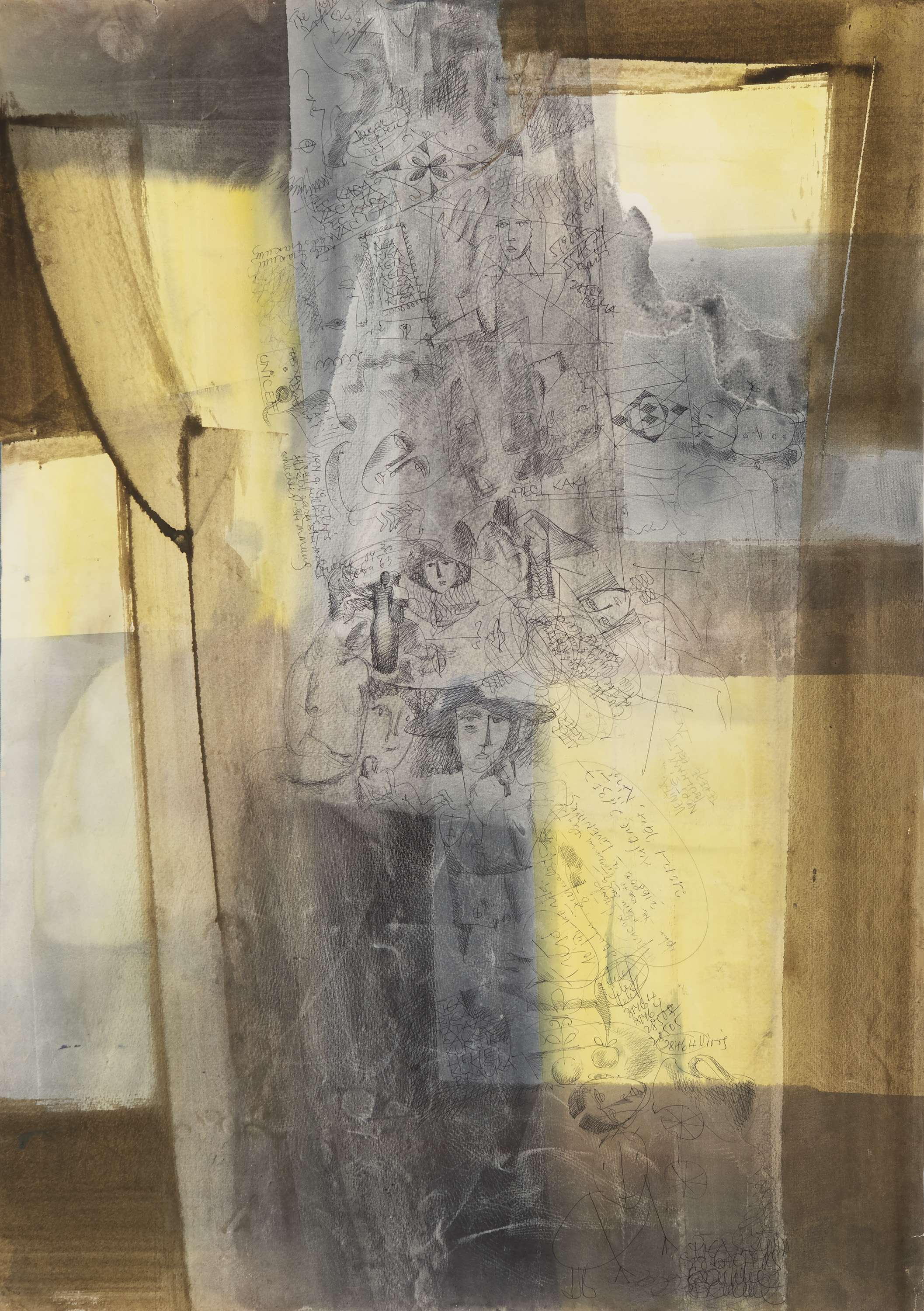
Untitled, undated. Gouache and ink on paper, 102 × 73.2 cm (40 3/16 × 28 13/16 in.). Norton and Nancy Dodge Collection of Nonconformist Art from the Soviet Union. D11290