
David (Dato) Shushania
1952 — Tbilisi (Georgia). Lives and Works in Tbilisi (Georgia)
Georgian cinematographer, rock musician, photographer, and painter David (Dato) Shushania was born into an artistic family. His parents were celebrated opera singers: his father, Irakli Shushania, received the title People’s Artist of the USSR, and his mother, Nunu Kajaia, was honored as People’s Artist of Georgia. As a child, his creative talents manifested in various directions, which made it difficult to decide on a career path.
In 1969-74, Shushania studied engineering and economics at Tbilisi State University. During these years, he pursued his passion for contemporary music, primarily rock, and began appearing onstage himself. From 1969 until 2025, he was a member and, in some cases, the founder of various bands, most notably the Blues Mobile Band (1969–2022), whose best-known song is “New Day Yesterday,” and Dato Shushania and the Rock Experience (2010–25).
Not finding fulfillment as an engineer, in 1980, Shushania enrolled in the faculty of cinematography at the Tbilisi Shota Rustaveli Theater and Film State University, where his mentor was acclaimed Georgian cinematographer Levan Paatashvili. He graduated with a degree in cinematography in 1986. During this same time, he continued performing as a bass guitarist and singer.
Prior to and following graduation, Shushania served as cinematographer on numerous Georgian films, including The Treasure of the Nation (1978), The Alien (1988), The Last Prayer of Nazare (1988), The Old Photo (1988), Noah (1990), The Lucky Village (1993), and Prologue for a Long Play (2003). From 2003 to 2006, he also shot twenty-four episodes of a popular Georgian soap opera, Coffee and Beer, produced by the television company Imedi.
Photography comprises an important aspect of Shushania’s career. He had been photographing since childhood, but started engaging with the medium seriously in 1980. His photos are meditative; the objects and individuals enter into a calm, thoughtful relationship with one another, while the photographer somehow observes them from a distance, giving them room for communication. At the same time, he establishes an order in the space between them, and light plays an important role in realizing this poetic vision.
The years of economic hardship preceding and following the dissolution of the Soviet Union in 1991 led to the collapse of Georgia’s cinema industry. Partly in response, Shushania began working with old photographs and films and different-colored transparent light filters. He created collages by cutting these materials into tiny pieces, gluing them together, and combining variously textured fragments of those materials. He also drew on these films with ink or other media. In some cases, he added different kinds of fabrics, fragments of photographs, and other materials to these minute artistic creations, thereby creating many film sketches for future large-scale canvases. After he transposed these small compositions onto large canvases, he painted the pictures by hand with oils and acrylics, working freely and adding some new lines and colors. This is how Shushania created his original, striking canvases.
In 1990, he started creating large-scale oil paintings—sometimes as large as two by three meters. These works reveal close ties to cinematography. Often featuring a frame of sorts and the proportions of a cinema screen, the compositions progress horizontally. Sections of the canvas are akin to film screens. Also cinematic is the paintings’ fragmentation of a figure’s movement into various phases—an aspect that aligns his paintings with the work of American photographer Eadweard Muybridge (1839–1894), who famously captured various phases of movement in his Animal Locomotion series.
Shushania’s paintings and collages soon attracted attention in Georgian art circles. During perestroika, they were presented at an exhibition of alternative art in Georgia.
In 1994, Shushania was among the first Georgian artists whose works, along with those of his wife, painter Nino Morbedadze, were exhibited at International Images, Ltd., in Sewickley, Pennsylvania. The gallery exhibited Shushania’s works in two subsequent exhibitions, in 2010 and 2012.
Ketevan Kintsurashvili
Translated from Georgian by Nino Gabunia
Photo portrait by Guram Tsibakhashvili
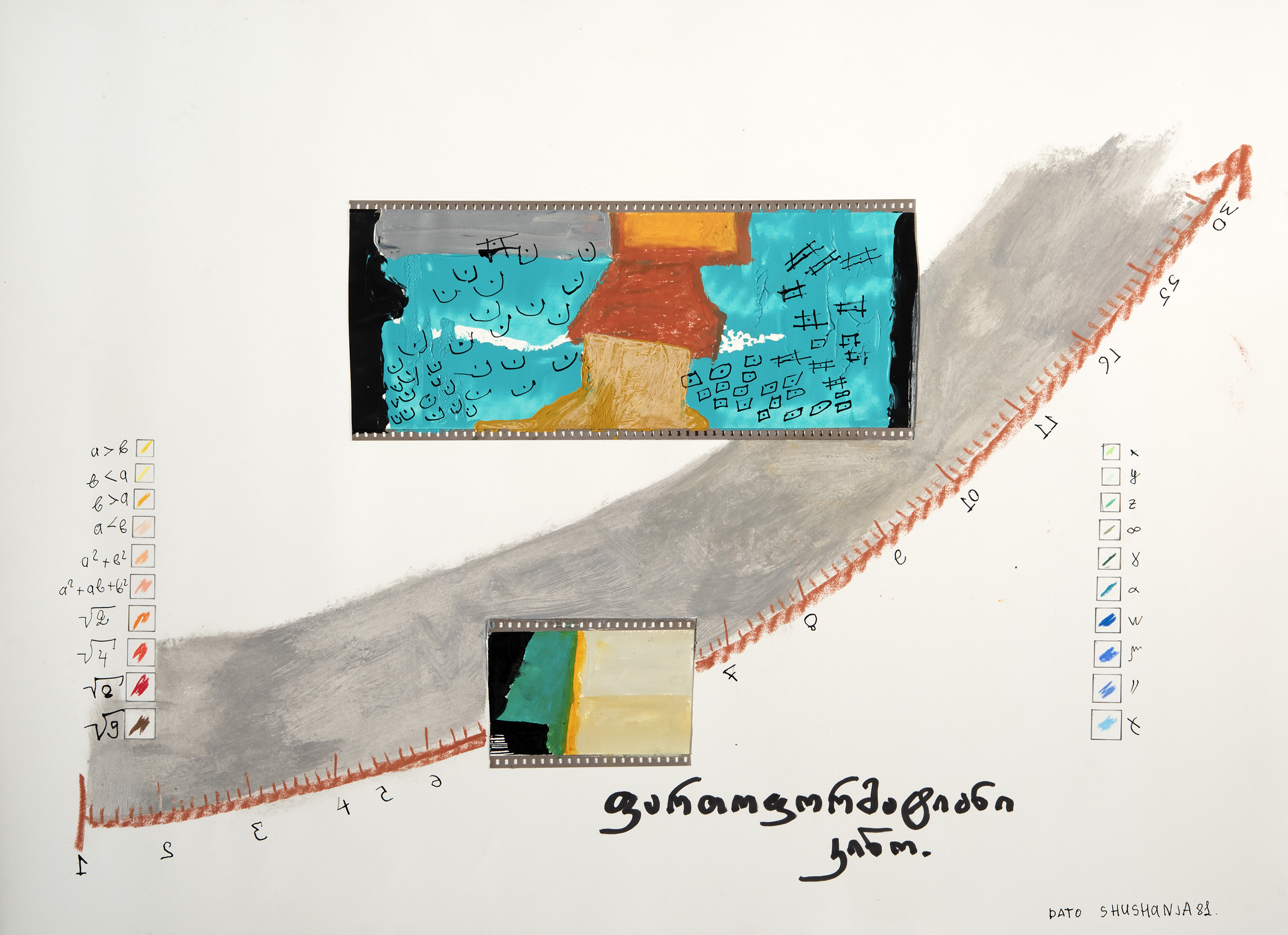
Widescreen Cinema, 1981. Mixed media on paper, 50.6 × 63.6 cm (19 15/16 × 25 1/16 in.). Norton and Nancy Dodge Collection of Nonconformist Art from the Soviet Union. D04165
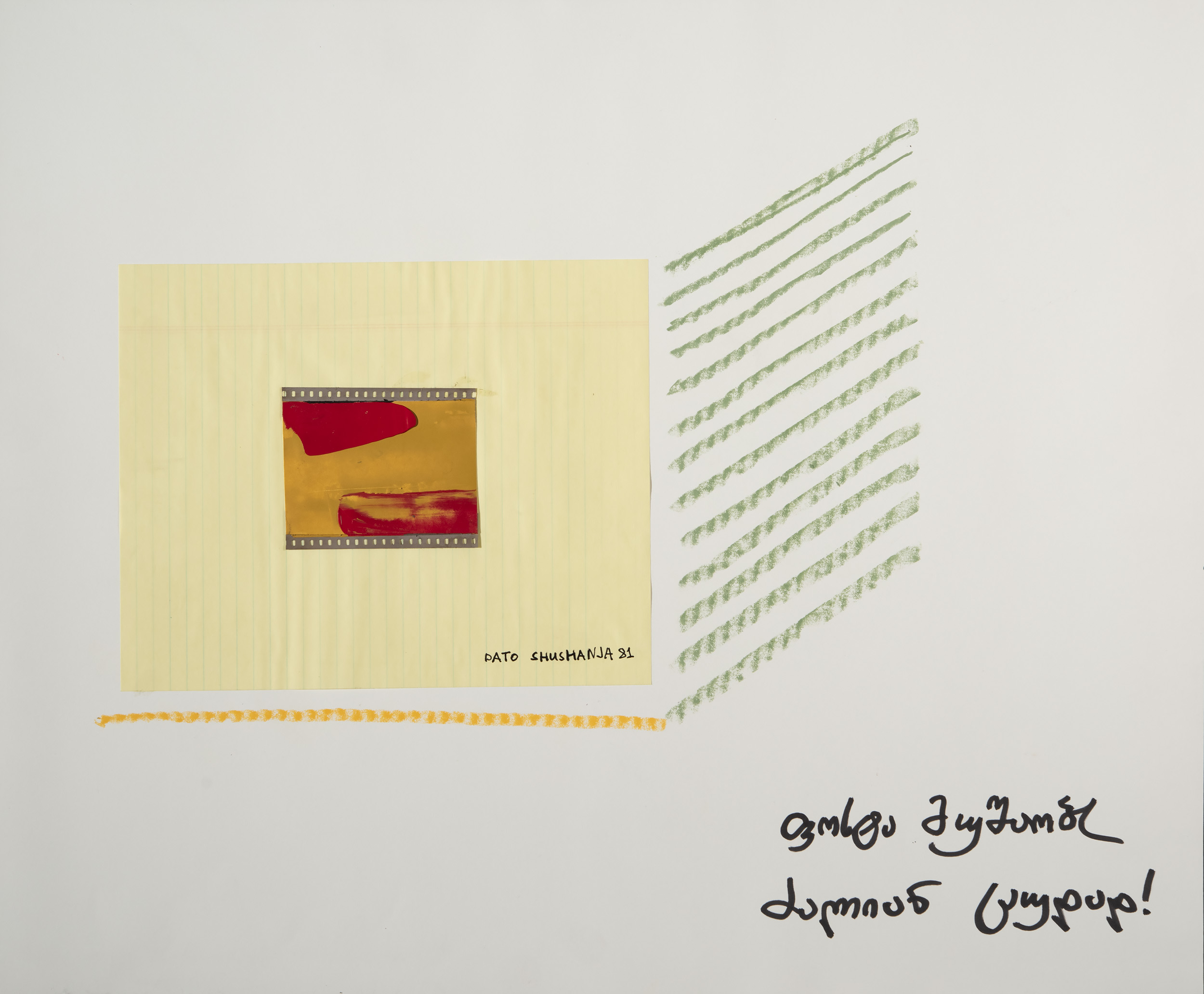
Untitled (The Post is Working Very Poorly), 1981. Mixed media on paper, 50.4 × 68.7 cm (19 13/16 × 27 1/16 in.). Norton and Nancy Dodge Collection of Nonconformist Art from the Soviet Union. D04166
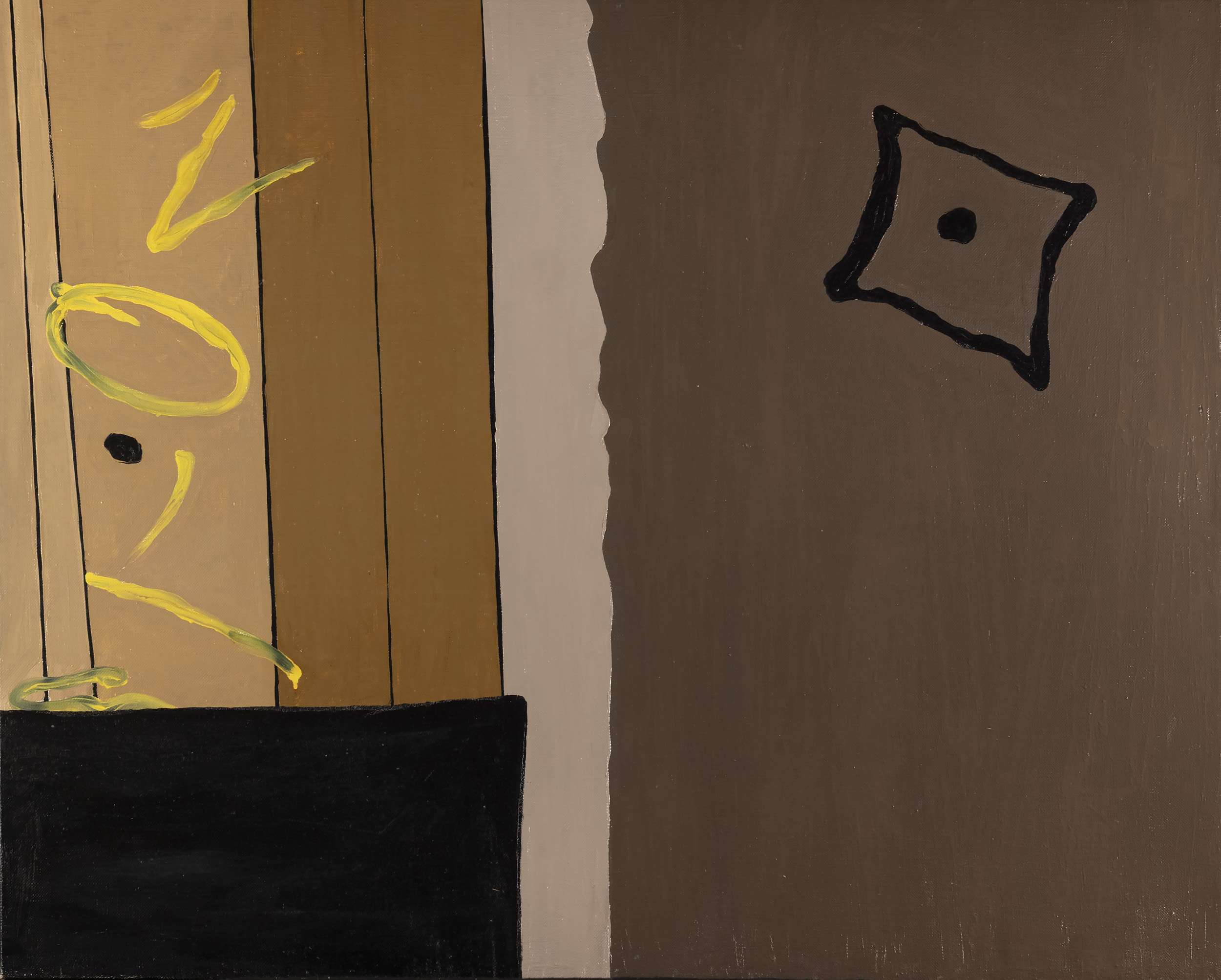
Untitled, undated. Oil on canvas, 97 × 130.5 cm (38 3/16 × 51 3/8 in.). Norton and Nancy Dodge Collection of Nonconformist Art from the Soviet Union. D07817
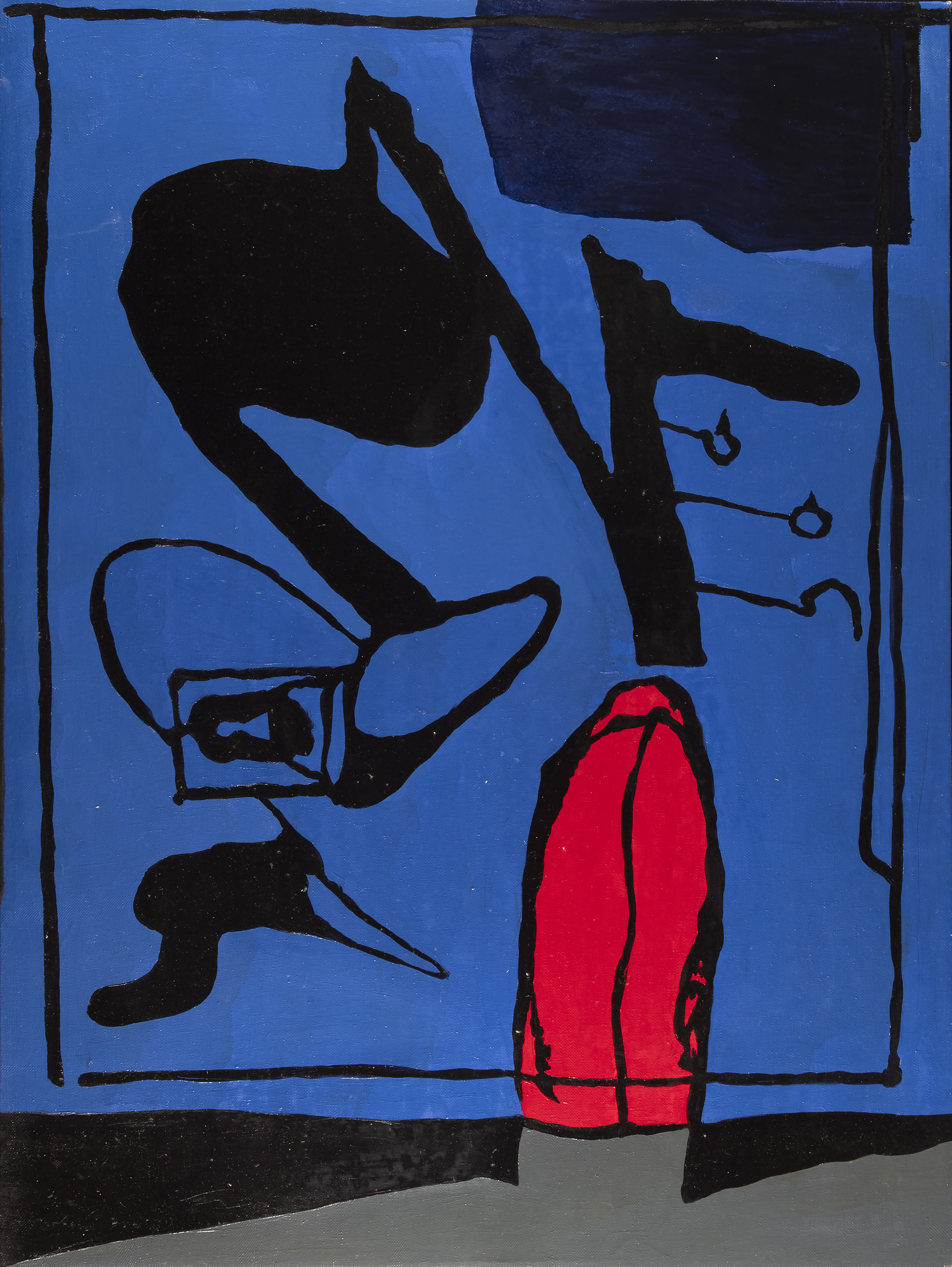
Untitled, undated. Oil on canvas, 97 × 130 cm (38 3/16 × 51 3/16 in.). Norton and Nancy Dodge Collection of Nonconformist Art from the Soviet Union. D07834
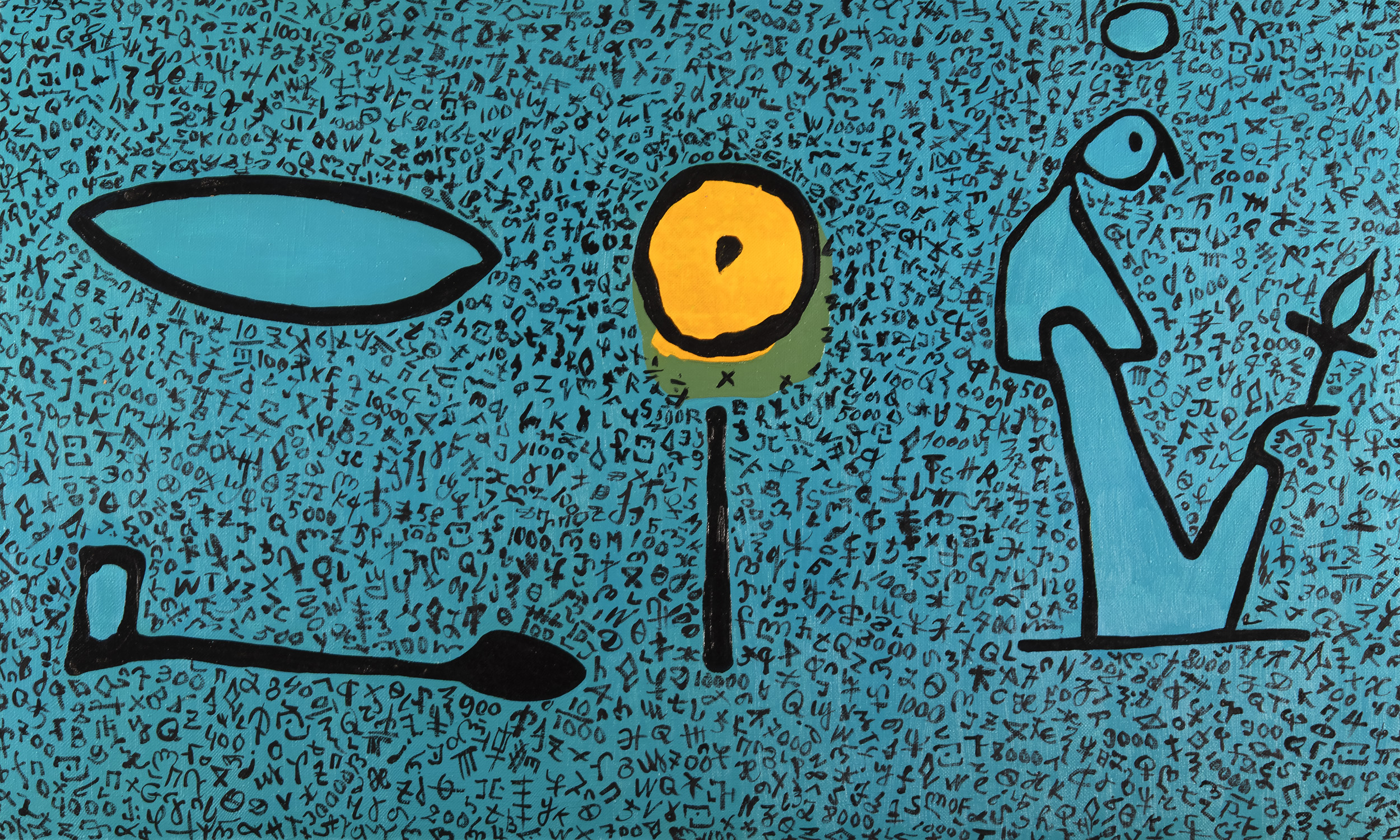
Untitled, undated. Oil on canvas, 70.5 × 115 cm (27 3/4 × 45 1/4 in.). Norton and Nancy Dodge Collection of Nonconformist Art from the Soviet Union. D08580