
Boris Smertin
1947 — Rostov-on-Don (Russia) | 1993 — Moscow (Russia). Worked in Moscow (Russia)
Boris Smertin was born in Rostov-on-Don. His mother was a self-taught singer; his father was the artist Leonid Smertin. He grew up on Menchikov Street, home to a number of famous artists. Both father and son were graduates of the local arts academy (which has since been renamed for painter M. B. Grekov). His father, along with a group of fellow students, was denounced by a classmate and spent a year in prison. The younger Smertin left Rostov shortly after completing his studies, relocating to Moscow, where he graduated from the Surikov Art Institute. (His 1985 Still Life [ZAM, D07219], of a gourd on a white background, was an homage to his small native city.) Smertin met his future wife, Tatiana, in a seminar at the artist retreat Senezh House of Creativity.
Smertin’s colleague Boris Mikhailov has described him as “an outgoing man with a subtle sense of humor that never dipped into satire. He had a similarly subtle feel for the absurd, for falsity both as such and in his immediate surroundings. His real reaction to those surroundings was mostly in the eyes.” [1]
Mikhailov was introduced to Smertin by the photographer Lev Melikhov, who did double duty as godfather to both Smertin and his daughter Anna (herself an artist). A photograph by Melikhov was on the cover of the catalog to the group exhibition Without the Fourth (1987), showing four artists posing casually in the snowy courtyard outside Smertin’s studio. One member of the quartet is painted over in white. As Mikhailov explains it, Vladimir Kuzmin and Yury Kosagovskiy were both invited to the group, but it became clear early in the preparations that Kosagovskiy did not share the group’s inclination toward metaphysical investigations. When the mock-up of the catalog was finished, Smertin covered up the fourth member—giving the group its name in the process.
The group Without the Fourth came together during the perestroika era, a time when the changes society was undergoing could not be ignored, and when new absurdities were arising alongside social advances. Not inclined toward direct social critique, these artists preferred a more contemplative approach: working with time. “We were troubled by, on the one hand, the absolute of time, and, on the other, its fluidity, dailiness, and basis in actual events. I remember that De Chirico was one of Boris’s favorite artists,” recalled Mikhailov, “as were some of De Chirico’s followers. Early Morandi, for example—before the still lifes. The transition from De Chirico’s to Morandi’s metaphysics interested him.” [2]
Whether starting from painting, in Mikhailov and Kuzmin’s case, or engraving, in Smertin’s, they all forged a path to object art and installation. Mikhailov made use of wood and ceramics in his work, Kuzmin took up light art (working as part of the duo Molitor & Kuzmin), and by the mid-’80s, Smertin was fashioning his inquiries into assemblages. It was in these works that he achieved his fullest expression as a contemporary artist.
Another connection between Smertin and Mikhailov is that they had their studios on the same block in central Moscow (on Ivanova Gorka). But while Mikhailov worked out of an ordinary first-floor apartment on Zabelina Street, Smertin had perhaps the only studio in Moscow located inside of a traffic arch of a house (Podkopaevsky Lane, 5). [3] The arch was walled in on two sides, with a door and a single small window. Beyond the wall of the Church of St. Nikolai the Wonderworker, there was, at that time, a laboratory of a chemical plant producing polyethylene, which caused the church attendants to walk the grounds wearing gas masks, lending a surrealistic absurdity and a great air of mystery to the neighborhood.
Smertin nourished a love for mysticism and enigma, beginning in the period when he worked at the print shop of the Artists’ Union making engravings to order with a thematic focus on the cosmos. According to his widow, Tatiana, Smertin sincerely believed in extraterrestrial intelligence, collecting materials on flying saucers (some of them self-published) and believing there were aliens around us, somewhere quite close. In the 1980s, belief in the existence of extraterrestrial beings and advanced alien civilizations was almost a mass phenomenon and was a topic of discussion even in Soviet scientific laboratories. However, unlike in the 1960s, the theme of space exploration and contact with the world of the stars no longer carried the same sense of grandeur. Rather, there was a tinge of doubt and anxiety: what does contact with the unknown entail—is there life out there, salvation from nuclear war, or a new, irreversible danger? Smertin picked up on and developed this trend primarily in space-related themes, but a sense of unease lingers with the viewer even when looking closely at the plots of his more intimate stories, such as a photoengraving dedicated to Podkopaevsky Lane—the artist’s place of power, where his muse came to visit him in his studio (1981, ZAM, D03565). However, to soften the gloomy, desolate atmosphere of the alley, Boris drew on mythology—Cupid and Psyche, two graceful silhouettes hovering above the darkness of the alley, symbolizing eternal love and the end of trials.
Smertin divided his little space into three rooms, the middle one housing a small press that he knelt at to make etchings. He played with technique and visual representation. In Space Exploration (1975, Novokuznetsk Art Museum), one of the etchings from his series on the cosmos, Smertin deployed the techniques of collage, joining together the world of space technology, images of cosmonauts, human heads (or pieces of them), a torso from an anatomy text, city blocks of skyscrapers, and snippets of text about space and the families of cosmonauts.
We can begin tracing the artist’s development in these engravings, the transition from plane to volume. Here, there is no immersion in three-dimensionality—rather, the elements of the compositions possess sculptural qualities, engage the space, and engage directly with viewers, holding their attention. Smertin sought his own language, starting with simple subjects, including a portrait of Yuliia, a daughter from his first marriage, which he drew in his studio (1983, ZAM, D03124); a portrait of his friend Viktor Krotov (1983, ZAM, D09011); impressions from creative journeys; views of rural villages and towns fixed by his photographic eye; and images of local workers.
He picked up on certain aspects of his subjects and left others behind. Lacunae began opening up, spacial holes, overexposed blankness: the subject became semi-real, as in his engraving На остановке [At the Stop] (1967). The influence of Rauschenberg, Kosior, and Warhol is clear in Smertin’s printing work. While Smertin did not make use of color, he actively took on the method, borrowed from etching, of effacing part of the image.
Smertin never concealed the fact that he made his engravings with the help of photographs, through which he entered the stylistic realm of etchings. He used both his own photographs (as in the composition with his daughter, where he again plays with the interference of exposure in the photo development process) and vintage found images of technical-school graduates, firefighters, or military units (Photo Given as a Keepsake, 1985, ZAM, D09010, from the cycle Photographs for Memory). At various times, he would remove or apply printing ink to photographs, or smear it with his hand, scrape it off, add color.
His studio called to mind a junk shop or an alchemist’s lab, and it could not accommodate more than five people at once. He slept on a trunk piled high with sketches, which had to be moved to the press each night. The rest of the space was filled with materials for his assemblages. He would wander like a man possessed through derelict houses, garbage dumps, and junkyards to find these materials: bits of furniture, household goods, empty icon frames, factory signage. “There are no superfluous things,” he’d say and ironically play upon (or declare) his passion in his assemblages, including Interiors. Composition #1 (1984, collection of the artist’s family [?]).
Building his own temporal continuum, Smertin combined materials culled from strangers’ pasts and his own, and from the present day. In a commentary on the piece +-Flight (1987, ZAM, D05288) found by his widow, Tatiana, he wrote: “Look how time has entered this assemblage. Here, we see some tongs for sugar cubes. They’ve been immersed in a corrosive environment that transformed them into the rusty memory of tongs. The new ones I found in my kitchen. My grandmother’s. I saw them and said, ‘I may have the same ones in the village!’—and then created this piece.” [4]. Mikhailov remembers it, too: “Boris even had a work called Plus or Minus a Hundred Years. What he meant was that a century sees little change in consciousness. It was built on a paradox: a large clear field with two objects at the bottom. The field itself was painterly, interestingly made, a kind of infinity. And below it, what you might find underground.” [5]
The destructive impact of time on natural and artificial materials—splitting, cracking, breaking, being moved to other spaces and states—is a theme Smertin worked with actively. This can be seen in The Wall (1985–86, ZAM, D06024), in which he imitated the cracks in a wall, or in the decomposition and relocation in Autumn Is Here Again (1984–85, ZAM, D06025). The impressions motivating these tendencies were not necessarily negative. A crack, for example, might call to mind rays of the sun peeking through the blinds of an Italian hotel room.
Irony pervades Smertin’s later fruit-based assemblages. Here, what interested him was not the process of natural decay—rather, he wished to prolong their life, their state of beauty. He fixed the fruit with varnish. If the reanimation of everyday objects in the Russian context was his reaction to the wretched conditions there, the emergence of fruit in his assemblages, which coincided with his first visits to the West, presents an ironic reaction to plenty and a gently cynical attitude towards food. Mikhailov remembers how, on arriving in Germany, Smertin was struck by the abundance of food in the train station’s shop windows and began to photograph it. To throw meat into the crowd at the end of a long day’s market trading, as he saw butchers do, seemed a cynical absurdity.
Smertin was terminally ill when he was preparing for a solo show at the city museum in Lüneburg, Germany, of work that, he said, “concerns the rapid passage of time.” [6] He asked his friends to destroy his unfinished works, which they did. On March 7, 1993, Boris Smertin voyaged off to his own cosmos. It may be that his soul hovers over Podkopaevsky Lane still.
Tatiana Kondakova
Translated from Russian by Ian Dreiblatt
Notes:
1. From an audio interview with Boris Mikhailov by Tatiana Kondakova (in the personal archive of Tatiana Kondakova)
2. Ibid.
3. From Yauza’s Friends, A Film Interview with Tatiana Kondakova. Museum of Basmanny District of Moscow.
4. From an audio interview with Tatiana Smertina for Tatiana Kondakova (from the personal archive of Tatiana Kondakova)
5. From an interview with Boris Mikhailov by Tatiana Kondakova (in the personal archive of Tatiana Kondakova)
6. From an audio interview with Tatiana Smertina for Tatiana Kondakova (from the personal archive of Tatiana Kondakova)

Daughter, 1983. Etching and aquatint with gouache on paper, 29.7 × 43.8 cm (11 11/16 × 17 1/4 in.). Norton and Nancy Dodge Collection of Nonconformist Art from the Soviet Union. D03124

Podkopaevsky Lane, 1981. Photoengraving and gouache on paper, 26 × 40.8 cm (10 1/4 × 16 1/16 in.). Norton and Nancy Dodge Collection of Nonconformist Art from the Soviet Union. D03565

In the Morning, 1982. Photoengraving and gouache on paper, 24.1 × 39.2 cm (9 1/2 × 15 7/16 in.). Norton and Nancy Dodge Collection of Nonconformist Art from the Soviet Union. D03566

In the Morning, undated. Photoengraving on paper, 24 × 39 cm (9 7/16 × 15 3/8 in.). Norton and Nancy Dodge Collection of Nonconformist Art from the Soviet Union. D09775

Photo given as a Keepsake, 1985. Photoetching with ink on paper, 19.8 × 26 cm (7 13/16 × 10 1/4 in.). Norton and Nancy Dodge Collection of Nonconformist Art from the Soviet Union. D09010

Portrait of the Artist Victor Krotov, 1983. Photoengraving on paper, 38 × 42.5 cm (14 15/16 × 16 3/4 in.). Norton and Nancy Dodge Collection of Nonconformist Art from the Soviet Union. D09011

Morning, 1984. Etching with gouache on paper, 42.3 × 59.1 cm (16 5/8 × 23 1/4 in.). Norton and Nancy Dodge Collection of Nonconformist Art from the Soviet Union. D09052
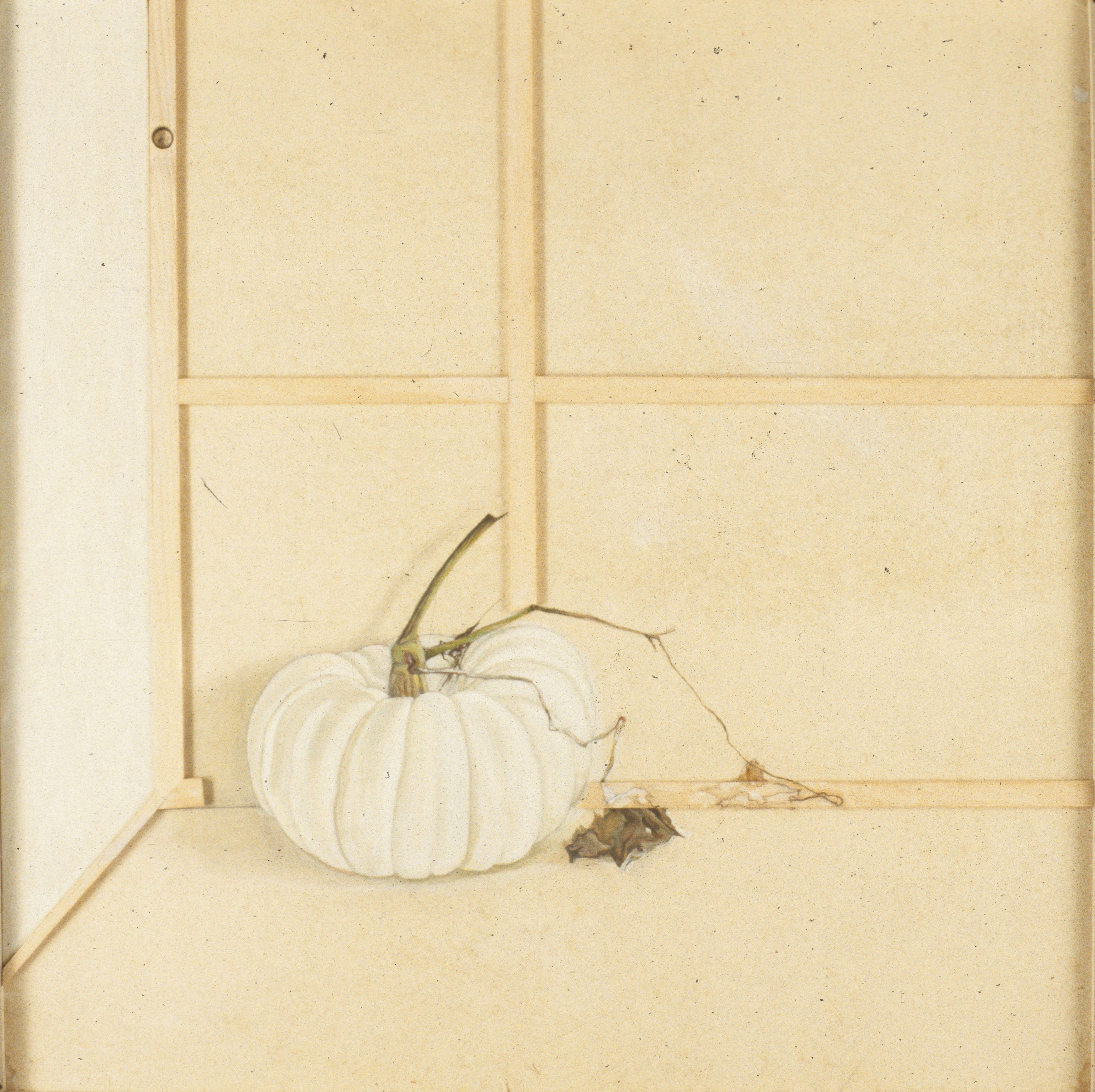
Still Life, 1985. Norton and Nancy Dodge Collection of Nonconformist Art from the Soviet Union. D07219