
Boris Kocheishvili
1940 — Elektrostal (Russia). Works in Moscow (Russia)
A prolific painter and creator of numerous works on paper, Boris Kocheishvili has developed a very distinctive style based on the traditions of European modernism. He even invented his own medium: colored relief, a unique combination of painting and sculpture. He was acquainted with many of Moscow’s underground artists and poets, but never belonged to any nonconformist art groups or movements even though he was critical of the “official” art of socialist realism and never sought government commissions. “I have never opposed or united with anyone,” he said in an interview with the Oral History Project. [1] As a result, although some of his works were acquired by state museums, he never received significant official recognition during the Soviet era and also was not included in the canon of nonconformist artists after the collapse of the Communist regime. It seems that Kocheishvili fell between those two worlds. He had no major institutional solo exhibitions until he was in his sixties. Throughout his career, he has written free verse poetry that has a strong inner relationship to his visual art. His poems are laconic and minimalist, with most lines consisting of just one word, where the empty spaces sometimes speak louder than the words themselves.
Kocheishvili was born in Elektrostal, an industrial suburb of Moscow, into the family of a railroad worker who joined the Red Army shortly before his son’s birth and rose to become an officer on the battlefields of World War II. Kocheishvili’s father was of Georgian descent but was born in Siberia and had no ties to his ancestors’ homeland. After the war, Kocheishvili’s family traveled to the Far East, Germany, and Ukraine, following his father’s deployments. In 1958, Kocheishvili enrolled in the Moscow State Academic Art School in Memory of 1905 and graduated in 1962. Disappointed with the Soviet academic system of training artists, he decided not to pursue higher education in art. Instead, he chose to learn from artists of the past by looking at old master prints and Russian religious icons in museums. In an interview, he confessed that he regularly visited the print room of the Pushkin State Museum of Fine Arts to study prints by Rembrandt and Goya. [2] In 1965, he joined the experimental etching studio founded by Ignaty Nivinsky (1881–1933), where he spent ten years learning the secrets of the medium from his mentor, the master printmaker Evgeny Teis (1900–1981). Although etching did not become his favorite medium, it significantly influenced the style of his ink drawings.
Kocheishvili has also confessed to being influenced by Giorgio de Chirico, whose art was largely unknown in the Soviet Union in the early 1960s. However, he was fortunate enough to see de Chirico’s work in that artist’s home country. At the age of twenty-two, during the Khrushchev Thaw, he had the opportunity to visit Italy with a group of artists on an educational trip organized by the Italian Communist Party. “I saw a lot of de Chirico, I came back and started drawing like de Chirico. These abstract spaces. But it was naive. It’s not possible outside of Italy,” he recalled in an interview. [3] Although he did not have a degree in fine arts, he began participating in exhibitions in 1963 and became a member of the Union of Artists in 1964. His first solo exhibition was held at the Nivinsky studio. It included about one hundred drawings.
Kocheishvili’s style was already formed by the 1970s, and over the years he has developed interpretations of the same motif: human figures or objects in a semi-abstract landscape. He creates a complex, nonlinear space by flattening the figures and using an inverted perspective derived from Russian religious icons. When depicting a human figure, he strips it of detail, even facial features, focusing instead on posture and movement. He has always drawn and painted from imagination, even claiming that none of his artwork bears any resemblance to the things and images that surrounded him in his daily life (although he has painted quite a few portraits of his friends and family). Meanwhile, literary and theatrical references abound. From an early age, the artist was fascinated by Anton Chekhov’s Three Sisters, and the motif of three female figures has become a recurring one in his work, both in paintings and in numerous freehand line drawings. Kocheishvili has been experimenting with abstraction for many years, yet his abstract paintings always contain some remnants of figuration—elusive, ambiguous forms that resemble landscapes and objects. Over the years, he has expanded his choice of painting and drawing techniques: from ink drawing and oil painting, to etching and lithography, to watercolor on paper, to oil on fiberboard, to pastel on cardboard, to collage and relief, and so on.
In the 1980s, he met the sculptor Adelaida Pologova (1923–2008), who became one of his closest friends. Noticing his interest in sculpture, she suggested that he start making reliefs. Kocheishvili took that advice, and plaster bas-relief became one of his favorite mediums. Unlike his predecessors, he does not see reliefs as part of the decoration of facades or interiors. For him, a relief is a work of art in its own right, similar to a painting. He develops themes and motifs typical of his paintings—figures and objects in a landscape—often even tinting them with acrylic. However, the forms take on volume and texture, further complicating the spatial relationships in his art.
The Pushkin State Museum of Fine Arts acquired Kocheishvili’s drawings, and, in 1981, the State Tretyakov Gallery bought and exhibited fifteen of his graphic works. His works were favored by collectors of unofficial art, purchased by George Costakis, Alberto Sandretti, and Norton Dodge. During Gorbachev’s perestroika, when border restrictions were relaxed, Kocheishvili’s art gained some recognition in the West. Art dealer Phyllis Kind showed and sold twelve of his black-and-white drawings at the Chicago International Art Fair in 1986, and his work has been exhibited in galleries in Europe and the United States. In 1991, he had a solo exhibition in Moscow, his first in twenty years, at the Segodnya Gallery. Unexpectedly, Kocheishvili suddenly lost interest in his artistic career and moved from Moscow to the countryside, not returning to the city until the late 1990s. He recalled that he had not painted for four years and turned to writing poetry. (His first book of verse was published in 1992.) In 2013, his first solo museum exhibition, Простое лето [Simple summer], took place at the State Russian Museum in Saint Petersburg. It included not only works of visual art but also his poetry, printed on long rolls of semitransparent paper hanging from the ceiling. Exhibitions at the Museum of Modern Art in Tbilisi (Georgia) and the State Tretyakov Gallery in Moscow followed in 2017 and 2021, respectively.
Kocheishvili was married to the artist Ksenia Sokolova, his classmate in art school, and the famous Soviet and Russian actress Liya Akhedzhakova. He currently lives in Moscow with his third wife, Natalia.
Ekaterina Wagner
Photo portrait: Boris Kocheishvili in his studio, Moscow, 2008. Photo by Tamara Vekhova. Courtesy of Tamara Vekhova
Notes:
1. Boris Kocheishvili, interview by Sergei Petrov and Tamara Vekhova, Oral History Project, 2024.
2. Kocheishvili, interview.
3. Kocheishvili, interview.
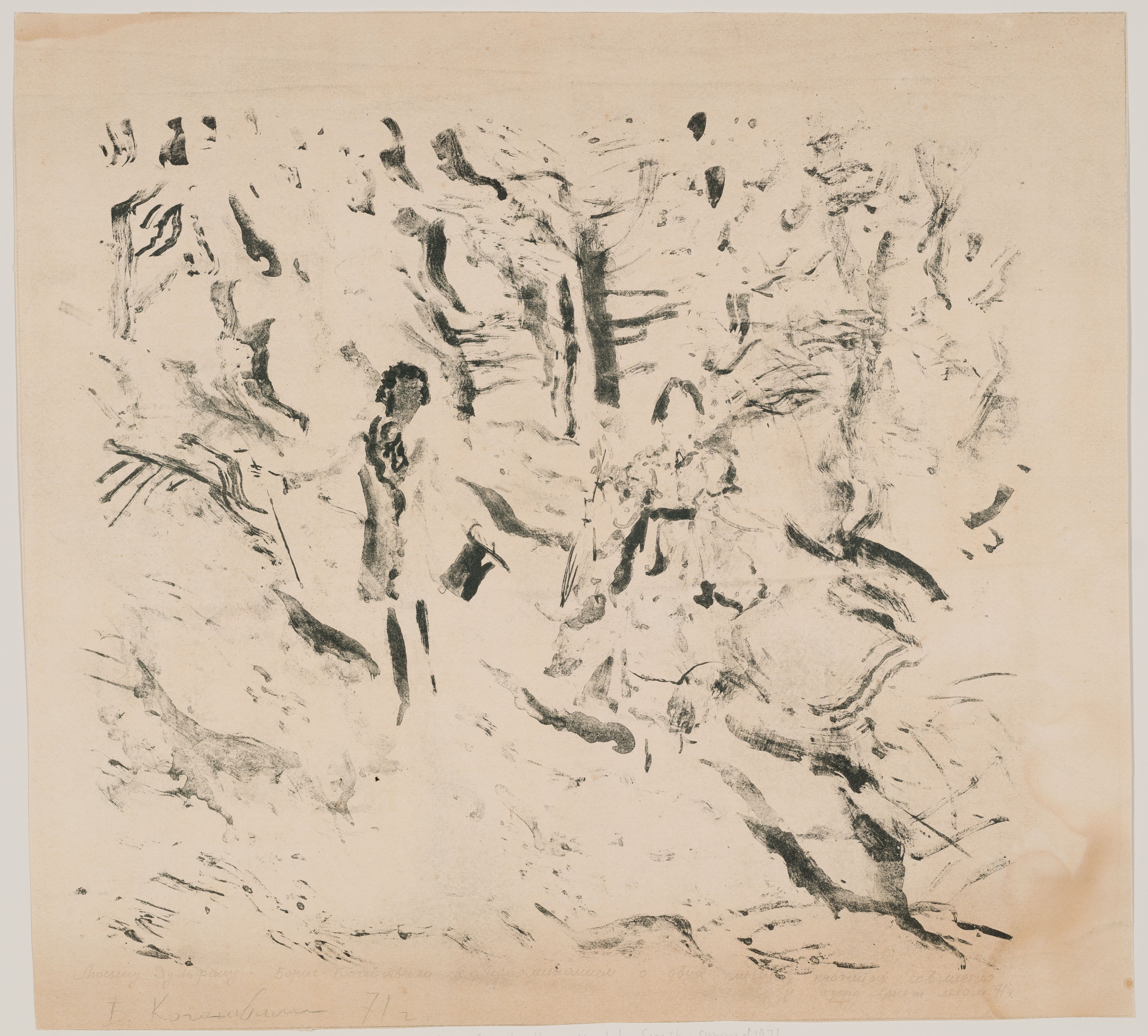
Untitled, 1971. Watercolor on paper, 43.6 × 47.6 cm (17 3/16 × 18 3/4 in.). Norton and Nancy Dodge Collection of Nonconformist Art from the Soviet Union. D01250
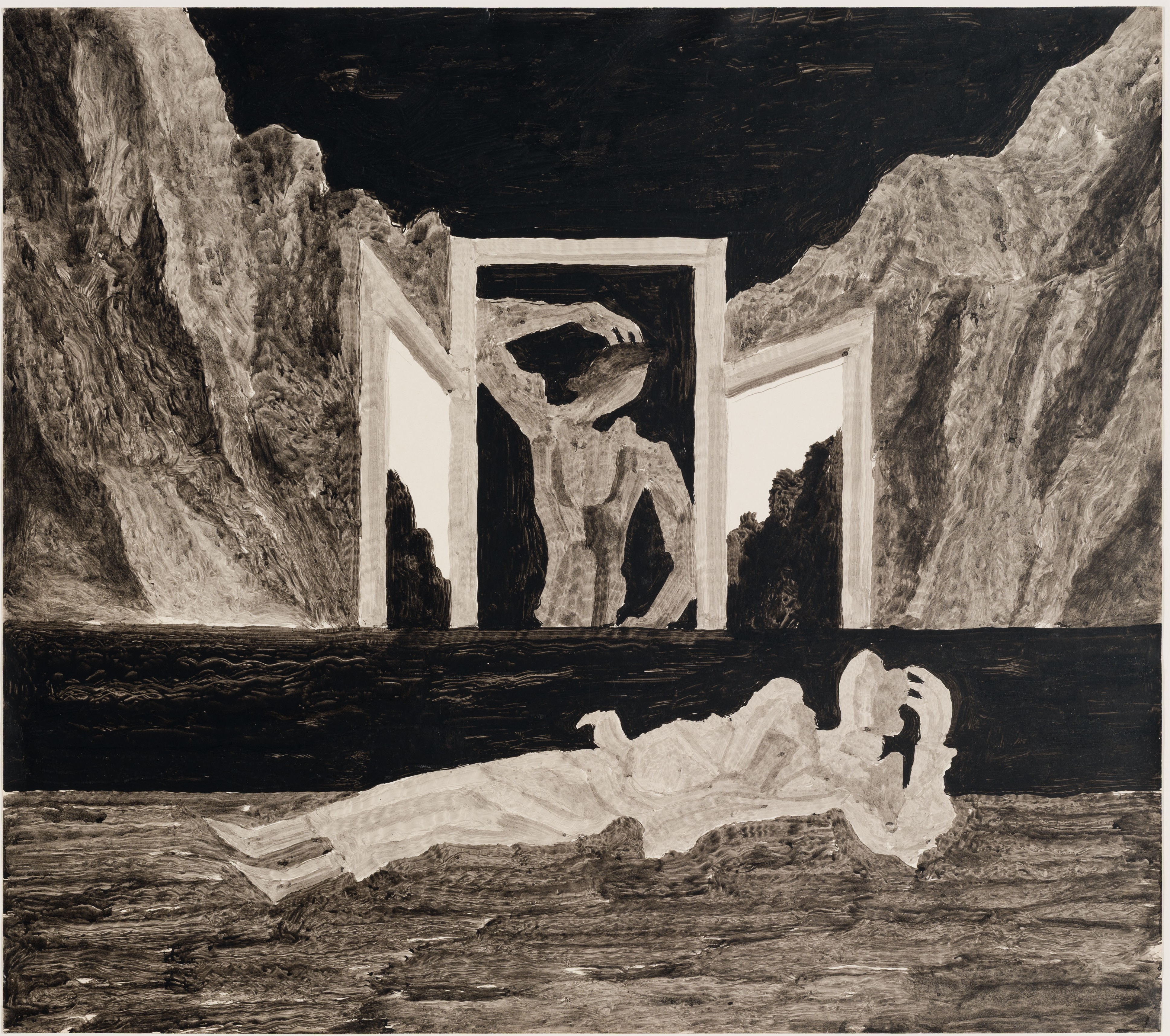
Untitled, undated. Ink on paper, 62.5 × 70.6 cm (24 5/8 × 27 13/16 in.). Norton and Nancy Dodge Collection of Nonconformist Art from the Soviet Union. D05992
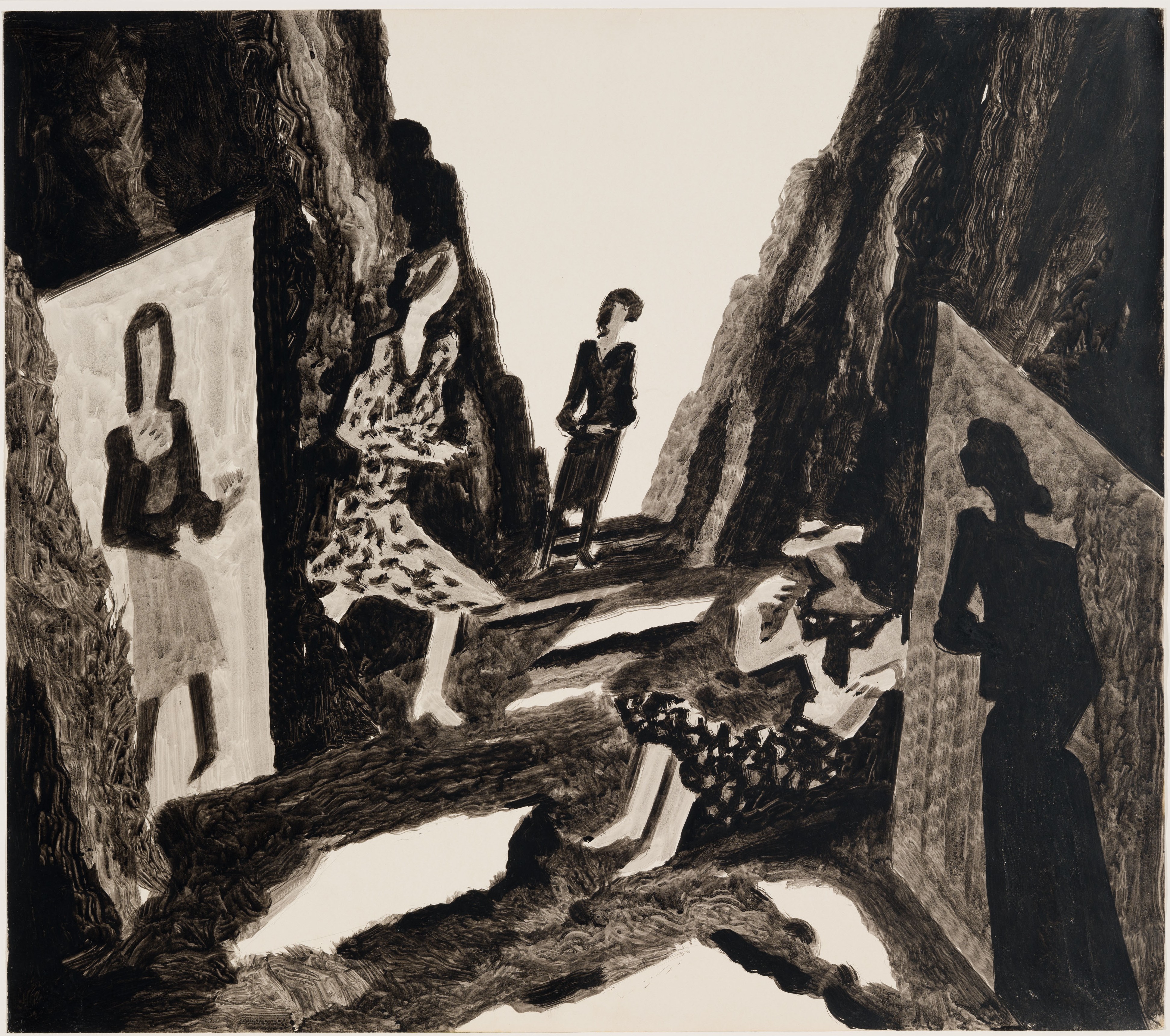
Women in the Forest, undated. Brush and ink with pencil on paper, 62 × 70.6 cm (24 7/16 × 27 13/16 in.). Norton and Nancy Dodge Collection of Nonconformist Art from the Soviet Union. D05993
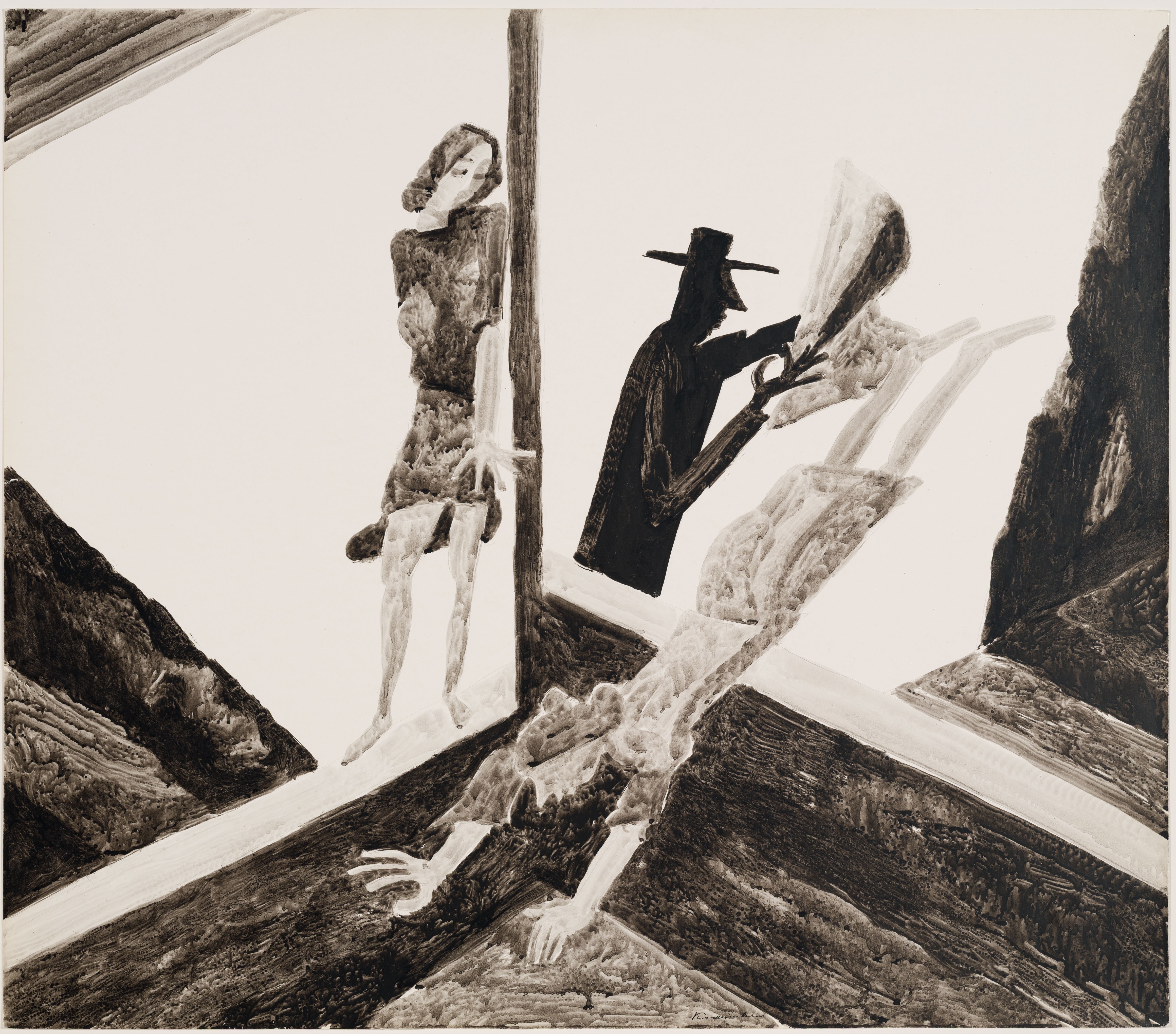
Untitled, undated. Ink on paper, 62.2 × 71.3 cm (24 1/2 × 28 1/16 in.). Norton and Nancy Dodge Collection of Nonconformist Art from the Soviet Union. D07528
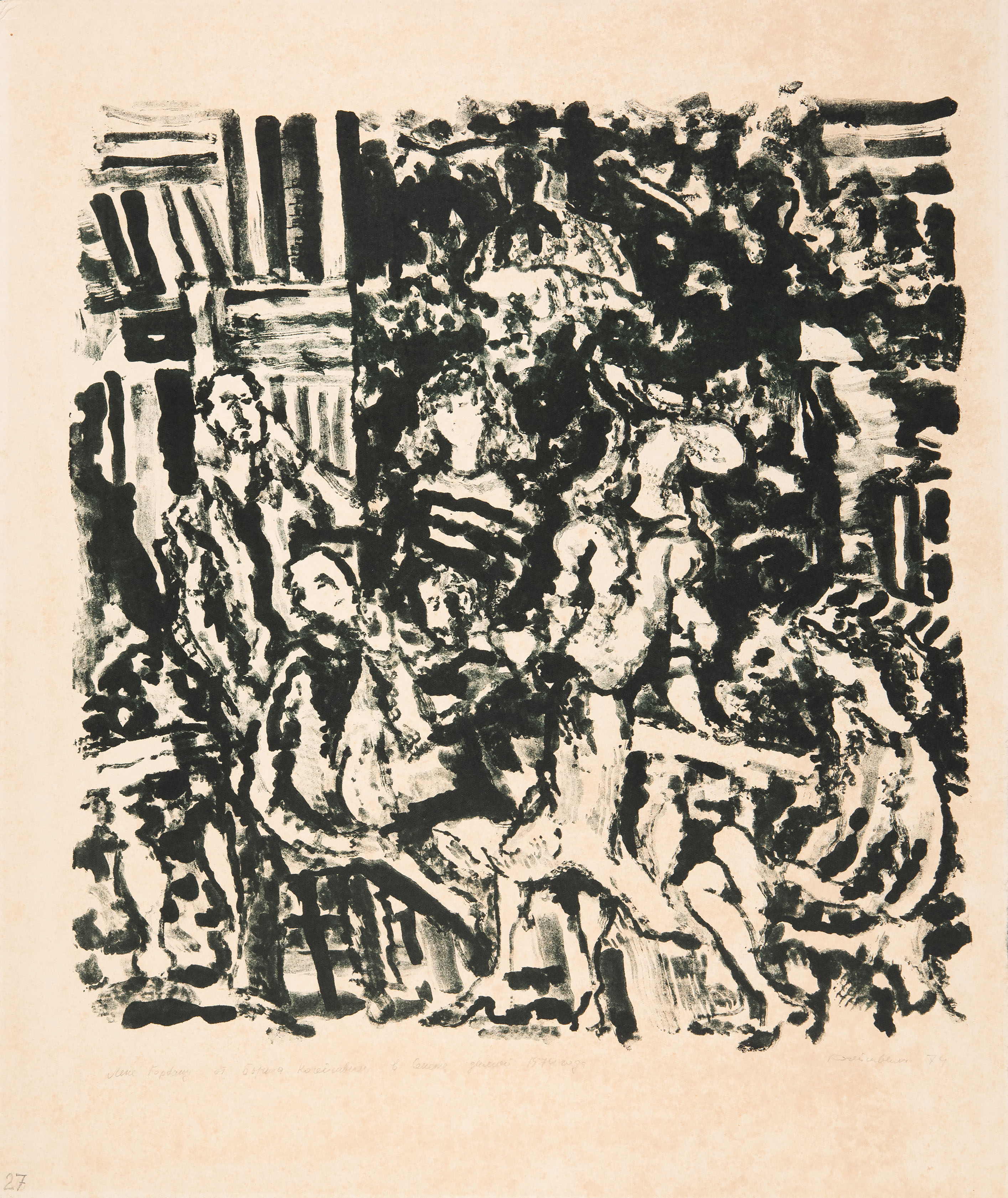
Untitled, 1974. Lithograph on paper, 52.2 × 47.9 cm (20 9/16 × 18 7/8 in.). Norton and Nancy Dodge Collection of Nonconformist Art from the Soviet Union. D14476