
Biruta Delle
(née Priekule)
1944 — Riga (Latvia) | 2025 — Riga (Latvia). Worked in Riga, Smiltene, Mazirbe, and Piebalga (Latvia)
Biruta Delle was a well-known painter whose works combine the study of nature and motifs of surreal visions. In the 1970s and 1980s she was a figure in local counterculture, balancing her career between art supported by and disapproved of by the Soviet regime.
She was born into the family of a skilled worker who had no connection with cultural circles, and she discovered her artistic vocation on her own. She learned drawing at Riga Secondary School No. 2 under Auseklis Bauķenieks (1910–2007), and she also attended classes at an amateur art studio led by educator Ansis Stunda (1892–1976), an alumnus of the Saint Petersburg Art Academy (formally known as the Russian Academy of Arts). Stunda recognized Delle’s outstanding talent and taught her privately for free. Biruta regarded him as her greatest authority, although as a painter, Stunda was little known.
Delle entered the LSSR State Academy of Arts (today the Art Academy of Latvia) on her second attempt in 1964, yet her relationship with the academy did not go smoothly. Delle could not accept the demands of the academy’s teaching staff to work within the framework of socialist realism, and she quit her studies in 1967, completing only the second year. During this time, she met young people from informal groups including beatniks and hippies and spent a lot of time in the small café Kaza (“goat” in Latvian, but nicknamed after a brand of the Hungarian coffee machine Casino), a meeting place for dissenters in Riga’s Old Town.
Biruta married Huberts Delle, an unemployed music obsessive who was later diagnosed with schizophrenia. Their daily life took place on the porch of Huberts’s parents’ house, surrounded by gardens in Riga’s Pārdaugava district, listening to records for days as Biruta painted and babysat their son. In the evenings, creative youth gathered there and passionately discussed art, literature, and poetry, as can be seen in the painting Feast in the Garden (1999).
In 1971, Delle painted the large figurative composition Joan Baez: Song About Peace, which depicts the American folk singer (b. 1941) surrounded by young, stylish people (Huberts was the model for each of them). In 1969 Delle met the writer Maija Silmale (1924–1973), who translated poetry from French and had returned from being exiled for antistate activities. Delle painted Silmale’s portrait (1972), and the title of the painting Who Was Not Needed in the Olive Garden? (1977) comes from a line of poetry by the French surrealist poet René Char (1907–1988), which Silmale had translated. The painting depicts stylized images of people wandering alone among the trees, staring into space. Although Delle took advantage of the fact that Baez and Char were among the few representatives of Western culture recognized in the Soviet Union, her audience understood the pro-Western mood of the works. An existential theme permeates all of Delle’s work, as she embodies loneliness, sadness, and pain in symbolic images, often using grotesque composition and surrealistic motifs—the Soviet Union’s most strongly criticized direction of Western art. There is also humor in the artist’s works.
Despite moving in dissident circles and her risky styles, Delle was not considered dangerous by the authorities, and her career developed. Her paintings were displayed at group exhibitions, and she was admitted to the Latvian SSR Artists’ Union in 1975. She held regular solo exhibitions, the most notable being in 1973 and 1983 in the House of Artists. In 1979, her political views, considered in conflict with official Soviet ideology, were discussed by the Artists’ Union board, and she was reprimanded.
Her life was completely subordinated to painting. To get a larger studio, she twice moved to places far from Riga, first to a country house near Smiltene, in northern Latvia, then later to the village Mazirbe on the west coast. Images of sand dunes and deserts entered her works as a symbol of isolation. She became known for her depictions of bright sunlight and deep, nuanced shadows. Meanwhile, there were dramatic events in her private life. According to Delle’s autobiography Mans ceļš [My Way], her second husband collaborated with the KGB (the Committee for State Security); in 1993 her son killed his stepfather in an acute phase of his mental illness and ended up in a psychiatric hospital; and her ex-husband, Huberts, committed suicide. After these events, surreal, nightmarish motifs intensified in Delle’s art. She repeatedly went through periods of depression and despair, but she always resumed painting.
Delle held solo exhibitions at the Latvian National Museum of Art in 1994 and 2024 (Biruta Delle: To Paint Every Day, curated by Vilnis Vējš). She regularly cooperated with the Gallery Daugava, where exhibitions of her latest works are held every few years.
Vilnis Vējš
Translated from Latvian by Philip Birzulis
Photo portrait by Atis Ieviņš
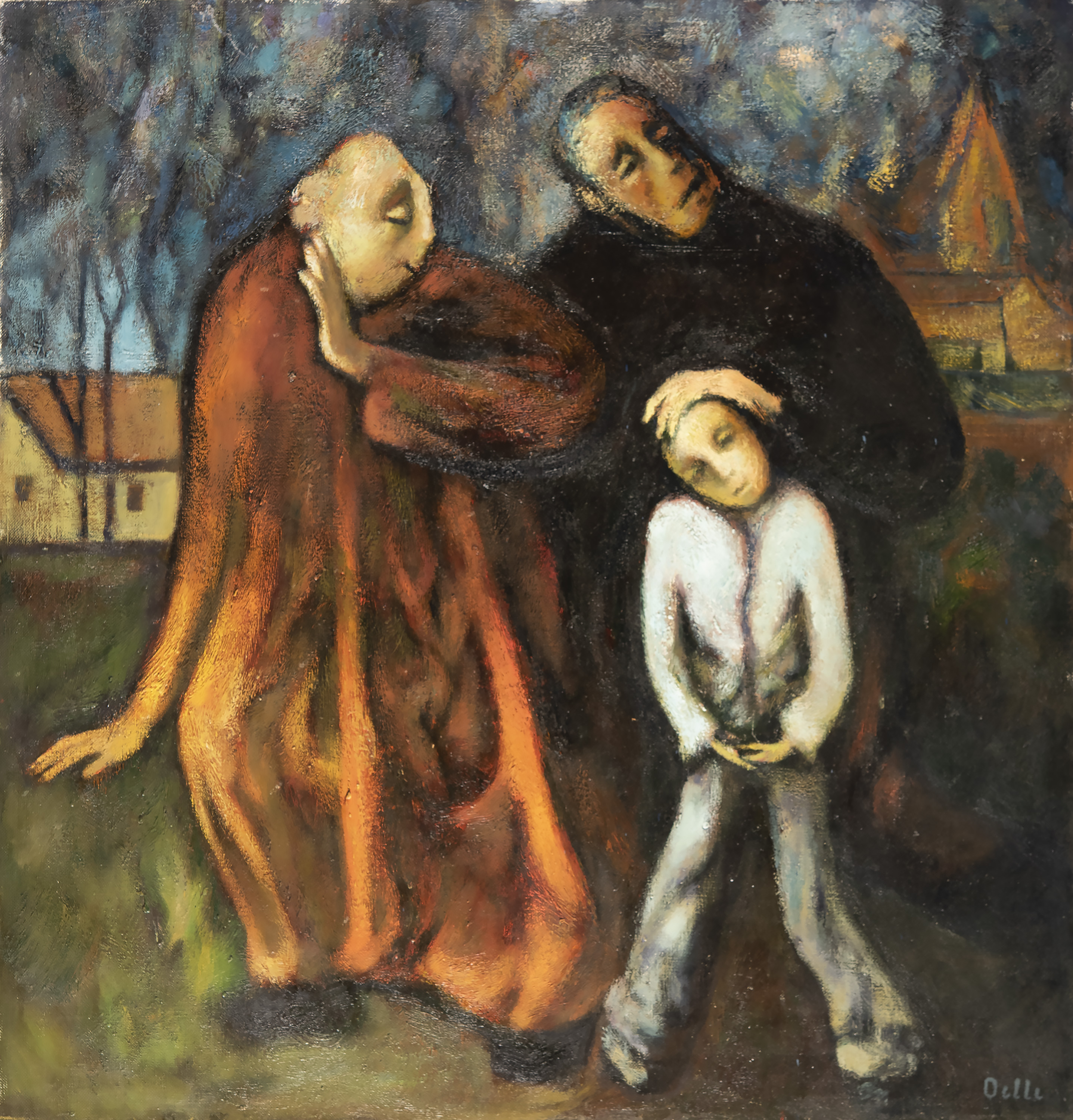
Departure, 1979. Oil on canvas, 100.3 × 100.6 cm (39 1/2 × 39 5/8 in.). Norton and Nancy Dodge Collection of Nonconformist Art from the Soviet Union. D00095
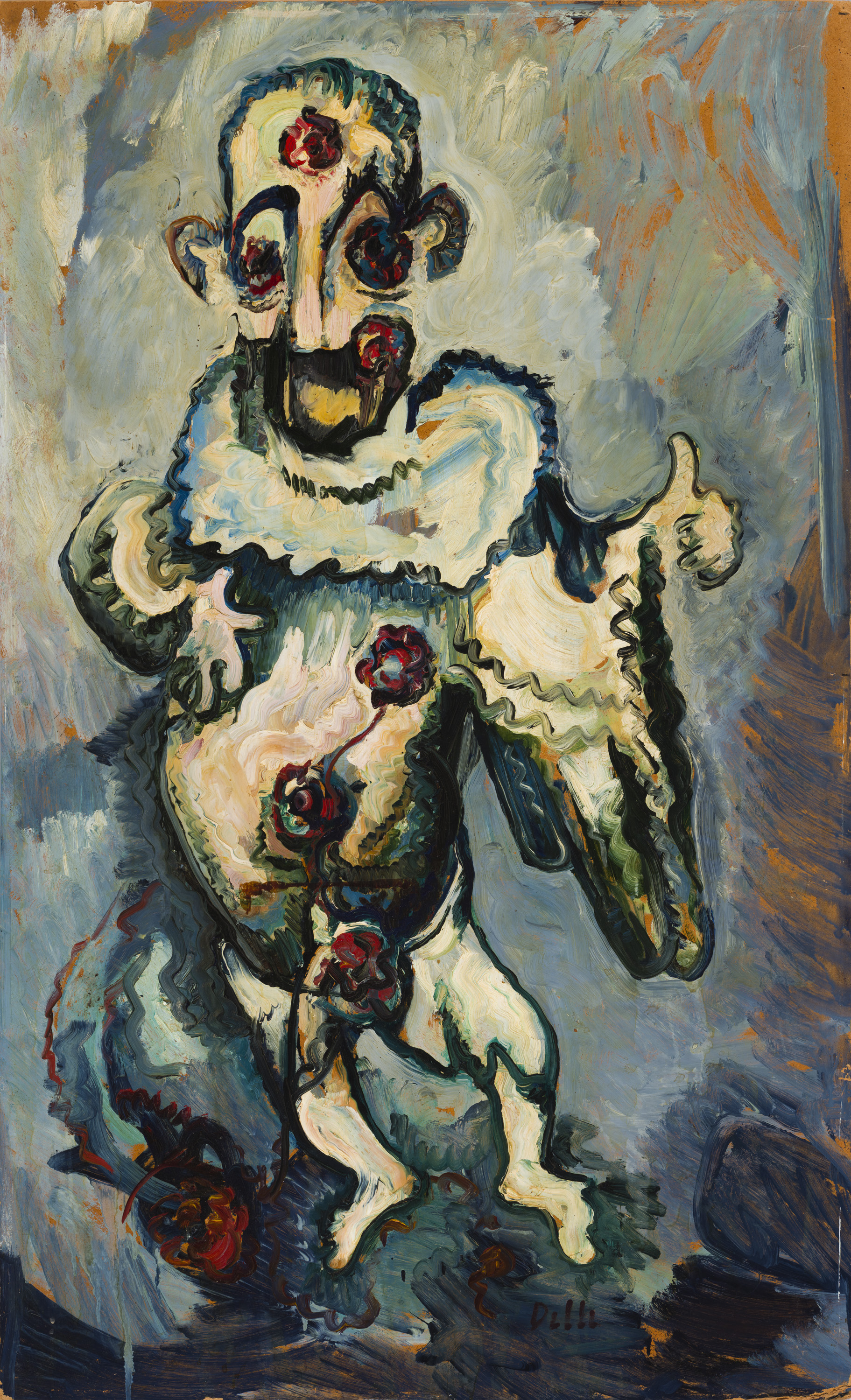
King, 1974. Oil on fiberboard, 112.3 × 68.2 cm (44 3/16 × 26 7/8 in.). The Norton and Nancy Dodge Collection of Nonconformist Art from the Soviet Union. D19470