
Andrei Roiter
1960 — Moscow (Russia). Works in Amsterdam (Netherlands) and New York City (USA)
Andrei Roiter is one of the most striking and original figures in the generation that came into the art scene in Russia during the last Soviet decade. In 1985, together with German Vinogradov (1957–2022), Nikolai Filatov (b. 1951), and Alexei Ivanov, Roiter founded the Kindergarten art squat, which became an important center of Moscow’s vibrant artistic life during the perestroika era. Although his artistic development took place within the community of “unofficial” artists, the position he assumed within this community was sui generis. Distancing himself from the conceptualist tradition that was dominant in Moscow at the time, he closely followed the latest artistic processes in the West, namely, the turn toward representation and the return to painting.
To be sure, Roiter’s practice had already gone beyond the mere revival of traditional media, and he actively employed readymades, objects, photography, installation, and so on. His works were based on the appropriation of graffiti images, children’s drawings, street agitprop, road signs, the design of household objects, and graphic illustrations from popular magazines. Roiter often described himself using the English word “transition,” referring to the free migration between different media and iconographic sources.
In the early 1990s, the term “transition” acquired another widespread meaning. With the end of the Soviet Union, all of post-Soviet reality began to be characterized as “transitional,” and with the collapse of the “second world” (the Soviet Union and its satellite states), the whole world could now be considered transitional as well. Coming up against the problem of identity, which inevitably accompanied the dissolution of the existing order, Roiter refused to associate himself with any new nonpersonal, national, or group identifications. Making a choice in favor of an identity that was unfinished and always in a state of mutation, he defined himself as a tourist artist. As a consequence, the panoply of motifs he appropriated changed and expanded. They came to include various found objects, notebook sketches, photo postcards, his own photographs, and so on—in other words, everything that had entered into his life in the course of real or virtual travels. These motifs could have been called souvenirs, with the qualification that their places of origin were usually not indicated on them. Souvenirs for him were something strictly personal and inexpressible. Tourism was not a social phenomenon, but the human condition.
By identifying his practice with tourism, Roiter inscribed himself within the romantic tradition, which in the 18th century gave rise to the figure of the traveler-writer. The subject, who at that time had lost an integral sense of himself, began to search for himself in the experience of isolated moments and situations, in overcoming the everyday for the sake of an encounter with the extraordinary. The old-fashioned home slide projector, consequently, makes a repeated appearance in Roiter’s works. The collective viewing of slides made during tourist trips was a common ritual during the 1970s and ’80s, and during his younger years, the artist had taken part in that practice.
However, after spawning the tourism industry, globalization led to the commercialization of the extraordinary. Yet Roiter’s souvenirs possess a value that is so subjective that it is difficult to monetize, just as it is difficult to subject them to any hierarchy, since they lack conventional value. In this respect, Roiter again follows the romantic tradition, which presented itself in opposition to bourgeois empiricism and identified the artist with the figure of the ragman, who finds value in that which is denied any by common opinion. Indeed, Roiter’s souvenirs are a world of old objects that have fallen out of everyday use, including timeworn books, tattered notebooks, faded photographs, and shapeless cardboard boxes.
At the same time, by constructing alternative hierarchies, the artist-ragman himself usually turns into a living embodiment of the imaginary reality he creates. That is why playacting is a theme that runs through all of Roiter’s work. In one of his paintings, we see a male figure with a long fake nose and a handwritten inscription spanning the entire surface of the canvas: “My profession is to be Andrei Roiter” (1999). In another painting, we encounter a cardboard box covered with dirty masking tape, with the handwritten inscription: “A.R.'s comedy tricks” (2010). Roiter’s world is a theater—a theater with one actor and one role.
What distinguishes a tourist in his movements around the world is a lack of his own place and the experience of loss. Roiter understands this perfectly well, since, after living through the “end of history” along with his whole generation in the early 1990s, he suddenly found himself in a reality that was completely unfamiliar to him, and which he started to look at with the eyes of a foreigner, tourist, or emigrant (a feeling certainly reinforced when he went on to live in Amsterdam and subsequently New York). Understanding this new life turns out to be possible only by comparing it with the past, which is visible in the present in the form of ruins — which create the illusion that the past is present, when in fact they are a form of being that has gone over into nonbeing. For this reason, Roiter’s main motifs not only bear the stamp of time, but are also usually not real objects, but rather their casts, copies, models, or representations of other representations — photographs, paintings, posters, and signs.
Along with this, Roiter’s arsenal includes one characteristic technique: in depicting an ordinary object, he often greatly magnifies it. As a result, it acquires an exaggerated meaningfulness that it did not previously possess; it becomes a ruin, as it were, although it lacks any direct connections to recognized history. For Roiter, the end of history consists of the dissolution not so much of history’s object as of its subject. Losing our subjectivity, we cannot fully know what it is we have lost, or which of our losses are causing a phantom pain. Roiter’s work is the expression of loss in its pure form.
Lastly, Roiter not only magnifies fragments of reality in his works, but also, conversely, reduces them. The models that so often appear in his works can be based on huge buildings—such as the grand complex of the Moscow University skyscraper—reduced to the size of a toy. Indeed, the motif of the toy itself, and the theme of childhood, are important components of his compositions. The handwritten texts in his works are usually written in a schoolchild’s handwriting, and his whole representational style seemingly betrays a child’s awkward hand. A toy, as the philosopher Giorgio Agamben has remarked, “is that which once was something, which now it no longer is.” It is precisely this that makes the toy an embodiment of the historical essence. Historical documents, the records and monuments of the past, are only witnesses of the historical past. But as Agamben observed, the toy, with its temporal dimensions, is a “materialization of the historicity contained in objects.” [1]
Viktor Misiano
Translated from Russian by Ilya Bernshtein
Notes:
1. Agamben, Giorgio. In Playland: Reflections on History and Play. Trans. Liz Heron. New York: Verso, 1993: 71.

Untitled, 1985. Graphite and ink on paper, 38.1 × 42.1 cm (15 × 16 9/16 in.). Norton and Nancy Dodge Collection of Nonconformist Art from the Soviet Union. D10417
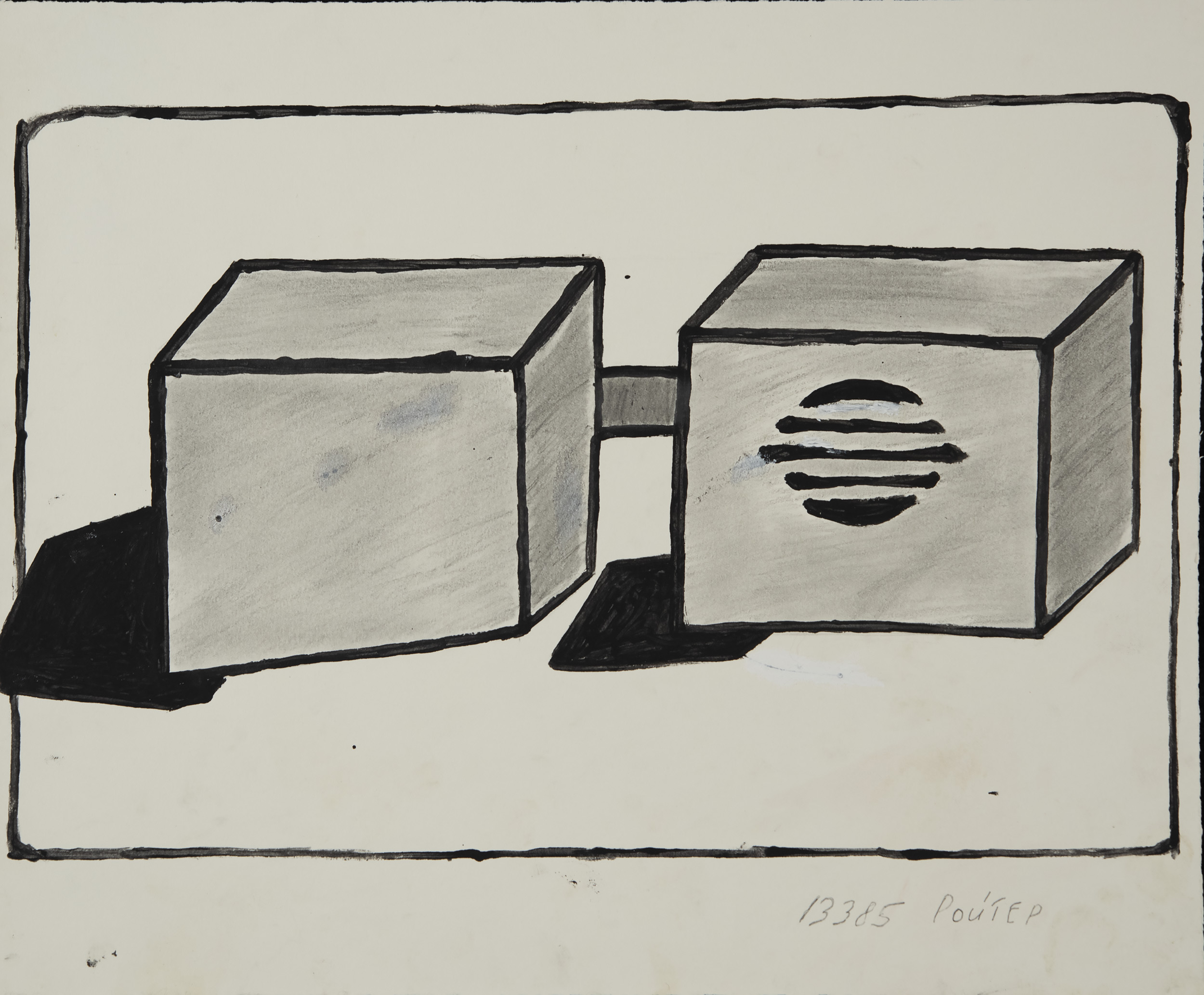
Untitled, 1985. Graphite and ink on paper, 34.7 × 42.1 cm (13 11/16 × 16 9/16 in.). Norton and Nancy Dodge Collection of Nonconformist Art from the Soviet Union. D10418
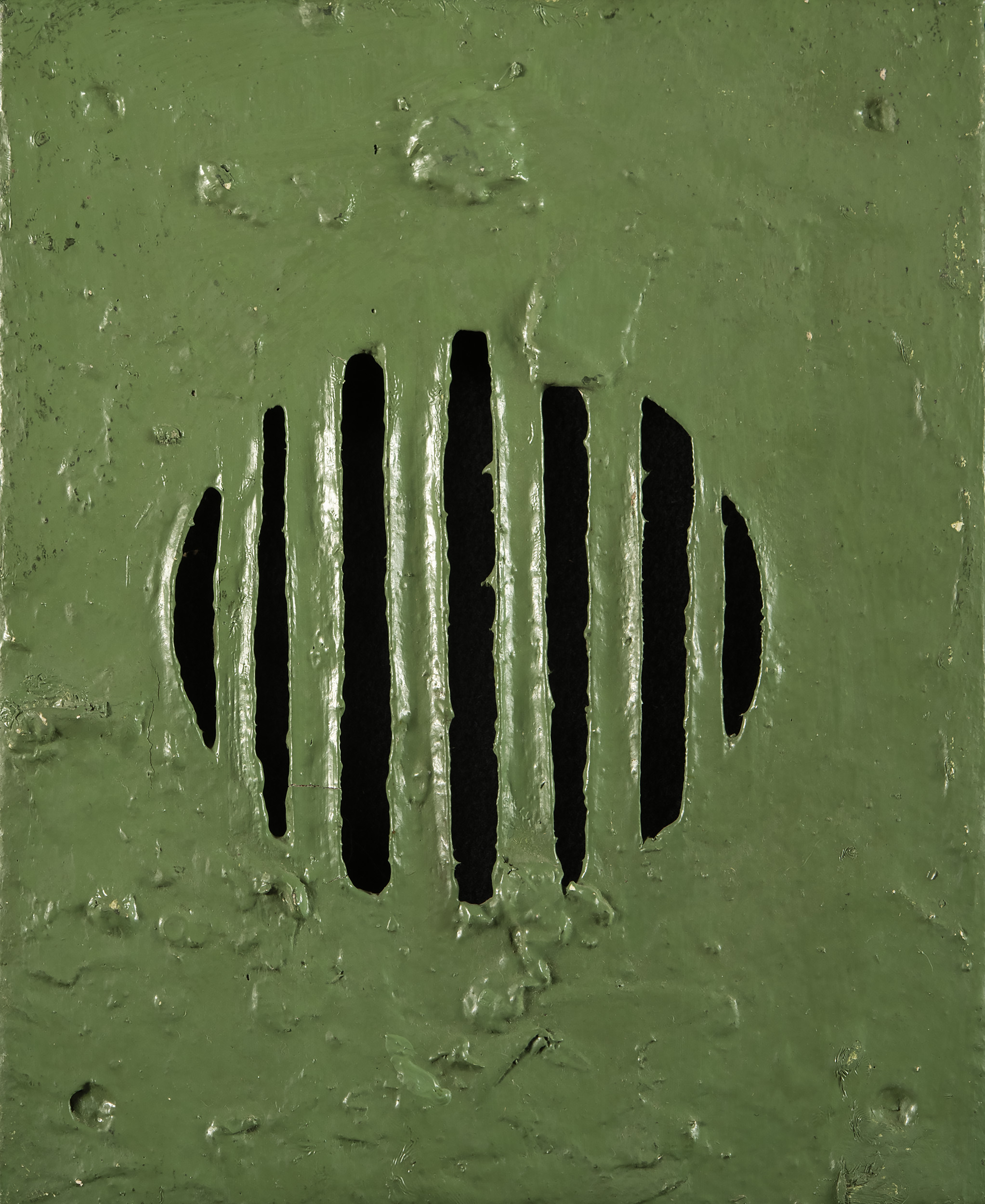
Untitled, 1986. Oil on cut linen, 27 × 22 cm (10 5/8 × 8 11/16 in.). Norton and Nancy Dodge Collection of Nonconformist Art from the Soviet Union. D22690
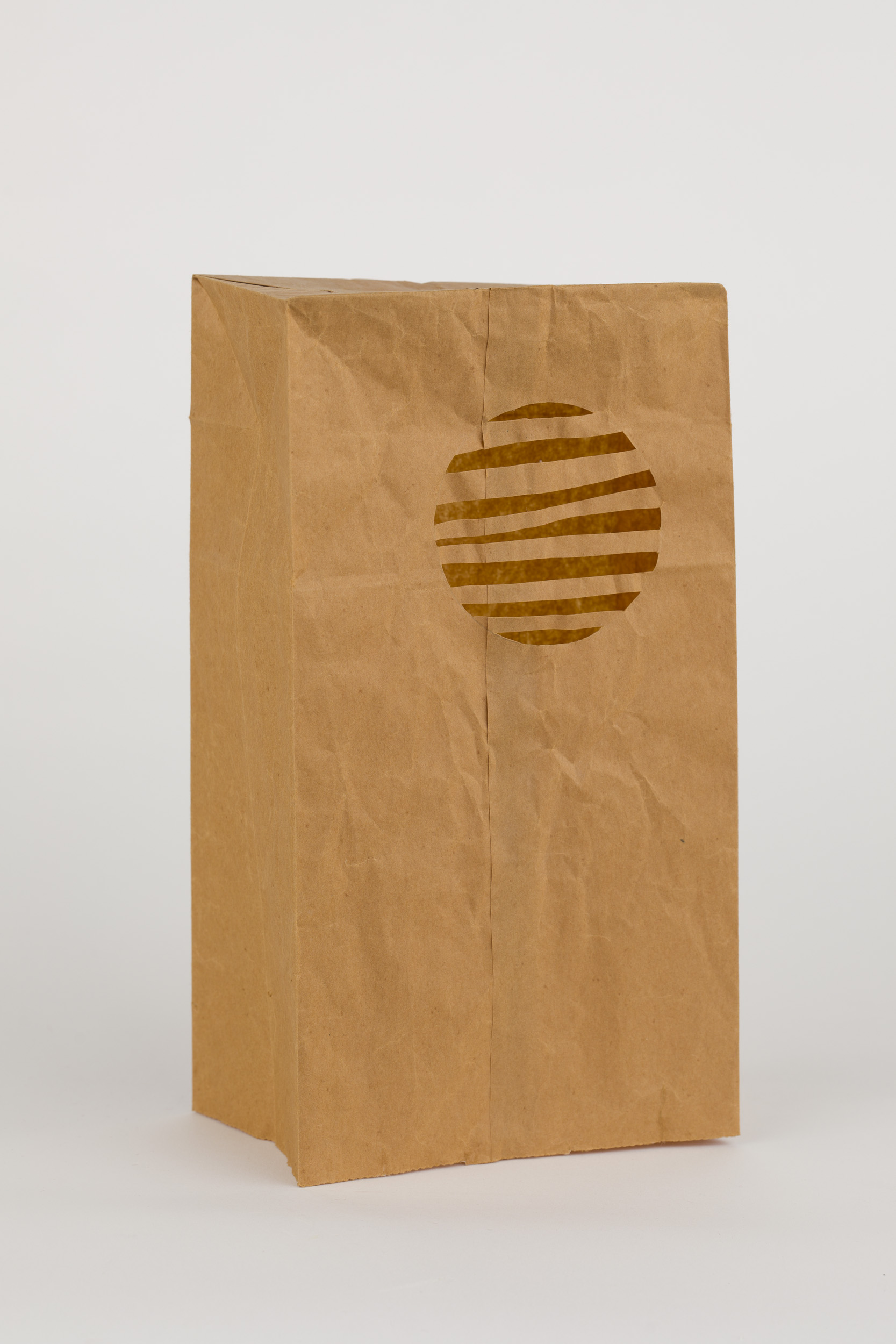
Not Green Speaker, undated. Modified paper lunch bag, 27.5 × 15.2 × 9 cm (10 13/16 × 6 × 3 9/16 in.). Norton and Nancy Dodge Collection of Nonconformist Art from the Soviet Union. 2013.016.071
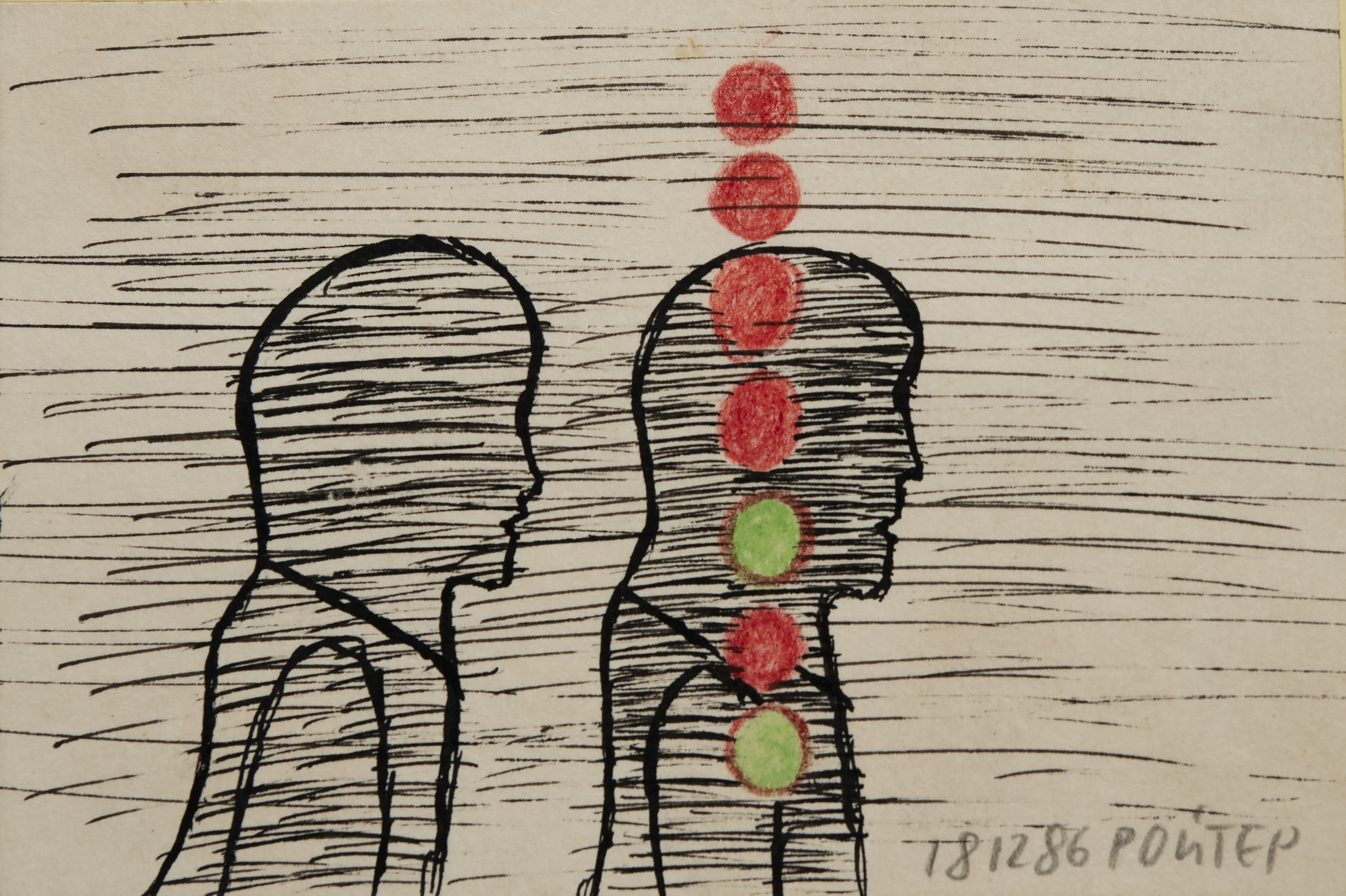
Untitled, 1986. Ink and colored pencil on paper, 8.4 × 12.5 cm (3 5/16 × 4 15/16 in.). Norton and Nancy Dodge Collection of Nonconformist Art from the Soviet Union. D09270
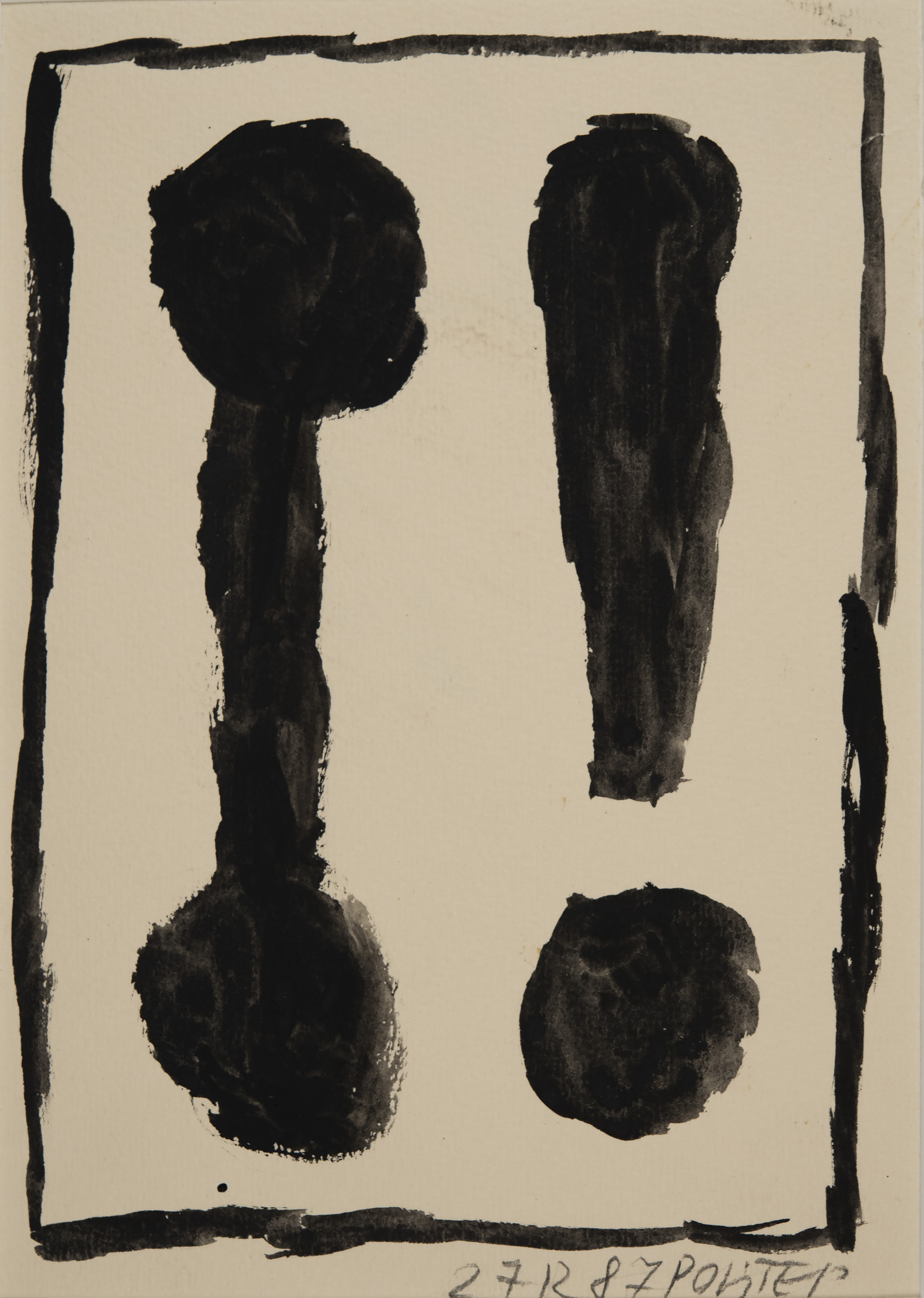
Untitled, 1987. Tempera on paperboard, 24.9 × 17.6 cm (9 13/16 × 6 15/16 in.). Norton and Nancy Dodge Collection of Nonconformist Art from the Soviet Union. D18675

Untitled, 1984. Gouache, watercolor, and colored pencil on paper, 63 x 46 cm (24 13/16 x 18 1/8 in.). Norton and Nancy Dodge Collection of Nonconformist Art from the Soviet Union. D04962
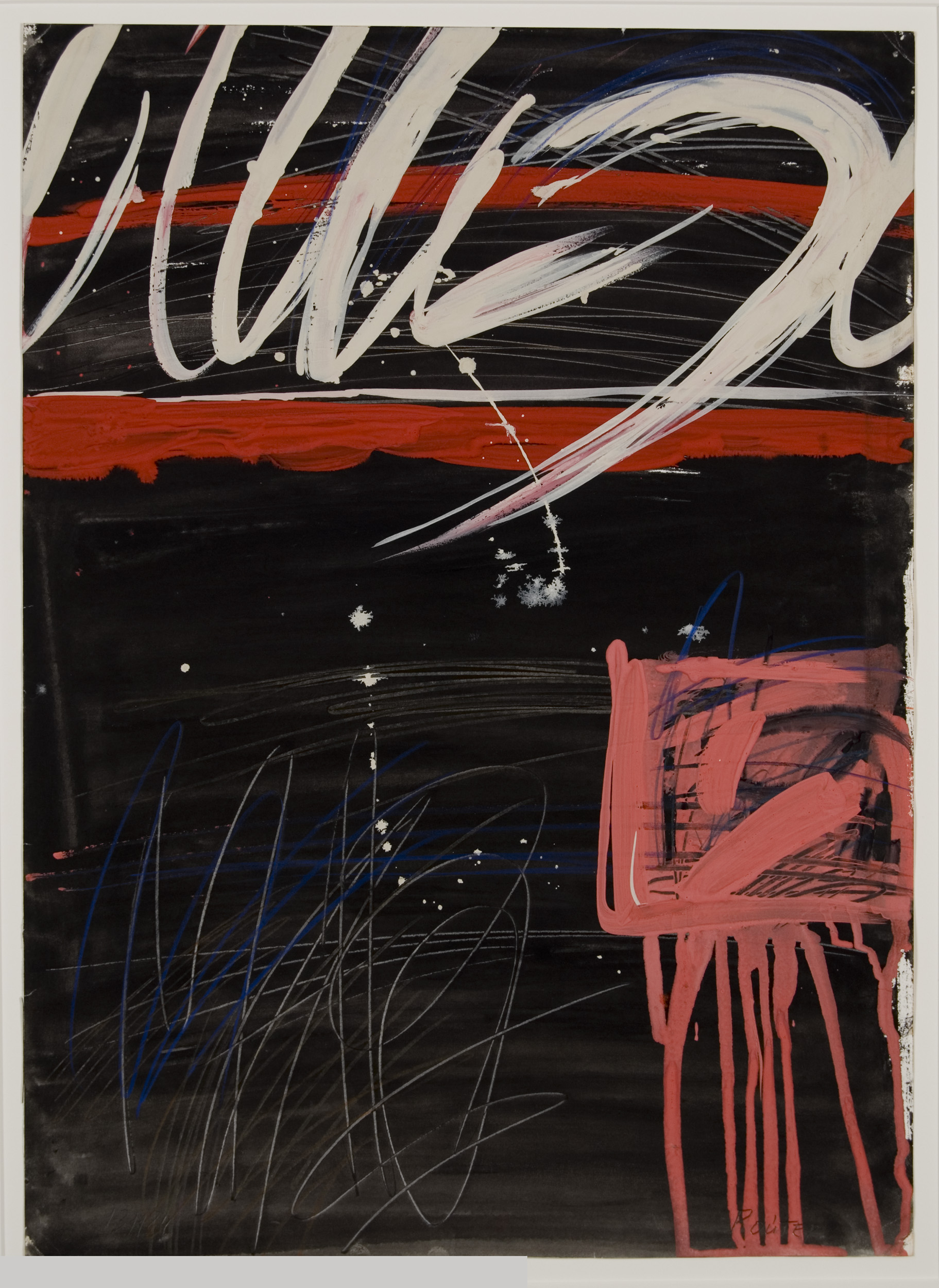
Untitled, 1984. Gouache, watercolor, and colored pencil on paper, 63.3 x 45.6 cm (24 15/16 x 17 15/16 in.). Norton and Nancy Dodge Collection of Nonconformist Art from the Soviet Union. D04959