
Anatoly (Anatol) Stepanenko
1948 — Irpin (Ukraine). Worked in Kyiv (Ukraine), Lviv (Ukraine), Moscow (Russia), Basel (Switzerland); currently works in Kyiv and Irpin (Ukraine)
Anatoly Stepanenko was born on April 25, 1948, in Irpin, Kyiv region, Ukraine. He is a Ukrainian multidisciplinary artist (graphics, painting, collage, art objects, site-specific installation, happenings, body art, photography, video installation), film director, poet, and curator. He is an experimentalist, a conceptualist, and a prominent representative of Ukrainian culture in the postmodernist era, also called the Ukrainian New Wave. [1] Stepanenko studied and lived in Kyiv until 1965, at which time he moved for further education and work in Lviv and Kyiv (Ukraine), Moscow (Russia), and Basel (Switzerland). Since 1998, he has lived and worked in Kyiv and Irpin, Ukraine.
Stepanenko’s life as an artist began in the hippie and artistic intellectual underground of Lviv in the 1970s, which included the graphic artist Oleksandr Aksinin (1949–1985). In Lviv, he was called “Anatol” in the Western Ukrainian manner (rather than Anatoly), which he adopted and later used. He was one of the first people in Ukraine to practice various forms of actionism in the 1970s, which led to his persecution by the KGB. [2]
At the Oleksandr Dovzhenko Film Studio, Stepanenko directed postmodern Ukrainian films that were among the first to showcase stylistic plot deconstruction: Misiats upovni [The Full Moon, 1986] and Hodynnykar ta kurka [The Clockmaker and the Hen, 1989]. In the late 1980s and early 1990s, he was close to the circle of artists and critics of the Parkomuna art group, an artists’ squat whose name derived in part from its location on Paris Commune street. [3] Stepanenko collaborated with the creative partnership NatsProm [National Industry/crafts] run by Oleg Tistol (b. 1960) and Mykola Matsenko (b. 1960). [4]
During the 1990s and 2000s, Stepanenko was also a curator and participated in group curatorial projects for contemporary visual art in Kyiv. He did not neglect the global stage; from 1994 to 2014, Stepanenko participated in international group exhibition projects in Poland, Switzerland, Italy, Japan, Germany, and the United Kingdom. A highlight of his curatorial work includes the project Markers: An Outdoor Banner Event of Artists and Poets for the Venice Biennale during the 49th Venice Biennale (2001).
In 1967, he graduated from the Kyiv Art and Industrial College (now Mykhailo Boychuk Kyiv State Academy of Decorative Applied Arts and Design and, after seven years in Kyiv, he graduated in 1977 from the Lviv Institute of Applied and Decorative Arts (now Lviv National Academy of Arts), studying under Danylo Dovboshynskyi. Following this graduation, Stepanenko served in the Soviet Army in the Black Sea Fleet from 1967 to 1970, before returning to Lviv in 1971 and then Kyiv in 1980. He returned to school two years later to study and live in Moscow, Russia. In 1984, he graduated from the Advanced Two-Year Directing and Screenwriting Courses in Moscow (in Andrei Tarkovsky’s workshop). Stepanenko then returned to Kyiv, where he joined various independent artistic groups, including the Біла Волона (Bila vorona, White crow) association, [5] which included Yurii Vakulenko, Volodymyr Arkhipov, Kostiantyn Samoilenko, Vira Vaisberg, and Olena Holub. During the Soviet era, this group organized the first large unofficial exhibition in Kyiv, An Absolutely Informal Exhibition of Young Artists (1988–89) at the Zorianyi Cinema. From 1993 to 1998, Stepanenko was the recipient of a scholarship from the IAAB, an international exchange and studio program founded by the Christoph Merian Stiftung. With this, he moved to work in Basel (Switzerland), where he had several solo exhibitions and participated in group art events.
Stepanenko participated in the Revolution of Dignity (2013–14) (also called the Euromaidan or Ukrainian Revolution), activism and civil unrest in the ongoing struggle of Ukrainian citizens for their rights. In 2022, he survived the occupation of Irpin by Russian troops. In a state of panic, and in fear of possible raids by the occupiers, Stepanenko burned most of his archive. These events led to a concussion; however, he did not leave the city during the fighting. In fact, the artist remained and fed the cats and dogs abandoned by their owners, because, as he says, he respects the greatest universal mystery: life, in all its forms.
The Norton and Nancy Dodge Collection contains some of Anatoly Stepanenko’s early works, which include drawings and collages from the 1970s and 1980s. He would subsequently build on this series of graphic art in his later work (including body art and photography). Art historian Halyna Skliarenko writes: “Objects made of paper gradually outlined one of the main directions of his work—huge paper creations. Their main features remain consistent in their plot motifs and in their interpretation. A constant for the artist is city themes, images of centaurs, and naked figures, whose eroticism is not so much sensual as mythological and phantasmagoric. There is also the artist’s interest in the aesthetics of Buddhism with its principle of “everything in one and one in everything”—that is, each fragment contains the whole world. The combination of text and image creates a certain semantic and aesthetic tension between them. One of these graphic sheets is perceived, first of all, as an artistic object in which, in addition to the image itself, the surface texture, paper thickness, its shape, size, and color are all important.” [6]
Stepanenko’s collages and drawings have a readymade nature and resemble palimpsest manuscripts, sketches of archaeological finds, or old archival documents, which is characteristic of postmodernism for its layered meanings. For example, a series from that period, Вторинні рудименти творчого процесу [Vtorynni rudimentary tvorchoho protsesu, The secondary Rudiments of the Creative Process], seems to capture the remains, sketches, and fragments of some unrealized artistic project. The artist himself defines his graphic works as “graphic objects,” rather than using the generally accepted classifications of fine art such as “easel graphics” or “drawing.” Stepanenko explains: “I often make my works on receipts, used sheets, and documents. I call these ‘graphic objects.’ Because everything that is on paper, even the texture and dirt, is a reflection of the essential signs of time. Sometimes my images are a provocation of genetic memory, something deeply ancient that lives in me unconsciously. I also developed my own system of hieroglyphs when I studied Kunta Yoga. [7]. This system of magical symbols is present everywhere in my work.” [8]
Stepanenko was one of the first Ukrainian artists to turn to action-based artistic practice, or, as phrased by Ihor Klekh, a Lviv writer and friend of the artist, “artistic disobedience.” [9] Lviv performance artist Vlodko Kaufman (b. 1957) recalls how Stepanenko realized his projects when “the word ‘performance’ had not yet entered the Ukrainian vocabulary and did not mean anything to anyone.” [8] The artistic environment of Lviv in the 1970s was conducive to artistic gestures: drawing with colored chalk in cafes and on the streets; standing on one leg under a wall with a flower in your teeth; going to Stryiskyi Park to outline your shadow on the path, coming back the next day and comparing the old outline with a new one; listening to the Soviet anthem loudly at 6 a.m. on the roof of a university dormitory on a radio and then throwing it to the ground in public. After the latter action, the KGB began to actively communicate with Stepanenko, trying to intimidate, blackmail, and recruit him. After all, as art historian Skliarenko notes, “the light playfulness hid more: an opposition to the normativity of the official Soviet aesthetic and ideological doctrine, the desire to expand the artistic space, to give it other qualities and dimensions,” [6] in which the totalitarian system was not interested in at all.
In the mid-1980s, Stepanenko began to take photographs that would gradually hold an important place in his oeuvre. In them, the artist recorded his art actions involving body art. Among these was the series Трансмутація N [Transmutatsiia N, Transmutation N] (black-and-white print on photographic fabric, 1987), a series of eight compositions of naked female torsos, which was first exhibited in 1995 at the Blank Art gallery in Kyiv. These artworks continued his exploration of pseudo-archaic ritual practices, which were similar to the subject motifs of his earlier graphic work, reinforced by a post-Chornobyl worldview. His photography also re-created the atmosphere of anticipation of sociopolitical changes (i.e., the collapse of the USSR and the restoration of Ukraine’s independence). Art historian Tetiania Zhmurko writes:
“Actively experimenting with form and color, the artist superimposes several exposures on one slide, obtaining an unexpected effect. Especially memorable are the series Глибока синь [Hlyboka syn, Deep Blue] (late 1980s) and Юлія в печалю [Yuliia v pechaliu, Yuliia in Sorrow] (1985), united by a similar idea. Using the aesthetics of noir, with blue and purple colors dominating, the artist subtly captures the atmosphere of the difficult, wistful, viscous time of the late 1980s. Broken angles that disintegrate upon closer inspection, silhouettes and street fragments are imbued with a gloomy melancholy. His works are not about social norms and the illusions of life (although these are definitely present), but about a strange distress, a stuckness, a lack of clear coordinates that would allow us to determine our time and place. These are stories about a city, and a person who got lost in its labyrinths.” [10]
In the early 1990s, Stepanenko became a curator of and participant in two projects important to the formation of contemporary Ukrainian art. The first was Kosyi Kaponir. In 1992, the building was an abandoned prison for military personnel and civilians, active from 1863 to 1919. Among the participants in the project were Oleg Holosiy (1965–1993), Oleksandr Hnylytskyij (1961–2009), Tistol, and Illia Chichkan (b. 1967). The second was Kyievo-Mohylianska akademiia [Kyiv-Mohyla Academy] (1993), which took place in the dilapidated eighteenth-century building of the Kyiv-Mohyla Academy, out of which the Soros Center for Contemporary Art would operate from 1994 to 2008. The participants in this project included Tistol, Matsenko, and Oleksandr Kharchenko. The artists’ aim was a “subjective research of space.” The concept was to explore and rethink a certain space—its historical, cultural, and social layers—through artistic interventions. The projects opened up new opportunities for exhibiting works in nontraditional spaces, as Ukrainian contemporary art was actively seeking alternative venues for its presentation.
Stepanenko’s installations and objects in these projects contained topical environmental and socio-political themes in a fantastical environment. In one of the rooms, he placed a dry tree with roots covered with construction debris against a white background, with numbers scattered on the floor. In another room, he directed a video that was projected onto the wall; the work consisted of edited fragments of newsreels from the 1920s featuring Bolshevik manifestos, but the projection was partially blocked by a pile of boards and a white flag hanging over the top. The chaos and ruins reinforced the atmosphere of a break in epochs and a clash of worldviews.
In 1996–2006, Stepanenko worked on the sculptural series Аккадські песиголовці [Akkadski pesyholovtsi, Akkadian Dog-Heads]. [6] These were organic objects grown from bee combs through biosynthesis. Their zoomorphic nature refers to Sumerian-Akkadian mythology, in which gods were depicted as animals endowed with powerful magical powers. The peculiarities of the process of creating the “dog-heads” are more reminiscent of the shocking experiments in genetic engineering in the 1990s, rather than the processes typical of classic sculpting. The artist, as always, accounts for the local context, as his bio-objects emerged from the post-Chornobyl worldview with its inherent phobia of mutations.
The creative figure of Anatoly “Anatol” Stepanenko is extremely important in the context of understanding contemporary Ukrainian art. Bohdan Mysiuga, a scholar of Lviv nonconformism, believes that “Stepanenko is, in many ways, in tune with the philosopher Jacques Derrida. He is close to performance because of his contact with the public, while Derrida held performative philosophy close because of the absence of a script. At the same time, despite his erotic paraphrasing of the Marquis de Sade, Stepanenko, like Derrida, is an ethicist, not a cynical observer. His image of pleasure is the path to absolute freedom.” Art historian Skliarenko reflects how “he not only united, to a certain extent, the creative centers of Kyiv and Lviv in the late twentieth century, but also added distinctive features to that ambiguous ‘transitional period’—the last generation of artists of the national underground of the 1970s and 1980s and the ‘New Wave’ of the 1990s.” [6]
Olena Mykhailovska
Translated from Ukrainian by Nathan Jeffers
Photo portrait: Anatoly Stepanenko, 1980. Lviv, Ukraine. Photo by Serhii Yanishevskyi.
Notes:
1. The Ukrainian New Wave is a set of creative movements that emerged in Ukraine between the late 1980s and the early 2000s against the backdrop of the tumultuous sociopolitical events of the collapse of the USSR and the establishment of Ukraine’s independence. It is a Ukrainian manifestation of postmodernism, characterized by stylistic and genre heterogeneity, comprised of bright personalities and independent creative groups whose activities were aimed at the development of painting and plastic art but were also a departure from it, toward actionism and the replacement of traditional artistic means with the latest technologies (as the art historian Oleksandr Soloviov described it: rozkartyniuvanna, “de-pictorialization”). For more on the Ukrainian New Wave movement see: Oksana Barshynova, ed., Ukrainska nova khyylia. Druha polovyna 1980kh – potachok 1990kh rokiv. Kataloh vystavsky. [Ukrainian New Wave: The second half of the 1980s – the beginning of the 1990s; exhibition catalog] (Kyiv: Natsionalnyi khudozhnii muzei Ukrainy, 2009).
2. The KGB of the USSR—the State Security Committee—was a state institution that was tasked with protecting the communist regime from internal opposition and external political opponents and carried out political repression. Anatoly Stepanenko recalls: “The year 1980 was approaching, and everywhere there were purges of those deemed unreliable. [Before the 1980 Olympics in Moscow, a wave of repression swept across the USSR.] It was especially scary after the death of Volodymyr Ivasiuk [1949–1979, a prominent Ukrainian composer who died under uncertain circumstances]. At midnight, I was returning from some party on Franko Street towards the center. I didn’t want to run into a police patrol, so I walked around the side streets. Behind the George Hotel, the headlights of a parked car suddenly turned on. Two heavyset figures blocked my way. They suggested I get into the car. When I refused, they pushed me in. Somewhere before Briukhovychi [a suburb of Lviv], at a bend in the road, I pulled at the door handle and pushed off with my feet. When I flew out, the car turned around, and they shone their headlights in my direction for a long time. But no one dared to look for me there in the depths of the night. Only in the morning I hobbled to Lviv, my knee and side were broken. My friend Orest Makota took me in for a few weeks. That’s when I got scared and realized that I had to leave Lviv.”
3. “There, artists worked, had fun, rested, drank, listened to music, had fierce discussions—there was complete freedom of thought; unpredictable, experimental projects and performances were born there,” Oleksandr Soloviov recalled. For more on the Paris Commune (squat), see mitec.ua.
4. “One of the manifestos, in which the ideological foundations of the artistic duo were outlined in a rather ironic form, announced the study of national stereotypes as recorded in the figurative environment, as well as ‘the creation of a micro-model of Ukrainian culture in the global and European context,’” writes art critic Natalia Matsenko.
5. More in the Antikvar interview with artist and art critic Olena Holub on Ukrainian New Wave.
6. Halyna Skliarenko, “Mystetstvo Anatolia Stepanenka: mizh metelykom ta pesyholovtsem” [The Art of Anatol Stepanenko: Between a butterfly and a dog-head], Fine Art, no. 2 (2008): 100.
7. Kunta yoga is a synthesis of several yoga teachings. This practice focuses on the contemplation of archetypal symbols, which its practitioners believe make it possible to alter one’s state of consciousness. According to the followers of this yogic teaching, each symbol carries a certain quality of energy or vibration which may be used in different situations of everyday life; there are symbols for cleansing and structuring space, healing the body, solving life problems via certain strategies, controlling one’s emotions, and harmonizing relationships.
8. Tania Zhmurko, “Вкус свободы и дух застоя: «Либертуха» Анатоля Степаненко” [The taste of freedom and the spirit of stagnation: Anatoly Stepanenko’s “Libertukha”], Bird in Flight, August 10, 2020.
9. Ihor Klekh, “Dva pohliady na Stepanenka. Pohliad druhii” [Two views on Stepanneko: The second view], Nezalezhnyi kulturolohichnyi chasopys Ї [The independent cultural journal Ї] 5 (1992): 48–50.
10. Stepanenko’s artist biography on PinchukArtCentre research platform.
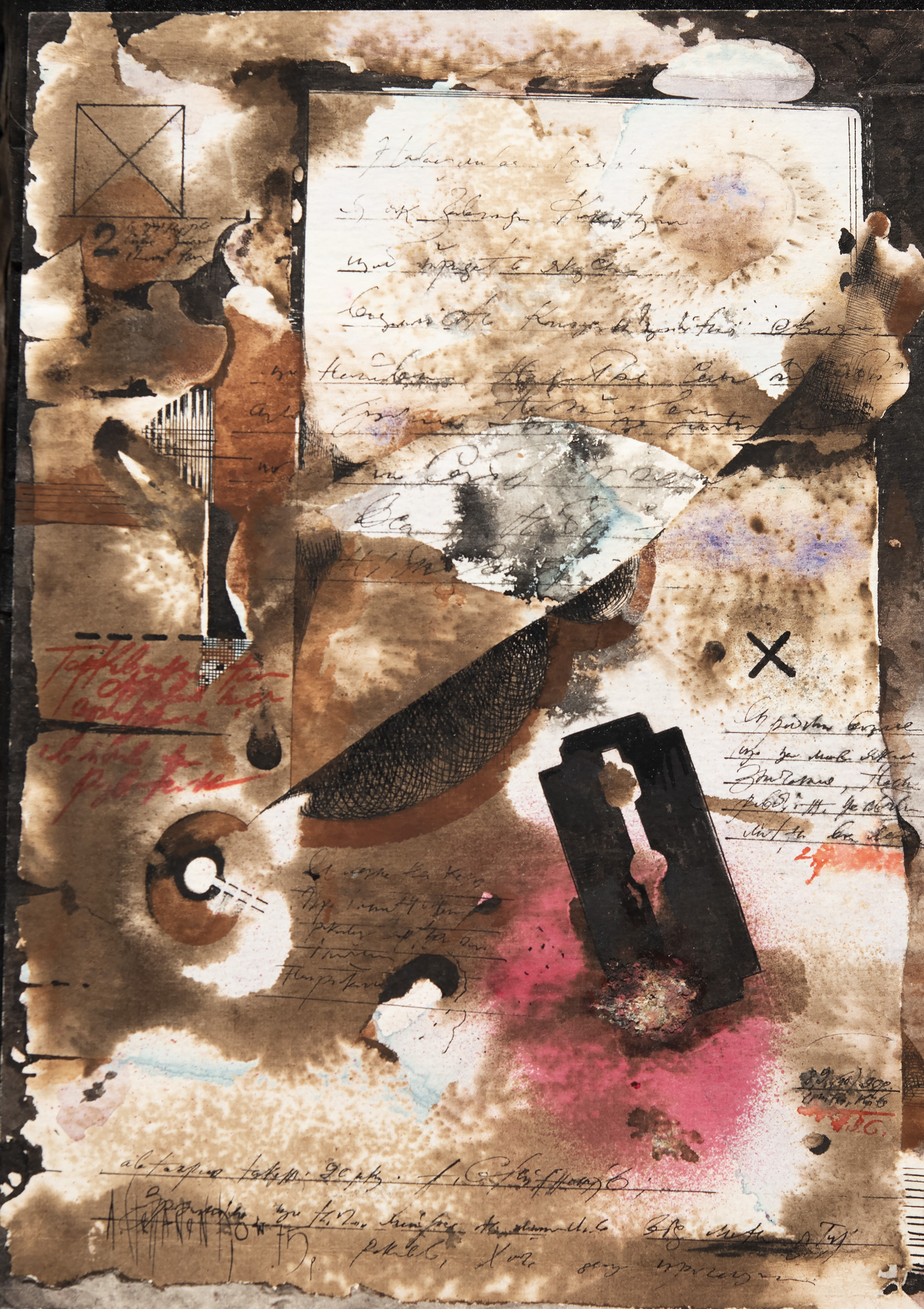
Untitled, 1975. Ink and watercolor on paper, 27 × 19.2 cm (10 5/8 × 7 9/16 in.). Norton and Nancy Dodge Collection of Nonconformist Art from the Soviet Union. D10402
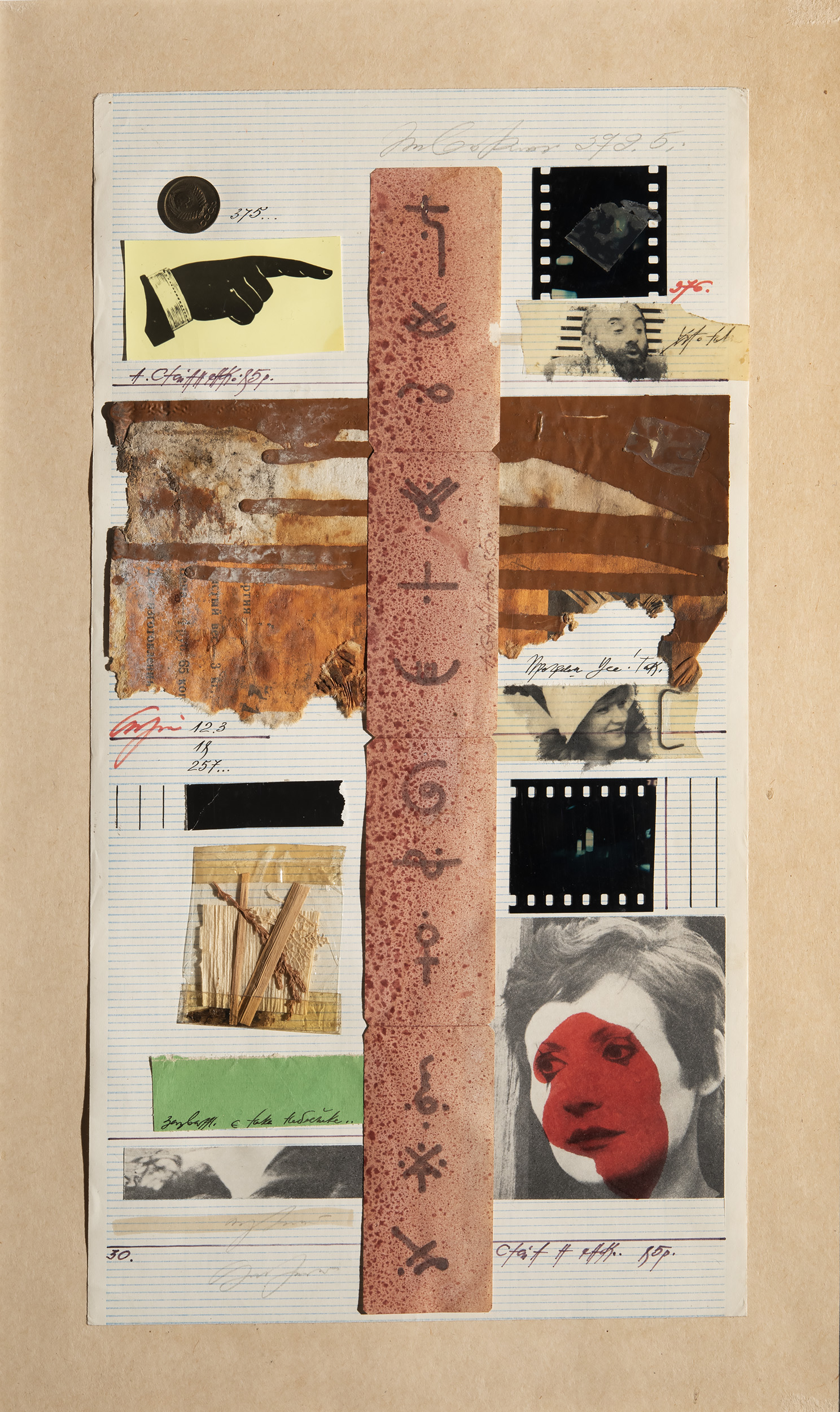
The Life as a Playing Machine, 1985. Mixed media collage on paper, 32 × 17.1 cm (12 5/8 × 6 3/4 in.). Norton and Nancy Dodge Collection of Nonconformist Art from the Soviet Union. D10437
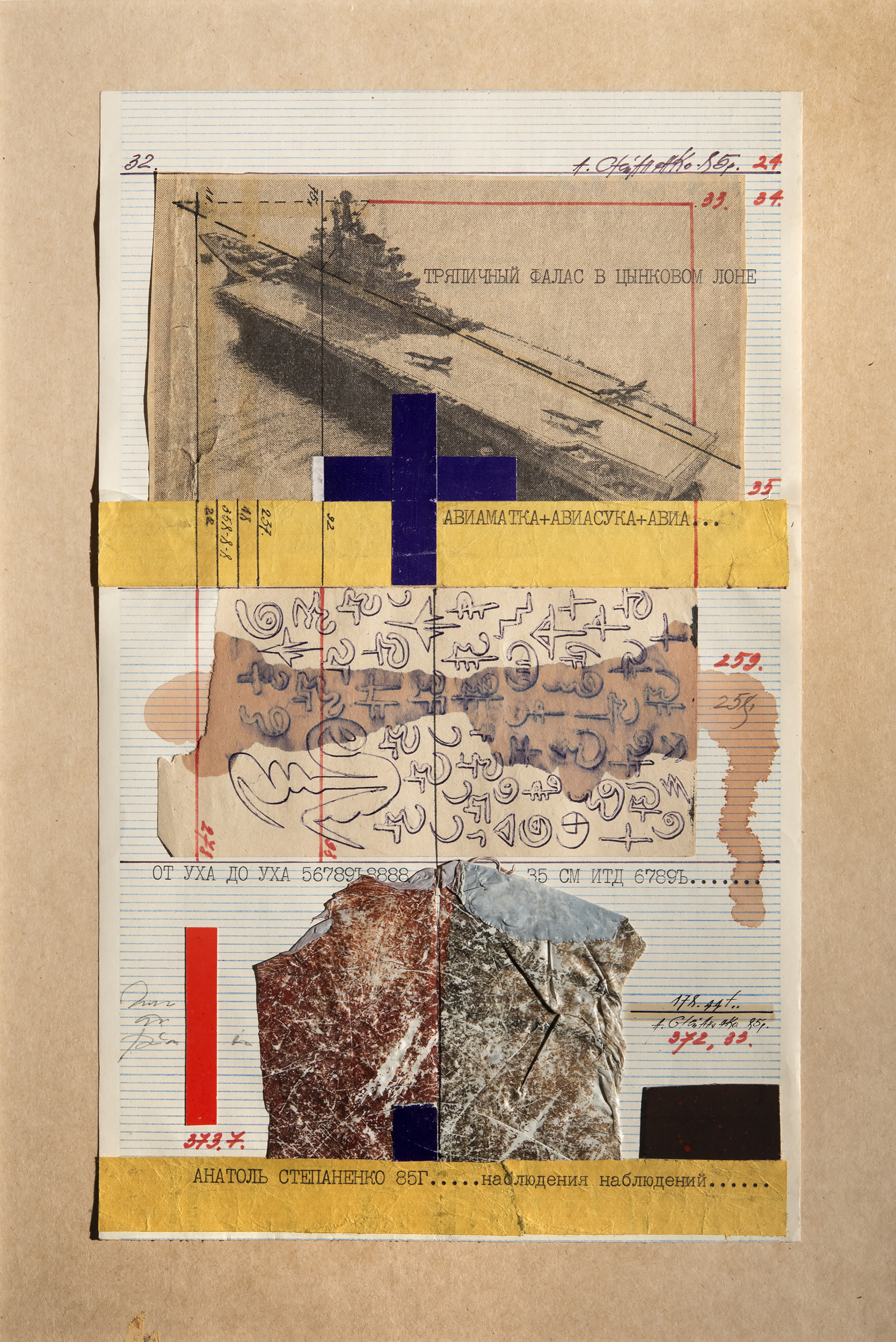
Metaphoric Shot, 1985. Paper collage on paper, 28 × 17 cm (11 × 6 11/16 in.). Norton and Nancy Dodge Collection of Nonconformist Art from the Soviet Union. D10439
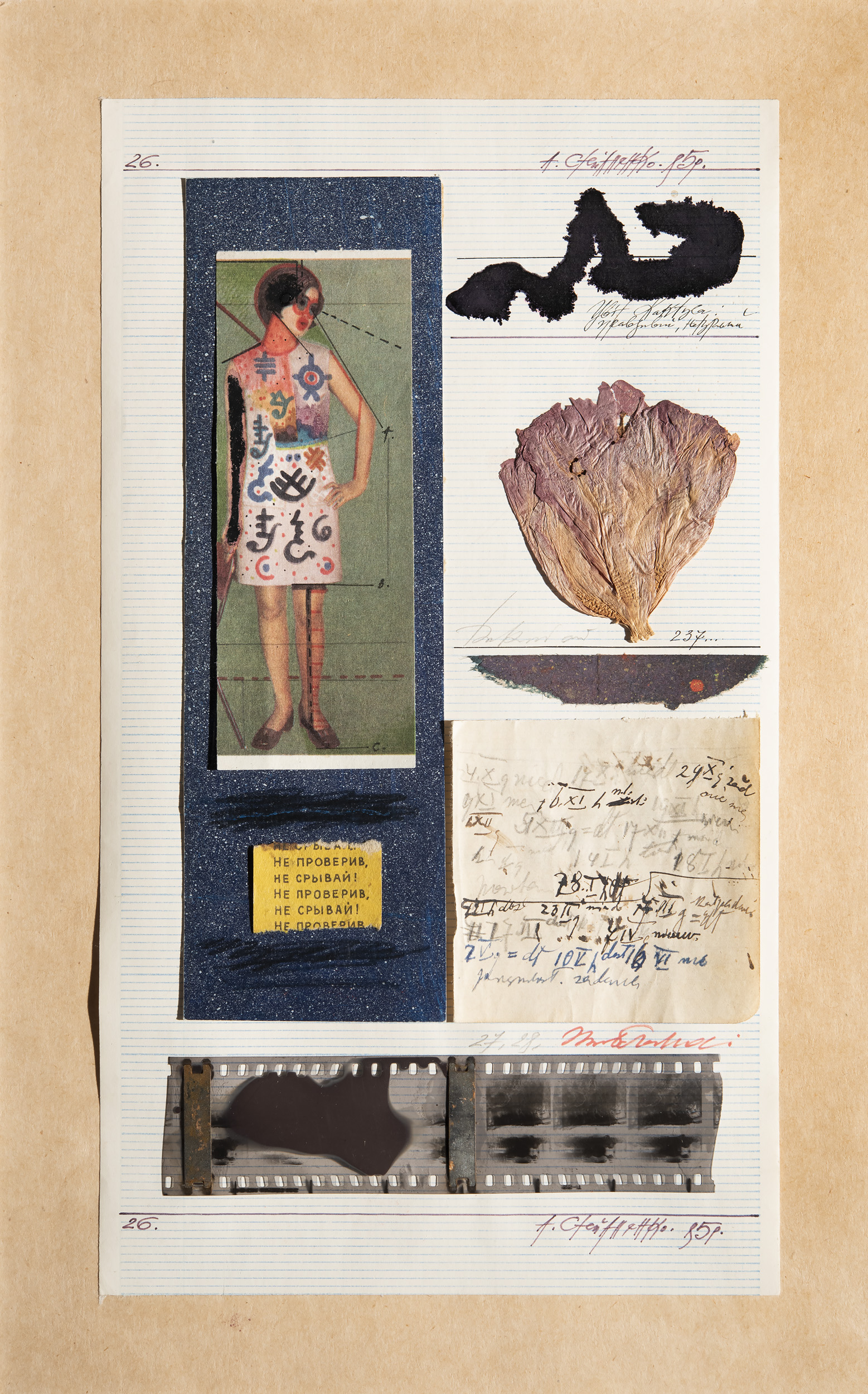
Sleep Uncle, Sleep, 1985. Collage, ink, graphite, and felt-tip pen on paper, 30 × 17 cm (11 13/16 × 6 11/16 in.). Norton and Nancy Dodge Collection of Nonconformist Art from the Soviet Union. D10442
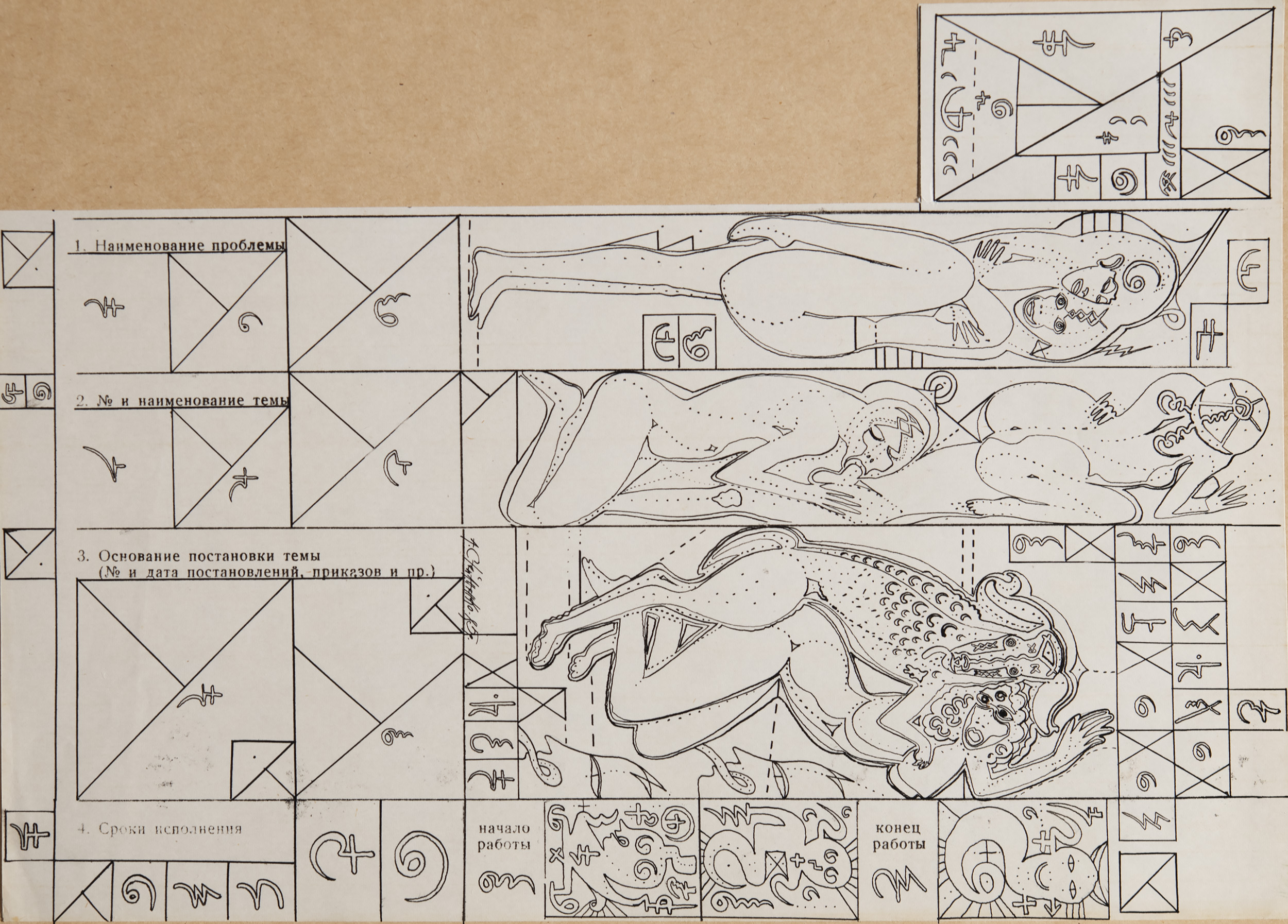
Children's Story for Valentyna, 1985. Ink on paper mounted on cardboard, 37.7 × 25.1 cm (14 13/16 × 9 7/8 in.). Norton and Nancy Dodge Collection of Nonconformist Art from the Soviet Union. D10447
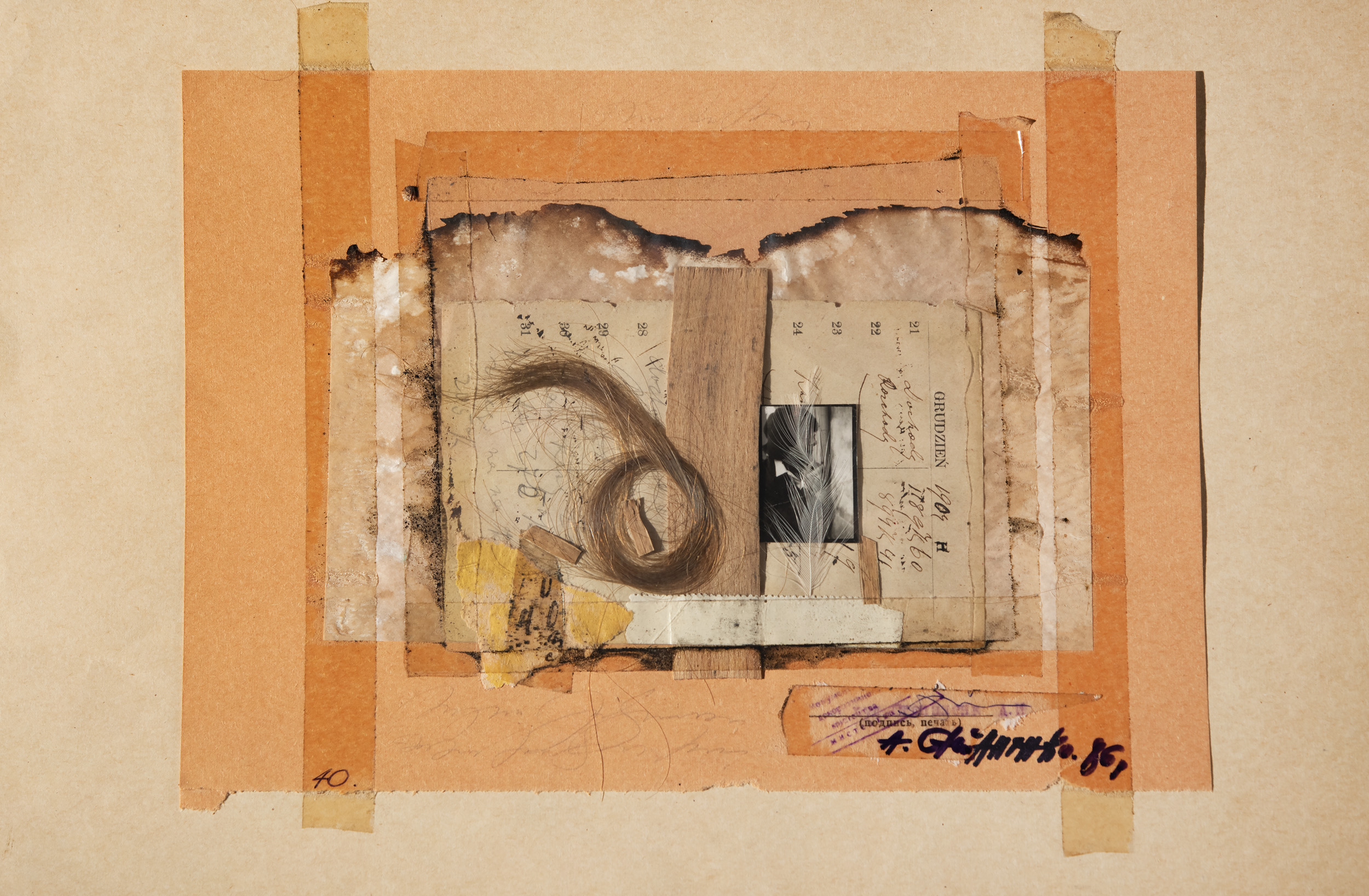
Untitled, 1986. Mixed media on paper, 24.8 × 38 cm (9 3/4 × 14 15/16 in.). Norton and Nancy Dodge Collection of Nonconformist Art from the Soviet Union. D10782
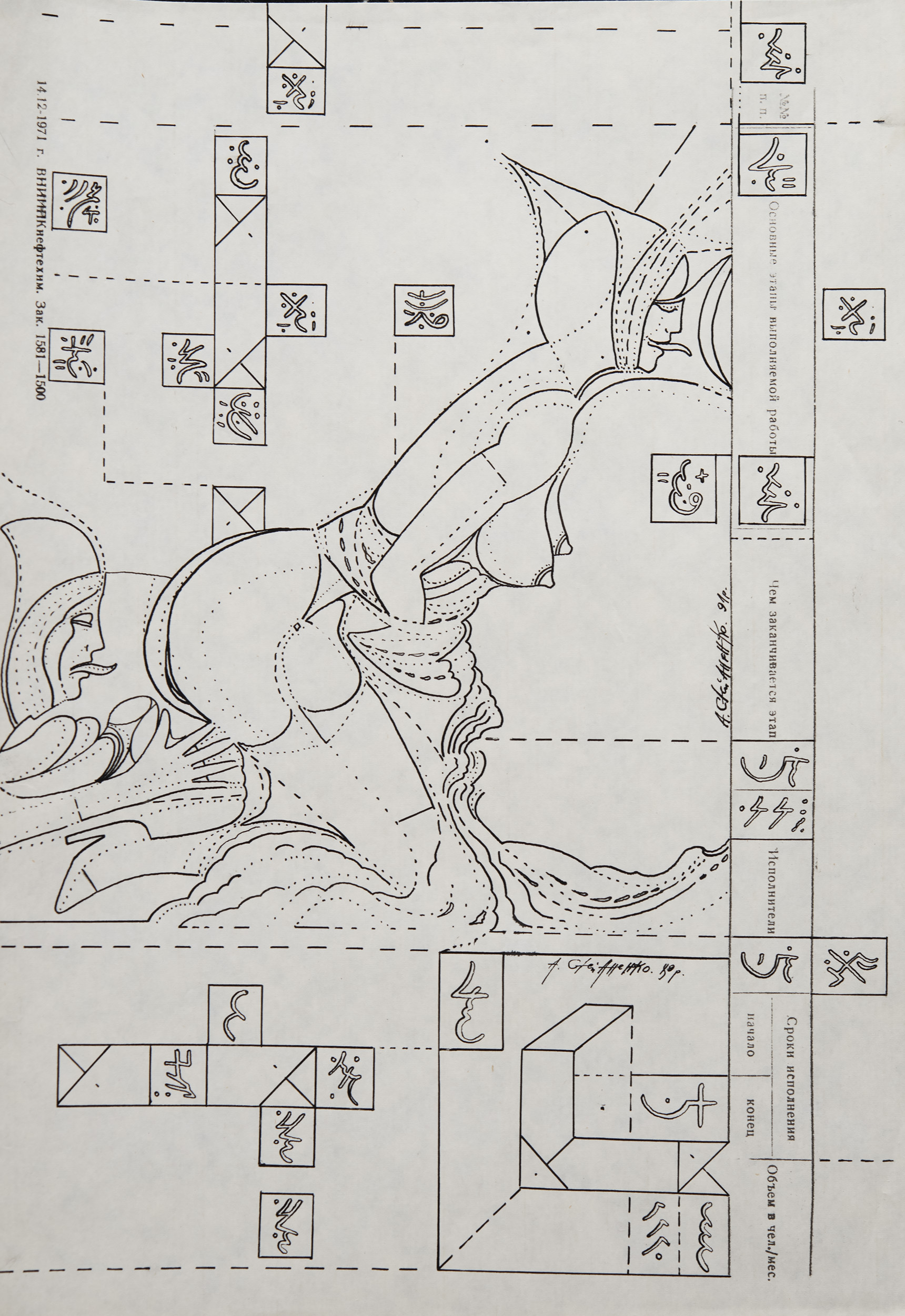
Untitled, 1980–91. Ink on paper, 29.8 × 20.9 cm (11 3/4 × 8 1/4 in.). Norton and Nancy Dodge Collection of Nonconformist Art from the Soviet Union. D10783
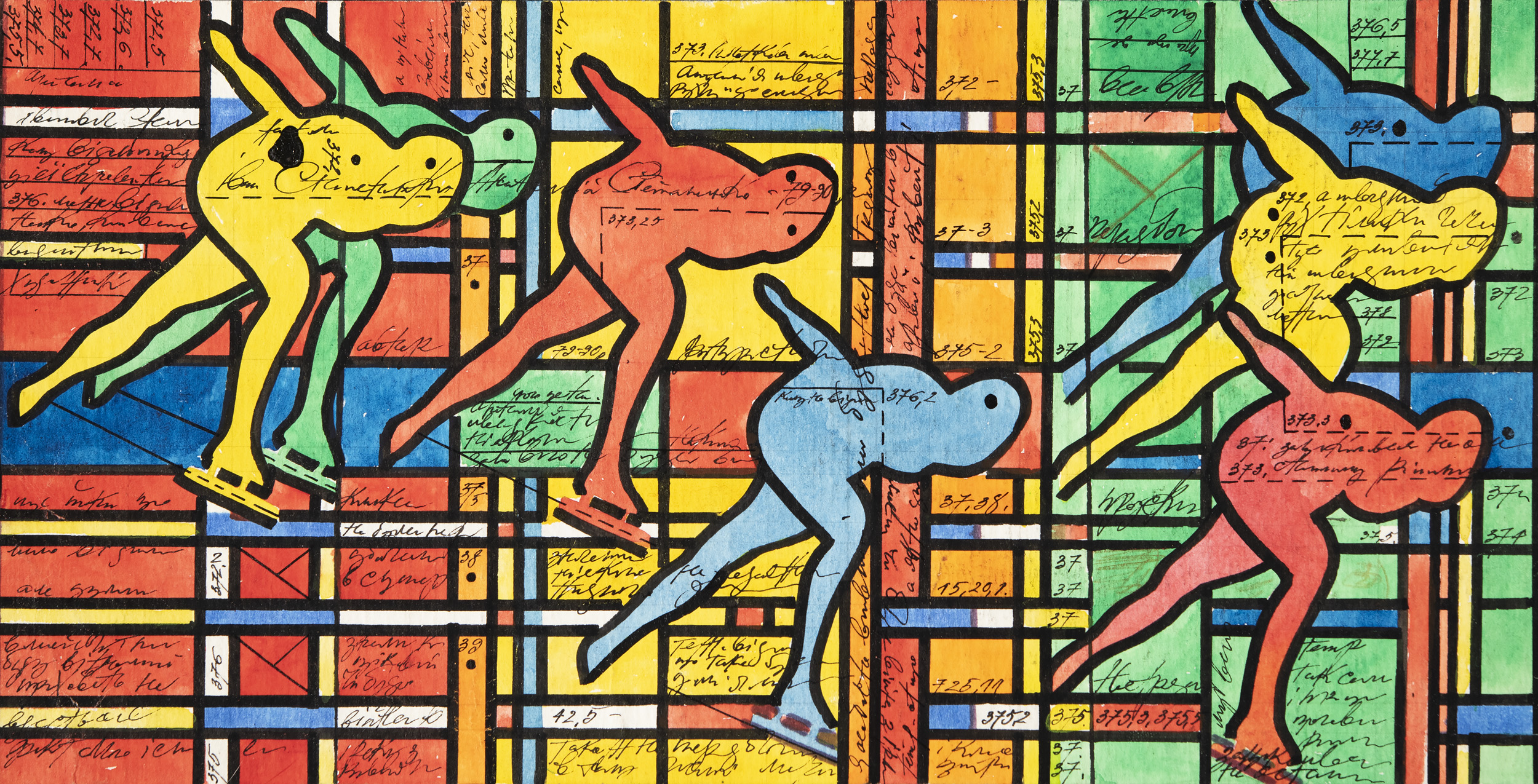
Untitled, 1979–90. Ink and colored ink on paper, 14.9 × 29.5 cm (5 7/8 × 11 5/8 in.). Norton and Nancy Dodge Collection of Nonconformist Art from the Soviet Union. D10784
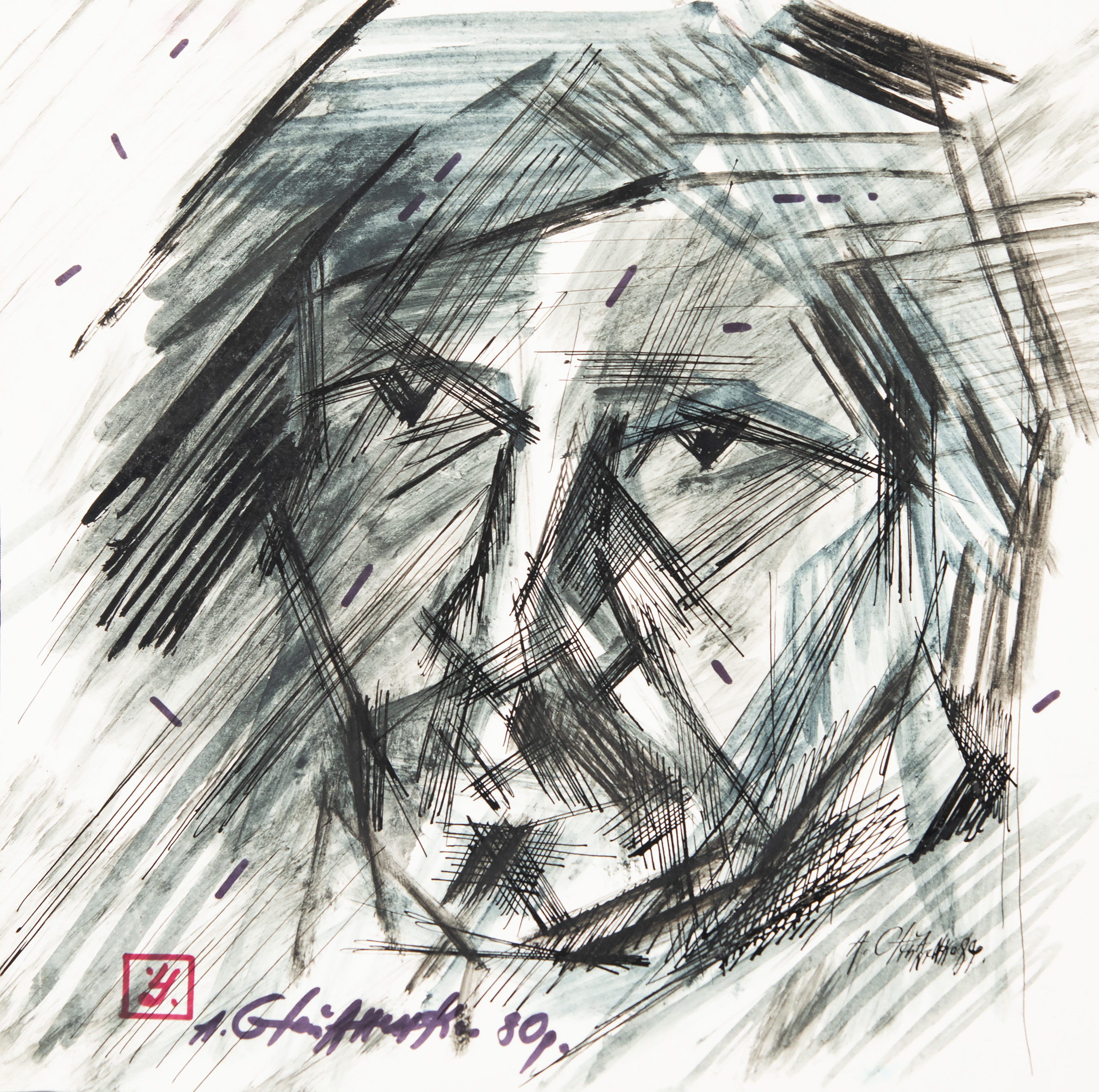
Untitled (Portrait of Volodymyr Ivasiuk), 1980. Felt-tip pen and ink on paper, 18 × 17.3 cm (7 1/16 × 6 13/16 in.). Norton and Nancy Dodge Collection of Nonconformist Art from the Soviet Union. D18576
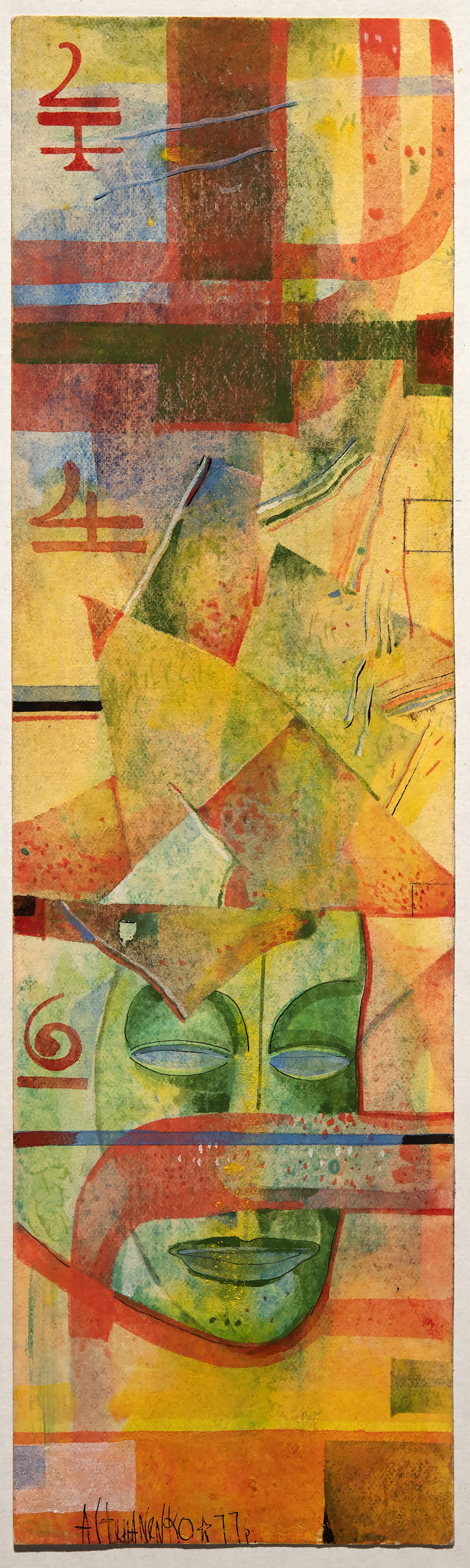
Untitled, 1977. Watercolor and ink on cardboard, 24.5 × 7 cm (9 5/8 × 2 3/4 in.). Norton and Nancy Dodge Collection of Nonconformist Art from the Soviet Union. D18589